Introduction
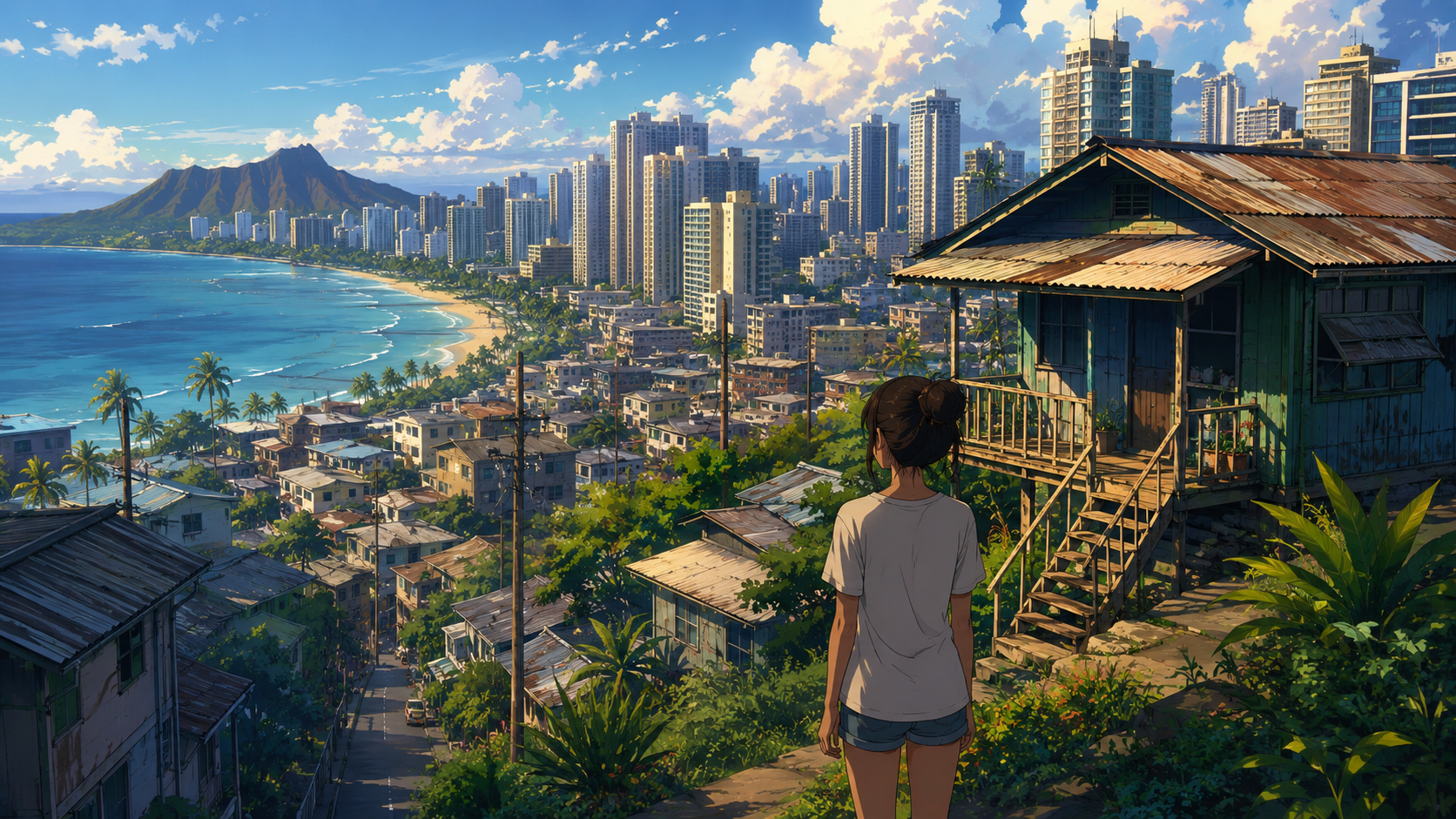
Hawaii is often imagined as a paradise of beaches, tourism, and tropical beauty. Millions of tourists visit the islands every year seeking relaxation, cultural experiences, and luxury vacations. However, behind this global image lies a serious social and economic crisis. Hawaii has become one of the most expensive places to live in the United States. Rising housing prices, high rent, food inflation, energy costs, and unequal economic opportunities have created a severe cost of living crisis for local residents. The housing crisis in Hawaii is not only an economic problem but also a sociological issue connected with inequality, class conflict, colonial history, migration, tourism, and cultural displacement.
The crisis affects Native Hawaiians, working-class families, students, elderly people, and middle-income workers differently. Many residents struggle to afford homes in the communities where they were born and raised. Some families are forced to migrate to mainland America due to rising expenses. Others experience overcrowded living conditions or homelessness. The sociological dimensions of this issue reveal how economic systems, government policies, and globalization shape the daily lives of people.

This article examines the cost of living and housing crisis in Hawaii from a sociological perspective. It explores historical causes, structural inequalities, tourism dependency, gentrification, social consequences, and possible solutions to the growing crisis.
Understanding the Cost of Living in Hawaii
The cost of living refers to the amount of money required to maintain a certain standard of life. In Hawaii, residents face extremely high expenses in almost every sector. Housing, transportation, healthcare, food, electricity, and education costs are significantly higher than the national average in the United States.
Several factors contribute to Hawaii’s high cost of living:
- Geographic isolation
- Dependence on imported goods
- Limited land availability
- Heavy tourism economy
- Real estate speculation
- High transportation costs
- Wage inequality
As an island state located in the Pacific Ocean, Hawaii imports a large portion of its food, fuel, and consumer goods. Transportation costs increase prices for ordinary products. Residents often pay much more for groceries and utilities compared to people living in mainland states.
The housing market has become the central issue in the broader cost of living crisis. Homeownership is increasingly unattainable for average workers, while rental prices continue to rise rapidly.
Historical Roots of the Housing Crisis
The housing crisis in Hawaii cannot be understood without examining its historical background. The islands experienced dramatic social and economic changes after Western colonization and the eventual annexation of Hawaii by the United States in 1898.
Before colonization, Native Hawaiians lived within communal systems connected to land and traditional social structures. Land had cultural and spiritual significance rather than being treated purely as private property. Colonial influence transformed land into a commercial asset. Large plantations, foreign investors, and tourism industries gradually gained control over major portions of Hawaiian land.
This transformation created long-term inequalities. Native Hawaiians lost access to ancestral lands while wealthy outsiders accumulated property. Sociologists view this process as a form of settler colonialism, where indigenous populations become marginalized economically and culturally within their own homeland.
The development of tourism during the twentieth century intensified land commodification. Coastal areas and urban centers became valuable commercial zones for hotels, luxury apartments, and vacation properties. As global tourism expanded, housing increasingly became tied to investment and profit rather than community needs.
Tourism and the Housing Crisis
Tourism is one of Hawaii’s largest industries and a major source of employment. While tourism generates income for the state economy, it also contributes heavily to the housing crisis.
Millions of tourists visit Hawaii annually, increasing demand for hotels, vacation rentals, and luxury real estate. Wealthy investors and foreign buyers purchase properties as vacation homes or investment assets. This drives up housing prices for local residents.
Platforms offering short-term rentals have further intensified the crisis. Many apartments and homes that could serve local families are instead used for tourists because landlords earn higher profits through short-term rentals. As a result, housing supply for residents decreases while rent prices increase.
From a sociological perspective, tourism creates a dual economy:
- A wealthy consumer class connected to tourism and investment.
- A struggling local workforce employed in low-wage service jobs.
Workers in hotels, restaurants, retail, and transportation sectors often cannot afford housing near their workplaces. This reflects Karl Marx’s theory of class inequality, where laborers generate wealth but remain economically disadvantaged within the capitalist system.
Tourism also creates cultural tensions. Many Native Hawaiians argue that excessive tourism commodifies Hawaiian culture while displacing local communities. Traditional neighborhoods are transformed into tourist-centered commercial spaces.
Gentrification and Social Displacement
Gentrification refers to the process where wealthier individuals move into lower-income neighborhoods, increasing property values and displacing long-term residents. Hawaii has experienced significant gentrification, particularly in urban areas such as Honolulu.
Luxury condominiums, resorts, and high-end developments have replaced many affordable housing areas. Rising property taxes and rent force lower-income residents to relocate. Native Hawaiian communities are especially vulnerable because of historical disadvantages and lower average household wealth.
Sociologists describe this process as spatial inequality. Urban space becomes organized according to economic power. Wealthy individuals gain access to desirable areas while poorer populations are pushed to less developed or overcrowded regions.
Gentrification affects social relationships and community identity. Long-standing social networks weaken as families move away. Cultural traditions connected to local neighborhoods decline. Many Native Hawaiians feel alienated in places that were historically central to their cultural life.
The emotional impact of displacement is also significant. People lose not only homes but also social belonging, community memory, and cultural continuity.
Homelessness in Hawaii
One of the most visible consequences of the housing crisis is homelessness. Hawaii has one of the highest homelessness rates in the United States relative to population size.

Homelessness in Hawaii is influenced by several interconnected factors:
- High housing costs
- Insufficient affordable housing
- Low wages
- Mental health challenges
- Substance abuse
- Domestic violence
- Economic inequality
Families with full-time employment may still struggle to pay rent. Some live in temporary shelters, vehicles, or overcrowded homes. Native Hawaiians are disproportionately represented among the homeless population, reflecting historical marginalization and structural inequality.
From the sociological perspective of structural functionalism, housing instability disrupts social order and family stability. Homelessness affects children’s education, healthcare access, employment opportunities, and mental well-being.
Conflict theorists argue that homelessness reflects unequal distribution of resources within capitalist societies. Wealth accumulates among investors and property owners while vulnerable populations face insecurity and exclusion.
Public attitudes toward homelessness also shape policy responses. Some residents view homelessness as a personal failure, while sociologists emphasize broader structural causes such as inequality and lack of affordable housing.
Native Hawaiians and Cultural Inequality
Native Hawaiians face unique challenges within the housing crisis. Historical dispossession, colonization, and economic marginalization continue to affect indigenous communities today.
Many Native Hawaiians experience lower income levels, higher poverty rates, and reduced access to homeownership compared to other groups in Hawaii. Rising property values make it increasingly difficult for indigenous families to remain in ancestral communities.
Land in Hawaiian culture is deeply connected to identity, spirituality, and collective memory. Therefore, displacement has both economic and cultural consequences. Losing land means losing cultural connections and traditional ways of life.
Sociologists studying indigenous issues often highlight the concept of cultural survival. Housing insecurity threatens the preservation of language, traditions, and community networks among Native Hawaiians.
Some activists describe the current crisis as a continuation of colonial inequality. Wealthy outsiders benefit from Hawaiian land while indigenous residents struggle to afford basic housing.
Movements advocating land sovereignty, affordable housing, and indigenous rights have become increasingly important in Hawaii’s social and political landscape.
Wage Inequality and Economic Stratification
Another major sociological dimension of Hawaii’s cost of living crisis is wage inequality. Although Hawaii’s economy generates billions through tourism and real estate, many workers receive relatively low wages.
The gap between income and living expenses continues to widen. Teachers, healthcare workers, retail employees, hospitality staff, and service workers often struggle financially despite full-time employment.
Economic stratification refers to the division of society into different economic layers. Hawaii demonstrates strong stratification between wealthy property owners and lower-income workers.
Luxury real estate markets attract wealthy investors from mainland America and international regions. These buyers can afford high property prices, which further inflate the housing market beyond the reach of local residents.
Meanwhile, many young adults delay marriage, homeownership, or family formation because of financial insecurity. This reflects sociological theories connecting economic conditions with changing family structures.
The “working poor” phenomenon has become increasingly common. People remain employed but cannot achieve financial stability due to rising costs.
Migration and Brain Drain
The housing crisis has encouraged migration from Hawaii to mainland United States. Many residents leave in search of affordable housing and better economic opportunities.
This migration has important sociological implications:
- Family separation
- Loss of local workforce
- Cultural fragmentation
- Emotional stress
- Community decline
Young professionals and educated individuals often relocate because they cannot afford to build a future in Hawaii. This creates a “brain drain,” where skilled workers leave the islands.
Families may become geographically divided, weakening traditional support systems. Elderly parents remain in Hawaii while younger generations move elsewhere.
For Native Hawaiians, migration can create cultural disconnection. Living away from ancestral land may weaken ties to language, traditions, and community identity.
At the same time, migration also reflects global economic mobility patterns where people move according to labor market opportunities and living affordability.
The Role of Government Policies
Government policies play a crucial role in shaping Hawaii’s housing crisis. Critics argue that insufficient affordable housing programs, zoning restrictions, and weak regulation of vacation rentals have worsened the problem.
Several policy challenges exist:
- Limited land for development
- Environmental regulations
- Slow housing construction
- Real estate speculation
- High construction costs
- Political influence of developers
Some policymakers support expanding affordable housing projects, increasing taxes on vacant homes, and regulating short-term rentals. Others prioritize tourism growth and real estate investment.
Sociologically, government decisions often reflect power relationships between economic elites and ordinary citizens. Developers, tourism industries, and investors may possess stronger political influence than low-income communities.
Public debates frequently emerge around balancing economic growth with social justice. Some residents argue that development creates jobs, while others believe it destroys local communities and worsens inequality.
Education, Healthcare, and Family Life
The cost of living crisis affects multiple social institutions beyond housing.
Education
Students from low-income families face housing instability, overcrowding, and financial stress. These conditions can negatively affect academic performance and mental health.

Teachers also struggle with high living expenses. Some leave Hawaii because salaries cannot match housing costs. This contributes to teacher shortages in schools.
Healthcare
Healthcare workers experience similar challenges. Hospitals may face staffing shortages because employees cannot afford nearby housing.
Mental health issues linked to financial stress are increasing. Anxiety, depression, and family conflict often rise during periods of economic insecurity.
Family Structure
High living expenses influence marriage patterns, fertility rates, and household arrangements. Many adults live with extended family members to reduce costs.
Multigenerational households are becoming more common. While this can strengthen family support systems, it may also create overcrowding and stress.
Environmental Challenges and Housing
Environmental issues also interact with Hawaii’s housing crisis. Climate change, coastal erosion, and natural disasters affect land availability and property development.
Rising sea levels threaten coastal communities and increase insurance costs. Some regions may become unsuitable for future housing development.
Environmental protection laws limit construction in ecologically sensitive areas. While these regulations protect natural ecosystems, they also restrict housing expansion.
This creates a sociological conflict between environmental sustainability and housing affordability. Policymakers must balance ecological preservation with social needs.
Sociological Theories and the Crisis
Several sociological theories help explain Hawaii’s housing and cost of living crisis.
Conflict Theory
Conflict theory emphasizes inequality and power struggles between social classes. Wealthy investors, corporations, and tourism industries benefit from rising property values, while working-class residents face displacement.
Housing becomes a source of profit rather than a basic human necessity.
Symbolic Interactionism
This theory examines how people attach meanings to social experiences. For Native Hawaiians, land represents cultural identity and spiritual belonging, not merely economic value.
Displacement therefore creates emotional trauma and identity loss.
Structural Functionalism
Structural functionalism views society as interconnected institutions. Housing instability disrupts education, family systems, healthcare access, and employment stability.
A dysfunctional housing system creates wider social instability.
Urban Sociology
Urban sociology explores how cities develop unevenly through economic and political forces. Hawaii’s urban centers demonstrate segregation between wealthy tourist zones and struggling residential communities.
Possible Solutions to the Crisis
Addressing Hawaii’s cost of living and housing crisis requires long-term structural reforms.
Expanding Affordable Housing
The government can invest in affordable housing projects targeted toward local residents and low-income workers.
Regulating Vacation Rentals
Stronger regulations on short-term rentals may increase housing availability for residents.
Supporting Native Hawaiian Communities
Policies protecting indigenous land rights and cultural preservation are essential for social justice.
Raising Wages
Increasing minimum wages and improving labor protections can help workers manage rising expenses.
Taxing Speculative Property Ownership
Higher taxes on vacant luxury properties and foreign investments may reduce speculative real estate practices.
Community-Based Development
Local communities should participate in housing decisions rather than leaving development entirely to private investors.
Improving Public Transportation
Better transportation systems could reduce commuting burdens for residents forced to live far from urban employment centers.
Conclusion
The cost of living and housing crisis in Hawaii is far more than an economic issue. It is deeply connected to sociology, history, culture, inequality, and power. Rising housing costs, tourism dependency, gentrification, and colonial legacies have created severe challenges for local communities, especially Native Hawaiians and working-class residents.
The crisis reveals broader tensions between capitalism and social welfare, globalization and cultural preservation, economic development and human dignity. Housing in Hawaii has increasingly become a commodity controlled by market forces rather than a fundamental social necessity.
Sociological analysis helps us understand that the problem is not simply individual financial failure but a structural issue rooted in unequal systems of power and resource distribution. The experiences of homelessness, migration, displacement, and cultural loss reflect larger social transformations occurring within Hawaii.
Solving the crisis requires cooperation between government institutions, local communities, activists, and policymakers. Affordable housing, wage reforms, cultural protection, and sustainable development policies are necessary for building a more equitable future.
Ultimately, the situation in Hawaii serves as an important example of how modern economic systems can reshape communities, identities, and everyday life. The challenge is not only to preserve Hawaii’s natural beauty but also to protect the social and cultural well-being of the people who call the islands home.
FAQs on Housing Crisis in Hawaii
1. What is the housing crisis in Hawaii?
The housing crisis in Hawaii refers to the severe shortage of affordable homes and rising property prices that make living difficult for local residents. High rent, expensive real estate, and limited housing supply are major causes of the housing crisis in Hawaii.
2. Why is the housing crisis in Hawaii getting worse?
The housing crisis in Hawaii is worsening because of increasing tourism, luxury real estate investment, short-term vacation rentals, and limited land for development. These factors raise housing demand and reduce affordable options for residents.
3. How does tourism affect the housing crisis in Hawaii?
Tourism contributes significantly to the housing crisis in Hawaii by increasing demand for vacation homes and short-term rentals. Many properties are used for tourists instead of local families, leading to higher rents and property prices.
4. Who is most affected by the housing crisis in Hawaii?
Native Hawaiians, low-income families, service workers, students, and elderly residents are most affected by the housing crisis in Hawaii because they often cannot afford rising rent and housing costs.
5. Why are housing prices so high in Hawaii?
Housing prices are high due to limited land availability, expensive construction costs, foreign investment, tourism growth, and strong demand for luxury properties in Hawaii.
6. How does the housing crisis in Hawaii impact Native Hawaiians?
The housing crisis in Hawaii has displaced many Native Hawaiians from ancestral communities. Rising property costs and gentrification create economic and cultural challenges for indigenous populations.
7. What role do short-term rentals play in the housing crisis in Hawaii?
Short-term rentals reduce the number of homes available for permanent residents. This increases rental prices and worsens the housing crisis in Hawaii.
8. Is homelessness connected to the housing crisis in Hawaii?
Yes, homelessness is strongly connected to the housing crisis in Hawaii. High rent and lack of affordable housing force many individuals and families into unstable living situations.
9. How does the housing crisis in Hawaii affect young people?
Young adults often delay marriage, family planning, and homeownership because they cannot afford housing in Hawaii. Many also move to mainland America for better opportunities.
10. What is gentrification in the context of the housing crisis in Hawaii?
Gentrification occurs when wealthy investors and newcomers increase property values in local communities, causing long-term residents to be displaced due to rising costs.
11. How does the housing crisis in Hawaii affect education?
The housing crisis in Hawaii affects education by increasing financial stress for students and teachers. Teacher shortages also occur because educators struggle to afford living expenses.
12. What government actions are being taken to address the housing crisis in Hawaii?
Government efforts include affordable housing programs, regulation of vacation rentals, rent assistance, and proposals to tax vacant investment properties.
13. How does the cost of living relate to the housing crisis in Hawaii?
Housing is the largest factor in Hawaii’s high cost of living. Expensive rent and home prices increase financial pressure on families and workers across the islands.
14. Can affordable housing solve the housing crisis in Hawaii?
Affordable housing development can help reduce the housing crisis in Hawaii, but long-term solutions also require wage growth, better regulation, and community-focused policies.
15. Why is the housing crisis in Hawaii considered a sociological issue?
The housing crisis in Hawaii is a sociological issue because it affects social inequality, cultural identity, migration, homelessness, family stability, and community relationships.
1 thought on “Cost of Living and Housing Crisis in Hawaii: A Sociological Perspective”