
Introduction
Education has long been considered the most powerful pathway for social mobility in the United States. From the earliest public school movements to the expansion of higher education after World War II, the promise of education has been closely connected with the belief that individuals, regardless of their social background, can improve their lives through knowledge and skill development. However, this promise has become increasingly uncertain in many parts of the country. Michigan, once known for its industrial prosperity and strong middle class, now faces a significant education crisis that raises important sociological questions about equality, opportunity, and social mobility.
The education crisis in Michigan is not simply about declining test scores or aging school buildings. It reflects broader structural inequalities rooted in economic transformation, racial segregation, urban decline, and unequal access to educational resources. Communities that once thrived through manufacturing employment now struggle with unemployment, population decline, and underfunded public institutions. Schools have become mirrors of these wider social conditions.
From a sociological perspective, education functions as more than a place where academic knowledge is transmitted. Schools are social institutions that shape identities, distribute opportunities, reinforce cultural values, and influence future life chances. When educational inequalities persist, they contribute to wider patterns of social inequality across generations.

This article examines the education crisis and social mobility in Michigan through the lens of sociology. It explores the historical roots of educational inequality, the role of socioeconomic status, racial disparities, educational policy, digital inequality, and the implications for future generations.
Understanding Education as a Social Institution
Sociologists view education as one of society’s fundamental institutions. Beyond teaching mathematics, science, or language, schools prepare individuals for participation in economic, political, and cultural life.
According to the functionalist perspective, education promotes social integration, develops human capital, and allocates individuals to appropriate occupational roles based on merit. In theory, educational achievement allows talented individuals from all backgrounds to succeed.
Conflict theorists present a different interpretation. They argue that schools often reproduce existing inequalities by providing unequal educational opportunities based on class, race, and neighborhood. Students from wealthier communities generally receive better educational resources, while disadvantaged students face structural barriers.
Symbolic interactionists focus on classroom experiences, teacher expectations, peer interactions, and labeling processes. These everyday interactions influence students’ academic confidence and future aspirations.
Michigan’s educational landscape illustrates how these theoretical perspectives intersect with real social conditions.
Historical Background of Michigan’s Education System
Michigan’s education system developed alongside the state’s industrial economy. During the twentieth century, automobile manufacturing generated stable employment that enabled many working-class families to achieve upward mobility without requiring advanced educational qualifications.
As manufacturing expanded, public schools received substantial investment, especially in growing suburban communities. Universities and community colleges also flourished, producing skilled workers for an industrial economy.
However, beginning in the late twentieth century, globalization, automation, and industrial restructuring dramatically transformed Michigan’s economic foundation. Factory closures reduced local tax revenues, weakened municipal finances, and contributed to declining investment in public education.
Cities such as Detroit experienced significant population loss, increased poverty, and deteriorating infrastructure. Schools serving these communities faced declining enrollment, teacher shortages, aging facilities, and reduced educational resources.
These economic transformations demonstrate how education cannot be understood independently from broader social and economic structures.
The Relationship Between Education and Social Mobility
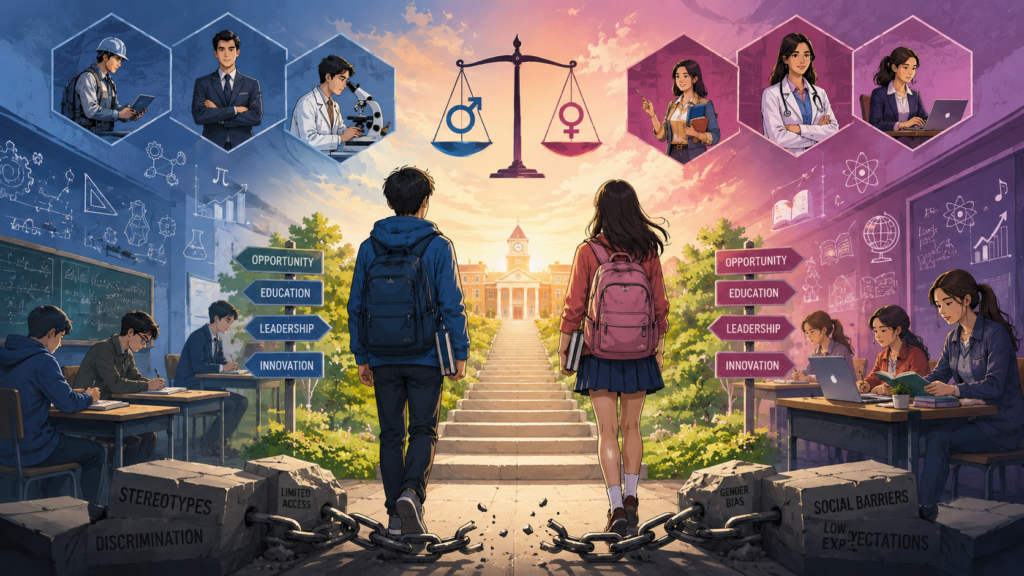
Social mobility refers to movement between different socioeconomic positions within society. Education has traditionally been regarded as the most effective mechanism for upward mobility.
Higher educational attainment generally leads to:
- Better employment opportunities
- Higher lifetime earnings
- Improved health outcomes
- Greater political participation
- Increased social capital
However, the effectiveness of education as a mobility mechanism depends upon equal access to quality schooling.
In Michigan, educational outcomes vary significantly according to family income, neighborhood characteristics, and racial composition. Students attending underfunded schools often encounter larger class sizes, fewer advanced courses, limited extracurricular activities, and reduced college preparation.
Consequently, educational inequality contributes directly to unequal occupational opportunities, reinforcing existing class divisions rather than reducing them.
Economic Inequality and Educational Opportunity
Economic inequality remains one of the strongest predictors of educational success in Michigan.
Children from higher-income families benefit from numerous educational advantages before entering kindergarten, including access to preschool education, books, private tutoring, enrichment programs, stable housing, nutritious food, and healthcare.
In contrast, low-income families often face challenges that affect children’s educational experiences:
- Housing instability
- Food insecurity
- Limited internet access
- Transportation difficulties
- Financial stress
- Reduced access to extracurricular learning
These disadvantages accumulate over time, producing achievement gaps that widen throughout students’ educational careers.
Pierre Bourdieu’s concept of cultural capital provides an important sociological explanation. Families with greater educational resources transmit language skills, cultural knowledge, educational expectations, and social networks that align closely with school norms.
Students lacking these forms of capital may possess equal intelligence but encounter greater obstacles within educational institutions.
Urban-Rural Educational Divide
Michigan’s education crisis affects both urban and rural communities, although the challenges differ considerably.
Urban districts often confront concentrated poverty, overcrowded classrooms, aging facilities, and teacher turnover. Many students also experience housing instability and neighborhood violence that interfere with academic achievement.
Rural communities face another set of problems. Declining populations reduce school funding, making it difficult to maintain specialized courses, extracurricular programs, and advanced technology. Geographic isolation also limits access to higher education and professional opportunities.
Despite these differences, both urban and rural schools experience resource inequalities that reduce educational opportunities and restrict social mobility.
Race, Segregation, and Educational Inequality
Michigan continues to experience substantial racial disparities in education.
Residential segregation has produced schools with highly unequal student populations. Because public school funding often depends upon local property values, neighborhoods with higher incomes generally support better-funded schools.
This pattern contributes to unequal access to:
- Experienced teachers
- Advanced Placement courses
- College counseling
- Laboratory facilities
- Technology resources
- Arts and enrichment programs
Critical Race Theory scholars argue that these disparities reflect institutional arrangements rather than individual shortcomings.
Historical housing discrimination, unequal employment opportunities, and neighborhood segregation continue to shape educational outcomes decades after formal legal segregation ended.
Students attending segregated schools frequently encounter lower expectations, fewer opportunities, and reduced access to influential social networks that facilitate upward mobility.
Teacher Shortages and Educational Quality
Michigan has experienced persistent teacher shortages in recent years, particularly in mathematics, science, special education, and rural districts.
Teacher shortages create several educational problems:
- Larger classroom sizes
- Increased reliance on substitute teachers
- Reduced individualized instruction
- Greater teacher burnout
- Lower educational continuity
From a sociological perspective, teachers represent important agents of socialization. They influence students’ aspirations, confidence, academic identity, and future planning.
When schools struggle to recruit and retain qualified educators, educational inequality widens because disadvantaged communities often experience the greatest staffing challenges.
Digital Inequality and Modern Education

The digital revolution has transformed education, making internet connectivity and digital literacy essential for academic success.
However, digital inequality remains a significant issue across Michigan.
Some students have access to:
- High-speed internet
- Personal computers
- Educational software
- Quiet study environments
Others depend upon shared devices, unreliable internet connections, or public Wi-Fi.
The COVID-19 pandemic highlighted these disparities when remote learning became necessary. Students without adequate digital resources experienced interrupted education, learning loss, and reduced academic engagement.
Digital inequality therefore represents a contemporary form of educational inequality with long-term consequences for employment and social mobility.
Higher Education and Rising Costs
Higher education remains one of the strongest predictors of upward social mobility.
Nevertheless, increasing tuition costs create financial barriers for many Michigan families.
Students from lower-income households often face difficult choices regarding:
- College enrollment
- Student loan debt
- Full-time employment while studying
- Delayed graduation
- Program selection
These financial pressures influence educational outcomes and career trajectories.
Community colleges provide affordable alternatives, yet financial constraints continue to discourage many capable students from completing higher education.
Sociologists emphasize that educational attainment depends not only on academic ability but also on economic resources and institutional support.
Education and Labor Market Transformation
Michigan’s labor market has undergone substantial structural transformation.
Manufacturing jobs that once provided middle-class incomes without college degrees have declined significantly. Today’s economy increasingly demands higher educational qualifications, technological competence, and adaptable skills.
This shift creates a paradox.
Education has become more important than ever for economic mobility, yet access to high-quality education remains uneven.
Individuals without postsecondary credentials face greater risks of unemployment, low wages, and economic insecurity.
Thus, educational inequality increasingly translates into labor market inequality.
The Role of Family and Community
Families remain central influences on educational success.
Parental education, household stability, reading habits, educational expectations, and involvement in school activities all contribute to children’s academic achievement.
Communities also shape educational experiences through:
- Social networks
- Mentorship opportunities
- Public libraries
- Community organizations
- Safe neighborhoods
- After-school programs
Robert Putnam’s concept of social capital explains how relationships within communities provide valuable information, support, and opportunities that facilitate educational success.
Communities experiencing social fragmentation often struggle to provide these supportive networks.
Educational Policy and Structural Reform
Educational reform efforts in Michigan have included curriculum changes, accountability systems, charter schools, early childhood education initiatives, and funding reforms.
While some policies have improved specific outcomes, sociologists argue that educational reform alone cannot eliminate inequality if broader structural conditions remain unchanged.
Effective reform requires coordinated investment in:
- Early childhood education
- Teacher recruitment and retention
- Mental health services
- School infrastructure
- Technology access
- Equitable funding systems
- Community partnerships
Education policy should address both classroom learning and the broader social environments affecting students’ lives.
The Sociology of Educational Aspirations
Students’ educational aspirations are shaped by more than personal ambition.
Social class, family expectations, neighborhood culture, teacher encouragement, peer groups, and perceived opportunities all influence educational goals.
Students growing up in economically disadvantaged communities may encounter fewer professional role models or perceive college as financially unattainable.
Conversely, students from affluent backgrounds often view higher education as an expected life course rather than an uncertain possibility.
These differences illustrate how aspirations themselves are socially constructed rather than purely individual choices.
Breaking the Cycle of Educational Inequality
Reducing educational inequality requires addressing multiple interconnected factors.
Expanding universal preschool, improving school funding equity, strengthening teacher preparation, increasing affordable higher education, and expanding digital infrastructure can all improve educational outcomes.
Community-based mentoring, career counseling, internship opportunities, and partnerships between schools and employers also enhance students’ future prospects.
Most importantly, policymakers must recognize that educational inequality reflects broader economic and social inequalities.
Long-term improvements require investments not only in schools but also in housing, healthcare, transportation, employment, and community development.
Future Prospects
Michigan possesses significant educational strengths, including respected universities, community colleges, skilled educators, and innovative educational initiatives.
The state’s future economic competitiveness depends largely on whether educational opportunities become more equally distributed across communities.
As technology continues transforming labor markets, educational equity will become even more important for sustaining social mobility.
If disparities remain unaddressed, educational inequality may increasingly reproduce economic inequality across generations.
Conversely, strategic investments in equitable education can strengthen both individual opportunity and broader social cohesion.
Conclusion
The education crisis in Michigan represents far more than an educational challenge; it is a sociological issue deeply connected to inequality, social mobility, race, class, and economic transformation. Schools reflect the broader social structures in which they operate, making educational outcomes inseparable from community conditions and public policy.
Sociological theories demonstrate that education can either reduce inequality by expanding opportunities or reinforce existing disparities through unequal access to resources and institutional support. Michigan’s experience illustrates both possibilities. While many students continue to achieve remarkable success, others face structural barriers that limit their educational and occupational futures.
Addressing the education crisis requires moving beyond narrow discussions of test scores and accountability. A comprehensive sociological approach recognizes the importance of equitable funding, inclusive educational policies, strong community institutions, qualified teachers, affordable higher education, and broader social investment.
Ultimately, education remains one of the most powerful engines of social mobility. Ensuring that every student in Michigan has genuine access to quality education is not only an educational priority but also a social, economic, and democratic necessity. By reducing structural inequalities and expanding educational opportunity, Michigan can strengthen social mobility, foster inclusive economic growth, and create a more equitable society for future generations.
FAQs on Social Mobility in Michigan
1. What is social mobility in Michigan?
Social mobility in Michigan refers to the ability of individuals or families to improve their socioeconomic status through education, employment, and economic opportunities.
2. How does education affect social mobility in Michigan?
Education is a major driver of social mobility in Michigan, as higher educational attainment generally leads to better employment opportunities, increased income, and improved quality of life.
3. Why is social mobility in Michigan declining for some communities?
Factors such as economic inequality, underfunded schools, racial disparities, housing segregation, and limited access to higher education contribute to reduced social mobility in Michigan.
4. What role does poverty play in social mobility in Michigan?
Poverty limits access to quality education, healthcare, technology, and career opportunities, making upward social mobility more difficult for many Michigan families.
5. How does residential segregation impact social mobility in Michigan?
Residential segregation often results in unequal school funding and access to educational resources, which can reduce opportunities for upward social mobility.
6. Can higher education improve social mobility in Michigan?
Yes. College degrees, technical training, and vocational education significantly increase employment prospects and long-term earning potential, supporting greater social mobility in Michigan.
7. How has the decline of manufacturing affected social mobility in Michigan?
The loss of manufacturing jobs has reduced stable middle-class employment opportunities, making education and specialized skills increasingly important for economic advancement.
8. What are the biggest barriers to social mobility in Michigan?
Key barriers include educational inequality, income disparities, student debt, limited job opportunities, digital inequality, and neighborhood disadvantage.
9. How does race influence social mobility in Michigan?
Historical and structural inequalities have contributed to differences in educational access, employment opportunities, and income across racial groups, affecting social mobility.
10. What is the relationship between school funding and social mobility in Michigan?
Schools with greater financial resources typically provide better educational opportunities, increasing students’ chances of achieving upward social mobility in Michigan.
11. How does digital inequality affect social mobility in Michigan?
Limited access to computers and high-speed internet can reduce educational achievement and workforce readiness, restricting future social mobility.
12. What policies can improve social mobility in Michigan?
Policies that promote equitable school funding, affordable higher education, early childhood education, workforce development, and community investment can strengthen Social Mobility in Michigan.
13. Why is early childhood education important for social mobility in Michigan?
High-quality early childhood education builds foundational academic and social skills, improving long-term educational success and economic opportunities important for Social Mobility in Michigan.
14. How do communities influence social mobility in Michigan?
Strong communities provide social support, mentoring, networking opportunities, and safe environments that encourage educational achievement and career development to influence Social Mobility in Michigan.
15. Why is social mobility in Michigan important for economic development?
Greater social mobility creates a more skilled workforce, reduces poverty, promotes economic growth, and strengthens social cohesion across the state.