Introduction
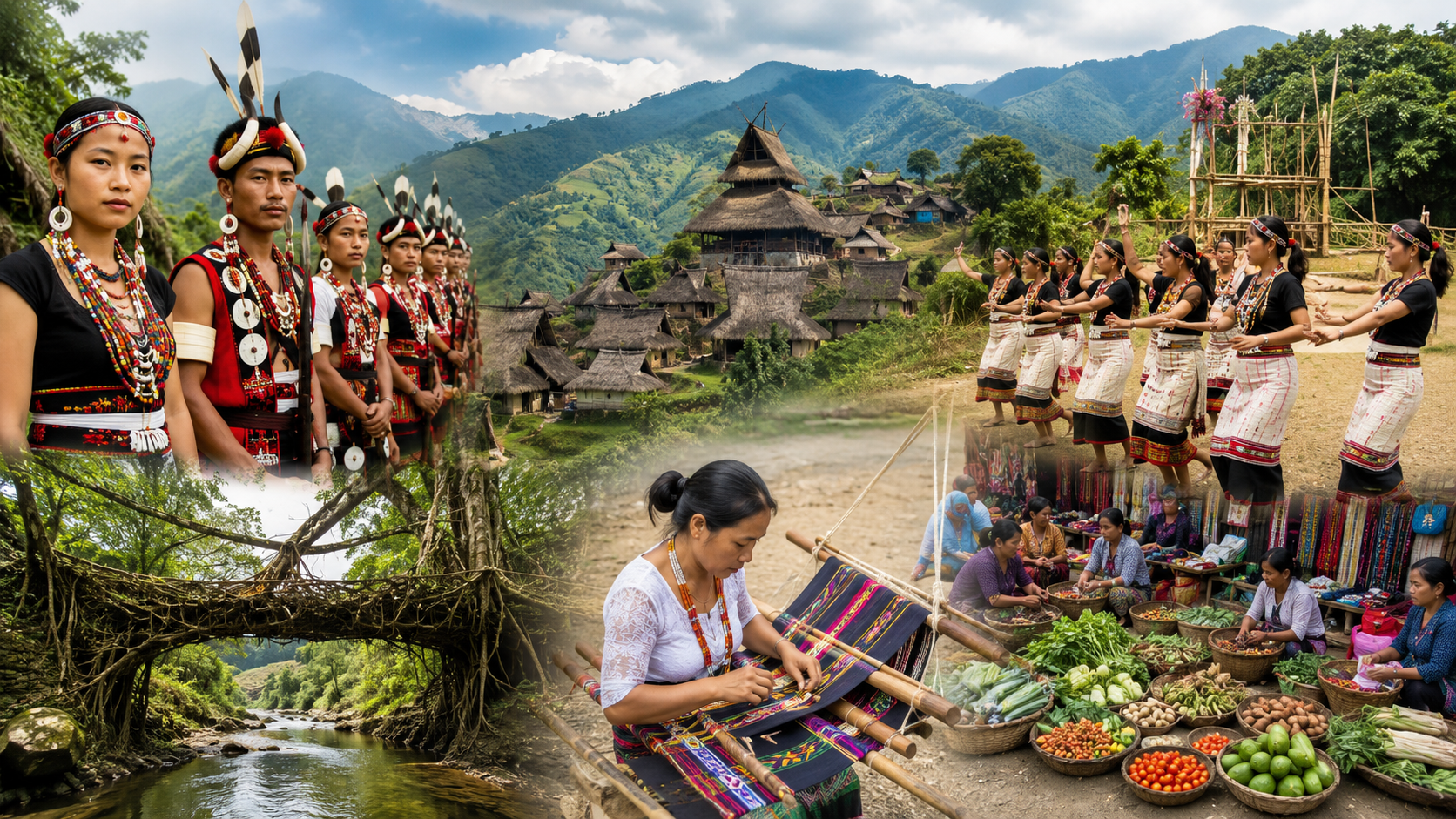
India is often described as a land of diversity, yet nowhere is this diversity more visible than in the North East. Comprising eight states—Arunachal Pradesh, Assam, Manipur, Meghalaya, Mizoram, Nagaland, Sikkim, and Tripura—the region represents one of the most culturally vibrant, linguistically rich, and socially complex parts of South Asia. Although geographically connected to the rest of India through the narrow Siliguri Corridor, the North East possesses historical experiences, ethnic compositions, and social institutions that distinguish it from other regions of the country.
The sociology of North East India has emerged as a significant field of study because the region presents a unique combination of tribal traditions, colonial legacies, post-colonial state formation, ethnic politics, religious diversity, borderland dynamics, migration, and rapid social transformation. Unlike many regions of mainland India, where caste often forms the principal axis of social organization, many societies in the North East are structured around tribes, clans, lineages, customary laws, and village institutions. This distinctive social structure provides sociologists with an opportunity to examine alternative forms of social organization beyond the conventional caste-based framework.
For decades, scholars have argued that the North East cannot be understood merely as a geographical region. It is a social and cultural landscape shaped by centuries of migration, interaction with Southeast Asia, colonial intervention, missionary influence, political movements, and economic changes. Every community in the region contributes to a mosaic of identities while simultaneously negotiating modernity, globalization, and national integration.
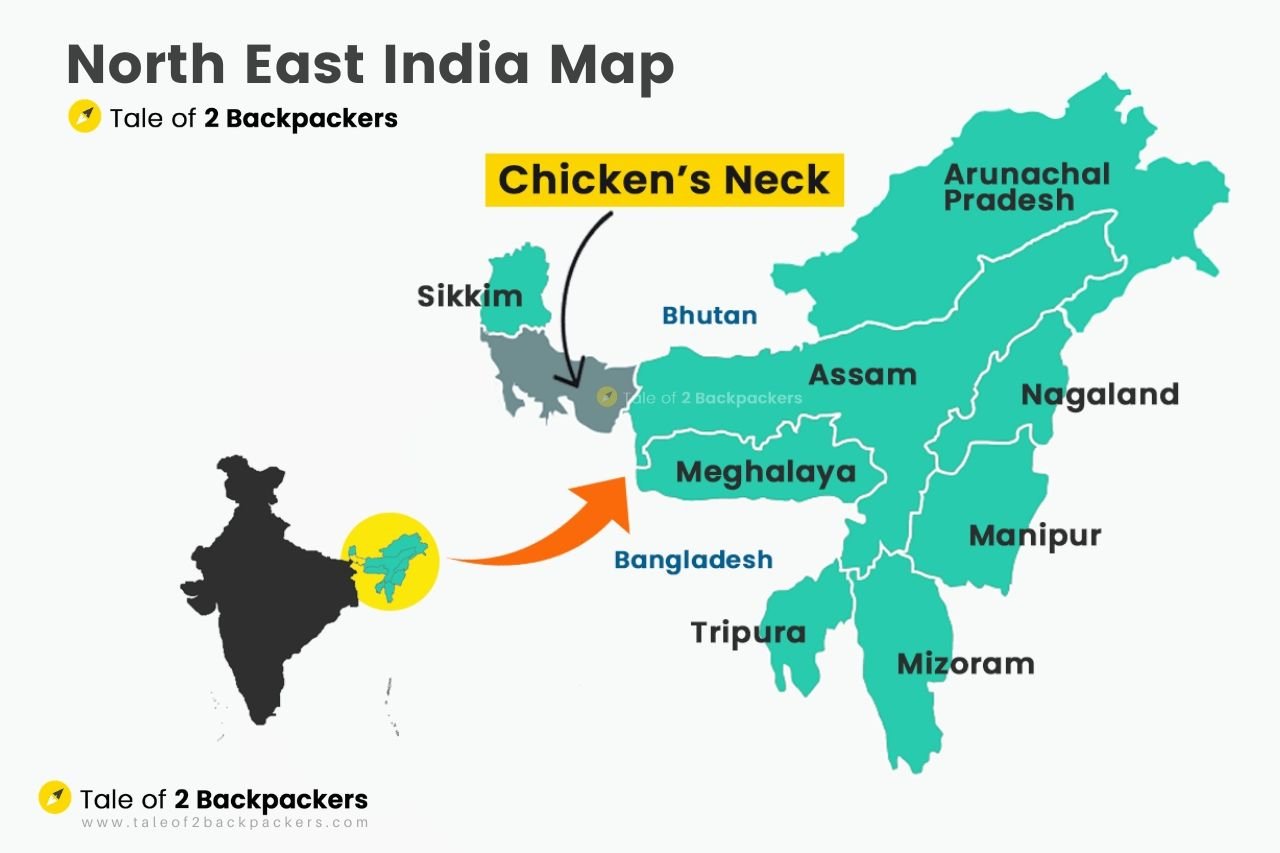
North East Indian Sociology seeks to understand these processes through systematic analysis. It studies how societies are organized, how cultural traditions are preserved and transformed, how ethnic identities are constructed, how tribal institutions function, and how development influences everyday life. More importantly, it highlights the resilience of indigenous communities in maintaining their traditions while adapting to changing political and economic realities.
Understanding North East Indian Sociology
North East Indian Sociology refers to the sociological study of the societies, cultures, institutions, identities, and social transformations occurring within the eight northeastern states of India. It examines the relationship between tribal communities, ethnic groups, state institutions, development policies, and global influences.
Unlike classical Indian sociology, which historically focused on caste, village studies, and agrarian relations, North East Indian Sociology emphasizes tribal social organization, ethnicity, customary governance, borderland politics, identity movements, indigenous knowledge systems, environmental relationships, and cultural diversity.
The discipline addresses questions such as:
How do tribal societies maintain social cohesion?
What role do clans and kinship play in regulating social life?
How has colonial rule transformed indigenous institutions?
How do modernization and globalization influence tribal identity?
Why do ethnic movements emerge?
How do migration and urbanization reshape traditional communities?
What is the relationship between development and indigenous rights?
These questions make the sociology of North East India both academically significant and socially relevant.
Why North East India is Sociologically Important
The North East occupies only a small percentage of India’s land area, yet it contains extraordinary cultural diversity. Hundreds of tribes and sub-tribes coexist within relatively small geographical spaces. Each community possesses its own language, myths, rituals, customary laws, and social institutions.
This diversity provides sociologists with a living laboratory for studying multiple forms of social organization. Some communities practice matriliny, while others follow patrilineal systems. Some villages continue to govern themselves through customary councils, whereas others have integrated democratic institutions into traditional governance.
The region also illustrates how geography shapes society. Mountain ranges, dense forests, river valleys, and international borders have historically influenced patterns of settlement, communication, trade, and cultural interaction. Many communities remained relatively isolated for centuries, allowing distinctive cultural traditions to flourish.
North East India also occupies a strategic geopolitical position. It shares international boundaries with China, Bhutan, Myanmar, Bangladesh, and Nepal. These borderland connections have facilitated migration, trade, cultural exchange, and sometimes political conflict. Consequently, sociologists examine how international boundaries influence identity formation, citizenship, and social relations.
Another reason for the region’s importance lies in its rapid social transformation. Expansion of education, transportation, communication technologies, tourism, urbanization, and government welfare programs has accelerated social change. Traditional institutions are adapting to modern economic opportunities while confronting challenges such as unemployment, environmental degradation, migration, and identity politics.
The Geographical Context of North East India
The physical geography of North East India has profoundly influenced its social development. Surrounded by mountains, forests, rivers, and international borders, the region has historically experienced relative geographical isolation from mainland India.
The Brahmaputra Valley forms the socio-economic heart of Assam, while the surrounding hill states developed distinctive tribal societies. River systems have supported agriculture, fishing, transportation, and trade. Mountainous terrain has encouraged decentralized village settlements rather than large urban centers.
The region’s ecological richness has shaped indigenous knowledge systems related to agriculture, forestry, medicinal plants, and biodiversity conservation. Many tribal communities maintain deep spiritual relationships with forests, rivers, and mountains, viewing nature not merely as a resource but as an integral part of social life.
Geographical diversity also explains variations in livelihood patterns. Communities living in river valleys often practice settled agriculture, whereas many hill communities traditionally depended upon shifting cultivation, hunting, gathering, and forest resources.
Today, improved infrastructure is gradually reducing geographical isolation, bringing new opportunities while simultaneously exposing indigenous societies to external cultural influences.
Historical Background of North East Indian Society
Understanding contemporary North East India requires an examination of its historical evolution. The region has witnessed successive waves of migration over thousands of years. Various Tibeto-Burman, Austroasiatic, Tai, Indo-Aryan, and Mon-Khmer speaking populations settled across different ecological zones.
These migrations produced a remarkable diversity of ethnic communities while allowing each group to develop distinctive social institutions. Over centuries, interactions among neighboring communities created networks of trade, marriage alliances, and cultural exchange.
Ancient kingdoms such as the Ahom Kingdom in Assam played significant roles in shaping regional political organization. The Ahoms ruled Assam for nearly six centuries and developed administrative systems that integrated multiple ethnic groups while preserving considerable local autonomy.
Many hill communities, however, maintained independent village republics governed by customary institutions. Political authority often remained decentralized, with village councils exercising substantial autonomy over local affairs.
The arrival of British colonial rule in the nineteenth century fundamentally transformed regional society. Colonial administrators introduced new administrative boundaries, taxation systems, modern education, missionary activities, and commercial agriculture. They also classified many indigenous populations as “tribes,” thereby institutionalizing ethnic identities within administrative frameworks.
Missionary education significantly expanded literacy in many hill regions while promoting Christianity. The introduction of Roman scripts for several tribal languages contributed to the development of modern literature and educational systems.
Colonial economic policies encouraged tea plantations, oil extraction, forestry, and infrastructure development, attracting migrants from different parts of India. These demographic changes later became important factors in ethnic politics and identity movements.
Colonial Sociology and the Construction of Tribal Identity
Colonial administrators were among the first to systematically document North East Indian societies. Through ethnographic surveys, censuses, and administrative reports, British officials categorized communities according to tribe, language, religion, and customary practices.
While these records remain valuable historical sources, modern sociologists argue that colonial classifications often simplified complex social realities. Communities that previously maintained fluid identities became rigidly classified under official tribal categories.
Colonial policies such as the Inner Line Regulations restricted the movement of outsiders into many tribal areas. Although originally intended for administrative control, these regulations also contributed to preserving indigenous cultures by limiting external settlement.
Missionary activities introduced Christianity to several tribal societies, particularly in Nagaland, Mizoram, and Meghalaya. Christianity transformed educational systems, family practices, literacy levels, and social values while coexisting with many indigenous cultural traditions.
The colonial period therefore represents both cultural disruption and institutional transformation. Traditional governance adapted to new administrative structures, and indigenous identities acquired new political significance.
Diversity of Tribes and Ethnic Communities
Perhaps the most remarkable feature of North East Indian society is its extraordinary ethnic diversity. More than two hundred tribal communities inhabit the region, each possessing distinct languages, customs, social institutions, and historical experiences.
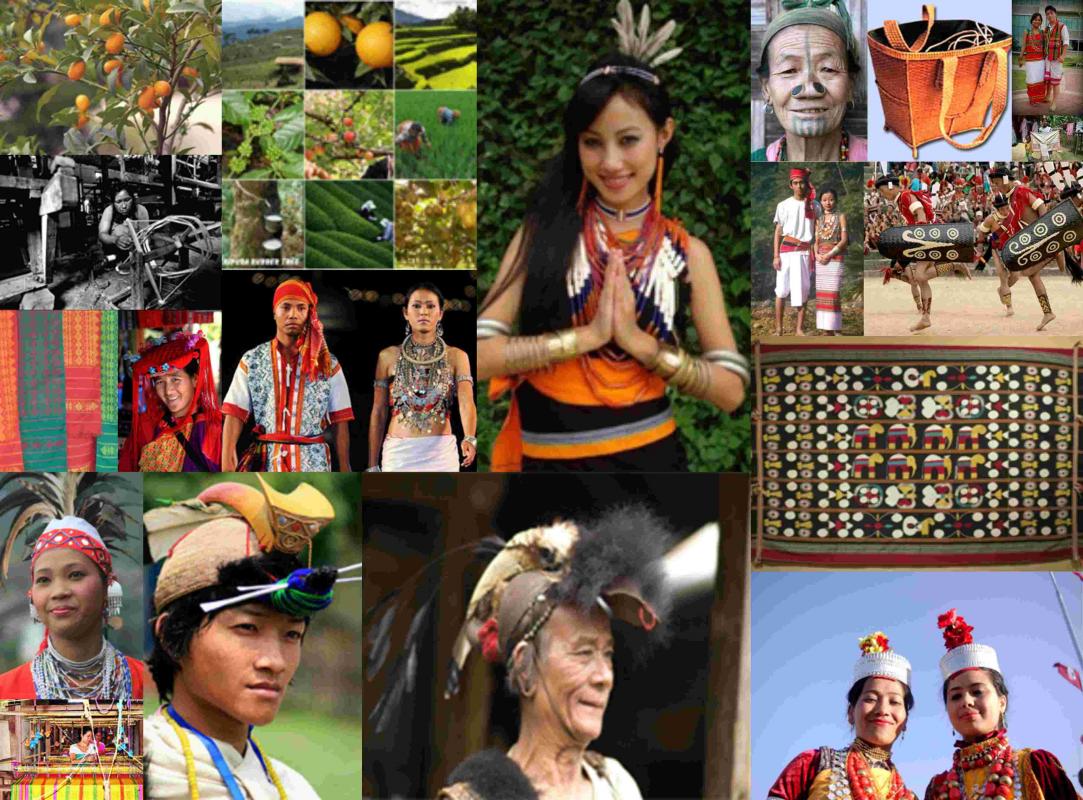
Among the major tribal groups are the Nagas, Mizos, Khasis, Garos, Jaintias, Bodos, Karbis, Mishings, Adis, Apatanis, Nyishis, Kukis, Hmars, Rabhas, Tiwas, Dimasas, Lepchas, Bhutias, and Tripuris. Numerous smaller tribes further enrich this diversity.
Despite their differences, these communities share several characteristics. Many emphasize collective ownership of resources, strong kinship networks, community cooperation, respect for elders, and close relationships with nature.
Ethnicity functions as an important source of identity. Language, traditional dress, festivals, oral histories, myths of origin, and customary laws strengthen collective consciousness. These identities often become politically significant in struggles over land rights, cultural preservation, and administrative autonomy.
Sociologists emphasize that tribal identities are dynamic rather than static. Communities continuously reinterpret traditions in response to education, urbanization, media, migration, and state policies.
Social Structure in North East India
The social structure of North East India differs significantly from the caste-centered organization found in many other regions of India. Although caste exists in parts of Assam and Tripura, especially among non-tribal populations, tribal societies generally organize themselves around kinship, clans, lineages, age groups, and village communities.
Social status often depends upon age, leadership qualities, community service, ritual knowledge, and economic contribution rather than hereditary caste hierarchy.
The family remains the fundamental unit of society. Extended families continue to play important roles in economic cooperation, child socialization, inheritance, and social security. Community life encourages collective participation in agricultural activities, festivals, rituals, and conflict resolution.
Village councils frequently regulate social behavior through customary laws. These institutions resolve disputes, allocate community resources, organize festivals, and preserve traditional norms.
Mutual cooperation forms an important feature of tribal social organization. Agricultural labor, house construction, festivals, and community welfare activities often involve collective participation rather than individual competition.
Tribe as a Social Institution
In sociological terms, a tribe represents more than an ethnic category. It constitutes a comprehensive social institution integrating kinship, economy, religion, politics, and culture.
Within tribal societies, membership provides individuals with identity, rights, responsibilities, and social security. Customary laws regulate marriage, inheritance, land ownership, conflict resolution, and religious practices.
Many tribal societies maintain clan exogamy, requiring individuals to marry outside their own clan while preserving broader tribal identity. Such practices strengthen social integration by creating networks of relationships across communities.
Tribal institutions also emphasize collective responsibility. Community members contribute labor during agricultural seasons, assist families during ceremonies, and support individuals facing hardship.
Modern education, migration, and urban employment have modified some traditional institutions, yet tribal identity remains a powerful force shaping social relationships across the region.
Kinship and Clan Organization
Kinship occupies a central position within North East Indian society. Relationships based on blood ties, marriage, and clan membership regulate social interaction throughout an individual’s life.
Clans function as extended kinship groups tracing descent from common ancestors, whether historical or mythical. Clan membership determines marriage rules, inheritance patterns, ritual responsibilities, and social obligations.
Among many communities, clan elders preserve genealogies and oral histories that reinforce collective memory. Clan identity also promotes mutual assistance during festivals, agricultural work, and conflict resolution.
Kinship networks extend beyond biological relationships to include ceremonial and ritual obligations. Such networks strengthen social solidarity while providing informal systems of welfare and social support.

The persistence of kinship institutions demonstrates that modernization does not necessarily eliminate traditional social structures. Instead, these institutions adapt to new educational, occupational, and urban contexts.
Village as the Foundation of Tribal Society
The village represents the primary unit of social organization in many parts of North East India. Traditionally, villages functioned as largely self-governing communities possessing political, economic, religious, and cultural autonomy.
Village councils managed land distribution, dispute settlement, resource conservation, ritual ceremonies, and community welfare. Leadership often depended upon customary legitimacy rather than formal state authority.
Collective labor remains an important aspect of village life. Community members cooperate during farming, road construction, house building, harvesting, and festival preparations. Such cooperation strengthens social solidarity while reducing economic inequalities.
Even today, despite increasing urbanization, village institutions continue to influence social life. Traditional councils frequently coexist with elected local governments, creating hybrid systems of governance that combine customary authority with constitutional democracy.
The village therefore remains one of the most important institutions for understanding North East Indian Sociology.
Tribal Culture and the Sociological Meaning of Culture
Culture is one of the central concepts in sociology because it shapes how individuals think, behave, communicate, and organize their social relationships. In North East India, culture is not merely a collection of customs or traditions; it is the foundation of social identity and collective existence. Every tribe possesses a distinctive cultural system that has evolved over centuries through interaction with the environment, neighboring communities, and historical experiences.
Unlike many regions where cultural homogenization has become increasingly common, the North East continues to preserve remarkable cultural diversity. Languages, oral traditions, music, dances, rituals, architecture, agricultural practices, food habits, clothing, and indigenous knowledge vary considerably from one community to another. Yet despite these differences, there exists a shared emphasis on community cooperation, respect for elders, harmony with nature, and collective responsibility.
From a sociological perspective, culture performs several essential functions. It provides norms that regulate social behavior, values that shape moral life, symbols that create collective identity, and traditions that connect present generations with their ancestors. Cultural practices also reinforce social solidarity by bringing community members together through festivals, rituals, and shared economic activities.
Modernization has undoubtedly introduced new lifestyles and technologies into the region, but cultural traditions continue to influence everyday social life. Rather than disappearing, many indigenous practices have been reinterpreted and adapted within contemporary social contexts.
Diversity of Tribal Communities
North East India is home to one of the world’s greatest concentrations of indigenous communities. More than two hundred tribes and numerous sub-tribes inhabit the region, each possessing its own language, myths of origin, social organization, customary laws, and religious beliefs.
The Naga tribes alone consist of numerous distinct communities such as the Angami, Ao, Sema (Sümi), Lotha, Konyak, Chakhesang, and Tangkhul, each with separate dialects and cultural traditions. Similarly, Mizoram includes several Mizo clans and related tribal groups, while Meghalaya is inhabited primarily by the Khasi, Garo, and Jaintia peoples. Arunachal Pradesh contains extraordinary diversity with tribes such as the Adi, Apatani, Nyishi, Monpa, Mishmi, and Galo.
Although these communities differ culturally, they share several sociological characteristics. Tribal identity is usually based upon common ancestry, territory, language, customary law, and collective memory. Social cohesion is maintained through kinship networks, clan organizations, traditional institutions, and community rituals.
Contemporary sociologists emphasize that tribal identities are neither isolated nor static. Migration, education, political mobilization, tourism, digital communication, and urbanization continuously reshape tribal identities while preserving core cultural values.
Language as a Foundation of Social Identity
Language is one of the strongest markers of identity in North East India. Hundreds of languages and dialects belonging to Tibeto-Burman, Austroasiatic, Indo-Aryan, Tai-Kadai, and Sino-Tibetan language families are spoken throughout the region.
Language performs functions far beyond communication. It preserves oral histories, folklore, songs, myths, genealogies, customary laws, ecological knowledge, and collective memory. Through language, communities transmit their cultural heritage from one generation to another.
Many tribal societies traditionally relied upon oral transmission rather than written literature. Elders narrated myths, heroic legends, migration histories, and moral stories that educated younger generations about social norms and community identity.
Missionary education played an important role in developing written forms of several tribal languages by introducing Roman scripts. Literacy expanded rapidly in many hill states, enabling the publication of literature, newspapers, dictionaries, and educational materials in indigenous languages.
However, globalization and urbanization have increased the dominance of English and regional lingua francas. Younger generations often become multilingual, balancing local languages with English and Hindi for educational and occupational opportunities. Sociologists view this multilingualism as both an opportunity and a challenge because language loss may weaken cultural continuity.
Family as the Primary Social Institution
The family remains the most fundamental institution in North East Indian society. It performs essential functions related to reproduction, socialization, economic cooperation, inheritance, emotional support, and cultural transmission.
Unlike many stereotypical representations, there is no single family pattern across the North East. Family organization varies significantly among different tribes depending upon kinship systems, inheritance rules, and customary laws.
In many tribal societies, the family extends beyond parents and children to include grandparents, uncles, aunts, cousins, and other relatives who collectively participate in child-rearing and economic activities. Extended family networks provide security during illness, agricultural work, marriage ceremonies, and periods of economic hardship.
Children grow up within strong community environments where education occurs not only through formal schools but also through observation, participation, storytelling, and communal rituals. Respect for elders, cooperation, honesty, hospitality, and responsibility are learned through everyday interaction.
Modern education, migration, and urban employment have gradually encouraged smaller nuclear families, especially in towns and cities. Nevertheless, kinship obligations remain influential even among urban households.
Kinship Systems and Social Organization
Kinship forms the backbone of tribal social organization. Sociologists consider kinship one of the oldest institutions regulating social life, marriage, inheritance, political authority, and economic cooperation.
Most tribal communities organize themselves into clans tracing descent from common ancestors. Clan membership determines marriage rules, ritual obligations, inheritance rights, and patterns of social cooperation.
One of the distinguishing features of North East India is the coexistence of both patrilineal and matrilineal systems. In patrilineal societies, descent and inheritance follow the father’s lineage. Property, clan identity, and family leadership usually pass through male descendants.
In contrast, matrilineal societies trace descent through the mother’s lineage. This system is most famously associated with the Khasi, Garo, and Jaintia communities of Meghalaya.
From a sociological perspective, these variations demonstrate that family organization is socially constructed rather than biologically predetermined. Different societies develop kinship systems that correspond to their historical, ecological, and economic circumstances.
Matriliny in Meghalaya: A Unique Social Institution
Among the most fascinating features of North East Indian Sociology is the persistence of matriliny in Meghalaya. The Khasi, Garo, and Jaintia communities practice inheritance through the female line, making them internationally recognized examples of matrilineal social organization.
In Khasi society, the youngest daughter traditionally inherits ancestral property and assumes responsibility for caring for elderly parents. Children belong to their mother’s clan, and family lineage continues through women.
However, sociologists emphasize that matriliny should not automatically be interpreted as female political domination. While women inherit property and preserve lineage, men often continue to occupy important positions within village councils, religious institutions, and community leadership.
This distinction illustrates an important sociological principle: inheritance patterns and political authority do not always coincide. Gender relations remain complex and cannot be reduced to simple categories of male or female dominance.
Modern education, urban employment, migration, and changing aspirations have generated debates regarding inheritance laws and gender equality within matrilineal societies. Some organizations advocate reforms to provide greater inheritance rights for men, while others argue for preserving traditional institutions.
Marriage and Social Relationships
Marriage occupies a central position in tribal society because it establishes alliances between families, clans, and villages. It regulates reproduction, inheritance, economic cooperation, and social status.
Most tribal communities prohibit marriage within the same clan, a practice known as clan exogamy. Exogamous marriage strengthens relationships across different kinship groups while preventing excessive concentration of lineage.
Traditional marriage ceremonies often involve elaborate rituals, community feasts, music, dance, and exchanges of symbolic gifts. Marriage is viewed not simply as a relationship between two individuals but as a social alliance involving extended families and the wider community.
Bride price rather than dowry has historically been practiced in many tribal societies. Bride price symbolizes appreciation for the woman’s contribution to her natal family rather than treating marriage as a commercial transaction. Sociologists caution against confusing bride price with the exploitative practices associated with dowry systems.
Love marriages have become increasingly common among educated youth, particularly in urban areas. Nevertheless, family approval continues to remain socially significant in most communities.
Inter-tribal and inter-religious marriages are also increasing, reflecting broader processes of social mobility, higher education, and urbanization.
Religion and Social Integration
Religion occupies a significant place in North East Indian society, although religious diversity varies considerably across states and communities.
Before the spread of organized religions, many tribes practiced indigenous belief systems centered upon nature worship, ancestor veneration, sacred forests, spirits, and ritual specialists. Mountains, rivers, forests, and agricultural cycles possessed profound religious significance.
Colonial missionary activities introduced Christianity to several tribal regions. Today, Christianity constitutes the dominant religion in Nagaland, Mizoram, and Meghalaya. Churches play important roles not only in religious life but also in education, health services, community welfare, and social organization.
Assam exhibits greater religious diversity with Hinduism, Islam, Christianity, Buddhism, Sikhism, and indigenous faith traditions coexisting within the same social landscape.
Arunachal Pradesh retains many indigenous belief systems while also witnessing the growth of Buddhism, Christianity, and Hinduism.
From a sociological perspective, religion serves multiple functions. It creates moral norms, strengthens collective identity, provides emotional support during crises, legitimizes social institutions, and organizes community festivals.
Although religious diversity occasionally generates tensions, it has more often encouraged coexistence and cultural interaction throughout the region.
Festivals and Collective Consciousness

Festivals constitute one of the strongest expressions of collective identity in North East India. Every community celebrates agricultural festivals, harvest ceremonies, religious events, seasonal transitions, and historical commemorations.
These festivals perform important sociological functions beyond entertainment. They reinforce social solidarity, preserve cultural memory, transmit traditional knowledge, and strengthen intergenerational relationships.
Community members participate collectively in dances, songs, feasts, sports, rituals, and cultural performances. Young people learn cultural traditions through active participation rather than formal instruction.
Harvest festivals illustrate the close relationship between economy, ecology, and culture. Agricultural success is celebrated collectively, emphasizing gratitude, cooperation, and communal responsibility.
Increasing tourism has transformed many traditional festivals into platforms for cultural representation and economic development. While commercialization raises concerns regarding authenticity, it also generates employment opportunities and promotes cultural visibility.
Indigenous Knowledge Systems
Indigenous knowledge forms one of the greatest intellectual resources of North East India. Over centuries, tribal communities have developed sophisticated understanding of agriculture, forestry, biodiversity, herbal medicine, architecture, water management, and environmental conservation.
This knowledge is transmitted through observation, apprenticeship, oral tradition, and community participation rather than formal educational institutions.
Traditional ecological knowledge enables communities to cultivate crops under diverse environmental conditions while maintaining ecological sustainability. Sacred groves, community forests, and customary conservation practices illustrate indigenous approaches to environmental management.
Modern sociologists increasingly recognize indigenous knowledge as an important component of sustainable development. Rather than viewing traditional practices as obstacles to modernization, contemporary scholarship emphasizes integrating scientific innovation with indigenous wisdom.
Traditional Economy and Livelihood
The economy of North East India has historically depended upon agriculture, forestry, animal husbandry, fishing, handicrafts, weaving, and local trade.
Shifting cultivation, commonly known as jhum cultivation, has traditionally supported many hill communities. Although frequently criticized as environmentally destructive, sociological research demonstrates that traditional jhum systems often maintained ecological balance when practiced under customary regulations and adequate fallow periods.
Settled agriculture dominates river valleys where rice cultivation constitutes the principal occupation. Tea plantations, horticulture, bamboo industries, fisheries, sericulture, and handicrafts contribute significantly to regional livelihoods.
Women play particularly important roles in agricultural production, weaving, food processing, and local markets. In many communities, female participation in economic activities exceeds national averages.
Modern economic development has diversified employment opportunities. Government services, education, healthcare, tourism, entrepreneurship, information technology, and small industries increasingly attract younger generations.
Nevertheless, unemployment remains a major challenge, encouraging migration toward metropolitan cities.
Gender Relations in North East Indian Society
Gender relations in North East India present a complex sociological picture that differs from many stereotypes about Indian society.
Women generally enjoy greater mobility, economic participation, and social visibility in many tribal communities compared with several patriarchal regions of South Asia. Female involvement in agriculture, trade, education, cultural activities, and community organizations has long been recognized.
The famous women-led markets of Manipur illustrate the historical economic role of women in public life. Similarly, women contribute significantly to household income through weaving, handicrafts, agriculture, and small-scale enterprises.
However, sociologists caution against idealizing gender relations. Domestic violence, political underrepresentation, unequal decision-making, and employment discrimination continue to exist in various forms. Even within matrilineal societies, political leadership often remains predominantly male.
Education, women’s organizations, legal reforms, and civil society activism have contributed to expanding gender equality across the region. Increasing numbers of women now participate in higher education, government administration, entrepreneurship, journalism, and politics.
The sociological study of gender in North East India therefore reveals both remarkable achievements and continuing challenges.
Education and Cultural Transformation
Education has become one of the most influential forces transforming North East Indian society. Missionary schools, government educational institutions, universities, and technical colleges have expanded educational opportunities across the region.
Higher literacy has encouraged social mobility, political participation, professional employment, and cultural preservation. Many educated tribal scholars actively document indigenous languages, folklore, oral traditions, and customary laws.
Education has also exposed younger generations to global ideas regarding democracy, human rights, gender equality, environmental sustainability, and technological innovation.
At the same time, sociologists note that education may generate cultural dilemmas. Young people often balance traditional expectations with modern aspirations. Migration for higher education frequently reduces opportunities for transmitting indigenous knowledge within families.
Despite these challenges, education remains one of the strongest instruments for social transformation and cultural resilience.
Tribal Culture and the Sociological Meaning of Culture
Culture is one of the central concepts in sociology because it shapes how individuals think, behave, communicate, and organize their social relationships. In North East India, culture is not merely a collection of customs or traditions; it is the foundation of social identity and collective existence. Every tribe possesses a distinctive cultural system that has evolved over centuries through interaction with the environment, neighboring communities, and historical experiences.
Unlike many regions where cultural homogenization has become increasingly common, the North East continues to preserve remarkable cultural diversity. Languages, oral traditions, music, dances, rituals, architecture, agricultural practices, food habits, clothing, and indigenous knowledge vary considerably from one community to another. Yet despite these differences, there exists a shared emphasis on community cooperation, respect for elders, harmony with nature, and collective responsibility.
From a sociological perspective, culture performs several essential functions. It provides norms that regulate social behavior, values that shape moral life, symbols that create collective identity, and traditions that connect present generations with their ancestors. Cultural practices also reinforce social solidarity by bringing community members together through festivals, rituals, and shared economic activities.
Modernization has undoubtedly introduced new lifestyles and technologies into the region, but cultural traditions continue to influence everyday social life. Rather than disappearing, many indigenous practices have been reinterpreted and adapted within contemporary social contexts.
Diversity of Tribal Communities
North East India is home to one of the world’s greatest concentrations of indigenous communities. More than two hundred tribes and numerous sub-tribes inhabit the region, each possessing its own language, myths of origin, social organization, customary laws, and religious beliefs.
The Naga tribes alone consist of numerous distinct communities such as the Angami, Ao, Sema (Sümi), Lotha, Konyak, Chakhesang, and Tangkhul, each with separate dialects and cultural traditions. Similarly, Mizoram includes several Mizo clans and related tribal groups, while Meghalaya is inhabited primarily by the Khasi, Garo, and Jaintia peoples. Arunachal Pradesh contains extraordinary diversity with tribes such as the Adi, Apatani, Nyishi, Monpa, Mishmi, and Galo.
Although these communities differ culturally, they share several sociological characteristics. Tribal identity is usually based upon common ancestry, territory, language, customary law, and collective memory. Social cohesion is maintained through kinship networks, clan organizations, traditional institutions, and community rituals.
Contemporary sociologists emphasize that tribal identities are neither isolated nor static. Migration, education, political mobilization, tourism, digital communication, and urbanization continuously reshape tribal identities while preserving core cultural values.
Language as a Foundation of Social Identity
Language is one of the strongest markers of identity in North East India. Hundreds of languages and dialects belonging to Tibeto-Burman, Austroasiatic, Indo-Aryan, Tai-Kadai, and Sino-Tibetan language families are spoken throughout the region.
Language performs functions far beyond communication. It preserves oral histories, folklore, songs, myths, genealogies, customary laws, ecological knowledge, and collective memory. Through language, communities transmit their cultural heritage from one generation to another.
Many tribal societies traditionally relied upon oral transmission rather than written literature. Elders narrated myths, heroic legends, migration histories, and moral stories that educated younger generations about social norms and community identity.
Missionary education played an important role in developing written forms of several tribal languages by introducing Roman scripts. Literacy expanded rapidly in many hill states, enabling the publication of literature, newspapers, dictionaries, and educational materials in indigenous languages.
However, globalization and urbanization have increased the dominance of English and regional lingua francas. Younger generations often become multilingual, balancing local languages with English and Hindi for educational and occupational opportunities. Sociologists view this multilingualism as both an opportunity and a challenge because language loss may weaken cultural continuity.
Family as the Primary Social Institution
The family remains the most fundamental institution in North East Indian society. It performs essential functions related to reproduction, socialization, economic cooperation, inheritance, emotional support, and cultural transmission.
Unlike many stereotypical representations, there is no single family pattern across the North East. Family organization varies significantly among different tribes depending upon kinship systems, inheritance rules, and customary laws.
In many tribal societies, the family extends beyond parents and children to include grandparents, uncles, aunts, cousins, and other relatives who collectively participate in child-rearing and economic activities. Extended family networks provide security during illness, agricultural work, marriage ceremonies, and periods of economic hardship.
Children grow up within strong community environments where education occurs not only through formal schools but also through observation, participation, storytelling, and communal rituals. Respect for elders, cooperation, honesty, hospitality, and responsibility are learned through everyday interaction.
Modern education, migration, and urban employment have gradually encouraged smaller nuclear families, especially in towns and cities. Nevertheless, kinship obligations remain influential even among urban households.
Kinship Systems and Social Organization
Kinship forms the backbone of tribal social organization. Sociologists consider kinship one of the oldest institutions regulating social life, marriage, inheritance, political authority, and economic cooperation.
Most tribal communities organize themselves into clans tracing descent from common ancestors. Clan membership determines marriage rules, ritual obligations, inheritance rights, and patterns of social cooperation.
One of the distinguishing features of North East India is the coexistence of both patrilineal and matrilineal systems. In patrilineal societies, descent and inheritance follow the father’s lineage. Property, clan identity, and family leadership usually pass through male descendants.
In contrast, matrilineal societies trace descent through the mother’s lineage. This system is most famously associated with the Khasi, Garo, and Jaintia communities of Meghalaya.
From a sociological perspective, these variations demonstrate that family organization is socially constructed rather than biologically predetermined. Different societies develop kinship systems that correspond to their historical, ecological, and economic circumstances.
Matriliny in Meghalaya: A Unique Social Institution
Among the most fascinating features of North East Indian Sociology is the persistence of matriliny in Meghalaya. The Khasi, Garo, and Jaintia communities practice inheritance through the female line, making them internationally recognized examples of matrilineal social organization.
In Khasi society, the youngest daughter traditionally inherits ancestral property and assumes responsibility for caring for elderly parents. Children belong to their mother’s clan, and family lineage continues through women.
However, sociologists emphasize that matriliny should not automatically be interpreted as female political domination. While women inherit property and preserve lineage, men often continue to occupy important positions within village councils, religious institutions, and community leadership.
This distinction illustrates an important sociological principle: inheritance patterns and political authority do not always coincide. Gender relations remain complex and cannot be reduced to simple categories of male or female dominance.
Modern education, urban employment, migration, and changing aspirations have generated debates regarding inheritance laws and gender equality within matrilineal societies. Some organizations advocate reforms to provide greater inheritance rights for men, while others argue for preserving traditional institutions.
Marriage and Social Relationships
Marriage occupies a central position in tribal society because it establishes alliances between families, clans, and villages. It regulates reproduction, inheritance, economic cooperation, and social status.
Most tribal communities prohibit marriage within the same clan, a practice known as clan exogamy. Exogamous marriage strengthens relationships across different kinship groups while preventing excessive concentration of lineage.
Traditional marriage ceremonies often involve elaborate rituals, community feasts, music, dance, and exchanges of symbolic gifts. Marriage is viewed not simply as a relationship between two individuals but as a social alliance involving extended families and the wider community.
Bride price rather than dowry has historically been practiced in many tribal societies. Bride price symbolizes appreciation for the woman’s contribution to her natal family rather than treating marriage as a commercial transaction. Sociologists caution against confusing bride price with the exploitative practices associated with dowry systems.
Love marriages have become increasingly common among educated youth, particularly in urban areas. Nevertheless, family approval continues to remain socially significant in most communities.
Inter-tribal and inter-religious marriages are also increasing, reflecting broader processes of social mobility, higher education, and urbanization.
Religion and Social Integration
Religion occupies a significant place in North East Indian society, although religious diversity varies considerably across states and communities.
Before the spread of organized religions, many tribes practiced indigenous belief systems centered upon nature worship, ancestor veneration, sacred forests, spirits, and ritual specialists. Mountains, rivers, forests, and agricultural cycles possessed profound religious significance.
Colonial missionary activities introduced Christianity to several tribal regions. Today, Christianity constitutes the dominant religion in Nagaland, Mizoram, and Meghalaya. Churches play important roles not only in religious life but also in education, health services, community welfare, and social organization.
Assam exhibits greater religious diversity with Hinduism, Islam, Christianity, Buddhism, Sikhism, and indigenous faith traditions coexisting within the same social landscape.
Arunachal Pradesh retains many indigenous belief systems while also witnessing the growth of Buddhism, Christianity, and Hinduism.
From a sociological perspective, religion serves multiple functions. It creates moral norms, strengthens collective identity, provides emotional support during crises, legitimizes social institutions, and organizes community festivals.
Although religious diversity occasionally generates tensions, it has more often encouraged coexistence and cultural interaction throughout the region.
Festivals and Collective Consciousness
Festivals constitute one of the strongest expressions of collective identity in North East India. Every community celebrates agricultural festivals, harvest ceremonies, religious events, seasonal transitions, and historical commemorations.
These festivals perform important sociological functions beyond entertainment. They reinforce social solidarity, preserve cultural memory, transmit traditional knowledge, and strengthen intergenerational relationships.
Community members participate collectively in dances, songs, feasts, sports, rituals, and cultural performances. Young people learn cultural traditions through active participation rather than formal instruction.
Harvest festivals illustrate the close relationship between economy, ecology, and culture. Agricultural success is celebrated collectively, emphasizing gratitude, cooperation, and communal responsibility.
Increasing tourism has transformed many traditional festivals into platforms for cultural representation and economic development. While commercialization raises concerns regarding authenticity, it also generates employment opportunities and promotes cultural visibility.
Indigenous Knowledge Systems
Indigenous knowledge forms one of the greatest intellectual resources of North East India. Over centuries, tribal communities have developed sophisticated understanding of agriculture, forestry, biodiversity, herbal medicine, architecture, water management, and environmental conservation.
This knowledge is transmitted through observation, apprenticeship, oral tradition, and community participation rather than formal educational institutions.
Traditional ecological knowledge enables communities to cultivate crops under diverse environmental conditions while maintaining ecological sustainability. Sacred groves, community forests, and customary conservation practices illustrate indigenous approaches to environmental management.
Modern sociologists increasingly recognize indigenous knowledge as an important component of sustainable development. Rather than viewing traditional practices as obstacles to modernization, contemporary scholarship emphasizes integrating scientific innovation with indigenous wisdom.
Traditional Economy and Livelihood
The economy of North East India has historically depended upon agriculture, forestry, animal husbandry, fishing, handicrafts, weaving, and local trade.
Shifting cultivation, commonly known as jhum cultivation, has traditionally supported many hill communities. Although frequently criticized as environmentally destructive, sociological research demonstrates that traditional jhum systems often maintained ecological balance when practiced under customary regulations and adequate fallow periods.
Settled agriculture dominates river valleys where rice cultivation constitutes the principal occupation. Tea plantations, horticulture, bamboo industries, fisheries, sericulture, and handicrafts contribute significantly to regional livelihoods.
Women play particularly important roles in agricultural production, weaving, food processing, and local markets. In many communities, female participation in economic activities exceeds national averages.
Modern economic development has diversified employment opportunities. Government services, education, healthcare, tourism, entrepreneurship, information technology, and small industries increasingly attract younger generations.
Nevertheless, unemployment remains a major challenge, encouraging migration toward metropolitan cities.
Gender Relations in North East Indian Society
Gender relations in North East India present a complex sociological picture that differs from many stereotypes about Indian society.
Women generally enjoy greater mobility, economic participation, and social visibility in many tribal communities compared with several patriarchal regions of South Asia. Female involvement in agriculture, trade, education, cultural activities, and community organizations has long been recognized.
The famous women-led markets of Manipur illustrate the historical economic role of women in public life. Similarly, women contribute significantly to household income through weaving, handicrafts, agriculture, and small-scale enterprises.
However, sociologists caution against idealizing gender relations. Domestic violence, political underrepresentation, unequal decision-making, and employment discrimination continue to exist in various forms. Even within matrilineal societies, political leadership often remains predominantly male.
Education, women’s organizations, legal reforms, and civil society activism have contributed to expanding gender equality across the region. Increasing numbers of women now participate in higher education, government administration, entrepreneurship, journalism, and politics.
The sociological study of gender in North East India therefore reveals both remarkable achievements and continuing challenges.
Education and Cultural Transformation
Education has become one of the most influential forces transforming North East Indian society. Missionary schools, government educational institutions, universities, and technical colleges have expanded educational opportunities across the region.
Higher literacy has encouraged social mobility, political participation, professional employment, and cultural preservation. Many educated tribal scholars actively document indigenous languages, folklore, oral traditions, and customary laws.
Education has also exposed younger generations to global ideas regarding democracy, human rights, gender equality, environmental sustainability, and technological innovation.
At the same time, sociologists note that education may generate cultural dilemmas. Young people often balance traditional expectations with modern aspirations. Migration for higher education frequently reduces opportunities for transmitting indigenous knowledge within families.
Despite these challenges, education remains one of the strongest instruments for social transformation and cultural resilience.
Conclusion of Part 2
The cultural foundations of North East Indian society reveal an extraordinary diversity of social institutions, languages, kinship systems, religious traditions, and indigenous knowledge. Families, clans, festivals, customary laws, and community organizations continue to provide social cohesion even as modernization reshapes everyday life.
Rather than existing in isolation, the societies of North East India continuously negotiate tradition and change. Education, economic development, religious transformation, urbanization, and globalization have introduced new opportunities while simultaneously raising important questions regarding cultural preservation and identity. These processes demonstrate that tribal societies are dynamic, adaptive, and capable of integrating innovation without completely abandoning their cultural heritage.
In Part 3, we will examine the major forces of social change in North East India, including modernization, urbanization, migration, insurgency, ethnic identity movements, environmental issues, development policies, globalization, digital transformation, contemporary sociological challenges, and the future of North East Indian society.
Part 3
North East Indian Sociology: Society, Culture, Tribes and Social Change (Part 3)
Social Change in North East India
Social change refers to the transformation of social institutions, cultural practices, values, relationships, and patterns of social organization over time. In North East India, social change has been rapid, multidimensional, and often uneven. Traditional tribal societies that were once relatively isolated have increasingly become connected with national and global economic, political, and cultural processes.
The transformation of North East Indian society cannot be attributed to a single factor. Colonial administration, missionary education, democratic governance, infrastructure development, urbanization, market expansion, digital technology, migration, and globalization have collectively reshaped social life. While many traditional institutions continue to exist, they now operate alongside modern legal systems, educational institutions, political organizations, and market economies.
From a sociological perspective, North East India illustrates how societies negotiate continuity and change simultaneously. Traditional customs are not simply disappearing; rather, they are being adapted, reinterpreted, and incorporated into new social realities. This dynamic interaction between tradition and modernity forms one of the defining characteristics of contemporary North East Indian sociology.
Modernization and Transformation of Tribal Society
Modernization has profoundly influenced the social organization of North East India. The expansion of roads, communication networks, healthcare, education, banking, and administrative institutions has reduced geographical isolation and increased interaction with the rest of India and the wider world.
Educational opportunities have enabled young people to pursue careers in government services, private enterprises, research, technology, and entrepreneurship. Modern occupations have gradually reduced dependence on subsistence agriculture in many communities.
Modernization has also transformed family structures. Extended families increasingly coexist with nuclear households, particularly in urban areas. Decision-making within families has become more participatory as education expands and women gain greater access to employment and public life.
Consumer culture has also become more visible. Mobile phones, social media, online shopping, digital banking, and global entertainment have altered patterns of communication and consumption. Young people today often combine traditional cultural practices with modern lifestyles, creating hybrid forms of identity.
Despite these changes, modernization has not completely displaced indigenous institutions. Traditional councils, customary laws, community festivals, and kinship networks continue to influence social life, demonstrating that modernization does not necessarily eliminate cultural traditions.
Urbanization and Changing Social Relations
Urbanization has become one of the most significant drivers of social transformation in the North East. Cities such as Guwahati, Shillong, Imphal, Aizawl, Kohima, Agartala, Gangtok, and Itanagar have experienced considerable population growth due to educational opportunities, government employment, trade, and improved infrastructure.
Urban life differs markedly from traditional village society. In villages, social relationships are largely based on kinship, clan membership, and community participation. In urban areas, relationships become more occupational, educational, and professional.
Urbanization has encouraged greater social mobility. Individuals increasingly define themselves through educational qualifications, occupations, and personal achievements rather than solely through tribal identity or lineage.
At the same time, urbanization presents new sociological challenges. Housing shortages, unemployment, traffic congestion, environmental pollution, and inequalities in access to services have emerged in many growing towns.
Urban migration also affects village life. Young people leaving rural communities for education and employment may weaken traditional institutions and reduce participation in customary practices. However, they also contribute remittances, new ideas, and technological knowledge that support rural development.
Thus, urbanization represents both an opportunity for economic advancement and a challenge to traditional patterns of community life.
Education and Social Mobility
Education has become one of the most powerful instruments of social mobility in North East India. Schools, colleges, universities, and technical institutions have significantly expanded educational access across the region.
Missionary institutions historically played a pioneering role in promoting literacy, especially among tribal communities. Today, public and private educational institutions continue to contribute to human resource development.
Education has influenced society in several important ways. It has encouraged critical thinking, increased political awareness, promoted gender equality, expanded employment opportunities, and facilitated participation in democratic governance.
Young people from remote villages now pursue higher education in metropolitan cities across India and abroad. Many return as teachers, doctors, engineers, civil servants, entrepreneurs, researchers, and social activists, contributing to regional development.
However, educational inequality remains a concern. Remote mountainous regions often face shortages of qualified teachers, infrastructure, digital connectivity, and higher educational institutions. Sociologists therefore argue that improving educational equity remains essential for inclusive social development.
Migration and Demographic Change
Migration has long shaped the social history of North East India. Historical migrations contributed to the remarkable ethnic diversity that characterizes the region today. In the modern period, migration continues to influence demographic patterns, economic development, and identity politics.
Internal migration occurs when young people move from villages to urban centers for education or employment. External migration includes movement to metropolitan cities such as Delhi, Bengaluru, Mumbai, Kolkata, Hyderabad, and Pune.
Migration provides economic opportunities but also generates challenges. Migrants often encounter cultural adjustment, discrimination, language barriers, and separation from traditional support networks.
The North East has also experienced immigration from neighboring regions during different historical periods. These demographic changes have influenced debates regarding citizenship, land rights, employment, political representation, and cultural identity.
Sociologists emphasize that migration should be understood not merely as population movement but as a process that reshapes family relationships, gender roles, economic structures, and collective identities.
Ethnicity and Identity Politics
Ethnicity occupies a central position in North East Indian sociology. Unlike caste, which dominates many parts of mainland India, ethnic identity often serves as the primary basis of political mobilization and social organization in the North East.
Ethnic identity is constructed through shared ancestry, language, territory, cultural practices, historical memory, and collective experiences. These identities strengthen community solidarity while preserving indigenous traditions.
Since Independence, several communities have organized movements seeking greater autonomy, recognition, cultural preservation, and political representation. Some movements demanded separate states, while others advocated autonomous district councils or constitutional safeguards.
The creation of new states such as Nagaland, Meghalaya, Mizoram, Arunachal Pradesh, and later the inclusion of Sikkim into the Indian Union reflected efforts to accommodate regional aspirations within India’s federal framework.
Contemporary identity politics continues to revolve around issues of land ownership, language preservation, cultural rights, resource distribution, and administrative autonomy.
From a sociological perspective, identity movements are not merely expressions of conflict but also attempts to secure recognition, dignity, and self-determination within a plural democratic society.
Insurgency and Society
One of the defining themes in the sociology of North East India is the relationship between insurgency and society. Several parts of the region have experienced insurgent movements since Independence, arising from a complex combination of historical, political, ethnic, economic, and administrative factors.
Sociologists avoid reducing insurgency to a single cause. Colonial boundaries, perceptions of political marginalization, competition over resources, demands for autonomy, ethnic identity, unemployment, and uneven development have all contributed to different movements across the region.
The social consequences of prolonged conflict have been significant. Violence, displacement, militarization, disruption of education, psychological trauma, and reduced investment have affected many communities.
At the same time, civil society organizations, churches, student unions, women’s groups, and community leaders have played vital roles in peacebuilding, dialogue, and reconciliation.
Recent peace agreements, infrastructure development, and democratic participation have contributed to improving stability in many areas. Nevertheless, sociologists emphasize that sustainable peace requires inclusive development, cultural recognition, equitable governance, and continued dialogue among all stakeholders.
Globalization and Cultural Change
Globalization has accelerated cultural transformation throughout North East India. Satellite television, smartphones, internet connectivity, digital platforms, tourism, international education, and global markets have expanded interactions beyond regional boundaries.
Young people increasingly participate in global cultural trends while simultaneously celebrating indigenous traditions. Western music, Korean popular culture, international fashion, and digital entertainment coexist with traditional dances, folk songs, festivals, and community rituals.
Globalization has also created new economic opportunities. Tourism, handicrafts, organic agriculture, music, fashion design, and digital entrepreneurship have gained increasing prominence.
However, globalization also raises concerns regarding cultural homogenization. Indigenous languages, traditional crafts, oral histories, and customary knowledge may decline if younger generations become disconnected from their cultural heritage.
Many communities have therefore adopted strategies of cultural revitalization by documenting folklore, promoting indigenous languages in schools, organizing cultural festivals, and using digital media to preserve traditional knowledge.
Environmental Sociology of North East India
The relationship between society and the environment occupies a central place in North East Indian sociology. The region contains some of India’s richest biodiversity, dense forests, river systems, wetlands, and mountain ecosystems.
Traditional tribal societies have historically maintained close ecological relationships with nature. Forests, rivers, hills, and wildlife possess not only economic value but also religious and cultural significance.
Community-based resource management has long characterized many indigenous societies. Sacred groves, customary forest regulations, and collective ownership systems contributed to environmental conservation.
Rapid development, however, has introduced new environmental challenges. Deforestation, infrastructure projects, mining, river erosion, floods, landslides, climate change, and urban expansion threaten ecological sustainability.
Sociologists emphasize that environmental problems cannot be understood solely through scientific analysis. They are also social issues involving governance, economic development, indigenous rights, public participation, and environmental justice.
Integrating indigenous ecological knowledge with modern environmental planning has become increasingly important for sustainable development.
Economic Development and Social Inequality
Although North East India has made substantial progress in infrastructure, education, healthcare, and communication, economic development remains uneven across the region.
Agriculture continues to employ a significant proportion of the population, while government employment remains a major source of income in several states. Tourism, horticulture, handicrafts, bamboo industries, information technology, renewable energy, and entrepreneurship are emerging sectors.
Economic inequalities persist between urban and rural areas, as well as among different communities. Remote villages often face limited market access, inadequate transportation, and fewer employment opportunities.
Youth unemployment has become one of the major sociological concerns. Many educated young people migrate outside the region in search of employment, contributing to demographic and social changes.
Inclusive economic development requires investment in education, skill development, infrastructure, digital connectivity, sustainable industries, and local entrepreneurship while respecting indigenous land rights and ecological sustainability.
Women and Contemporary Social Change
Women have played an increasingly significant role in shaping contemporary North East Indian society. Higher education, employment, political participation, civil society activism, and entrepreneurship have expanded opportunities for women across the region.
Women’s organizations have contributed to peacebuilding, environmental conservation, education, healthcare, and social justice. In several communities, women continue to play central roles in agriculture, local markets, handicrafts, and household management.
Nevertheless, challenges remain. Gender-based violence, limited political representation in certain institutions, wage disparities, and unequal access to leadership positions continue to affect many women.
Sociologists argue that genuine gender equality requires not only legal reforms but also transformation of social attitudes, educational opportunities, and institutional practices.
The experience of North East India demonstrates that traditional societies can evolve toward greater gender inclusion while preserving cultural identity.
Digital Society and Youth Culture
Digital technology has transformed communication, education, commerce, and political participation throughout North East India.
Social media platforms enable young people to express cultural identity, organize community initiatives, promote local tourism, market handicrafts, and participate in national conversations. Digital platforms have also become important tools for preserving indigenous languages and documenting cultural traditions.
Online education expanded significantly after the COVID-19 pandemic, although digital inequality remains evident in remote regions with limited internet connectivity.
Youth culture increasingly reflects both global influences and local traditions. Music festivals, digital content creation, fashion, sports, and entrepreneurship demonstrate how younger generations negotiate multiple identities in an interconnected world.
Digital transformation has therefore become an important field of sociological research, illustrating how technology reshapes social interaction without entirely replacing traditional institutions.
Government Policies and Tribal Development
The Constitution of India provides several safeguards for tribal communities in the North East. Autonomous District Councils, provisions under the Sixth Schedule, reservation policies, tribal welfare programs, and cultural preservation initiatives aim to protect indigenous rights and promote inclusive development.
Government investment in roads, healthcare, education, telecommunications, and rural development has improved living conditions in many regions. Programs promoting skill development, entrepreneurship, women’s empowerment, and sustainable livelihoods have also expanded.
However, sociologists point out that development projects must balance economic growth with cultural preservation and environmental sustainability. Policies designed without meaningful community participation may generate resistance or unintended social consequences.
Participatory governance, respect for customary institutions, and dialogue with local communities remain essential for successful development planning.
Contemporary Challenges
Despite remarkable progress, North East India continues to face several sociological challenges.
Rapid urbanization has created pressure on infrastructure and public services. Youth unemployment contributes to migration and economic uncertainty. Environmental degradation threatens biodiversity and traditional livelihoods. Language loss raises concerns regarding cultural continuity. Identity politics occasionally generates social tensions, while unequal access to education and healthcare persists in remote regions.
Climate change has intensified floods, landslides, and ecological vulnerability, affecting agriculture and rural communities. Digital inequality also remains a barrier to inclusive development.
Addressing these challenges requires interdisciplinary approaches combining sociology, economics, political science, environmental studies, anthropology, and public policy.
Future of North East Indian Society
The future of North East India will be shaped by its ability to balance tradition with modernization, economic development with ecological sustainability, and cultural diversity with national integration.
Education, digital innovation, sustainable tourism, renewable energy, entrepreneurship, cultural industries, and regional cooperation with neighboring countries present significant opportunities for inclusive growth.
The preservation of indigenous languages, customary institutions, oral traditions, and ecological knowledge will remain essential for maintaining cultural diversity. At the same time, democratic governance, gender equality, youth participation, and technological advancement can strengthen social resilience.
North East India demonstrates that development need not require the abandonment of cultural identity. Instead, societies can innovate while preserving the values and institutions that define their collective heritage.
Conclusion
North East Indian Sociology offers one of the richest and most dynamic fields within Indian sociological studies. The region’s extraordinary ethnic diversity, tribal institutions, kinship systems, linguistic plurality, religious traditions, and ecological relationships provide invaluable insights into the complexity of human society.
Unlike conventional narratives centered primarily on caste, North East India reveals alternative forms of social organization based on clans, customary laws, village councils, collective ownership, and indigenous governance. These institutions continue to shape social life even as modernization, education, urbanization, migration, globalization, and digital technology transform everyday experiences.
The sociology of the region also highlights the importance of understanding identity, ethnicity, conflict, development, and environmental sustainability as interconnected social processes. Issues such as insurgency, migration, gender equality, urban growth, and climate change cannot be understood in isolation; they are deeply embedded within historical, political, economic, and cultural contexts.
Ultimately, North East India stands as a remarkable example of resilience and adaptation. Its communities have preserved rich cultural traditions while embracing educational advancement, democratic participation, technological innovation, and economic development. For sociologists, policymakers, educators, and students, the region offers profound lessons on diversity, coexistence, social transformation, and the enduring strength of indigenous institutions.
As India continues to evolve in the twenty-first century, the experiences of North East India remind us that genuine development must respect cultural pluralism, promote social justice, protect ecological resources, and empower communities to shape their own futures. Understanding North East Indian Sociology is therefore not only essential for comprehending one region of the country but also for appreciating the broader dynamics of social change in contemporary India.
FAQs
1. What is North East Indian Sociology?
North East Indian Sociology is the branch of sociology that studies the society, culture, tribes, kinship systems, ethnic identities, social institutions, and processes of social change in the eight northeastern states of India.
2. Why is North East Indian Sociology important?
North East Indian Sociology is important because it helps explain the unique social structures, tribal traditions, cultural diversity, and contemporary challenges of one of India’s most ethnically diverse regions.
3. Which states are included in North East Indian Sociology?
North East Indian Sociology covers Arunachal Pradesh, Assam, Manipur, Meghalaya, Mizoram, Nagaland, Sikkim, and Tripura.
4. What are the main features of North East Indian Sociology?
The major features of North East Indian Sociology include tribal social organization, kinship systems, ethnic diversity, customary laws, indigenous cultures, linguistic diversity, and rapid social transformation.
5. How is North East Indian Sociology different from mainstream Indian sociology?
Unlike mainstream Indian sociology, which often focuses on caste, North East Indian Sociology primarily examines tribes, clans, ethnicity, customary institutions, indigenous governance, and borderland societies.
6. What role do tribes play in North East Indian Sociology?
Tribes are the foundation of North East Indian Sociology, influencing social organization, cultural identity, marriage systems, political institutions, land ownership, and community life.
7. How does culture influence North East Indian Sociology?
Culture shapes North East Indian Sociology through language, festivals, religion, oral traditions, music, dance, customary laws, food habits, and traditional ecological knowledge.
8. What is the significance of kinship in North East Indian Sociology?
Kinship is a key institution in North East Indian Sociology, regulating family relationships, inheritance, marriage, clan identity, and social responsibilities.
9. How has modernization affected North East Indian Sociology?
Modernization has transformed North East Indian Sociology by expanding education, urbanization, employment opportunities, digital communication, and infrastructure while also reshaping traditional social institutions.
10. Why is ethnicity important in North East Indian Sociology?
Ethnicity is central to North East Indian Sociology because it influences identity, political movements, language preservation, cultural rights, and community solidarity.
11. What are the major social challenges in North East Indian Sociology?
Important challenges in North East Indian Sociology include unemployment, migration, environmental degradation, identity politics, cultural preservation, urbanization, and unequal development.
12. How does globalization impact North East Indian Sociology?
Globalization affects North East Indian Sociology by introducing new educational opportunities, digital technology, tourism, entrepreneurship, and global cultural influences while also creating concerns about cultural preservation.
13. What is the role of women in North East Indian Sociology?
Women contribute significantly to North East Indian Sociology through agriculture, trade, education, entrepreneurship, community leadership, and cultural preservation, with some societies practicing matriliny.
14. Why is North East Indian Sociology important for sociology students?
Studying North East Indian Sociology helps sociology students understand tribal societies, indigenous institutions, social change, identity politics, borderland studies, and cultural diversity in India.
15. What is the future of North East Indian Sociology?
The future of North East Indian Sociology lies in balancing cultural preservation with modernization, sustainable development, digital transformation, inclusive governance, and indigenous rights.