
Education and Social Mobility in Ohio is one of the most significant topics in contemporary sociology because it demonstrates how educational opportunities shape economic success, social status, and life chances. Ohio, located in the American Midwest, has historically been known for its manufacturing industries, strong public education system, and prestigious universities. However, globalization, industrial decline, demographic changes, and economic restructuring have transformed the relationship between education and social mobility across the state.
Education has traditionally been regarded as the “great equalizer” in American society. Sociologists argue that schools provide individuals with knowledge, skills, and credentials necessary for upward social mobility. Yet, unequal access to quality education often reproduces existing social inequalities instead of eliminating them. Ohio presents an interesting case where excellent universities coexist with struggling school districts, creating contrasting educational experiences for students from different socioeconomic backgrounds.

This article examines Education and Social Mobility in Ohio from a sociological perspective by analyzing educational inequality, family background, race, class, rural-urban differences, higher education, public policy, labor market transformations, and future challenges.
Understanding Education and Social Mobility in Ohio
Social mobility refers to the movement of individuals or families from one social class to another. It may occur upward, downward, or across occupational categories. Education is considered one of the strongest determinants of upward mobility because it enhances human capital, increases employability, and improves earning potential.
In sociology, education serves multiple purposes. It transmits knowledge, develops social skills, promotes civic participation, and prepares individuals for occupational roles. At the same time, educational institutions often reflect broader social inequalities related to income, race, gender, and geography.
Ohio’s educational landscape illustrates this dual role. While many students successfully use education to improve their socioeconomic status, others encounter structural barriers that limit their opportunities.
Ohio’s Educational Landscape
Ohio has one of the largest public education systems in the United States. The state includes urban school districts in cities such as Columbus, Cleveland, Cincinnati, Toledo, Akron, and Dayton, alongside numerous suburban and rural districts.
Ohio also hosts nationally recognized universities, including:
- The Ohio State University
- Case Western Reserve University
- University of Cincinnati
- Miami University
- Ohio University
- Kent State University
These institutions contribute significantly to workforce development, research, innovation, and economic growth.
Despite these strengths, educational quality varies substantially across school districts due to differences in local funding, tax revenues, and community resources.
Education as Human Capital
Human Capital Theory argues that education increases individuals’ productivity, leading to higher wages and improved employment opportunities.
Ohio’s economy has shifted from traditional manufacturing toward healthcare, technology, logistics, finance, education, and advanced manufacturing. Modern industries increasingly require specialized skills, making higher education and technical training more important than ever.
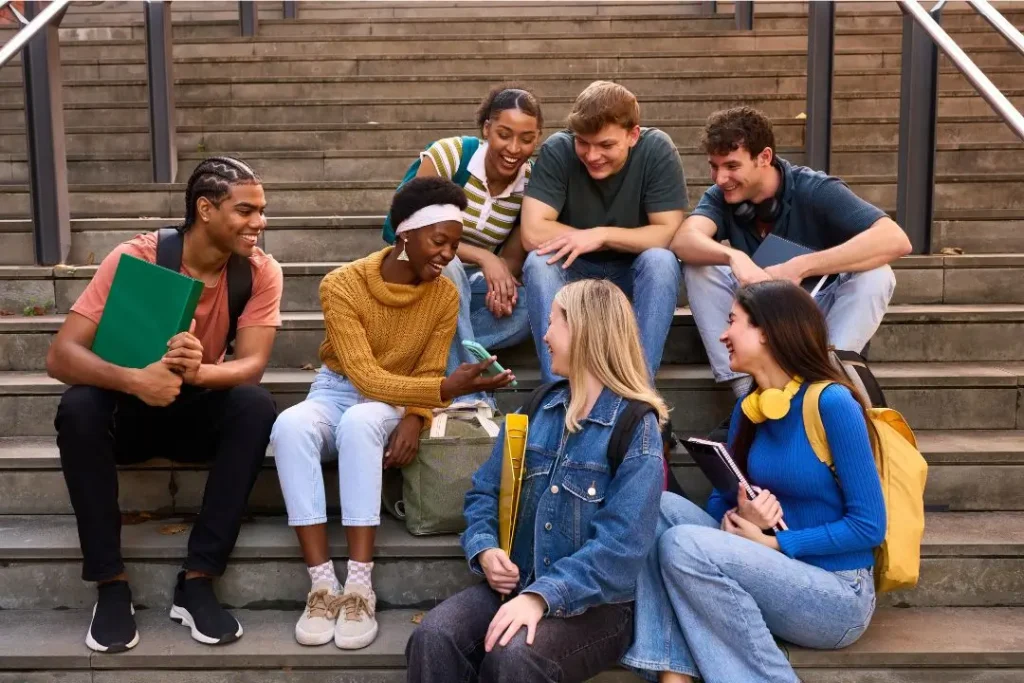
Students who complete college degrees generally experience:
- Higher lifetime earnings
- Lower unemployment
- Better occupational status
- Improved health outcomes
- Greater civic participation
Consequently, education remains one of the strongest pathways toward upward social mobility in Ohio.
Functionalist Perspective
Functionalist sociologists such as Émile Durkheim and Talcott Parsons viewed education as a mechanism that promotes social integration and meritocracy.
According to functionalism, Ohio’s educational institutions perform several important functions:
Schools teach shared values and civic responsibility.
Students acquire occupational skills required by employers.
Educational credentials help allocate individuals into suitable careers.
Schools promote social cohesion by integrating diverse populations.
From this viewpoint, educational success depends primarily on talent, effort, and achievement.
However, sociologists acknowledge that equal opportunities are not always available to all students.
Conflict Theory and Educational Inequality
Conflict theorists such as Karl Marx and Pierre Bourdieu argue that education often reproduces social inequality rather than reducing it.
In Ohio, wealthier communities frequently possess:
- Better-funded schools
- Modern facilities
- Smaller classrooms
- Advanced Placement courses
- Experienced teachers
- Greater extracurricular opportunities
Conversely, economically disadvantaged districts may struggle with limited funding, aging infrastructure, higher teacher turnover, and fewer academic resources.
These disparities influence educational achievement and future career opportunities, reinforcing existing class differences.
Social Class and Educational Achievement
Family socioeconomic status remains one of the strongest predictors of educational success in Ohio.
Children from affluent households often benefit from:
Highly educated parents
Private tutoring
Educational technology
Stable housing
Books and learning materials
Safe neighborhoods
College preparation programs
Meanwhile, low-income families may experience:
Financial stress
Food insecurity
Housing instability
Limited internet access
Transportation difficulties
Reduced educational support
These structural inequalities affect academic performance long before students enter college.
Cultural Capital and Educational Success
Pierre Bourdieu’s concept of cultural capital explains why children from privileged families often perform better academically.
Cultural capital includes:
Language skills
Communication styles
Educational expectations
Knowledge of academic culture
Participation in cultural activities
Professional social networks
Many middle-class families in Ohio possess educational resources that align closely with school expectations. Their children therefore find it easier to navigate educational systems.
Students from disadvantaged backgrounds may possess valuable skills but lack the cultural resources that schools reward most heavily.
Rural and Urban Educational Differences
Ohio contains both highly urbanized metropolitan regions and extensive rural communities.
Urban districts often offer:
Specialized academic programs
Magnet schools
Career academies
Large extracurricular opportunities
Advanced technology
However, urban schools may also face challenges such as concentrated poverty, overcrowding, and residential segregation.
Rural schools encounter different issues.
Many rural communities experience:
Population decline
Teacher shortages
Limited course offerings
Long transportation distances
Restricted broadband access
Fewer Advanced Placement classes
These geographic inequalities significantly influence educational outcomes.
Race, Ethnicity, and Educational Opportunity
Racial inequality continues to influence educational experiences throughout Ohio.
African American, Hispanic, and some immigrant communities often attend schools with fewer financial resources due to historical patterns of residential segregation and economic inequality.
Educational disparities appear in:
Graduation rates
Standardized test performance
College enrollment
Advanced coursework participation
School disciplinary actions
Although many schools have implemented equity initiatives, sociologists argue that broader structural inequalities continue to shape educational opportunities.
Gender and Educational Mobility

Gender patterns in Ohio have evolved considerably.
Women now enroll in colleges at higher rates than previous generations and increasingly enter professional occupations.
However, gender inequalities persist in fields such as engineering, computer science, and advanced manufacturing.
Men from economically disadvantaged backgrounds have experienced declining college enrollment in some regions following manufacturing job losses.
Understanding gender requires examining its interaction with class, race, and geography rather than treating it as an isolated factor.
Higher Education and Economic Mobility
Higher education remains central to upward mobility in Ohio.
A college degree increases opportunities in:
Healthcare
Engineering
Education
Business
Information Technology
Public Administration
Scientific research
However, rising tuition costs have created financial barriers for many students.
Student loans may delay:
Home ownership
Marriage
Business creation
Family formation
Wealth accumulation
These financial burdens disproportionately affect first-generation college students.
Community Colleges and Workforce Development
Community colleges play an essential role in Ohio’s educational system.
They provide affordable pathways to higher education through:
Associate degrees
Technical certifications
Skilled trades
Healthcare training
Manufacturing technology
Business education
Many students later transfer to four-year universities while others directly enter the labor market.
Community colleges have become important instruments for promoting educational accessibility and economic mobility.
Vocational Education and Skilled Trades
Not every pathway to mobility requires a four-year degree.
Ohio has expanded career and technical education in areas including:
Advanced manufacturing
Construction
Automotive technology
Healthcare
Information technology
Robotics
Logistics
These programs align education with labor market needs and provide strong employment opportunities.
Sociologists increasingly recognize vocational education as an important form of social mobility.
Digital Divide and Educational Access
Technology has become fundamental to modern education.
However, digital inequality persists across Ohio.
Students without reliable internet access or computers face disadvantages in:
Online learning
Homework completion
Research
College applications
Digital literacy
The COVID-19 pandemic highlighted how unequal technology access can widen educational disparities.
Bridging the digital divide remains an important policy objective.
Immigration and Educational Mobility
Although Ohio has a smaller immigrant population than some coastal states, immigration has contributed to educational diversity.
Children from immigrant families often encounter challenges including:
Language barriers
Cultural adjustment
Limited family familiarity with American education
Economic hardship
Despite these challenges, many immigrant families strongly emphasize education as a means of upward mobility.
Their experiences demonstrate the importance of social support and educational opportunity.
Education and Labor Market Transformation
Ohio’s economy has undergone significant restructuring.
Traditional manufacturing jobs that once required only high school education have declined.
New employment increasingly demands:
Technical expertise
Problem-solving skills
Digital literacy
Critical thinking
Continuous learning
As automation and artificial intelligence expand, lifelong education has become increasingly important.
Workers frequently require retraining throughout their careers.
Public Policy and Educational Equity
Ohio has introduced various policies aimed at improving educational opportunity.
These include:
School funding reforms
Early childhood education
Scholarship programs
Career-technical education
College readiness initiatives
Teacher professional development
Nevertheless, debates continue regarding school funding formulas, educational accountability, charter schools, standardized testing, and educational equity.
Sociologists emphasize that effective policies must address both educational institutions and broader socioeconomic inequalities.
Sociological Perspectives on Social Mobility
Several sociological theories help explain educational outcomes in Ohio.
Functionalism emphasizes meritocracy and social integration.
Conflict Theory highlights inequalities in power, wealth, and educational resources.
Symbolic Interactionism focuses on classroom interactions, teacher expectations, and student identities.
Bourdieu’s Theory of Cultural Capital explains how family background influences educational achievement.
Together, these perspectives reveal that educational success depends not only on individual effort but also on structural opportunities and social environments.
Current Challenges
Ohio continues to face several educational challenges.
Educational funding remains unequal across districts.
Economic inequality influences student achievement.
Mental health concerns affect learning.
Teacher shortages create staffing difficulties.
Rural schools experience declining enrollment.
College affordability remains a significant concern.
Technological changes require continuous curriculum updates.
Addressing these challenges requires collaboration among governments, educators, communities, and families.
Future Prospects
The future of Education and Social Mobility in Ohio depends on reducing structural inequalities while preparing students for an evolving economy.
Greater investment in early childhood education, affordable higher education, digital infrastructure, workforce training, and equitable school funding can strengthen social mobility.
Educational institutions must also emphasize critical thinking, creativity, technological competence, and lifelong learning to prepare students for future labor markets.
Sociological research suggests that education alone cannot eliminate inequality. However, when combined with inclusive social policies, economic opportunities, and community support, education remains one of the most powerful tools for promoting upward mobility.
Conclusion
Education and Social Mobility in Ohio illustrates the complex relationship between schooling, economic opportunity, and social inequality. Ohio possesses world-class universities, strong public schools, and expanding technical education programs that have enabled countless individuals to improve their lives through education. At the same time, disparities based on income, race, geography, and family background continue to shape educational outcomes.
From a sociological perspective, education functions both as a pathway to opportunity and as a mechanism through which social inequalities can be reproduced. Human capital theory highlights education’s role in economic advancement, while conflict theory emphasizes unequal access to educational resources. Functionalism stresses meritocracy, whereas Bourdieu’s concept of cultural capital explains how family advantages influence academic achievement.
The state’s continued economic transformation makes education more important than ever. Investments in equitable school funding, affordable higher education, workforce development, and digital inclusion will determine whether Ohio can strengthen social mobility for future generations. Ultimately, creating an educational system that offers genuine opportunities to every student—regardless of socioeconomic background—remains essential for building a more equitable and prosperous Ohio.
15 FAQs on Social Mobility in Ohio
1. What is Social Mobility in Ohio?
Social Mobility in Ohio refers to the ability of individuals or families to improve or change their socioeconomic status through education, employment, income growth, and career advancement.
2. How does education influence Social Mobility in Ohio?
Education improves skills, qualifications, and employment opportunities, making it one of the strongest drivers of Social Mobility in Ohio.
3. Why is educational inequality important in Social Mobility in Ohio?
Unequal access to quality schools, experienced teachers, and educational resources creates barriers that limit Social Mobility in Ohio, especially for low-income communities.
4. Does higher education improve Social Mobility in Ohio?
Yes. College degrees and technical certifications generally lead to higher-paying jobs, greater career stability, and increased opportunities for upward Social Mobility in Ohio.
5. How do family income levels affect Social Mobility in Ohio?
Children from higher-income families often have access to better schools, tutoring, and educational resources, giving them advantages in achieving Social Mobility in Ohio.
6. What role do community colleges play in Social Mobility in Ohio?
Community colleges provide affordable education, workforce training, and transfer opportunities, helping many students achieve upward Social Mobility in Ohio.
7. How do rural and urban schools differ regarding Social Mobility in Ohio?
Urban schools may offer more academic programs, while rural schools often face teacher shortages and limited resources, influencing Social Mobility in Ohio differently across regions.
8. How does race affect Social Mobility in Ohio?
Historical inequalities and differences in educational access can influence graduation rates, college enrollment, and employment opportunities, impacting Social Mobility in Ohio.
9. Can vocational education support Social Mobility in Ohio?
Absolutely. Career and technical education prepares students for skilled occupations in manufacturing, healthcare, IT, construction, and logistics, supporting Social Mobility in Ohio.
10. What sociological theories explain Social Mobility in Ohio?
Functionalism, Conflict Theory, Symbolic Interactionism, and Pierre Bourdieu’s Cultural Capital Theory all provide valuable perspectives on Social Mobility in Ohio.
11. How does the digital divide impact Social Mobility in Ohio?
Limited internet access and lack of digital devices reduce learning opportunities, making it more difficult for students to achieve Social Mobility in Ohio.
12. What are the biggest challenges to Social Mobility in Ohio?
Major challenges include unequal school funding, college affordability, poverty, teacher shortages, regional disparities, and changing labor market demands.
13. How has Ohio’s changing economy affected Social Mobility?
As manufacturing jobs decline and knowledge-based industries grow, education and technical skills have become increasingly important for Social Mobility in Ohio.
14. What policies can improve Social Mobility in Ohio?
Investments in early childhood education, equitable school funding, affordable higher education, digital infrastructure, and workforce development can strengthen Social Mobility in Ohio.
15. Why is Social Mobility in Ohio important for society?
Greater Social Mobility in Ohio reduces inequality, strengthens the workforce, promotes economic growth, and creates more equal opportunities for future generations.