
Introduction: Understanding Rural Youth in America
Rural Youth in America occupy an important position in the country’s changing social and economic structure. They grow up in communities shaped by agriculture, small businesses, manufacturing, local traditions, religious institutions, family relationships, and strong neighborhood connections. However, their experiences are increasingly influenced by digital technology, educational competition, changing labor markets, and the desire for greater economic independence.
The experiences of Rural Youth in America cannot be understood simply by comparing rural and urban lifestyles. Rural communities differ significantly across regions. Young people in the agricultural Midwest may face different opportunities from those in Appalachia, the Mississippi Delta, the rural South, tribal communities, or remote western counties. Some rural areas benefit from growing industries and expanding employment, while others experience population decline, limited public services, and shrinking economic opportunities.
From a sociological perspective, Rural Youth in America provide an important case study of the relationship between social structure and individual aspirations. Young people may dream of becoming engineers, teachers, healthcare professionals, entrepreneurs, agricultural innovators, or digital content creators. Yet their ability to achieve these ambitions depends partly on family income, school quality, transportation, internet access, social networks, and the availability of local jobs.

The central question is not whether rural young people possess ambition. It is whether their communities provide the institutional resources necessary to transform ambition into opportunity.
Education and the Unequal Distribution of Opportunity
Education remains one of the most important mechanisms of social mobility for Rural Youth in America. A good education can help young people move beyond the economic limitations of their families and communities. However, access to educational resources remains uneven across the American countryside.
According to the U.S. Department of Agriculture’s Economic Research Service, the proportion of adults in nonmetropolitan areas with a bachelor’s degree increased from 9.7% in 2000 to 14.7% in 2023. Despite this progress, the gap between metropolitan and nonmetropolitan educational attainment widened over the same period. These figures concern adults rather than young people specifically, but they demonstrate the broader educational inequalities that shape rural communities.
The sociological significance of this pattern lies in the unequal distribution of cultural and economic capital. Sociologist Pierre Bourdieu argued that educational achievement is influenced not only by individual ability but also by access to resources, knowledge, institutional support, and social connections. Rural students whose families have limited experience with higher education may have less access to guidance about scholarships, competitive university admissions, internships, and professional careers.
Schools in rural America also face practical challenges. Some districts struggle to recruit certified teachers, maintain specialist science facilities, provide advanced mathematics courses, and organize extracurricular activities. The U.S. Government Accountability Office reported in July 2025 that rural schools in several examined districts faced shortages of qualified teachers and limited access to STEM learning materials. In one rural Alabama district, officials reported that no certified mathematics teachers were available to serve students in grades seven through twelve during the 2023–24 school year.
This example illustrates how institutional inequality can shape individual outcomes. A talented student may possess the ability to study engineering or computer science but lack the advanced instruction required to compete for admission to a selective university.
For Rural Youth in America, educational disadvantage is therefore not necessarily the result of weak motivation. It can emerge from the unequal distribution of educational infrastructure.
Higher Education and the Cost of Leaving Home
College can offer Rural Youth in America access to professional occupations, wider social networks, and greater financial independence. Nevertheless, attending college often requires leaving one’s home community.
The costs extend beyond tuition. Students may need to pay for accommodation, transportation, food, books, and healthcare. For families with limited savings, these expenses can make higher education financially risky.
Rural students may also experience what sociologists call a conflict between individual mobility and community attachment. Leaving home can improve career prospects, but it can separate young adults from parents, friends, cultural traditions, and familiar support systems.
This creates a difficult choice. Should young people pursue opportunities elsewhere, or remain in their communities and accept more limited career options?
Rural Youth in America who choose to leave are not necessarily rejecting their cultural identities. Their migration may represent a practical response to the geographic concentration of universities, specialized training, and high-paying jobs.
Digital Inequality and the Changing Classroom
Digital technology has transformed educational possibilities for Rural Youth in America. Online courses, virtual libraries, educational videos, and remote tutoring can connect students to learning opportunities previously unavailable in isolated communities.
However, digital access is not simply a matter of owning a smartphone. Reliable broadband, suitable computers, quiet study spaces, and digital literacy are equally important.
The National Center for Education Statistics reported that, in 2019, approximately 76% of rural students had fixed broadband internet access at home, compared with 87% of suburban students. These are historical figures rather than current access estimates, but they reveal the digital inequalities that became especially visible during the COVID-19 pandemic.

When schools moved online during the pandemic, students with reliable internet connections could continue their studies more easily than those who depended on unstable mobile connections or shared devices. The crisis demonstrated how a public health emergency could intensify existing educational inequalities.
From a sociological perspective, this situation reflects the interaction between technological development and social stratification. Technology may expand opportunity, but its benefits are distributed unevenly when infrastructure and household resources differ.
For Rural Youth in America, digital inclusion requires affordable broadband, updated school equipment, teacher training, and access to digital skills development. Without these resources, the expansion of online education may reproduce the inequalities it promises to reduce.
Employment: Between Traditional Industries and New Careers
Employment is another major factor shaping the experiences of Rural Youth in America. Historically, many rural communities depended on agriculture, mining, forestry, manufacturing, and locally owned businesses. These industries continue to support rural economies, but technological change and economic restructuring have altered the nature of available work.
Mechanization has reduced the need for certain forms of agricultural labor, while some manufacturing communities have experienced job losses because of automation, competition, and industrial relocation. At the same time, healthcare, logistics, renewable energy, tourism, information technology, and advanced agricultural services have created new possibilities in particular regions.
According to the USDA’s September 2026 update on rural employment, nonmetropolitan employment reached approximately 20 million in 2024, surpassing its 2019 pre-pandemic level. Employment increased by 0.6% between 2023 and 2024. However, regional outcomes varied considerably, with some counties experiencing strong employment growth while others continued to face losses.
These findings are important because they challenge the stereotype that all rural economies are declining. Some rural communities are creating new opportunities, while others struggle with industrial contraction and limited diversification.
For Rural Youth in America, the availability of employment is only one part of the problem. Job quality, wages, benefits, stability, and opportunities for advancement also matter.
Young people may find work in retail, restaurants, agriculture, warehouses, or family businesses but still struggle to afford housing, transportation, and education. This reflects the distinction between employment and economic security.
From the perspective of Karl Marx’s analysis of class relations, employment must be understood in relation to ownership, control over production, and the distribution of economic rewards. Young workers may contribute to productive industries without receiving enough income to achieve financial independence.
The Skills Gap and Vocational Education
One potential response is to strengthen vocational education, apprenticeships, and career-oriented training. Rural employers may need electricians, mechanics, nurses, agricultural technicians, construction workers, renewable-energy technicians, and information technology specialists.
For Rural Youth in America, these careers can offer alternatives to the assumption that a four-year university degree is the only route to success.
The challenge is to ensure that vocational education does not become a second-class option reserved for disadvantaged students. High-quality technical education should provide recognized qualifications, opportunities for further study, fair wages, and long-term career mobility.
Community colleges can play an especially important role by partnering with employers and universities. Such partnerships can help students acquire practical skills without necessarily leaving their regions.
However, training programs must be connected to genuine labor demand. Preparing young people for occupations that do not exist locally may simply encourage further migration.
The sociological objective should be to create meaningful choices rather than direct young people into careers according to their social class or geographical background.
Youth Disconnection: When Education and Employment Both Fail
One of the most serious challenges facing Rural Youth in America is the experience of becoming disconnected from both education and employment. Researchers often describe young people in this situation as disconnected youth: individuals who are not working, studying, or participating in a training program.
A significant recent development appeared in June 2026, when the RAND Corporation published Mapping Disconnection Among American Youth: How Place Shapes Opportunity. The research found that approximately 16% of young people aged 18–24 in a typical American community were disconnected from work, education, and training. It also identified elevated rates of disconnection in many rural communities, parts of the Deep South, tribal lands, the Ozarks, Appalachia, and the rural Southwest.
The report also found an association between stronger social ties across socioeconomic groups and lower rates of youth disconnection. This finding is particularly relevant to rural sociology because it suggests that opportunity depends not only on formal institutions but also on the relationships connecting people to resources.
For Rural Youth in America, disconnection may result from several overlapping circumstances: limited job vacancies, inadequate transportation, family responsibilities, financial difficulties, or a mismatch between educational qualifications and available work. In some communities, young people may want to participate in education or employment but lack a practical route into either.
Robert K. Merton’s strain theory offers one way to interpret this situation. When society promotes success, financial independence, and professional achievement but restricts legitimate pathways to these goals, frustration may develop. However, not every disconnected young person experiences the same pressures, and disconnection should not automatically be interpreted as personal failure.
Social isolation can deepen the problem. Young adults who lack mentors, professional contacts, or supportive institutions may struggle to identify training opportunities or secure their first jobs. Once someone becomes disconnected, the absence of experience and references can make re-entry more difficult.
Rural Youth in America therefore need accessible career counseling, mental health support, transportation, paid apprenticeships, and flexible routes back into education. The RAND findings suggest that building stronger relationships across communities may be part of the solution, alongside investment in schools and employment programs.
Family, Community and Social Capital
Family and community relationships remain central to the social experiences of Rural Youth in America. In many rural areas, extended families, churches, voluntary organizations, sports clubs, and local associations provide emotional support and practical assistance.
Sociologist James Coleman emphasized the importance of social capital: the resources people can access through relationships, trust, and social networks. For young people, social capital may include a relative who helps them find a job, a teacher who recommends a scholarship, or a local business owner who offers an apprenticeship.
These relationships can be particularly valuable where formal services are limited. A supportive community can help young people navigate educational transitions, cope with unemployment, and develop a sense of belonging.
Nevertheless, social capital has limitations. Strong local networks may be built around established families and familiar social groups. Young people who belong to marginalized communities or lack influential connections may find it difficult to access the same opportunities.
This is an example of how social networks can create both inclusion and exclusion. Relationships are valuable, but their benefits depend on who is connected to whom and which resources those relationships provide.
Rural Youth in America also face changing expectations within families. Parents may encourage children to pursue higher education and professional careers while simultaneously hoping they will remain nearby. Young people may feel responsible for supporting aging relatives or continuing a family business.
These competing expectations show that aspirations are socially shaped rather than formed entirely through individual choice.
Migration, Brain Drain and the Desire to Return
Migration is one of the most visible issues affecting Rural Youth in America. Many young adults leave their home communities to attend college, find specialized employment, or experience a wider range of cultural and professional opportunities.
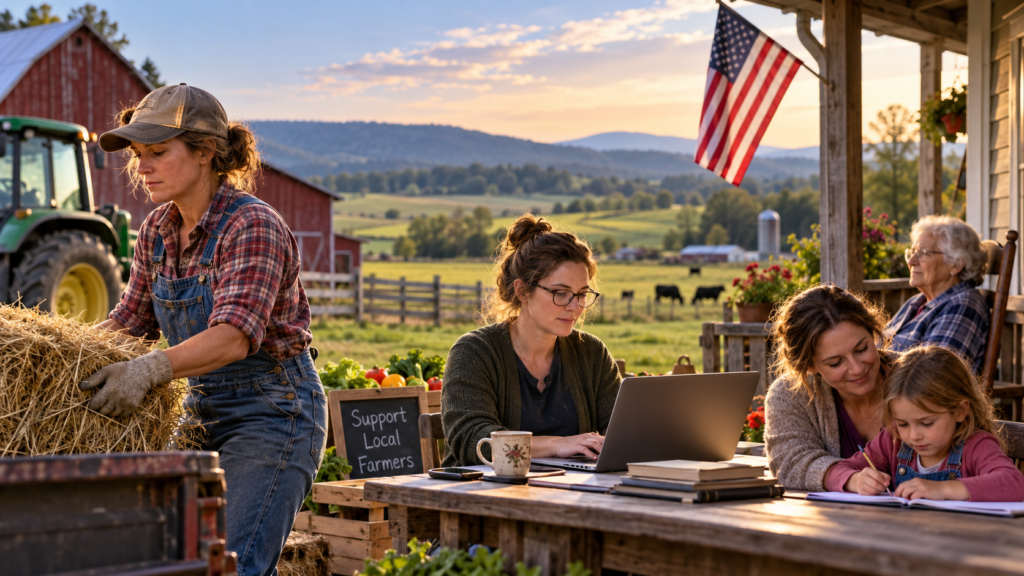
This movement can produce what is commonly called rural brain drain. When educated young people leave permanently, communities may lose potential teachers, healthcare professionals, entrepreneurs, and civic leaders.
The process can become self-reinforcing. A declining young-adult population may reduce demand for local businesses, weaken school enrollment, and make it more difficult to maintain public services. Fewer services can then encourage additional families to move elsewhere.
From a demographic perspective, migration is not merely an individual decision. It can reshape the age structure, economic capacity, and long-term sustainability of entire communities.
Yet migration should not be viewed only as a problem. Young people who move away may acquire valuable skills, professional contacts, and financial resources. Some later return to establish businesses, work remotely, or contribute to local development.
For Rural Youth in America, the ability to return depends on whether their communities offer suitable employment, housing, broadband connectivity, and a supportive environment for entrepreneurship.
A promising strategy is to develop stronger connections between rural communities and their former residents. Alumni networks, remote-work opportunities, small-business grants, and local investment initiatives may help transform migration into a continuing relationship rather than a permanent separation.
The ultimate objective is not to prevent young people from leaving. It is to ensure that leaving is a genuine choice and that returning remains possible.
Gender, Class and Unequal Aspirations
The experiences of Rural Youth in America are also shaped by gender and social class. Although rural communities are diverse, local labor markets may offer different opportunities to young men and women.
In areas where employment is concentrated in construction, manufacturing, agriculture, or extractive industries, young men may encounter established pathways into certain occupations. Young women may face different opportunities depending on the availability of healthcare, education, professional services, and other industries.
These patterns are not universal, but they illustrate how the organization of local economies can influence career expectations.
Gender norms may also shape family responsibilities. Some young adults are expected to provide unpaid care for children, siblings, or older relatives. These responsibilities can restrict their ability to attend college, accept distant employment, or work unpredictable hours.
Class inequality further influences aspiration. A young person from a financially secure family may be able to move to another state, complete an unpaid internship, or spend several years studying. Someone from a low-income household may need to earn money immediately after graduation.
Consequently, two students with similar academic abilities may have very different opportunities to pursue their ambitions.
For Rural Youth in America, equal opportunity requires more than encouraging hard work. It requires scholarships, affordable housing, childcare, accessible transportation, fair employment practices, and educational support that takes household circumstances into account.
Recent Developments and the Future of Rural Youth in America
Recent research and policy discussions highlight three important developments.
First, the USDA’s 2026 employment update indicates that rural employment recovered beyond its pre-pandemic level by 2024, although growth differed across counties. This suggests that economic recovery is geographically uneven and that national averages can conceal persistent local disadvantage.
Second, the Government Accountability Office’s July 2025 report on rural STEM education documented continuing challenges involving teacher recruitment, instructional materials, and access to educational experiences. At the same time, it described innovative partnerships connecting rural schools with research centers, nonprofits, and local industries. These examples demonstrate that rural schools can develop effective solutions when they receive the necessary support.
Third, the RAND research released in June 2026 drew attention to the geography of youth disconnection and the importance of relationships across socioeconomic groups. It reinforces the idea that schools, employers, community organizations, and families must work together rather than treating youth unemployment as an isolated individual problem.
Taken together, these developments reveal a complex reality. Rural Youth in America are not simply waiting for economic change. They are studying, working, adapting to technology, supporting families, and negotiating competing expectations. Their opportunities depend on how effectively institutions respond to changing economic and social conditions.
Sociological Solutions: Creating Opportunities Without Erasing Rural Identity
Addressing the challenges facing Rural Youth in America requires a coordinated strategy that recognizes both structural inequality and local strengths.
Educational policy should prioritize well-supported rural schools, qualified teachers, modern laboratories, digital infrastructure, and accessible college counseling. Rural students should have opportunities to study advanced subjects regardless of their distance from major educational centers.
Employment policy should support local business development, vocational training, apprenticeships, healthcare services, and industries capable of providing stable, well-paid work. Economic development should not depend entirely on attracting large outside employers; local entrepreneurship and small businesses can also create durable opportunities.
Investment in broadband and public transportation is equally important. Reliable internet can expand access to education and remote work, while affordable transportation can connect young people to colleges, employers, internships, and healthcare services.
Community organizations can help by offering mentoring, career guidance, leadership programs, and connections between students and professionals. Because the RAND findings associate stronger cross-class social connections with lower youth disconnection, programs should deliberately connect young people with people who can provide knowledge, encouragement, and practical opportunities beyond their immediate social circles.
Finally, policymakers should involve young people themselves in designing rural development programs. Young residents understand the everyday challenges of their communities and can identify opportunities that outside decision-makers may overlook.
The goal should not be to transform every rural community into an urban center. Rural places have their own cultural identities, environmental resources, social relationships, and economic possibilities. Development should strengthen these assets while expanding individual freedom and opportunity.
Conclusion on Rural Youth in America
Rural Youth in America stand at the intersection of educational inequality, economic restructuring, family expectations, technological change, and social mobility. Their aspirations are often ambitious, but the opportunities available to pursue those aspirations vary considerably according to geography, class, gender, infrastructure, and social connections.
Recent evidence from the USDA, the Government Accountability Office, and the RAND Corporation shows why rural youth development requires attention to both economic conditions and social relationships. Employment growth alone cannot guarantee meaningful careers, and educational access alone cannot ensure that young graduates can find suitable work.
A sociological understanding of Rural Youth in America moves beyond blaming individuals for unemployment, migration, or educational disadvantage. It asks how institutions distribute resources, how communities create or restrict opportunities, and how social networks influence life chances.
The future of Rural Youth in America will depend on whether schools, governments, employers, and communities can build pathways that connect education with meaningful employment and personal fulfillment. When young people have the freedom to pursue their ambitions without being forced to abandon their communities, rural development becomes more inclusive, resilient, and sustainable.
Ultimately, investing in Rural Youth in America is not merely an educational or employment policy. It is an investment in the social and economic future of the United States.
Frequently Asked Questions on Rural Youth in America
1. Who are Rural Youth in America?
Rural Youth in America refers to young people growing up in rural and nonmetropolitan communities across the United States. Their experiences vary according to regional economies, family resources, educational opportunities, and community institutions.
2. What are the major challenges facing Rural Youth in America?
Major challenges include unequal educational resources, limited access to some professional jobs, transportation barriers, digital inequality, youth disconnection, and the financial costs of higher education.
3. How does education influence Rural Youth in America?
Education can improve employment prospects, income potential, and social mobility. However, unequal access to qualified teachers, advanced courses, college guidance, and financial assistance can restrict opportunities.
4. Why do young people leave rural America?
Many leave to attend college, obtain specialized training, find better-paying jobs, or access professional networks. Others migrate for personal reasons, including independence and wider cultural experiences.
5. What is rural brain drain?
Rural brain drain is the loss of educated or highly skilled residents when they move away and do not return. It can reduce the availability of professionals, entrepreneurs, and future community leaders.
6. What is youth disconnection?
Youth disconnection describes a situation in which young people are not participating in employment, education, or training. The causes can include structural barriers, personal circumstances, and limited local opportunities.
7. How can rural schools improve educational outcomes?
Rural schools can benefit from teacher recruitment initiatives, modern learning facilities, broadband access, STEM partnerships, career counseling, and collaboration with colleges and local employers.
8. What role does technology play in rural youth development?
Technology can expand access to online education, remote employment, professional networks, and entrepreneurship. Its benefits depend on affordable broadband, suitable devices, and digital skills.
9. How can rural communities create better jobs for young people?
Communities can support small businesses, vocational education, apprenticeships, healthcare, renewable energy, advanced agriculture, and other industries suited to local economic conditions.
10. Why is Rural Youth in America an important sociological topic?
It illustrates how social class, geography, educational institutions, family relationships, and economic structures influence aspirations and life chances. It also reveals how inequality can persist even when individuals are motivated to succeed.
References and Further Reading
- U.S. Department of Agriculture, Economic Research Service. (2026). Rural Employment and Labor Force. https://www.ers.usda.gov/topics/rural-economy-population/employment-education/rural-employment-and-unemployment/
- U.S. Department of Agriculture, Economic Research Service. (2026). Employment & Education: Rural Education. https://ers.usda.gov/topics/rural-economy-population/employment-education/rural-education
- U.S. Government Accountability Office. (2025). STEM Education: Selected Federal Initiatives, Challenges, and Approaches to Supporting Rural Populations. https://www.gao.gov/products/gao-25-107371
- Wenger, J. W., & Bonds, S. (2026). Mapping Disconnection Among American Youth: How Place Shapes Opportunity. RAND Corporation. https://doi.org/10.7249/RRA4847-1
- National Center for Education Statistics. (2023). Rural Students’ Access to the Internet. https://nces.ed.gov/programs/coe/indicator/lfc/internet-access-students-rural