Introduction
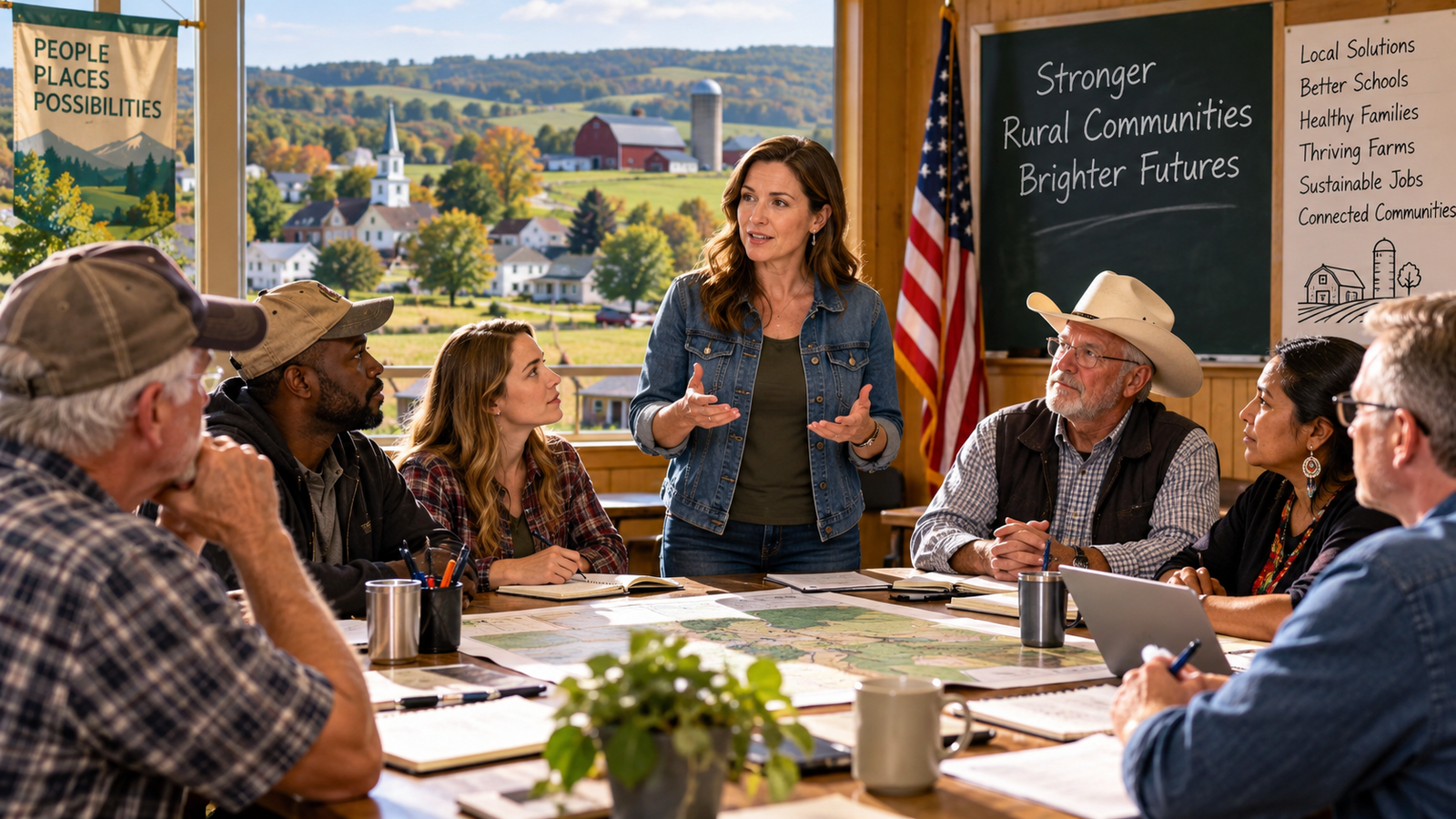
Community leadership in rural America plays a vital role in shaping social relationships, local institutions, economic opportunities, and collective development. Rural communities are often characterized by close personal relationships, shared traditions, strong local identities, and a deep connection to land and place. Within these communities, leadership is not limited to elected officials or government representatives. Teachers, farmers, religious leaders, business owners, community organizers, healthcare workers, and volunteers can all influence local decisions and social change.
From a sociological perspective, Community Leadership in Rural America is a process through which individuals and groups mobilize resources, establish common goals, resolve conflicts, and strengthen collective action. It reflects the interaction between social structure, cultural values, power relations, and community participation. Rural leadership can preserve traditional ways of life while also encouraging innovation, inclusion, and economic development.
However, rural America is not socially or economically uniform. Small farming towns, Indigenous communities, remote mountain settlements, agricultural regions, and rural communities near metropolitan areas experience different opportunities and challenges. Therefore, understanding Community Leadership in Rural America requires examining its historical roots, social networks, institutional relationships, inequalities, and changing forms of participation.

This article explores Community Leadership in Rural America through major sociological perspectives, highlighting how leadership contributes to social cohesion, community development, democratic participation, and rural transformation.
Understanding Community Leadership in Rural America
Community leadership refers to the ability of individuals or groups to influence collective decisions and encourage people to work toward shared objectives. In rural settings, leadership frequently emerges from everyday social relationships rather than formal political institutions alone.
Community Leadership in Rural America may involve organizing a local food bank, supporting a rural school, improving healthcare access, protecting agricultural livelihoods, establishing youth programs, or advocating for better roads and broadband connectivity. These activities demonstrate that leadership operates at both institutional and informal levels.
Formal leadership includes elected officials, local government administrators, school board members, nonprofit directors, and representatives of community organizations. Informal leadership often comes from respected elders, religious figures, experienced farmers, teachers, and residents who have developed trust through long-term involvement in local affairs.
A sociological understanding of Community Leadership in Rural America recognizes that influence depends on more than official authority. Social reputation, personal relationships, access to resources, cultural knowledge, and the ability to build cooperation also determine who becomes a community leader.
Leadership is therefore a relational process. A leader may possess knowledge and organizational skills, but effective community action depends on whether residents recognize the leader’s legitimacy and are willing to participate in collective decisions.
Historical Foundations of Rural Leadership
The history of rural America provides an important foundation for understanding contemporary leadership. Agricultural communities traditionally relied on cooperation among families, neighbors, churches, local associations, and voluntary organizations. Activities such as harvesting, barn raising, mutual assistance, and community celebrations helped establish relationships of reciprocity.
These traditions contributed to the development of social networks that continue to influence Community Leadership in Rural America. In many places, local leaders gained influence through their participation in agricultural organizations, religious institutions, civic associations, and community improvement initiatives.
The growth of cooperatives, agricultural extension services, rural schools, and local government institutions also created new opportunities for leadership. Farmers’ organizations helped residents share information, negotiate economic challenges, and advocate for public policies. Community associations provided spaces for collective decision-making and voluntary service.
Nevertheless, the history of rural leadership has not always been inclusive. Land ownership, racial segregation, gender inequality, and class divisions frequently determined who could exercise public influence. In some communities, established landowners and business elites held disproportionate power, while women, racial minorities, migrant workers, and economically disadvantaged residents faced barriers to participation.
Consequently, Community Leadership in Rural America must be understood as both a tradition of cooperation and a field of unequal power relations. Historical patterns continue to shape contemporary debates about representation, authority, and community development.
Sociological Perspectives on Community Leadership
Several sociological theories help explain how leadership develops and functions in rural communities.
Structural Functionalism
Structural functionalism examines how social institutions contribute to the stability and functioning of society. From this perspective, Community Leadership in Rural America helps coordinate activities among institutions such as schools, families, churches, local governments, healthcare organizations, and businesses.
For example, when a rural community experiences a school closure, local leaders may organize public meetings, negotiate with educational authorities, and coordinate alternative educational services. Such activities help institutions respond to changing social needs.
Leadership also promotes social integration by establishing shared expectations and encouraging cooperation. Community festivals, volunteer programs, and local improvement projects can reinforce a sense of belonging.
However, functionalism can overlook conflicts and inequalities within communities. Institutions that appear to maintain social stability may also preserve the dominance of particular groups. A complete sociological analysis must therefore examine whose interests leadership serves and whose concerns remain unaddressed.
Conflict Theory
Conflict theory emphasizes competition over resources, authority, and social opportunities. It is particularly useful for analyzing inequalities in Community Leadership in Rural America.
Rural communities often experience disagreements over land use, agricultural subsidies, environmental protection, industrial development, public spending, and access to essential services. These conflicts may reflect differences between wealthy landowners, small farmers, wage workers, business interests, and disadvantaged households.
For instance, a proposed industrial project may promise employment and increased tax revenue while raising concerns about environmental damage or the displacement of existing livelihoods. Community leaders must navigate these competing interests and determine how decisions are made.
Conflict theory also draws attention to representation. If leadership positions are dominated by affluent residents, the priorities of low-income households may receive less attention. Sociological analysis therefore asks whether community participation is genuinely democratic or mainly reflects the preferences of powerful groups.
From this perspective, Community Leadership in Rural America can reproduce inequality, but it can also challenge established power structures by supporting marginalized residents and advocating for fairer resource distribution.
Social Capital Theory
Social capital refers to the resources people obtain through relationships, trust, shared expectations, and networks of cooperation. It is especially relevant to Community Leadership in Rural America because personal relationships often influence how information and assistance circulate.
Robert Putnam’s work on social capital emphasizes the significance of civic engagement and networks of association. In rural settings, social capital may develop through neighborhood groups, agricultural cooperatives, volunteer fire departments, churches, sports organizations, and community projects.
Strong social ties can help residents respond to emergencies, support vulnerable households, and organize collective initiatives. Leaders who maintain trustworthy relationships may find it easier to mobilize volunteers and coordinate resources.
However, social capital has limitations. Close networks can exclude newcomers, minority groups, or people who do not share dominant cultural expectations. Community Leadership in Rural America is most effective when it combines strong internal relationships with connections to external institutions, funding sources, professional networks, and public agencies.
The Role of Social Networks and Local Institutions
Social networks are central to the operation of rural leadership. In smaller communities, residents may know one another through family relationships, employment, education, religious participation, and voluntary activities. These overlapping relationships can make cooperation easier because trust develops through repeated interaction.
Community Leadership in Rural America frequently depends on the ability to connect these networks. A school principal may collaborate with parents, local businesses, nonprofit organizations, and government officials to improve educational opportunities. A farmer may connect agricultural producers with extension specialists and cooperative marketing organizations.
Local institutions provide the organizational foundations for these activities. Schools can serve as community gathering places, libraries can offer educational and digital resources, and religious organizations can coordinate charitable assistance. Local governments and civic associations can create formal channels for public participation.
Yet institutional capacity varies considerably across rural America. Communities with declining populations may struggle to maintain schools, hospitals, libraries, and other services. Limited funding and shortages of trained personnel can place additional pressure on local leaders.
Effective Community Leadership in Rural America therefore requires collaboration across institutions rather than dependence on a single influential individual. Partnerships help distribute responsibilities, expand available resources, and reduce the risk that community initiatives will disappear when a particular leader leaves.
Gender, Race, Class, and Leadership Inequality
Leadership opportunities are shaped by social inequalities. Gender, race, ethnicity, education, income, age, and property ownership can influence who is heard in public discussions and who gains access to decision-making positions.

Historically, rural leadership in many American communities was associated with male landowners, business leaders, and established political families. Women frequently performed essential community work through schools, churches, caregiving networks, and voluntary associations without receiving equivalent recognition or formal authority.
Contemporary Community Leadership in Rural America includes women serving as mayors, educators, nonprofit directors, organizers, agricultural entrepreneurs, and advocates for public services. Their contributions demonstrate how leadership can extend beyond traditional institutional boundaries.
Race and ethnicity also shape leadership experiences. Black rural communities have developed important traditions of mutual aid, religious leadership, civic organizing, and political advocacy. Indigenous communities maintain diverse governance traditions and leadership practices rooted in their own histories, laws, and cultural values. Latino communities, including agricultural workers and small-business owners, also contribute to rural civic and economic life.
However, these groups may face unequal access to funding, political representation, institutional support, or public recognition. Migrant workers and residents with limited English proficiency can encounter additional barriers to participation.
Class differences create further divisions. Wealthier residents may have more time, professional connections, transportation, and financial resources to influence local decisions. Residents working multiple jobs or managing insecure employment may find regular civic participation difficult.
Inclusive Community Leadership in Rural America requires addressing these structural barriers. Accessible meetings, transparent decision-making, multilingual communication where needed, youth participation, and representative leadership structures can help ensure that community priorities reflect a broader range of experiences.
Community Leadership and Rural Economic Development
Economic development is one of the most important responsibilities associated with Community Leadership in Rural America. Rural economies depend on different combinations of agriculture, manufacturing, tourism, natural resources, small businesses, public services, and remote employment.
Economic restructuring has created significant challenges in many rural regions. Agricultural consolidation, the decline of certain industries, population loss, and limited access to well-paid employment can weaken local economic stability. Community leaders often attempt to respond by supporting entrepreneurship, workforce development, infrastructure investment, and business cooperation.
Local leadership can help identify community assets, such as agricultural knowledge, cultural heritage, natural landscapes, craft traditions, and existing business networks. These assets may support initiatives in agritourism, local food systems, renewable energy, heritage tourism, and small-scale manufacturing.
Community Leadership in Rural America can also strengthen economic resilience by encouraging collaboration between local governments, educational institutions, employers, and workforce development organizations. Partnerships may help residents acquire new skills and connect businesses with potential employees.
Nevertheless, development strategies must account for the distribution of benefits. A project that increases local revenue may still create insecure jobs, place pressure on housing, or damage the environment. Economic growth does not automatically produce social equality.
Sustainable rural development therefore requires leaders to consider employment quality, environmental protection, affordability, access to services, and the long-term interests of residents. Community participation is essential because local people understand many of the practical consequences that outside investors or policymakers may overlook.
Education, Youth Participation, and Future Leadership

Education plays a major role in developing future community leaders. Rural schools provide more than academic instruction; they often function as important social institutions that connect families, educators, local organizations, and community activities.
Community Leadership in Rural America can strengthen educational opportunities by supporting school funding, extracurricular programs, career counseling, digital literacy, vocational training, and partnerships with colleges or employers.
Youth participation is particularly important because rural communities may struggle to retain young adults when higher education and employment opportunities are concentrated elsewhere. Young residents who feel excluded from community decisions may become less interested in local civic life.
Youth councils, student organizations, volunteering, local environmental projects, and community entrepreneurship programs can give young people practical leadership experience. These initiatives also allow younger residents to contribute perspectives on technology, employment, recreation, education, and social inclusion.
Intergenerational cooperation is equally valuable. Older residents may provide institutional knowledge, practical experience, and historical understanding, while younger residents can introduce new technologies, communication methods, and ideas.
Community Leadership in Rural America becomes more sustainable when leadership development is treated as a continuous process rather than an activity limited to established adults. Mentorship and shared decision-making can help communities prepare for future challenges.
Digital Technology and Changing Forms of Leadership
Digital technology is changing how rural residents organize, communicate, and access information. Broadband connectivity, social media, video meetings, online fundraising, and digital public services can help leaders connect residents with institutions beyond their immediate locality.
Community Leadership in Rural America increasingly involves coordinating information through online community groups, promoting local businesses, advertising public meetings, and raising awareness about local issues. Digital communication can make participation easier for residents who live far from community centers or have limited mobility.
Technology can also connect rural entrepreneurs with wider markets and help community organizations share successful practices. Online educational programs and remote employment opportunities may reduce some disadvantages associated with geographical isolation.
However, the digital divide remains a significant sociological concern. Some rural areas lack reliable high-speed internet, while low-income households may struggle to afford devices or service subscriptions. Older residents and people with limited digital skills may also encounter barriers.
Online communication can generate misinformation, intensify disagreements, or exclude people who do not use particular platforms. Digital leadership must therefore complement, rather than entirely replace, face-to-face interaction.
Successful Community Leadership in Rural America combines technological innovation with accessible communication, digital education, and traditional community engagement. The objective is to expand participation without creating new forms of exclusion.
Challenges Facing Rural Community Leaders
Rural leaders operate within complex social, economic, and institutional conditions. Limited budgets, declining populations, aging infrastructure, healthcare shortages, and inadequate transportation can restrict their ability to respond to community needs.
Another major challenge is the concentration of responsibilities among a small number of volunteers or officials. In communities with limited organizational capacity, the same individuals may serve on school boards, organize public events, lead nonprofit initiatives, and participate in local government.
This concentration can produce fatigue and make community projects vulnerable when experienced leaders retire or move away. Community Leadership in Rural America therefore benefits from succession planning, volunteer development, shared responsibilities, and transparent organizational practices.
Political polarization can create additional difficulties. Disagreements about development, public spending, environmental regulation, immigration, or social policy may divide residents who otherwise share common local concerns.
Leaders must create opportunities for constructive discussion without assuming that every disagreement can be eliminated. Fair procedures, reliable information, active listening, and clear explanations of decisions can help maintain trust.
External pressures also matter. State and federal policies, changing markets, environmental events, and decisions by large corporations can affect rural communities in ways that local leaders cannot fully control. Building partnerships with regional institutions and higher levels of government can increase their capacity to respond.
Ultimately, Community Leadership in Rural America requires adaptability, accountability, social awareness, and a realistic understanding of both local strengths and structural limitations.
Building More Inclusive and Sustainable Rural Communities
The future of Community Leadership in Rural America depends on strengthening democratic participation, institutional cooperation, and social inclusion. Leadership should not be understood simply as the authority of a few influential individuals. It should also involve the collective capacity of residents to identify problems, develop solutions, and evaluate outcomes.
Participatory decision-making is an important starting point. Public meetings, community surveys, neighborhood discussions, and accessible consultation processes can help leaders understand the priorities of different groups.
Transparency is equally important. Clear budgets, public reporting, conflict-of-interest safeguards, and explanations of major decisions help residents evaluate whether leadership is serving the wider community.
Community Leadership in Rural America can also benefit from collaboration between neighboring towns, regional planning organizations, universities, nonprofit institutions, and government agencies. Shared services and cooperative projects may help smaller communities overcome resource constraints.
Sustainability requires attention to environmental and social conditions alongside economic development. Protecting water resources, supporting local businesses, improving public transportation, expanding healthcare access, and investing in education can contribute to long-term community resilience.
Most importantly, rural residents should be recognized as active participants in development rather than passive recipients of outside assistance. Community-based knowledge and local experience can improve the relevance and durability of public programs.
Conclusion
Community Leadership in Rural America is a complex sociological process shaped by social networks, cultural traditions, institutional structures, economic conditions, and unequal power relations. It influences how rural communities organize collective action, respond to economic change, maintain social connections, and participate in democratic decision-making.
Structural functionalism highlights the role of leadership in coordinating institutions, conflict theory reveals inequalities in authority and resources, and social capital theory explains how trust and networks support cooperation. Together, these perspectives demonstrate that rural leadership cannot be understood through individual personalities alone.
Effective Community Leadership in Rural America requires inclusive participation, transparent governance, institutional partnerships, youth engagement, digital access, and sustainable development strategies. It must recognize the diverse experiences of women, racial and ethnic minorities, low-income households, young people, and other groups whose contributions may be overlooked.
Although rural communities face considerable challenges, they also possess valuable resources, including local knowledge, social relationships, civic traditions, and opportunities for collective innovation. When these resources are mobilized fairly and effectively, Community Leadership in Rural America can strengthen community resilience and improve quality of life.
From a sociological perspective, the central question is not simply who leads rural communities, but how leadership is organized, whose interests it represents, and whether it expands the ability of residents to shape their shared future.
Frequently Asked Questions (FAQs)
1. What is Community Leadership in Rural America?
Community Leadership in Rural America refers to the process through which local individuals and organizations mobilize residents, coordinate resources, solve shared problems, and promote community development.
2. Why is Community Leadership in Rural America important?
It helps rural residents address challenges involving education, healthcare, employment, infrastructure, social inclusion, and local governance.
3. Who can become a rural community leader?
Teachers, farmers, elected officials, religious leaders, nonprofit organizers, business owners, young people, and other active residents can all become community leaders.
4. How does sociology explain rural leadership?
Sociology examines rural leadership through social institutions, power relations, cultural traditions, social networks, inequality, and collective action.
5. What is the role of social capital in rural leadership?
Social capital supports cooperation through trust, relationships, shared norms, and networks that help residents organize community activities.
6. What challenges do rural community leaders face?
Common challenges include limited funding, population decline, inadequate infrastructure, political disagreements, healthcare shortages, and unequal participation.
7. How does leadership support rural economic development?
Leaders can encourage entrepreneurship, workforce training, local investment, business partnerships, and sustainable development initiatives.
8. How can rural leadership become more inclusive?
Inclusive leadership requires representative decision-making, accessible meetings, transparent governance, and meaningful participation from diverse social groups.
9. What role does technology play in rural leadership?
Digital technology supports communication, public participation, education, fundraising, local business promotion, and connections with external institutions.
10. How can young people contribute to rural leadership?
Young people can participate through student organizations, youth councils, volunteering, entrepreneurship, environmental projects, and community development programs.
11. What is the relationship between rural leadership and social inequality?
Leadership can either reproduce existing inequalities or challenge them by expanding representation, access to resources, and participation in community decisions.
12. What is the future of Community Leadership in Rural America?
Its future depends on inclusive governance, effective collaboration, digital connectivity, leadership development, and sustainable responses to changing rural conditions.
References
- Putnam, Robert D. (2000). Bowling Alone: The Collapse and Revival of American Community. Simon & Schuster.
- Bourdieu, Pierre. (1986). “The Forms of Capital.” In Handbook of Theory and Research for the Sociology of Education, edited by John G. Richardson. Greenwood Press.
- Coleman, James S. (1988). “Social Capital in the Creation of Human Capital.” American Journal of Sociology, 94, S95–S120.
- Flora, Cornelia Butler, Flora, Jan L., and Gasteyer, Stephen P. (2016). Rural Communities: Legacy and Change. Westview Press.
- U.S. Department of Agriculture, Economic Research Service. Rural America at a Glance. https://www.ers.usda.gov/