Introduction
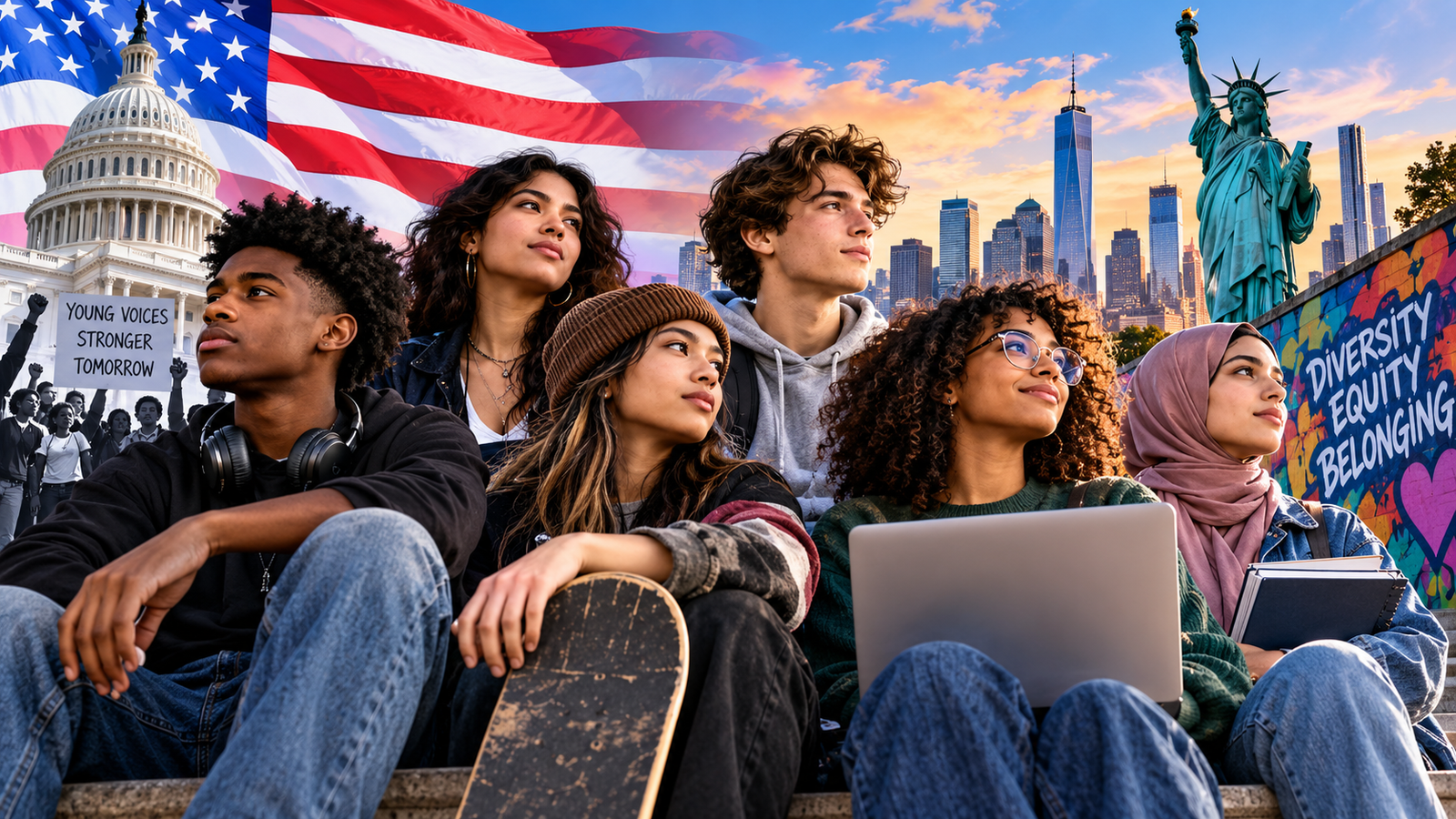
Youth culture is an important area of sociological study because young people play a significant role in shaping social values, cultural practices, political movements, and technological change. In contemporary American society, young people experience a rapidly changing social environment influenced by digital technology, globalization, economic inequality, racial diversity, and changing family structures. These forces shape how young Americans understand themselves and establish their identities within society. Consequently, Identity in America cannot be understood without examining the experiences, aspirations, and challenges of its younger generations.
Youth culture includes the lifestyles, beliefs, language, fashion, music, entertainment, social relationships, and political attitudes commonly associated with young people. However, American youth are not a homogeneous social group. Their experiences differ according to social class, race, ethnicity, gender, sexuality, religion, geographical location, and educational opportunities. These differences demonstrate that Identity in America is socially constructed and continuously negotiated through everyday interactions and broader institutional structures.

From a sociological perspective, youth identity is not simply an individual choice. It develops through socialization, peer relationships, family expectations, educational institutions, mass media, and economic conditions. Understanding Identity in America therefore requires examining the relationship between individual agency and social structure.
Understanding Youth Culture in American Society
Youth culture refers to the shared practices, symbols, values, and social experiences through which young people express their identities and distinguish themselves from other generations. In the United States, youth culture has historically influenced music, fashion, language, political activism, consumer behavior, and popular entertainment.
During the twentieth century, the emergence of rock and roll, the counterculture movement of the 1960s, hip-hop culture, punk music, and later internet-based communities demonstrated how young people could challenge established social norms. These cultural developments contributed to broader transformations in Identity in America, particularly in relation to race, gender, freedom, and individual expression.
Contemporary youth culture is increasingly diverse and digitally connected. Young Americans participate in online communities, follow global entertainment trends, create digital content, and use social platforms to communicate their beliefs. Cultural participation is no longer limited to geographical communities or traditional institutions. A teenager in a small American town can share cultural interests with young people across the world.
Nevertheless, youth culture also reflects inequalities within American society. Access to technology, leisure activities, higher education, and cultural opportunities varies considerably. Therefore, Identity in America is shaped not only by cultural preferences but also by unequal access to social and economic resources.
Sociological Theories of Youth Identity
Several sociological theories help explain how young people construct their identities in American society.
Symbolic Interactionism
Symbolic interactionism, associated with sociologists such as George Herbert Mead and Herbert Blumer, emphasizes the importance of social interaction in the development of the self. Individuals learn to understand themselves through communication, social expectations, and the reactions of others.
For young Americans, identity develops through interactions with parents, teachers, classmates, friends, and online communities. Clothing, slang, music preferences, and social media profiles become symbols through which young people communicate who they are and how they want others to perceive them.
This perspective suggests that Identity in America is continuously shaped by social feedback. Acceptance can strengthen a young person’s sense of belonging, while rejection or discrimination may produce insecurity and social isolation.
Erikson’s Theory of Identity Development
Erik Erikson’s psychosocial theory identifies adolescence as a significant period of identity exploration. During this stage, young people attempt to develop a coherent understanding of their values, goals, social roles, and personal commitments.
Although Erikson’s theory is psychological, it has important sociological implications. Identity exploration takes place within a social environment that provides opportunities and imposes limitations. Educational expectations, family traditions, economic circumstances, and cultural norms influence the choices available to young people.
Thus, Identity in America emerges through the interaction between personal development and social expectations. Young people may negotiate competing expectations concerning career success, family responsibilities, cultural traditions, and personal freedom.
Social Identity Theory
Social identity theory, developed by Henri Tajfel and John Turner, explains how individuals derive part of their self-understanding from membership in social groups. People may identify with racial, ethnic, religious, national, regional, political, or cultural communities.
In the United States, youth identities are frequently shaped by multiple group memberships. A young person may simultaneously identify as an American, a member of an immigrant family, a student, a musician, and an activist. These identities can complement one another, although they may also create tension when social expectations conflict.
This approach demonstrates why Identity in America should be understood as multidimensional rather than as a single, fixed characteristic.
Family, Education, and the Socialization of Youth

Family remains one of the most important agents of socialization. Through family relationships, young people learn language, values, moral expectations, cultural traditions, and ideas about success. Parents and caregivers also influence educational aspirations, political attitudes, religious practices, and attitudes toward relationships.
However, family socialization in America varies considerably. Some young people grow up in traditional households with clearly defined expectations, while others experience more flexible family structures. Immigrant families may emphasize cultural continuity and educational achievement, whereas young people may seek greater independence or adopt cultural practices from their American peers.
These differences influence Identity in America, especially when young people attempt to balance family expectations with individual aspirations. Intergenerational disagreements over career choices, dating, clothing, religion, or independence can become important moments in identity formation.
Schools also play a central role in shaping youth identities. Educational institutions teach academic knowledge while transmitting social norms, civic values, and expectations about achievement. Peer groups within schools provide opportunities for friendship, competition, cooperation, and cultural expression.
At the same time, differences in school funding, neighborhood resources, disciplinary practices, and access to advanced courses can reproduce existing social inequalities. Students from disadvantaged backgrounds may face barriers that limit their opportunities to pursue particular educational or professional identities.
Consequently, Identity in America is closely connected to the structure of educational opportunities and the unequal distribution of social resources.
Social Media and Digital Identity in America
Social media has transformed the ways young Americans communicate, develop friendships, express opinions, and present themselves to others. Platforms such as Instagram, TikTok, YouTube, and Snapchat provide spaces for self-expression, cultural participation, entertainment, and political discussion. Digital communication has consequently become an important influence on Identity in America.
Through online profiles, photographs, videos, and personal narratives, young people construct public versions of themselves. They can explore interests, experiment with different forms of self-presentation, and connect with communities that may be unavailable in their immediate surroundings. For young people who feel marginalized in their local environments, online communities can offer recognition, solidarity, and emotional support.

However, digital identity also creates sociological challenges. Social media encourages constant comparison with others, particularly concerning physical appearance, lifestyle, popularity, and economic success. Influencers often present carefully curated images of wealth, beauty, and happiness, potentially creating unrealistic expectations among younger audiences.
The pursuit of likes, followers, and online approval can influence how young people evaluate their self-worth. Algorithms may also reinforce particular preferences, political beliefs, and cultural stereotypes by repeatedly presenting similar content. These processes affect how young Americans understand social belonging and individual achievement.
Digital platforms also create opportunities for activism. Young people use online networks to discuss racial justice, climate change, gender equality, education, and other social issues. Digital communication can therefore expand participation in public life while exposing users to misinformation, harassment, and polarization.
The relationship between social media and Identity in America is consequently complex. Digital platforms offer greater opportunities for self-expression, but they also introduce new forms of social pressure, surveillance, and commercial influence.
Race, Ethnicity, and Multicultural Youth Identity
Race and ethnicity remain central dimensions of social identity in the United States. American society includes communities with different historical experiences, cultural traditions, languages, and migration histories. Young people develop their identities within this multicultural environment, negotiating both shared national belonging and distinct cultural affiliations.
African American youth culture has played a particularly important role in shaping American music, fashion, language, literature, sports, and political activism. Hip-hop, for example, developed from specific urban experiences and became a globally influential cultural form. It has provided opportunities for artistic expression and social criticism while also raising questions about cultural ownership, commercialization, and racial representation.
Latino and Hispanic youth negotiate identities influenced by family traditions, language, migration, and American popular culture. Some identify strongly with their national or ancestral heritage, while others combine several cultural influences in their everyday lives. Asian American youth similarly navigate diverse experiences involving family expectations, racial stereotypes, community relationships, and national belonging.
Indigenous youth maintain and reinterpret cultural traditions while addressing the continuing effects of colonization, historical exclusion, and unequal access to resources. Their experiences demonstrate that cultural identity is connected to collective memory, political recognition, and struggles for social justice.
For many young Americans, identities are not mutually exclusive. A person may identify with a racial or ethnic community while also feeling a strong attachment to the United States. These overlapping affiliations reveal the complexity of Identity in America.
Nevertheless, racism and discrimination can influence how young people perceive themselves and how others perceive them. Stereotyping, unequal treatment, and pressure to conform to dominant cultural expectations may create challenges for identity development. Sociological analysis therefore examines not only cultural diversity but also the unequal power relations through which identities are recognized or stigmatized.
Gender, Sexuality, and Changing Social Norms
Gender is another major factor shaping youth culture and Identity in America. Traditional expectations concerning masculinity, femininity, appearance, relationships, and family responsibilities have influenced American social life for generations. However, these expectations have changed considerably through feminist movements, educational expansion, workplace participation, and public debates about gender equality.
Young women increasingly challenge stereotypes that restrict their educational, professional, and personal ambitions. Many question expectations that associate femininity exclusively with domestic responsibilities or physical appearance. At the same time, young men may reconsider conventional expectations that discourage emotional openness or define masculinity primarily through dominance, financial success, and physical strength.
LGBTQ+ youth have also contributed to wider discussions about gender, sexuality, recognition, and social inclusion. Online communities, advocacy organizations, and changing public conversations can provide opportunities for young people to explore their identities and find supportive relationships.
However, acceptance remains uneven across families, schools, religious communities, and geographical regions. Some young people experience bullying, exclusion, or conflict with family expectations. Their experiences illustrate how social norms can create both opportunities and constraints for personal expression.
From a sociological perspective, gender identity is shaped by the interaction of personal experience, social institutions, cultural expectations, and unequal power relations. Identity in America therefore reflects continuing debates about individual freedom, social acceptance, equality, and the meaning of belonging.
Social Class, Consumerism, and Youth Lifestyles
Social class significantly influences the opportunities available to young Americans. Family income, parental education, neighborhood conditions, and access to cultural resources affect education, leisure, employment, and future aspirations. As a result, youth culture may appear shared across society while remaining divided by economic inequality.
Pierre Bourdieu’s concepts of cultural capital and social reproduction help explain these differences. Cultural capital includes knowledge, skills, tastes, and educational advantages that can help individuals succeed within particular social environments. Young people whose families possess greater economic and cultural resources may have easier access to extracurricular activities, professional networks, and educational opportunities.
Consumer culture also influences youth identity. Clothing brands, smartphones, gaming equipment, entertainment subscriptions, and lifestyle products can become symbols of social status and group membership. Advertising encourages young people to associate personal identity with particular products and consumption patterns.
However, not all young Americans can afford the same lifestyles. Economic differences may create feelings of exclusion when social participation depends on expensive clothing, travel, technology, or entertainment. Young people may experience pressure to present an image of prosperity even when their financial circumstances are limited.
Working-class youth, for example, may develop identities centered on family responsibility, practical skills, community solidarity, or early employment. Middle-class youth may have greater opportunities to explore educational and professional pathways, although they can also face intense pressure to achieve academic and career success.
These patterns show that Identity in America is influenced by the relationship between cultural preferences and material resources. Personal choices matter, but those choices are made within unequal social conditions.
Youth Political Culture and Social Movements
Young Americans have repeatedly influenced political debates and social movements. Student activism, civil rights campaigns, anti-war protests, environmental movements, and contemporary campaigns for social justice demonstrate the political significance of youth culture.
Political identity develops through family socialization, education, peer relationships, media exposure, and experiences with public institutions. Some young people become politically active through formal organizations, while others participate through online campaigns, community volunteering, artistic expression, or public demonstrations.
Contemporary youth activism often connects personal identity with collective concerns. A young person may view environmental protection, racial equality, affordable education, or democratic participation as essential parts of their understanding of citizenship.
Digital platforms can make political information more accessible and help coordinate collective action. Yet online engagement does not automatically produce lasting political participation. Misinformation, ideological polarization, distrust of institutions, and unequal access to political resources can limit meaningful engagement.
Youth political culture is also diverse. Young Americans disagree about economic policy, immigration, social values, climate change, and the appropriate role of government. Treating all young people as a single political group would therefore overlook important differences in their experiences and beliefs.
From a sociological viewpoint, Identity in America is connected to how young people define citizenship, negotiate competing social values, and decide whether existing institutions represent their interests.
Globalization and the Transformation of Youth Culture
Globalization has expanded cultural exchange and changed the ways young Americans understand their place in the world. Music, films, anime, gaming, fashion, food, and social media trends circulate across national borders, allowing young people to participate in cultural communities that extend far beyond the United States.
American youth culture itself influences global lifestyles through Hollywood, hip-hop, digital entertainment, sports, and popular fashion. At the same time, young Americans adopt cultural influences from Japan, South Korea, Latin America, Europe, Africa, and other regions.
The popularity of anime, K-pop, international gaming communities, and global fashion trends illustrates how cultural identity can develop through transnational connections. Young people may feel attached to cultural practices that are not directly connected to their family’s heritage or immediate geographical environment.
These exchanges broaden the possibilities for Identity in America by allowing young people to combine local, national, and global influences. They can develop interests and social relationships that challenge traditional cultural boundaries.
However, globalization also raises concerns about cultural appropriation, commercialization, and unequal cultural representation. Powerful entertainment industries can dominate global markets, while smaller cultural communities may struggle to maintain control over their cultural expressions.
Global cultural exchange therefore creates both opportunities and tensions. It encourages openness and creativity while raising questions about authenticity, belonging, and cultural power.
Rural and Urban Differences in Youth Identity
Geographical location influences how young Americans experience youth culture. Urban and rural communities often differ in access to education, employment, entertainment, public transportation, digital infrastructure, and cultural institutions. These differences affect the opportunities through which young people construct their identities.
Urban youth may have access to diverse cultural communities, universities, music venues, professional networks, and organized social movements. Greater cultural diversity can expose young people to different lifestyles and perspectives, although urban areas also experience housing inequality, social segregation, and economic insecurity.
Rural youth may develop stronger attachments to local traditions, family networks, community relationships, agriculture, or regional identities. Close-knit communities can provide social support and a sense of belonging, but they may also create pressure to conform to established expectations.
Young people in rural areas can face limited employment options, fewer specialized educational institutions, and long distances to cultural or social services. Digital technology can reduce some geographical barriers, although differences in broadband access and household resources remain important.
Neither urban nor rural youth should be understood through stereotypes. Both settings contain considerable social and cultural diversity. Their comparison simply demonstrates that Identity in America develops within specific local conditions rather than in an abstract national environment.
Mental Health, Belonging, and Identity Challenges
The process of developing an identity can involve uncertainty, social pressure, and conflict. Young Americans may face competing expectations from families, schools, employers, friends, and online communities. They may feel pressure to achieve academically, choose a career, maintain relationships, and present a successful image of themselves.
Social isolation, discrimination, economic insecurity, and uncertainty about the future can complicate these experiences. Social media may intensify comparison, while online harassment can undermine feelings of safety and belonging.
The sociological concept of social integration helps explain why supportive relationships matter. Family acceptance, friendships, inclusive educational environments, community participation, and access to mental health resources can help young people develop a stronger sense of belonging.
Institutions also influence how identity-related challenges are experienced. Schools that respond effectively to bullying, workplaces that provide fair opportunities, and communities that respect cultural differences can create more supportive environments for youth development.
It is important not to interpret every identity struggle as an individual failure. Difficulties may reflect wider social conditions, including discrimination, unequal opportunities, housing insecurity, or inadequate institutional support.
A sociological understanding of Identity in America therefore connects individual well-being with the quality of social relationships and the broader distribution of resources, recognition, and opportunity.
The Future of Youth Culture and Identity in America
The future of American youth culture will likely be shaped by technological change, demographic diversity, economic transformation, climate concerns, and evolving social values. Artificial intelligence, virtual communities, and new forms of digital entertainment may create additional ways for young people to express themselves and establish relationships.
At the same time, economic inequality, educational costs, housing affordability, and uncertainty about employment may influence how young Americans imagine their futures. These conditions can affect their expectations regarding independence, family formation, career success, and social mobility.
The growing visibility of multicultural identities will continue to challenge narrow definitions of American belonging. Young people increasingly encounter different cultural traditions and social perspectives through education, migration, entertainment, and digital communication.
However, technological innovation alone will not guarantee equality or inclusion. The benefits of cultural participation depend on access to resources, protection from discrimination, and opportunities to participate in public life.
A more inclusive understanding of Identity in America requires recognizing that young people should be able to explore their identities without being denied educational opportunities, social respect, or equal treatment. Families, schools, community organizations, and policymakers all have roles in creating environments that support this process.
Conclusion
Youth culture and identity are essential subjects for understanding contemporary American society. Young people do not simply inherit established social values; they reinterpret, challenge, and transform them through cultural expression, social relationships, political participation, and technological innovation.
Sociological perspectives demonstrate that Identity in America develops through the interaction of individual experiences and social structures. Family, education, race, ethnicity, gender, social class, consumer culture, geography, and globalization all influence how young people understand themselves and their place in society.
Social media and global cultural exchange have expanded the opportunities for identity exploration, but they have also introduced new pressures and inequalities. Economic resources, institutional support, and social acceptance continue to influence the extent to which young Americans can participate fully in society.
Ultimately, Identity in America is not a fixed or uniform concept. It is a changing social process through which individuals negotiate belonging, difference, freedom, and responsibility. Studying youth culture provides valuable insight into the wider transformations of American society and helps explain how the next generation may shape its cultural and social future.
Frequently Asked Questions (FAQs)
1. What is youth culture in America?
Youth culture in America refers to the shared lifestyles, beliefs, music, fashion, language, entertainment, and social practices through which young people express themselves and develop relationships.
2. Why is Identity in America important in sociology?
Identity in America is important because it reveals how social institutions, cultural values, inequality, and social interactions influence individual self-understanding and group belonging.
3. How does social media influence youth identity?
Social media allows young people to express themselves, build communities, and explore interests. However, it can also encourage social comparison, online harassment, and pressure to seek approval.
4. What role does family play in youth identity formation?
Families transmit cultural traditions, values, language, and expectations. Family relationships influence young people’s decisions, aspirations, and understanding of their social roles.
5. How does education shape Identity in America?
Schools influence identity through peer relationships, academic experiences, civic education, institutional expectations, and access to opportunities. Educational inequalities can also affect future possibilities.
6. How do race and ethnicity influence American youth culture?
Race and ethnicity shape cultural traditions, social experiences, community relationships, and experiences of discrimination. They can influence how young people understand belonging and social recognition.
7. What is the relationship between gender and youth identity?
Gender expectations influence behavior, appearance, relationships, opportunities, and social acceptance. Young people may reproduce or challenge these expectations as they develop their identities.
8. How does social class affect youth identity?
Social class influences access to education, technology, leisure, employment, and cultural resources. These differences affect lifestyles, aspirations, and opportunities for social mobility.
9. What is the role of globalization in youth culture?
Globalization enables young Americans to access international music, films, fashion, gaming, and cultural communities, creating identities that combine local, national, and global influences.
10. How do young Americans participate in social movements?
Young people participate through protests, student organizations, online campaigns, community initiatives, volunteering, and political discussions concerning issues such as racial equality and climate change.
11. What sociological theories explain youth identity?
Symbolic interactionism, social identity theory, and approaches to socialization and cultural reproduction help explain how interactions, group membership, institutions, and social inequalities influence identity.
12. How does consumerism influence youth culture?
Consumerism links products and brands with status, lifestyle, and group membership. It can provide ways to express identity while also creating pressure to meet material expectations.
13. How do rural and urban environments influence youth identity?
Urban environments may provide greater access to diverse cultural institutions and networks, while rural communities may offer stronger local connections. Both environments contain diverse experiences and opportunities.
14. What challenges do young Americans face in developing their identities?
Common challenges include discrimination, social pressure, economic insecurity, family conflict, online harassment, and uncertainty about education, employment, and the future.
15. Why should sociologists study youth culture?
Studying youth culture helps sociologists understand generational change, cultural innovation, social inequality, political participation, and the changing values of American society.