Introduction: Understanding Rural America and Food Security
Rural America is often associated with agricultural abundance, open landscapes, farming communities, and traditional ways of life. However, the presence of agricultural production does not guarantee that every rural household has reliable access to nutritious and affordable food. The relationship between Rural America and Food Security reveals important social inequalities involving poverty, employment, transportation, healthcare, education, and access to public services. While rural communities contribute significantly to the American food system, many residents face barriers that make obtaining healthy food difficult.
Food security refers to a situation in which individuals and households have consistent access to sufficient, safe, nutritious food that supports an active and healthy life. Food insecurity occurs when people lack the financial resources or practical opportunities to obtain adequate food. From a sociological perspective, Rural America and Food Security is not simply a question of agricultural production or individual food choices. It is a social issue shaped by economic structures, geographical isolation, unequal resource distribution, and public policy.
Understanding Rural America and Food Security requires examining how social class, race, age, gender, family structure, and community institutions influence people’s experiences. A rural household may live close to farms yet struggle to afford fresh vegetables, fruits, dairy products, and other nutritious foods. This apparent contradiction demonstrates that food access depends not only on the availability of food but also on purchasing power, transportation, retail infrastructure, and social support.
The Sociological Meaning of Food Security
Food security is an important subject in sociology because food is a basic human necessity connected to social inequality, human development, and quality of life. Sociologists study how institutions and social relationships determine who can obtain essential resources and who experiences deprivation.
The study of Rural America and Food Security illustrates the difference between food availability and food accessibility. A region may produce substantial quantities of agricultural commodities while its residents struggle to purchase affordable groceries. Agricultural production, food processing, distribution, and retail sales are connected through markets that do not necessarily prioritize the needs of every local household.
Food insecurity can also affect social participation. People who regularly worry about food may experience stress, embarrassment, social isolation, and difficulties maintaining family relationships. Children may struggle to concentrate at school, while adults may find it harder to maintain employment and manage health problems. These experiences demonstrate that food insecurity is connected to broader patterns of social disadvantage.
Therefore, Rural America and Food Security should be understood as a structural issue rather than merely a consequence of poor individual decisions. Household choices are influenced by income, prices, local services, working conditions, and the availability of transportation.
Poverty and Economic Inequality in Rural Communities
Poverty is one of the most important factors affecting Rural America and Food Security. Rural economies vary considerably across the United States. Some communities benefit from manufacturing, tourism, energy production, and diversified employment, while others depend heavily on agriculture, seasonal work, or a limited number of employers.

Low wages, insecure employment, underemployment, and limited job opportunities can reduce household purchasing power. Families may need to choose between groceries and other essential expenses, including rent, electricity, heating, transportation, and medical care. When prices rise or working hours decline, food budgets are often among the first areas affected.
Economic inequality also operates across generations. Children growing up in households with limited resources may experience nutritional disadvantages that influence educational achievement and future opportunities. These disadvantages can reinforce existing patterns of social stratification.
From a conflict theory perspective, Rural America and Food Security reflects unequal access to economic resources. Wealth, land ownership, employment opportunities, and political influence are distributed unevenly across society. Although rural areas produce important agricultural goods, the economic benefits of production may not reach all workers and households equally.
The relationship between rural employment and food access also deserves attention. Agricultural laborers and food-processing workers may contribute to the production of essential goods while earning wages that make healthy diets difficult to afford. This highlights the contradiction between participation in the food economy and the ability to achieve personal food security.
Food Deserts and Geographical Isolation
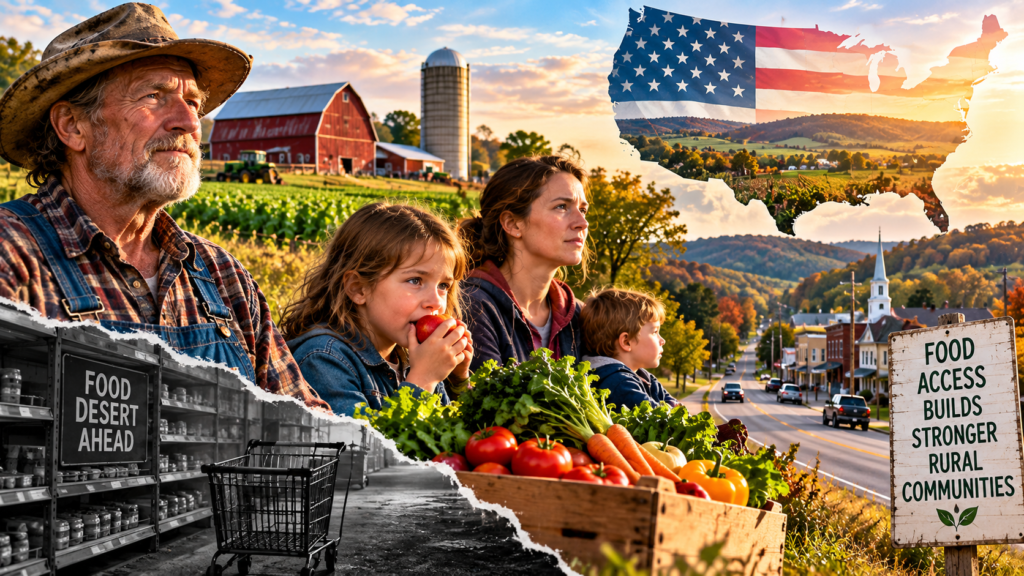
Food deserts are commonly understood as areas where residents have limited access to affordable and nutritious food, often because full-service grocery stores are distant or difficult to reach. The concept is particularly relevant to Rural America and Food Security, where long distances between settlements can make shopping expensive and time-consuming.
In many rural communities, residents may depend on small convenience stores, gas stations, or limited local retailers. These outlets can provide essential products, but their selection of fresh produce, lean proteins, and other nutritious foods may be restricted. Prices may also be higher than those found in larger supermarkets.
Transportation creates another challenge. Households without reliable vehicles may depend on relatives, neighbors, public transportation, or infrequent community transport services. A grocery store that appears accessible on a map may be practically unreachable for an older adult, a person with a disability, or a family without a car.
The geographical dimensions of Rural America and Food Security show that distance is not merely a physical measurement. It is also a social barrier shaped by income, disability, infrastructure, and access to private transportation.
The term food desert should nevertheless be used carefully. Not every rural community with limited supermarkets experiences the same conditions, and distance alone cannot explain every household’s food insecurity. Researchers also examine food prices, store quality, household resources, cultural preferences, and the ability to use available food assistance.
Race, Ethnicity, and Historical Inequality
Race and ethnicity are important dimensions of Rural America and Food Security because historical patterns of discrimination have influenced land ownership, employment, wealth accumulation, and access to public resources.
Some rural Black communities continue to experience the consequences of historical exclusion from landownership opportunities, agricultural credit, and economic investment. In parts of the rural South, these historical patterns intersect with persistent poverty and limited access to services.
Indigenous communities also face distinct challenges associated with colonial dispossession, geographical isolation, infrastructure inequalities, and the disruption of traditional food systems. Access to culturally appropriate foods can be especially important where communities seek to maintain traditional practices and strengthen food sovereignty.
Latino rural communities, including agricultural workers and their families, may face low wages, seasonal employment, language barriers, and difficulties navigating public assistance programs. These challenges vary considerably by region, immigration circumstances, occupation, and household resources.
A sociological analysis of Rural America and Food Security must therefore avoid treating rural residents as a single, uniform population. Experiences differ according to racial identity, ethnicity, class position, citizenship circumstances, and historical relationships with institutions.
Intersectionality provides a useful framework for understanding how multiple forms of inequality operate together. For example, an older Indigenous woman living in a remote community may encounter different barriers from a middle-income rural household with two vehicles and stable employment. Effective policies must recognize these differences rather than rely on a single solution.
Family Structure, Gender, and Food Insecurity
Family relationships strongly influence Rural America and Food Security. Households organize food purchasing, meal preparation, caregiving, and the distribution of limited resources. When money becomes scarce, family members may change their eating patterns to ensure that children or other dependents receive food.

Single-parent households can face particular pressures when one income must cover housing, childcare, transportation, healthcare, and groceries. Limited access to affordable childcare may also restrict employment opportunities, creating a cycle in which financial insecurity and food insecurity reinforce one another.
Gender inequality can further shape these experiences. Women often perform a disproportionate share of unpaid domestic labor, including meal planning, cooking, and caring for children or older relatives. When household budgets become inadequate, this responsibility may place additional emotional and practical pressure on women.
In some households, mothers may reduce their own food consumption to protect their children’s diets. Such coping strategies can conceal the seriousness of household food insecurity because children may receive meals even while adults experience inadequate nutrition.
The study of Rural America and Food Security must also consider changing family structures. Older adults living alone, grandparents raising grandchildren, households affected by disability, and families with unstable employment may require different forms of assistance. Community food programs and social services are most effective when they understand these household differences.
The Impact on Children and Education
Childhood food insecurity is one of the most serious consequences of unequal food access. Children require adequate nutrition for physical growth, cognitive development, emotional well-being, and school participation. When families cannot consistently obtain nutritious meals, children’s educational experiences may suffer.
The relationship between Rural America and Food Security and education extends beyond hunger itself. A child experiencing food insecurity may have difficulty concentrating, feel tired during lessons, or experience anxiety about meals at home. Persistent nutritional hardship can also affect family stability and the ability to participate in extracurricular activities.
Schools play an important role in reducing these risks. School breakfast and lunch programs can provide reliable meals, while summer meal initiatives help address gaps when schools are closed. However, students in remote communities may face transportation barriers when meal sites are far from their homes.
School meals also have a sociological dimension. They can reduce immediate material inequality by ensuring that students from different income groups have access to food during the school day. Programs should be implemented in ways that protect students’ dignity and minimize stigma.
Addressing Rural America and Food Security among children requires coordination between schools, families, healthcare providers, community organizations, and public agencies. Nutrition support should be integrated with broader efforts to reduce child poverty and improve access to education and healthcare.
Older Adults, Health, and Social Isolation
Older adults represent another important group in discussions of Rural America and Food Security. Many rural seniors live on fixed incomes and may face rising living costs, limited transportation, mobility difficulties, and chronic health conditions that affect their ability to shop and prepare meals.
Social isolation can intensify these problems. An older person who lives alone may have limited assistance with grocery shopping or cooking. Even when food is physically available, preparing nutritious meals may be difficult for someone experiencing mobility limitations or reduced independence.
Food insecurity can also worsen existing health inequalities. Poor nutrition may complicate the management of diabetes, cardiovascular disease, and other chronic conditions. At the same time, healthcare expenses can reduce the money available for groceries, creating a cycle between medical costs and food deprivation.
Programs such as home-delivered meals, community dining initiatives, senior centers, and transportation services can help reduce these barriers. Their effectiveness depends on reliable funding, appropriate local coverage, and awareness among eligible residents.
A sociological approach to Rural America and Food Security recognizes that food access for older adults is not only a matter of income. It also involves social connection, dignity, mobility, independence, and the availability of community support.
Agriculture, Food Production, and the Rural Paradox
One of the most striking features of Rural America and Food Security is the paradox that communities involved in producing food may still experience food insecurity. Agricultural regions can generate large quantities of crops, livestock products, and other commodities without guaranteeing affordable access to a diverse and nutritious diet for local residents.
This paradox becomes clearer when the food system is examined sociologically. Farms may produce crops for national or international markets rather than local consumption. Processing facilities, distribution networks, contracts, and retail supply chains influence where food travels and how much consumers pay.
Farm workers may also face seasonal incomes, uncertain working conditions, and limited access to employment benefits. Small farmers can experience financial pressure from fluctuating commodity prices, debt, input costs, and extreme weather. Food production therefore does not automatically translate into economic security for everyone involved.
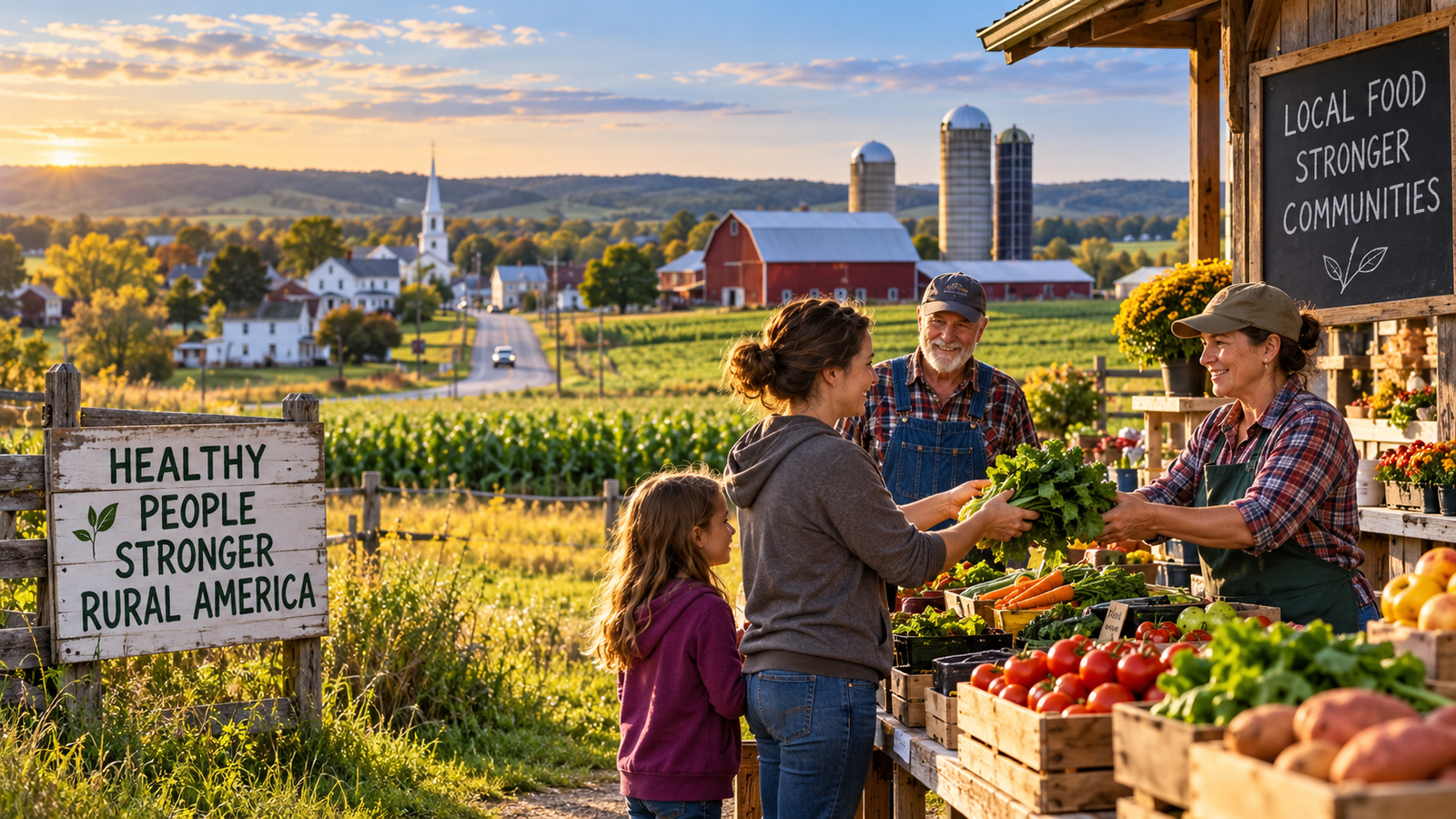
Local food systems can provide useful opportunities. Farmers’ markets, community-supported agriculture, cooperative grocery stores, food hubs, and direct-to-consumer sales may strengthen connections between producers and residents. However, these initiatives must consider affordability, seasonal availability, transportation, and the purchasing power of low-income households.
Community gardens and small-scale food production can supplement household diets and strengthen social relationships. Nevertheless, they cannot independently solve structural problems such as low wages, high housing costs, and inadequate public transportation.
Consequently, Rural America and Food Security requires policies that connect agricultural development with local nutritional needs. A productive agricultural economy should be evaluated not only by its output but also by its contribution to community well-being.
Public Assistance and Community Support
Government assistance programs are central to efforts to reduce Rural America and Food Security. In the United States, the Supplemental Nutrition Assistance Program (SNAP) helps eligible households purchase food. School meal programs, the Special Supplemental Nutrition Program for Women, Infants, and Children (WIC), and nutrition initiatives for older adults provide additional forms of support to eligible populations.
Despite their importance, participation can be affected by administrative complexity, limited information, stigma, transportation barriers, and difficulties accessing enrollment services. Rural residents may also face unreliable internet access or long distances to service offices.
Food banks, faith-based organizations, community groups, and local charities often help fill gaps. They may distribute groceries, operate food pantries, deliver meals, or connect families with social services. Such organizations can respond to immediate needs and build trust within communities.
However, charitable assistance should complement rather than replace broader social protection. Food banks often depend on donations and volunteers, and their available supplies may fluctuate. Long-term improvements in Rural America and Food Security require stable public programs, adequate household incomes, and accessible community infrastructure.
Sociologically, the relationship between public institutions and community organizations illustrates the importance of social capital. Trust, cooperation, and local networks can help residents obtain information and support. Yet communities with fewer resources may struggle to provide the same level of assistance as wealthier areas, making public investment especially important.
Climate Change and the Future of Rural Food Security
Climate change is increasingly relevant to Rural America and Food Security because rural livelihoods often depend on agriculture, natural resources, and weather-sensitive industries. Droughts, floods, heat waves, wildfires, and unpredictable growing seasons can disrupt agricultural production and increase economic uncertainty.
When harvests decline or transportation networks are damaged, food prices and availability may be affected. Rural households can experience a double burden if they depend on agriculture for income while also facing higher food costs.
Climate-related risks are not distributed equally. Large agricultural businesses may have greater access to insurance, capital, irrigation technology, and alternative supply chains than small farms or low-income households. This difference demonstrates how environmental change interacts with existing social inequalities.
Building resilience requires investment in sustainable farming, water management, emergency food distribution, infrastructure, and diversified local economies. Community preparedness is especially important in remote regions where extreme weather can interrupt transportation and access to essential services.
A long-term sociological understanding of Rural America and Food Security must therefore integrate environmental sociology with research on poverty, labor, social inequality, and institutional capacity.
Solutions: Building More Equitable Rural Food Systems
Improving Rural America and Food Security requires a comprehensive strategy that addresses both immediate hunger and the structural causes of food insecurity.
First, strengthening household economic security is essential. Fair wages, stable employment, affordable housing, and access to healthcare can help families maintain adequate food budgets. Policies should recognize that food insecurity is frequently connected to broader financial pressures rather than isolated grocery expenses.
Second, rural transportation and retail infrastructure need improvement. Community transport services, mobile grocery markets, cooperative stores, and delivery programs can help residents who cannot easily reach supermarkets. Public investment should prioritize remote and underserved communities.
Third, nutrition assistance should be accessible, reliable, and responsive to local circumstances. Simplified enrollment, multilingual information, community outreach, and better coordination between schools, healthcare providers, and social service agencies can help eligible households receive support.
Fourth, local food production should be connected more effectively with community needs. Partnerships between farmers, schools, food banks, and local governments can improve the distribution of fresh produce and other nutritious foods. Affordable pricing must remain central to these initiatives.
Finally, policymakers should use community-level research to understand differences between rural regions. Solutions appropriate for a remote agricultural county may not work equally well in a rural manufacturing community or an Indigenous reservation. Participatory planning can help residents identify barriers and develop locally relevant responses.
The future of Rural America and Food Security depends on recognizing food as both a material necessity and a foundation of social well-being. Sustainable progress requires cooperation among governments, businesses, schools, farmers, healthcare institutions, and community organizations.
Conclusion on Rural America and Food Security
Rural America and Food Security is a complex sociological issue shaped by poverty, geographical isolation, racial inequality, family structure, agricultural markets, environmental change, and public policy. Although rural communities play an essential role in food production, many households face barriers to obtaining affordable and nutritious meals.
A sociological perspective moves beyond individual explanations of hunger and examines the institutions, economic relationships, and social inequalities that influence access to food. It also highlights the importance of dignity, community participation, social support, and equal opportunities.
Addressing Rural America and Food Security requires more than increasing food supplies. It demands stronger rural economies, accessible transportation, effective nutrition assistance, resilient agricultural systems, and targeted support for vulnerable populations.
Ultimately, a more secure rural food system is one in which agricultural productivity is matched by social inclusion and equitable access to nutritious food. By addressing the structural causes of food insecurity, the United States can improve rural well-being and build healthier, more resilient communities.
Frequently Asked Questions (FAQs) on Rural America and Food Security
1. What is Rural America and Food Security?
Rural America and Food Security refers to the relationship between rural living conditions and households’ ability to obtain sufficient, affordable, safe, and nutritious food.
2. Why is food insecurity a problem in rural America?
Food insecurity can result from low incomes, limited employment, long distances to grocery stores, transportation difficulties, and inadequate access to social services.
3. What are food deserts in rural communities?
Rural food deserts are areas where residents face limited practical access to affordable and nutritious food, often because grocery stores are distant or transportation is inadequate.
4. How does poverty affect rural food security?
Poverty limits purchasing power and forces households to balance food expenses against housing, utilities, healthcare, transportation, and other essential costs.
5. How does food insecurity affect rural children?
Food insecurity can contribute to hunger, stress, nutritional problems, and difficulties concentrating and participating in school.
6. What role does SNAP play in rural food security?
SNAP provides eligible low-income households with assistance to purchase food, helping reduce financial barriers to obtaining groceries.
7. Why can farming communities experience food insecurity?
Agricultural production does not guarantee local affordability. Farm workers and other residents may have low or seasonal incomes, while food may be produced for distant markets.
8. How does transportation affect rural food access?
Long distances, limited public transport, and the cost of maintaining a vehicle can make grocery shopping difficult for rural households.
9. How do food banks support rural communities?
Food banks and pantries distribute groceries and connect residents with assistance, although their capacity depends on funding, donations, and local infrastructure.
10. How can rural food insecurity be reduced?
Effective approaches include improving wages, strengthening nutrition assistance, expanding transportation, supporting local food systems, and investing in rural infrastructure.
11. What is the sociological perspective on rural food security?
It examines how social class, race, gender, institutions, geography, and public policy shape people’s access to food.
12. How does climate change affect rural food security?
Extreme weather can disrupt farming, transportation, household incomes, and food prices, increasing risks for vulnerable rural populations.
13. Why is food security important for rural development?
Reliable access to nutritious food supports health, educational achievement, workforce participation, family stability, and community resilience.
14. What is the difference between food availability and food security?
Food availability concerns whether food exists in a region, while food security also requires reliable economic and practical access to sufficient, nutritious food.
15. Why should policymakers study Rural America and Food Security?
Studying Rural America and Food Security helps policymakers identify structural inequalities, design effective assistance programs, and improve the well-being of rural households.