
Education has always been one of the strongest institutions shaping social life, cultural identity, and economic development. In Australia, education reforms have evolved continuously to respond to changing demographic patterns, globalization, technological innovation, Indigenous rights, labor market demands, and social inequality. From a sociological perspective, education reforms are not merely administrative changes in curriculum or assessment systems. They represent broader transformations in power relations, social mobility, cultural inclusion, and national identity.
Australia has one of the world’s most respected education systems, attracting hundreds of thousands of international students every year. However, beneath this success lies an ongoing debate about educational equity, access, privatization, Indigenous education, multiculturalism, digital learning, and socioeconomic inequality. Sociologists argue that education reforms should not only improve academic achievement but also create a more just and inclusive society where every individual has equal opportunities regardless of social background.
This article examines the sociology of education reforms in Australia by exploring the historical development of educational policies, theoretical perspectives, contemporary reforms, social inequalities, Indigenous education, multicultural challenges, technological transformation, and future directions.
Understanding Education Reforms in Australia from a Sociological Perspective
Education reforms refer to systematic changes made to educational policies, teaching methods, curriculum, governance, funding, assessment, and institutional structures. Sociologists view education as one of society’s primary institutions responsible for transmitting culture, maintaining social order, developing human capital, and promoting social integration.
However, education also reproduces existing social inequalities. Access to quality education often depends upon class, income, ethnicity, geographical location, disability, and family resources. Therefore, reforms are designed not only to improve educational quality but also to reduce inequality and increase educational participation.
Australian education reforms increasingly focus on balancing excellence with equity, ensuring that economic competitiveness does not undermine social justice.
Historical Evolution of Education in Australia
Australia’s education system has undergone several major phases of reform.
During the colonial era, education was largely influenced by British traditions and religious organizations. Schooling mainly served European settlers while Indigenous Australians were excluded or forced into assimilationist policies.
The twentieth century witnessed the expansion of public education, compulsory schooling, teacher training, and university development. Following World War II, immigration transformed Australia into a multicultural society, requiring schools to become more culturally inclusive.
Since the 1980s, globalization and neoliberal economic policies have introduced market-based reforms emphasizing accountability, competition, standardized testing, school autonomy, and parental choice.
Today, Australian education continues evolving through digital transformation, Indigenous reconciliation, sustainability education, and workforce-oriented learning.
Major Sociological Theories Explaining Education Reforms
Functionalist Perspective
Functionalist sociologists such as Émile Durkheim argue that education maintains social stability by transmitting shared values, social norms, and national identity.
From this perspective, Australian education reforms seek to:
- Improve workforce skills
- Promote civic responsibility
- Strengthen social cohesion
- Prepare citizens for democratic participation
- Support economic productivity
National curriculum reforms and literacy standards reflect functionalist goals of maintaining an educated and productive society.
Conflict Theory
Conflict theorists including Karl Marx and Pierre Bourdieu argue that education often reproduces existing inequalities rather than eliminating them.
According to this perspective, education reforms may unintentionally favor privileged groups through:
- Unequal school funding
- Private school advantages
- Cultural capital differences
- Standardized testing biases
- Geographic disparities
Australian sociologists frequently debate whether education reforms genuinely reduce inequality or simply reorganize existing forms of privilege.
Symbolic Interactionism
Symbolic interactionists focus on everyday classroom experiences.
They examine how:
- Teacher expectations affect student performance.
- Labels influence self-esteem.
- Classroom interactions shape identities.
- Peer groups influence educational aspirations.
Modern reforms encouraging inclusive classrooms and culturally responsive teaching acknowledge these micro-level sociological processes.
National Curriculum Reforms
One of Australia’s most significant reforms has been the development of the Australian Curriculum.
The curriculum aims to create national consistency while allowing states and territories some flexibility.
Major objectives include:
- Higher literacy standards
- Numeracy improvement
- Scientific literacy
- Digital capabilities
- Critical thinking
- Ethical understanding
- Intercultural competence
From a sociological perspective, a national curriculum strengthens national integration while recognizing Australia’s cultural diversity.
However, critics argue that excessive standardization may reduce teacher creativity and overlook local community needs.
Standardized Testing and Accountability
Australia introduced the National Assessment Program – Literacy and Numeracy (NAPLAN) to measure student achievement.
Supporters argue standardized testing:
- Identifies learning gaps
- Improves accountability
- Helps policymakers allocate resources
- Provides parents with performance information
Sociologists, however, identify several concerns.
High-stakes testing may:
- Increase student anxiety
- Narrow curriculum
- Encourage teaching to the test
- Disadvantage disadvantaged schools
- Reinforce social inequality
The debate illustrates how education reforms can produce both intended and unintended social consequences.
Educational Inequality in Australia
Despite strong educational outcomes overall, Australia continues experiencing educational inequalities.

Socioeconomic Inequality
Students from wealthier families generally enjoy:
- Better schools
- Private tutoring
- Digital resources
- Stable learning environments
- Higher educational expectations
Lower-income students often encounter financial barriers, reduced educational support, and limited access to enrichment opportunities.
Education reforms increasingly prioritize targeted funding for disadvantaged schools.
Geographic Inequality
Australia’s vast geography creates educational disparities between urban and rural communities.
Students in remote regions frequently experience:
- Teacher shortages
- Limited subject availability
- Poor internet connectivity
- Reduced university access
Recent reforms promoting online learning and regional investment aim to reduce these disparities.
Indigenous Education Reforms
Perhaps no area of Australian education has undergone more significant sociological transformation than Indigenous education.
Historically, Aboriginal and Torres Strait Islander students experienced exclusion, assimilation policies, discrimination, and educational disadvantage.
Contemporary reforms emphasize:
- Cultural inclusion
- Indigenous languages
- Community partnerships
- Local knowledge systems
- Closing educational gaps
- Increasing Indigenous teacher representation
Sociologically, these reforms represent a shift from assimilation toward recognition, reconciliation, and cultural justice.
Nevertheless, educational achievement gaps remain significant, indicating that structural inequalities continue affecting Indigenous communities.
Multiculturalism and Inclusive Education
Australia is one of the world’s most multicultural societies.
Education reforms increasingly reflect this diversity by promoting:
- Multicultural education
- English language support
- Anti-racism initiatives
- Religious tolerance
- Global citizenship
- Intercultural understanding
Schools now celebrate diverse cultural backgrounds while encouraging shared democratic values.
Sociologists argue that multicultural education helps strengthen social cohesion by reducing prejudice and encouraging mutual respect.
However, balancing cultural diversity with national identity remains an ongoing policy challenge.
Digital Transformation of Australian Education
Technology has dramatically reshaped Australian education.
Recent reforms encourage:
- Online classrooms
- Artificial intelligence tools
- Digital literacy
- Coding education
- Blended learning
- Cyber safety education
The COVID-19 pandemic accelerated digital learning across Australia.
From a sociological viewpoint, digital education creates new opportunities but also introduces digital inequality.
Students without reliable internet, computers, or technological support risk falling further behind, demonstrating that technological innovation alone cannot eliminate educational inequality.
Higher Education Reforms
Australian universities have experienced extensive reforms over recent decades.
Key developments include:
- Increased international student enrollment
- Research funding expansion
- Industry partnerships
- Graduate employability initiatives
- Flexible learning pathways
Higher education has become increasingly market-oriented, with universities competing internationally for students and research funding.
Sociologists describe this as the commercialization of higher education.
While internationalization generates economic benefits, concerns exist regarding tuition costs, student debt, academic casualization, and educational accessibility.
Vocational Education and Skills Development
Australia has strengthened vocational education through Technical and Further Education (TAFE) institutions and apprenticeship programs.

These reforms seek to:
- Address labor shortages
- Improve workforce readiness
- Support lifelong learning
- Reduce youth unemployment
From a sociological perspective, vocational education promotes social mobility by providing practical pathways beyond traditional university education.
However, occupational prestige differences between vocational and university pathways continue influencing student choices.
Educational Equity and Social Mobility
Education has long been viewed as the primary mechanism for upward social mobility.
Australian reforms increasingly focus on ensuring that educational opportunities depend upon ability rather than social background.
Policies supporting equity include:
- Needs-based school funding
- Early childhood education
- Disability inclusion
- Indigenous scholarships
- Rural education initiatives
- Student wellbeing programs
Nevertheless, sociological research consistently shows that family background remains a strong predictor of educational achievement.
Therefore, education reforms alone cannot eliminate broader social inequalities.
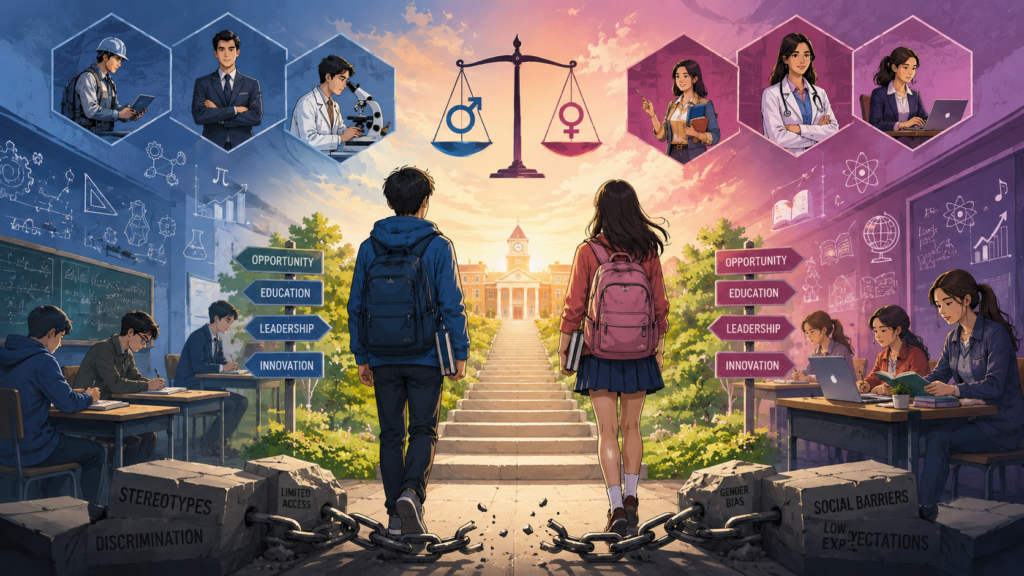
Gender and Education
Australia has achieved significant gender equality in educational participation.
Girls now outperform boys in several educational indicators, including school completion and university enrollment.
However, gender disparities remain in:
- STEM participation
- Leadership positions
- Occupational outcomes
- Wage inequality
Recent reforms encourage girls’ participation in science, technology, engineering, and mathematics while supporting boys experiencing educational disengagement.
Mental Health and Student Wellbeing
Modern education reforms increasingly recognize that academic success depends upon student wellbeing.
Schools now emphasize:
- Mental health support
- Anti-bullying programs
- Inclusive school environments
- Emotional resilience
- Student counselling
Sociologists argue that education should develop the whole person rather than focusing solely on examination performance.
The increasing awareness of mental health reflects broader societal changes regarding psychological wellbeing.
Neoliberalism and Education Policy
Many sociologists argue that Australian education reforms since the 1980s reflect neoliberal ideology.
Characteristics include:
- School competition
- Market choice
- Performance measurement
- Privatization
- Accountability systems
- Efficiency-based management
Supporters believe competition improves educational quality.
Critics argue that market-based reforms increase inequality by benefiting families with greater financial and cultural resources.
This debate continues influencing Australian education policy.
Future Challenges
Australia’s education system faces several emerging challenges.
Artificial intelligence will transform teaching methods, assessment, and workforce preparation.
Climate change education will become increasingly important as environmental sustainability becomes a national priority.
Growing migration will require stronger multicultural education and language support.
Rapid technological innovation demands continuous curriculum updates to prepare students for future occupations.
Educational policymakers must also balance academic excellence with equity, ensuring reforms benefit all students rather than only those already advantaged.
Conclusion
The sociology of education reforms in Australia demonstrates that education is far more than classroom instruction. It is a powerful social institution that shapes opportunity, identity, citizenship, and national development. Australian reforms have evolved from colonial educational systems to modern policies emphasizing equity, multiculturalism, Indigenous inclusion, technological innovation, and global competitiveness.
While substantial progress has been made in expanding educational access and improving learning outcomes, significant sociological challenges remain. Socioeconomic inequality, geographic disparities, Indigenous educational disadvantage, commercialization, digital divides, and mental health concerns continue affecting educational experiences.
From a sociological perspective, successful education reforms require more than improved curricula or standardized assessments. They must address broader structural inequalities that shape educational opportunities throughout society. By promoting inclusive, equitable, culturally responsive, and future-oriented education, Australia can continue strengthening social mobility while preparing citizens for an increasingly diverse and rapidly changing world.
Ultimately, the sociology of education reforms reminds us that education is both a mirror of society and a powerful instrument for transforming it. Australia’s ongoing commitment to balancing excellence with equity will determine not only educational success but also the nation’s future social cohesion, democratic participation, and economic prosperity.
FAQs (Focus Keyword: Education Reforms in Australia)
1. What are Education Reforms in Australia?
Education Reforms in Australia are policy changes aimed at improving educational quality, equity, curriculum, assessment, teacher effectiveness, and student outcomes across schools and universities.
2. Why are Education Reforms in Australia important?
Education Reforms in Australia are important because they address educational inequality, prepare students for future careers, improve learning standards, and promote inclusive education for diverse communities.
3. How do Education Reforms in Australia promote social mobility?
Education Reforms in Australia improve access to quality education, increase support for disadvantaged students, and create opportunities that help individuals move upward socially and economically.
4. What is the sociological significance of Education Reforms in Australia?
From a sociological perspective, Education Reforms in Australia influence social equality, cultural integration, identity formation, and the distribution of educational opportunities across society.
5. How do Education Reforms in Australia support Indigenous students?
Education Reforms in Australia include culturally responsive teaching, Indigenous language programs, community partnerships, scholarships, and initiatives to reduce educational achievement gaps.
6. What role does multiculturalism play in Education Reforms in Australia?
Education Reforms in Australia encourage multicultural education, cultural diversity, anti-racism programs, and inclusive learning environments that reflect Australia’s multicultural society.
7. How has technology influenced Education Reforms in Australia?
Technology has transformed Education Reforms in Australia by expanding online learning, digital literacy, AI-assisted education, coding education, and blended classroom models.
8. What challenges do Education Reforms in Australia face?
Major challenges include socioeconomic inequality, rural education gaps, Indigenous disadvantage, digital inequality, teacher shortages, and balancing academic excellence with equity.
9. How do Education Reforms in Australia affect higher education?
Education Reforms in Australia have expanded university access, promoted international education, strengthened research, and improved graduate employability while raising debates about commercialization.
10. What is the role of standardized testing in Education Reforms in Australia?
Standardized assessments such as NAPLAN help measure student performance, although sociologists debate their impact on educational equity and student wellbeing.
11. How do Education Reforms in Australia address educational inequality?
Education Reforms in Australia provide targeted funding, disability support, regional education initiatives, scholarships, and early childhood education to reduce learning disparities.
12. What is the impact of Education Reforms in Australia on teachers?
Education Reforms in Australia require teachers to adopt new curricula, digital teaching methods, continuous professional development, and inclusive classroom practices.
13. How do Education Reforms in Australia prepare students for future employment?
Education Reforms in Australia emphasize vocational education, STEM subjects, digital skills, critical thinking, creativity, and lifelong learning to meet changing workforce demands.
14. What are the future priorities of Education Reforms in Australia?
Future Education Reforms in Australia are expected to focus on artificial intelligence, sustainability education, mental health, digital inclusion, and equitable access for all learners.
15. What can other countries learn from Education Reforms in Australia?
Other countries can learn from Education Reforms in Australia by adopting policies that combine educational excellence with equity, multicultural inclusion, Indigenous recognition, and technological innovation.