Introduction on CJP Gen Z Protest
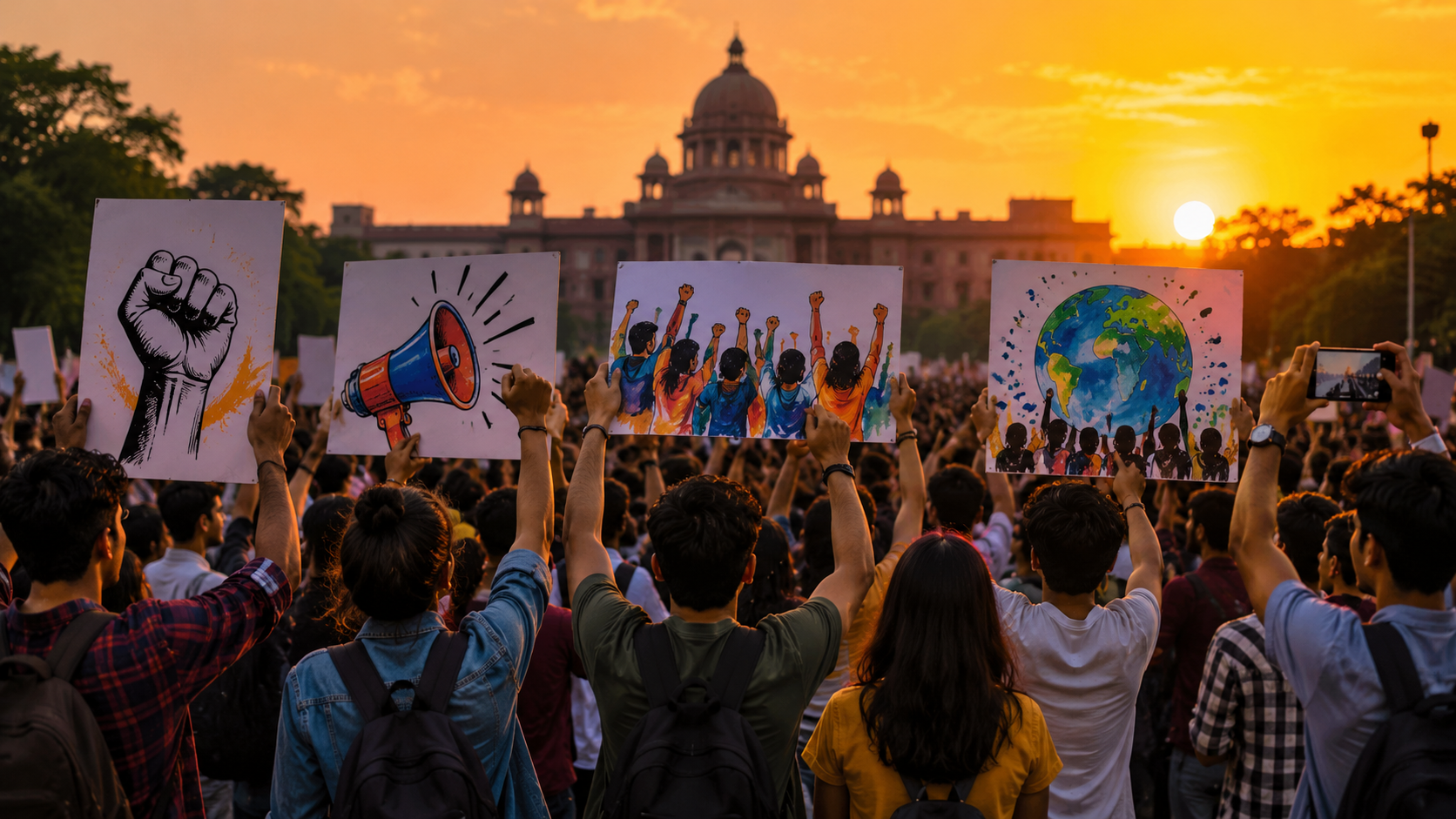
India’s recent Cockroach Janta Party (CJP) protest has emerged as one of the most remarkable youth-led social movements in recent years. What began as online satire soon transformed into a nationwide campaign demanding accountability following allegations surrounding examination paper leaks, educational insecurity and growing frustration among young aspirants. Within weeks, thousands of students gathered in cities across India, especially at New Delhi’s Jantar Mantar, making the movement a symbol of Generation Z’s political consciousness and digital activism. The movement eventually compelled the government to enter negotiations, and Education Minister Dharmendra Pradhan resigned after sustained protests and political pressure.
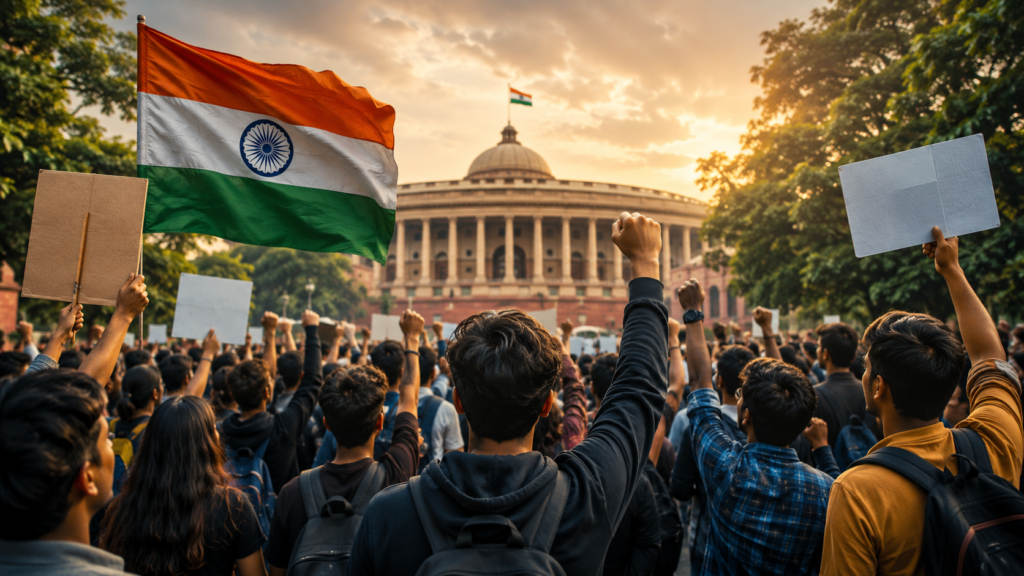
From a sociological perspective, the CJP movement is significant not merely because of its political outcomes but because it demonstrates how Generation Z is reshaping the culture of protest itself. Unlike previous generations, today’s youth combine online humour, memes, creative storytelling, music, reels, visual symbolism and grassroots mobilisation into a single form of collective action. Their protests are simultaneously physical and digital, local and national, emotional and strategic.
This article analyses the CJP protest through sociological theories, examining why Generation Z mobilised so effectively and how their unique methods of communication reflect broader social changes in India.
Understanding the Rise of the CJP Movement
The immediate trigger behind the CJP movement was widespread dissatisfaction over alleged examination paper leaks and the perceived failure of institutions to protect the future of millions of students. However, sociologists rarely interpret protests as reactions to a single event. Instead, protests emerge when long-term frustrations accumulate until a specific incident becomes the catalyst for collective action.
Reports indicate that repeated examination controversies, rising unemployment, increasing competition for government jobs and declining trust in public institutions created a fertile environment for youth mobilisation. The paper leak controversy merely accelerated already existing frustrations among India’s educated youth.
Sociologist Robert K. Merton’s concept of strain theory helps explain this phenomenon. Indian society strongly encourages educational success as the pathway to social mobility. Families invest years of preparation, financial resources and emotional energy into competitive examinations. When students perceive that the system itself has become unreliable, they experience structural strain. The resulting frustration often transforms into collective resistance rather than individual disappointment.
The CJP movement therefore represented not simply anger over one examination but anxiety regarding fairness, opportunity and the credibility of public institutions.
Generation Z: A New Social Generation
Generation Z generally refers to people born between the late 1990s and early 2010s. Unlike previous generations, they have grown up with smartphones, social media, artificial intelligence, digital classrooms and instant communication.
Karl Mannheim argued that generations develop distinct social identities because they experience major historical events during their formative years. Generation Z has experienced the COVID-19 pandemic, prolonged online education, rapid technological change, economic uncertainty and intense competition for limited employment opportunities.
These experiences have produced a generation that thinks differently about authority, communication and participation.
Instead of waiting for traditional political organisations to represent them, Gen Z prefers creating decentralised networks through Instagram, X, YouTube, WhatsApp and other digital platforms. Information spreads horizontally among peers rather than vertically through institutions.
The CJP movement perfectly illustrates Mannheim’s theory. Rather than depending on established political parties or student unions, thousands of young people connected through shared digital experiences and common frustrations.
Digital Society and Networked Collective Action
Contemporary sociology increasingly recognises that social media has transformed collective behaviour.
Spanish sociologist Manuel Castells describes modern society as a network society, where communication networks become the primary source of power and mobilisation.
The CJP protest demonstrates this transformation.
Instead of relying primarily on newspapers, television or political rallies, participants organised through digital platforms.
Announcements spread through short videos.
Protest schedules circulated via messaging applications.
Creative posters became viral social media content.
Hashtags transformed local demonstrations into national conversations.
Participants documented police action through live streaming and mobile videos, reducing the state’s monopoly over information. Reuters and other reports noted that despite restrictions and attempts to curb demonstrations, online mobilisation continued to attract widespread participation.
The protest therefore existed simultaneously in physical streets and digital spaces.
Collective Identity Beyond Political Parties
One remarkable feature of the CJP movement was its ability to unite students from diverse linguistic, regional and social backgrounds.
Traditional social movements often depend upon ideological organisations with formal memberships.
The CJP movement instead relied upon what sociologists describe as collective identity.
Participants identified themselves as students, examination aspirants and young citizens seeking institutional accountability rather than members of a specific political ideology.
The movement created an emotional community.
Shared experiences of examination stress, uncertainty and perceived injustice became stronger than differences of caste, religion or region.
This shared identity generated solidarity that encouraged continued participation despite police action, administrative restrictions and public criticism.
Why Young People Chose Satire Instead of Anger
Perhaps the most distinctive characteristic of the CJP movement was its extensive use of humour.
Previous protest movements often relied upon emotionally intense speeches and ideological slogans.
Generation Z adopted a different strategy.
Memes.
Satirical posters.
Ironical speeches.
Humorous references.
Self-deprecating jokes.
Creative performances.
From a sociological perspective, humour performs several important social functions.
First, satire reduces fear.
Mocking authority psychologically weakens hierarchical power.
Second, humour increases participation because it creates a welcoming atmosphere.
Third, humorous content spreads much faster through social media algorithms than lengthy political speeches.
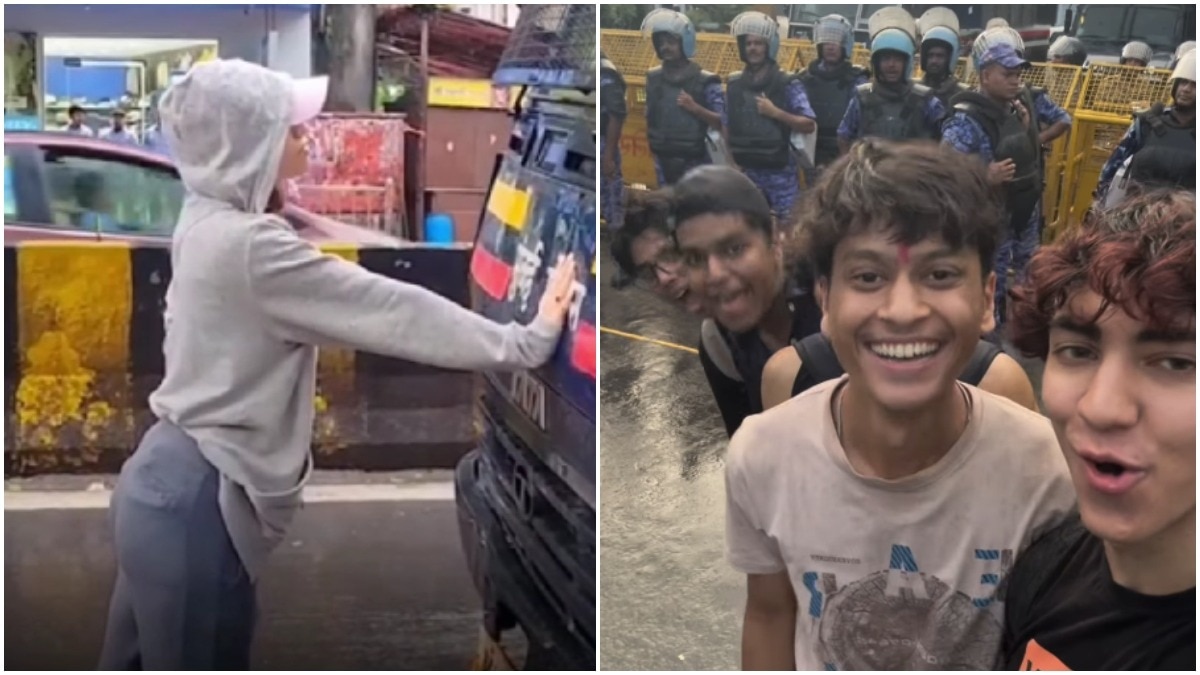
Reports from demonstrations described colourful placards, playful slogans, satirical Bollywood references and creative public performances that attracted enormous online attention.
Rather than appearing aggressive, the movement appeared relatable.
This significantly expanded public sympathy.
Symbolism and the Sociology of Protest
French sociologist Pierre Bourdieu emphasised that symbols possess enormous social power.
The CJP movement demonstrated this principle effectively.
The movement adopted symbols that transformed an insulting label into a badge of collective identity.
According to Reuters, the movement drew inspiration from a controversial public remark comparing unemployed youth to cockroaches. Instead of rejecting the label, protesters embraced it ironically, converting humiliation into empowerment.
This process is sociologically important.
Marginalised groups throughout history have often reclaimed derogatory labels to challenge dominant narratives.
By redefining the symbol, protesters changed the meaning of public discourse.
Instead of allowing opponents to define them, they defined themselves.
This symbolic transformation strengthened internal solidarity while attracting widespread media attention.
Digital Emotion and Emotional Contagion
Social movements are not driven solely by rational calculations.
They are also emotional communities.
Modern digital platforms accelerate emotional contagion.
A single emotional video can inspire thousands of participants.
Personal stories of students, emotional speeches, viral interviews and live updates created collective empathy across India.
People who never attended demonstrations still felt emotionally connected through continuous digital exposure.
Sociologists describe this as mediated solidarity, where technology creates emotional bonds among geographically distant individuals.
In the CJP movement, digital storytelling became as important as street mobilisation itself.
Rather than depending exclusively on organisational leadership, emotions travelled through smartphones, creating nationwide participation and public engagement.
The Language of Gen Z Protest: From Slogans to Storytelling
One of the defining characteristics of the CJP movement was that it transformed protest into a form of cultural expression. Earlier generations often relied on long speeches, ideological pamphlets and traditional political slogans. Generation Z adopted an entirely different communication style. Instead of merely demanding change, they designed messages that people wanted to photograph, share and remix across social media.
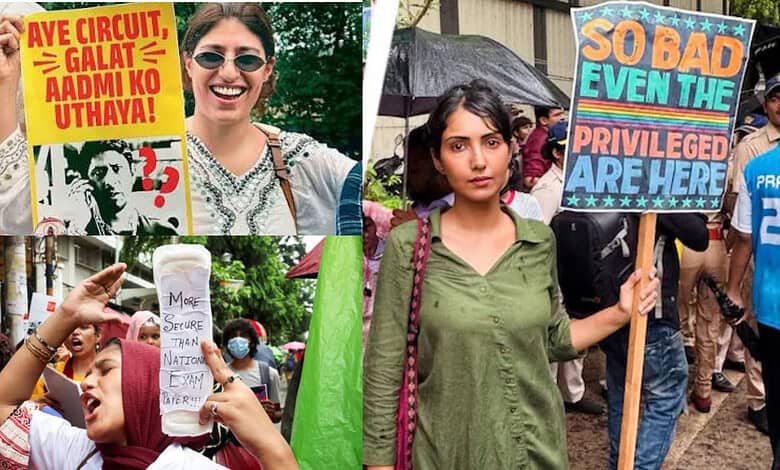
At protest sites such as Jantar Mantar, placards contained humorous one-liners, sarcastic references to popular culture, Bollywood dialogues, gaming symbols and internet slang. Many slogans rhymed naturally, making them easier to remember and chant. Protest songs borrowed elements from rap music and street performances, while participants created parody videos that spread rapidly on Instagram and YouTube. Reports described demonstrations where colourful posters, rap performances and satirical placards became as important as speeches themselves.
From a sociological perspective, this reflects a shift from information-based protest to attention-based protest. In the digital age, a message gains influence when it is memorable, emotionally engaging and easily shared. Generation Z instinctively understands this media environment.
Creativity as a Form of Social Capital
French sociologist Pierre Bourdieu argued that individuals possess different forms of capital, including economic, cultural and social capital. The CJP movement demonstrated that creativity itself has become a valuable form of cultural capital.
Many protesters were students without political experience or organisational resources. They compensated for this by producing eye-catching artwork, digital illustrations, satirical videos and humorous slogans. A hand-painted poster often travelled farther online than a lengthy political statement because it encouraged people to take photographs and share them.
This creative participation also lowered the barriers to joining the movement. Someone who was uncomfortable giving speeches could still contribute by designing posters, composing poems, writing rhyming slogans or editing short videos. Creativity therefore became a democratic resource that expanded participation beyond traditional activists.
Reels, Memes and the Sociology of Digital Mobilisation
Perhaps the most distinctive feature of the CJP protest was its dependence on short-form digital content.
Instagram Reels, YouTube Shorts and memes did not merely document the protest; they became part of the protest itself. Protesters produced humorous videos explaining complex issues in less than a minute. Others recreated famous movie scenes, added satirical subtitles or used trending audio tracks to communicate their demands. Viral songs, parody videos and creative reels became an integral part of the movement’s public identity.
Sociologically, this reflects what communication scholars describe as participatory culture. Unlike traditional media, where audiences passively consume information, social media encourages every participant to become a content creator.
Each student with a smartphone effectively became a journalist, editor, designer and broadcaster simultaneously.
This decentralised communication structure made the movement highly resilient because there was no single source of information that authorities could easily control.
Humour as a Non-Violent Political Strategy
Historically, humour has often been underestimated as a political tool. Yet sociological research shows that satire weakens authority by exposing contradictions and encouraging public reflection.
The CJP movement repeatedly used irony instead of aggression. Protesters mocked political narratives through memes, symbolic costumes, parody posters and exaggerated performances. International coverage noted that humour became one of the movement’s most powerful weapons, allowing young people to criticise authority while maintaining a largely peaceful and creative atmosphere.
Humour also reduced fear. Many first-time protesters felt more comfortable participating in an event that resembled a festival of creativity rather than a confrontational political rally.
From a symbolic interactionist perspective, humour changed the meaning of protest itself. Demonstrations became spaces where political participation was combined with art, music and shared cultural experiences.
The Rise of Leaderless Yet Connected Movements
Another sociologically significant feature of the CJP movement was its decentralised organisation.
Unlike many twentieth-century protest movements, Generation Z did not depend exclusively on charismatic leaders. Although certain public figures became symbolic representatives, thousands of local organisers independently coordinated activities through digital platforms.
Sociologists describe such movements as networked social movements.
Leadership became distributed rather than centralised.
Ideas travelled faster than formal instructions.
Individuals adapted protest methods according to local contexts while remaining connected through shared hashtags, slogans and digital communities.
This organisational flexibility made the movement difficult to suppress because participation was sustained by collective identity rather than hierarchical command.
What Governments Can Learn from Generation Z
The CJP protest offers several important lessons for governments in democratic societies.
The first lesson is that young citizens expect dialogue rather than delayed communication. Generation Z has grown up in an environment where information is available instantly. When governments remain silent during crises, the absence of communication is often interpreted as indifference.
The second lesson is that transparency is now a public expectation rather than a political choice. Young people demand clear explanations, regular updates and visible accountability. Digital technology enables citizens to compare official statements with independent information almost immediately.
The third lesson is that symbols matter as much as policies. A single insensitive remark or dismissive response can rapidly become a national symbol through social media, especially when it resonates with existing frustrations. Reports indicate that a controversial “cockroach” remark became a powerful rallying symbol after protesters reclaimed it through satire and collective identity.
The fourth lesson is that governments should recognise digital spaces as legitimate public spheres. Political engagement today occurs not only in legislative assemblies and public meetings but also through social media platforms where millions of citizens exchange ideas daily.
Generation Z and the Future of Democratic Participation
The CJP movement suggests that democratic participation is evolving rather than declining.
Many observers incorrectly assume that Generation Z is politically indifferent because they spend significant time online. The movement demonstrated precisely the opposite.
Digital engagement can strengthen offline participation.
Online discussions became street demonstrations.
Street demonstrations generated new online conversations.
This continuous interaction created a cycle of mobilisation that expanded public awareness and encouraged civic participation.
Globally, similar patterns have appeared in youth-led movements across different countries, where social media serves as a bridge between individual concerns and collective political action.
Sociological Implications of the CJP Movement
From the perspective of sociology, the CJP protest reflects several broader transformations occurring within contemporary society.
First, it illustrates the growing influence of digital culture in shaping political behaviour.
Second, it demonstrates how collective identity can emerge rapidly through shared online experiences.
Third, it highlights the increasing importance of symbolic communication, where memes, posters and visual storytelling carry political meanings comparable to speeches and manifestos.
Finally, the movement shows that youth activism today is multidimensional. Protest is no longer limited to marches or public meetings. It includes digital creativity, cultural production, collaborative storytelling and online community building.
These characteristics distinguish Generation Z from previous generations and suggest that future social movements will increasingly integrate technology with civic participation.
Conclusion
The CJP Gen Z protest represents a significant moment in the evolution of democratic participation in India. While its immediate focus centred on educational accountability and institutional reform, its broader sociological significance lies in the transformation of protest culture itself. Generation Z demonstrated that creativity can coexist with political seriousness, humour can strengthen collective action and digital platforms can become powerful instruments of civic engagement.
Creative slogans, rhyming chants, artistic placards, viral reels and meme-based communication were not superficial elements of the movement. They were carefully adapted forms of communication suited to a generation raised in a digital ecosystem. These methods enabled young citizens to attract public attention, strengthen solidarity and communicate complex grievances in accessible ways.
For today’s governments, the principal lesson is not simply to respond after protests become widespread, but to cultivate trust through transparency, dialogue and accountability before frustration escalates into mass mobilisation. Governments that recognise young people as active partners in policymaking, rather than passive recipients of decisions, are more likely to build lasting democratic legitimacy.
Ultimately, the CJP movement reminds us that democracy evolves alongside society. As communication technologies change and new generations redefine public participation, institutions must also adapt. Listening to Generation Z is therefore not merely a political necessity but a sociological imperative for any government seeking to remain responsive, legitimate and resilient in the twenty-first century.
FAQs on Gen Z Protest
1. What is the Gen Z Protest?
The Gen Z Protest refers to youth-led movements where Generation Z uses both offline demonstrations and digital platforms to demand accountability, transparency, and social change.
2. Why is the CJP movement called a Gen Z Protest?
It is considered a Gen Z Protest because the movement was largely driven by young people who organized through social media, created viral content, and used innovative protest techniques.
3. How is the Gen Z Protest different from traditional protests?
Unlike traditional protests, the Gen Z Protest combines street demonstrations with memes, Instagram Reels, creative posters, hashtags, and digital storytelling to reach wider audiences.
4. Why do Gen Z protesters use humour and satire?
Humour and satire make complex political issues easier to understand, attract public attention, reduce fear, and encourage greater participation in peaceful protests.
5. What role does social media play in the Gen Z Protest?
Social media enables rapid communication, mobilizes supporters, shares live updates, spreads awareness, and allows participants to create and distribute their own protest content.
6. Why are creative posters important in the Gen Z Protest?
Creative posters communicate messages quickly, attract media attention, encourage online sharing, and help create a memorable visual identity for the movement.
7. How do rhyming slogans influence the Gen Z Protest?
Rhyming slogans are easy to remember, increase crowd participation, strengthen unity, and often become viral across digital platforms.
8. Why are Instagram Reels popular during the Gen Z Protest?
Reels present protest messages in short, engaging videos that can reach millions of viewers within a short period, especially younger audiences.
9. Which sociological theory best explains the Gen Z Protest?
The Gen Z Protest can be explained through theories such as Collective Action Theory, Symbolic Interactionism, Network Society by Manuel Castells, and Karl Mannheim’s Theory of Generations.
10. What social issues motivate the Gen Z Protest?
Common concerns include unemployment, educational inequality, examination integrity, corruption, transparency, climate change, and democratic accountability.
11. How does the Gen Z Protest influence democracy?
It encourages greater civic participation, increases public debate, promotes government accountability, and strengthens democratic engagement among young citizens.
12. Can digital activism replace physical protests?
No. Digital activism complements physical demonstrations by expanding awareness, mobilizing participants, and sustaining public discussion beyond protest sites.
13. What lessons can governments learn from the Gen Z Protest?
Governments should prioritize transparency, timely communication, youth engagement, institutional accountability, and constructive dialogue with young citizens.
14. Why has the Gen Z Protest attracted global attention?
Its innovative communication style, creative use of technology, and ability to mobilize large numbers of young people have made it a model for modern social movements.
15. What is the future of the Gen Z Protest?
As digital technology continues to evolve, the Gen Z Protest is expected to become even more interactive, decentralized, creative, and influential in shaping public policy and democratic participation.
16. Why has the Gen Z Protest become a sociological phenomenon?
The Gen Z Protest is considered a sociological phenomenon because it reflects changing patterns of youth identity, digital communication, collective action, and political participation in modern society.
17. How does the Gen Z Protest build collective identity?
The Gen Z Protest creates a shared identity through common experiences, hashtags, slogans, viral content, and offline gatherings, helping participants feel connected despite diverse backgrounds.
18. What makes Gen Z Protest slogans unique?
Gen Z Protest slogans often use humour, rhymes, pop culture references, internet slang, and wordplay, making them memorable and highly shareable on social media.
19. Why are memes important in the Gen Z Protest?
Memes simplify complex political issues, engage young audiences, spread information rapidly, and encourage wider participation through relatable and humorous content.
20. How has the Gen Z Protest changed political communication?
The Gen Z Protest has shifted political communication from long speeches and press conferences to short videos, visual storytelling, live streaming, and interactive social media engagement.
21. What role do influencers play in the Gen Z Protest?
Influencers, content creators, and independent journalists help amplify the Gen Z Protest by sharing information, increasing visibility, and encouraging civic participation among their followers.
22. Can the Gen Z Protest influence public policy?
Yes. A well-organized Gen Z Protest can shape public opinion, increase media attention, pressure policymakers, and encourage governments to review or modify policies.
23. Why do Gen Z protesters prefer decentralised movements?
Generation Z often favours decentralised movements because digital platforms allow individuals to organise collectively without relying on traditional hierarchical leadership.
24. What challenges does the Gen Z Protest face?
The Gen Z Protest faces challenges such as misinformation, online trolling, digital surveillance, political polarisation, media bias, and maintaining long-term public engagement.
25. What does the future of the Gen Z Protest look like?
The future of the Gen Z Protest is likely to feature greater use of artificial intelligence, immersive digital platforms, data-driven campaigns, and cross-border collaboration, making youth movements more connected and globally influential.