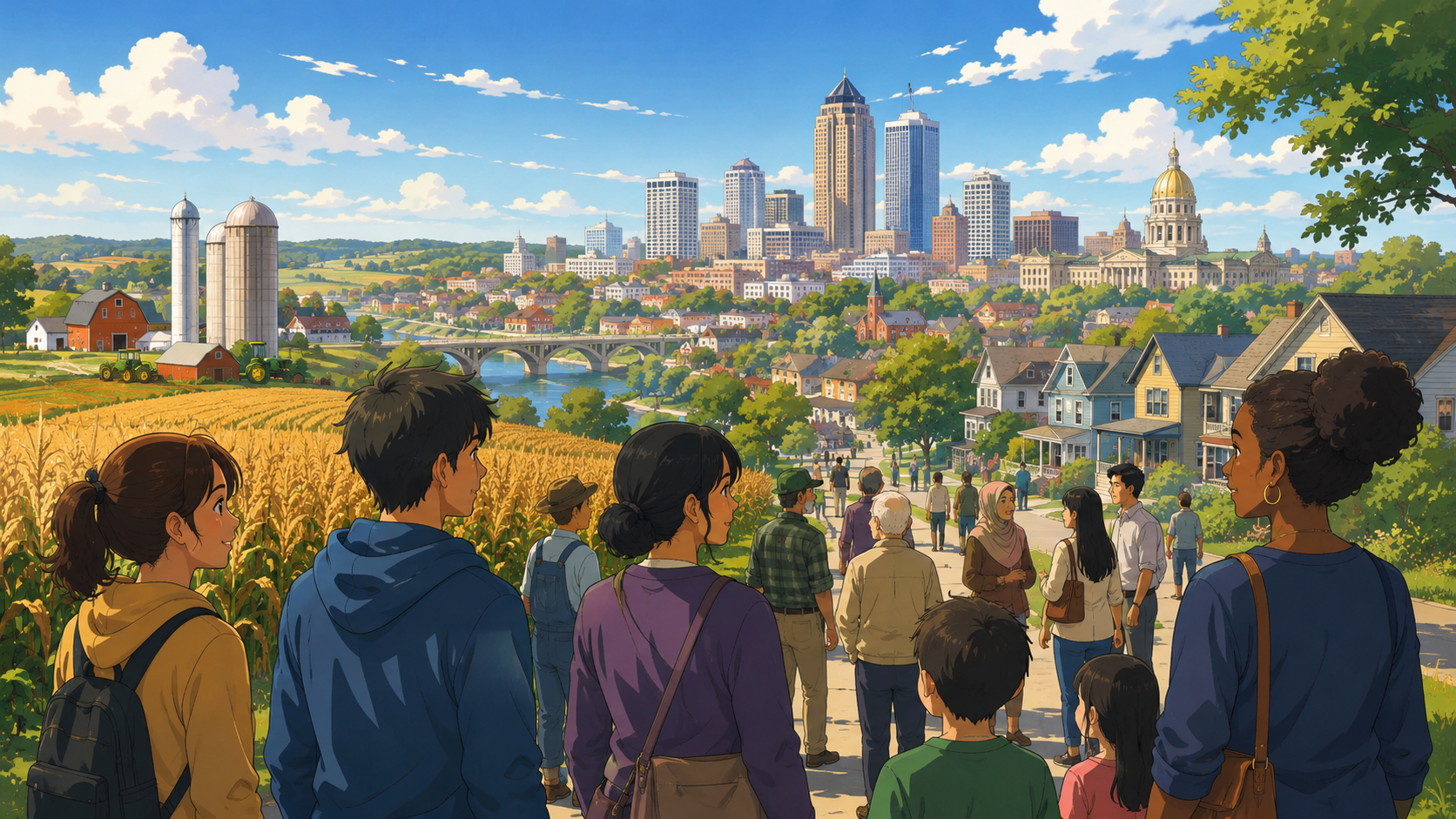
Introduction on Changing Demographics in Iowa
Migration has always been one of the most significant forces shaping societies. People move across regions and countries for employment, education, family reunification, safety, and improved living standards. These movements influence not only population size but also social institutions, cultural identities, labor markets, and community relationships. In the United States, the state of Iowa presents an interesting case for understanding the sociological impact of migration. Traditionally known for its agricultural economy and rural communities, Iowa has experienced demographic transformation through domestic migration, international immigration, urbanization, and an aging population.
The changing demographics of Iowa reflect broader social processes such as globalization, economic restructuring, labor mobility, and multiculturalism. While Iowa remains one of the less densely populated states in the country, migration has significantly influenced its workforce, educational institutions, healthcare systems, and local communities. International migrants have contributed to agriculture, food processing, manufacturing, healthcare, and technology sectors, while internal migration has shifted population growth toward metropolitan areas.

From a sociological perspective, migration is not merely the movement of people. It represents changing social relationships, evolving identities, economic adaptation, and cultural transformation. This article examines migration and changing demographics in Iowa through major sociological theories, explores current migration trends, discusses challenges and opportunities, and analyzes the long-term implications for Iowa’s society.
Understanding Migration from a Sociological Perspective
Migration refers to the movement of people from one geographical location to another with the intention of temporary or permanent settlement. Sociologists classify migration into several categories:
- Internal migration (movement within the country)
- International migration (movement across national borders)
- Rural-to-urban migration
- Urban-to-rural migration
- Temporary and seasonal migration
- Forced migration
- Voluntary migration
Migration is influenced by economic opportunities, education, environmental factors, political conditions, family networks, and technological advancements. These factors are commonly explained through the Push-Pull Theory, where unfavorable conditions push people away from one area while better opportunities attract them elsewhere.
In Iowa, migration has become increasingly important because of labor shortages, declining rural populations, and growing demand for skilled workers.
Historical Migration Patterns in Iowa
Historically, Iowa’s population was shaped by European immigrants during the nineteenth century. German, Scandinavian, Irish, Dutch, Czech, and British settlers established farming communities that influenced the state’s cultural traditions.
Agriculture became the backbone of Iowa’s economy, attracting migrants seeking farmland and economic stability. During the twentieth century, industrialization and mechanized agriculture reduced labor demand in rural areas, leading many young residents to migrate toward urban centers or other states.
Since the late twentieth century, Iowa has experienced increasing international immigration, particularly from Latin America, Asia, and Africa. Refugees and immigrant workers have contributed significantly to local economies, particularly in meat processing, manufacturing, healthcare, and service industries.
Today, migration patterns continue to reshape Iowa’s demographic landscape.
Major Demographic Changes in Iowa
Population Growth
Compared to many rapidly growing states, Iowa has experienced relatively slow population growth. However, migration has helped maintain population stability despite declining birth rates.
International immigrants have become an important source of population growth, helping offset natural population decline in several counties.
Increasing Cultural Diversity
One of the most visible demographic changes is increasing ethnic and racial diversity.
Communities now include growing populations of:
- Hispanic and Latino residents
- Asian immigrants
- African immigrants
- Refugees from various conflict-affected countries
Schools, workplaces, and neighborhoods increasingly reflect multicultural identities.
Aging Population
Like many Midwestern states, Iowa faces an aging population. Many rural counties have high proportions of elderly residents because younger generations move elsewhere for education and employment.
Migration helps partially address labor shortages created by population aging.
Urbanization
Migration has contributed to population growth in metropolitan regions such as Des Moines, Cedar Rapids, Iowa City, and Ames.
Meanwhile, many rural communities continue experiencing population decline.
Causes of Migration to Iowa

Employment Opportunities
Employment remains one of the strongest migration drivers.
Major sectors attracting migrants include:
- Agriculture
- Food processing
- Manufacturing
- Healthcare
- Construction
- Information technology
- Education
Employers facing labor shortages increasingly recruit immigrant workers.
Educational Institutions
Universities attract thousands of domestic and international students each year.
Many graduates remain in Iowa after completing their education, contributing to skilled workforce development.
Affordable Cost of Living
Compared with coastal states, Iowa offers relatively affordable housing, lower living expenses, and safer communities, making it attractive to families and professionals.
Refugee Resettlement
Iowa has welcomed refugees from countries affected by war, political instability, and humanitarian crises. These newcomers contribute to workforce diversity while enriching local cultures.
Internal Migration Trends
Domestic migration within the United States also shapes Iowa’s demographics.
Rural-to-Urban Migration
Young adults often leave rural communities for metropolitan areas offering:
- Better employment
- Higher education
- Healthcare access
- Entertainment
- Career advancement
This migration contributes to rural population decline.
Return Migration
Some former residents return later in life seeking affordable housing, family support, or retirement communities.
Interstate Migration
Workers relocate to Iowa from neighboring states for employment opportunities in healthcare, manufacturing, and technology.
International Immigration in Iowa
International migration has become increasingly significant.
Immigrants contribute to:
- Economic productivity
- Entrepreneurship
- Cultural diversity
- Population growth
- Innovation
Many immigrant-owned businesses create employment opportunities while introducing new cultural traditions.
Immigrant communities also strengthen local economies through consumer spending and tax contributions.
Sociological Theories Explaining Migration
Functionalist Perspective
Functionalists argue that migration contributes to social stability by matching labor supply with economic demand.
In Iowa, migrants help address shortages in agriculture, healthcare, education, and manufacturing.
Migration supports economic growth and strengthens social institutions.
Conflict Perspective
Conflict theorists focus on inequalities affecting migrants.
Common issues include:
- Wage disparities
- Workplace discrimination
- Limited access to healthcare
- Housing inequalities
- Political exclusion
Power differences influence migrants’ opportunities and social mobility.
Symbolic Interactionism
This perspective examines daily interactions between migrants and host communities.
Language, cultural practices, stereotypes, and social relationships shape integration experiences.
Positive interactions encourage inclusion, while prejudice may produce social isolation.
Social Network Theory
Migrants often rely on family members and community networks for employment, housing, and emotional support.
These networks reduce migration costs and facilitate settlement.
Migration and Iowa’s Labor Market

Migration plays an essential role in sustaining Iowa’s economy.
Many industries experience labor shortages because of:
- Population aging
- Declining rural populations
- Low unemployment rates
Migrants fill essential positions in:
- Meatpacking
- Dairy farming
- Crop production
- Logistics
- Healthcare
- Hospitality
- Construction
Highly skilled immigrants also contribute to engineering, medicine, scientific research, and higher education.
Cultural Transformation
Migration has transformed Iowa into a more culturally diverse society.
Communities now celebrate cultural festivals, international cuisines, multilingual education, and cross-cultural events.
Schools increasingly provide English language learning programs.
Religious diversity has also expanded through churches, mosques, temples, and cultural organizations.
These developments promote multicultural understanding while occasionally generating debates over identity and integration.
Challenges Associated with Migration
Despite many benefits, migration creates several sociological challenges.
Language Barriers
Limited English proficiency may restrict employment opportunities and access to public services.
Educational institutions often invest in language support programs.
Housing
Affordable housing shortages affect both migrants and long-term residents in growing communities.
Healthcare Access
Some migrants encounter barriers related to insurance, transportation, language, or legal status.
Community health organizations increasingly provide culturally sensitive healthcare.
Social Integration
Building trust between newcomers and established residents takes time.
Community organizations, schools, and religious institutions often facilitate integration through cultural exchange programs.
Discrimination
Some migrants experience prejudice based on ethnicity, nationality, religion, or language.
Reducing discrimination remains essential for promoting social cohesion.
Migration and Education
Schools play a central role in integrating migrant families.
Educational institutions support migration through:
- English language instruction
- Cultural inclusion
- Diversity education
- Family engagement programs
- Counseling services
Students from migrant families often enrich classrooms by introducing diverse perspectives and multilingual abilities.
Universities also benefit from international students who contribute to research and innovation.
Rural Communities and Demographic Change
Many rural Iowa communities face declining populations due to youth outmigration.
Migration helps sustain these communities by:
- Filling workforce shortages
- Supporting local businesses
- Maintaining school enrollment
- Preserving healthcare facilities
- Increasing tax revenues
Without migration, some rural communities would experience even greater economic decline.
Economic Contributions of Migrants
Migrants make significant contributions through:
- Entrepreneurship
- Tax payments
- Consumer spending
- Workforce participation
- Innovation
- Agricultural production
Small businesses established by immigrants often revitalize declining neighborhoods.
These enterprises also generate employment for local residents.
Social Capital and Community Development on Changing Demographics in Iowa
Sociologists emphasize the importance of social capital—networks of trust and cooperation.
Successful integration depends upon:
- Community organizations
- Religious institutions
- Volunteer groups
- Local governments
- Schools
Strong social networks encourage cooperation between migrants and long-term residents.
This social capital improves community resilience and social cohesion.
Future Demographic Trends in Iowa
Several demographic trends are expected to shape Iowa’s future.
Population aging will likely continue, increasing demand for healthcare workers and caregivers.
International migration may become even more important for maintaining economic growth.
Urban areas are expected to experience continued expansion, while some rural counties may continue losing population unless migration offsets decline.
Technological industries may attract more highly educated professionals from across the United States and abroad.
Climate-related migration could also influence future population patterns as environmental conditions change in other regions.
Policy Considerations on Changing Demographics in Iowa
Effective migration policies can strengthen Iowa’s long-term development.
Important priorities include:
- Expanding workforce development programs
- Supporting English language education
- Improving affordable housing
- Enhancing healthcare accessibility
- Promoting anti-discrimination initiatives
- Encouraging community integration
- Investing in rural development
Balanced policies benefit both migrants and existing residents while supporting sustainable economic growth.
Conclusion on Changing Demographics in Iowa
Migration has become one of the defining forces shaping Iowa’s contemporary society. From a sociological perspective, migration represents far more than population movement; it reflects changing economic structures, evolving cultural identities, demographic transformation, and shifting social relationships. Iowa’s experience demonstrates how international immigration, domestic migration, urbanization, and population aging interact to influence communities across the state.
Migrants contribute significantly to Iowa’s workforce, economy, education system, and cultural diversity. At the same time, challenges such as language barriers, housing shortages, healthcare access, and social integration require thoughtful policy responses. Sociological theories—including functionalism, conflict theory, symbolic interactionism, and social network theory—offer valuable insights into these complex processes.
As Iowa continues adapting to demographic change, successful integration, inclusive public policies, and strong community institutions will remain essential. Embracing diversity while promoting equal opportunities can help Iowa build a resilient society that benefits both newcomers and long-term residents. Understanding migration through a sociological lens ultimately highlights the interconnected nature of people, communities, and social change in an increasingly globalized world.
FAQs on Changing Demographics in Iowa
1. What does Changing Demographics in Iowa mean?
Changing Demographics in Iowa refers to shifts in the state’s population based on age, race, ethnicity, migration, education, and urbanization over time.
2. What are the main factors driving Changing Demographics in Iowa?
The primary drivers include international immigration, domestic migration, declining birth rates, an aging population, and economic opportunities.
3. How has migration influenced Changing Demographics in Iowa?
Migration has increased cultural diversity, strengthened the labor force, and helped offset population decline in many communities.
4. Why is the aging population important in Changing Demographics in Iowa?
An aging population increases demand for healthcare, social services, and skilled workers while influencing economic and policy decisions.
5. Which communities are most affected by Changing Demographics in Iowa?
Rural communities often face population decline, while urban areas like Des Moines and Iowa City experience population growth and greater diversity.
6. How does Changing Demographics in Iowa affect the labor market?
It creates both opportunities and challenges by increasing labor demand in healthcare, agriculture, manufacturing, and technology sectors.
7. What role do immigrants play in Changing Demographics in Iowa?
Immigrants contribute to workforce growth, entrepreneurship, cultural diversity, and economic development across the state.
8. How does Changing Demographics in Iowa impact education?
Schools increasingly serve multicultural student populations, expanding bilingual education and diversity-focused learning programs.
9. What sociological theories explain Changing Demographics in Iowa?
Functionalism, Conflict Theory, Symbolic Interactionism, and Social Network Theory help explain demographic changes and migration patterns.
10. Does Changing Demographics in Iowa affect rural communities?
Yes. Many rural areas experience youth outmigration but benefit from immigrant workers who help sustain local economies and public services.
11. How does cultural diversity relate to Changing Demographics in Iowa?
Greater migration has introduced new languages, traditions, religions, and cuisines, making Iowa’s communities increasingly multicultural.
12. What economic benefits result from Changing Demographics in Iowa?
A diverse population supports business growth, innovation, consumer spending, entrepreneurship, and long-term economic stability.
13. What challenges accompany Changing Demographics in Iowa?
Common challenges include affordable housing shortages, language barriers, healthcare access, and social integration.
14. How can policymakers respond to Changing Demographics in Iowa?
Policies supporting workforce development, affordable housing, education, healthcare, and community inclusion can address demographic changes effectively.
15. What is the future outlook for Changing Demographics in Iowa?
Future trends suggest continued population aging, increasing diversity, urban growth, and a greater reliance on migration to support economic development.