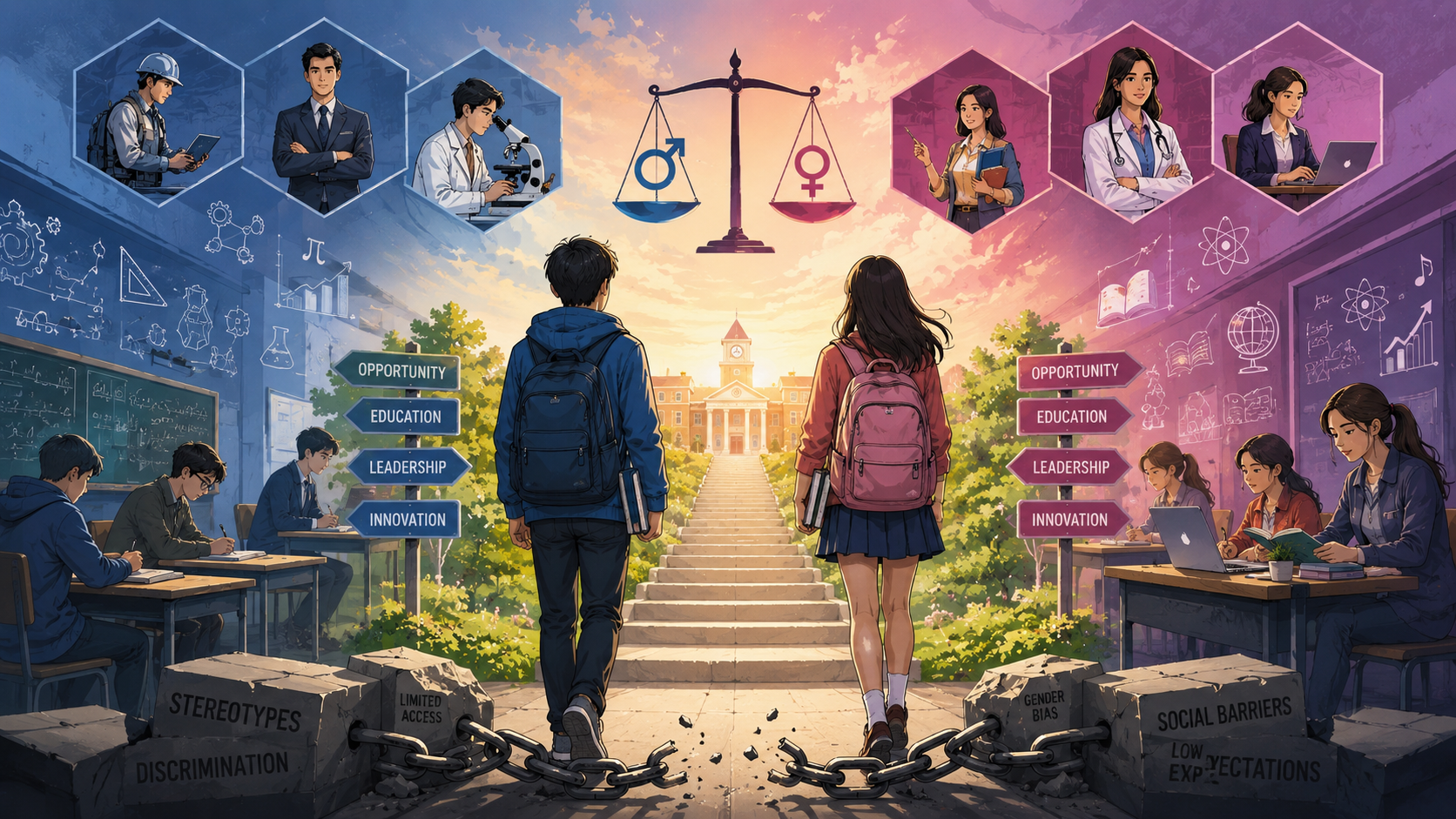
Education is often described as the “great equalizer” because it provides opportunities for individuals to improve their social and economic position. In sociological terms, education is deeply connected with social mobility, class structure, cultural capital, and inequality. However, the reality is far more complex. In many regions of the United States, unequal educational opportunities continue to reinforce existing social divisions rather than eliminate them. West Virginia presents a significant example of how geography, poverty, economic transition, and historical disadvantage shape educational inequality and influence social mobility.
West Virginia has long faced economic and social challenges connected with industrial decline, rural isolation, unemployment, and poverty. These structural conditions directly influence the quality of education available to children and young adults. Educational inequality in the state is not simply about differences in school performance; it is linked with unequal access to resources, technology, healthcare, transportation, and cultural opportunities. These inequalities affect whether individuals can move upward in the social hierarchy or remain trapped within cycles of poverty.
Sociologists view education as one of the most important institutions in society because it transmits values, skills, and knowledge across generations. Yet educational systems can also reproduce social inequality. In West Virginia, many students experience barriers that reduce their chances of upward mobility. The interaction between education and social mobility therefore becomes a crucial sociological issue.

Explore the sociological aspects of social mobility in West Virginia, focusing on education inequality, poverty, rural challenges, and the role of education in economic advancement.
Understanding Educational Inequality
Educational inequality refers to unequal access to quality education and unequal educational outcomes among different social groups. These inequalities may emerge from class differences, rural-urban divisions, race, family background, income, or geographic isolation. Sociologists argue that educational inequality is often connected with broader systems of social stratification.
In West Virginia, inequality is strongly associated with socioeconomic status and rural geography. Many communities in the state are located in mountainous and isolated areas where schools struggle with limited funding, teacher shortages, and poor infrastructure. Public schools in economically distressed counties frequently lack modern educational facilities, advanced technology, and extracurricular opportunities.
Educational inequality also appears in the form of achievement gaps. Students from low-income households often perform lower on standardized tests, have higher dropout rates, and face greater obstacles in accessing higher education. These inequalities are not merely individual failures; they reflect structural disadvantages embedded within society.
Historical Background of Education in West Virginia
The historical development of West Virginia helps explain present educational challenges. The state’s economy was traditionally dependent on coal mining, manufacturing, and resource extraction industries. For decades, many working-class families relied on manual labor jobs that did not require advanced educational qualifications.
During the twentieth century, industrial employment provided economic stability for many communities. However, the decline of the coal industry and industrial restructuring created widespread unemployment and economic insecurity. As industries collapsed, tax revenues declined, affecting public institutions including schools.
Many rural counties experienced population decline, poverty, and reduced investment in education. The weakening of local economies limited educational development and contributed to persistent inequality. Historical dependence on extractive industries also shaped cultural attitudes toward formal education, as employment opportunities were once available without college degrees.
Today, educational institutions in West Virginia continue to struggle with the legacy of economic decline. Limited economic diversification means that many students face uncertainty about employment opportunities even after completing education.
Sociology of Education and Social Stratification
Sociologists have developed several theories to explain educational inequality and social mobility. Functionalist theorists argue that education helps maintain social order by preparing individuals for different roles in society. According to this perspective, schools reward merit and talent.
Conflict theorists, however, argue that education reproduces class inequality rather than eliminating it. According to conflict theory, schools often favor students from privileged backgrounds because they possess greater economic and cultural resources. Educational institutions may therefore reinforce social stratification.

Pierre Bourdieu’s concept of cultural capital is especially useful in understanding educational inequality in West Virginia. Cultural capital includes language skills, attitudes, habits, and knowledge transmitted through family environments. Middle-class families generally provide children with educational advantages such as books, tutoring, technological access, and academic support. Working-class and low-income families may lack these resources, creating unequal educational outcomes.
The concept of social reproduction also explains how inequality persists across generations. Schools often mirror broader social inequalities rather than challenge them.
In West Virginia, children born into poor households are more likely to attend underfunded schools, experience educational disadvantages, and remain within lower socioeconomic classes as adults. Thus, limited educational opportunities reduce the possibility of upward social mobility.
Rural Isolation and Educational Challenges
One of the most important sociological factors influencing education in West Virginia is rural isolation. Many communities are geographically remote, creating barriers to educational access. Students may travel long distances to attend school, and some areas experience limited internet connectivity and transportation facilities.
Rural schools often struggle to recruit and retain qualified teachers. Educators may avoid isolated regions because of lower salaries, fewer professional opportunities, and limited infrastructure. As a result, schools in poorer counties may experience shortages in science, mathematics, and specialized subject teachers.
The digital divide became especially visible during the COVID-19 pandemic when online education became essential. Many students in rural West Virginia lacked reliable internet access or digital devices. This situation widened educational inequality and placed disadvantaged students further behind academically.
Rural schools may also offer fewer advanced placement courses, vocational training programs, and extracurricular activities compared to urban or suburban schools. These limitations reduce students’ opportunities for academic development and college preparation.
Poverty and Educational Outcomes
Poverty is one of the strongest predictors of educational inequality in West Virginia. Families with limited financial resources often struggle to provide educational support for children. Low-income students may face food insecurity, unstable housing, healthcare problems, and psychological stress, all of which negatively affect academic performance.
Sociological research consistently shows that children from poor households are more likely to experience lower educational attainment. Poverty influences educational achievement through multiple pathways:
- Limited access to learning materials
- Lack of tutoring and private educational support
- Reduced parental educational involvement
- Poor healthcare and nutrition
- Increased psychological stress
- Lower access to technology
In West Virginia, child poverty rates in certain counties remain significantly high. Economic hardship affects both school systems and individual students. Underfunded schools may lack libraries, laboratories, and modern educational technologies. Teachers working in such environments often face overwhelming challenges.
Poverty also influences educational aspirations. Students growing up in economically distressed communities may develop limited expectations regarding higher education and professional careers. This process reflects what sociologists describe as “social conditioning,” where individuals internalize the constraints of their social environment.
Family Background and Cultural Capital
Family environment plays a crucial role in educational success. Parents with higher educational attainment generally possess greater cultural capital and are better equipped to guide children academically. They may help with homework, encourage reading habits, and provide information about college opportunities.
In contrast, families experiencing economic hardship may struggle to provide academic support because of financial pressures, work demands, or limited educational experience. This does not mean that low-income parents care less about education; rather, structural constraints limit their ability to support children in the same ways as middle-class families.
In West Virginia, educational inequality often reflects intergenerational patterns. Communities affected by long-term unemployment and poverty may experience lower college attendance rates across generations. Children growing up in such environments may have limited exposure to professional role models or higher educational institutions.
Bourdieu’s theory of cultural reproduction explains how schools often reward middle-class norms and behaviors. Students possessing middle-class cultural capital tend to perform better because educational institutions are structured around those cultural expectations.
Race, Ethnicity, and Educational Inequality
Although West Virginia has a relatively smaller racial minority population compared to many states, racial and ethnic inequalities still exist within educational systems. Minority students may experience unequal access to resources, discrimination, or limited representation in educational curricula.
African American students and other minority groups often face additional barriers connected with historical inequality and economic disadvantage. Sociologists emphasize that educational inequality cannot be understood solely through class analysis; race and ethnicity also shape educational experiences.
Intersectionality is important in analyzing educational inequality. Students may experience overlapping disadvantages based on class, race, gender, and geography. For example, a low-income minority student in a rural county may face multiple structural barriers simultaneously.
Higher Education and Social Mobility
Higher education is often viewed as a pathway to upward social mobility. College degrees generally increase employment opportunities, income levels, and occupational prestige. However, access to higher education is itself unequal.
Many students in West Virginia face financial barriers to attending college. Rising tuition costs, student debt, and economic insecurity discourage higher educational participation. Students from low-income households may prioritize immediate employment over long-term educational investment.
Educational attainment levels in West Virginia remain below the national average. Lower college completion rates reduce opportunities for upward social mobility and contribute to persistent socioeconomic inequality.
Community colleges and vocational education programs play an important role in the state by providing accessible educational opportunities. These institutions help students develop technical skills and improve employment prospects. However, unequal preparation at the school level still affects students’ ability to succeed in higher education.
Sociologists argue that while education can promote mobility, it cannot fully eliminate inequality without broader structural changes. Economic opportunities, labor markets, and social policies also influence whether educational achievement translates into upward mobility.
The Role of Schools in Social Mobility
Schools can either reinforce inequality or help reduce it. Effective educational institutions provide students with knowledge, skills, confidence, and opportunities for advancement. Teachers often play a transformative role in encouraging disadvantaged students.

In West Virginia, many educators work under difficult conditions yet continue supporting students facing economic and social challenges. Schools frequently serve as community centers providing meals, counseling, healthcare support, and social services.
Programs aimed at reducing inequality include:
- Early childhood education initiatives
- School meal programs
- Financial aid for higher education
- Vocational and technical education
- Digital learning expansion
- Rural broadband development
Such initiatives can improve educational outcomes and increase opportunities for social mobility. However, long-term structural investment is necessary to address deep-rooted inequality.
Digital Divide and Technological Inequality
Technological access has become essential for educational success. Students require internet connectivity, computers, and digital literacy skills to participate fully in modern education.
West Virginia’s mountainous geography and rural infrastructure create challenges for internet expansion. Many students in remote communities continue to experience limited digital access. This digital divide contributes to educational inequality because technology is increasingly integrated into learning processes.
Students lacking technological resources may struggle with homework, research, communication, and online learning platforms. During the pandemic, unequal digital access highlighted how technological inequality intersects with class and geography.
Sociologically, the digital divide reflects broader patterns of social inequality. Technological resources are unevenly distributed, giving advantaged groups greater educational opportunities.
Educational Policy and Reform
Government policies significantly influence educational inequality and mobility. Educational funding systems based on local property taxes often create disparities between wealthy and poor communities. Schools in affluent regions generally receive greater financial resources than schools in economically distressed areas.
Policy reforms in West Virginia have focused on improving teacher salaries, expanding broadband access, and strengthening vocational education. However, persistent structural challenges continue to affect educational equality.
Sociologists argue that educational reform must address broader social inequalities rather than focusing only on schools. Poverty reduction, healthcare access, housing stability, and economic development are essential for improving educational outcomes.
Investment in early childhood education is particularly important because educational inequalities often emerge before children enter formal schooling. Early intervention programs can reduce developmental gaps and improve long-term academic success.
Gender and Educational Mobility
Gender dynamics also influence educational experiences and mobility patterns. Historically, women faced barriers in accessing higher education and professional opportunities. Although educational participation among women has increased significantly, gender inequality continues in employment and income structures.
In some rural communities of West Virginia, traditional gender roles still shape occupational expectations. Men may enter manual labor occupations, while women may experience limited professional opportunities due to caregiving responsibilities or labor market constraints.
Education can challenge traditional gender inequalities by expanding career opportunities and social participation. Increased educational attainment among women has contributed to changing social roles and family structures.
Youth Migration and Brain Drain
A major challenge in West Virginia is youth outmigration, often referred to as “brain drain.” Many educated young adults leave the state in search of employment opportunities elsewhere. This migration pattern affects both social mobility and regional development.
Students who achieve educational success may relocate to urban centers offering higher salaries and career advancement. As a result, economically distressed communities lose skilled individuals who could contribute to local development.
Brain drain creates a sociological paradox: education enables upward mobility, but mobility often requires leaving disadvantaged regions. Consequently, communities experiencing educational disadvantage may continue facing economic decline.
Education and the Future of West Virginia
The future of West Virginia depends heavily on educational development and social investment. Education remains one of the most important tools for reducing poverty and promoting economic transformation. Expanding equal educational opportunities can strengthen communities, improve labor market participation, and encourage innovation.
Sociological analysis demonstrates that educational inequality is not simply an individual problem but a structural issue connected with class, geography, economy, and social policy. Addressing inequality therefore requires comprehensive social reform.
Improving social mobility in West Virginia involves:
- Increasing educational funding equity
- Expanding rural infrastructure
- Supporting teachers and schools
- Reducing child poverty
- Improving digital access
- Expanding affordable higher education
- Creating local employment opportunities
Education alone cannot eliminate inequality, but it remains a powerful mechanism for social change when combined with broader economic and social reforms.
Conclusion
Educational inequality and social mobility in West Virginia reflect broader patterns of social stratification within American society. Economic decline, rural isolation, poverty, technological inequality, and historical disadvantage continue to shape educational opportunities across the state.
From a sociological perspective, education functions both as a pathway for upward mobility and as a mechanism that can reproduce inequality. Students from privileged backgrounds often possess greater economic and cultural resources, while disadvantaged students face structural barriers limiting academic success.
The relationship between education and mobility in West Virginia demonstrates that inequality is deeply rooted within social institutions and community structures. Schools alone cannot solve these problems without broader investment in economic development, healthcare, infrastructure, and social welfare.
Nevertheless, education remains central to the future of the state. Expanding equal educational opportunities can promote social inclusion, economic growth, and greater social mobility. By addressing structural inequalities and investing in educational equity, West Virginia can create pathways for future generations to achieve social and economic advancement.
FAQs on Social Mobility in West Virginia
1. What is social mobility in West Virginia?
Social mobility in West Virginia refers to the ability of individuals or families to improve their social and economic status through education, employment, and economic opportunities within the state.
2. Why is social mobility in West Virginia an important sociological issue?
Social mobility in West Virginia is important because poverty, rural isolation, and unequal educational opportunities often limit people’s chances of upward economic advancement.
3. How does education affect social mobility in West Virginia?
Education strongly influences social mobility in West Virginia by providing skills, qualifications, and career opportunities that can help individuals move into higher social and economic positions.
4. What are the major barriers to social mobility in West Virginia?
Major barriers to social mobility in West Virginia include poverty, unemployment, limited access to higher education, rural inequality, and inadequate technological infrastructure.
5. How does rural geography impact social mobility in West Virginia?
Rural geography affects social mobility in West Virginia by limiting access to quality schools, internet connectivity, transportation, and employment opportunities.
6. Does poverty reduce social mobility in West Virginia?
Yes, poverty significantly reduces social mobility in West Virginia because low-income families often lack access to quality education, healthcare, and economic resources.
7. What role do schools play in social mobility in West Virginia?
Schools play a major role in social mobility in West Virginia by helping students gain knowledge, skills, and qualifications necessary for better employment and higher social status.
8. How does higher education influence social mobility in West Virginia?
Higher education improves social mobility in West Virginia by increasing employment opportunities, income potential, and occupational prestige.
9. Why do many young people leave West Virginia after education?
Many young people leave because they seek better employment opportunities, higher salaries, and career growth outside the state, contributing to brain drain.
10. How does the digital divide affect social mobility in West Virginia?
Limited internet access and technological inequality reduce educational and employment opportunities, negatively affecting social mobility in West Virginia.
11. Can vocational education improve social mobility in West Virginia?
Yes, vocational and technical education can improve social mobility in West Virginia by preparing students for skilled jobs and local employment opportunities.
12. How does family background influence social mobility in West Virginia?
Family background affects social mobility in West Virginia through differences in income, educational support, cultural capital, and access to resources.
13. What is the connection between unemployment and social mobility in West Virginia?
High unemployment rates reduce social mobility in West Virginia because limited job opportunities make economic advancement more difficult.
14. How can government policies improve social mobility in West Virginia?
Government policies can improve social mobility in West Virginia through better school funding, affordable higher education, rural development, and poverty reduction programs.
15. What is the future of social mobility in West Virginia?
The future of social mobility in West Virginia depends on educational reform, economic diversification, technological development, and investment in rural communities.
1 thought on “Education Inequality and Social Mobility in West Virginia”