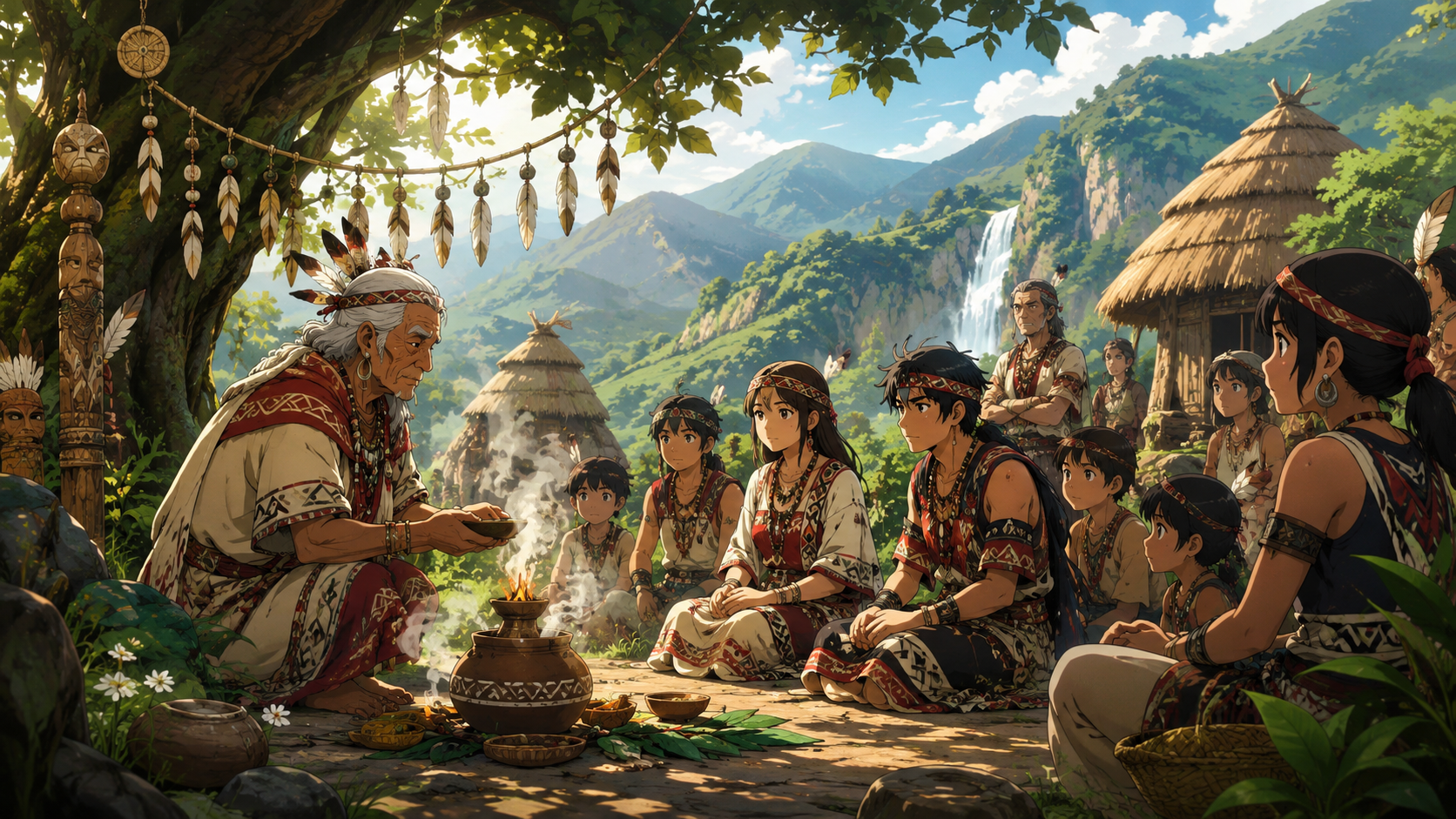
India is known for its cultural diversity, religious pluralism, and rich heritage of indigenous traditions. Alongside major organized religions such as Hinduism, Islam, Christianity, Sikhism, Buddhism, and Jainism, India is home to numerous tribal religions and indigenous belief systems that have existed for centuries. These belief systems are deeply connected with nature, ancestors, spirits, community traditions, and local cultural practices. Tribal religions represent one of the oldest forms of spiritual expression in the Indian subcontinent and continue to play a vital role in shaping the social life of tribal communities.
From a sociological perspective, tribal religions are not merely systems of worship but also institutions that regulate social relationships, cultural identity, economic activities, and ecological ethics. Tribal beliefs provide meaning to life, strengthen collective solidarity, preserve oral traditions, and create a sense of belonging among indigenous communities. At the same time, modernization, urbanization, globalization, religious conversion, and state intervention have significantly influenced tribal religious life in contemporary India.

This article explores tribal religions and indigenous beliefs in India from a sociological viewpoint, examining their characteristics, social functions, regional diversity, interaction with mainstream religions, and the challenges they face in modern society.
Meaning of Tribal Religion
Tribal religion refers to the religious beliefs and practices followed by indigenous or tribal communities that are usually based on oral traditions rather than written scriptures. These religions are often animistic, meaning they believe that natural objects such as rivers, mountains, forests, animals, and trees possess spiritual power.
Indian tribes are commonly referred to as Scheduled Tribes under the Constitution of India. These communities often maintain distinct cultural identities, languages, rituals, and spiritual practices. Their religious systems differ from institutionalized religions because they are closely tied to everyday life, environment, and social organization.
Sociologists and anthropologists have long studied tribal religions to understand how human societies develop symbolic systems and social structures. Thinkers like Émile Durkheim, Bronisław Malinowski, and A.R. Radcliffe-Brown emphasized that religion performs important social functions by maintaining social cohesion and collective consciousness.
Historical Background of Tribal Religions in India
Tribal religions in India have ancient origins that predate many organized religions. Before the spread of Vedic Hinduism and later world religions, indigenous communities across forests, hills, and remote regions practiced nature worship, ancestor worship, and spirit worship.
Different tribal groups developed unique systems of belief depending on their ecological environment and historical experiences. Archaeological and anthropological evidence suggests that many early forms of religion in India were linked to fertility cults, sacred groves, totemic practices, and ritual sacrifices.
Over time, interaction between tribes and mainstream society led to cultural exchange. Some tribal communities adopted Hindu deities and rituals, while others retained distinct identities. Colonial rule further transformed tribal religious life through missionary activities, census classification, and administrative policies.
In independent India, tribal religions became an important subject of sociological discussion because they reflect issues of identity, marginalization, and cultural survival.
Major Characteristics of Tribal Religions
Nature Worship
One of the central features of tribal religions is nature worship. Tribes often consider forests, rivers, hills, animals, and celestial bodies sacred. Nature is viewed not merely as a physical environment but as a living spiritual force.
For example, many tribal communities worship the sun, moon, earth, rain, and trees. Sacred groves are protected areas where cutting trees or harming wildlife is prohibited because they are believed to be inhabited by spirits or deities.
Nature worship also reflects ecological wisdom. Tribal societies traditionally maintain a balanced relationship with the environment, emphasizing conservation and sustainable living.
Animism
Animism is a common element in tribal belief systems. The concept refers to the belief that spirits exist in natural objects and living beings. Tribal people may believe that every mountain, river, tree, or animal possesses a soul.
British anthropologist Edward B. Tylor identified animism as one of the earliest forms of religion. In tribal societies, spirits may be benevolent or malevolent, and rituals are performed to maintain harmony with them.
Animistic beliefs influence agricultural activities, hunting practices, festivals, and social customs.
Ancestor Worship
Ancestor worship is another important feature of tribal religions in India. Tribal communities often believe that the spirits of ancestors continue to influence the lives of the living.
Ancestors are respected as protectors and guardians of the community. Rituals and offerings are made to seek blessings, protection, and prosperity. Such practices strengthen kinship ties and reinforce continuity between generations.
Totemism
Totemism refers to the belief in a symbolic relationship between a social group and a particular animal, plant, or object. Many tribes identify themselves with specific totems and consider them sacred.
A clan may believe that it descended from a tiger, snake, bird, or tree. Members of the clan generally avoid harming or consuming their totemic symbol. Totemism helps regulate marriage rules, social identity, and group solidarity.
Oral Traditions
Unlike organized religions that rely on written scriptures, tribal religions are mainly transmitted through oral traditions. Myths, legends, songs, folk tales, and rituals are passed from one generation to another.
Oral traditions preserve the historical memory, moral values, and cultural identity of tribal communities. Storytelling and ritual performances play a major role in maintaining social cohesion.
Tribal Religions Across Different Regions of India
India has a vast variety of tribal communities, each with distinct religious traditions.
Tribal Religions in Central India
Central India, including states like Jharkhand, Chhattisgarh, Odisha, and Madhya Pradesh, has a large tribal population. Tribes such as the Santhal, Munda, Oraon, and Gond follow indigenous religious systems.
The Santhals worship nature spirits and supreme deities associated with forests and agriculture. Their religious festivals are closely linked with farming cycles.
The Gonds believe in clan deities, village gods, and ancestral spirits. Ritual specialists known as priests or shamans conduct ceremonies during festivals and agricultural events.
Tribal Religions in Northeast India
The northeastern states have a rich diversity of tribal religions. Tribes such as the Nagas, Mizos, Khasis, Garos, and Bodos historically practiced animistic and ancestor-based religions.

The Khasi tribe of Meghalaya traditionally follows indigenous beliefs centered around sacred forests and ancestral worship. Many tribal festivals in the region celebrate harvests, fertility, and communal unity.
However, Christianity has significantly influenced tribal societies in Northeast India due to missionary activities during colonial and postcolonial periods.
Tribal Religions in Western India
In Rajasthan and Gujarat, tribes such as the Bhils and Garasias maintain indigenous religious traditions mixed with Hindu influences.
The Bhils worship local deities, ancestral spirits, and nature forces. Folk rituals, music, and dance form an essential part of their religious practices.
Tribal Religions in South India
South Indian tribes like the Todas, Kotas, Chenchus, and Irulas possess unique spiritual systems. The Todas of the Nilgiri Hills traditionally consider buffaloes sacred and perform elaborate rituals connected with dairy activities.
Sacred landscapes, hills, and forests remain central to the religious life of many South Indian tribal communities.
Sociological Functions of Tribal Religions
Social Cohesion
Émile Durkheim argued that religion strengthens social solidarity by creating collective consciousness. Tribal religions play a similar role by uniting community members through shared beliefs, rituals, and festivals.
Religious ceremonies bring people together and reinforce social relationships. Collective participation in rituals strengthens cooperation and mutual trust.
Regulation of Social Behavior
Tribal religions regulate social norms and moral conduct. Beliefs in spirits, ancestors, and supernatural punishment encourage people to follow customary laws and ethical values.
Religious taboos may prohibit harmful activities such as overhunting, forest destruction, or violation of marriage rules. Thus, religion contributes to social order and environmental balance.
Preservation of Cultural Identity
Religion is a major source of cultural identity among tribal communities. Indigenous belief systems preserve languages, songs, myths, and rituals that distinguish tribal groups from mainstream society.
In modern times, tribal religious identity has become linked with movements for cultural rights and political recognition.
Psychological Security
Bronisław Malinowski viewed religion as a source of psychological comfort during uncertainty and crisis. Tribal rituals often help individuals cope with illness, death, natural disasters, and economic difficulties.
Belief in supernatural protection provides emotional stability and collective hope.
Ecological Balance
Tribal religions promote environmental ethics through sacred beliefs associated with forests, rivers, and animals. Many tribes protect biodiversity through religious customs.
Sacred groves, for example, function as ecological conservation zones. Such practices demonstrate the close relationship between indigenous spirituality and sustainable living.
Tribal Festivals and Rituals
Festivals occupy an important place in tribal religious life. They are usually connected with agriculture, hunting, fertility, rain, and seasonal changes.
The Santhal festival of Sohrai celebrates cattle and harvest prosperity. The Karam festival, celebrated by several tribes in eastern India, honors nature and community welfare.
Dance, music, drumming, and communal feasting are integral parts of tribal festivals. These activities strengthen social integration and cultural continuity.

Rituals are often conducted by traditional priests, shamans, or elders who are believed to possess spiritual knowledge. Ritual specialists mediate between humans and supernatural forces.
Interaction with Mainstream Religions
Tribal religions in India have interacted with Hinduism, Christianity, Buddhism, and Islam for centuries. This interaction has led to processes of cultural assimilation, syncretism, and transformation.
Sanskritization
Sociologist M.N. Srinivas introduced the concept of Sanskritization to explain how lower social groups adopt the customs and rituals of higher Hindu castes to gain social status.
Many tribal communities adopted Hindu gods, rituals, and festivals while retaining indigenous practices. This process blurred the distinction between tribal religion and folk Hinduism.
Christian Missionary Influence
Christian missionaries played an important role in tribal regions, especially in Northeast India and Central India. Missionary activities introduced modern education, healthcare, and literacy.
Many tribal groups converted to Christianity, leading to changes in traditional religious practices. However, conversion also became associated with issues of identity, empowerment, and resistance against social marginalization.
Religious Syncretism
In several regions, tribal religions merged elements from different religions. Tribal communities may worship Hindu deities while continuing ancestor worship and animistic rituals.
This syncretic nature reflects the dynamic and adaptive character of tribal spirituality.
Challenges Faced by Tribal Religions
Modernization and Urbanization
Modernization has significantly affected tribal societies. Migration to urban areas, industrialization, and formal education have weakened traditional religious institutions.
Young generations may become detached from indigenous customs and oral traditions.
Deforestation and Environmental Degradation
Tribal religions are closely connected with forests and natural landscapes. Deforestation, mining, and industrial projects threaten sacred sites and traditional ecological practices.
Loss of forests also disrupts the spiritual and economic life of tribal communities.
Cultural Assimilation
Mainstream cultural influence often leads to the erosion of tribal identities. Indigenous religions may be absorbed into dominant religious systems, reducing their distinctiveness.
Language loss and declining oral traditions further weaken tribal cultural heritage.
Religious Conversion and Identity Politics
Religious conversion remains a sensitive issue in tribal regions. Conversion to Christianity or Hindu reform movements sometimes creates divisions within communities.
At the same time, many tribal groups demand official recognition of their indigenous religions in the national census.
Economic Marginalization
Poverty, displacement, and lack of access to resources continue to affect tribal populations. Economic insecurity often reduces community participation in traditional rituals and festivals.
Tribal Religion and Constitutional Recognition
The Constitution of India recognizes the cultural rights of Scheduled Tribes and provides protections for tribal communities. However, many indigenous religions are not separately categorized in official census data.
Some tribal groups demand recognition of religions such as Sarna, Donyi-Polo, and other indigenous faiths. They argue that tribal religions should not be automatically classified under major religions like Hinduism.
Recognition of tribal religions is linked with broader issues of identity, autonomy, and cultural preservation.
Tribal Religions in Contemporary India
In recent decades, there has been growing awareness regarding indigenous rights and cultural diversity. Tribal communities are increasingly asserting their religious identity through social movements, festivals, and political organizations.
Scholars, activists, and environmentalists have also highlighted the ecological knowledge embedded in tribal belief systems. Indigenous spiritual traditions are now seen as valuable sources of sustainable environmental practices.
Digital media and cultural documentation projects are helping preserve tribal languages, myths, and rituals. However, balancing modernization with cultural preservation remains a major challenge.
Conclusion
Tribal religions and indigenous beliefs in India represent an important dimension of the country’s cultural and sociological diversity. These belief systems are deeply rooted in nature, community life, oral traditions, and ecological ethics. From ancestor worship and animism to sacred groves and seasonal festivals, tribal religions provide social cohesion, moral guidance, cultural identity, and environmental consciousness.
From a sociological perspective, tribal religions are not primitive remnants of the past but living systems that continue to shape the everyday lives of millions of indigenous people. They reveal how religion functions as a social institution that connects individuals with community, environment, and history.
Despite facing challenges from modernization, deforestation, cultural assimilation, and identity politics, tribal religions continue to survive and adapt in contemporary India. Protecting indigenous belief systems is not only important for preserving cultural heritage but also for promoting social justice, ecological sustainability, and pluralism in Indian society.
The study of tribal religions therefore remains highly significant for understanding the relationship between culture, religion, identity, and social change in modern India.
FAQs on Indigenous Beliefs in India
1. What are Indigenous Beliefs in India?
Indigenous Beliefs in India refer to the traditional spiritual and religious practices followed by tribal and native communities, often based on nature worship, ancestor worship, and animistic traditions.
2. Why are Indigenous Beliefs in India important?
Indigenous Beliefs in India are important because they preserve tribal identity, cultural heritage, ecological knowledge, and traditional social values within indigenous communities.
3. How do Indigenous Beliefs in India differ from organized religions?
Unlike organized religions, Indigenous Beliefs in India are mainly oral, community-centered, and deeply connected with forests, rivers, ancestors, and local customs rather than written scriptures.
4. Which tribes are known for Indigenous Beliefs in India?
Tribes such as the Santhal, Gond, Bhil, Munda, Oraon, Khasi, Naga, and Toda are known for practicing Indigenous Beliefs in India.
5. What is the role of nature in Indigenous Beliefs in India?
Nature plays a central role in Indigenous Beliefs in India, where forests, mountains, rivers, trees, and animals are often considered sacred and spiritually powerful.
6. What is animism in Indigenous Beliefs in India?
Animism in Indigenous Beliefs in India refers to the belief that natural objects and living beings possess spiritual souls or supernatural energies.
7. How do Indigenous Beliefs in India influence tribal society?
Indigenous Beliefs in India influence social behavior, family relations, festivals, environmental ethics, and community unity among tribal populations.
8. What are sacred groves in Indigenous Beliefs in India?
Sacred groves are protected forest areas preserved by tribal communities due to religious and spiritual beliefs associated with Indigenous Beliefs in India.
9. How are festivals connected with Indigenous Beliefs in India?
Festivals connected with Indigenous Beliefs in India are usually related to harvests, agriculture, seasonal changes, fertility, and community welfare.
10. What challenges do Indigenous Beliefs in India face today?
Indigenous Beliefs in India face challenges such as modernization, urbanization, deforestation, religious conversion, and cultural assimilation.
11. Are Indigenous Beliefs in India officially recognized?
Some Indigenous Beliefs in India seek separate recognition in census classifications, as many tribal religions are currently grouped under larger religions.
12. How do Indigenous Beliefs in India support environmental conservation?
Indigenous Beliefs in India encourage environmental protection through sacred forests, taboos against overexploitation, and respect for biodiversity.
13. What is ancestor worship in Indigenous Beliefs in India?
Ancestor worship in Indigenous Beliefs in India involves honoring deceased family members who are believed to guide and protect the community.
14. How has modernization affected Indigenous Beliefs in India?
Modernization has weakened some traditional customs and oral traditions associated with Indigenous Beliefs in India, especially among younger generations.
15. Why is the sociological study of Indigenous Beliefs in India important?
The sociological study of Indigenous Beliefs in India helps scholars understand cultural diversity, tribal identity, religion, social organization, and environmental ethics in Indian society.