Introduction
Wisconsin is often recognized for its dairy industry, manufacturing centers, lakes, and Midwestern culture. However, beneath its image of social stability lies a long history of racial inequality and urban segregation. In recent decades, sociologists, policymakers, and civil rights organizations have increasingly focused on the racial divisions present in Wisconsin’s cities, especially in Milwaukee, which has repeatedly been identified as one of the most racially segregated metropolitan areas in the United States. Race relations and urban segregation in Wisconsin reflect broader American patterns of inequality, but they also possess unique regional characteristics shaped by industrialization, migration, housing policies, education systems, and economic restructuring.
From a sociological perspective, urban segregation is not merely the physical separation of racial groups. It is a complex social process involving unequal access to housing, employment, education, healthcare, transportation, and political representation. Segregation influences daily interactions, social mobility, and the distribution of opportunities within society. Race relations in Wisconsin therefore cannot be understood only through individual prejudice; they must be examined within institutional and structural contexts.
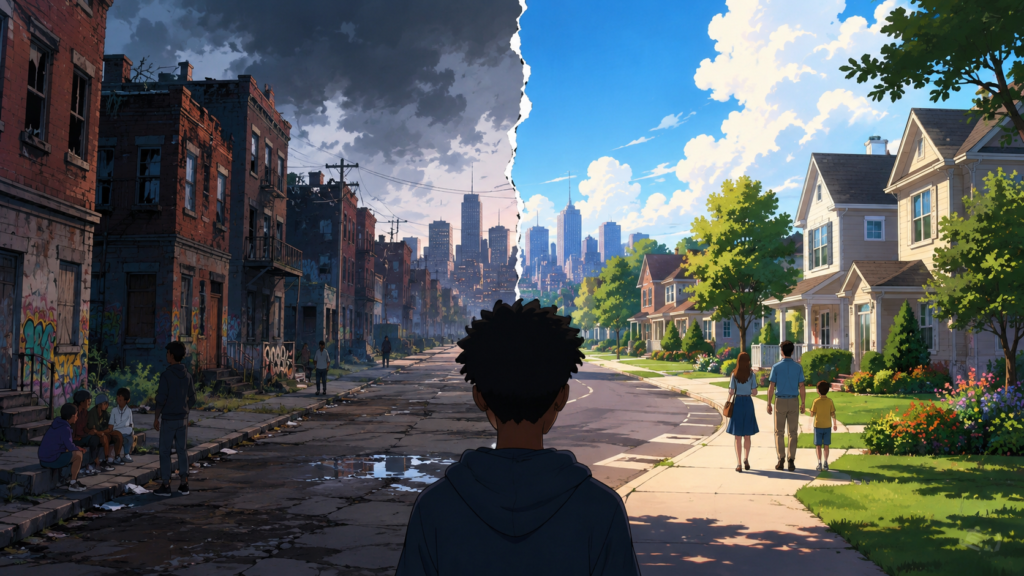
This article explores the sociological dimensions of race relations and urban segregation in Wisconsin. It examines historical developments, causes of segregation, economic and educational inequalities, policing and criminal justice issues, suburbanization, and the social consequences of racial division. The article also discusses efforts toward racial integration and social justice.
Historical Background of Race Relations in Wisconsin
The racial history of Wisconsin differs somewhat from southern states where slavery played a dominant role. Wisconsin entered the Union in 1848 as a free state, and many residents supported abolitionism during the nineteenth century. However, the absence of slavery did not mean the absence of racial discrimination. African Americans in Wisconsin faced exclusion from housing, employment, education, and public life throughout much of the twentieth century.
During the Great Migration between the early 1900s and the 1970s, many African Americans moved from southern states to northern industrial cities in search of economic opportunities and freedom from Jim Crow segregation. Milwaukee became a major destination because of its manufacturing industries, including steel production, brewing, and machinery manufacturing. Black workers contributed significantly to industrial growth, but they were often confined to low-paying jobs and overcrowded neighborhoods.
At the same time, white ethnic communities such as German, Polish, and Irish immigrants established strong neighborhood identities in Wisconsin cities. These communities often resisted racial integration, leading to the development of segregated urban spaces. Restrictive covenants, discriminatory lending practices, and racial violence further reinforced racial boundaries.
One major turning point occurred during the Civil Rights Movement of the 1960s. Activists in Milwaukee organized marches against housing discrimination, demanding open housing laws. Father James Groppi and the National Association for the Advancement of Colored People (NAACP) Youth Council became prominent leaders in these struggles. Their activism revealed how northern segregation operated through housing markets and institutional practices rather than explicit legal segregation alone.
Understanding Urban Segregation Sociologically
Urban segregation refers to the spatial separation of social groups within cities based on race, class, ethnicity, or income. Sociologists view segregation as both a cause and consequence of inequality. Segregated neighborhoods often develop unequal access to resources, creating cycles of poverty and social exclusion.
Several sociological theories help explain segregation in Wisconsin:
Structural Functionalism
Structural functionalists argue that society consists of interconnected institutions working together to maintain order. However, segregation disrupts social integration by limiting interaction between racial groups. Segregated communities often produce unequal educational and economic outcomes, weakening social cohesion.
Conflict Theory
Conflict theorists view segregation as a result of power struggles between dominant and marginalized groups. In Wisconsin, racial segregation can be understood as a system that protects economic and political advantages for dominant white populations while limiting opportunities for minority communities.
Symbolic Interactionism
From the symbolic interactionist perspective, race relations are shaped through everyday interactions and social meanings. Stereotypes about neighborhoods, schools, and communities influence how people perceive racial groups. Media portrayals and cultural narratives often reinforce fear and social distance.
Critical Race Theory
Critical Race Theory argues that racism is embedded within legal, political, and economic institutions. Segregation in Wisconsin is therefore not accidental but connected to policies such as redlining, discriminatory zoning, and unequal public investment.
Milwaukee: The Center of Segregation Debate
Milwaukee is central to discussions about urban segregation in Wisconsin. Sociological studies consistently rank Milwaukee among the most segregated metropolitan areas in America. The city displays stark racial divisions between predominantly white suburbs and predominantly Black inner-city neighborhoods.
African Americans in Milwaukee are concentrated mainly in the northern parts of the city, while many white residents live in suburban areas surrounding the metropolitan region. Latino populations are concentrated in southern neighbourhoods. These patterns are not random; they reflect decades of housing discrimination and economic inequality.
The industrial decline of Milwaukee worsened racial inequality. During the late twentieth century, manufacturing jobs declined because of globalization and automation. Many African American workers who depended on industrial employment experienced unemployment and poverty. White middle-class residents increasingly moved to suburbs, a process known as “white flight.”
This suburbanization created uneven urban development. Suburbs often had better-funded schools, safer environments, and stronger tax bases, while inner-city neighborhoods experienced declining infrastructure and public services.
Housing Discrimination and Redlining
Housing discrimination has been one of the most significant causes of segregation in Wisconsin. During the twentieth century, banks and real estate agencies used practices that restricted minority access to housing.
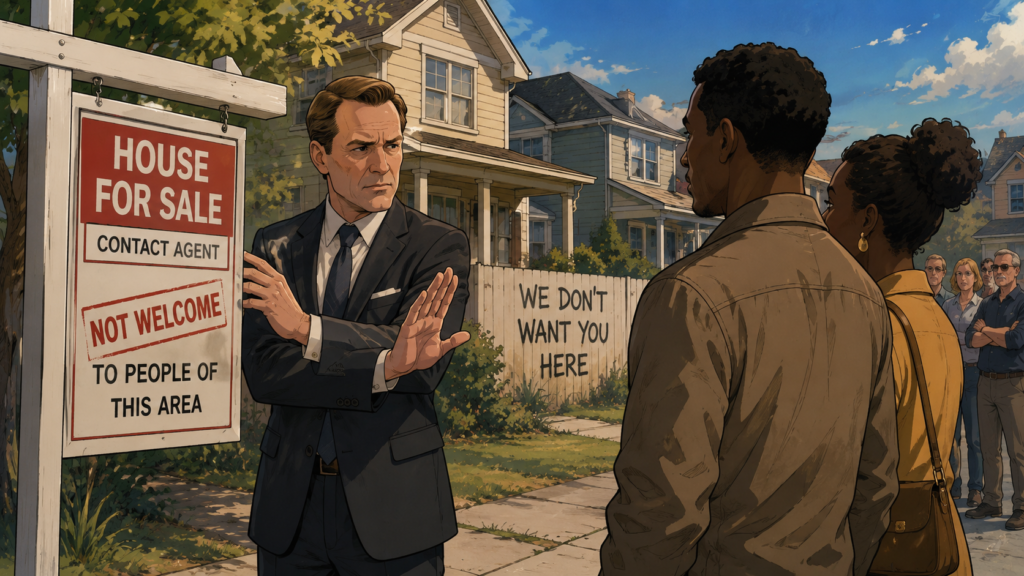
Redlining
Redlining involved denying loans or insurance to residents in minority neighborhoods. Financial institutions labeled Black neighborhoods as risky investments, making it difficult for African Americans to purchase homes or improve property conditions.
Redlining had long-term sociological effects:
- Reduced home ownership among minority populations
- Declining neighborhood investment
- Concentrated poverty
- Limited intergenerational wealth transfer
Because home ownership is a major source of wealth accumulation in American society, discriminatory housing policies contributed to persistent racial wealth gaps.
Restrictive Covenants
Many neighborhoods in Wisconsin used restrictive covenants preventing non-white residents from purchasing homes. Even after such practices became illegal, informal discrimination continued through real estate steering and biased lending practices.
Contemporary Housing Inequality
Although legal segregation has ended, modern housing inequality remains significant. Minority communities often face higher rent burdens, fewer mortgage approvals, and limited access to high-opportunity neighborhoods. Gentrification in some urban areas has also displaced low-income residents.
Education and School Segregation
Educational inequality is deeply connected to urban segregation in Wisconsin. Schools are often funded through local property taxes, meaning wealthier neighborhoods have better-funded educational institutions.
In Milwaukee and other urban centers, many minority students attend underfunded schools with fewer resources, larger class sizes, and lower graduation rates. Segregated schooling reinforces broader social inequality because education strongly influences employment and income opportunities.
Sociologists describe this as the “reproduction of inequality,” where social disadvantages are passed from one generation to another through institutions like schools.
Achievement Gaps
Wisconsin has one of the largest racial achievement gaps in the United States. African American and Latino students often score lower on standardized tests compared to white students. These disparities are linked to structural factors such as:
- Residential segregation
- Poverty
- Unequal school funding
- Limited access to advanced educational programs
- Implicit racial bias
School Choice Debate
Wisconsin has been a major center of school choice and voucher programs. Supporters argue that these programs provide minority students with alternatives to failing public schools. Critics argue that school choice may further fragment educational systems and fail to address root causes of inequality.
Economic Inequality and Labor Market Disparities
Economic inequality strongly shapes race relations in Wisconsin. Minority populations often experience higher unemployment, lower wages, and reduced access to stable employment.
Deindustrialization
The decline of manufacturing industries disproportionately affected African American workers. Many industrial jobs that once provided middle-class stability disappeared during the late twentieth century. New service-sector jobs often offered lower wages and fewer benefits.
Occupational Segregation
Occupational segregation occurs when racial groups are concentrated in different types of jobs. Minority workers are often overrepresented in low-paying sectors such as food service, retail, and temporary labor.
Wealth Inequality
Wealth inequality is particularly severe because of historical exclusion from home ownership and economic investment. White households in Wisconsin generally possess significantly higher wealth than Black households.
Economic disparities contribute to social tensions because unequal access to resources creates feelings of exclusion, marginalization, and distrust toward institutions.
Policing, Criminal Justice, and Race Relations
Policing and criminal justice are major aspects of race relations in Wisconsin. Minority communities, especially African Americans, have often reported disproportionate policing, racial profiling, and unequal treatment within the justice system.
The 2016 police shooting of Sylville Smith in Milwaukee sparked protests and national attention. The incident reflected broader concerns about police-community relations and systemic racism.
Mass Incarceration
African Americans in Wisconsin are incarcerated at disproportionately high rates. Sociologists argue that mass incarceration contributes to social disorganization by disrupting families, limiting employment opportunities, and reinforcing poverty cycles.
Trust and Social Institutions
Low trust between minority communities and law enforcement can weaken social cohesion. Communities experiencing aggressive policing may develop alienation from government institutions.
Conflict theorists argue that criminal justice systems sometimes reflect broader social inequalities rather than neutral enforcement alone.
Latino Communities and Immigration
Although discussions about race relations in Wisconsin often focus on Black-white segregation, Latino communities have become increasingly important in the state’s demographic landscape.
Latino populations in Wisconsin have grown significantly in cities such as Milwaukee, Madison, and Racine. Many Latino residents work in agriculture, food processing, construction, and service industries.
Latino communities often face:
- Language barriers
- Employment insecurity
- Immigration-related discrimination
- Limited healthcare access
Urban segregation also affects Latino populations, with many communities concentrated in specific neighborhoods with limited public resources.

Suburbanization and Spatial Inequality
Suburbanization has intensified racial segregation in Wisconsin. White middle-class families moved from cities to suburban areas during the post-World War II era, taking economic resources and political influence with them.
Suburbs often implemented zoning policies favoring single-family housing and limiting affordable housing development. These policies indirectly excluded low-income and minority populations.
Sociologists describe this process as “spatial inequality,” where geographic location determines access to opportunities such as quality schools, transportation, employment, and healthcare.
Public transportation systems in Wisconsin cities frequently reflect these inequalities. Limited transportation options make it difficult for inner-city residents to access suburban employment centers.
Media, Stereotypes, and Social Perception
Media representations strongly influence race relations. News coverage often associates minority neighborhoods with crime and poverty while ignoring structural causes of inequality.
Symbolic interactionists emphasize that stereotypes shape everyday social interactions. Fear and misunderstanding between racial groups may increase when communities remain socially isolated from one another.
Social media has created both challenges and opportunities. While online platforms can spread misinformation and racial hostility, they also allow activists to organize campaigns for racial justice and awareness.
Health Inequalities and Segregation
Urban segregation affects health outcomes in Wisconsin. Minority neighborhoods often experience:
- Higher pollution exposure
- Limited healthcare facilities
- Food deserts
- Higher stress levels
- Increased chronic disease rates
The COVID-19 pandemic highlighted these inequalities, as minority populations experienced higher infection and mortality rates because of structural disadvantages.
Environmental sociology shows how unequal urban planning and industrial development create environmental racism, where marginalized communities face greater environmental risks.
Community Activism and Social Change on Urban Segregation in Wisconsin
Despite persistent inequality, Wisconsin has a strong history of community activism and racial justice movements.
Civil rights organizations, religious groups, grassroots activists, and youth organizations have worked to challenge segregation and discrimination. These groups advocate for:
- Affordable housing
- Criminal justice reform
- Educational equity
- Economic investment in minority neighborhoods
- Fair employment practices
NAACP and local activist groups continue to play significant roles in promoting racial equality.
Universities and sociological researchers in Wisconsin also contribute by studying inequality and proposing policy reforms.
Government Policies and Reform Efforts
State and local governments have attempted various reforms to reduce segregation and improve race relations. These include:
- Fair housing laws
- Educational reforms
- Community policing initiatives
- Economic development programs
- Diversity and inclusion policies
However, critics argue that reforms are often limited because they fail to address structural inequalities deeply rooted in housing and economic systems.
Policies promoting affordable housing in suburban areas and regional economic cooperation may help reduce segregation over time.
The Future of Race Relations in Wisconsin
The future of race relations in Wisconsin depends on multiple social, economic, and political factors. Demographic changes, urban redevelopment, immigration, and technological transformation will continue shaping racial dynamics.
Younger generations are generally more supportive of multiculturalism and diversity, which may improve intergroup relations. However, economic inequality and political polarization remain major obstacles.
Sociologists emphasize that reducing segregation requires more than changing individual attitudes. Structural reforms involving housing, education, healthcare, transportation, and employment are necessary for meaningful social integration.
Greater investment in urban communities, equitable school funding, and inclusive policymaking may help create a more socially integrated society.
Conclusion on Urban Segregation in Wisconsin
Race relations and urban segregation in Wisconsin reveal the enduring influence of historical inequality within modern society. Although Wisconsin is geographically distant from the American South, it has experienced deep racial divisions shaped by housing discrimination, industrial decline, educational inequality, and suburbanization.
From a sociological perspective, segregation is not simply about physical separation; it represents unequal access to social opportunities and resources. The experiences of African American and Latino communities in Wisconsin demonstrate how institutional structures shape life chances and social mobility.
Milwaukee stands as a powerful example of how racial segregation can persist despite legal equality. Yet Wisconsin also possesses a history of activism, community resistance, and social reform efforts aimed at building a more inclusive society.
Addressing racial inequality requires comprehensive structural change alongside community dialogue and political commitment. Sociological analysis helps reveal that race relations are connected to broader systems of power, economy, and urban development. Understanding these connections is essential for creating a future where social integration and equality become achievable realities in Wisconsin and beyond.
FAQs on Urban Segregation in Wisconsin
1. What is Urban Segregation in Wisconsin?
Urban Segregation in Wisconsin refers to the separation of racial and ethnic communities into different neighborhoods, often resulting in unequal access to housing, education, employment, and public services.
2. Why is Milwaukee considered highly segregated?
Milwaukee is considered highly segregated because historical housing discrimination, white flight, and economic inequality created strong racial divisions between neighborhoods and suburbs and it impact on Urban Segregation in Wisconsin.
3. How did housing policies contribute to Urban Segregation in Wisconsin?
Housing policies such as redlining, restrictive covenants, and discriminatory lending practices prevented minority communities from purchasing homes in many neighbourhoods, reinforcing Urban Segregation in Wisconsin.
4. What role does education play in Urban Segregation in Wisconsin?
Educational inequality is closely connected to Urban Segregation in Wisconsin neighbourhoods because schools are often funded through local property taxes, creating unequal educational opportunities.
5. How does Urban Segregation in Wisconsin affect employment opportunities?
Urban Segregation in Wisconsin limits access to quality jobs, transportation, and professional networks, making economic mobility more difficult for marginalized communities.
6. What is the sociological meaning of racial segregation?
In sociology, racial segregation refers to the institutional and spatial separation of racial groups that creates unequal access to social resources and opportunities.
7. How has industrial decline influenced Urban Segregation in Wisconsin?
The decline of manufacturing industries increased unemployment and poverty in minority neighborhoods, deepening racial and economic impact by Urban Segregation in Wisconsin.
8. What are the social effects of Urban Segregation in Wisconsin?
Urban segregation can lead to poverty concentration, crime, health inequalities, educational gaps, and weakened social cohesion.
9. How does suburbanization increase segregation?
Suburbanization allowed many white middle-class families to move away from urban centers, concentrating poverty and minority populations in inner-city neighborhoods.
10. Is Urban Segregation in Wisconsin still a problem today?
Yes, despite legal reforms, many Wisconsin cities continue to experience racial disparities in housing, schooling, healthcare, and employment.
11. How does Urban Segregation in Wisconsin impact healthcare access?
Segregated communities often have fewer healthcare facilities, higher pollution levels, and limited access to healthy food and medical services.
12. What is redlining in the context of Wisconsin cities?
Redlining was a discriminatory practice where banks denied loans or insurance to residents in minority neighborhoods, reducing investment and wealth creation.
13. How do sociologists explain Urban Segregation in Wisconsin?
Sociologists explain on Urban Segregation in Wisconsin through theories such as conflict theory, structural inequality, and Critical Race Theory, which emphasize institutional discrimination.
14. What efforts are being made to reduce Urban Segregation in Wisconsin?
Efforts include fair housing policies, educational reforms, community activism, affordable housing initiatives, and economic development programs that reduce Urban Segregation in Wisconsin.
15. Why is studying Urban Segregation in Wisconsin important?
Studying on Urban Segregation in Wisconsin, helps people understand how historical discrimination and structural inequality continue to shape social relationships and opportunities today.
1 thought on “Race Relations and Urban Segregation in Wisconsin: A Sociological Analysis”