Introduction
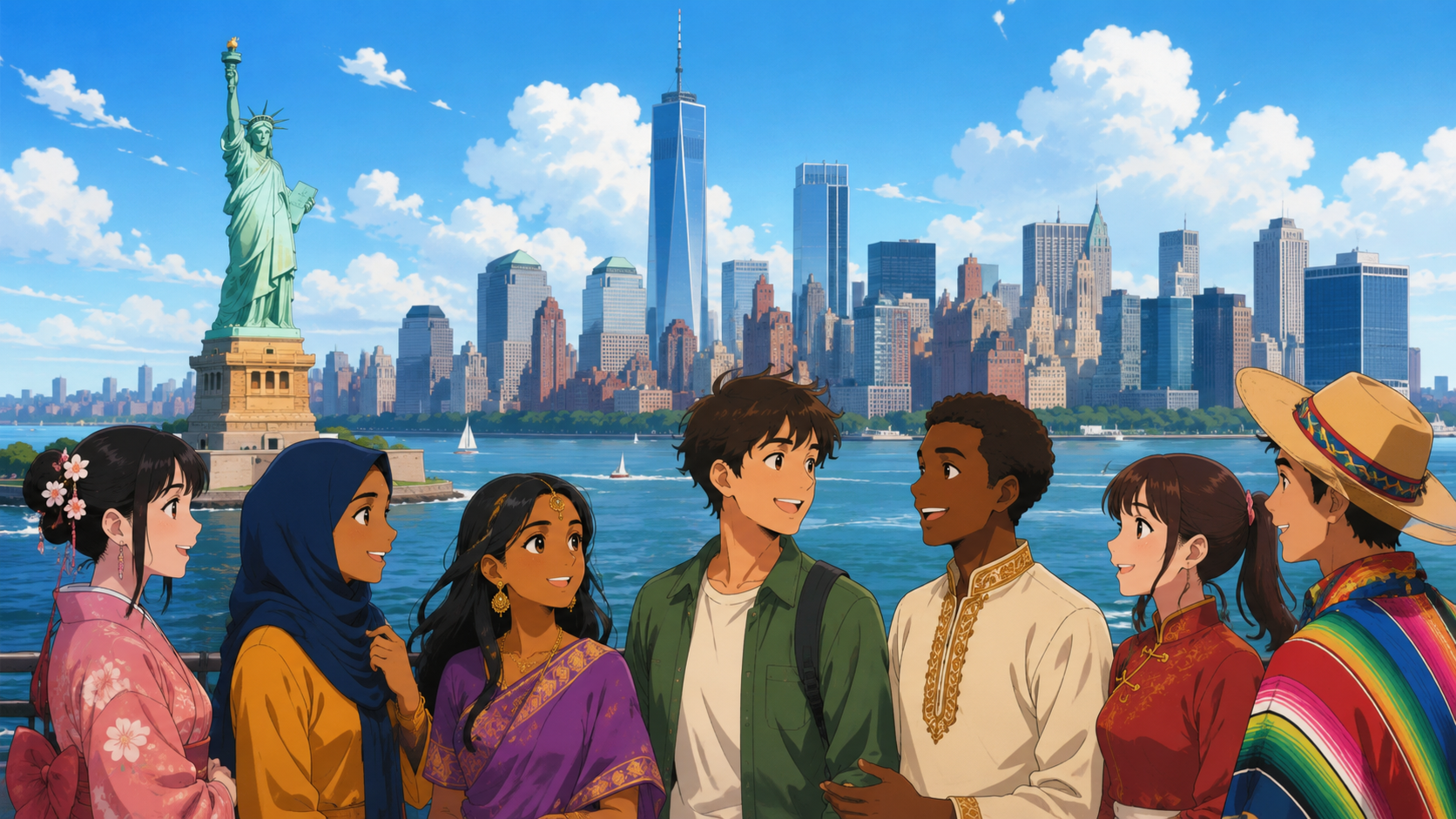
New Jersey is one of the most culturally diverse regions in the United States. Despite being geographically small, the state has become a major destination for immigrants from different parts of the world. Over the decades, immigration has transformed New Jersey into a multicultural society where people from Asia, Latin America, Africa, Europe, and the Caribbean coexist and contribute to economic, social, political, and cultural life. From bustling Indian neighborhoods in Jersey City to Hispanic communities in Newark and Korean business centers in Bergen County, New Jersey represents a living example of multiculturalism in practice.
In sociological terms, immigration refers to the movement of people from one country to another for settlement, employment, education, safety, or better living opportunities. Multiculturalism, on the other hand, refers to the coexistence of diverse cultural groups within a society while maintaining their distinct cultural identities. In New Jersey, both immigration and multiculturalism are deeply interconnected. Immigration has not only changed the demographic structure of the state but has also shaped institutions, educational systems, labor markets, urban spaces, and identity politics.
The sociological significance of immigration in New Jersey lies in its role in shaping social interaction, class formation, ethnic identity, social mobility, and cultural integration. The state reflects both the opportunities and challenges associated with multicultural societies. While diversity has enriched New Jersey economically and culturally, it has also raised concerns regarding inequality, discrimination, housing, labor exploitation, and social cohesion.
This article explores immigration and multiculturalism in New Jersey from a sociological perspective. It examines historical migration trends, demographic changes, cultural diversity, economic contributions, educational impacts, social integration, challenges faced by immigrant communities, and the future of multicultural society in New Jersey.
Historical Background of Immigration in New Jersey
Immigration has played a significant role in the historical development of New Jersey. During the nineteenth and early twentieth centuries, European immigrants from Ireland, Italy, Germany, and Eastern Europe arrived in large numbers. Many worked in factories, ports, railroads, and industrial centers located in cities such as Newark, Paterson, and Jersey City.
The industrial growth of New Jersey attracted labor migrants seeking employment opportunities. Sociologists often describe this period as part of the broader process of industrial urbanization in America. Immigrants formed ethnic neighborhoods, religious institutions, and community organizations that helped preserve cultural identity while adapting to American society.
After the Immigration and Nationality Act of 1965 in the United States, immigration patterns changed significantly. The law removed discriminatory national-origin quotas and opened doors for immigrants from Asia, Latin America, Africa, and the Middle East. Consequently, New Jersey experienced a dramatic increase in non-European immigration.
Indian, Chinese, Filipino, Korean, Dominican, Mexican, Haitian, and Arab communities began growing rapidly across the state. These communities transformed local economies and urban landscapes. Today, New Jersey is among the states with the highest proportion of foreign-born residents in the country.
From a sociological perspective, this shift reflects globalization and transnational migration. Immigrants no longer migrate only for industrial labor; many arrive as professionals, students, entrepreneurs, healthcare workers, and technology specialists. Thus, immigration patterns in New Jersey mirror broader changes in the global economy.
Demographic Diversity in New Jersey
New Jersey’s population demonstrates remarkable ethnic and racial diversity. The state contains large immigrant populations from multiple regions of the world, creating a multicultural social structure.
Some of the major immigrant groups include:
- South Asians, especially Indians and Pakistanis
- Hispanic and Latino populations
- Chinese and Korean communities
- Caribbean immigrants
- Middle Eastern and African migrants
Cities such as Jersey City, Edison, Newark, and Paterson are known for their multicultural populations. Different languages, religions, cuisines, and traditions coexist within these urban spaces.
Sociologists describe such diversity as “pluralism,” where multiple cultural groups maintain distinct identities while participating in a shared political and economic system. Unlike assimilationist models that expect immigrants to abandon their cultures, multiculturalism encourages cultural preservation alongside civic participation.
New Jersey’s demographic diversity is visible in:
- Multilingual schools
- Ethnic businesses
- Religious institutions
- Cultural festivals
- Media outlets
- Political representation
The growth of immigrant populations has also contributed to changing family structures and social norms. Intercultural marriages, bilingual households, and transnational family connections have become increasingly common.
From the perspective of symbolic interactionism, cultural identity in New Jersey is continuously shaped through daily social interaction. Food, clothing, language, festivals, and public behavior become symbols through which communities express identity and belonging.
Immigration and Economic Development
Immigrants contribute significantly to New Jersey’s economy. They work across various sectors including healthcare, transportation, retail, hospitality, education, finance, and technology.
Highly skilled immigrants have become especially important in fields such as medicine, engineering, pharmaceuticals, and information technology. Areas near New York City have attracted global talent due to employment opportunities and educational institutions.

At the same time, many immigrants work in low-wage sectors such as construction, agriculture, domestic work, and food services. Sociologists refer to this as labor market segmentation, where immigrant workers are concentrated in specific sectors based on skill, class, and legal status.
Immigrant entrepreneurship is another major feature of New Jersey’s economy. Indian-owned motels, Korean grocery stores, Hispanic restaurants, and Middle Eastern retail businesses have transformed local commerce. Ethnic entrepreneurship often emerges because immigrants face barriers in mainstream labor markets and therefore create their own economic opportunities.
These businesses contribute to:
- Job creation
- Urban revitalization
- Local tax revenue
- International trade connections
However, economic inequality remains a major issue. While some immigrant groups achieve upward mobility, others experience poverty, unstable employment, and exploitation. Undocumented workers are particularly vulnerable because they often lack legal protections.
Conflict theorists argue that capitalist economies benefit from immigrant labor because immigrants are frequently employed in low-paying and insecure jobs. Employers may exploit immigration status to reduce wages and labor rights.
Thus, immigration in New Jersey reflects both economic opportunity and structural inequality.
Multiculturalism and Cultural Exchange
Multiculturalism in New Jersey is expressed through everyday cultural interaction. Ethnic festivals, food markets, religious celebrations, and artistic traditions contribute to the state’s vibrant social life.
Examples include:
- Diwali celebrations among Indian communities
- Chinese New Year festivals
- Hispanic cultural parades
- African and Caribbean music events
- Islamic religious gatherings
- Korean cultural programs
Such events create opportunities for intercultural understanding and social integration. Sociologists describe this process as cultural diffusion, where cultural practices spread between groups through interaction.
Educational institutions also play a major role in promoting multiculturalism. Schools often include multicultural curricula that teach students about different cultures, histories, and traditions. Bilingual education programs help immigrant students adapt while maintaining linguistic identity.
Media and digital communication have further strengthened multicultural connections. Immigrant communities can maintain ties with their home countries while participating in American society. This process is known as transnationalism.
New Jersey’s multiculturalism also influences food culture. Restaurants serving Indian, Mexican, Chinese, Korean, Middle Eastern, and Caribbean cuisines have become mainstream parts of urban life. Food acts as an important cultural bridge between communities.
From the perspective of functionalism, multicultural diversity can strengthen society by encouraging innovation, creativity, and social adaptation. Different cultural groups contribute unique knowledge, traditions, and social networks that enrich collective life.
Education and Immigrant Communities
Education plays a central role in immigrant integration in New Jersey. Immigrant parents often view education as the primary path toward upward social mobility and economic success.

Schools in immigrant-heavy areas face both opportunities and challenges. Diverse classrooms expose students to multiple cultures and perspectives. However, schools must also address issues such as:
- Language barriers
- Cultural adjustment
- Educational inequality
- Resource limitations
- Discrimination
English language learning programs are essential for newly arrived students. Teachers often work in multicultural environments where students speak different languages and come from different educational backgrounds.
Second-generation immigrants frequently experience identity negotiation. They may balance the cultural expectations of their families with the norms of American society. Sociologists refer to this experience as bicultural identity formation.
Many immigrant families emphasize academic achievement. Asian immigrant communities in particular are often associated with high educational attainment, although sociologists caution against stereotyping groups through the “model minority” myth.
Educational success is strongly linked to social class. Middle-class immigrant families often have better access to quality schools, tutoring, and educational resources, while low-income immigrant communities may struggle with underfunded schools and residential segregation.
Higher education institutions in New Jersey attract international students from around the world. Universities contribute to multiculturalism by fostering global exchange and diversity.
Immigration, Urbanization, and Community Formation
Immigration has significantly shaped urban development in New Jersey. Many immigrants settle in cities because urban areas provide employment opportunities, transportation networks, and established ethnic communities.
Ethnic enclaves are common in New Jersey. These are neighborhoods where immigrants from similar backgrounds live and work together. Examples include Indian communities in Edison and Hispanic communities in Newark.
Ethnic enclaves provide:
- Social support
- Employment networks
- Cultural familiarity
- Religious institutions
- Language assistance
From a sociological perspective, enclaves reduce the stress of migration and help immigrants adapt to new environments. However, critics argue that ethnic concentration may sometimes limit broader social integration.
Urban sociologists also note that immigration has contributed to the revitalization of declining neighborhoods. Immigrant businesses often reopen commercial spaces and increase economic activity in urban areas.
At the same time, urban inequality remains a challenge. Housing affordability, overcrowding, and segregation affect many immigrant communities. Rising housing costs in parts of New Jersey have created pressure on low-income immigrant households.
Gentrification has also transformed some urban neighborhoods, displacing working-class immigrant populations. This reflects broader tensions between economic development and social justice.
Religion and Multicultural Identity
Religion is an important component of multicultural life in New Jersey. Immigrants bring diverse religious traditions including Hinduism, Islam, Christianity, Buddhism, Sikhism, and Judaism.
Religious institutions serve multiple sociological functions:
- Spiritual guidance
- Community support
- Cultural preservation
- Social networking
- Charity and welfare services
Mosques, temples, churches, and gurdwaras act as cultural centers where immigrants maintain traditions and strengthen community bonds.
Religious pluralism in New Jersey demonstrates the coexistence of multiple belief systems within a democratic society. However, religious diversity can also create tensions, especially when stereotypes or prejudice emerge.
After events such as the September 11 attacks, Muslim and South Asian communities faced increased discrimination and surveillance. Sociologists analyze such reactions through theories of social exclusion and racialization.
Despite these challenges, interfaith dialogue and multicultural initiatives have helped promote tolerance and cooperation among religious groups in New Jersey.
Challenges Faced by Immigrant Communities
Although New Jersey is known for diversity, immigrants still face numerous social challenges.
Discrimination and Racism
Immigrants may experience prejudice based on race, ethnicity, religion, language, or immigration status. Discrimination can occur in employment, housing, education, and public life.
Racial profiling and anti-immigrant rhetoric create feelings of insecurity among some communities. Sociologists view discrimination as a form of structural inequality embedded within institutions and power relations.
Language Barriers
Limited English proficiency affects access to education, healthcare, legal services, and employment. Older immigrants often face greater challenges adapting linguistically.
Legal and Documentation Issues
Undocumented immigrants face fear of deportation, restricted employment opportunities, and limited access to social services. Legal insecurity creates psychological stress and social marginalization.
Economic Exploitation
Low-income immigrant workers are vulnerable to wage theft, unsafe working conditions, and labor exploitation. Domestic workers and undocumented laborers are especially at risk.
Identity Conflict
Second-generation immigrants often experience identity struggles between family traditions and mainstream American culture. Questions of belonging and cultural loyalty can create emotional tension.
Gender and Immigration
Gender significantly shapes immigrant experiences in New Jersey. Women immigrants often face distinct challenges related to employment, family responsibilities, and cultural expectations.
Many immigrant women work in healthcare, childcare, domestic labor, and service industries. Some experience economic dependence and limited social mobility due to language barriers or patriarchal family structures.
At the same time, migration can empower women by increasing educational and employment opportunities. Exposure to new social norms may alter traditional gender roles within immigrant families.
Sociologists studying intersectionality emphasize that gender interacts with race, class, and immigration status. For example, a low-income undocumented woman may experience multiple forms of disadvantage simultaneously.
Immigrant youth also negotiate changing gender expectations between home culture and American society. This can create generational conflicts within families.
Political Participation and Social Change
Immigrant communities increasingly influence politics in New Jersey. As immigrant populations grow, political parties pay greater attention to issues such as immigration reform, healthcare, education, and labor rights.
Naturalized immigrants participate in elections, advocacy movements, and local government. Minority representation in politics has increased over time.
Community organizations and activist groups help immigrants access legal support, social services, and civic education. Such organizations promote social inclusion and collective empowerment.
Social movements advocating immigrant rights challenge discriminatory policies and support multicultural democracy. Sociologists describe these movements as examples of collective action aimed at social change.
Political participation also strengthens multicultural citizenship by encouraging immigrants to engage actively in democratic institutions.
Theoretical Perspectives on Immigration and Multiculturalism
Sociologists use different theoretical frameworks to understand immigration and multiculturalism in New Jersey.
Functionalist Perspective
Functionalists argue that immigration benefits society by filling labor shortages, increasing cultural diversity, and promoting economic growth. Multiculturalism contributes to social adaptation and innovation.
Conflict Perspective
Conflict theorists focus on inequality, labor exploitation, and power struggles. They argue that immigrant workers are often exploited within capitalist economies and may face discrimination from dominant groups.
Symbolic Interactionism
This perspective examines everyday social interaction and identity formation. Cultural symbols, language, and communication shape immigrant experiences and multicultural relationships.
Assimilation Theory
Assimilation theory suggests immigrants gradually adopt the norms and values of mainstream society. However, modern sociologists recognize that assimilation is not always linear or complete.
Transnationalism
Transnationalism highlights how immigrants maintain connections with their countries of origin through communication, travel, and economic exchange.
These perspectives together help explain the complex realities of immigration in New Jersey.
Future of Multiculturalism in New Jersey
The future of New Jersey will continue to be shaped by immigration and multiculturalism. Demographic diversity is expected to increase further as global migration continues.
Technological development, globalization, climate change, and economic transformation may influence future migration patterns. Educational institutions, workplaces, and political systems will need to adapt to increasingly diverse populations.
Policies promoting social inclusion, equal opportunity, and intercultural dialogue will be essential for maintaining social cohesion. Addressing inequality, discrimination, and housing challenges will remain important priorities.
Young generations growing up in multicultural environments may develop more inclusive attitudes toward diversity. Hybrid cultural identities are likely to become increasingly common.
New Jersey’s experience demonstrates that multiculturalism is not merely about coexistence but about ongoing negotiation between cultures, institutions, and identities.
Conclusion on Multiculturalism in New Jersey
Immigration and multiculturalism have profoundly transformed New Jersey into one of the most diverse societies in the United States. Immigrant communities contribute significantly to economic development, cultural enrichment, urban revitalization, and political participation. At the same time, they face challenges related to inequality, discrimination, labor exploitation, and social integration.
From a sociological perspective, New Jersey represents a dynamic example of how globalization and migration reshape modern societies. Immigration has altered demographic patterns, family structures, educational systems, and urban spaces. Multiculturalism has created opportunities for intercultural exchange while also raising important questions about identity, citizenship, and social justice.
The state’s future depends on its ability to balance diversity with inclusion. Policies that support equal rights, educational access, economic opportunity, and intercultural understanding can strengthen social cohesion in an increasingly multicultural society.
Ultimately, immigration and multiculturalism in New Jersey reveal the evolving nature of modern social life. They show how cultural diversity can become both a source of strength and a site of social negotiation in contemporary society.
FAQs on Multiculturalism in New Jersey
1. What is multiculturalism in New Jersey?
Multiculturalism in New Jersey refers to the coexistence of diverse ethnic, cultural, religious, and linguistic communities within the state while maintaining their unique cultural identities.
2. Why is multiculturalism in New Jersey sociologically important?
Multiculturalism in New Jersey is sociologically important because it influences social interaction, identity formation, education, urban development, and economic growth in one of America’s most diverse states.
3. How has immigration shaped multiculturalism in New Jersey?
Immigration has introduced people from Asia, Latin America, Africa, Europe, and the Caribbean, creating a highly diverse population and strengthening multiculturalism in New Jersey.
4. Which immigrant communities contribute most to multiculturalism in New Jersey?
Indian, Hispanic, Chinese, Korean, Pakistani, Filipino, Caribbean, and Middle Eastern communities are among the major contributors to multiculturalism in New Jersey.
5. How does multiculturalism in New Jersey affect education?
Multiculturalism in New Jersey encourages bilingual education, cultural awareness, inclusive curricula, and diverse classroom environments that expose students to multiple cultures.
6. What are the economic impacts of multiculturalism in New Jersey?
Multiculturalism in New Jersey supports entrepreneurship, international business connections, labor market diversity, and local economic development through immigrant-owned businesses.
7. How does multiculturalism in New Jersey influence food culture?
The state’s multicultural environment has popularized global cuisines such as Indian, Korean, Mexican, Chinese, Middle Eastern, and Caribbean food across urban and suburban communities.
8. What challenges are associated with multiculturalism in New Jersey?
Challenges include discrimination, language barriers, economic inequality, housing issues, social segregation, and legal difficulties faced by some immigrant communities.
9. How does multiculturalism in New Jersey impact urban life?
Multiculturalism shapes urban neighborhoods through ethnic enclaves, cultural businesses, religious institutions, and community organizations that enrich city life.
10. What role does religion play in multiculturalism in New Jersey?
Religion strengthens multiculturalism in New Jersey by supporting cultural preservation and community bonding through churches, temples, mosques, synagogues, and gurdwaras.
11. How does multiculturalism in New Jersey affect social identity?
People in multicultural communities often develop hybrid identities that combine traditional cultural values with broader American social norms.
12. What is the relationship between globalization and multiculturalism in New Jersey?
Globalization has increased international migration, communication, and cultural exchange, making multiculturalism in New Jersey more dynamic and interconnected.
13. How do immigrant communities preserve multiculturalism in New Jersey?
Immigrant communities preserve multiculturalism through festivals, language use, traditional clothing, religious practices, cultural centers, and family traditions.
14. How does multiculturalism in New Jersey contribute to social change?
Multiculturalism encourages greater cultural tolerance, political participation, social activism, and discussions about equality and diversity in public life.
15. What is the future of multiculturalism in New Jersey?
The future of multiculturalism in New Jersey is expected to involve increasing diversity, stronger intercultural interaction, and continued debates about inclusion, identity, and social justice.