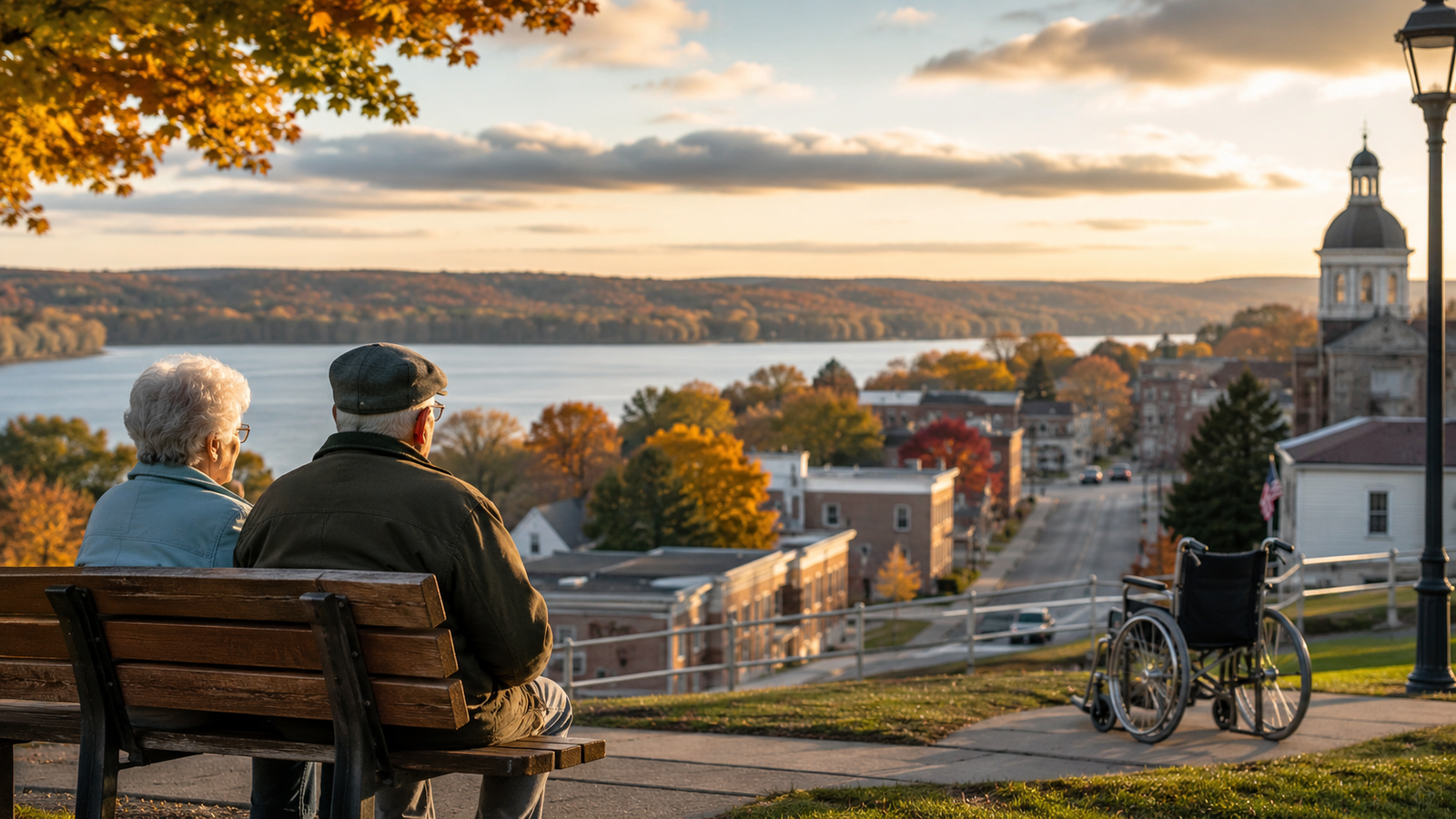
Introduction on Aging Population in Wisconsin
Wisconsin is experiencing an important demographic transformation as its population ages. Increasing life expectancy, declining fertility, migration patterns, and the aging of the large baby-boom generation have contributed to a growing proportion of older residents. This transformation has significant implications for healthcare, social relationships, family structures, communities, and public policy. Healthcare access for older adults is therefore not simply a medical issue; it is a sociological issue shaped by geography, income, transportation, family support, social inequality, and institutional arrangements.
The Wisconsin Department of Health Services (DHS) maintains demographic data on residents aged 65 and older using American Community Survey averages for 2020–2024 and provides projections of older populations through 2050. The state also tracks disability and dementia among older residents, demonstrating that population aging will influence not only the number of people needing healthcare but also the kinds of social and support services communities require.
At the same time, healthcare access is uneven across Wisconsin. Rural communities face shortages of healthcare professionals, transportation difficulties, and limited availability of specialized services. In December 2025, Wisconsin DHS reported that more than one-third of Wisconsin residents live in rural areas and that 40 of the state’s 72 counties were federally designated mental-health professional shortage areas, while 37 were primary-care shortage areas and 34 were dental-care shortage areas.
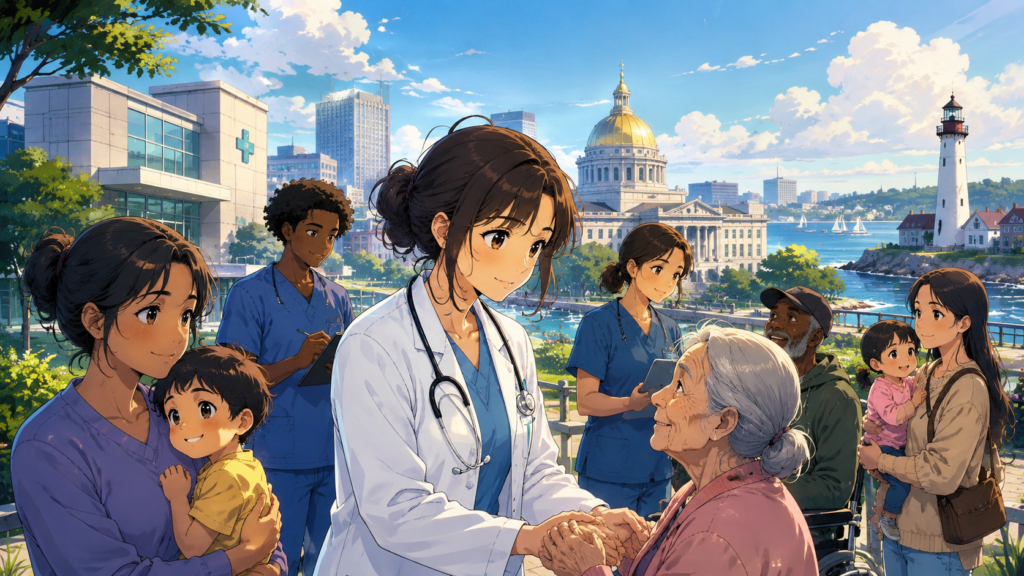
From a sociological perspective, the central question is not simply whether older people have hospitals and doctors available. It is whether social institutions provide older adults with equitable opportunities to obtain appropriate healthcare while maintaining dignity, independence, social participation, and quality of life.
Population Aging and Social Change in Wisconsin
Population aging changes the structure of society. When the proportion of older adults increases, communities must reorganize their healthcare, housing, transportation, employment, family-caregiving, and social-support systems.
Aging is often treated as an individual biological process, but sociology emphasizes that the experience of aging is socially constructed. Two people of the same age can experience very different levels of health and independence depending on their income, education, family relationships, neighborhood, race and ethnicity, transportation options, and access to healthcare.
Wisconsin’s demographic transition therefore needs to be understood in relation to social inequality. The state DHS provides county-level data because aging is not distributed equally across Wisconsin. Some counties and smaller communities have substantially older populations than others. DHS also provides projections of the population aged 60 and older through 2050, allowing communities to anticipate future healthcare and social-service needs.
An aging population also changes intergenerational relationships. Older adults may require assistance from adult children, spouses, relatives, friends, neighbors, or professional caregivers. At the same time, many older adults remain economically and socially active, contribute to community organizations, provide childcare, volunteer, and support younger generations.
Consequently, aging should not be understood only as a period of dependency. It can also represent a stage of continued social participation. The challenge for Wisconsin is to create institutions that support both independence and care when assistance becomes necessary.
Healthcare Access as a Sociological Issue
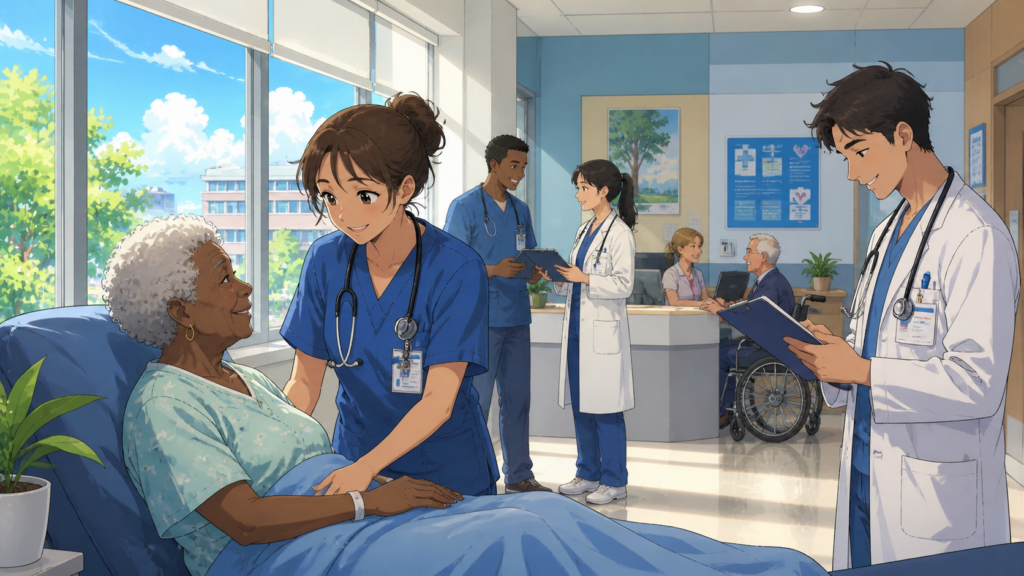
Healthcare access involves more than the physical presence of medical facilities. Sociologically, access includes affordability, availability, transportation, cultural compatibility, information, trust, and the ability to navigate complicated institutions.
An older person living close to a hospital may still experience limited healthcare access if they cannot afford medications, lack transportation, cannot obtain a timely appointment, or have difficulty understanding insurance requirements.
This is particularly important for older adults because healthcare needs often become more complex with age. Chronic illnesses, mobility limitations, hearing or vision problems, cognitive changes, and multiple medications may require regular interaction with several healthcare professionals.
The 2025 Wisconsin State Health Assessment identified healthcare cost, access, and quality as one of the state’s priority areas. It also connected health outcomes with broader social factors such as employment, income, housing, transportation, and social and emotional support.
This reflects a major sociological principle: health is influenced by social determinants. Medical treatment is important, but health outcomes are also shaped by the conditions in which people live.
Rural–Urban Inequality on Aging Population in Wisconsin
One of the most significant dimensions of healthcare access in Wisconsin is the rural–urban divide. Rural communities often have smaller populations and fewer healthcare institutions. This can make it difficult to maintain specialists, hospitals, pharmacies, rehabilitation facilities, mental-health services, and long-term-care providers.
The problem becomes particularly serious for older residents. An elderly person who no longer drives may depend on relatives or community transportation to reach a medical appointment. If a specialist is located many miles away, the appointment can require an entire day of travel.
Geographical distance can therefore become a form of social inequality. Urban residents may have several healthcare providers within relatively short distances, while rural residents may have fewer choices.
Wisconsin has recognized this structural problem. In late 2025, the state received an initial $203.67 million award through the federal Rural Health Transformation Program to strengthen healthcare access in rural communities through investments in workforce, technology, and care coordination.
For an aging population, such investment is important because rural communities may simultaneously experience a higher need for healthcare and a smaller supply of healthcare workers.
Transportation and Mobility on Aging Population in Wisconsin
Transportation is one of the most underestimated dimensions of healthcare access among older adults.
Driving provides independence, but aging can bring physical limitations that make driving difficult or unsafe. When older people stop driving, their ability to access doctors, pharmacies, grocery stores, rehabilitation centers, and social activities may decline.
This produces a sociological chain reaction. Limited transportation can lead to missed appointments, delayed treatment, social isolation, dependence on relatives, and reduced participation in community life.
Transportation is therefore not merely an infrastructure issue. It is connected to autonomy and social inclusion.
Wisconsin’s 2025 State Health Assessment specifically identified transportation infrastructure and public transportation options as a priority alongside healthcare access.
Improving transportation for older adults can consequently produce benefits beyond healthcare. It can help people remain socially connected, participate in community organizations, attend religious or cultural activities, shop for necessities, and maintain relationships.
Economic Inequality and Healthcare on Aging Population in Wisconsin
Income is another major factor influencing healthcare access among older adults.
Although Medicare provides important coverage for older Americans, healthcare can still generate significant out-of-pocket expenses. Prescription medications, dental care, vision services, transportation, long-term care, home modifications, and other services can create financial pressure.
Economic inequality also affects the ability to live near healthcare facilities. Wealthier older adults may have greater access to private transportation, home-based services, assisted living, and specialized healthcare. Lower-income seniors may have fewer choices.
This creates what sociologists describe as cumulative inequality. Economic disadvantages accumulated throughout the life course can become particularly visible during old age. Individuals who had lower-paying jobs, limited savings, inadequate housing, or unstable employment may enter retirement with fewer resources to manage healthcare expenses.
Wisconsin provides several programs intended to address these inequalities. According to DHS, Medicaid programs for older adults can provide healthcare and long-term-care assistance, while Medicare Savings Programs may help eligible individuals with Medicare-related out-of-pocket costs. SeniorCare also assists eligible adults aged 65 and older with prescription drug costs.
These programs demonstrate that healthcare access is partly dependent on the relationship between individuals and welfare institutions.
Family Caregiving and Changing Family Structures
Family remains one of the most important institutions supporting older adults.
Spouses, adult children, grandchildren, siblings, and other relatives frequently provide transportation, medication assistance, household support, companionship, and help with medical decisions.
However, traditional assumptions about family caregiving are becoming increasingly complicated. Families are smaller than in previous generations, adult children may live far away, and many working-age family members have full-time employment and their own childcare responsibilities.
This creates what sociologists call a caregiving burden. When formal services are insufficient, responsibility may shift toward family members, particularly women. Caregiving can strengthen family relationships, but it can also produce stress, financial difficulties, lost work opportunities, and emotional exhaustion.
The issue is therefore not simply whether families care about older relatives. Many do. The question is whether social institutions provide sufficient support so that caregiving does not become an unequal private burden.
Wisconsin has developed programs addressing this problem. Its aging services include family caregiver support, elderly nutrition, falls prevention, dementia resources, and other programs designed to help older adults maintain independence and wellness.
Long-Term Care and Institutional Dependence
As people live longer, long-term care becomes increasingly important. Some older adults eventually require assistance with daily activities such as bathing, dressing, eating, medication management, and mobility.
The sociological challenge is balancing institutional care with individual autonomy.
Nursing homes can provide intensive services, but institutionalization may also disrupt established social relationships. Older adults may feel separated from their communities, families, neighborhoods, and familiar environments.
For this reason, home- and community-based care has become increasingly important. Wisconsin’s Medicaid system includes programs such as Family Care, Family Care Partnership, IRIS, and PACE that support older adults and people with disabilities through different combinations of healthcare and long-term services.
These programs reflect a broader transformation in the sociology of aging: the movement away from viewing older people primarily as institutional care recipients and toward supporting them as individuals who should retain choice and control over their lives.
Dementia, Disability, and Social Isolation
Aging also increases the importance of dementia and disability services.
Wisconsin DHS maintains county-level projections of people living with dementia through 2040. These projections are intended to help communities plan for future needs and include people living in community settings rather than residents of skilled nursing facilities.
Dementia has social consequences beyond memory loss. It can affect family relationships, employment of caregivers, housing arrangements, transportation, financial management, and participation in community life.
Social isolation is another important concern. Older adults who lose spouses, friends, mobility, or transportation may experience shrinking social networks. Healthcare institutions often encounter the consequences of this isolation because loneliness and reduced social support can make it harder for individuals to manage chronic conditions and follow treatment plans.
Consequently, healthcare policy should not separate physical health from social relationships. Community centers, senior programs, volunteer networks, libraries, religious organizations, transportation services, and neighborhood groups can all function as informal health-support institutions.
Aging, Race, Culture, and Social Inequality
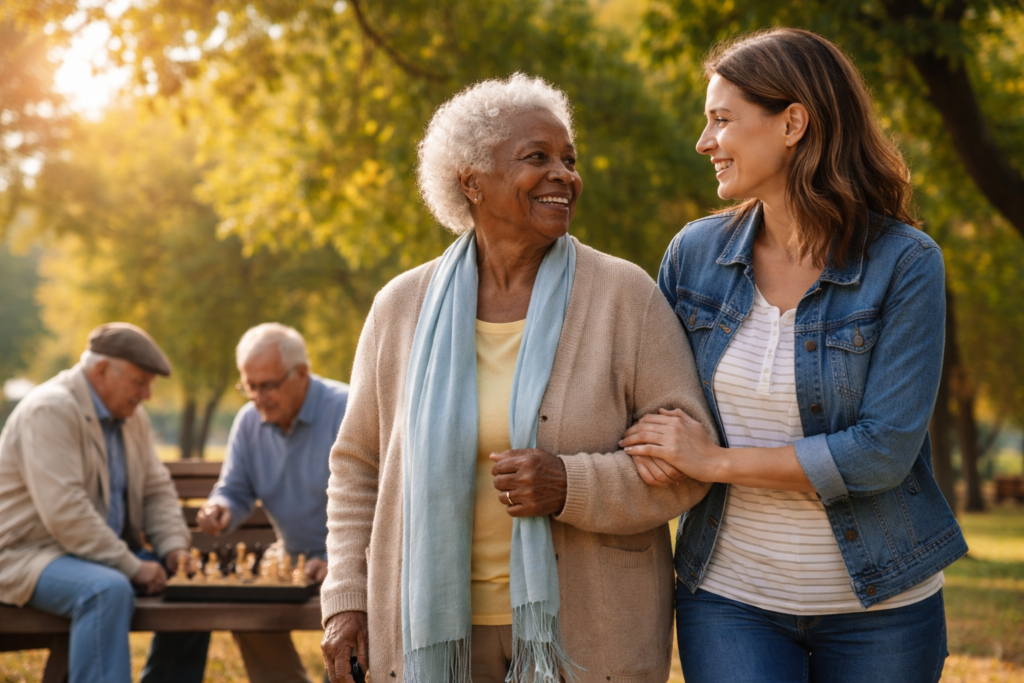
Healthcare access must also be examined through the lens of cultural and social diversity.
Older adults are not a homogeneous population. Differences in race, ethnicity, disability, gender, income, education, immigration history, language, and family structure can influence experiences with healthcare institutions.
Trust is particularly important. People may avoid healthcare systems if they have previously experienced discrimination, poor communication, or cultural misunderstanding.
Healthcare providers therefore need culturally responsive approaches. Effective aging policy should recognize different family structures, languages, cultural expectations, and understandings of illness and caregiving.
Social inequality can also accumulate over the life course. Individuals who experienced educational or economic disadvantages earlier in life may face greater health challenges later. This means that policies addressing aging should begin long before people reach retirement age.
Technology and Telehealth on Aging Population in Wisconsin
Technology offers an important opportunity to improve healthcare access, particularly in rural Wisconsin.
Telehealth can reduce the need for long-distance travel and allow older adults to consult healthcare professionals from their homes. Digital healthcare can be especially useful for follow-up appointments, medication consultations, mental-health services, and some chronic-disease management.
However, technology can also create new inequalities.
Older adults who lack reliable broadband, smartphones, computers, digital literacy, or assistance navigating online platforms may be excluded from technology-based healthcare. Vision, hearing, cognitive, and mobility limitations can further complicate digital access.
Therefore, technological innovation should not simply replace traditional services. It should complement them. Digital healthcare is most socially useful when accompanied by accessible interfaces, technical assistance, reliable internet, and alternatives for people who cannot use technology independently.
Aging and the Healthcare Workforce
The aging population also creates a workforce challenge.
As demand for healthcare and long-term care increases, Wisconsin needs sufficient numbers of physicians, nurses, home-health workers, personal-care workers, social workers, therapists, and geriatric specialists.
Rural areas face particular difficulties in recruiting and retaining healthcare professionals. The state’s Rural Health Transformation investment explicitly focuses on workforce development as part of improving rural healthcare.
From a sociological perspective, workforce shortages demonstrate that healthcare is a social institution dependent on labor markets. If wages, working conditions, training opportunities, and professional support are inadequate, communities may struggle to attract workers even when healthcare needs are high.
The future of aging in Wisconsin will therefore depend partly on whether the state can build a sustainable care workforce.
Aging and Social Policy on Aging Population in Wisconsin
Wisconsin already has a substantial institutional framework for supporting older residents. Aging and Disability Resource Centers (ADRCs), for example, connect older adults and people with disabilities to information and services and can provide assistance in person, by phone, or through home visits.
Such institutions are sociologically significant because they act as bridges between individuals and complex welfare systems. An older person may not know whether they qualify for Medicaid, long-term care, transportation assistance, nutrition programs, or caregiver support. Resource centers can help transform fragmented services into a more understandable system.
Effective social policy should therefore emphasize coordination rather than treating healthcare, housing, transportation, nutrition, and social support as completely separate problems.
Toward a More Age-Friendly Wisconsin
Wisconsin’s response to population aging should move beyond a narrow medical model.
An age-friendly society is one in which older people can remain connected, independent, and socially valued. Healthcare is one component of this system, but housing, transportation, employment, public spaces, community organizations, and social relationships are equally important.
The state’s 2025 health assessment provides an important foundation because it recognizes that health is connected to economic well-being, housing, transportation, mental health, and healthcare access.
Future policies should therefore focus on strengthening primary care in underserved areas, expanding transportation options, supporting family caregivers, improving home-based care, developing the healthcare workforce, expanding appropriate telehealth, and ensuring that low-income older adults can afford essential services.
At the community level, Wisconsin can also encourage intergenerational programs. Schools, libraries, community centers, universities, and voluntary organizations can create opportunities for older adults to participate in civic and cultural life. Such programs challenge stereotypes that equate old age with dependency.
Conclusion on Aging Population in Wisconsin
Healthcare access and population aging in Wisconsin represent a complex sociological challenge. The growth of the older population affects not only hospitals and medical professionals but also families, communities, transportation systems, labor markets, welfare institutions, and social relationships.
The central issue is inequality. Older adults who live in well-served communities, possess adequate income, have reliable transportation, and maintain strong family networks may navigate aging relatively successfully. Others, particularly those living in rural communities or experiencing economic insecurity, disability, social isolation, or limited family support, may face substantial barriers.
Wisconsin has developed important institutions and programs to respond to these challenges. Its Aging and Disability Resource Centers, Medicaid long-term-care programs, caregiver services, dementia resources, and rural-health initiatives provide a foundation for future action.
Ultimately, the sociology of aging reminds us that healthcare is not simply about treating disease. It is about creating social conditions in which people can live longer lives with dignity, autonomy, security, and meaningful relationships. Wisconsin’s future response to population aging will therefore depend on whether healthcare policy is integrated with broader policies addressing transportation, housing, economic security, family caregiving, technology, and community participation.
An aging Wisconsin does not necessarily represent a social crisis. It can represent a significant achievement of modern society. The real challenge is ensuring that longer lives are accompanied by equitable access to healthcare and opportunities for continued participation in social life.
FAQs — Aging Population in Wisconsin
1. What is the Aging Population in Wisconsin?
The Aging Population in Wisconsin refers to the growing number and proportion of residents aged 65 and older. Population aging is influenced by longer life expectancy, declining birth rates, and the aging of the baby-boom generation.
2. Why is the Aging Population in Wisconsin increasing?
The Aging Population in Wisconsin is increasing because people are living longer and large older generations are reaching retirement age. Demographic changes are also influencing the age structure of communities across the state.
3. How does the Aging Population in Wisconsin affect healthcare?
The Aging Population in Wisconsin increases demand for primary care, chronic disease management, prescription medications, rehabilitation, mental-health services, home-based care, and long-term-care services.
4. Does rural Wisconsin face greater challenges from population aging?
Yes. The Aging Population in Wisconsin can create particularly significant challenges in rural communities where healthcare providers, specialists, transportation services, and long-term-care facilities may be less accessible.
5. How does transportation affect the Aging Population in Wisconsin?
Transportation is an important determinant of healthcare access for the Aging Population in Wisconsin. Older adults who cannot drive may depend on family members, public transportation, community programs, or specialized transportation services.
6. How does poverty affect the Aging Population in Wisconsin?
Lower income can make it more difficult for members of the Aging Population in Wisconsin to afford medications, transportation, dental and vision services, housing, and other healthcare-related expenses.
7. What role do families play in supporting the Aging Population in Wisconsin?
Families often provide transportation, companionship, household assistance, medication support, and personal care. However, caregiving responsibilities can also create financial and emotional pressures for family members.
8. What healthcare problems are common among the Aging Population in Wisconsin?
The Aging Population in Wisconsin is more likely to require services related to chronic diseases, mobility limitations, dementia, disability, mental health, medication management, and long-term care.
9. How does rural–urban inequality affect the Aging Population in Wisconsin?
The Aging Population in Wisconsin experiences different healthcare opportunities depending on location. Urban areas generally have more healthcare facilities and specialists, while some rural communities face longer travel distances and workforce shortages.
10. What is the relationship between social isolation and the Aging Population in Wisconsin?
Social isolation can become a major issue for the Aging Population in Wisconsin, particularly after retirement, the loss of a spouse or friends, reduced mobility, or relocation. Strong community networks can help reduce isolation.
11. How can telehealth help the Aging Population in Wisconsin?
Telehealth can help the Aging Population in Wisconsin access healthcare without traveling long distances. It can be particularly useful for follow-up consultations, mental-health services, and some chronic disease-management needs.
12. What challenges does dementia create for the Aging Population in Wisconsin?
Dementia can affect independence, family relationships, transportation, financial management, and healthcare needs. Wisconsin therefore needs adequate dementia services, caregiver support, and community-based resources.
13. How can Wisconsin improve healthcare access for its Aging Population?
Wisconsin can improve healthcare access for its Aging Population by strengthening rural healthcare, expanding transportation, supporting family caregivers, increasing the healthcare workforce, improving home-based services, and making healthcare more affordable.
14. Why is the Aging Population in Wisconsin a sociological issue?
The Aging Population in Wisconsin is a sociological issue because aging affects family structures, social inequality, community relationships, employment, caregiving, housing, transportation, healthcare institutions, and government policy.
15. What does the future look like for the Aging Population in Wisconsin?
The Aging Population in Wisconsin will likely require greater investment in healthcare, long-term care, transportation, housing, social services, and community support. Planning for these changes can help older residents maintain independence and quality of life.