
Introduction
Education has long been regarded as one of the most powerful instruments for achieving social mobility. It provides individuals with knowledge, skills, and opportunities that can improve their socioeconomic status while reducing inequalities across generations. However, the relationship between education and social mobility is neither simple nor automatic. Structural barriers such as poverty, racial inequality, geographic isolation, and unequal access to quality educational resources continue to limit educational outcomes for many communities. In the U.S. state of Kentucky, these challenges are particularly significant because of the state’s diverse socioeconomic landscape, ranging from prosperous urban centers to economically distressed rural regions.
Kentucky presents an important case study for sociologists because it demonstrates how education interacts with social class, regional disparities, labor market transformations, and public policy. While the state has made progress in expanding educational access through reforms, scholarships, and community college initiatives, substantial gaps remain in educational achievement and upward mobility.

This article examines Education Challenges and Social Mobility in Kentucky from a sociological perspective. It explores the historical context, major educational barriers, inequalities across communities, policy interventions, and future directions that can promote greater social mobility.
Understanding Social Mobility
Social mobility refers to the movement of individuals or groups within a society’s social hierarchy. It can be upward, downward, or horizontal, but education is most often associated with upward mobility.
Sociologists distinguish between:
- Intergenerational mobility, where children achieve a different socioeconomic status than their parents.
- Intragenerational mobility, where individuals improve or decline in status during their own lifetime.
Education influences both forms by improving employment opportunities, increasing earning potential, enhancing social capital, and developing human capabilities. However, when educational opportunities are unequally distributed, social mobility becomes restricted.
Kentucky’s Educational Landscape
Kentucky has a diverse educational system consisting of public schools, private institutions, community colleges, technical schools, and universities. The state has invested considerably in educational reforms over the past three decades.
Several characteristics shape Kentucky’s educational environment:
- Large rural population
- Significant Appalachian communities
- Urban centers such as Louisville and Lexington
- Economic dependence on agriculture, manufacturing, healthcare, logistics, and formerly coal mining
- Growing demand for skilled labor
Although educational attainment has steadily improved, disparities remain across income groups and geographic regions.
Historical Development of Education in Kentucky
Historically, Kentucky’s educational system reflected broader American inequalities.
During much of the twentieth century:
- Rural schools often lacked adequate funding.
- Segregation created unequal educational opportunities.
- Appalachian regions experienced chronic underinvestment.
- Many families depended on child labor in farming or mining.
The Kentucky Education Reform Act (KERA) of 1990 represented a turning point. It sought to equalize school funding, improve accountability, modernize curricula, and raise educational standards.
Since then, Kentucky has experienced improvements in graduation rates, literacy, and college enrollment. Nevertheless, socioeconomic inequalities continue to influence educational outcomes.
Poverty and Educational Inequality

Poverty remains one of the strongest predictors of educational success in Kentucky.
Children growing up in low-income households often face:
- Limited access to educational materials
- Poor nutrition
- Housing instability
- Health challenges
- Reduced access to preschool education
- Higher levels of stress
These disadvantages affect cognitive development, school attendance, academic achievement, and graduation rates.
From a sociological perspective, conflict theory argues that unequal economic structures reproduce educational inequalities by providing affluent families with greater resources and opportunities.
Students from wealthier families typically have access to:
- Better schools
- Private tutoring
- Extracurricular activities
- Technology
- Stable learning environments
Consequently, education may reinforce rather than eliminate class differences.
Rural Education Challenges
Kentucky’s rural communities experience unique educational difficulties.
Many rural school districts face:
- Teacher shortages
- Limited course offerings
- Aging school infrastructure
- Transportation difficulties
- Restricted internet access
- Lower tax revenues
Students often travel long distances to attend school, reducing opportunities for extracurricular participation.
Digital inequality became especially visible during remote learning periods, when many rural students lacked reliable broadband access.
Rural communities also face limited access to advanced placement courses, specialized science laboratories, foreign language programs, and career counseling.
Appalachian Kentucky and Educational Disadvantage
Eastern Kentucky’s Appalachian region illustrates how geography influences educational opportunities.
The decline of the coal industry has produced:
- High unemployment
- Population decline
- Persistent poverty
- Reduced local government revenue
These economic conditions affect schools through limited funding and shrinking student populations.
Many young people leave Appalachian communities to pursue higher education or employment elsewhere, contributing to “brain drain,” where educated individuals permanently relocate.
Sociologists describe this as a cycle in which economic decline reduces educational investment, which in turn limits future economic development.
Urban Educational Inequalities
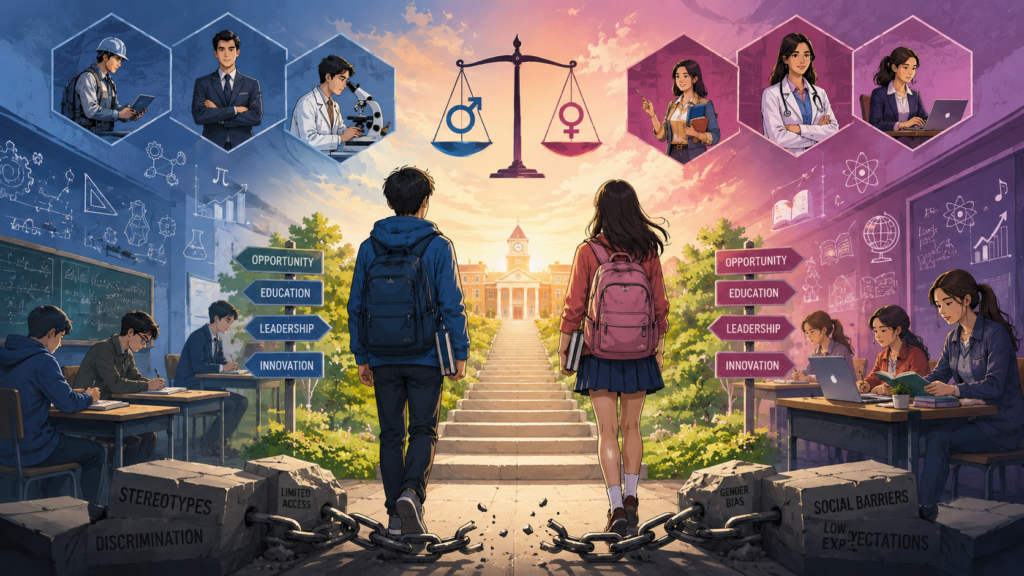
Although cities offer greater educational opportunities, urban schools also experience inequalities.
Schools serving disadvantaged neighborhoods often struggle with:
- Higher student mobility
- Greater poverty rates
- Behavioral challenges
- Overcrowded classrooms
- Resource disparities
Residential segregation influences school demographics, concentrating socioeconomic disadvantage within certain districts.
Urban students may have access to universities, museums, internships, and cultural institutions, yet unequal neighborhood conditions continue to affect educational achievement.
Race, Ethnicity, and Educational Opportunity
Kentucky has become increasingly diverse over recent decades.
While racial disparities are generally smaller than in some other states, important differences remain.
Minority students may experience:
- Achievement gaps
- Lower college enrollment rates
- Unequal disciplinary practices
- Cultural barriers
- Limited representation among teachers
Structural inequalities rather than individual abilities explain much of these disparities.
Critical race theory within sociology emphasizes that educational systems can unintentionally reproduce broader patterns of social inequality through institutional practices.
The Digital Divide
Technology has become essential for modern education.
Students require reliable internet access for:
- Homework
- Online research
- Virtual classrooms
- College applications
- Digital literacy
However, digital inequality persists across Kentucky.
Households in rural and low-income communities often lack:
- High-speed internet
- Personal computers
- Quiet study spaces
- Digital skills
The digital divide increasingly influences educational success and future employment opportunities.
Higher Education and Social Mobility
Colleges and universities remain major pathways for upward mobility.
Kentucky has expanded access through:
- Community colleges
- Technical education
- Financial aid programs
- Scholarship initiatives
- Workforce development partnerships
Nevertheless, several barriers continue to affect college participation.
These include:
- Rising tuition costs
- Student debt
- Family financial responsibilities
- First-generation college challenges
- Limited academic preparation
Students from low-income households often balance employment with full-time study, increasing the likelihood of delayed graduation or dropout.
Workforce Development and Career Education
Kentucky’s economy increasingly demands workers with advanced technical skills.
Career and Technical Education (CTE) has become an important strategy for improving social mobility.
Modern CTE programs provide training in:
- Healthcare
- Manufacturing
- Information technology
- Engineering
- Logistics
- Skilled trades
These programs reduce the gap between education and employment by aligning classroom learning with labor market demands.
Sociologists argue that vocational education can enhance mobility when it provides genuine career advancement rather than limiting students to lower-paying occupations.
Education and Human Capital
Human capital theory views education as an investment that increases workers’ productivity and earnings.
Higher educational attainment generally leads to:
- Better employment
- Higher wages
- Improved health
- Greater civic participation
- Increased economic stability
Kentucky’s economic development increasingly depends on expanding educational attainment across its workforce.
Employers increasingly seek workers with critical thinking, communication, digital literacy, and problem-solving skills.
Cultural Capital and Educational Success
French sociologist Pierre Bourdieu introduced the concept of cultural capital to explain educational inequality.
Children from higher socioeconomic backgrounds often possess advantages such as:
- Strong reading habits
- Educational vocabulary
- Familiarity with academic expectations
- Parental guidance
- Access to enrichment activities
These forms of cultural capital improve educational success independently of intelligence.
Schools may unintentionally reward students who already possess these advantages, thereby reproducing social inequality.
Family Structure and Educational Achievement
Family environments significantly influence educational outcomes.
Students generally perform better when families provide:
- Emotional support
- Stable housing
- Educational encouragement
- Homework assistance
- High expectations
Economic hardship can reduce parents’ ability to participate actively in their children’s education due to long working hours or financial stress.
Family-school partnerships therefore play an essential role in promoting educational success.
Public Policy and Educational Reform
Kentucky has introduced numerous policies designed to improve educational equity.
Key areas include:
- Increased school accountability
- Early childhood education
- Literacy improvement initiatives
- Expanded preschool programs
- College readiness standards
- Teacher professional development
- Workforce partnerships
Although these reforms have produced measurable improvements, long-term success depends on sustained funding and community support.
Educational policy must also address broader social determinants such as housing, healthcare, nutrition, and employment.
The Role of Community Organizations
Educational success depends not only on schools but also on community institutions.
Libraries, nonprofit organizations, faith-based groups, youth clubs, and local businesses contribute by providing:
- Tutoring
- Mentoring
- After-school programs
- Internship opportunities
- Scholarship support
- Career guidance
Strong community networks increase students’ social capital, expanding access to educational and employment opportunities.
Sociological Perspectives
Functionalist Perspective
Functionalists argue that education prepares individuals for productive roles within society.
Schools:
- Develop skills
- Promote social integration
- Encourage shared values
- Prepare future workers
Educational achievement is viewed as a merit-based pathway toward occupational success.
Conflict Perspective
Conflict theorists argue that educational institutions often reproduce existing social inequalities.
Students from privileged backgrounds possess greater economic and cultural resources, leading to unequal educational outcomes.
Schools may therefore reinforce class divisions instead of eliminating them.
Symbolic Interactionism
Symbolic interactionists focus on everyday interactions within schools.
Teacher expectations, peer relationships, classroom labeling, and school culture influence students’ academic identity and motivation.
Positive interactions encourage achievement, while negative labeling may contribute to lower educational performance.
Future Directions
Improving social mobility in Kentucky requires coordinated efforts across education, government, business, and civil society.
Priority areas include:
- Expanding broadband access
- Strengthening rural schools
- Supporting teacher recruitment
- Increasing affordable higher education
- Expanding early childhood education
- Reducing childhood poverty
- Enhancing career counseling
- Promoting workforce partnerships
- Investing in community development
These strategies recognize that education alone cannot eliminate inequality unless accompanied by broader social and economic reforms.
Conclusion
Education remains one of the most effective mechanisms for promoting social mobility in Kentucky, yet significant structural barriers continue to limit equal opportunity. Poverty, rural isolation, regional economic decline, unequal school funding, digital inequality, and cultural differences all influence educational achievement. From a sociological perspective, these challenges illustrate that educational outcomes are deeply connected to wider social structures rather than individual effort alone.
Kentucky has made substantial progress through educational reform, expanded access to higher education, workforce development, and community partnerships. However, achieving genuine social mobility requires continued investment in equitable educational opportunities from early childhood through higher education and lifelong learning. Addressing socioeconomic disparities alongside educational reform will enable more Kentuckians to realize their potential, contribute to economic development, and strengthen social cohesion.
Ultimately, education should function not merely as a pathway to employment but as a foundation for social justice, equal opportunity, and sustainable community development. By reducing structural inequalities and ensuring access to quality education for all, Kentucky can strengthen both individual life chances and the broader well-being of society.
FAQs
1. What is social mobility in Kentucky?
Social mobility in Kentucky refers to the ability of individuals or families to improve their socioeconomic status through education, employment, and economic opportunities.
2. Why is education important for social mobility in Kentucky?
Education provides the skills, qualifications, and knowledge needed to secure better-paying jobs, making it one of the strongest drivers of social mobility in Kentucky.
3. How does poverty affect social mobility in Kentucky?
Poverty limits access to quality schools, educational resources, healthcare, and technology, making upward social mobility more difficult for many families.
4. What are the biggest barriers to social mobility in Kentucky?
Major barriers include poverty, rural educational disparities, unequal school funding, limited broadband access, rising college costs, and regional economic inequality.
5. How do rural schools influence social mobility in Kentucky?
Rural schools often face teacher shortages, fewer advanced courses, and limited educational resources, which can reduce opportunities for upward mobility.
6. Does higher education improve social mobility in Kentucky?
Yes. College degrees, technical education, and vocational training significantly increase employment opportunities and earning potential, improving social mobility in Kentucky.
7. How does the Appalachian region affect social mobility in Kentucky?
Economic decline, population loss, and limited employment opportunities in Appalachian Kentucky create additional challenges for educational achievement and upward mobility.
8. What role does Career and Technical Education (CTE) play in social mobility in Kentucky?
CTE programs prepare students for high-demand industries, helping them gain practical skills and secure stable careers that support upward mobility.
9. How does the digital divide impact social mobility in Kentucky?
Limited internet access and lack of digital resources reduce educational opportunities, making it harder for students to compete academically and professionally.
10. Can public policy improve social mobility in Kentucky?
Yes. Investments in education, affordable college, early childhood programs, broadband expansion, and workforce development can strengthen social mobility in Kentucky.
11. How does family background influence social mobility in Kentucky?
Family income, parental education, and access to educational support strongly influence children’s academic success and future socioeconomic status.
12. What sociological theories explain social mobility in Kentucky?
Functionalism emphasizes education as a path to opportunity, conflict theory highlights structural inequalities, and symbolic interactionism focuses on classroom experiences and expectations.
13. How do community organizations support social mobility in Kentucky?
Libraries, nonprofits, mentoring programs, and local businesses provide tutoring, scholarships, career guidance, and internships that improve educational success.
14. Why is reducing educational inequality essential for social mobility in Kentucky?
Equal educational opportunities help individuals develop the skills needed for higher-paying jobs, reducing income inequality across generations.
15. What is the future of social mobility in Kentucky?
The future depends on improving educational equity, expanding workforce training, increasing college affordability, and creating stronger economic opportunities across both rural and urban communities.