Introduction
The Appalachian region of the United States, particularly in Kentucky, has long been associated with both rich cultural traditions and persistent economic challenges. Nestled within the broader landscape of the Appalachian Mountains, Kentucky’s Appalachian communities present a compelling case for sociological inquiry into inequality, marginalization, and resilience. Despite the region’s natural beauty and strong communal bonds, it remains one of the most economically disadvantaged areas in the United States.
This article explores the sociological dimensions of economic inequality in Appalachian Kentucky by examining historical processes, social structures, cultural dynamics, labor markets, and policy interventions. It aims to understand how inequality is produced, reproduced, and experienced within this unique regional context.

Explore Economic Inequality in Kentucky through a sociological lens, focusing on Appalachian society, poverty, labor shifts, education, and structural challenges shaping regional inequality.
Historical Foundations of Inequality
To understand economic inequality in Appalachian Kentucky, one must begin with its historical development. The region was historically isolated due to its rugged terrain, which limited transportation, communication, and economic diversification. Early settlers relied heavily on subsistence agriculture and small-scale farming, fostering a culture of self-reliance.
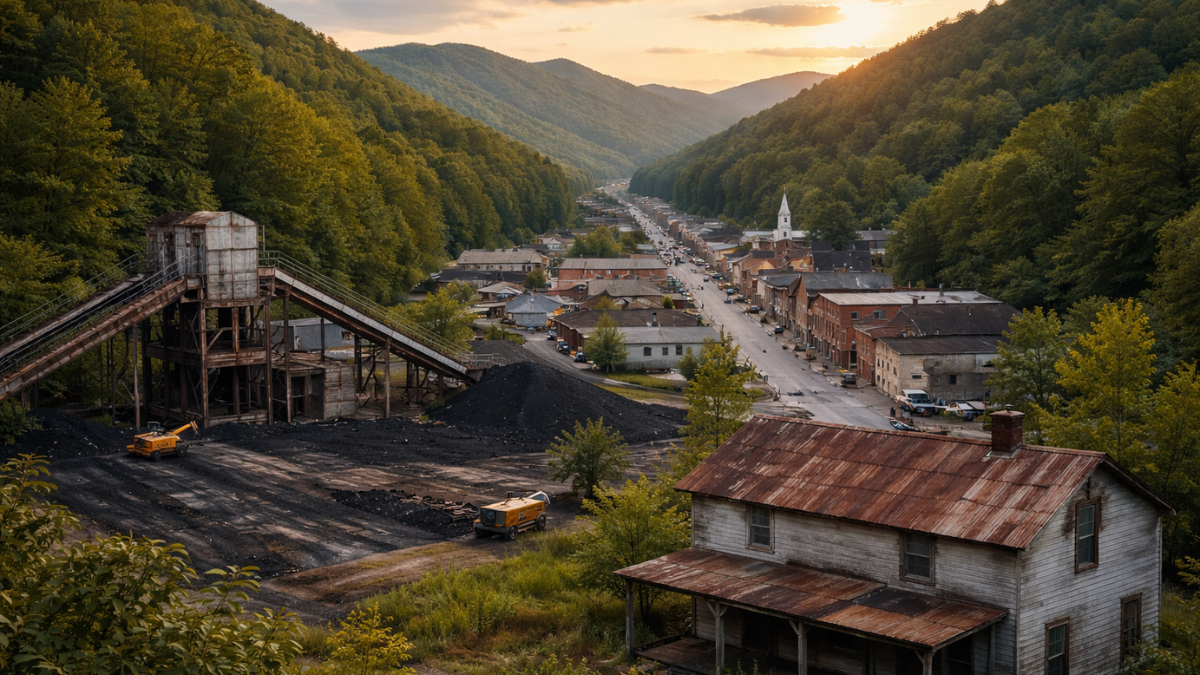
However, the late 19th and early 20th centuries marked a turning point with the expansion of the coal industry. External corporations acquired land and mineral rights, often under exploitative conditions. Local populations became dependent on coal mining for employment, creating a mono-industrial economy.
This form of economic organization led to what sociologists describe as dependency theory, where local economies are controlled by external forces. Profits were extracted from the region while reinvestment remained minimal, leaving communities economically vulnerable.
Structural Inequality and Class Stratification
Economic inequality in Appalachian Kentucky is deeply embedded in its social structure. Class divisions are evident between landowners, corporate stakeholders, and working-class residents. The decline of coal mining in recent decades has exacerbated these inequalities, as many communities lost their primary source of income without viable alternatives.
From a sociological perspective, this reflects structural inequality, where social institutions systematically disadvantage certain groups. Limited access to quality education, healthcare, and employment opportunities reinforces a cycle of poverty. According to conflict theory, these inequalities are not accidental but are the result of power imbalances that favor dominant economic actors.
Labor Market Transformations
The labor market in Appalachian Kentucky has undergone significant changes over the past few decades. The mechanization of coal mining and the shift toward renewable energy have reduced demand for labor in traditional industries. As a result, unemployment and underemployment have become widespread.
Many workers have transitioned to low-wage service sector jobs, which often lack stability and benefits. This shift reflects broader trends in the global economy but has particularly severe consequences in regions with limited economic diversification.
The concept of precarious labor is useful here. Workers face uncertain employment conditions, irregular income, and minimal social protection. This precariousness contributes to economic inequality by limiting upward mobility and increasing financial insecurity.
Education and Social Mobility
Education plays a critical role in shaping economic outcomes. In Appalachian Kentucky, educational attainment levels are generally lower than the national average. Schools in rural areas often face funding shortages, limited resources, and difficulties in attracting qualified teachers.

This educational disparity restricts social mobility, reinforcing intergenerational poverty. Sociologist Pierre Bourdieu’s concept of cultural capital helps explain this phenomenon. Students from disadvantaged backgrounds may lack the skills, knowledge, and social networks needed to succeed in educational institutions and the labor market.
Moreover, higher education often requires leaving the region, leading to a “brain drain” where educated individuals do not return. This further weakens local economies and perpetuates inequality.
Health Disparities and Economic Inequality
Health outcomes in Appalachian Kentucky are closely linked to economic conditions. The region experiences higher rates of chronic illnesses, substance abuse, and mental health issues compared to national averages.
Limited access to healthcare facilities and professionals exacerbates these problems. Many residents face barriers such as transportation, cost, and lack of insurance. The opioid crisis has had a particularly devastating impact, highlighting the intersection of economic despair and public health.
From a sociological standpoint, these health disparities can be understood through the lens of social determinants of health. Economic inequality influences access to resources that are essential for maintaining health, thereby creating a cycle where poor health further limits economic opportunities.
Cultural Identity and Community Resilience
Despite economic challenges, Appalachian Kentucky is characterized by a strong sense of cultural identity and community cohesion. Traditions such as storytelling, music, and craftsmanship play a vital role in maintaining social bonds.
This cultural richness contributes to what sociologists call social capital—the networks and relationships that facilitate collective action. Communities often rely on mutual support systems to cope with economic hardship.
However, cultural identity can also be stigmatized. Stereotypes portraying Appalachian residents as backward or uneducated contribute to social exclusion and discrimination. These narratives can influence policy decisions and limit investment in the region.
Gender and Inequality
Gender dynamics also shape economic inequality in Appalachian Kentucky. Women often face additional barriers in the labor market, including lower wages, limited job opportunities, and responsibilities related to caregiving.
The decline of traditionally male-dominated industries like coal mining has altered gender roles, with more women entering the workforce. However, this shift has not necessarily led to greater equality, as many available jobs are low-paying and insecure.

Feminist sociological perspectives highlight how intersecting factors such as gender, class, and geography create unique forms of disadvantage for women in the region.
Race, Ethnicity, and Marginalization
Although Appalachian Kentucky is often perceived as racially homogeneous, there are minority populations that experience distinct forms of marginalization. African American communities and immigrant groups face additional challenges related to discrimination and limited access to resources.
Intersectionality—a concept developed by Kimberlé Crenshaw—provides a useful framework for understanding how overlapping identities contribute to inequality. For example, a low-income woman of color in Appalachian Kentucky may face multiple layers of disadvantage.
The Role of Government and Policy
Government policies have played a significant role in shaping economic conditions in Appalachian Kentucky. Initiatives such as the Appalachian Regional Commission (ARC) have aimed to promote economic development and reduce poverty.
Programs focusing on infrastructure, education, and healthcare have had some success, but challenges remain. Critics argue that many policies fail to address the root causes of inequality, such as structural dependence and lack of local control.
Neoliberal economic policies, which emphasize market solutions and reduced government intervention, have also influenced the region. These approaches often prioritize efficiency over equity, potentially exacerbating inequality.
Globalization and Regional Inequality
Globalization has had a profound impact on Appalachian Kentucky. The integration of global markets has led to increased competition and the relocation of industries to regions with lower labor costs.
This process has contributed to deindustrialization and job loss in the region. At the same time, globalization has created new opportunities, such as tourism and digital entrepreneurship. However, these opportunities are not evenly distributed, often benefiting those with access to capital and technology.
From a world-systems perspective, Appalachian Kentucky can be seen as part of the “periphery” within a global economic system, where resources are extracted and wealth is concentrated elsewhere.
Environmental Issues and Economic Inequality
Environmental degradation is another critical aspect of economic inequality in Appalachian Kentucky. Coal mining has left a legacy of deforestation, water pollution, and land degradation.
These environmental challenges disproportionately affect low-income communities, who often lack the resources to relocate or mitigate risks. Environmental sociology highlights how economic systems can externalize costs onto vulnerable populations.
Efforts to transition to sustainable energy sources present both challenges and opportunities. While they may reduce environmental harm, they also require careful planning to ensure that workers are not left behind.
Community-Based Solutions and Future Prospects
Despite persistent challenges, there are numerous examples of community-based initiatives aimed at addressing economic inequality in Appalachian Kentucky. These include cooperatives, local entrepreneurship programs, and grassroots organizations.
Such initiatives emphasize local control, sustainability, and inclusivity. They align with the concept of development from below, which prioritizes community participation and empowerment.
Education and skill development are also critical for future progress. Investments in technology and infrastructure can help bridge the gap between Appalachian Kentucky and more economically developed regions.
Conclusion
Appalachian society in Kentucky presents a complex interplay of history, culture, and economic structures that contribute to persistent inequality. From the legacy of coal dependency to contemporary challenges in education, health, and labor markets, the region exemplifies how structural factors shape social outcomes.
However, it is equally important to recognize the resilience and agency of Appalachian communities. Cultural identity, social capital, and grassroots initiatives offer pathways for addressing inequality and fostering sustainable development.
A comprehensive sociological approach—one that considers historical context, structural dynamics, and human agency—is essential for understanding and addressing economic inequality in Appalachian Kentucky. Only through such an approach can meaningful and lasting change be achieved.
FAQs
- What is Economic Inequality in Kentucky?
Economic Inequality in Kentucky refers to the uneven distribution of income, wealth, and opportunities among different social groups within the state, particularly in Appalachian regions. - Why is Economic Inequality in Kentucky so high in Appalachian areas?
Economic Inequality in Kentucky is high in Appalachian areas due to historical dependence on coal industries, limited diversification, and geographic isolation. - How does education affect Economic Inequality in Kentucky?
Lower educational attainment in rural areas contributes significantly to Economic Inequality in Kentucky by limiting job opportunities and social mobility. - What role does the coal industry play in Economic Inequality in Kentucky?
The rise and decline of coal mining created a mono-economy, and its collapse intensified Economic Inequality in Kentucky by causing unemployment and economic instability. - How does healthcare access impact Economic Inequality in Kentucky?
Limited healthcare access worsens Economic Inequality in Kentucky by increasing financial burdens and reducing workforce productivity. - Is Economic Inequality in Kentucky linked to unemployment?
Yes, high unemployment and underemployment are key drivers of Economic Inequality in Kentucky, especially in rural Appalachian communities. - How does globalization influence Economic Inequality in Kentucky?
Globalization has contributed to job losses and industrial decline, thereby increasing Economic Inequality in Kentucky. - What is the role of government in reducing Economic Inequality in Kentucky?
Government programs like regional development initiatives aim to reduce Economic Inequality in Kentucky through infrastructure, education, and job creation. - How does gender affect Economic Inequality in Kentucky?
Women often face wage gaps and limited job opportunities, which intensify Economic Inequality in Kentucky. - Are there racial dimensions to Economic Inequality in Kentucky?
Yes, minority groups face additional barriers, making Economic Inequality in Kentucky more complex and intersectional. - What is the connection between poverty and Economic Inequality in Kentucky?
Poverty is both a cause and consequence of Economic Inequality in Kentucky, creating a cycle that is difficult to break. - How does migration affect Economic Inequality in Kentucky?
Outmigration of skilled workers leads to “brain drain,” worsening Economic Inequality in Kentucky by reducing local economic capacity. - What are the environmental impacts linked to Economic Inequality in Kentucky?
Environmental degradation from mining disproportionately affects poor communities, reinforcing Economic Inequality in Kentucky. - Can tourism reduce Economic Inequality in Kentucky?
Tourism has potential but is unevenly distributed, so it only partially addresses Economic Inequality in Kentucky. - What are possible solutions to Economic Inequality in Kentucky?
Solutions include improving education, diversifying the economy, investing in healthcare, and supporting local entrepreneurship to reduce Economic Inequality in Kentucky.
1 thought on “Appalachian Society and Economic Inequality in Kentucky: A Sociological Analysis”