B. R. Ambedkar and His Movements for Marginalized Groups in India
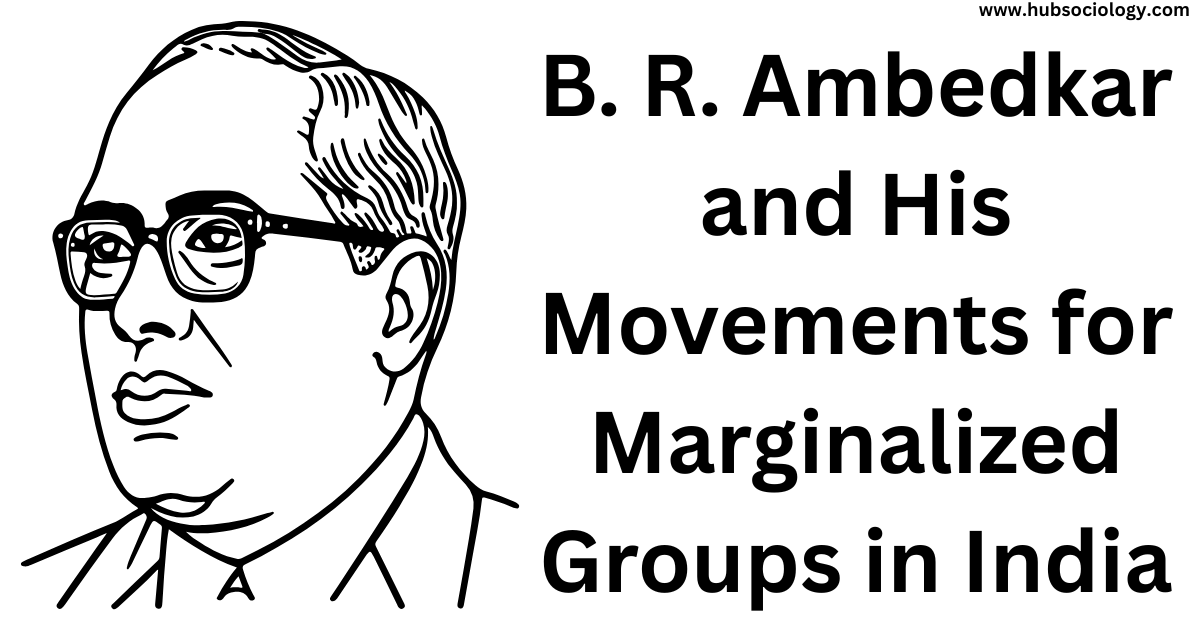
B. R. Ambedkar and His Movements for Marginalized Groups in India

Introduction Dr. Bhimrao Ramji Ambedkar (1891–1956), popularly known as Babasaheb Ambedkar, was a jurist, social reformer, economist, and the chief architect of the Indian Constitution. His life and work were dedicated to the upliftment of marginalized communities, particularly Dalits (formerly known as “untouchables”), Adivasis, and other oppressed groups in India. From a sociological perspective, Ambedkar’s … Read more

Parsons’ Functionalism and Social Change with 30 Questions

Functionalism

Talcott Parsons (1902–1979) is one of the most influential figures in the field of sociology, particularly known for his development of structural functionalism, a theoretical framework that seeks to explain social structures and institutions in terms of their functions in maintaining social order and stability. Parsons’ work has been both celebrated and critiqued for its … Read more

Modernization and Social Change in India with 30 Questions

Modernization

Modernization and social change are two interconnected processes that have significantly shaped the trajectory of Indian society. Modernization refers to the process of social transformation whereby societies evolve from traditional, agrarian structures to industrialized, urbanized, and technologically advanced systems. Social change, on the other hand, encompasses the alterations in social structures, cultural norms, values, and … Read more

Westernization and Social Change in India: A Sociological Perspective

Functionalism

Introduction on Westernization and Social Change India, a land of diverse cultures, traditions, and histories, has undergone significant social transformations over the centuries. One of the most profound influences on Indian society in the modern era has been the process of westernization. Westernization, as a sociological concept, refers to the adoption of Western cultural, economic, … Read more

Islam and Social Change in India: A Sociological Perspective

Social Fact by Émile Durkheim: A Sociological Perspective

India, a land of diverse cultures, religions, and traditions, has been a melting pot of social change and transformation over centuries. Among the many religions that have shaped its social fabric, Islam holds a significant place. Introduced to India in the 7th century through trade and later consolidated by various dynasties, Islam has played a … Read more

Socio-Religious Reform Movements and Their Influence on Social Change in India

Socio-Religious Reform Movements

India, with its rich tapestry of cultures, religions, and traditions, has historically been a land of diverse social practices and beliefs. However, many of these practices were deeply entrenched in hierarchical structures, caste systems, and gender inequalities. The 19th and early 20th centuries witnessed the emergence of socio-religious reform movements that sought to address these … Read more

Planned Social Change :Comprehensive note with 30 Questions

Planned Social Change

Social change is an inevitable and continuous process that shapes societies over time. It refers to the transformation of cultural, economic, political, and social institutions and relationships. While social change can occur organically through natural processes, it can also be deliberately initiated and directed. This intentional effort to alter societal structures and norms is known … Read more

Factors of Social Change: Comprehensive Note with 15 Important Questions

Factors of Social Change

Social change is an inevitable process that transforms the structure, culture, and functions of a society over time. It is a dynamic phenomenon influenced by various factors that shape the development and evolution of human communities. Sociologists have extensively analyzed the factors of social change, highlighting their complex interrelations and impact on societies. This article … Read more

Dialectical Approaches to Social Change in Indian Society

Dialectical Approaches

Social change is a dynamic and continuous process that restructures societies by influencing institutions, cultural norms, and power relations. In the Indian context, marked by deep-rooted traditions and hierarchical social structures, an effective analysis of social change requires an approach that acknowledges contradictions, conflicts, and their resolutions. Dialectical approaches, grounded in the principles of conflict … Read more

Cognitive Historical Approaches with 50 Important MCQs

Cognitive Historical Approaches

Social change is a complex and multifaceted phenomenon that encompasses shifts in cultural norms, social structures, economic systems, and political institutions. In the context of Indian society, which is characterized by its vast diversity, deep-rooted traditions, and dynamic history, understanding social change requires nuanced methodologies. One such approach is the cognitive historical method, which examines … Read more