Introduction: When Welfare Funding Becomes a Question of Survival
For millions of women living in India’s urban settlements, economic survival depends on more than finding employment. Access to affordable credit, self-help groups, vocational training, collective savings, and government-supported livelihood initiatives can determine whether a household remains financially stable during periods of crisis. However, uncertainty surrounding the funding of urban livelihood programmes has raised concerns about the future of these support systems.
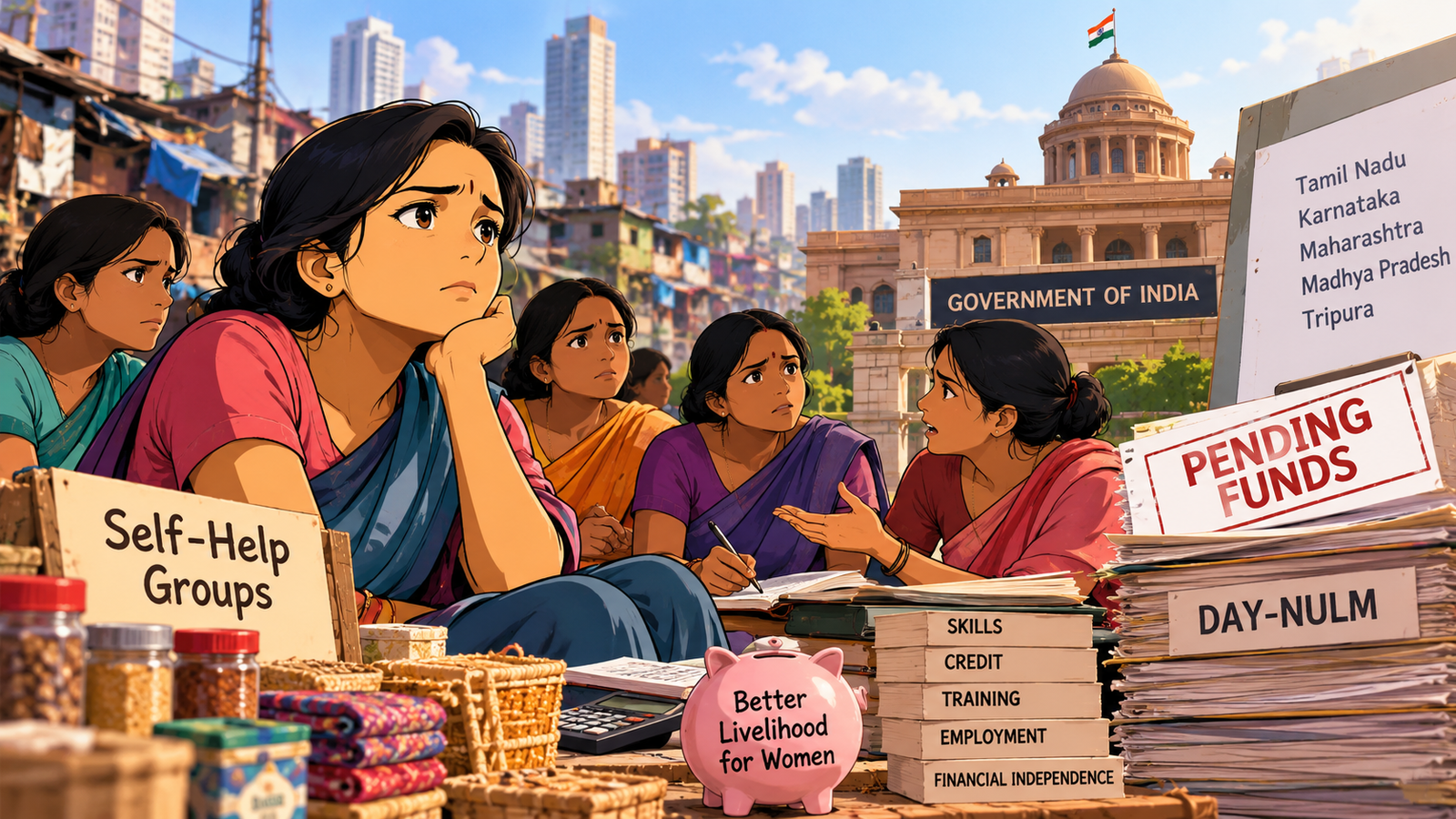
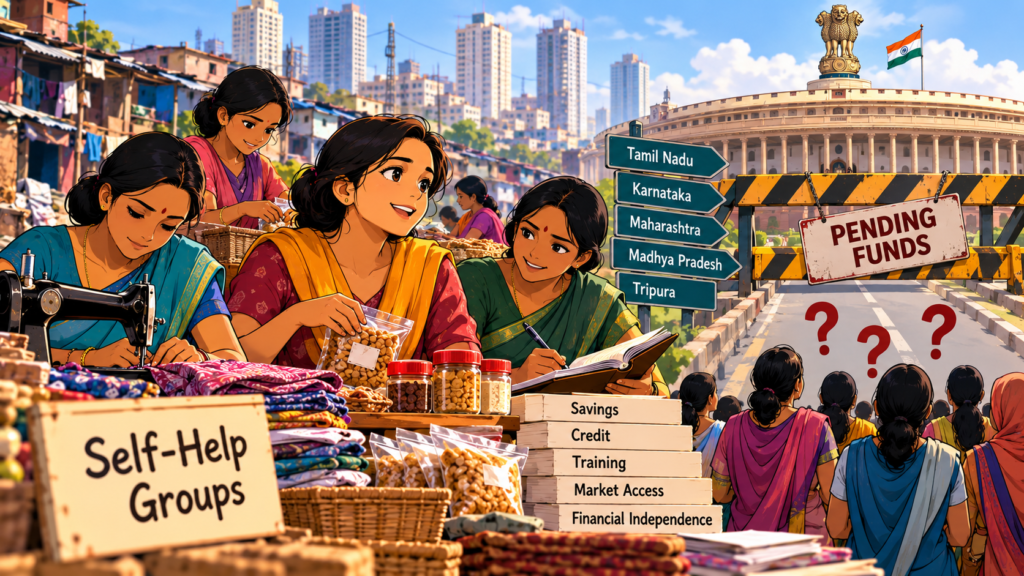
A report published by Financial Express on October 14, 2026, describes how five states—Tamil Nadu, Karnataka, Maharashtra, Madhya Pradesh, and Tripura—have urged the Union government to release pending funds associated with the Deendayal Antyodaya Yojana–National Urban Livelihoods Mission (DAY-NULM). The mission ended in September 2024, and concerns have emerged over the absence of a clearly established successor programme and uncertainty surrounding transitional arrangements. Read the Financial Express report.
The dispute raises a broader sociological question: what happens when the institutions that support economically vulnerable women become financially uncertain?
From a sociological perspective, funding uncertainty is not simply an administrative or fiscal problem. It can affect women’s bargaining power within households, their ability to participate in economic activities, the strength of community networks, and the relationship between citizens and the welfare state. When livelihood support becomes unpredictable, women who already occupy insecure positions in the labour market may face additional economic and social risks.
Understanding DAY-NULM and Its Role in Urban Livelihoods
The Deendayal Antyodaya Yojana–National Urban Livelihoods Mission was designed to reduce poverty and vulnerability among urban households by promoting self-employment, skilled wage employment, access to institutional credit, and community-based organisations. Its framework also addressed the needs of urban homeless people and street vendors.
According to the mission’s official website, the programme aimed to build sustainable livelihood opportunities by strengthening institutions among the urban poor. Women-led self-help groups (SHGs) were an important part of this institutional approach.
Self-help groups bring together people, often women from economically disadvantaged households, to save money collectively, develop financial discipline, access credit, and pursue income-generating activities. Depending on their circumstances and available support, members may establish small businesses, participate in local markets, undertake food processing, provide services, or expand existing enterprises.
The importance of these groups extends beyond their immediate financial activities. They can create opportunities for women to share information, develop leadership skills, build social networks, and engage with local institutions.
Government assistance can help these groups develop the organisational capacity required to function effectively. Support for training, credit linkages, community mobilisation, and institutional development can be particularly significant for women who lack collateral, formal employment records, or established connections with financial institutions.
The end of DAY-NULM in September 2024, followed by uncertainty over its replacement and the future of related support, therefore raises concerns about continuity. The central issue is not merely whether a particular scheme continues under the same name. It is whether the services and institutions built through the programme can continue functioning without interruption.
The Funding Dispute: What the Five States Are Demanding
The October 2026 report identifies five states seeking financial clarity and the release of funds associated with urban livelihood support. The amounts reported as being sought include ₹350 crore by Tamil Nadu, ₹80.99 crore by Maharashtra, ₹101 crore by Madhya Pradesh, and ₹6.5 crore by Tripura. The report also identifies concerns raised by Karnataka about the use of pilot-scheme allocations for salaries and programme operations.
These figures represent reported state-level demands; they should not automatically be interpreted as amounts independently verified to be legally payable and overdue in every case.
The dispute also involves the transition to a limited pilot initiative launched in October 2024, referred to in the report as DJAY-S. According to the coverage, states have expressed concern about the programme’s uncertain future, exhausted funds, outstanding dues, and disruptions to support for self-help groups and field-level personnel.
The Union Ministry of Housing and Urban Affairs, as reported by Financial Express, has maintained that there are no pending demands and has pointed to convergence with other schemes, including Swachh Bharat Mission and PM SVANidhi, as possible ways to continue supporting relevant activities.
This difference in position illustrates a familiar challenge in India’s federal system. State governments may seek predictable allocations to maintain existing services, while the Union government may emphasise administrative processes, available allocations, and the use of alternative programmes.
The practical question is whether these arrangements provide continuous and accessible support to women on the ground. Administrative convergence may be useful, but its effectiveness depends on whether alternative schemes offer comparable assistance, reach the same beneficiaries, and operate with adequate funding and institutional capacity.
The Gendered Nature of Urban Economic Insecurity
Funding uncertainty does not affect every social group in the same way. Its consequences are shaped by gender, class, caste, occupation, education, and access to social protection.

Many low-income urban women work in informal or insecure occupations, including domestic work, street vending, home-based production, small retail, food preparation, cleaning, and casual services. Such work may provide essential household income without guaranteeing a regular salary, paid leave, employment benefits, or protection against sudden income loss.
Women in these circumstances often combine paid work with unpaid domestic responsibilities, including childcare, cooking, caring for older relatives, and managing household consumption. Their economic choices are therefore shaped by both labour-market conditions and family expectations.
For women seeking to establish small businesses, collective savings and accessible credit can help meet initial costs, purchase stock, replace equipment, or respond to emergencies. When access to institutional support becomes uncertain, women may have to rely more heavily on personal savings, informal borrowing, or loans from relatives and private lenders.
This does not mean that every woman associated with a self-help group will experience the same outcome. The effects will depend on the group’s financial strength, the availability of other lending sources, household resources, and local economic conditions. Nevertheless, uncertainty in a public support system can create additional risks for those with the fewest alternatives.
From a feminist sociological perspective, the issue reveals how economic institutions interact with unequal social responsibilities. A programme intended to strengthen women’s livelihoods can have consequences for their autonomy well beyond the immediate amount of money disbursed.
Self-Help Groups as Economic and Social Institutions
Self-help groups are important because they connect individual households to wider networks of cooperation. Their functions may include savings, borrowing, collective decision-making, skill development, and engagement with government departments and banks.
The official DAY-NULM guidelines describe the development of women’s groups, their financial management, training, and links with banking institutions as elements of the mission’s community-based approach. See the mission’s social mobilisation guidelines.
From the perspective of Émile Durkheim’s ideas about social solidarity, collective institutions can help build cooperation and shared responsibility. Women who participate in organised groups may gain access to information and relationships that would otherwise be difficult to develop individually.
Pierre Bourdieu’s concept of social capital also helps explain the significance of these networks. Social capital refers to resources that become available through relationships, group membership, and networks of mutual recognition. A self-help group may provide access not only to money but also to knowledge about banking, markets, public services, and opportunities for collective action.
When funding disruptions weaken the organisations that support such groups, the potential loss is therefore both economic and social. Training activities may be postponed, field-level assistance may become less reliable, and groups may find it harder to establish or maintain links with institutions.
These outcomes are possible consequences rather than proof that every group has already experienced disruption. Their extent needs to be assessed through evidence from individual states and urban local bodies.
How Funding Uncertainty Can Affect Household Welfare
The consequences of an uncertain livelihood programme can extend into the everyday lives of families.
For a woman running a small food business, access to credit may determine whether she can buy ingredients in sufficient quantities. For a domestic worker trying to establish a supplementary source of income, training may provide an opportunity to move into a different occupation. For a group of women producing clothing or handicrafts, collective financial support may help them purchase raw materials and reach new customers.
If expected support is delayed or unavailable, these activities may become harder to sustain. Some women may postpone business expansion, reduce purchases, use household savings, or abandon plans to become self-employed. Others may continue successfully through their own savings, bank loans, or alternative programmes.
At the household level, even a modest decline in earnings can require difficult choices between food, education, healthcare, rent, transport, and debt repayment. Women may also absorb additional unpaid work to compensate for lost income or reduced access to services.
The social consequences can be particularly serious where households have limited savings and several dependants. However, the actual impact will depend on the scale and duration of the funding disruption, the availability of replacement support, and the economic circumstances of the household.
A sociological analysis must therefore connect government financing to the wider structure of social reproduction: the daily activities through which families maintain themselves, care for their members, and prepare the next generation for participation in society.
Informal Employment and the Limits of Market-Based Solutions
Urban India depends heavily on informal labour. Many workers contribute to local economies without enjoying the security associated with formal employment. Women are especially visible in occupations where work is home-based, poorly paid, irregular, or difficult to measure in conventional employment statistics.
For these workers, a livelihood programme can serve as a bridge between informal economic activity and more stable opportunities. Credit access, business training, and collective organisation may help women improve their earning capacity and strengthen their market position.
Yet government support cannot eliminate the structural disadvantages that women face. Unequal access to property, limited control over productive assets, discriminatory social expectations, gaps in digital literacy, and restrictions on mobility may all affect their ability to use financial assistance effectively.
At the same time, expecting private markets alone to provide affordable credit, training, and social protection can leave the poorest households behind. Commercial lenders may consider small, irregular, or undocumented incomes difficult to assess for Livelihood. Training programmes may also fail to reach women who cannot travel far from home or pay for childcare.
This is why continuity in public livelihood support matters. Funding is not a complete solution to urban poverty, but predictable and accessible support can help address barriers that individual effort and market transactions cannot resolve on their own.
Federalism, Governance, and Accountability
The funding dispute also raises questions about the distribution of responsibilities between the Union government, state governments, and urban local bodies.
Centrally supported schemes often depend on coordination across different levels of government. Financial allocations must be accompanied by clear guidelines, timely approvals, administrative capacity, and systems for monitoring expenditure and outcomes.
When a programme ends and a successor arrangement remains uncertain, the transition can create difficulties for officials, field staff, community organisations, and beneficiaries. Local institutions may struggle to plan activities if they cannot establish whether funding will continue, when it will arrive, or which activities will be eligible for assistance to Livelihood.
From a sociological perspective, Max Weber’s analysis of bureaucracy is relevant here. Administrative systems are intended to provide predictable procedures and defined responsibilities to Livelihood. When the rules governing a public programme are unclear to the institutions responsible for implementation, uncertainty can travel down the administrative chain and eventually affect Livelihood.
At the same time, accountability requires examining more than the existence of funding disputes. Governments must clarify the status of claimed dues, explain the applicable funding rules, disclose allocations and releases, and demonstrate how public resources are reaching intended beneficiaries.
The fact that governments led by different political parties have raised concerns makes the issue worth examining as a question of institutional continuity and intergovernmental coordination, rather than reducing it to a single party’s political position.
Ultimately, the success of public policy should be assessed by the reliability of the services delivered, the transparency of expenditure, and the outcomes experienced by vulnerable communities.
Beyond Financial Assistance: Women’s Agency and Economic Independence
Women’s empowerment cannot be measured solely by the number of bank accounts opened, loans issued, or groups formed. These indicators can provide useful information, but they do not fully reveal whether women have gained control over income, decision-making power, or long-term economic security.
Amartya Sen’s capability approach offers a useful framework. It distinguishes between possessing resources and having the genuine freedom to use them to pursue valued goals. A woman may receive access to credit but still face restrictions on mobility, control over earnings, or participation in household decisions.
Similarly, a woman may complete vocational training without being able to secure employment because of limited local demand, inadequate transport, or unpaid care responsibilities.
Effective livelihood programmes must therefore connect funding with meaningful opportunities. Women need access to appropriate training, affordable credit, markets, mentoring, social protection, and institutions that respond to their actual circumstances.
Self-help groups can contribute to this process by creating collective spaces in which women share experiences, develop confidence, and participate in decisions. However, the strength of these institutions depends on sustained organisational support and their ability to operate beyond the life of a single project.
The wider goal should be to help women move from economic vulnerability towards greater control over their resources and choices. Predictable programme funding can contribute to this goal, but it must be combined with broader action against structural inequalities.
What Should Happen Next to Livelihood?
A durable response to funding uncertainty requires clear decisions, transparent administration, and a focus on continuity for beneficiaries.
First, the Union government and the concerned states should publish a clear account of outstanding claims, funds already released, eligible expenditure, and unresolved financial issues. This would help distinguish verified liabilities from disputed demands and improve public accountability.
Second, the future of urban livelihood support should be communicated through a clear policy framework. If a successor programme or transitional arrangement is intended to replace DAY-NULM, governments should explain its objectives, eligibility criteria, financing arrangements, implementation responsibilities, and timetable.
Third, support for existing self-help groups should be protected during the transition. Where funding interruptions have affected training, credit linkages, or community mobilisation, authorities should identify those gaps and establish a practical plan for restoring essential services.
Fourth, alternative programmes should be evaluated according to their actual accessibility and outcomes. Linking women to another scheme is useful only if that scheme can meet their needs without imposing unreasonable additional requirements or leaving important services uncovered.
Fifth, governments should strengthen monitoring at the local level. Information about the number of active groups, credit access, training completion, enterprises established, repayment conditions, and women’s earnings can help determine whether livelihood support is achieving its intended objectives.
Finally, women participating in self-help groups should have meaningful opportunities to contribute to programme design and evaluation. Consultation with beneficiaries can reveal problems that may not be visible in financial statements or administrative reports.
These steps would help move the discussion beyond competing claims about funding and towards a measurable commitment to livelihood security.
Conclusion: Funding Continuity Is Part of Social Protection to Livelihood
The uncertainty surrounding India’s urban livelihood support framework highlights the relationship between public finance and everyday social inequality. For women in low-income urban households, self-help groups and livelihood programmes can provide access to savings, credit, training, collective organisation, and economic opportunities.
When the future of these arrangements becomes unclear, the consequences may extend beyond administrative delays to Livelihood. Women with insecure incomes and limited financial reserves may face greater difficulty planning their businesses, managing household expenses, and pursuing economic independence.
The reports of five states seeking financial clarity over DAY-NULM-related support reveal a policy challenge that requires transparent accounting, effective coordination, and a credible framework for continuity. The disagreement between the states and the Union government should be assessed through verified financial records and evidence of programme delivery, rather than assumptions about responsibility or motive.
From a sociological standpoint, the central issue is whether institutions designed to reduce vulnerability can provide reliable support to the people who depend on them. A livelihood programme’s value lies not only in the funds allocated but also in its ability to strengthen women’s capabilities, sustain community networks, and expand meaningful economic choices.
Funding continuity should therefore be treated as an essential element of inclusive urban development to Livelihood. Supporting women’s livelihoods is not merely an expenditure decision; it is part of the broader task of reducing structural inequality and ensuring that economic participation becomes more secure, accessible, and equitable.