Introduction on Stress in America
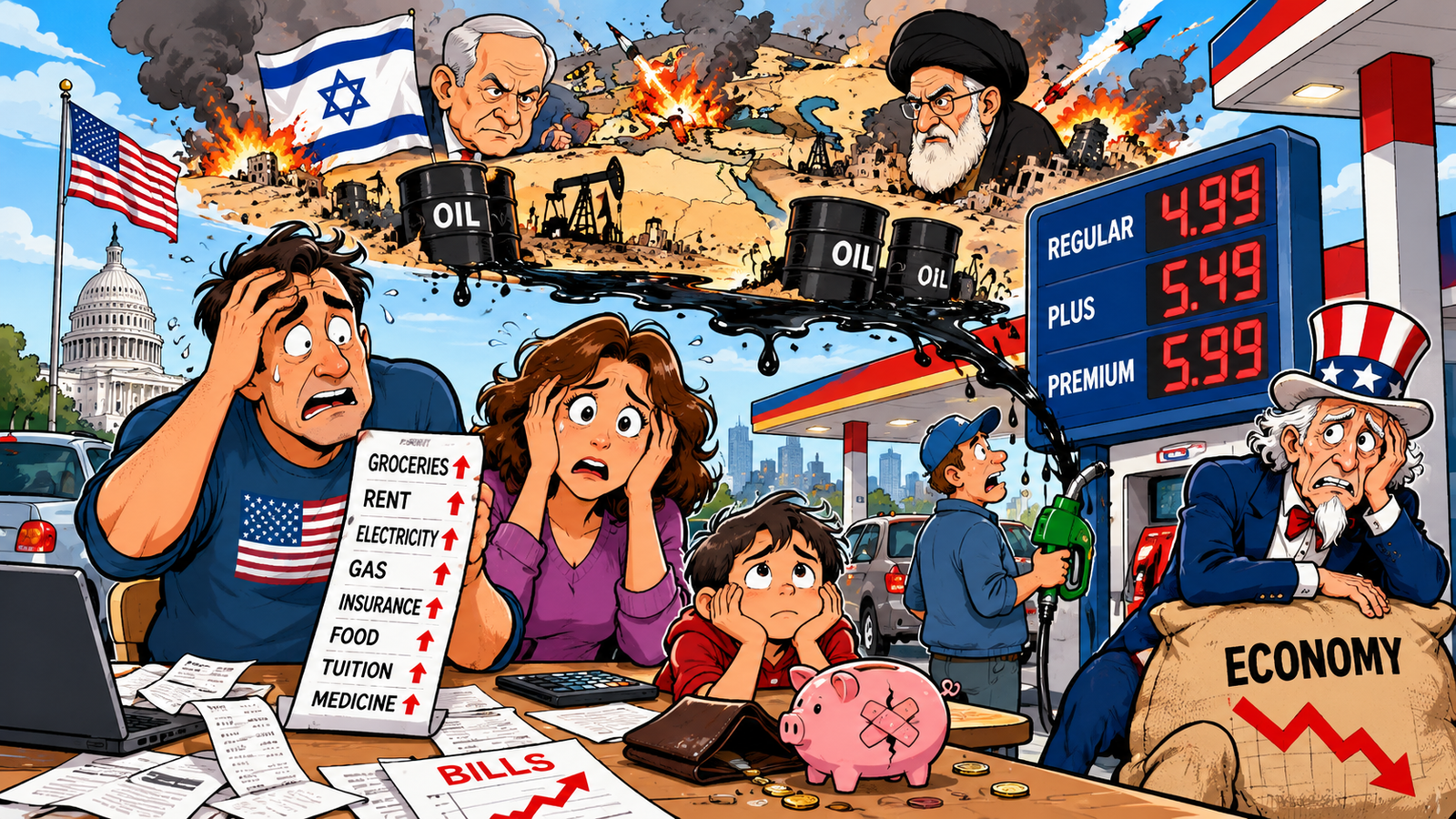
The Middle East has long been a region of geopolitical competition, military confrontation, and international diplomatic tension. However, conflicts in the region do not remain geographically confined. Through global energy markets, international trade, political debates, digital media, and public opinion, their consequences reach ordinary households thousands of miles away. In the United States, the continuing conflict involving Iran, Israel, and the wider Middle East has increasingly connected foreign policy with economic insecurity and everyday emotional pressure.
The relationship between the Middle East conflict and Stress in America illustrates an important sociological reality: international political events can reshape domestic life even when most citizens are physically distant from the battlefield. Rising energy costs, uncertainty about inflation, concerns about military escalation, and continuous exposure to distressing news can influence how Americans work, spend, interact, and imagine their future.
In October 2026, the economic consequences of the conflict have become particularly significant. Reuters reported on October 9 that American consumer sentiment had fallen close to record lows, with the University of Michigan’s Consumer Sentiment Index declining to 46.3 in early October. Rising living costs and energy prices linked to the conflict were among the major concerns.

From a sociological perspective, the crisis is therefore more than a foreign policy issue. It is also a question of social inequality, household stability, collective anxiety, political trust, and the relationship between global events and individual well-being.
Table of Contents
Understanding Stress in America Through Global Conflict
Stress is often understood as an individual psychological response to difficult circumstances. Sociology, however, examines how social structures, economic arrangements, political institutions, and cultural expectations shape the pressures individuals experience.
The concept of social stress helps explain why an international conflict can affect people who have no direct involvement in military operations. When a conflict threatens energy supplies, increases the cost of living, or creates uncertainty about national security, its consequences become part of ordinary social experience.
For example, a delivery driver may worry about higher fuel expenses, a parent may struggle to manage a household budget, and a small-business owner may face rising transportation costs. Although these individuals experience different problems, their difficulties may originate partly from the same international crisis.
This demonstrates the sociological connection between global structures and personal troubles. What appears to be an individual financial problem may actually reflect broader geopolitical and economic conditions.
The phrase Stress in America therefore captures more than emotional discomfort. It also describes the cumulative strain created by economic uncertainty, political polarization, job insecurity, family responsibilities, and concerns about the future.
How the Middle East Conflict Affects the American Economy
Rising Energy Prices and Household Expenses
One of the most direct connections between Middle East conflict and the American economy is the global energy market. The region occupies a strategically important position in international oil production and transportation. The Strait of Hormuz, in particular, is a critical route for global energy shipments.
Military escalation, attacks on shipping, or restrictions on maritime transportation can disrupt the movement of oil and petroleum products. Even when American consumers are not directly affected by a physical shortage, uncertainty about future supply can push global prices higher.
On October 8, 2026, reports of intensified tensions around the Strait of Hormuz coincided with a rise in Brent crude prices to approximately $105 per barrel. The disruption raised concerns about fuel supplies and further inflation.
For American households, higher energy prices can translate into more expensive gasoline, transportation, heating, and delivered goods. Businesses that depend on fuel may pass some of their additional costs on to consumers.
The consequences are interconnected. A household that spends more on gasoline has less money available for groceries, education, healthcare, savings, and recreation. Families may postpone purchases, reduce leisure activities, or rely more heavily on credit.
These adjustments can create persistent financial pressure, especially when wages do not rise at the same pace as everyday expenses.
Inflation and the Cost-of-Living Crisis
Energy is an important input in modern economic activity. When fuel prices rise, transportation and production costs may also increase. Depending on the duration and severity of the disruption, these pressures can spread through supply chains and contribute to broader inflation.
The effects are not identical across all products or regions. Nevertheless, prolonged increases in fuel and shipping costs can make it more difficult for households to maintain their previous standard of living.
The economic challenge is particularly serious when families are already dealing with housing costs, insurance premiums, education expenses, and consumer debt. Even a relatively small increase in recurring expenses can create considerable pressure for households with limited financial reserves.
This situation reveals a central sociological distinction between absolute income and economic security. A household may continue earning the same amount of money but experience a decline in its purchasing power. Consequently, its members may feel that they are falling behind even though their employment status has not changed.
The resulting insecurity contributes to Stress in America because financial stability is closely connected to people’s sense of control, dignity, and confidence in the future.
Business Uncertainty and Employment Concerns
International conflicts can also influence business confidence. Companies may face unpredictable fuel prices, changing shipping schedules, higher insurance costs, and uncertainty about future demand.
Small businesses often have fewer financial resources than large corporations to absorb sudden increases in operating expenses. Independent retailers, restaurants, transportation providers, and delivery services may therefore experience disproportionate pressure.
If businesses reduce hiring, delay investment, or increase prices to protect their margins, workers and consumers can face additional uncertainty.
It is important not to assume that every international conflict automatically causes widespread unemployment. Domestic demand, government policy, monetary conditions, and business performance also influence employment. However, prolonged geopolitical uncertainty can add another source of risk to an already complicated economic environment.
For workers who are worried about job security, economic uncertainty can affect family planning, housing decisions, educational investments, and mental well-being.
The Sociology of Financial Stress in America
Karl Marx and Economic Insecurity
Karl Marx’s analysis of capitalism provides one useful framework for understanding the relationship between geopolitical crises and household stress. Marx emphasized the unequal distribution of economic resources and the vulnerability of workers within capitalist production.
When global energy prices rise, the burden is not necessarily distributed equally. Large companies may possess greater financial reserves, bargaining power, and access to credit. Workers who depend on fixed salaries may have fewer options for protecting their purchasing power.
For example, an employee cannot always negotiate an immediate salary increase when gasoline and food prices rise. If rent, transportation, and utility bills consume most of that employee’s income, even a temporary increase in living costs may create a serious financial problem.
From a Marxian perspective, the crisis highlights how economic insecurity is connected to class relations and unequal control over resources.
The same international shock can therefore produce very different experiences for wealthy households, middle-income families, and low-wage workers.
Émile Durkheim and Social Stability
Émile Durkheim’s concept of anomie offers another way to understand the social consequences of prolonged uncertainty. Anomie refers broadly to a weakening or disruption of the norms and expectations that help organize social life.
When people cannot confidently predict their economic future, established expectations about employment, consumption, homeownership, and family security may become difficult to maintain.
For example, young adults who expect to save for a home may find that rising expenses delay their plans. Parents may struggle to provide the educational opportunities they had anticipated for their children. Workers approaching retirement may become concerned about their savings and future living costs.
These experiences can weaken confidence in the institutions that are expected to provide stability.
However, uncertainty does not inevitably lead to social breakdown. Community networks, supportive institutions, public assistance, and effective government communication can help people maintain social solidarity during periods of crisis.
Durkheim’s perspective reminds us that social connections and collective institutions matter when individuals face circumstances beyond their personal control.
C. Wright Mills and the Sociological Imagination
C. Wright Mills’s concept of the sociological imagination is particularly relevant to understanding Stress in America.
Mills argued that personal troubles must be examined in relation to broader public issues. This perspective helps connect a family’s difficulty paying for gasoline with international conflict, energy markets, economic policy, and global political relationships.
Without this wider perspective, individuals may interpret financial hardship entirely as a personal failure. They may believe that they are struggling because they are not working hard enough or managing their money properly.
Personal budgeting and individual decisions do matter, but they cannot eliminate every structural pressure. A household cannot independently control international oil prices, maritime security, military escalation, or national inflation.
The sociological imagination therefore helps explain how personal experiences are connected to institutions and global processes.
It also encourages a more balanced public discussion: individuals need practical financial strategies, while governments and institutions must consider the wider economic conditions that shape household security.
Social Inequality: Who Experiences the Greatest Stress in America?

The economic consequences of conflict are rarely distributed evenly across society. Income, occupation, location, household composition, and access to savings all influence how people respond to rising costs.
Low-income households often experience greater vulnerability because essential expenses consume a larger proportion of their income. When gasoline, utilities, and groceries become more expensive, there may be little room to reduce discretionary spending.
Middle-class families can experience a different form of pressure. They may have stable employment but face mortgage payments, childcare costs, insurance bills, student loans, and expectations about maintaining their standard of living.
Workers whose earnings depend on driving or transportation may be particularly exposed to fuel-price fluctuations. Rural households that depend on personal vehicles may also have fewer alternatives to driving than residents of areas with reliable public transportation.
Older adults living on relatively fixed incomes can face difficulties when essential costs rise faster than their income. Families supporting children and elderly relatives may experience a combination of financial and caregiving pressure.
These differences demonstrate that economic shocks are mediated by social position. The same increase in fuel prices may be inconvenient for one household but financially destabilizing for another.
A sociological analysis must therefore look beyond national averages and ask which groups possess the resources needed to absorb economic disruption.
Media Exposure, Fear, and Collective Anxiety
The relationship between conflict and Stress in America is not exclusively economic. Media coverage can also influence how people perceive risk and uncertainty.
Television news, online publications, and social media platforms provide continuous access to information about military operations, civilian casualties, diplomatic disputes, and possible escalation. This access can increase public awareness, encourage humanitarian concern, and help citizens evaluate government decisions.
At the same time, repeated exposure to alarming images and speculative commentary may intensify feelings of helplessness or apprehension, particularly when people cannot distinguish verified reporting from unconfirmed claims.
Digital platforms may also circulate dramatic headlines more widely than nuanced explanations. As a result, people can encounter a continuous stream of crisis-related content without receiving enough context to understand its actual implications.
From a sociological perspective, this is a problem of collective anxiety: uncertainty becomes a shared social experience, reinforced through conversations, online networks, political messaging, and media narratives.
Not everyone responds in the same way. Some people follow developments closely, while others limit their exposure. Personal experiences, political beliefs, family connections to the military, and confidence in institutions can all influence reactions.
Responsible journalism and media literacy can help reduce unnecessary confusion. Citizens benefit from checking multiple credible sources, distinguishing confirmed events from forecasts, and setting reasonable boundaries around repetitive news consumption.
Political Polarization and Public Trust
Foreign conflicts often become subjects of domestic political competition. Citizens may disagree about military intervention, diplomatic negotiations, national security priorities, humanitarian responsibilities, and the appropriate use of public funds.
These disagreements become especially intense when the public also faces rising living costs. People may question whether government decisions are improving national security or contributing to economic hardship.
Public opinion research during 2026 illustrates the connection between international conflict and domestic concerns. A Reuters/Ipsos poll reported by Ipsos in March found that Americans identified the economy and foreign conflicts among the country’s leading problems. Fourteen percent named war and foreign conflicts as the most important issue, up from one percent in February, while 16% identified the economy, unemployment, and jobs.
Such findings do not mean that all Americans share the same views or experience identical levels of stress. Instead, they demonstrate that international security and domestic economic well-being have become closely connected in public debate.
Political polarization can intensify this pressure when opposing groups interpret the same events through incompatible narratives. Public trust may weaken if official explanations appear inconsistent or if people believe that the costs of foreign policy are being unfairly distributed.
However, disagreement is also a normal feature of democratic societies. Open debate, independent journalism, transparent decision-making, and accountable institutions can help citizens evaluate difficult policy choices without treating political opponents as enemies.
Family Life, Social Relationships, and Everyday Decisions
Economic insecurity can influence relationships within households. When families have less disposable income, discussions about spending, education, housing, and leisure can become more difficult.
Parents may worry about maintaining their children’s standard of living. Couples may disagree about whether to save more, postpone a major purchase, or reduce recreational expenses. Young adults may delay moving out, pursuing further education, or starting families because they feel uncertain about their financial prospects.
These pressures can affect social participation as well. Households may reduce restaurant visits, travel, entertainment, or community activities to manage expenses. Over time, reduced participation can weaken opportunities for relaxation and social connection.
Nevertheless, families and communities can also respond through cooperation. Sharing resources, supporting relatives, participating in community organizations, and discussing financial decisions openly can help reduce the isolation associated with economic pressure.
The sociological lesson is that economic stress is both an individual experience and a relational process. Its effects are shaped by how people interact with family members, colleagues, neighbors, and institutions.
Government Policy and the Challenge of Reducing Stress in America
Because the consequences of international conflict extend into domestic economic life, public policy plays an important role in determining how severe the impact becomes.
Energy diversification, investment in public transportation, strategic energy planning, and resilient supply chains can help reduce vulnerability to external shocks. Targeted assistance for low-income households may also provide relief when essential expenses rise sharply.
Monetary policy presents a more complicated challenge. Central banks must consider inflation risks while also accounting for employment and economic growth. Raising interest rates can help restrain inflationary pressure, but higher borrowing costs can make mortgages, vehicle loans, and business investment more expensive.
Fiscal policy also involves trade-offs. Governments must balance national security commitments with domestic priorities such as healthcare, education, infrastructure, and social protection.
Transparent communication is essential. When officials explain what is known, what remains uncertain, and which measures are being considered, citizens may be better equipped to make informed decisions.
Public institutions cannot eliminate every consequence of a foreign conflict. However, effective planning and fair access to support can prevent an international shock from becoming an unnecessarily severe domestic social crisis.
Conclusion on Stress in America
The Middle East conflict demonstrates how international politics can shape everyday life in the United States. Through energy markets, inflation, business uncertainty, political debate, and continuous media exposure, a distant geopolitical crisis can become a source of financial pressure and collective anxiety.
Stress in America should therefore be understood not simply as a psychological issue but as a sociological phenomenon shaped by economic inequality, institutional trust, social relationships, and global interdependence.
Marx helps explain unequal economic vulnerability, Durkheim highlights the importance of social stability, and C. Wright Mills shows how personal financial difficulties connect to wider public issues. Together, these perspectives demonstrate why the consequences of conflict cannot be understood solely through military developments or market prices.
Ultimately, reducing the social costs of geopolitical instability requires more than individual resilience. It also demands responsible policymaking, economic protections for vulnerable households, transparent public communication, and strong community networks.
The broader lesson is that global peace and domestic well-being are closely connected. When international conflict creates uncertainty, the ability of American society to protect economic security, maintain social solidarity, and preserve public trust becomes especially important.
FAQs About Stress in America
1. How does the Middle East conflict contribute to Stress in America?
The Middle East conflict can contribute to Stress in America through rising fuel prices, inflationary pressures, economic uncertainty, and continuous exposure to disturbing news. These factors can affect household budgets, public confidence, and emotional well-being.
2. Why is Stress in America increasing during international conflicts?
Stress in America may increase during international conflicts because people worry about economic stability, national security, energy prices, and the possibility of further escalation. Media coverage and political disagreements can intensify these concerns.
3. How do rising oil prices affect Stress in America?
Rising oil prices can increase gasoline, transportation, and delivery costs. When businesses pass these expenses on to consumers, households may face higher living costs, contributing to financial pressure and Stress in America.
4. What is the sociological explanation for Stress in America?
Sociologically, Stress in America can be explained through economic inequality, social instability, political uncertainty, and unequal access to resources. Sociologists examine how social structures and institutions influence people’s experiences of stress.
5. How does inflation contribute to Stress in America?
Inflation reduces purchasing power when prices rise faster than household incomes. Families may struggle to afford groceries, housing, healthcare, and transportation, increasing financial insecurity and Stress in America.
6. Which social groups are most affected by Stress in America?
Low-income households, low-wage workers, people living on fixed incomes, and families with substantial housing or childcare expenses may be especially vulnerable. Their limited financial reserves make it harder to absorb unexpected increases in living costs.
7. How does Karl Marx’s theory explain Stress in America?
Karl Marx’s theory highlights how class inequality and unequal control over economic resources shape social experiences. During economic crises, workers with limited bargaining power may face greater financial insecurity than wealthier groups.
8. How does Émile Durkheim’s theory relate to Stress in America?
Émile Durkheim’s concept of anomie helps explain how prolonged uncertainty can disrupt social expectations and weaken feelings of stability. Economic insecurity may affect people’s confidence in employment, family security, and social institutions.
9. What is C. Wright Mills’s perspective on Stress in America?
C. Wright Mills’s concept of the sociological imagination connects personal troubles with public issues. It helps explain how an individual’s financial difficulties may be linked to global conflict, energy markets, economic policy, and structural inequality.
10. How does social media influence Stress in America during war?
Social media can spread breaking news, graphic images, unverified claims, and alarming predictions. Continuous exposure may intensify anxiety, although digital platforms can also provide useful information, community support, and opportunities for civic engagement.
11. Does the Middle East conflict directly cause inflation in the United States?
Not necessarily. Conflict can contribute to inflation by disrupting energy supplies and increasing transportation costs. However, inflation also depends on domestic demand, monetary policy, supply chains, wages, and other economic conditions.
12. How does Stress in America affect family relationships?
Financial uncertainty can increase disagreements about spending, savings, housing, and education. Families may also reduce recreational activities or postpone major decisions. Open communication and mutual support can help households manage these pressures.
13. What role does government policy play in reducing Stress in America?
Government policies can help by strengthening energy security, supporting vulnerable households, improving public transportation, maintaining resilient supply chains, and communicating clearly about economic risks. The effectiveness of these measures depends on their design and implementation.
14. How can Americans manage Stress in America during geopolitical uncertainty?
People can follow reliable news sources, limit repetitive exposure to distressing coverage, review household budgets, maintain social connections, and seek professional support if stress becomes overwhelming. Individual strategies can help, although they cannot eliminate broader structural problems.
15. What does Stress in America reveal about global interdependence?
Stress in America demonstrates that international events can influence domestic economic conditions, social relationships, and public attitudes. The connection between Middle East conflict and American households illustrates how global political and economic systems shape everyday life.