Introduction
Education is often regarded as the most powerful instrument for social transformation. In a democratic society like India, education is expected to provide equal opportunities to all citizens regardless of caste, class, gender, religion, or region. It is seen as the pathway to social mobility, economic development, and individual empowerment. However, despite constitutional guarantees and decades of educational reforms, inequality in education remains deeply rooted in Indian society.
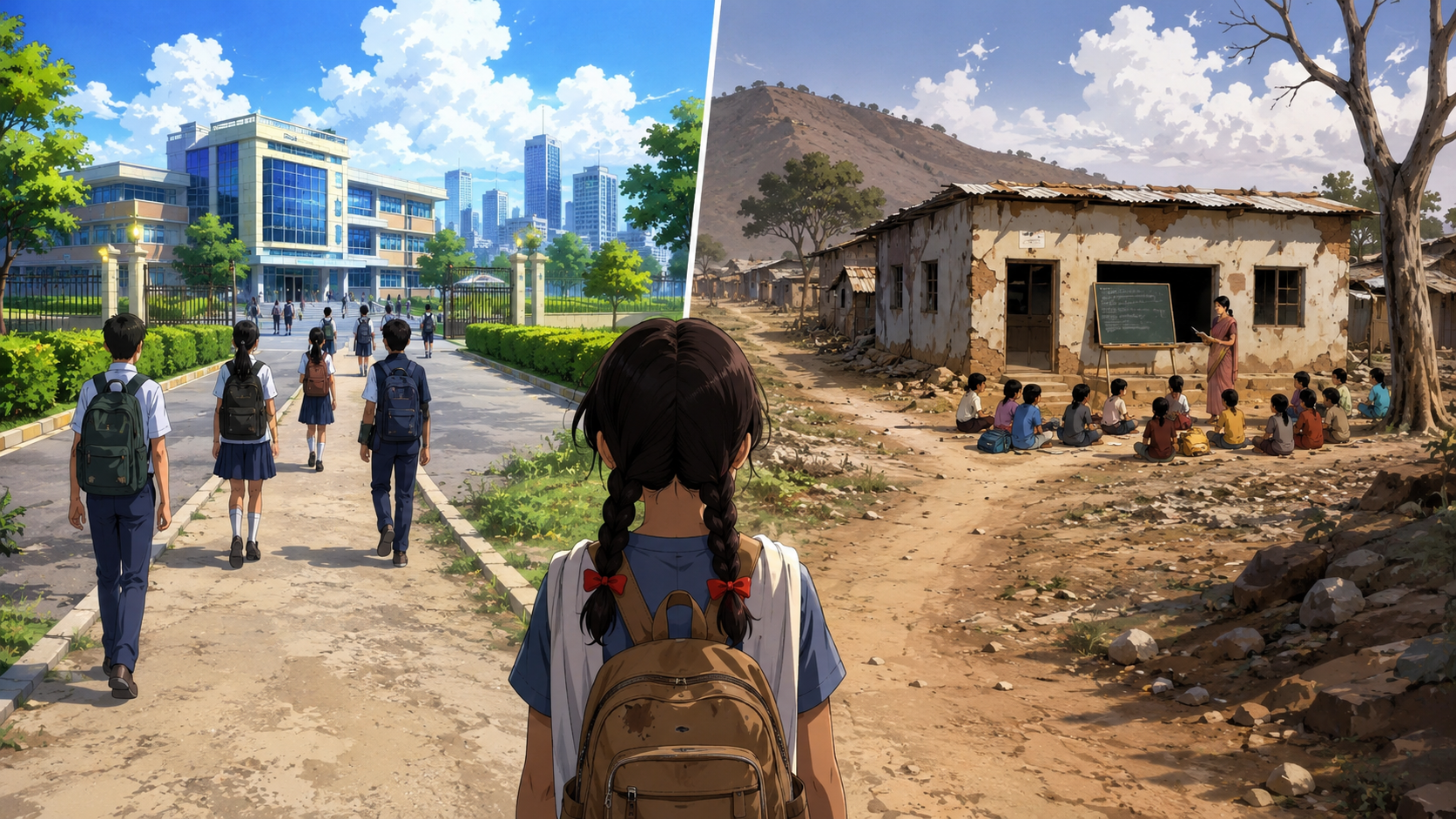
The Indian education system reflects the broader structure of society. Social inequality in India is not merely economic; it is also shaped by caste hierarchy, patriarchy, regional imbalance, language barriers, digital divides, and cultural exclusion. As a result, access to quality education remains uneven. While some students study in elite private schools with advanced facilities, others struggle in underfunded government schools lacking teachers, infrastructure, and digital resources.
From a sociological perspective, education does not only transmit knowledge. It also reproduces social values, norms, and existing inequalities. Sociologists have long debated whether education acts as a force of equality or as a mechanism that preserves privilege. In India, both dimensions can be observed simultaneously. Education has enabled millions to escape poverty and discrimination, yet it has also reinforced divisions between privileged and marginalized groups.
This article examines education and social inequality in India through a sociological lens. It explores the relationship between education and caste, class, gender, rural-urban differences, digital inequality, and government policies while analyzing major sociological theories related to educational inequality.
Meaning of Social Inequality in Education
Social inequality in education refers to unequal access to educational opportunities, resources, and outcomes among different social groups. These inequalities are influenced by social status, income, caste, gender, ethnicity, religion, and geographical location.
Educational inequality can appear in several forms:
- Unequal access to schools and colleges
- Differences in quality of education
- Language-based disadvantages
- Unequal digital access
- Gender discrimination
- Caste-based exclusion
- Economic barriers
- Unequal employment opportunities after education
In India, educational inequality is not a recent phenomenon. It has historical roots connected to the caste system and colonial policies.
Historical Background of Educational Inequality in India
Ancient India and the Caste System
In ancient India, education was largely restricted to upper castes, especially Brahmins. Lower castes and Dalits were denied access to formal learning. The Gurukul system mainly benefited privileged social groups. Knowledge became a tool of social control.
Women were also excluded from education in many periods. Patriarchal values limited female literacy and participation in intellectual life.
Thus, education became closely connected with social hierarchy.
Colonial Period
During British colonial rule, modern education systems were introduced. English education created new opportunities but also widened social divisions. Urban elites benefited more than rural populations.
Colonial education produced an educated middle class that later played a role in the nationalist movement. However, marginalized communities remained largely excluded from quality education.
Post-Independence India
After independence in 1947, the Indian Constitution recognized education as a fundamental tool for equality and nation-building. Important constitutional provisions include:
- Right to Equality
- Right against discrimination
- Reservation policies
- Right to Education Act
Despite these efforts, structural inequalities continued to shape educational outcomes.
Sociological Perspectives on Education and Inequality
Functionalist Perspective
Functionalists such as Émile Durkheim viewed education as an institution that promotes social integration and prepares individuals for social roles. According to this perspective, schools teach discipline, cooperation, and shared values necessary for society.
Functionalists argue that education creates meritocracy where success depends on talent and hard work. In theory, education allows individuals from poor backgrounds to improve their social status.
However, critics argue that the Indian education system does not function equally for all groups because structural inequalities limit opportunities.
Conflict Perspective
Conflict theorists like Karl Marx believed education reflects class inequality. Schools often reproduce the interests of dominant groups.
In India, wealthy families can afford private schools, coaching centers, English-medium education, and digital learning resources. Poor families often depend on poorly funded public schools.
Thus, education may reproduce social inequality rather than eliminate it.
Pierre Bourdieu and Cultural Capital
Pierre Bourdieu introduced the concept of cultural capital. Children from educated and wealthy families possess language skills, cultural habits, and confidence valued by schools.
In India, urban middle-class students often have advantages such as:
- English fluency
- Access to books and technology
- Educated parents
- Coaching facilities
Students from rural or marginalized communities may lack these advantages, leading to unequal outcomes.
Feminist Perspective
Feminist sociologists examine how patriarchy shapes educational opportunities for girls and women.
Gender inequality in education includes:
- Lower female literacy
- Early marriage
- School dropout among girls
- Lack of sanitation facilities
- Safety concerns
Although female education has improved significantly, many girls still face barriers in higher education and professional fields.
Caste and Educational Inequality
Impact of the Caste System
The caste system remains one of the strongest sources of educational inequality in India. Historically marginalized groups such as Scheduled Castes (SCs) and Scheduled Tribes (STs) continue to experience discrimination.
Problems faced by lower caste students include:
- Social exclusion
- Untouchability practices in some areas
- Teacher bias
- Bullying and humiliation
- Economic poverty
Many Dalit students are first-generation learners with limited family support for education.
Reservation Policy
The reservation system aims to improve representation of marginalized communities in education and employment.
Reservations exist for:
- Scheduled Castes
- Scheduled Tribes
- Other Backward Classes (OBCs)
These policies have increased access to higher education for disadvantaged groups. However, debates continue regarding merit, equality, and social justice.
Sociologically, reservation is viewed as a corrective mechanism against historical oppression.
Class Inequality and Education
Economic Differences
Class inequality strongly influences educational opportunities in India.
Children from affluent families enjoy:
- Private schooling
- Coaching institutes
- International curriculum
- Better nutrition
- Digital access
Poor children often face:
- Child labor
- Inadequate study environment
- Financial pressure
- Poor school infrastructure
Economic inequality affects not only school access but also educational quality.
Privatization of Education
The rapid growth of private schools and universities has widened educational inequality.
Elite institutions offer better facilities and global exposure, while government schools often struggle with:
- Teacher shortages
- Poor infrastructure
- Lack of laboratories
- Low digital connectivity
Education increasingly functions as a market commodity, benefiting economically privileged groups.
Gender Inequality in Education
Female Literacy and Schooling
India has made significant progress in female literacy, yet gender gaps remain.
Many girls discontinue education due to:
- Poverty
- Household responsibilities
- Early marriage
- Safety concerns
- Menstrual hygiene issues
In some communities, investment in boys’ education is prioritized over girls’ education.
Higher Education and Employment
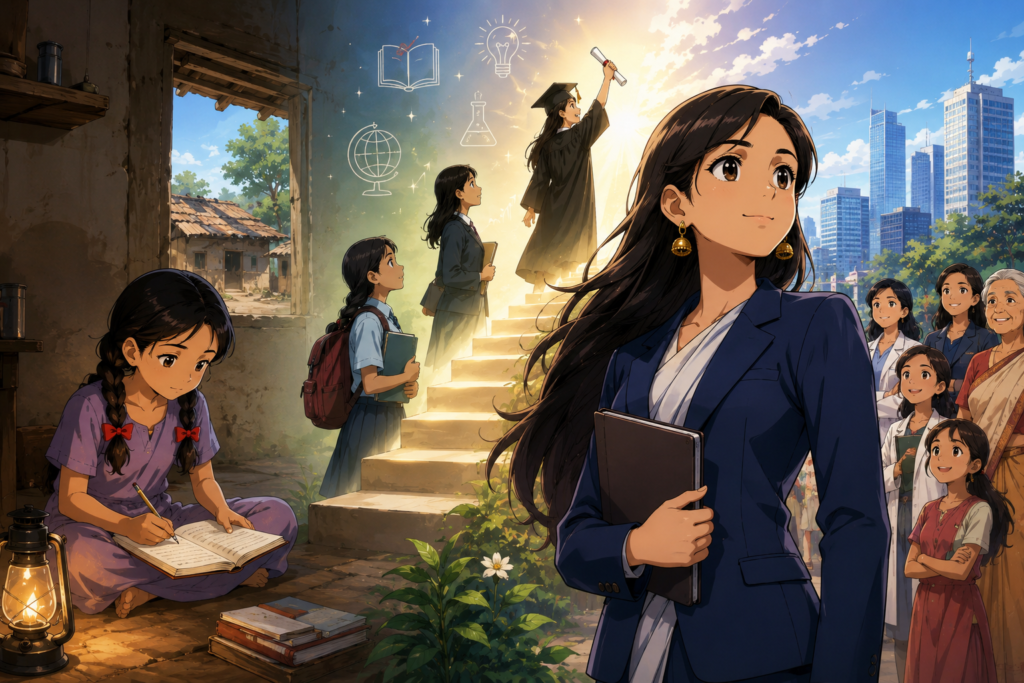
Women’s participation in higher education has improved, but inequality persists in science, technology, engineering, and leadership positions.
Patriarchal attitudes continue to shape career choices and educational expectations.
Sociological Importance of Female Education
Education empowers women socially and economically. It contributes to:
- Lower fertility rates
- Better health awareness
- Economic independence
- Political participation
- Gender equality
Thus, female education is closely linked with social development.
Rural-Urban Educational Divide
Urban Advantages
Urban areas generally have better educational facilities such as:
- Private schools
- Coaching centers
- Internet access
- Libraries
- Skilled teachers
Urban students are more exposed to competitive examinations and career opportunities.
Rural Challenges
Rural schools often suffer from:
- Poor infrastructure
- Teacher absenteeism
- Lack of electricity
- Limited transportation
- Multi-grade classrooms
Many rural students travel long distances to attend school.
This rural-urban divide reinforces broader patterns of social inequality.
Language and Educational Inequality
Language plays an important role in educational success in India.
English-Medium Advantage
English is associated with social prestige, employment opportunities, and higher education.
Students studying in English-medium schools often gain advantages in:
- Competitive examinations
- Corporate jobs
- Global communication
Regional Language Challenges
Students educated in regional languages may face difficulties in higher education and employment where English dominates.
This creates linguistic inequality between elite and non-elite students.
Digital Divide and Educational Inequality
Technology and Education
The digital revolution has transformed education through:
- Online classes
- E-learning platforms
- Digital libraries
- Smart classrooms
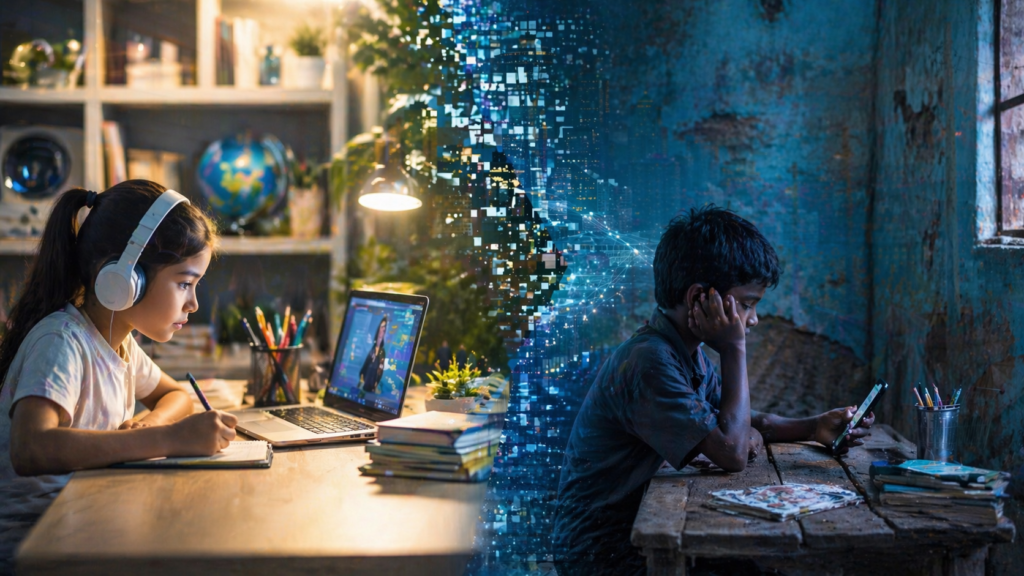
However, unequal access to technology has created a new form of inequality.
COVID-19 and Online Education
The COVID-19 pandemic exposed deep digital inequality in India.
Many students lacked:
- Smartphones
- Internet connectivity
- Electricity
- Digital literacy
Urban middle-class students continued online learning, while millions of rural and poor students were left behind.
This digital divide widened existing educational disparities.
Education and Social Mobility
Education is often considered a pathway for upward social mobility.
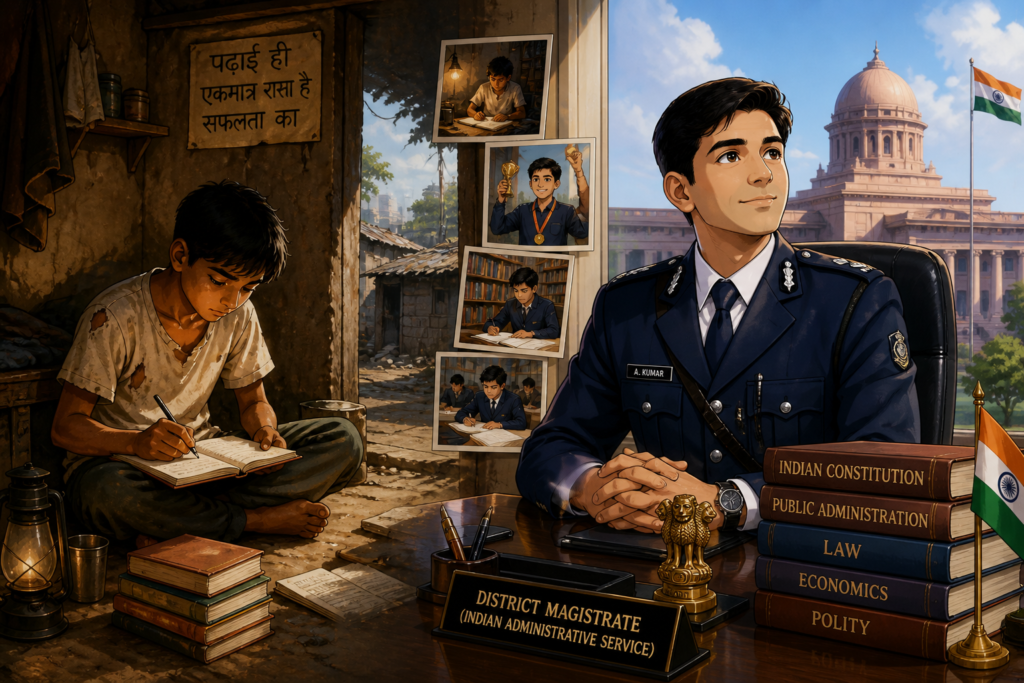
Many individuals from marginalized communities have improved their lives through education and government support. Examples include:
- Civil servants from rural backgrounds
- Dalit intellectuals
- Women professionals
- First-generation graduates
However, sociologists argue that mobility remains unequal because structural barriers continue to exist.
Educational success often depends on social background as much as individual effort.
Role of Government in Reducing Educational Inequality
Right to Education Act (2009)
The Right to Education Act made education a fundamental right for children aged 6 to 14 years.
The Act focuses on:
- Free and compulsory education
- Inclusive schooling
- Infrastructure standards
- Teacher qualifications
Mid-Day Meal Scheme
The Mid-Day Meal Scheme encourages school attendance and improves nutrition among poor children.
It has positively affected enrollment rates, especially among marginalized communities.
Scholarships and Welfare Programs
Government initiatives include:
- Scholarships for SC/ST/OBC students
- Free textbooks
- Bicycle distribution
- Hostel facilities
- Digital education programs
These policies aim to reduce inequality in educational access.
Challenges in Indian Education System
Despite progress, several challenges remain:
Poor Quality of Government Schools
Many schools lack:
- Toilets
- Laboratories
- Libraries
- Trained teachers
Commercialization of Education
Private education has become expensive, making quality education inaccessible to many families.
Examination Pressure
The exam-oriented system promotes rote learning instead of critical thinking and creativity.
Dropout Rates
Economic hardship and social discrimination contribute to school dropout, especially among girls and marginalized groups.
Unemployment Among Educated Youth
Even educated youth often face unemployment or underemployment, creating frustration and social tension.
Education, Inequality, and Social Change
Education has a dual role in society.
Education as a Tool of Equality
Education can:
- Reduce poverty
- Promote democracy
- Empower marginalized groups
- Encourage social mobility
- Develop critical awareness
Social reformers like B. R. Ambedkar strongly emphasized education as a means of liberation for oppressed communities.
Education as a Tool of Social Reproduction
At the same time, unequal educational systems reproduce privilege.
Elite schools often prepare students for high-paying careers, while poor schools limit opportunities.
Thus, education can simultaneously promote equality and maintain inequality.
Importance of Inclusive Education
Inclusive education seeks to ensure equal opportunities for all students regardless of caste, gender, disability, religion, or economic status.
An inclusive education system requires:
- Equal infrastructure
- Trained teachers
- Digital access
- Gender-sensitive policies
- Anti-discrimination measures
- Multilingual support
Inclusive education strengthens social cohesion and democracy.
Future of Education and Equality in India
India’s future depends heavily on educational reform.
Key priorities include:
- Improving government schools
- Expanding digital access
- Reducing gender inequality
- Supporting rural education
- Strengthening public universities
- Promoting skill-based learning
- Reducing commercialization
Technology, if distributed equally, can help bridge educational gaps. However, without social justice and policy intervention, inequality may continue.
Conclusion
Education and social inequality in India are deeply interconnected. The Indian education system reflects the broader social structure shaped by caste, class, gender, language, and regional disparities. While education has opened opportunities for millions, it has not fully overcome structural inequality.
From a sociological perspective, education is both a means of empowerment and a mechanism of social reproduction. The experiences of students differ greatly depending on their social background. Elite groups continue to enjoy greater educational advantages, while marginalized communities face systemic barriers.
Nevertheless, education remains one of the strongest instruments for social transformation. Policies promoting inclusive and equitable education can help reduce social inequality and strengthen democratic values.
For India to achieve genuine social justice, education must become accessible, affordable, and meaningful for every citizen. Only then can education truly fulfill its role as a force for equality, empowerment, and national development.
FAQs on Social Inequality in India
1. What is Social Inequality in India?
Social Inequality in India refers to unequal access to resources, opportunities, education, healthcare, and social status among different groups based on caste, class, gender, religion, and region.
2. How does education reflect Social Inequality in India?
Education reflects Social Inequality in India through unequal access to quality schools, digital resources, private coaching, and higher education opportunities for marginalized communities.
3. What role does caste play in Social Inequality in India?
Caste remains a major factor in Social Inequality in India because historically disadvantaged groups often face discrimination, exclusion, and limited educational and economic opportunities.
4. How does poverty increase Social Inequality in India?
Poverty limits access to quality education, healthcare, nutrition, and employment, thereby strengthening Social Inequality in India across generations.
5. Why is rural education connected to Social Inequality in India?
Rural areas often lack proper infrastructure, trained teachers, internet access, and educational facilities, contributing significantly to Social Inequality in India.
6. How does gender affect Social Inequality in India?
Gender discrimination affects girls’ education, employment, safety, and social participation, making it an important dimension of Social Inequality in India.
7. What is the digital divide in relation to Social Inequality in India?
The digital divide refers to unequal access to smartphones, computers, and the internet, which widens Social Inequality in India, especially in online education.
8. How do private schools contribute to Social Inequality in India?
Private schools often provide better facilities and opportunities than government schools, creating educational gaps that reinforce Social Inequality in India.
9. What are the major causes of Social Inequality in India?
Major causes include caste hierarchy, economic inequality, patriarchy, regional imbalance, lack of quality education, and unequal access to technology.
10. How does Social Inequality in India affect employment opportunities?
People from marginalized backgrounds often receive lower-quality education and fewer networking opportunities, limiting their access to well-paid jobs.
11. What is the sociological view of Social Inequality in India?
Sociologists view Social Inequality in India as a structural problem rooted in historical, cultural, and economic systems that reproduce unequal opportunities.
12. How does the government try to reduce Social Inequality in India?
The government uses reservation policies, scholarships, free education programs, mid-day meals, and welfare schemes to reduce Social Inequality in India.
13. Why is female education important for reducing Social Inequality in India?
Female education promotes economic independence, social awareness, health improvement, and gender equality, helping reduce Social Inequality in India.
14. Can education reduce Social Inequality in India?
Yes, inclusive and accessible education can improve social mobility, empower marginalized communities, and reduce long-term Social Inequality in India.
15. What is the future challenge of Social Inequality in India?
The major future challenge is ensuring equal access to quality education, digital technology, employment, and social justice for all sections of society.