Introduction on Cultural Diversity in Washington
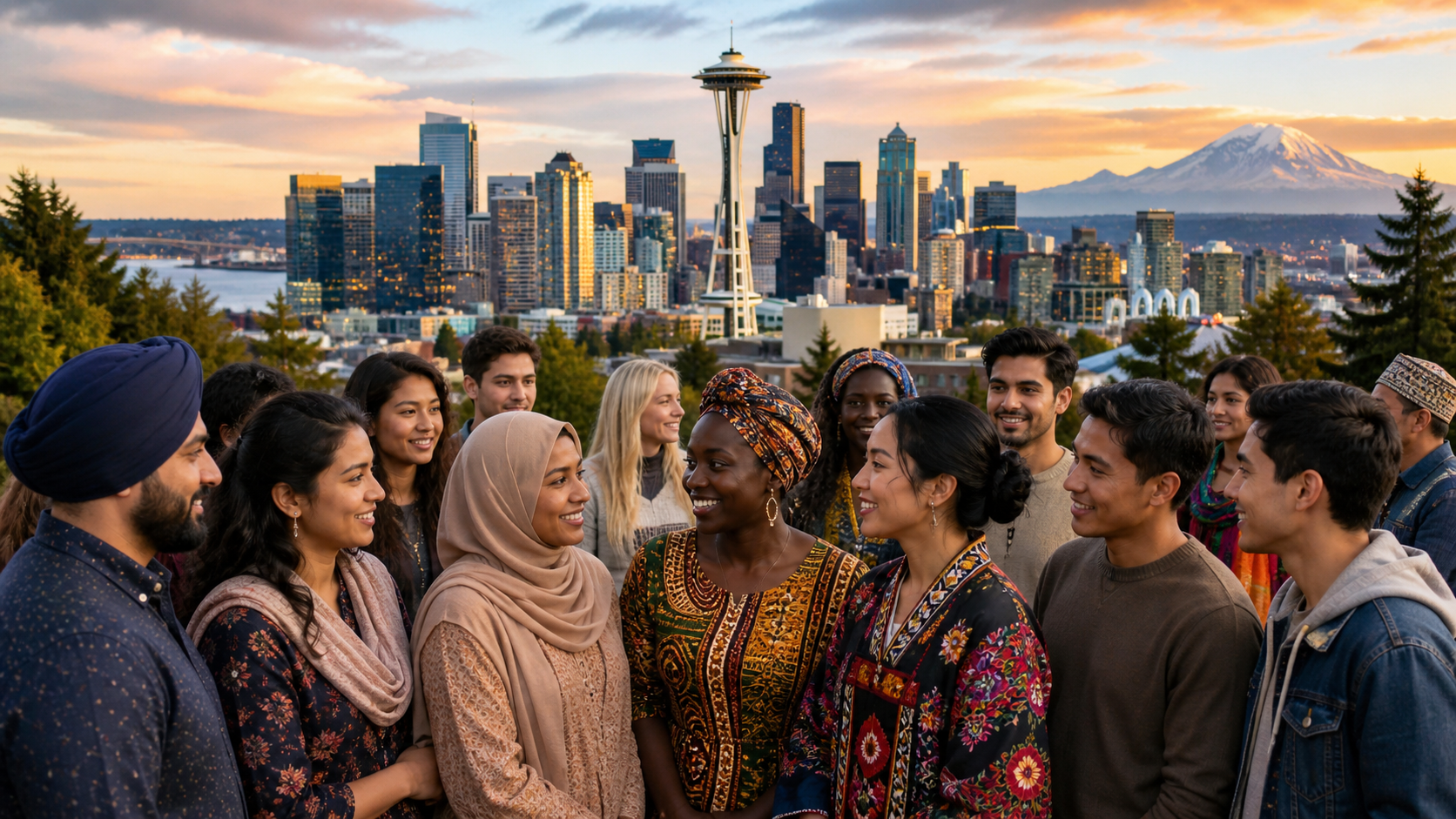
Migration has played a major role in shaping societies across the world, and the state of Washington is a strong example of this social transformation. Washington is known not only for its technological advancement and economic development but also for its multicultural population. People from different ethnic, linguistic, religious, and cultural backgrounds have migrated to Washington over many decades, creating a socially diverse environment. The sociological study of migration and cultural diversity in Washington helps us understand how people adapt to new environments, preserve their traditions, and contribute to social and economic life.
Migration in Washington includes both domestic migration from other American states and international migration from countries in Asia, Latin America, Africa, and Europe. Cities such as Seattle, Spokane, and Tacoma have become culturally diverse urban centers where multiple identities coexist. Sociologists study these patterns to understand issues such as integration, identity formation, social inequality, labor participation, and multicultural coexistence.
This article explores migration and cultural diversity in Washington from a sociological perspective by examining historical migration trends, cultural interaction, social institutions, economic participation, challenges faced by migrants, and the future of multicultural society in the state.
Understanding Migration in Sociology
Migration refers to the movement of people from one place to another for temporary or permanent settlement. Sociology studies migration as a social process influenced by economic opportunities, political conditions, education, family networks, and environmental changes.
Migration can be categorized into several forms:
- Internal migration
- International migration
- Rural-to-urban migration
- Seasonal migration
- Forced migration
- Skilled migration
Washington has experienced almost all these forms of migration. The state’s growing industries, universities, ports, and technology sector have attracted migrants from across the globe.
Sociologists often use theories such as push-pull theory, assimilation theory, multiculturalism, and transnationalism to explain migration patterns. Push factors such as poverty, unemployment, and political instability force people to leave their homelands, while pull factors such as better employment, education, healthcare, and safety attract them to places like Washington.
Historical Background of Migration in Washington
Migration has influenced Washington since the nineteenth century. Indigenous communities originally inhabited the region before European settlers arrived. Later, migrants from different parts of the United States and foreign countries contributed to economic development through agriculture, fishing, mining, railroad construction, and trade.
During the late nineteenth and early twentieth centuries, Chinese and Japanese laborers migrated to Washington to work in railroads, farms, fisheries, and urban businesses. Over time, Filipino, Korean, and South Asian migrants also became part of the state’s demographic structure.
The Second World War and post-war industrial growth increased migration further. In recent decades, the expansion of the technology industry, especially in Seattle, attracted skilled workers from India, China, and other countries. Refugees from countries affected by war and political instability also settled in Washington, adding to its cultural diversity.
Today, Washington represents a multicultural society where different communities coexist while maintaining their cultural identities.
Demographic Diversity in Washington
Washington is one of the more culturally diverse states in the United States. Migration has increased the presence of various racial and ethnic communities.
Major communities include:
- White Americans
- African Americans
- Hispanic and Latino populations
- Asian Americans
- Native American groups
- Pacific Islander communities
- Middle Eastern and African immigrants
Large immigrant populations come from countries such as India, China, Vietnam, Mexico, the Philippines, Ethiopia, and Somalia. This demographic diversity has changed social interaction, education, cuisine, language use, and cultural celebrations throughout the state.
In cities like Seattle, multilingual communication has become common. Schools, hospitals, and workplaces increasingly provide multilingual services to support diverse communities.
Cultural Diversity and Multiculturalism
Cultural diversity refers to the coexistence of multiple cultural groups within a society. In Washington, migration has contributed significantly to multiculturalism.
Multiculturalism is a sociological concept that promotes respect and acceptance of cultural differences. Instead of forcing migrants to abandon their traditions completely, multicultural societies encourage the preservation of cultural identity while participating in broader social life.
Washington demonstrates multiculturalism through:
- Ethnic neighborhoods
- International food culture
- Multilingual education
- Religious diversity
- Cultural festivals
- Community organizations
Different cultural festivals celebrate traditions from around the world. Events featuring Asian, African, Latin American, and Indigenous cultures create opportunities for intercultural understanding and social interaction.
Migration has also transformed everyday life in Washington. Restaurants serving Indian, Vietnamese, Ethiopian, Korean, Mexican, and Middle Eastern cuisine are now common across urban areas. Cultural exchange occurs not only in public institutions but also through food, music, language, fashion, and social media.
Immigration and Economic Development
Migration contributes significantly to Washington’s economy. Immigrants participate in multiple sectors, including technology, healthcare, agriculture, education, transportation, and construction.
The technology industry in Seattle has attracted highly skilled professionals from many countries. International workers contribute to innovation, research, and global business expansion. Companies connected to software development, artificial intelligence, and digital commerce depend heavily on migrant talent.
Agricultural regions in Washington also rely on migrant labor. Seasonal agricultural workers play a major role in fruit harvesting and farming activities. The state’s apple, cherry, and berry industries depend on immigrant workers for production and distribution.
From a sociological perspective, migration strengthens economic systems while also creating labor inequalities. Skilled migrants may receive higher salaries and better living conditions, while low-income migrant workers often face economic insecurity and limited access to resources.
Education and Cultural Integration
Educational institutions play a major role in integrating migrants into society. Schools and universities in Washington have become culturally diverse spaces where students from different backgrounds interact.
Children of immigrants often experience bicultural socialization. They learn the language and norms of American society while maintaining family traditions at home. Sociologists study how this dual identity influences personality development, academic performance, and social mobility.
Schools in Washington increasingly emphasize:
- Inclusive curriculum
- Multicultural education
- Language support programs
- Anti-discrimination policies
- Cultural awareness activities
Universities attract international students who contribute to cultural exchange and academic diversity. These institutions become spaces for global interaction where students learn about different societies and worldviews.
However, educational inequality still exists. Some migrant communities face barriers such as language difficulties, economic hardship, and limited educational access. Sociologists argue that equal educational opportunities are essential for successful social integration.
Migration and Urban Sociology
Urban sociology examines how migration changes cities and urban life. Cities in Washington have experienced rapid demographic transformation due to migration.
Seattle, for example, has become an international city with diverse communities living in shared urban spaces. Migrants contribute to urban culture, entrepreneurship, housing demand, and public life.
Migration influences urban sociology in several ways:
Neighborhood Formation
Migrants often settle in communities where people share similar languages and cultural backgrounds. Ethnic neighborhoods provide social support, cultural familiarity, and economic opportunities.
Housing Challenges
Rapid population growth can increase housing demand and living costs. In some areas of Washington, rising rents and property prices have affected both migrants and long-term residents.
Social Networks
Migrants create support systems through family ties, community groups, and religious institutions. These networks help newcomers find jobs, housing, and social belonging.
Cultural Exchange
Urban spaces encourage interaction among diverse groups. Public transportation, schools, markets, and workplaces become sites of multicultural interaction.
Identity and Social Belonging
Migration often changes personal and collective identity. Migrants may experience feelings of adaptation, cultural conflict, or identity transformation.
First-generation immigrants usually maintain strong ties with their homeland culture, while second-generation youth often develop hybrid identities. They may combine cultural traditions from their family background with American social values.
Sociologists use concepts such as:
- Bicultural identity
- Acculturation
- Assimilation
- Cultural hybridity
to explain these experiences.
In Washington, many migrant communities preserve their traditions through language schools, cultural centers, religious institutions, and festivals. At the same time, interaction with wider society creates new cultural forms and identities.
Identity formation is influenced by factors such as race, religion, class, gender, and citizenship status. Some migrants experience discrimination or exclusion, which can affect their sense of belonging.
Religion and Cultural Diversity
Migration has increased religious diversity in Washington. Christianity remains significant, but the state also includes followers of Islam, Hinduism, Buddhism, Sikhism, Judaism, and other faiths.
Religious institutions serve multiple sociological functions:
- Spiritual support
- Community organization
- Cultural preservation
- Social assistance
- Identity formation
Mosques, temples, churches, and gurdwaras often become gathering spaces for immigrant communities. They help migrants maintain traditions while adapting to new social environments.
Religious diversity also encourages interfaith dialogue and cultural understanding. However, religious minorities may sometimes face stereotypes or discrimination, especially during periods of political tension.
Migration, Race, and Social Inequality
Sociologists emphasize that migration is connected to issues of race and inequality. Although Washington is culturally diverse, not all communities experience equal opportunities.
Some migrants face challenges such as:
- Employment discrimination
- Language barriers
- Limited healthcare access
- Housing inequality
- Racism and xenophobia
Undocumented migrants may experience additional insecurity due to legal concerns and fear of deportation.
Racial inequality can affect education, income, healthcare, and criminal justice experiences. African, Latino, and some Asian communities may face structural disadvantages despite contributing significantly to society.
Social inequality becomes more visible during economic crises or political conflicts, when migrants are sometimes blamed for unemployment or social problems. Sociologists argue that inclusive social policies are necessary to reduce inequality and promote social harmony.
Gender and Migration on Cultural Diversity in Washington
Migration experiences differ for men and women. Gender plays an important role in determining employment opportunities, family responsibilities, and social integration.
Women migrants in Washington often work in healthcare, domestic labor, hospitality, and service industries. Many also pursue higher education and professional careers.
However, women migrants may face:
- Wage inequality
- Workplace discrimination
- Cultural restrictions
- Domestic burdens
- Limited access to healthcare
At the same time, migration can empower women by increasing economic independence and educational opportunities.
Sociologists study how migration reshapes gender roles within families and communities. In some migrant households, traditional gender expectations change as women participate more actively in the labor market.
Refugees and Humanitarian Migration
Washington has welcomed refugees from different parts of the world, including Southeast Asia, Africa, and the Middle East. Refugees often flee war, persecution, or environmental disaster.
Refugees face unique sociological challenges:
- Trauma and psychological stress
- Language adaptation
- Employment difficulties
- Cultural adjustment
- Social isolation
Community organizations and nonprofit institutions help refugees integrate into society through housing assistance, language training, and educational programs.
The sociological study of refugees highlights the importance of social support systems in rebuilding lives after displacement.
Media, Technology, and Cultural Interaction
Technology has transformed migration experiences in Washington. Social media and digital communication allow migrants to maintain connections with their countries of origin while adapting to local society.
Digital platforms help migrants:
- Communicate with family abroad
- Access cultural content
- Find employment opportunities
- Participate in community networks
- Share political opinions
Technology also contributes to globalization and cultural exchange. Young people in Washington are increasingly exposed to global music, films, languages, and cultural practices.
However, digital spaces can also spread misinformation, stereotypes, and hate speech against migrants. Sociologists examine how media influences public attitudes toward immigration and diversity.
Government Policies and Social Integration on Cultural Diversity in Washington
Government policies strongly influence migration and cultural diversity. Policies related to immigration, labor rights, education, healthcare, and housing affect migrants’ quality of life.
Washington has often supported inclusive approaches toward immigrants and refugees. Community-based programs encourage social integration and equal opportunities.
Effective integration policies include:
- Language education
- Anti-discrimination laws
- Healthcare accessibility
- Employment support
- Legal assistance
- Cultural inclusion programs
Sociologists argue that integration should not require the loss of cultural identity. A balanced approach allows migrants to participate fully in society while preserving their heritage.
Challenges of Multicultural Society
Although cultural diversity enriches society, it also creates challenges.
Some major challenges include:
- Cultural misunderstanding
- Ethnic segregation
- Political polarization
- Economic inequality
- Identity conflict
- Racism and prejudice
Rapid migration may create tensions related to employment, housing, and social services. Misunderstanding between communities can lead to stereotypes or discrimination.
However, sociological research shows that intercultural communication, education, and community interaction can reduce prejudice and strengthen social cohesion.
The Future of Cultural Diversity in Washington
Washington will likely continue to experience migration and demographic change in the future. Globalization, climate change, economic opportunities, and international education will continue influencing migration patterns.
Future society in Washington may become even more multilingual and multicultural. Educational institutions, workplaces, and public policies will need to adapt to increasing diversity.
Sociologists believe that the future success of multicultural society depends on:
- Social inclusion
- Equal opportunities
- Cultural respect
- Economic justice
- Democratic participation
- Intercultural dialogue
If managed positively, cultural diversity can strengthen creativity, innovation, and social development.
Conclusion on Cultural Diversity in Washington
Migration and cultural diversity have deeply shaped the social structure of Washington. From historical labor migration to modern global mobility, people from different cultures have contributed to the state’s economy, education, urban life, and cultural identity. Sociological analysis shows that migration is not only a demographic process but also a transformation of social relationships, identities, and institutions.
Washington demonstrates both the opportunities and challenges of multicultural society. Cultural diversity enriches social life through language, religion, food, art, and global interaction. At the same time, issues of inequality, discrimination, and social integration remain important concerns.
The sociological perspective emphasizes that successful multicultural societies require inclusion, mutual respect, and equal opportunities. As Washington continues to evolve through migration, its future will depend on how effectively it balances diversity with social unity.
FAQs on Cultural Diversity in Washington
1. What is meant by Cultural Diversity in Washington?
Cultural Diversity in Washington refers to the coexistence of people from different ethnic, linguistic, religious, and cultural backgrounds within the state. Migration has made Washington a multicultural society with diverse traditions and lifestyles.
2. How has migration influenced Cultural Diversity in Washington?
Migration has brought people from Asia, Latin America, Africa, and Europe to Washington, enriching the state’s social structure through new languages, cuisines, religions, and cultural practices.
3. Why is Cultural Diversity in Washington important sociologically?
Cultural Diversity in Washington is important because it helps sociologists understand social integration, identity formation, multiculturalism, inequality, and intercultural interaction.
4. Which cities best represent Cultural Diversity in Washington?
Cities such as Seattle, Tacoma, and Spokane are known for their multicultural populations and diverse social environments.
5. How does Cultural Diversity in Washington affect education?
Schools and universities in Washington promote multicultural education, language support programs, and inclusive learning environments to support students from diverse backgrounds.
6. What role does religion play in Cultural Diversity in Washington?
Religion contributes significantly to Cultural Diversity in Washington through the presence of churches, mosques, temples, synagogues, and gurdwaras representing multiple faith communities.
7. How does Cultural Diversity in Washington influence food culture?
Washington’s food culture reflects global influences, including Indian, Mexican, Vietnamese, Ethiopian, Korean, and Middle Eastern cuisines introduced by migrant communities.
8. What challenges are associated with Cultural Diversity in Washington?
Some challenges include racial discrimination, language barriers, housing inequality, cultural misunderstanding, and economic disparities among migrant communities.
9. How do migrants maintain their cultural identity in Washington?
Migrants preserve their identity through cultural festivals, language schools, religious institutions, family traditions, and community organizations.
10. What is the relationship between globalization and Cultural Diversity in Washington?
Globalization encourages international migration, cultural exchange, and digital communication, all of which strengthen Cultural Diversity in Washington.
11. How does Cultural Diversity in Washington contribute to the economy?
Immigrant communities contribute to industries such as technology, agriculture, healthcare, construction, and education, helping economic growth and innovation.
12. What is multiculturalism in the context of Cultural Diversity in Washington?
Multiculturalism refers to the acceptance and coexistence of different cultural groups while allowing individuals to maintain their traditions and identities.
13. How do universities support Cultural Diversity in Washington?
Universities encourage diversity through international student programs, cultural exchange activities, inclusive policies, and multicultural student organizations.
14. What sociological theories explain Cultural Diversity in Washington?
Theories such as multiculturalism, assimilation theory, transnationalism, and symbolic interactionism help explain migration and cultural interaction in Washington.
15. What is the future of Cultural Diversity in Washington?
The future of Cultural Diversity in Washington is expected to grow with continued migration, globalization, technological development, and increasing intercultural interaction.