Introduction
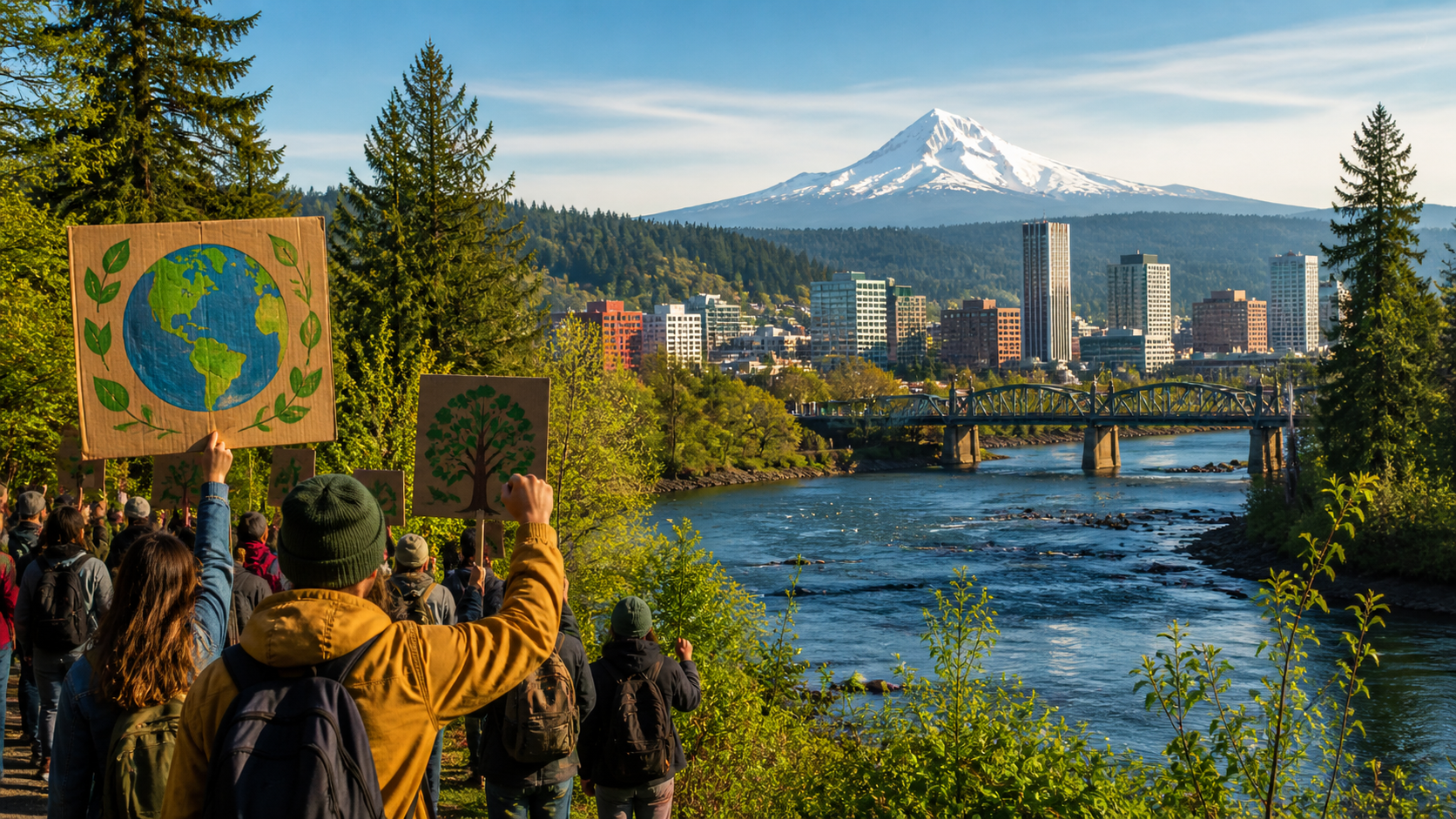
Environmental sociology is a dynamic subfield of sociology that examines the intricate relationships between human societies and the natural environment. Emerging in the late twentieth century, it focuses on how social structures, cultural values, political systems, and economic practices shape environmental problems and responses to them . In the United States, few regions embody the practical application of environmental sociology as vividly as the state of Oregon. Known for its progressive environmental policies, strong grassroots movements, and deep ecological consciousness, Oregon provides a compelling case study of how environmental activism evolves within a sociological framework.
This article explores environmental sociology and activism in Oregon by analyzing historical developments, institutional frameworks, grassroots mobilization, environmental justice concerns, and contemporary challenges. By doing so, it highlights how environmental issues are not merely ecological but deeply social, reflecting power relations, cultural identities, and collective action.
Understanding Environmental Sociology
Environmental sociology investigates how human behavior contributes to environmental degradation and how societies respond to ecological crises. It moves beyond traditional sociology by incorporating ecological constraints into the analysis of social systems. The field examines:
- The social causes of environmental problems
- The impacts of these problems on different social groups
- Collective responses through policy, activism, and cultural change
Environmental sociologists argue that environmental issues are socially constructed—what counts as an “environmental problem” often depends on political interests, scientific discourse, and public awareness. For instance, pollution or climate change becomes a social issue only when it is recognized, debated, and acted upon within society.
Historical Roots of Environmentalism in Oregon
Oregon’s environmental movement has deep historical roots, dating back to the early twentieth century. Citizen activism played a crucial role in shaping environmental governance. One of the earliest examples was the establishment of the Oregon State Sanitary Authority, which focused on water quality and pollution control. This institution reflected a growing recognition that environmental protection was a public responsibility rather than a private concern .
By the mid-twentieth century, environmental awareness in Oregon expanded significantly. The state became a pioneer in environmental legislation, including:
- The first bottle recycling law (Bottle Bill)
- Land-use planning regulations
- Policies to reduce pollution and protect ecosystems
These initiatives were not imposed from above but emerged from strong grassroots activism. Organizations like the Oregon Environmental Council, founded in 1968, mobilized ordinary citizens to advocate for environmental reforms. Their efforts demonstrate how civil society can influence state policy through collective action.
Environmental Activism as a Social Movement
From a sociological perspective, environmental activism in Oregon can be understood as part of the broader “new social movements” (NSMs). These movements differ from traditional class-based struggles by focusing on issues such as quality of life, identity, and sustainability. Environmentalism, in particular, has gained widespread public support and is considered one of the most successful modern social movements .

In Oregon, activism has taken multiple forms:
1. Institutional Activism
Organizations such as Environment Oregon and Oregon Wild engage in lobbying, research, and policy advocacy. Their campaigns address issues like renewable energy, wildlife conservation, and plastic pollution.
For example, Environment Oregon has promoted solar energy adoption and plastic bag bans, while Oregon Wild has contributed to the protection of millions of acres of wilderness and rivers. These efforts highlight how institutional activism operates within legal and political frameworks to achieve environmental goals.
2. Grassroots Mobilization
Grassroots activism remains central to Oregon’s environmental landscape. Local communities, students, and volunteers organize protests, awareness campaigns, and conservation initiatives. The success of many environmental policies in Oregon can be attributed to sustained public engagement.
3. Direct Action and Radical Activism
Oregon has also witnessed radical forms of environmental activism. Figures like Tre Arrow gained attention for engaging in direct action, including protests against logging activities. While controversial, such actions reflect tensions within the environmental movement between reformist and radical approaches.
Radical environmentalism challenges dominant economic systems and emphasizes the urgency of ecological protection. However, it also raises ethical and legal questions about the limits of activism.
Sociological Dimensions of Environmental Activism
Environmental activism in Oregon is shaped by several sociological factors:
1. Culture and Identity
Oregon’s environmental consciousness is deeply embedded in its cultural identity. The state is often associated with outdoor lifestyles, ecological awareness, and sustainability. This cultural orientation fosters public support for environmental policies and activism.
Environmental values are transmitted through education, media, and community practices. They influence individual behavior, such as recycling, energy conservation, and participation in environmental initiatives.
2. Political Structure and Governance
Oregon’s political system facilitates citizen participation through mechanisms like ballot initiatives and public hearings. This participatory governance model enables environmental activists to influence policy decisions directly.
The collaboration between government agencies and civil society organizations has led to innovative environmental policies, making Oregon a leader in environmental governance.
3. Economic Factors
Economic considerations play a crucial role in environmental debates. Industries such as logging, agriculture, and energy production often conflict with environmental goals. Activism in Oregon frequently involves negotiating these tensions.
For example, campaigns to protect forests may face opposition from logging companies concerned about economic losses. Environmental sociology examines how these conflicts reflect broader issues of power and resource distribution.
Environmental Justice in Oregon
Environmental justice is a key focus of environmental sociology, emphasizing the unequal distribution of environmental benefits and burdens. In Oregon, environmental justice issues include:

- Disproportionate exposure to pollution among marginalized communities
- Limited access to clean resources in certain regions
- Indigenous struggles for land and ecological rights
Environmental justice movements seek to address these inequalities by advocating for inclusive policies and community participation. They highlight the intersection of environmental issues with race, class, and social inequality.
Role of Science and Knowledge
Scientific knowledge plays a significant role in shaping environmental policy and activism. However, environmental sociology recognizes that science is not neutral—it is influenced by social contexts and power relations.
In Oregon, scientific research informs environmental decision-making, but it is often contested by different stakeholders. For example:
- Environmental groups may use scientific data to advocate for conservation
- Industries may challenge or reinterpret the same data to support economic activities
This dynamic illustrates how knowledge production is intertwined with social interests.
Contemporary Environmental Challenges
Despite its progressive reputation, Oregon faces several environmental challenges:
1. Climate Change
Climate change poses significant threats, including rising temperatures, wildfires, and changes in water availability. Activists in Oregon are increasingly focusing on climate mitigation and adaptation strategies.
2. Urbanization
Rapid urban growth in cities like Portland has led to issues such as housing pressure, transportation emissions, and loss of green spaces. Balancing development with sustainability remains a key challenge.
3. Resource Conflicts
Conflicts over land use, water rights, and natural resource management continue to shape environmental debates. These conflicts often involve multiple stakeholders with competing interests.
Digital Activism and New Media
The rise of digital technology has transformed environmental activism. Social media platforms enable activists to:
- Spread awareness بسرعة
- Mobilize supporters
- Coordinate actions
Digital activism also allows marginalized voices to participate in environmental discourse. However, it raises concerns about “clicktivism,” where online engagement does not translate into meaningful action .
Theoretical Perspectives in Environmental Sociology
Several sociological theories help explain environmental activism in Oregon:
1. Treadmill of Production
This theory argues that capitalist economies prioritize growth over environmental sustainability, leading to continuous resource exploitation. Activism in Oregon often challenges this model by advocating for sustainable alternatives.
2. Ecological Modernization
Ecological modernization suggests that technological innovation and policy reforms can address environmental problems without abandoning economic growth. Oregon’s emphasis on renewable energy and green policies reflects this approach.
3. Political Ecology
Political ecology examines how power relations influence environmental outcomes. It highlights conflicts between different social groups and the role of political institutions in shaping environmental policies.
Case Studies of Environmental Success
Oregon’s environmental activism has achieved several notable successes:
- Passage of the Bottle Bill, promoting recycling
- Protection of wilderness areas and rivers
- Implementation of land-use planning laws
These achievements demonstrate the effectiveness of collective action and policy advocacy in addressing environmental issues.
Critiques and Limitations
While Oregon is often seen as a model for environmentalism, it is not without critiques:
- Environmental policies may disproportionately affect certain industries and workers
- Activism can sometimes overlook the needs of marginalized communities
- Radical activism may alienate public support
Environmental sociology emphasizes the need for balanced and inclusive approaches to environmental governance.
Future Directions
The future of environmental sociology and activism in Oregon will likely involve:
- Greater emphasis on climate justice
- Integration of indigenous knowledge systems
- Expansion of renewable energy initiatives
- Increased use of digital tools for activism
These developments will shape how Oregon addresses environmental challenges in the coming decades.
Conclusion
Environmental sociology provides a powerful framework for understanding the complex interplay between society and the environment. In Oregon, this interplay is evident in the state’s rich history of environmental activism, progressive policies, and ongoing struggles.
From grassroots movements to institutional advocacy, environmental activism in Oregon reflects broader sociological dynamics, including cultural values, political structures, and economic interests. While significant progress has been made, challenges remain, particularly in addressing environmental justice and balancing development with sustainability.
Ultimately, the case of Oregon demonstrates that environmental issues are deeply social. Addressing them requires not only scientific solutions but also collective action, social awareness, and a commitment to equity and sustainability.
FAQs
- What is Activism in Oregon?
Activism in Oregon refers to organized efforts by individuals and groups to promote environmental protection, social justice, and policy change within the state. - Why is Activism in Oregon important?
Activism in Oregon is important because it has historically shaped progressive environmental laws, protected natural resources, and encouraged sustainable development. - What are the main areas of Activism in Oregon?
The main areas include environmental protection, climate change action, forest conservation, water rights, and environmental justice. - How did Activism in Oregon begin?
Activism in Oregon began in the early 20th century with public concerns about pollution and conservation, later expanding into organized environmental movements. - Who participates in Activism in Oregon?
Citizens, students, NGOs, indigenous communities, policymakers, and environmental organizations actively participate in activism efforts. - What role do grassroots movements play in Activism in Oregon?
Grassroots movements are central, mobilizing communities to advocate for policy change and environmental protection at local and state levels. - How does Activism in Oregon influence government policies?
Through protests, lobbying, public campaigns, and ballot initiatives, activism significantly impacts environmental legislation and governance. - What are some successful examples of Activism in Oregon?
Examples include the Bottle Bill, land-use planning laws, and conservation of forests and rivers. - What challenges does Activism in Oregon face?
Challenges include conflicts with economic interests, political resistance, and balancing development with environmental sustainability. - How is Activism in Oregon linked to environmental justice?
It addresses inequalities by advocating for fair distribution of environmental benefits and reducing harm to marginalized communities. - What role does youth play in Activism in Oregon?
Youth are increasingly active, especially in climate change movements, using education and digital platforms to raise awareness. - How has digital media impacted Activism in Oregon?
Digital platforms help spread awareness, organize campaigns, and connect activists across communities more efficiently. - What is the future of Activism in Oregon?
The future includes stronger climate action, renewable energy advocacy, and inclusive environmental policies. - How does Activism in Oregon relate to sociology?
It reflects social structures, cultural values, and power dynamics that shape environmental issues and responses. - Can Activism in Oregon serve as a model for other regions?
Yes, it provides a strong example of how collective action and policy engagement can promote sustainable and equitable environmental practices.
1 thought on “Environmental Sociology and Activism in Oregon: A Sociological Perspective”