Introduction on Impact of Social Media on Indian Youth
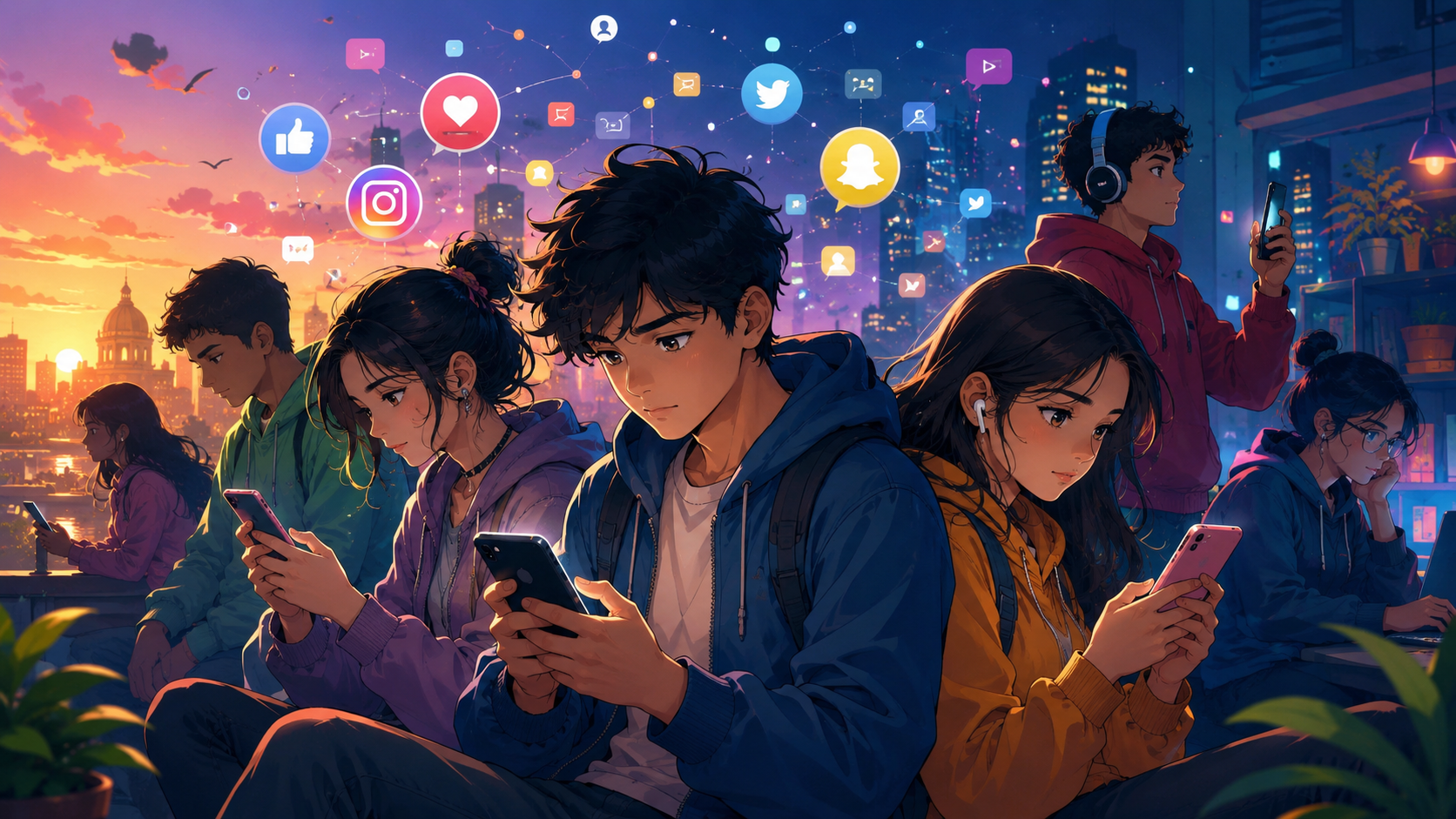
In 2026, social media has become one of the most powerful forces shaping the lives of Indian youth. Platforms such as Instagram, YouTube, WhatsApp, Snapchat, Facebook, and X are no longer limited to entertainment or communication. They have evolved into social spaces where young people build identities, express opinions, create relationships, consume culture, and even earn livelihoods. With India having one of the world’s largest youth populations and internet user bases, the sociological impact of social media is profound and far-reaching.
From a sociological perspective, social media is not just a technological tool; it is a social institution that influences behavior, values, norms, and social relationships. Indian youth in 2026 live in a digital society where online interactions often shape offline realities. The rise of digital culture has transformed education, politics, family relations, mental health, consumer habits, and social identities.

Growth of Social Media in India
India’s rapid digital transformation has played a major role in the expansion of social media usage among youth. Affordable smartphones, low-cost internet services, and the spread of 4G and 5G networks have connected millions of young Indians to online platforms. Rural areas, small towns, and semi-urban regions are now deeply connected to digital culture.
The popularity of short-video platforms, influencer culture, and online entertainment has made social media a part of daily life. Young people spend several hours every day scrolling through reels, chatting in groups, watching videos, and sharing content. Social media has become a digital public space where youth interact with society.
This widespread usage has created a generation that experiences friendship, education, entertainment, and even political awareness through screens.
Social Media and Identity Formation
Construction of Digital Identity
One of the biggest sociological impacts of social media is the transformation of identity formation among Indian youth. Young people today carefully create online identities through profile pictures, posts, captions, videos, and stories. Social media allows individuals to present idealized versions of themselves.
In earlier generations, identity was largely shaped by family, caste, religion, locality, and educational institutions. In 2026, digital identity has become equally important. A youth may now be recognized more by online popularity than by traditional social status.
The desire for likes, comments, and followers often pushes young people to continuously modify their appearance, behavior, and opinions to gain social approval. This has created a culture of performance where social recognition is measured digitally.
Influence of Peer Culture
Social media has intensified peer influence among Indian youth. Trends spread rapidly, and young people often feel pressure to follow viral fashion, slang, lifestyle patterns, and opinions. Peer groups are no longer limited to classrooms or neighborhoods; they now exist across digital platforms.
The fear of missing out, commonly known as FOMO, has become a major psychological and sociological issue. Many youth feel anxious when they are disconnected from online trends or social circles.
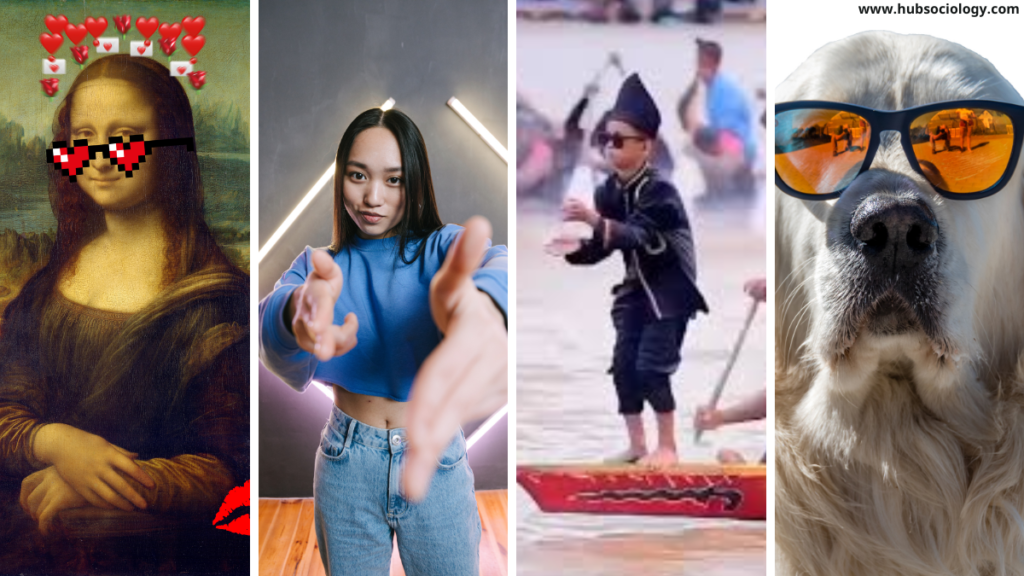
This digital peer culture has created both inclusion and exclusion. Popular users receive visibility and validation, while others may experience loneliness and social insecurity.
Impact on Education and Learning
Positive Educational Opportunities
Social media has opened new educational opportunities for Indian students. Educational channels, online tutorials, digital notes, webinars, and discussion forums have made learning more accessible. Students from rural and economically weaker backgrounds can now access educational content that was previously unavailable.
Many students use YouTube for competitive exam preparation, language learning, and skill development. Educational influencers and teachers on social media platforms have created a new digital learning culture.
Online communities also allow students to exchange ideas, collaborate on projects, and gain awareness about scholarships and career opportunities.
Decline in Attention Span
Despite educational benefits, excessive social media use has negatively affected concentration and study habits. Short-form content has reduced patience for long reading and deep academic engagement.
Students often become distracted by notifications, entertainment videos, and endless scrolling. Many youth struggle to maintain focus during studies because digital platforms constantly compete for attention.
This creates a contradiction in modern education. Social media can improve access to knowledge while simultaneously weakening the discipline required for serious learning.
Social Media and Mental Health
Rising Anxiety and Depression
Mental health concerns among Indian youth have increased significantly in the digital era. Continuous comparison with influencers, celebrities, and peers often creates feelings of inadequacy and low self-esteem.
Many young people compare their real lives with the carefully edited online lives of others. This creates unrealistic expectations regarding beauty, wealth, relationships, and success.
Cyberbullying, online harassment, trolling, and hate comments also contribute to emotional stress. Victims of online abuse may experience anxiety, depression, and social withdrawal.
Addiction and Digital Dependency
Social media platforms are designed to maximize user engagement. Notifications, infinite scrolling, and algorithm-based content create addictive behavior patterns.
Many Indian youth spend several hours daily on social media, often sacrificing sleep, physical activity, and face-to-face interactions. Excessive dependence on online validation can weaken emotional stability.
Digital addiction has also reduced meaningful interpersonal communication within families and communities.
Gender and Social Media
Empowerment of Young Women
Social media has provided many young women in India with new opportunities for expression, education, entrepreneurship, and activism. Women can now share opinions, showcase talents, and participate in public discussions more freely.
Online platforms have helped women challenge patriarchal norms, raise awareness about gender issues, and build support networks. Female content creators, educators, and entrepreneurs have gained visibility through digital media.

For many girls from conservative backgrounds, social media offers a space for self-expression that may not exist offline.
Online Harassment and Gender Pressure
However, social media has also exposed women to cyber harassment, body shaming, stalking, and online abuse. Young women often face stricter moral judgment than men regarding online behavior.
The pressure to appear attractive and socially active has intensified beauty standards among female youth. Filters, edited images, and influencer culture often create unrealistic expectations about physical appearance.
Thus, social media simultaneously acts as a tool of empowerment and a source of gender-based pressure.
Social Media and Political Awareness
Digital Political Participation
Social media has transformed political participation among Indian youth. Young people now engage with political debates, social movements, and national issues through digital platforms.
Political parties, activists, and influencers use social media to influence youth opinion. Hashtags, viral videos, and online campaigns shape political discussions and public awareness.
Many youth who were previously disconnected from politics now actively participate in online debates regarding unemployment, education, gender justice, caste discrimination, climate change, and nationalism.
Spread of Misinformation
At the same time, social media has increased the spread of fake news and misinformation. Many users share unverified content without critical analysis.
Algorithm-driven platforms often promote sensational and emotionally charged material because it attracts engagement. This can create political polarization and social conflict.
Young people may become vulnerable to propaganda, manipulated narratives, and digital extremism if media literacy remains weak.
Social Media and Consumer Culture
Rise of Influencer Culture
Influencer culture has become one of the defining features of Indian youth life in 2026. Influencers promote fashion, beauty products, gadgets, fitness trends, travel lifestyles, and luxury consumption.
Young people increasingly admire digital celebrities and attempt to imitate their lifestyles. Social status is now often linked to online visibility and consumption patterns.
The desire to display branded products, expensive experiences, and fashionable appearances has strengthened consumerism among youth.
Commercialization of Everyday Life
Social media has blurred the line between personal life and marketing. Everyday activities such as eating, traveling, studying, and exercising are often turned into content for public display.
Youth increasingly treat themselves as personal brands. Success is measured through engagement metrics such as followers, likes, and shares.
This commercialization of identity reflects the influence of capitalist consumer culture in digital society.
Family Relations in the Digital Age
Changing Parent-Child Relationships
Social media has altered traditional family relationships in India. Parents often struggle to understand the digital lives of their children, leading to generational conflicts.
Young people seek privacy and independence online, while parents worry about safety, morality, and addiction. Disagreements regarding screen time and online behavior have become common in many households.
However, digital communication has also strengthened family connections in some cases, especially among migrant families living apart.
Decline of Face-to-Face Interaction
Excessive screen use has reduced direct interpersonal interaction within families. Many youth spend more time online than engaging in conversations with family members.
Traditional community participation and neighborhood interactions have also weakened as digital entertainment replaces outdoor social life.
This shift reflects the broader sociological transition from community-based interaction to digitally mediated socialization.
Rise of Right-Wing and Far-Right Hate
In 2026, social media has become a powerful space for the spread of political extremism, communal narratives, and ideological polarization among Indian youth. Right-wing and far-right groups increasingly use digital platforms to circulate emotionally charged content related to religion, nationalism, identity politics, and historical grievances. Through short videos, memes, hashtags, edited clips, and provocative speeches, these groups often transform online anger into real-world social tensions.
From a sociological perspective, social media algorithms amplify divisive content because controversial and emotionally intense posts attract more engagement. As a result, young users are repeatedly exposed to content that promotes “us versus them” thinking. Over time, constant exposure to communal narratives can normalize hate speech, stereotypes, and mistrust between religious or social communities.
Many youth become politically radicalized not through formal organizations, but through digital echo chambers where similar opinions are continuously reinforced. In these online spaces, misinformation, fake historical claims, conspiracy theories, and communal propaganda spread rapidly without verification. This creates moral panic and collective hostility, especially during elections, religious events, or social conflicts.
The consequences often move beyond the digital world into real-life society. Online hate campaigns can encourage mob behavior, communal violence, harassment, and social exclusion. Rumors spread through WhatsApp groups or viral posts have, in several instances, contributed to public unrest and communal clashes in different parts of India. Social media therefore acts not only as a communication platform but also as a mechanism for mobilizing collective emotions and political aggression.
Far-right digital culture also influences youth identity by linking masculinity, nationalism, and religious pride with aggressive online behavior. Young users may gain validation through trolling, hate comments, or participation in communal campaigns, treating digital hostility as a form of political participation.
At the same time, social media also hosts voices that resist extremism through fact-checking, interfaith dialogue, peace campaigns, and constitutional awareness. The digital sphere has therefore become a battleground between democratic values and divisive ideologies.
The sociological challenge for India in 2026 is to protect freedom of expression while preventing the spread of organized hate and communal polarization. Without stronger digital literacy, responsible media regulation, and critical thinking among youth, social media can continue transforming online extremism into real-world social conflict.
Social Media and Social Inequality
Digital Divide
Although millions of Indian youth use social media, digital inequality still exists. Access to high-quality internet, smartphones, and digital literacy varies across regions, classes, and genders.
Urban middle-class youth often use social media for networking, skill development, and career building. In contrast, many rural or economically disadvantaged youth mainly consume entertainment content.
Thus, equal access to technology does not always produce equal social benefits.
Language and Cultural Diversity
Social media has also increased the visibility of regional languages and local cultures. Indian youth now create content in Hindi, Bengali, Tamil, Malayalam, Bhojpuri, and many other languages.
Regional creators have gained popularity, allowing local identities to flourish in digital spaces. This has challenged the dominance of English-language content.
At the same time, global trends continue to influence Indian culture, creating a mix of local traditions and global digital lifestyles.
Positive Contributions of Social Media
Despite its challenges, social media has contributed positively to Indian society in several ways.
It has helped youth access information quickly, connect across distances, develop digital skills, and discover career opportunities. Many young entrepreneurs use social media for business promotion and income generation.
Social media has also supported social movements related to gender equality, environmental awareness, mental health, and education.
For marginalized communities, digital platforms can provide visibility and representation that traditional institutions often deny.
Challenges for Indian Society
The rapid influence of social media has created several challenges for Indian society in 2026:
- Rising mental health problems among youth
- Digital addiction and reduced productivity
- Spread of fake news and online hate
- Cybercrime and privacy concerns
- Weakening of face-to-face social relationships
- Commercialization of youth culture
- Increased social comparison and insecurity
Addressing these challenges requires digital literacy, responsible platform regulation, mental health awareness, and stronger educational guidance.
Conclusion
The impact of social media on Indian youth in 2026 is complex and multidimensional. From a sociological perspective, social media is both a tool of empowerment and a source of social pressure. It has transformed identity formation, education, politics, family relationships, consumer culture, and mental health.
Social media has given Indian youth unprecedented opportunities for learning, expression, and participation. At the same time, it has created new forms of inequality, anxiety, dependency, and cultural change.
The future of Indian society will depend on how effectively it balances digital freedom with social responsibility. If used wisely, social media can become a force for creativity, education, and social progress. If left unchecked, it may deepen psychological stress, misinformation, and social fragmentation.
Therefore, the sociological challenge of 2026 is not whether youth should use social media, but how society can ensure that digital technology contributes to healthy human development and collective well-being.
FAQs
1. What is the impact of Social Media on Indian Youth in 2026?
The impact of Social Media on Indian Youth in 2026 includes changes in communication, education, identity formation, mental health, political awareness, and consumer behavior. Social media has become a major influence on youth lifestyles and social relationships.
2. How does Social Media on Indian Youth affect mental health?
Social Media on Indian Youth can increase anxiety, depression, loneliness, and stress due to online comparison, cyberbullying, and digital addiction. Excessive screen time also affects sleep and emotional well-being.
3. What are the positive effects of Social Media on Indian Youth?
The positive effects of Social Media on Indian Youth include better access to information, online learning opportunities, career networking, entrepreneurship, creativity, and social awareness.
4. How does Social Media on Indian Youth influence education?
Social Media on Indian Youth provides educational resources, online tutorials, and collaborative learning opportunities. However, it can also reduce concentration and create distractions during study time.
5. Why is Social Media on Indian Youth considered a sociological issue?
Social Media on Indian Youth is a sociological issue because it affects social behavior, family relationships, peer groups, identity, culture, and social values within Indian society.
6. How does Social Media on Indian Youth affect family relationships?
Social Media on Indian Youth can reduce face-to-face communication within families and create generational conflicts regarding screen time, privacy, and online behavior.
7. What role does Social Media on Indian Youth play in political awareness?
Social Media on Indian Youth increases political participation by exposing young people to discussions about elections, social movements, and national issues through digital platforms.
8. How does Social Media on Indian Youth promote consumer culture?
Social Media on Indian Youth encourages consumerism through influencer marketing, online advertisements, and lifestyle trends that promote branded products and luxury lifestyles.
9. Can Social Media on Indian Youth create digital addiction?
Yes, Social Media on Indian Youth can create digital addiction because platforms are designed to keep users engaged through notifications, endless scrolling, and personalized content.
10. How does Social Media on Indian Youth influence identity formation?
Social Media on Indian Youth shapes identity by encouraging self-presentation, online validation, and digital image management through posts, photos, and videos.
11. What are the dangers of misinformation in Social Media on Indian Youth?
Misinformation in Social Media on Indian Youth can spread fake news, political propaganda, hate speech, and rumors, leading to confusion and social conflict.
12. How does Social Media on Indian Youth affect gender relations?
Social Media on Indian Youth provides empowerment opportunities for women but also increases cyber harassment, body shaming, and gender-based online abuse.
13. What is the role of influencers in Social Media on Indian Youth?
Influencers in Social Media on Indian Youth shape fashion, opinions, lifestyle choices, beauty standards, and consumption habits among young audiences.
14. How does Social Media on Indian Youth impact rural India?
Social Media on Indian Youth in rural India improves communication, awareness, and access to education, but digital inequality and limited digital literacy remain challenges.
15. What is the future of Social Media on Indian Youth in India?
The future of Social Media on Indian Youth will depend on digital literacy, responsible platform use, mental health awareness, and effective regulation to ensure healthy social development.