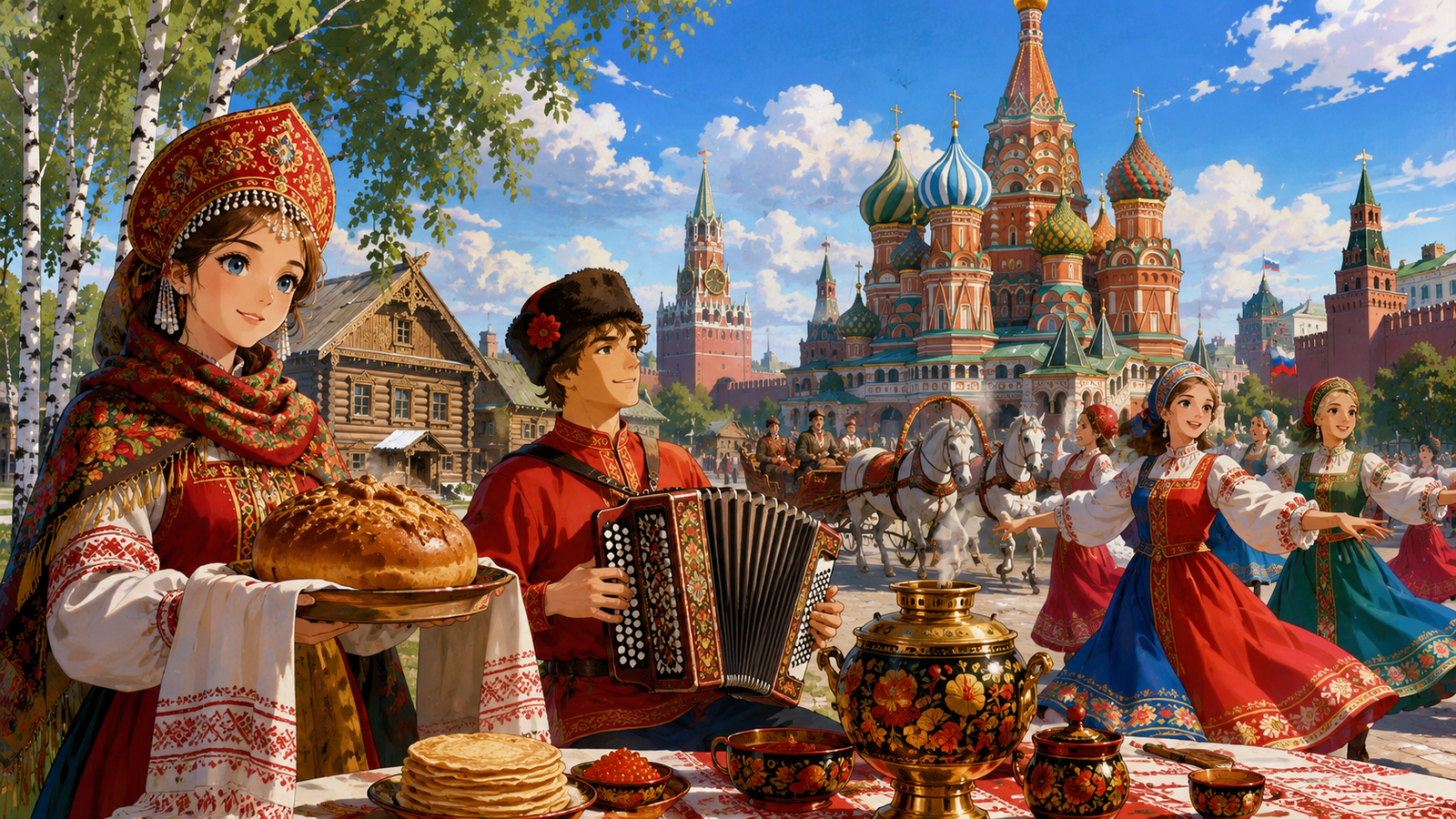
Introduction on Inequality in Russian Society
Russian society provides one of the most important examples for understanding the relationship between class, power and inequality. The country has experienced dramatic political, economic and social transformations within little more than a century. From the collapse of the Tsarist Empire and the socialist revolution of 1917 to the establishment of the Soviet Union, the transition to a market economy after 1991, and the emergence of contemporary Russian capitalism, each period has reshaped the structure of social inequality.
The Soviet Union officially aimed to build a classless society based on socialism. Private ownership of major means of production was largely abolished, and the state attempted to reduce the enormous economic inequalities that existed under Tsarism. However, the disappearance of private capitalists did not mean the disappearance of social hierarchy. Soviet society developed its own forms of inequality based on political authority, occupational position, educational status, access to state resources and membership in the Communist Party.
The collapse of the Soviet Union created another major transformation. The transition from a centrally planned economy to capitalism produced new social classes, particularly wealthy business elites and oligarchs. At the same time, millions of ordinary citizens experienced unemployment, economic insecurity and declining living standards during the difficult transition of the 1990s. In contemporary Russia, economic inequality exists alongside strong political centralization. Wealth, state authority, corporate power and political connections often intersect, creating a complex system in which class and power reinforce one another.
A sociological study of Russian society therefore requires more than simply comparing the rich and the poor. It involves examining how wealth is distributed, who controls political institutions, how social mobility operates, how education and occupation shape life chances, and how gender, ethnicity and geography contribute to inequality. The Russian case also demonstrates that inequality can survive under both socialist and capitalist systems, although its form and justification may change.
Table of Contents
Historical Foundations of Class Inequality in Russian Society
Before the Russian Revolution, society was characterized by a rigid hierarchical structure. Under the Tsarist system, Russian society was divided into legally and socially recognized estates. The nobility possessed political privileges and controlled significant amounts of land. The clergy occupied an important religious and social position, while merchants and industrialists represented emerging economic groups. The majority of the population consisted of peasants, many of whom experienced severe poverty and dependence.
The abolition of serfdom in 1861 represented an important social change, but it did not immediately eliminate rural inequality. Many peasants remained economically disadvantaged, while industrialization produced a growing urban working class. Factories in cities such as Moscow and St. Petersburg created new forms of exploitation and class conflict. Workers often faced long working hours, poor living conditions and limited political rights.
From a Marxist perspective, late Tsarist Russia contained an increasingly visible conflict between social classes. Industrial workers represented the emerging proletariat, while factory owners and wealthy property holders formed part of the bourgeoisie. However, Russian society was not identical to the capitalist societies of Western Europe. The peasantry remained an extremely large section of the population, and the state played a powerful role in political and economic life.
The inequalities of the Tsarist period contributed to revolutionary movements. The Russian Revolution of 1917 was therefore not only a political event but also a major attempt to transform the class structure of society. The Bolsheviks promised to eliminate exploitation and establish a system based on collective ownership and greater equality.
The Soviet Promise of a Classless Society
After the revolution, the Soviet state attempted to transform the economic foundations of class society. Major industries, banks and land were brought under state or collective control. The traditional capitalist class was weakened or eliminated as a dominant economic force. In theory, socialism would reduce the inequalities created by private ownership of the means of production.
The Soviet system significantly expanded access to education, healthcare and employment. Industrial workers and peasants received opportunities for social advancement that had been unavailable under Tsarism. Large-scale literacy campaigns and the expansion of universities allowed many individuals from working-class and rural backgrounds to enter professional occupations.
These developments contributed to a considerable degree of social mobility. A person born into a poor peasant family could potentially become an engineer, teacher, scientist or government official. The Soviet system also promoted women’s participation in education and employment. In comparison with the highly unequal social structure of the Tsarist era, Soviet society created important mechanisms for reducing certain forms of economic inequality.
However, the concept of a completely classless society remained more ideological than sociological. Social inequalities continued to exist, although they were organized differently. Income differences were often smaller than in capitalist societies, but access to resources was not equal. Political position, bureaucratic authority and membership in elite institutions created new forms of privilege.
This contradiction is central to the sociological understanding of Soviet society. The formal abolition of private ownership did not automatically eliminate power differences. Instead, control over the state became one of the most important sources of privilege.
The Nomenklatura and the Sociology of Power
One of the most significant features of Soviet inequality was the development of the nomenklatura. This term referred broadly to the system through which important positions in the government, Communist Party, military, industry and other institutions were controlled and filled.
Members of the political and administrative elite possessed advantages that were not always visible in official income statistics. They often had access to better housing, special stores, vacation facilities, transportation, healthcare and educational opportunities. Their children could also benefit from valuable social networks.
This demonstrates an important sociological principle: inequality is not limited to money. Power itself can become a form of social advantage.
Max Weber’s approach to stratification is useful for understanding this situation. Weber argued that social inequality involves not only class but also status and power. In the Soviet context, an individual could possess relatively similar official income to another citizen while enjoying much greater influence and access because of a position within the Communist Party or state bureaucracy.
The Soviet elite therefore represented a group whose social advantages were closely connected to political authority rather than private ownership alone. The ability to make decisions, allocate resources and influence institutions created a privileged position.
Sociologist Pierre Bourdieu’s concept of capital can also be applied. Besides economic capital, individuals possess social and cultural capital. Party membership, elite education, professional networks and familiarity with official institutions could function as valuable resources. These advantages could be transferred across generations, helping certain families maintain privileged positions.
Thus, while Soviet ideology emphasized equality, everyday social life remained structured by hierarchy.
Class Structure in Contemporary Russian Society
The dissolution of the Soviet Union in 1991 produced one of the most dramatic economic transformations of the twentieth century. Russia moved rapidly from a centrally planned economy toward a market-based system. State-owned industries were privatized, and new forms of private ownership emerged.
The transition created major opportunities for some groups but severe difficulties for others. A small number of individuals gained control over valuable natural resources, industries and financial assets. These individuals became extremely wealthy and formed part of a new capitalist elite often described as oligarchs.
At the same time, many workers experienced unemployment, wage insecurity and economic uncertainty. Savings lost value during periods of inflation, and the social protections associated with the Soviet system weakened. Pensioners and low-income households were particularly vulnerable.
Contemporary Russian society can therefore be understood as containing several major social groups. At the top are wealthy business owners, senior corporate executives and politically influential elites. A professional and managerial middle class includes specialists such as doctors, teachers, engineers, lawyers, information technology professionals and administrators. The working population includes industrial workers, service workers, construction workers and others employed in manual or lower-paid occupations.
There is also a significant population facing economic insecurity. People working in informal employment, unstable jobs or low-wage service sectors may experience limited social protection. Pensioners, unemployed individuals and residents of economically weaker regions can also face serious disadvantages.
However, class divisions in Russia cannot be explained purely by occupation. Political connections may influence access to contracts, employment opportunities and economic resources. The relationship between economic power and state power is therefore particularly important.
Oligarchy, Wealth and Economic Power on Russian Society
The rise of extremely wealthy individuals after the Soviet collapse became one of the most visible symbols of post-Soviet inequality. Privatization enabled certain individuals and groups to acquire valuable assets during a period of rapid institutional change.

From a Marxist perspective, this process represented the emergence or re-emergence of a capitalist class with control over important economic resources. Ownership of energy companies, financial institutions, manufacturing firms and other major enterprises created enormous concentrations of wealth.
Yet the Russian case also demonstrates the limitations of viewing the capitalist class as completely independent from the state. Economic success may depend heavily on political relationships, state policy and access to government-controlled resources.
The sociological concept of elite power is therefore particularly relevant. C. Wright Mills argued that modern societies may be dominated by interconnected political, economic and military elites. In Russia, relationships among government officials, state institutions and major corporations can play an important role in the distribution of power.
This does not mean that every wealthy person has direct political authority. Rather, it highlights how economic resources and political influence can become interconnected. Individuals with access to powerful networks may enjoy opportunities unavailable to ordinary citizens.
Such systems can create what sociologists describe as cumulative advantage. Wealth provides access to better education, housing and networks. These advantages increase the possibility of gaining further wealth and influence. Over time, inequality may reproduce itself.
Political Power and Social Inequality on Russian Society
Political power is a central element in understanding Russian social structure. The state plays a powerful role in the economy, security system, media environment and major industries. Consequently, access to political institutions can have significant social and economic consequences.
In liberal democratic theory, political institutions are expected to provide mechanisms through which citizens can influence public policy. Sociologically, however, the distribution of political influence may itself be unequal. Wealthy individuals, powerful organizations and state-connected elites can possess greater access to decision-makers than ordinary citizens.
The concentration of power can also affect the distribution of resources. Government policies influence taxation, social welfare, public employment, infrastructure investment and regional development. Those with greater political influence may be better positioned to protect their interests.
Weber’s concept of authority is useful here. Weber emphasized that power is the ability to impose one’s will, while authority involves power considered legitimate within a social system. Political institutions possess legal and administrative authority, allowing them to organize society and allocate resources.
In Russia, the state is therefore not simply an external institution separate from class relations. It can be an active participant in the production and management of social inequality.
Regional Inequality: Moscow and the Rest of Russia
One of the most visible forms of inequality in Russia is geographical. Economic opportunities are not distributed equally across the country’s enormous territory.
Moscow and, to a lesser extent, St. Petersburg have developed as major centers of finance, government, higher education and professional employment. Residents of these cities generally have greater access to high-paying jobs, universities, cultural institutions and modern infrastructure than people living in many rural or economically weaker regions.
In contrast, remote towns and rural areas may experience population decline, limited employment opportunities and weaker infrastructure. Young people often migrate to larger cities in search of education and employment.
This process can create a cycle of regional inequality. When educated and ambitious young people leave economically weaker areas, those regions may lose skilled workers and experience slower development. Meanwhile, major cities accumulate human capital and investment.
The center-periphery model is useful for understanding this pattern. Powerful economic and political centers attract resources, while peripheral regions may remain dependent on decisions made elsewhere.
Regional inequality also affects life chances. A student with similar talent and motivation may experience very different educational and occupational opportunities depending on whether they are born in Moscow, a regional city or a remote rural community.
Therefore, geographical location functions as an important dimension of social stratification.
Education, Cultural Capital and Social Mobility
Education has historically been one of the most important mechanisms of social mobility in Russia. During the Soviet period, educational expansion enabled many people from working-class and peasant backgrounds to enter professional occupations.
In contemporary Russia, higher education continues to be important for access to professional employment. However, educational opportunities are not equally distributed.
Families with greater economic resources can invest more in tutoring, private educational services, technology and preparation for competitive examinations. Students in major urban centers may also have better access to prestigious schools and universities.
Bourdieu’s concept of cultural capital helps explain how educational inequality can reproduce social class. Children from highly educated families may develop communication styles, knowledge and cultural experiences that correspond more closely with the expectations of educational institutions.
Social networks also matter. Access to influential teachers, professional contacts and family connections may provide advantages when seeking employment.
As a result, education can function in two different ways. It can provide opportunities for upward mobility, allowing talented individuals from disadvantaged backgrounds to improve their social position. At the same time, unequal access to educational resources can reproduce existing privilege.
This contradiction is particularly important in modern societies that formally claim to provide equal opportunity. Legal equality does not necessarily produce equal starting conditions.
Gender and Social Inequality
Gender is another important dimension of inequality in Russian society. Women have historically participated in education and employment at relatively high levels, particularly as a result of Soviet policies promoting women’s participation in the workforce.
However, formal participation does not necessarily mean complete equality. Women may experience occupational segregation, wage differences and unequal responsibilities within the family.
Women are often expected to combine paid employment with domestic responsibilities such as childcare and household work. Sociologists refer to this as the “double burden.” Even when women participate fully in the labor market, they may continue to perform a disproportionate share of unpaid domestic labor.
Gender inequality can intersect with class inequality. A wealthy professional woman and a low-paid female service worker may experience gender discrimination differently because their economic resources and social positions are very different.
Intersectionality is useful for understanding these overlapping forms of inequality. Class, gender, ethnicity, age and geographical location do not operate independently. Instead, they interact to shape an individual’s social experience.
Ethnicity, Migration and Social Stratification on Russian Society
Russia is a multiethnic society containing numerous ethnic and national groups. Ethnic identity can influence access to social resources, political representation and economic opportunities.
Migration also contributes to the structure of inequality. Migrants may perform essential but low-paid work in construction, domestic service, retail and other sectors. Some may experience insecure employment, limited social protection or discrimination.
The sociological significance of migration lies in the division of labor. Modern economies often depend upon workers who occupy positions with lower status and weaker bargaining power. Migrants can become concentrated in such sectors, creating an additional layer of social stratification.
Ethnicity and nationality may therefore combine with class to influence life chances. However, it is important not to treat all ethnic minorities or migrants as a single social category. Their experiences differ according to education, occupation, legal status, region and economic resources.
The Role of the Middle Class of Russian Society
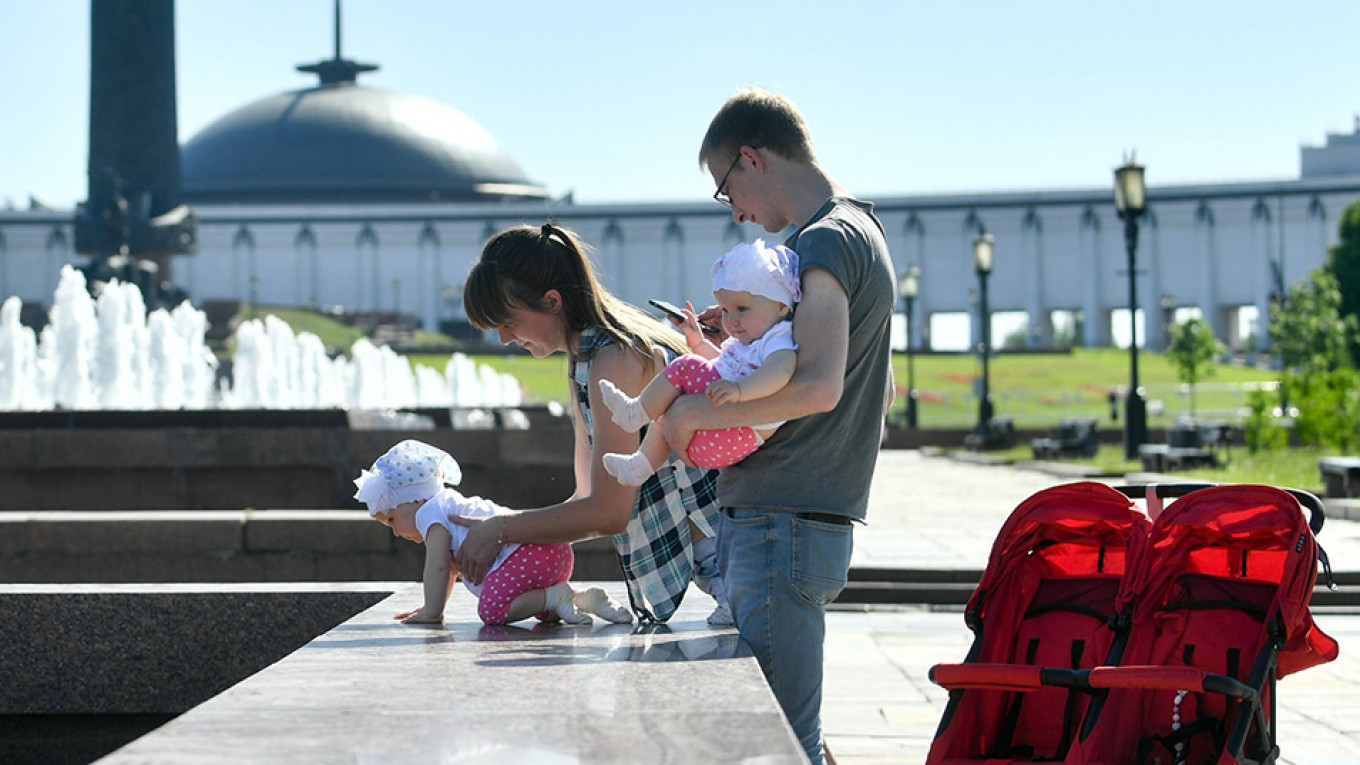
The development of a middle class has been an important feature of post-Soviet Russian society. Professionals, entrepreneurs, managers and skilled employees have benefited from economic modernization and the expansion of sectors such as finance, technology, education and services.
The middle class is often associated with higher education, professional employment, urban lifestyles and relatively stable incomes. However, the Russian middle class is not socially uniform.
Some individuals possess considerable economic security, property and professional influence. Others may have middle-class occupations but face insecurity because of inflation, economic instability or dependence on state employment.
The relationship between the middle class and political power is also complex. In many sociological theories, a large and economically secure middle class is considered important for social stability and institutional development. However, economic dependence on state institutions or large corporations can influence the independence of middle-class groups.
The Russian middle class therefore cannot simply be understood through income levels. Its relationship with the state, property ownership, professional autonomy and political participation must also be considered.
Inequality and Social Mobility on Inequality in Russian Society
Social mobility refers to movement between social positions. Russia has experienced periods of both significant mobility and increasing barriers to advancement.
The Soviet period created opportunities for upward mobility through industrialization and educational expansion. The rapid transformation of the 1990s also created opportunities for some individuals to accumulate wealth quickly.
However, contemporary inequality can make social mobility more difficult. Children born into wealthy families have access to better housing, education, healthcare and professional networks. These advantages can be passed from one generation to the next.
Meanwhile, children from economically disadvantaged families may face limited educational resources and greater financial pressure. They may enter the labor market earlier or lack the social connections necessary for highly competitive professions.
This process is known as the reproduction of inequality. Social class is not simply a matter of individual talent or effort. Family background and access to resources strongly influence life chances.
The concept of meritocracy is therefore sociologically important. A society may claim that success depends primarily on ability and hard work. Yet if individuals begin life with dramatically unequal resources, competition cannot be considered entirely equal.
Theoretical Perspectives on Russian Inequality
Different sociological theories provide different interpretations of Russian social inequality.
A Marxist approach emphasizes ownership and control over economic resources. From this perspective, contemporary Russian society contains significant class divisions between those who control major forms of capital and those who depend primarily on selling their labor.
Marxism is particularly useful for examining the growth of wealthy business elites after the collapse of the Soviet system. However, it must be adapted to explain the strong role of the state and the importance of political connections.
Weberian sociology provides a broader model of stratification. Weber argued that class, status and power are separate but interconnected dimensions of inequality. This approach is especially useful for Russia because political authority and social status can provide advantages independent of direct ownership.
Bourdieu’s theory emphasizes economic, cultural and social capital. Wealthy families can provide economic resources, while educated families may transmit cultural knowledge and professional networks. These forms of capital help explain why inequality can persist across generations.
Elite theory focuses on the concentration of decision-making power among relatively small groups. The Russian case demonstrates how political, economic and administrative elites may possess disproportionate influence over society.
Finally, functionalist theories suggest that some degree of social inequality may exist because societies reward different skills and responsibilities differently. However, this explanation becomes controversial when inequality is extremely large and opportunities are inherited rather than earned. If social position depends heavily on family background or political connections, the argument that inequality reflects individual merit becomes less convincing.
Conclusion on Inequality in Russian Society
The sociological study of class, power and inequality in Russian society reveals a complex relationship between economic resources and political authority. Russia has moved through radically different social systems, from the hierarchical Tsarist order to Soviet socialism and contemporary capitalism. Yet inequality has remained a persistent feature of social life.
The form of inequality has changed. Under Tsarism, land ownership and inherited privilege were central. During the Soviet period, private capitalist ownership was reduced, but political and bureaucratic elites gained privileged access to resources. After the collapse of the Soviet Union, market reforms and privatization produced new concentrations of wealth and the emergence of powerful economic elites.
Contemporary Russian inequality involves income and wealth, but it also includes political influence, education, social networks, regional differences, gender and ethnicity. An individual’s life chances may depend not only on personal ability but also on family background, geographical location, access to education and proximity to powerful institutions.
The Russian experience demonstrates an important sociological lesson: changing an economic system does not automatically eliminate inequality. Socialist and capitalist systems can both produce hierarchies, although the mechanisms through which privilege operates may differ.
Understanding Russia therefore requires examining the interaction between class and power. Economic inequality can generate political influence, while political influence can create economic opportunities. Educational and social advantages can also reproduce themselves across generations.
For sociologists, Russian society remains an important case study of how institutions shape inequality. It shows that class is not merely an economic category and that power is not confined to formal political office. Together, class, power and inequality form an interconnected structure that influences opportunities, identities, relationships and the future direction of society.
The central challenge for any society seeking greater equality is not simply to redistribute income. It is also necessary to examine unequal access to education, political influence, social networks, employment and public resources. The Russian experience makes clear that genuine social equality requires attention to both economic distribution and the broader structures of power through which privilege is created and maintained.
FAQs on Inequality in Russian Society
1. What is inequality in Russian society?
Inequality in Russian society refers to unequal access to wealth, income, political power, education, employment, healthcare, and social opportunities among different groups.
2. What are the main causes of inequality in Russian society?
Major causes include unequal wealth distribution, regional differences, educational inequality, political influence, occupational differences, and unequal access to social networks and resources.
3. How did the Soviet Union affect inequality in Russian society?
The Soviet system reduced some forms of economic inequality through state-controlled resources, education, employment, and social welfare. However, political and bureaucratic elites still enjoyed special privileges.
4. Is inequality in Russian society mainly based on class?
Class is a major factor, but inequality in Russian society is also influenced by political power, education, gender, ethnicity, geographical location, and social connections.
5. Who are the major social classes in contemporary Russian society?
Contemporary Russian society broadly includes wealthy economic and political elites, a professional and managerial middle class, working-class groups, and economically vulnerable populations.
6. What role does political power play in inequality in Russian society?
Political power can influence access to resources, employment, business opportunities, public contracts, and decision-making, making it an important dimension of inequality.
7. Why is regional inequality important in Russian society?
Economic opportunities vary greatly between major cities such as Moscow and economically weaker or remote regions. This affects employment, education, infrastructure, and overall living standards.
8. How does education influence inequality in Russian society?
Education can promote social mobility, but students from wealthier families often have greater access to quality schools, private tutoring, technology, and professional networks.
9. What is the relationship between wealth and power in Russia?
Wealth and power can be interconnected. Economic resources may provide greater influence, while political connections can sometimes create access to economic opportunities and important networks.
10. How does gender contribute to inequality in Russian society?
Women may experience occupational segregation, income differences, and the double burden of paid employment combined with household and childcare responsibilities.
11. How does migration affect inequality in Russian society?
Migrants may be concentrated in lower-paid or insecure sectors of the economy. Their access to employment protection and social resources can differ depending on their legal and social position.
12. What is social mobility in Russian society?
Social mobility refers to movement between social classes or social positions. Education, occupation, family background, wealth, and social networks can all influence mobility.
13. Did capitalism increase inequality in Russian society?
The transition to a market economy after the collapse of the Soviet Union created significant new economic opportunities but also contributed to major differences in wealth and income.
14. What sociological theories explain inequality in Russian society?
Marxism focuses on class and ownership, Weberian theory examines class, status, and power, while Bourdieu’s theory explains how economic, social, and cultural capital can reproduce inequality.
15. Why is inequality in Russian society important for sociological study?
Inequality in Russian society is important because Russia’s transition from Tsarist rule to socialism and then to a market economy demonstrates how social inequality can change form while continuing to influence life chances and power relations.