Introduction
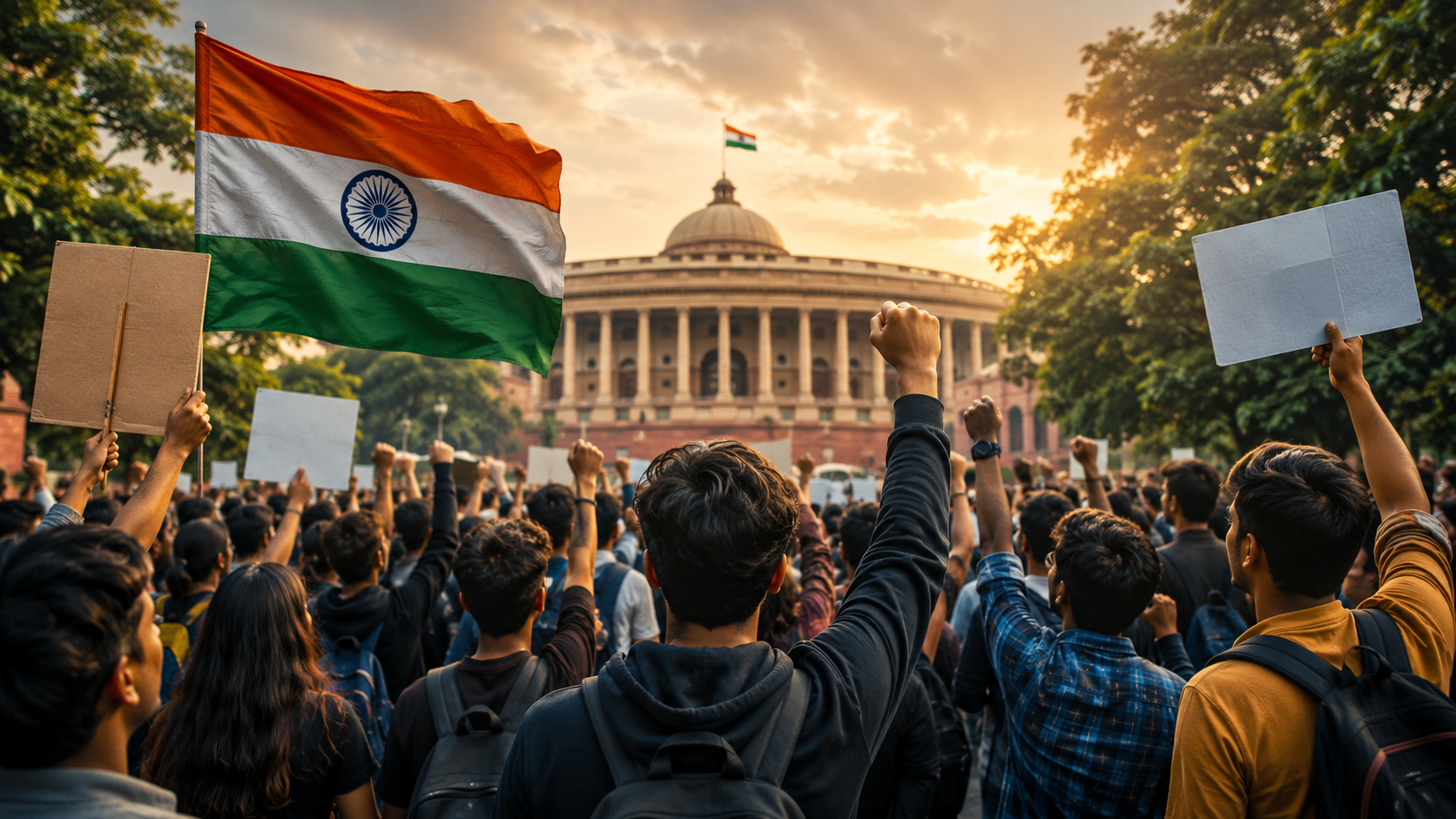
India is home to one of the world’s youngest populations. More than half of its citizens are below the age of 30, making youth one of the country’s most significant social, economic, and political forces. For decades, education has been viewed as the primary path to upward social mobility, especially for middle-class and lower-income families. Competitive examinations such as NEET, JEE, UPSC, SSC, and state-level recruitment tests have become gateways to higher education and secure employment. Consequently, the fairness and credibility of these examinations directly affect millions of young people.
In 2026, a nationwide youth movement emerged in response to repeated allegations of examination paper leaks, concerns over transparency, and growing frustration with unemployment. What began as online criticism rapidly transformed into one of India’s largest youth-led protest movements. This movement became widely associated with the Cockroach Janta Party (CJP), an organization that transformed an insulting label into a symbol of resistance, resilience, and collective identity. The movement later expanded beyond examination reforms to include broader concerns about youth aspirations, governance, accountability, and democratic participation.
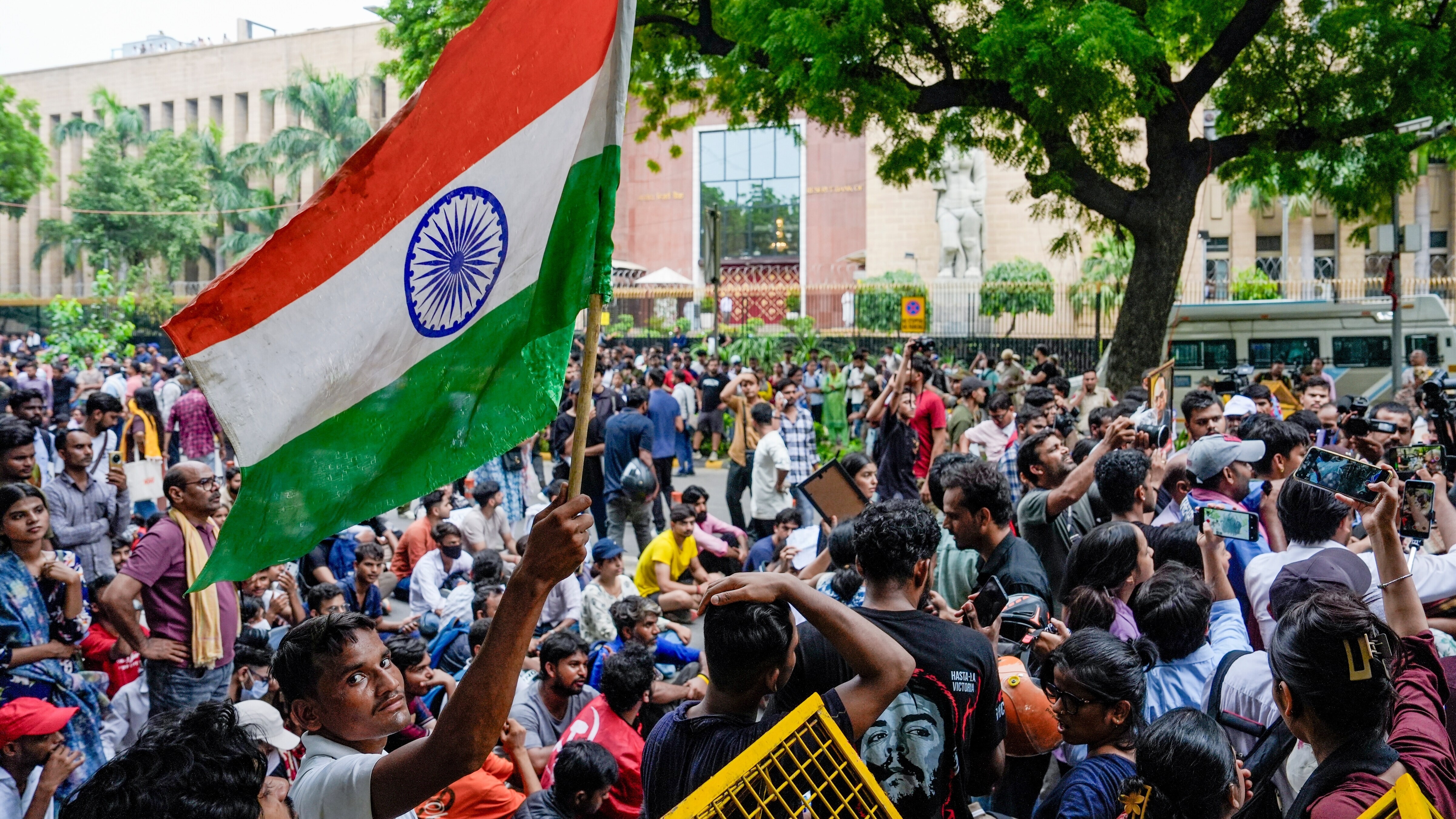
From a sociological perspective, the India Gen Z Protest is not merely a political event. It reflects deeper structural tensions involving education, social inequality, employment, digital communication, and generational identity. The protests demonstrate how young citizens increasingly use social media, decentralized leadership, and symbolic narratives to challenge institutions they perceive as failing to meet their expectations.
This article examines the India Gen Z Protest and the Cockroach Janta Party through the lens of sociology. It explores the social background of the movement, its causes, organizational structure, and theoretical significance in understanding contemporary youth activism in India.
Understanding Generation Z in India
Generation Z generally refers to individuals born between the late 1990s and early 2010s. Unlike previous generations, Gen Z has grown up with smartphones, high-speed internet, digital education, artificial intelligence, and constant access to social media. Their experiences have shaped unique attitudes toward politics, employment, education, and social justice.
Several characteristics distinguish Indian Gen Z from earlier generations.
First, they possess unprecedented access to information. News spreads within minutes through platforms such as Instagram, YouTube, WhatsApp, Telegram, and X. Young people no longer depend solely on traditional newspapers or television channels to understand national events.
Second, they are highly connected socially. Students from different states can easily organize campaigns, share experiences, and coordinate protests despite geographical distances.
Third, they generally expect greater transparency and accountability from public institutions. Digital literacy has made it easier to compare policies, expose irregularities, and mobilize support around shared grievances.
Finally, Gen Z has entered adulthood during a period marked by intense competition for educational opportunities and government employment. Millions compete for a relatively small number of prestigious seats and secure jobs, increasing pressure on examination systems and public recruitment.
This combination of technological connectivity and structural pressure provides the social environment in which the 2026 protests emerged.
The Social Background Behind the Protest
The immediate trigger of the movement was public anger over repeated examination paper leak controversies. Medical entrance examinations and several recruitment examinations became symbols of broader concerns regarding fairness and institutional accountability. Millions of students invest years preparing for these examinations, often spending substantial family resources on coaching, accommodation, and educational materials.
When examinations are cancelled, postponed, or questioned due to alleged irregularities, students experience more than academic disappointment. Many feel that years of effort have become uncertain. Families also face financial and emotional burdens.
Sociologically, these incidents represent a crisis of institutional trust. Institutions such as examination authorities derive legitimacy from public confidence. When confidence weakens, citizens increasingly seek alternative methods to express dissatisfaction, including collective protests and digital campaigns.
The movement therefore cannot be understood solely as opposition to individual examination incidents. Rather, it reflects accumulated frustration regarding educational governance, employment opportunities, and perceived failures of accountability. Protesters have demanded systemic reforms alongside action against those responsible for examination irregularities.
The Emergence of the Cockroach Janta Party (CJP)
One of the most distinctive aspects of the movement was the emergence of the Cockroach Janta Party (CJP).
The name originated after unemployed youth were compared to “cockroaches” during public controversy. Instead of rejecting the insult, young activists deliberately adopted the symbol as an expression of resilience. Sociologists often describe this process as symbolic inversion, where marginalized groups reclaim negative labels and transform them into symbols of pride and resistance.
Throughout history, social movements have frequently reappropriated insulting language. Such transformations weaken the power of stigma while strengthening collective identity.
The Cockroach Janta Party rapidly expanded through social media campaigns. Memes, artwork, videos, slogans, and online discussions helped convert digital participation into offline mobilization. Within weeks, demonstrations were organized across multiple Indian cities, attracting thousands of students and young professionals.
Unlike conventional political organizations, the CJP initially projected itself as a decentralized youth movement rather than an electoral party. Its primary emphasis remained educational reforms, transparency, and youth participation.
Why Did Gen Z Connect So Strongly with the Movement?
The popularity of the movement cannot be explained only by examination controversies. Several structural factors contributed to widespread participation.
Educational Pressure
Indian society places extraordinary importance on educational achievement. Success in competitive examinations often determines access to prestigious universities and government employment. Failure frequently carries significant psychological and social consequences.
Families invest considerable financial resources in coaching institutions and private education. Students may spend several years preparing for a single examination.
Consequently, any disruption in examination credibility directly affects long-term life planning.
Employment Uncertainty
India’s labour market presents another important context.
Many graduates aspire to secure stable government employment because of job security, pension benefits, and social prestige. However, competition has intensified dramatically due to limited vacancies.
The resulting mismatch between educational qualifications and employment opportunities has created widespread anxiety among young adults.
Digital Political Participation
Unlike previous generations, Gen Z relies heavily on digital platforms for civic engagement.
Online campaigns reduced organizational costs and enabled rapid dissemination of protest information. Hashtags, live streaming, digital posters, and short videos allowed participants to coordinate without centralized leadership.
Digital participation also enabled students from remote regions to contribute to national discussions without physically attending demonstrations.
Sociological Theories Explaining the Movement
The India Gen Z Protest provides an excellent case study for several classical and contemporary sociological theories.
Relative Deprivation Theory
Relative deprivation theory argues that social movements emerge not simply because people experience hardship but because they perceive a gap between expectations and actual opportunities.
Many Indian students invested years preparing for competitive examinations under the expectation that hard work would be rewarded fairly.
When allegations of examination irregularities surfaced repeatedly, many participants perceived a violation of meritocratic expectations.
Their frustration resulted not merely from economic hardship but from the belief that institutional fairness had been compromised.
This theory helps explain why the protests attracted students from diverse socioeconomic backgrounds.
Resource Mobilization Theory
Resource Mobilization Theory emphasizes that successful movements require organizational resources rather than only public dissatisfaction.
The CJP effectively utilized several important resources:
- Social media networks
- Volunteer organizers
- Independent digital journalism
- Online fundraising
- Student organizations
- Digital communication platforms
Rather than depending on expensive organizational infrastructure, the movement relied heavily upon decentralized digital coordination.
Technology therefore functioned as a powerful mobilizing resource.
New Social Movement Theory
Traditional social movements often focused primarily on class conflict and economic inequality.
New Social Movement Theory argues that contemporary movements increasingly emphasize identity, recognition, participation, transparency, environmental concerns, gender equality, and democratic accountability.
The India Gen Z Protest closely resembles this model.
Although employment concerns remain important, the movement also emphasizes institutional transparency, educational justice, youth dignity, democratic participation, and ethical governance.
Its decentralized structure, strong digital presence, and symbolic politics distinguish it from many earlier protest movements.
Symbolic Interactionism
Symbolic Interactionism studies how individuals construct meaning through symbols and interaction.
The adoption of the “cockroach” symbol demonstrates this process clearly.
Originally intended as an insult, the symbol gradually acquired entirely different meanings within the movement:
- Persistence
- Survival
- Collective identity
- Resistance against humiliation
- Youth solidarity
Through repeated interaction across social media and public demonstrations, participants collectively reconstructed the symbol’s meaning.
Consequently, the cockroach became not merely an image but a shared identity representing youth resilience.
Conflict Theory and the Politics of Youth
One of the most relevant sociological perspectives for understanding the India Gen Z Protest is Conflict Theory, developed primarily by Karl Marx and later expanded by sociologists such as Ralf Dahrendorf and C. Wright Mills. Conflict Theory argues that society is characterized by unequal distributions of power and resources, and that social conflict emerges when groups perceive these inequalities as unjust.
Although Marx focused mainly on economic class conflict, modern sociologists apply Conflict Theory to institutions such as education, law, politics, and public administration. In the context of the India Gen Z Protest, many participants argued that repeated examination controversies and recruitment delays reflected deeper institutional problems rather than isolated administrative mistakes.
For many young people, competitive examinations represent the promise of social mobility. Students from rural areas, lower-income families, and first-generation learners often invest years preparing for national and state-level examinations. When these systems appear unreliable, frustration extends beyond academic concerns to questions of justice, equality, and democratic accountability.
Conflict Theory helps explain why educational grievances quickly expanded into broader demands for institutional reform. Protesters questioned not only specific examination processes but also the relationship between citizens and public institutions responsible for ensuring fairness and transparency.
At the same time, it is important to recognize that different stakeholders interpret these events differently. Government authorities have stated that reforms are being implemented to strengthen examination security and punish those responsible for malpractice, while protesters have argued that more comprehensive structural changes are needed. This difference in perspective illustrates how competing groups may interpret the same social reality through different institutional and political lenses.
The Role of Sonam Wangchuk
The movement gained additional national attention when education reform advocate and engineer Sonam Wangchuk joined the campaign through a prolonged hunger strike. His participation broadened the movement beyond student organizations and attracted attention from educators, civil society groups, and sections of the national media. Reuters reported that Wangchuk called for reforms addressing examination integrity and youth concerns before ending his fast after discussions with government representatives.

From a sociological perspective, charismatic individuals often help transform localized grievances into broader social movements. Max Weber described charismatic authority as a form of legitimacy derived from the perceived moral credibility and personal influence of leaders rather than formal institutional power.
However, the India Gen Z Protest also demonstrated the limitations of leader-centered activism. Much of the movement remained decentralized, with thousands of participants organizing independently through digital platforms rather than relying solely on a single leadership figure.
This combination of symbolic leadership and decentralized participation represents a defining feature of many twenty-first-century social movements.
Social Media as an Agent of Social Change
Digital technology played an indispensable role throughout the protest movement.
Unlike earlier generations, today’s youth possess immediate access to information through smartphones and social networking platforms. News regarding examination controversies, protest schedules, speeches, and government announcements circulated rapidly through Instagram, X, WhatsApp, Telegram, and YouTube.
Sociologists increasingly describe social media as an agent of socialization because it shapes political attitudes, public opinion, and collective identity.
The movement demonstrated several important characteristics of digital activism.
Rapid Information Sharing
Students from different states exchanged updates almost instantly. Examination notifications, legal developments, protest locations, and media reports spread far more quickly than through traditional communication channels.
Collective Identity Formation
Hashtags, memes, artwork, and slogans created a sense of belonging among participants who had never met physically.
Digital communities became spaces where young people shared common experiences regarding educational pressure, unemployment, and institutional distrust.
Citizen Journalism
Many participants documented demonstrations using mobile phones, enabling alternative narratives alongside mainstream media coverage.
Videos recorded by participants frequently reached millions of viewers within hours.
Decentralized Organization
Unlike traditional political organizations, many protest activities emerged through volunteer coordination rather than centralized command structures.
This flexibility allowed the movement to continue even when specific events were restricted or cancelled.
Nevertheless, digital activism also presents challenges.
False information can spread rapidly.
Emotional content often receives greater attention than verified information.
Online polarization may increase political divisions.
Therefore, digital participation requires responsible verification alongside active civic engagement.
Comparing the India Gen Z Protest with Global Youth Movements
Youth-led movements have become increasingly common across the world.
Although each movement reflects unique national circumstances, several similarities emerge.
The Hong Kong democracy protests demonstrated how decentralized organization and encrypted digital communication could sustain prolonged civic mobilization.
The Fridays for Future climate movement, initiated by Greta Thunberg, illustrated the capacity of young people to influence global environmental debates.
Student demonstrations in countries such as France, Chile, and South Korea have similarly focused on education, employment, affordability, and democratic accountability.
The India Gen Z Protest shares several characteristics with these international movements.
First, leadership remains relatively decentralized.
Second, social media serves as the principal organizational infrastructure.
Third, symbolic narratives strengthen collective identity.
Finally, participants often frame their demands in terms of fairness, transparency, and institutional accountability rather than narrow ideological objectives.
However, the Indian movement remains distinctive because its immediate focus centers upon competitive examinations and public recruitment systems, issues affecting millions of students annually.
Media Representation and Public Opinion
Media organizations significantly influence how protest movements are understood by society.
Traditional newspapers and television channels often emphasize different aspects of demonstrations depending upon editorial priorities.
Meanwhile, digital media enables protesters to communicate directly with audiences without relying exclusively on institutional journalism.
The India Gen Z Protest generated extensive discussion across both traditional and digital platforms.
Supporters viewed the movement as a legitimate demand for educational reform and youth justice.
Critics argued that prolonged protests could disrupt public order or become politically polarized.
Sociologists recognize that media framing influences public interpretation.
The same event may be described as:
- A democratic protest
- A student movement
- Civil disobedience
- Political mobilization
- Public disorder
Each description shapes public attitudes differently.
Consequently, media analysis remains essential for understanding contemporary social movements.
State Response and Democratic Institutions
Governments possess the responsibility of maintaining both democratic freedoms and public order.
According to widely reported accounts, authorities imposed restrictions on some protest activities, including barricades, detentions, and crowd-control measures during demonstrations near Parliament. Government representatives also later held discussions with protest representatives regarding examination reforms.
From a sociological perspective, democratic societies continuously negotiate the balance between individual rights and collective security.
Peaceful public demonstrations constitute an important mechanism through which citizens express grievances.
Simultaneously, governments must consider public safety, administrative continuity, and legal responsibilities.
The interaction between protesters and public institutions therefore becomes an ongoing process of negotiation rather than a simple confrontation.
Youth Identity and Collective Consciousness
One of the most important sociological contributions of the movement lies in its creation of a shared youth identity.
Participants came from diverse linguistic, regional, religious, and economic backgrounds.
Despite these differences, they increasingly identified themselves as members of a common generation facing similar structural challenges.
French sociologist Émile Durkheim emphasized the importance of collective consciousness—the shared beliefs and values that unite members of society.
Within the movement, common experiences such as examination pressure, career uncertainty, and digital communication contributed to the formation of this collective identity.
The adoption of common symbols, slogans, and narratives further strengthened solidarity among participants.
Criticisms and Challenges
Like most social movements, the India Gen Z Protest has also faced criticism.
Some observers argue that decentralized organization can make long-term policy engagement more difficult.
Others suggest that online activism sometimes prioritizes symbolic visibility over sustained institutional dialogue.
Additional challenges include:
- Maintaining nonviolent discipline during large demonstrations.
- Preventing misinformation on social media.
- Representing the diversity of India’s student population.
- Converting protest demands into practical policy reforms.
- Sustaining public engagement after media attention declines.
Supporters, however, argue that these challenges are common to many democratic movements and do not diminish the legitimacy of calls for transparent and accountable institutions.
The Future of Youth Politics in India
The India Gen Z Protest demonstrates that young citizens are becoming increasingly active participants in democratic life.
Future youth politics in India is likely to exhibit several characteristics.
Digital platforms will continue expanding opportunities for civic participation.
Policy debates concerning education, employment, technology, and governance will increasingly involve direct youth engagement.
Political institutions may also need to strengthen mechanisms for consultation with students and young professionals.
Educational reforms, examination security, and employment generation are likely to remain important public policy issues.
Regardless of political outcomes, the movement has highlighted the growing influence of digitally connected youth within India’s democratic landscape.
Conclusion
The India Gen Z Protest and the emergence of the Cockroach Janta Party (CJP) represent more than a response to examination controversies. They illustrate broader sociological transformations occurring within Indian society.
The movement reflects changing relationships between youth, education, technology, democracy, and public institutions. Through digital communication, symbolic identity, and decentralized organization, participants transformed individual frustrations into collective action.
Sociological theories such as Relative Deprivation Theory, Resource Mobilization Theory, Conflict Theory, Symbolic Interactionism, New Social Movement Theory, and Durkheim’s concept of collective consciousness all help explain different dimensions of the movement.
At the same time, the protests demonstrate the importance of balancing democratic participation, institutional accountability, and constructive dialogue. While opinions differ regarding the movement’s methods and political implications, it has undeniably brought renewed attention to examination governance, educational fairness, and the aspirations of India’s younger generation.
As India continues to experience rapid social and technological change, youth movements like this will remain significant subjects for sociological research. They provide valuable insights into how digital generations organize, negotiate power, construct identities, and participate in democratic processes. Understanding these developments is essential for scholars, policymakers, educators, and citizens seeking to understand the evolving relationship between society, education, and democracy in twenty-first-century India.
FAQs
1. What is the India Gen Z Protest?
The India Gen Z Protest is a youth-led movement that emerged in 2026, primarily demanding transparent examination systems, accountability for paper leaks, and reforms in education and public recruitment.
2. Why did the India Gen Z Protest begin?
The India Gen Z Protest began after repeated examination paper leak controversies, growing unemployment, and concerns over fairness in competitive examinations.
3. What is the Cockroach Janta Party (CJP)?
The Cockroach Janta Party (CJP) is a symbolic youth movement that adopted the “cockroach” as a representation of resilience after the term was used as an insult toward unemployed youth.
4. What are the main demands of the India Gen Z Protest?
The India Gen Z Protest demands secure examinations, transparent recruitment, accountability for examination irregularities, educational reforms, and greater institutional transparency.
5. How has social media influenced the India Gen Z Protest?
Social media has enabled rapid communication, nationwide coordination, digital activism, and the creation of a shared identity among participants in the India Gen Z Protest.
6. Why is the India Gen Z Protest important in sociology?
The India Gen Z Protest illustrates concepts such as collective action, symbolic interactionism, conflict theory, resource mobilization, and new social movements.
7. How does Conflict Theory explain the India Gen Z Protest?
Conflict Theory suggests that the India Gen Z Protest reflects tensions between young citizens seeking fair opportunities and institutions responsible for distributing educational and employment resources.
8. What role does Generation Z play in the India Gen Z Protest?
Generation Z forms the core of the India Gen Z Protest, using digital technology and social media to organize, communicate, and advocate for reforms.
9. How is the India Gen Z Protest different from traditional student movements?
Unlike many traditional movements, the India Gen Z Protest relies heavily on decentralized leadership, digital platforms, and symbolic online campaigns.
10. What sociological theories are relevant to the India Gen Z Protest?
The India Gen Z Protest can be analyzed using Relative Deprivation Theory, Resource Mobilization Theory, Conflict Theory, Symbolic Interactionism, and New Social Movement Theory.
11. Has the India Gen Z Protest influenced public debate?
Yes. The India Gen Z Protest has generated nationwide discussions about examination integrity, youth employment, educational reforms, and democratic participation.
12. What challenges does the India Gen Z Protest face?
The India Gen Z Protest faces challenges including misinformation, maintaining peaceful demonstrations, sustaining public engagement, and achieving long-term policy reforms.
13. Why is education central to the India Gen Z Protest?
Education is central because competitive examinations significantly influence career opportunities, social mobility, and economic security for millions of Indian students.
14. What can policymakers learn from the India Gen Z Protest?
The India Gen Z Protest highlights the importance of transparent governance, secure examination systems, effective communication, and meaningful youth participation in policymaking.
15. What is the future of the India Gen Z Protest?
The future of the India Gen Z Protest will likely depend on government reforms, continued civic engagement, and the ability of youth organizations to maintain constructive dialogue while advocating for institutional improvements.
2 thoughts on “India Gen Z Protest and Cockroach Janta Party (CJP): A Sociological Analysis of Youth Resistance, Education, and Democracy”