
Introduction
Agriculture has historically been the backbone of rural American society, shaping not only economic systems but also social relations, cultural practices, and community life. From the early agrarian republic envisioned by Thomas Jefferson to the highly mechanized and industrialized agricultural systems of today, rural America has undergone profound transformations. These changes are not merely economic; they are deeply sociological, influencing class structures, family organization, migration patterns, gender roles, and community cohesion.
The relationship between agriculture and social change in rural America is complex and multidimensional. It involves shifts from subsistence farming to commercial agriculture, the rise of agribusiness, technological innovations, globalization, and policy interventions. Each of these factors has contributed to altering the social fabric of rural communities.

This article explores the sociological dimensions of agricultural transformation in rural American society, examining how changes in agricultural practices have reshaped social institutions, inequalities, and cultural identities. Explore Social Change in Rural American Society through agriculture, technology, migration, and inequality. A sociological analysis of rural transformation in the United States.
Historical Foundations of Rural Agricultural Society
In the 18th and 19th centuries, agriculture was predominantly family-based. Farms were small, labor-intensive, and largely self-sufficient. Rural communities were tightly knit, with strong kinship ties and shared cultural norms. Social life revolved around farming cycles, religious institutions, and local markets.
Agriculture was not just an economic activity but a way of life. The family served as both a production and consumption unit. Children contributed to farm labor, and knowledge was passed down through generations. Social stratification existed but was relatively less pronounced compared to industrial urban centers.
However, even during this period, differences in land ownership, access to resources, and regional variations created inequalities. The plantation system in the South, for example, was based on slavery and later sharecropping, reflecting stark class and racial divisions.
Industrialization and the Transformation of Agriculture
The late 19th and early 20th centuries marked the beginning of significant transformation in American agriculture due to industrialization. Mechanization, such as the introduction of tractors and combine harvesters, reduced the need for manual labor. This had profound sociological consequences.
Firstly, there was a decline in the agricultural labor force. Many rural residents migrated to urban areas in search of employment in factories. This rural-to-urban migration altered demographic patterns and contributed to the growth of cities.
Secondly, the nature of farming changed from subsistence to commercial production. Farmers began producing for national and global markets rather than local consumption. This shift increased economic dependency on market fluctuations, affecting farmers’ stability and livelihoods.
Industrialization also contributed to the emergence of a new class structure in rural society. Large landowners and agribusiness corporations gained more power, while small farmers struggled to compete.
The Rise of Agribusiness and Capitalist Agriculture
The mid-20th century witnessed the rise of agribusiness, characterized by large-scale, corporate-controlled farming. This shift represented a move towards capitalist agriculture, where profit maximization became the primary goal.
Agribusiness brought efficiency and increased productivity through advanced technologies, fertilizers, and genetically modified crops. However, it also led to the consolidation of land and resources in the hands of a few corporations.
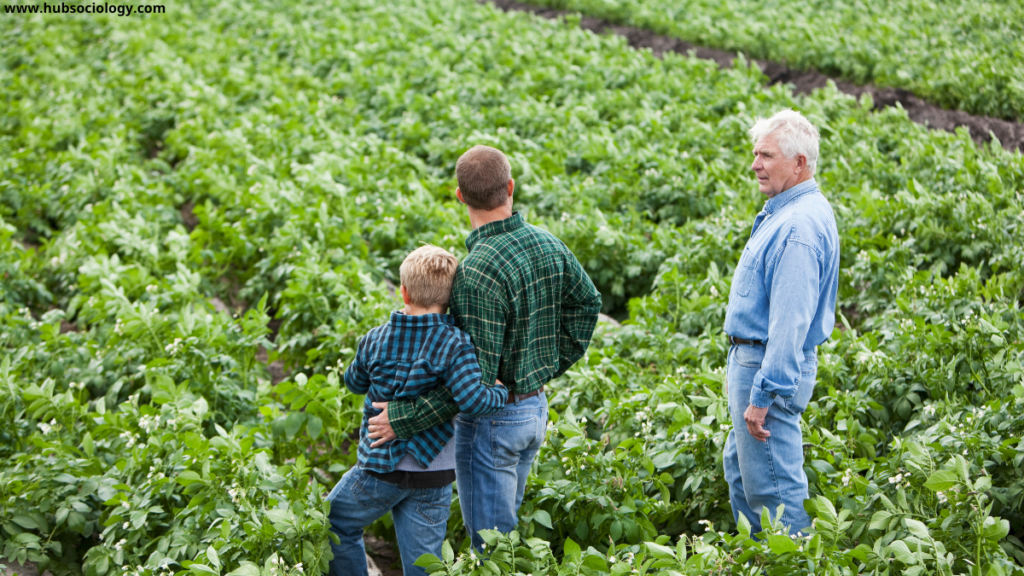
From a sociological perspective, this transformation has intensified social inequality in rural areas. Small and medium-sized farmers often face economic pressures, leading to farm closures and loss of livelihoods. This process, sometimes referred to as “farm consolidation,” has reduced the number of independent farmers and increased rural unemployment.
Additionally, the dominance of agribusiness has weakened traditional community structures. Local decision-making has been replaced by corporate policies, reducing the autonomy of rural populations.
Technological Change and Its Social Implications
Technological advancements have played a crucial role in shaping modern agriculture. Innovations such as precision farming, biotechnology, and digital agriculture have revolutionized production processes.
While technology has increased efficiency and output, it has also contributed to social change in several ways. One major impact is the reduction in labor demand. Automation has replaced many traditional farming jobs, leading to unemployment and outmigration.
Moreover, access to advanced technology often requires significant financial investment, creating disparities between large-scale farmers and smallholders. This digital divide exacerbates existing inequalities within rural society.
Technology has also altered the knowledge system in agriculture. Traditional farming knowledge is increasingly replaced by scientific expertise, often controlled by corporations and research institutions. This shift can marginalize local knowledge and cultural practices.
Migration and Demographic Changes
Agricultural transformation has significantly influenced migration patterns in rural America. The decline in farming opportunities has led to outmigration, particularly among young people seeking education and employment in urban areas.
This demographic shift has resulted in aging rural populations, with fewer young individuals to sustain agricultural activities and community life. Schools, healthcare facilities, and local businesses often struggle to survive due to declining populations.
At the same time, some rural areas have experienced in-migration of immigrant labor, particularly in sectors such as fruit picking and dairy farming. These migrant workers often occupy low-wage, precarious jobs, highlighting issues of labor exploitation and social inequality.
The coexistence of declining local populations and increasing migrant labor creates new social dynamics, including cultural diversity, social tensions, and the need for integration policies.
Changing Family Structures and Gender Roles
Agricultural change has also transformed family structures in rural America. Traditionally, farm families operated as cohesive units, with clearly defined gender roles. Men typically handled fieldwork, while women managed household tasks and contributed to farm labor.
With the commercialization and mechanization of agriculture, these roles have evolved. Women increasingly participate in off-farm employment, contributing to household income. This shift has altered gender relations and increased women’s economic independence.
However, gender inequalities persist. Women often face barriers in land ownership, access to credit, and decision-making within agricultural systems.
Family farms have also declined, replaced by corporate farming models. This shift reduces the role of the family as a central institution in agricultural production, leading to changes in socialization processes and intergenerational knowledge transfer.
Social Inequality and Rural Stratification
Agricultural transformation has intensified social inequality in rural American society. Economic disparities between large agribusinesses and small farmers have widened, creating a polarized class structure.
Land ownership remains a key factor in rural stratification. Those who own large tracts of land and have access to capital benefit from technological advancements and market opportunities. In contrast, small farmers and tenant farmers often struggle with debt and financial instability.
Racial and ethnic inequalities are also significant. Historically marginalized groups, including African American farmers, have faced systemic discrimination in access to land, credit, and government support.
Additionally, migrant laborers often experience poor working conditions, low wages, and limited legal protections. These inequalities reflect broader patterns of social exclusion and exploitation within the agricultural system.
Environmental Change and Sustainability
Modern agricultural practices have significant environmental implications, which in turn affect social structures. The use of chemical fertilizers, pesticides, and intensive farming methods has led to soil degradation, water pollution, and loss of biodiversity.
These environmental challenges have social consequences, including health risks, economic losses, and conflicts over resource use. Rural communities are increasingly engaged in debates over sustainable agriculture and environmental conservation.

The rise of organic farming and sustainable practices represents a counter-movement to industrial agriculture. These approaches emphasize ecological balance, local production, and community involvement.
From a sociological perspective, sustainability initiatives can strengthen community ties and promote social equity. However, they also face challenges related to cost, scalability, and market access.
The Role of Government and Policy
Government policies have played a crucial role in shaping agricultural transformation and social change. Subsidies, price supports, and trade policies influence farming practices and economic outcomes.
While some policies aim to support farmers, they often disproportionately benefit large agribusinesses. This can exacerbate inequality and marginalize small farmers.
Rural development programs, infrastructure investments, and social welfare policies are essential for addressing the challenges faced by rural communities. However, policy implementation often varies across regions, leading to uneven development.
Sociologically, the role of the state reflects power dynamics and competing interests within society. Policy decisions can either reinforce existing inequalities or promote more inclusive and sustainable development.
Cultural Change and Rural Identity
Agricultural transformation has also influenced cultural identities in rural America. Traditional values such as self-reliance, community cooperation, and attachment to land are being challenged by economic and technological changes.
The decline of family farms and rural depopulation has led to a sense of loss and nostalgia among many rural residents. At the same time, new cultural forms are emerging, influenced by globalization and technological connectivity.
Rural identity is increasingly diverse and dynamic, shaped by interactions between local traditions and global influences. This cultural transformation reflects broader processes of social change in contemporary society.
Conclusion
Agriculture remains a central force in shaping rural American society, but its nature and impact have changed dramatically over time. From family-based farming to corporate agribusiness, each stage of agricultural development has brought significant sociological transformations.
These changes have affected social structures, economic relations, demographic patterns, and cultural identities. While technological advancements and market integration have increased productivity, they have also contributed to inequality, environmental challenges, and social dislocation.
Understanding agriculture and social change in rural America requires a comprehensive sociological perspective that considers both opportunities and challenges. Policymakers, researchers, and communities must work together to create a more equitable and sustainable rural future.
Ultimately, the story of agriculture in rural America is not just about food production; it is about people, communities, and the evolving fabric of society.
FAQs on Social Change in Rural American Society
- What is meant by Social Change in Rural American Society?
Social Change in Rural American Society refers to the transformation of social structures, economic systems, cultural practices, and population dynamics influenced by agricultural development, technology, and policy changes. - How has agriculture influenced Social Change in Rural American Society?
Agriculture has shaped employment patterns, migration trends, and class structures, making it a central driver of Social Change in Rural American Society. - What role does technology play in Social Change in Rural American Society?
Technological advancements reduce labor demand, increase productivity, and create inequalities, significantly impacting Social Change in Rural American Society. - How has migration contributed to Social Change in Rural American Society?
Rural-to-urban migration and immigrant labor inflows have reshaped demographics and community structures, accelerating Social Change in Rural American Society. - What is the impact of agribusiness on Social Change in Rural American Society?
Agribusiness has increased efficiency but also led to economic inequality and the decline of small farms, influencing Social Change in Rural American Society. - How does Social Change in Rural American Society affect family structures?
It has transformed traditional family roles, reduced reliance on family labor, and increased off-farm employment opportunities. - What are the major causes of Social Change in Rural American Society?
Industrialization, globalization, technological innovation, and government policies are key drivers of Social Change in Rural American Society. - How does Social Change in Rural American Society impact gender roles?
Women are increasingly involved in economic activities, leading to shifts in traditional gender roles and greater independence. - What is the relationship between inequality and Social Change in Rural American Society?
Social Change in Rural American Society has widened economic disparities between large agribusinesses and small farmers. - How has globalization influenced Social Change in Rural American Society?
Global markets have increased competition and dependency, transforming local agricultural practices and social relations. - What environmental issues are linked to Social Change in Rural American Society?
Soil degradation, water pollution, and loss of biodiversity are major concerns associated with modern agricultural practices. - How does Social Change in Rural American Society affect rural culture?
It leads to the erosion of traditional values while introducing new cultural influences and identities. - What challenges do small farmers face in Social Change in Rural American Society?
They face financial instability, competition from large corporations, and limited access to resources. - What is the role of government in Social Change in Rural American Society?
Government policies influence agricultural practices, economic stability, and rural development. - Why is Social Change in Rural American Society important to study?
It helps understand broader societal transformations, inequalities, and the future of rural communities.
1 thought on “Agriculture and Social Change in Rural American Society: A Sociological Analysis”