Introduction
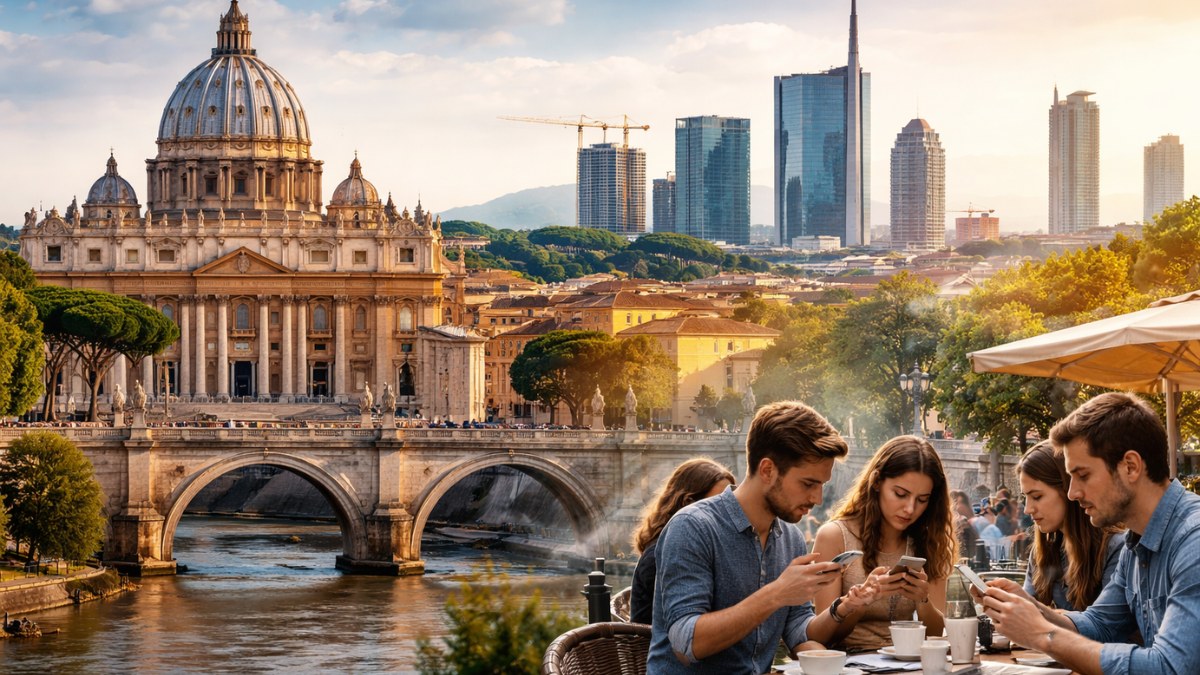
Italy, often regarded as the historical and spiritual centre of Roman Catholicism, presents a fascinating case for examining the relationship between religion and modernization. The coexistence of ancient religious traditions and modern secular values makes Italian society a rich terrain for sociological inquiry. From the influence of the Vatican to the rise of secular attitudes among younger generations, Italy embodies the dynamic tension between continuity and change.
Modernization, broadly defined as the process of social transformation involving industrialization, urbanization, rationalization, and secularization, has significantly reshaped religious life in Italy. While religion once played a dominant role in shaping social norms, political institutions, and cultural practices, its position has evolved under the pressures of modernity.
This article explores how religion interacts with modernization in Italian society, focusing on historical roots, institutional transformations, changing belief systems, and contemporary challenges.
Historical Context of Religion in Italy
To understand religion in modern Italy, it is essential to examine its historical foundations. The Roman Catholic Church has been deeply intertwined with Italian identity for centuries. The presence of the Vatican in Rome has symbolically and practically reinforced the Church’s centrality in Italian life.
During the pre-modern period, religion was not merely a personal belief system but a dominant social institution. It regulated education, marriage, morality, and even governance. The Church functioned as a key agent of social cohesion and cultural continuity.
However, the unification of Italy in the 19th century marked a turning point. The conflict between the Italian state and the Papacy, known as the “Roman Question,” led to tensions between religious authority and political power. The Lateran Treaty of 1929 eventually resolved this conflict by recognizing Vatican City as an independent state while establishing Catholicism as Italy’s state religion.
This historical trajectory set the stage for the complex interplay between religion and modernization in the 20th and 21st centuries.
Modernization and Secularization
One of the most significant sociological processes associated with modernization is secularization—the decline of religious authority and practice in public and private life. In Italy, secularization has been gradual and uneven.
Decline in Religious Practice
Over the past few decades, Italy has witnessed a noticeable decline in church attendance and participation in religious rituals. While older generations continue to maintain strong ties to the Church, younger Italians are increasingly distancing themselves from organized religion.
This shift can be attributed to several factors:
- Increased access to education and scientific knowledge
- Urbanization and the weakening of traditional community structures
- Exposure to global cultural values emphasizing individualism
Despite this decline, Italy remains less secularized compared to many other Western European countries. Cultural Catholicism still plays a significant role, even among those who are not regular churchgoers.
Persistence of Cultural Religion
In Italy, religion often functions as a cultural identity rather than a strictly doctrinal commitment. Festivals, rituals, and symbols continue to hold social significance, even for individuals who may not adhere to religious teachings.
For example, events such as Christmas, Easter, and local patron saint festivals are celebrated widely, blending religious meaning with cultural tradition. This phenomenon reflects what sociologists call “belonging without believing.”
The Role of the Catholic Church in Modern Italy
Despite the forces of modernization, the Catholic Church continues to wield considerable influence in Italian society.
Institutional Influence
The Church remains an important institution in areas such as education, healthcare, and social services. Catholic schools and organizations play a vital role in providing welfare and community support.
Additionally, the Church has historically influenced political life. Although Italy is now a secular state, religious values continue to shape public debates on issues such as abortion, euthanasia, and family policy.
Moral Authority and Public Discourse
The Church still acts as a moral authority, particularly on ethical issues. Papal statements and Church teachings often generate national and international discussions.
However, this authority is increasingly contested in a modern, pluralistic society where diverse perspectives coexist. The rise of liberal values has challenged traditional religious norms, leading to debates over gender roles, LGBTQ+ rights, and reproductive rights.
Religion and Identity in Contemporary Italy
Regional Variations
Religion in Italy is not uniform; it varies significantly across regions. Southern Italy tends to be more religiously observant, with strong community ties and traditional practices. In contrast, northern regions are generally more secular and industrialized.
These regional differences highlight the uneven impact of modernization and the persistence of local cultural patterns.
Immigration and Religious Diversity
Modernization has also brought increased migration, transforming Italy into a more religiously diverse society. The presence of Muslims, Orthodox Christians, Hindus, and other religious groups has expanded the religious landscape.
This diversity presents both opportunities and challenges:
- It promotes multiculturalism and interfaith dialogue
- It raises questions about integration, identity, and social cohesion
The Catholic Church has responded by engaging in interreligious dialogue and advocating for tolerance, although tensions occasionally arise.
Family, Gender, and Religion
Changing Family Structures
Modernization has significantly altered family life in Italy. Traditional Catholic values emphasized marriage, large families, and clearly defined gender roles. However, contemporary Italian society has seen:

- Declining birth rates
- Increased cohabitation and divorce rates
- Greater acceptance of non-traditional family forms
These changes reflect the growing influence of secular values and individual choice.
Gender Roles and Feminism
The role of women in Italian society has evolved dramatically. While the Church traditionally promoted conservative gender roles, modernization has facilitated women’s participation in education, employment, and politics.
Feminist movements have challenged religious doctrines related to gender inequality, leading to greater autonomy and rights for women. However, tensions between religious teachings and modern gender norms persist.
Youth, Religion, and Modern Values
Young Italians represent a key demographic in understanding the future of religion. Surveys indicate that younger generations are less likely to identify strongly with organized religion.
Individualization of Belief
Rather than rejecting spirituality altogether, many young Italians are redefining it. They often prefer personalized forms of belief that emphasize:
- Spirituality over institutional religion
- Ethical values over doctrinal adherence
- Flexibility and inclusivity
This trend aligns with broader patterns of individualization in modern societies.
Digital Influence
The rise of digital media has also transformed religious engagement. Online platforms provide alternative spaces for exploring spirituality, accessing religious content, and participating in discussions.
However, digitalization also contributes to the fragmentation of religious authority, as individuals can choose from a wide range of beliefs and practices.
Religion and Politics in Modern Italy
The relationship between religion and politics has evolved significantly in Italy.
From Dominance to Pluralism
In the past, political parties such as the Christian Democrats were closely aligned with the Catholic Church. Today, Italy’s political landscape is more pluralistic, with religion playing a less direct role.
However, religious values still influence policy debates, particularly on moral and ethical issues.
Secularism and State Neutrality
Italy’s constitution guarantees freedom of religion and the separation of Church and state. This framework reflects the principles of a modern, democratic society.
Nevertheless, the historical legacy of Catholicism continues to shape national identity and public life.
Challenges and Future Prospects
Balancing Tradition and Modernity
One of the key challenges facing Italian society is balancing its rich religious heritage with the demands of modernization. This involves negotiating between:
- Cultural continuity and social change
- Collective traditions and individual autonomy
Declining Religious Authority
The decline in religious authority raises questions about social cohesion and moral guidance. As traditional institutions lose influence, new forms of community and ethical frameworks must emerge.
Interreligious Relations
Increasing diversity requires effective strategies for promoting tolerance and integration. Dialogue and mutual understanding are essential for maintaining social harmony.
Conclusion
Religion and modernization in Italian society are not mutually exclusive but deeply interconnected processes. While modernization has led to secularization, individualization, and social transformation, religion continues to play a significant cultural and institutional role.
Italy exemplifies a unique model where tradition and modernity coexist, often in tension but also in dialogue. The Catholic Church remains an influential force, even as its authority is challenged by changing values and social structures.
From a sociological perspective, the Italian case highlights the complexity of religious change in modern societies. Rather than disappearing, religion adapts, transforms, and redefines itself in response to new social realities.
As Italy moves forward, the interplay between religion and modernization will continue to shape its cultural identity, social institutions, and collective future.
FAQs
- What is modernization in Italian society?
Modernization in Italian society refers to the transformation of traditional social, cultural, and religious structures due to industrialization, urbanization, education, and globalization. - How has modernization in Italian society affected religion?
Modernization in Italian society has reduced the dominance of organized religion while encouraging individual spirituality and secular values. - Is Italy still a religious country despite modernization?
Yes, despite modernization in Italian society, cultural Catholicism remains strong, though active religious participation has declined. - What role does the Catholic Church play in modernization in Italian society?
The Catholic Church still influences education, ethics, and social policies, even as modernization in Italian society challenges its authority. - How has modernization in Italian society impacted family life?
Modernization in Italian society has led to smaller families, increased divorce rates, and acceptance of diverse family structures. - What is the relationship between youth and modernization in Italian society?
Youth are at the forefront of modernization in Italian society, often embracing secularism, digital culture, and individualized beliefs. - Has modernization in Italian society increased religious diversity?
Yes, modernization in Italian society has encouraged migration, leading to greater religious diversity and multiculturalism. - How does modernization in Italian society influence gender roles?
Modernization in Italian society has promoted gender equality, increased women’s workforce participation, and challenged traditional norms. - What are the regional differences in modernization in Italian society?
Northern Italy is generally more industrialized and secular, while southern regions retain stronger religious traditions despite modernization. - How has education contributed to modernization in Italian society?
Education has played a key role in modernization in Italian society by promoting critical thinking, scientific reasoning, and secular outlooks. - Does modernization in Italian society weaken religious traditions?
Modernization in Italian society has transformed rather than completely weakened religious traditions, often turning them into cultural practices. - What challenges arise from modernization in Italian society?
Challenges include balancing tradition with change, managing religious diversity, and addressing declining institutional authority. - How has modernization in Italian society affected politics?
Modernization in Italian society has reduced direct religious control over politics but religious values still influence policy debates. - Is secularization a result of modernization in Italian society?
Yes, secularization is a key outcome of modernization in Italian society, though it occurs gradually and unevenly. - What is the future of modernization in Italian society?
The future of modernization in Italian society will likely involve continued secularization, cultural adaptation of religion, and greater social diversity.