Introduction on Rural to Urban Migration
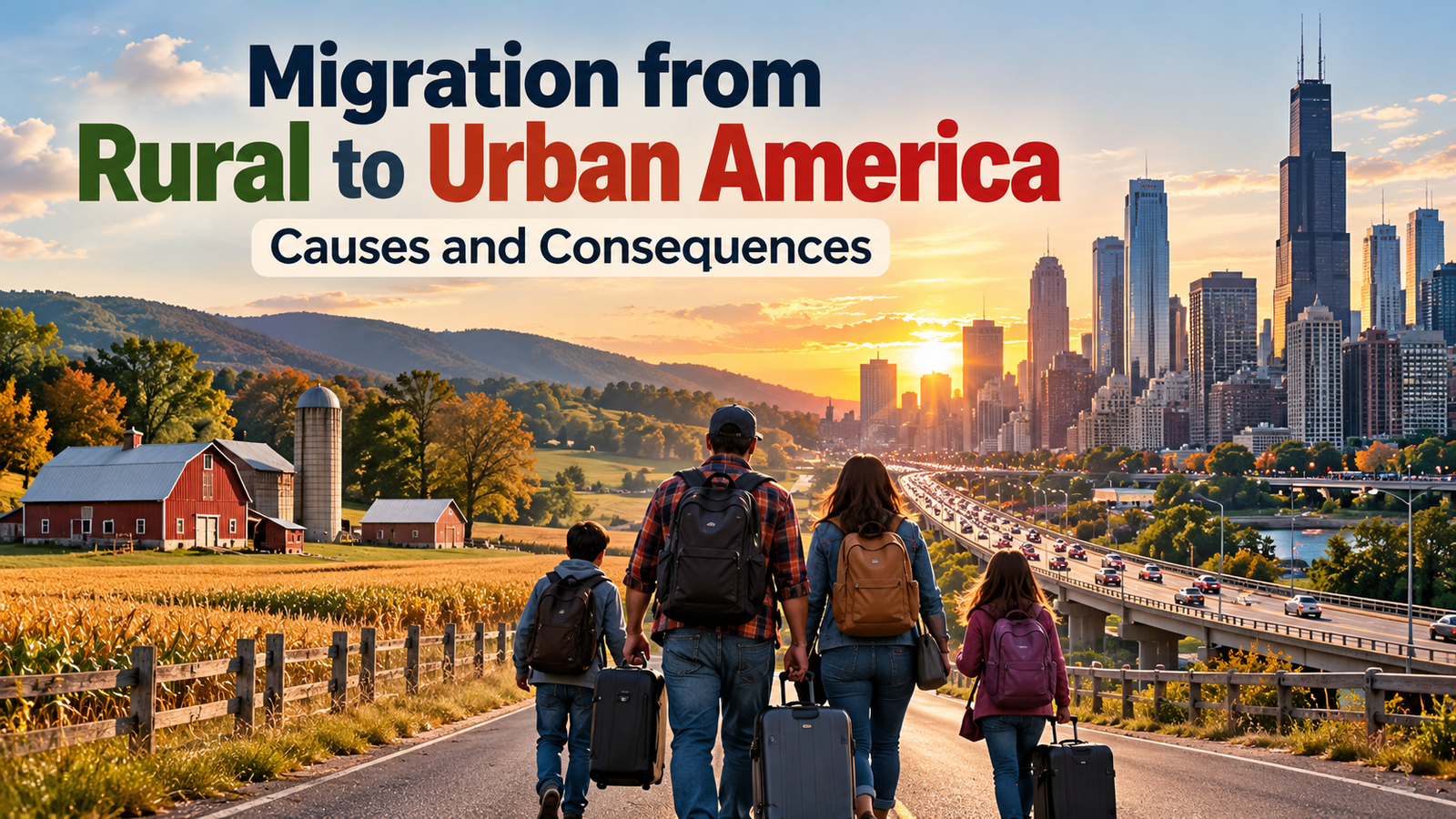
Migration has played a significant role in shaping American society, influencing its economic development, demographic composition, cultural diversity, and patterns of social inequality. The movement of people from rural communities to urban areas has been particularly important in transforming the United States from a predominantly agricultural society into a highly urbanized and industrialized nation. The phenomenon of Rural to Urban America describes this movement of individuals and families from countryside communities toward cities and metropolitan regions in search of employment, education, healthcare, improved living standards, and social mobility.
From the Industrial Revolution to the contemporary digital economy, Rural to Urban migration has reflected broader transformations in American capitalism, agricultural production, technology, and social organization. Historically, cities attracted workers to factories, transportation networks, and commercial centres. Today, metropolitan areas continue to draw people through opportunities in healthcare, technology, education, finance, entertainment, and professional services.
However, migration is not simply a geographical movement. It is also a sociological process that changes family relationships, community identities, social networks, cultural practices, and patterns of inequality. Although urban life can offer greater opportunities, it may also expose migrants to expensive housing, insecure employment, social isolation, and unequal access to resources.

Understanding Rural to Urban America therefore requires examining both the structural forces that encourage migration and the consequences experienced by individuals, families, communities, and society as a whole.
1. Understanding Rural to Urban Migration in America
Rural to Urban migration refers to the movement of people from rural areas, small agricultural communities, and less densely populated settlements to cities and metropolitan regions. In the United States, this process has occurred over several centuries, although its pace, geographical direction, and underlying causes have changed over time.
During the nineteenth century, industrialization encouraged workers to move toward expanding manufacturing centres. The development of railways, factories, commercial agriculture, and urban infrastructure created new employment opportunities that were often unavailable in rural communities.
During the twentieth century, mechanization reduced the demand for agricultural labour. Tractors, harvesters, improved farming techniques, and large-scale agricultural enterprises allowed fewer workers to produce more food. Consequently, some rural residents sought alternative livelihoods in industrial cities and growing metropolitan economies.
The Great Migration, particularly between approximately 1910 and 1970, provides an important historical example of population movement within the United States. Millions of African Americans moved from the rural South to northern, midwestern, and western cities, seeking industrial employment, educational opportunities, greater political participation, and escape from racial segregation and violence. Although this migration was not exclusively rural-to-urban, it demonstrates how economic pressures and racial structures can jointly influence population movement.
In contemporary America, migration patterns are more complex. Some rural residents move to major metropolitan areas, while others relocate to smaller cities, regional employment centres, or suburban communities. Remote work, changing housing costs, demographic ageing, and the restructuring of local economies have also influenced where Americans choose to live.
The sociological significance of this movement lies in the relationship between individual decisions and structural conditions. People may choose to relocate, but their choices are shaped by the distribution of employment, educational institutions, healthcare services, transportation systems, and economic resources.
2. Major Causes of Rural to Urban Migration
2.1 Economic Opportunities and Employment of Rural to Urban Migration
Economic opportunity is one of the most important explanations for Rural to Urban migration. Cities generally provide a wider range of employment opportunities across manufacturing, construction, healthcare, education, retail, finance, transportation, and technology. Rural communities, particularly those dependent on agriculture or a small number of industries, may offer fewer alternative occupations.
The decline of employment in traditional industries has encouraged many rural workers to seek opportunities elsewhere. Agricultural mechanization, industrial restructuring, the closure of factories, and the concentration of businesses in metropolitan regions can weaken local employment markets. Even when rural production increases, employment does not necessarily grow at the same rate.
According to the U.S. Department of Agriculture’s Economic Research Service, agricultural and manufacturing industries have increased productivity without always generating corresponding employment growth. Meanwhile, rural economies have diversified into services such as healthcare and hospitality.
From a sociological perspective, this reflects the relationship between economic structures and individual mobility. People migrate not simply because they prefer cities, but because the organization of the economy distributes jobs and resources unevenly across geographical regions.
2.2 Educational Opportunities of Rural to Urban Migration
Education is another major factor influencing migration patterns in Rural to Urban America. Rural schools and colleges may offer fewer specialized programmes, research facilities, vocational courses, and professional training opportunities than large metropolitan institutions.
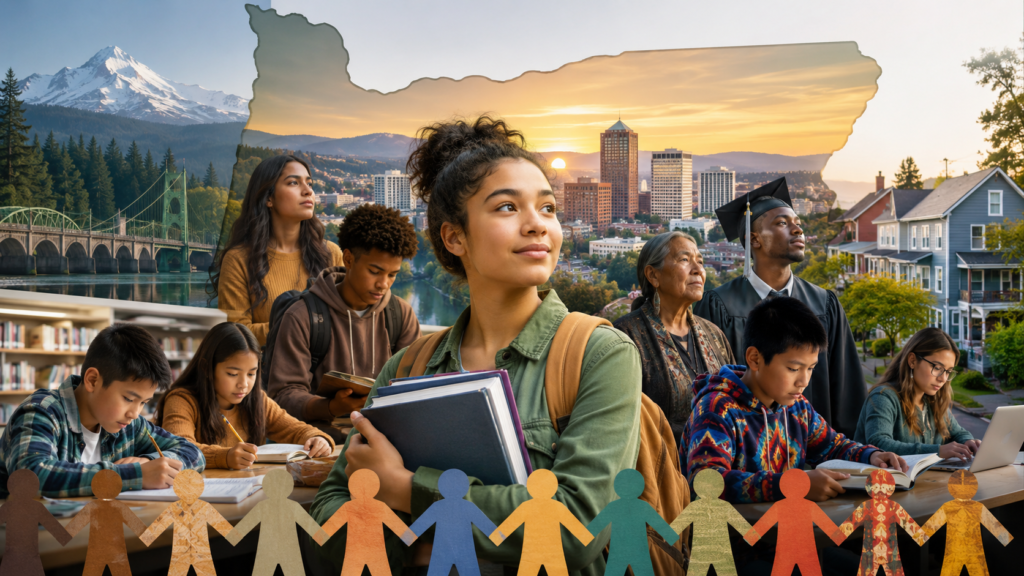
Young people frequently leave their hometowns to attend universities or acquire technical qualifications. After graduation, many remain in urban areas because professional opportunities, internships, and specialized career pathways are concentrated there.
This process can create a cycle of selective migration. Rural communities invest in educating young people, but some of their most qualified residents relocate permanently. The resulting loss of skilled workers may weaken local institutions and reduce the capacity of rural communities to develop economically.
Sociologically, education functions as a mechanism of social mobility, but access to its benefits is geographically unequal. Migration becomes a strategy through which individuals attempt to convert educational qualifications into employment, income, and social status.
2.3 Better Healthcare and Public Services on Rural to Urban Migration
Access to healthcare, childcare, public transportation, and other essential services also influences migration decisions. Some remote rural communities face long distances to hospitals, specialist doctors, diagnostic facilities, and emergency services.
Families managing chronic illnesses, older adults requiring specialized care, and parents seeking accessible childcare may consider relocation to areas with better infrastructure.
However, the availability of services does not guarantee affordability. Urban residents may have access to more hospitals and specialists but still face expensive insurance, high medical bills, and long waiting periods.
The sociological issue is therefore not merely the presence of services but their accessibility. Income, insurance coverage, transportation, and social class determine whether migrants can benefit from the resources available in cities.
2.4 Agricultural Mechanization and Economic Restructuring on Rural to Urban Migration
Technological change has transformed American agriculture. Modern machinery, automation, improved crop management, and large-scale farming enable agricultural enterprises to produce substantial output with fewer workers.
Although these developments can improve productivity, they may reduce demand for certain forms of manual labour. Small farmers and agricultural workers can also face pressure from fluctuating commodity prices, rising operating costs, and competition from larger enterprises.
Industrial restructuring creates similar challenges. When a rural factory closes or a major employer reduces its workforce, alternative employment may be limited.
Migration consequently becomes a response to changes in the economic organization of society. This illustrates a central sociological principle: individual life chances are shaped by broader structural transformations that individuals cannot control entirely.
2.5 Lifestyle Aspirations and Social Mobility on Rural to Urban Migration
Migration is not always driven by economic necessity. Some people move to metropolitan areas because they desire greater independence, cultural diversity, entertainment, professional networks, and new social experiences.
Cities often provide access to museums, universities, artistic communities, sporting events, restaurants, and specialized cultural institutions. Young adults may also perceive urban living as an opportunity to escape restrictive social expectations or develop identities that differ from those dominant in their hometowns.
From the perspective of symbolic interactionism, cities provide new environments in which individuals can develop identities through interaction with different social groups. These experiences may influence attitudes toward gender roles, family relationships, career choices, and cultural practices.
Nevertheless, urban life is not universally preferable. Some people value rural community connections, lower-density living, family proximity, and access to nature. Migration decisions reflect differences in personal aspirations, economic resources, and stages of life.
3. Sociological Theories Explaining Rural to Urban Migration
Several sociological approaches help explain why migration occurs and how it transforms American society.
Push-Pull Theory on Rural to Urban Migration
The push-pull approach explains migration through conditions that encourage people to leave one location and attract them to another. Limited employment, declining local industries, inadequate services, and agricultural insecurity may push people away from rural communities. Higher wages, universities, healthcare facilities, and professional opportunities may pull them toward cities.
However, migration is rarely the result of a single factor. A person may leave a rural town because of unemployment while simultaneously being attracted by the possibility of higher education. Family connections, housing costs, and the availability of transport can determine whether migration is feasible.
The theory is useful because it identifies the different pressures involved, but it can oversimplify migration if it ignores social class, racial discrimination, gender, and unequal access to resources.
Modernization Theory on Rural to Urban Migration
Modernization theory associates urbanization with the transition from traditional agricultural economies toward industrial and service-based economies. As societies develop technologically, employment and population may become increasingly concentrated in urban centres.
In the American context, industrialization transformed patterns of work, education, consumption, and family life. Cities became centres of economic production, political administration, and cultural innovation.
Nevertheless, modernization should not be interpreted as a process in which rural life is necessarily backward or urban life automatically superior. Rural communities can be economically innovative, socially cohesive, and technologically advanced. The important question is how resources and opportunities are distributed between different places.
Marxist and Conflict Perspectives on Rural to Urban Migration
Conflict theory emphasizes the role of economic power, class relations, and unequal ownership of resources. From this perspective, rural-to-urban migration must be understood within the organization of capitalist production.
The concentration of investment and employment in metropolitan regions can create unequal development. Workers may be compelled to move because economic opportunities are unavailable in their home communities. Meanwhile, businesses benefit from a mobile workforce that supplies labour to expanding industries.
Urban migrants can enter unequal labour markets in which wages, housing conditions, and employment security vary according to class, race, immigration status, and educational qualifications.
This approach highlights an important distinction: migration may increase individual opportunities while reproducing broader patterns of economic inequality.
4. Major Consequences of Rural to Urban Migration
4.1 Economic Growth and Labour Market Transformation on Rural to Urban Migration
One of the most significant consequences of Rural to Urban America is the contribution of migration to urban economic development. Migrants supply workers for construction, transportation, manufacturing, healthcare, hospitality, education, and other industries.
Population growth can increase consumer demand, support local businesses, expand tax revenues, and encourage investment in infrastructure. Migrants also bring skills, knowledge, entrepreneurial ambitions, and cultural experiences that can contribute to economic innovation.
For individuals, relocation may lead to higher earnings and improved career prospects. However, these benefits are unevenly distributed. Workers with professional qualifications may enter well-paid occupations, while those with limited formal education may depend on low-wage, physically demanding, or insecure employment.
Consequently, migration can support economic growth without ensuring that all migrants experience economic security.
4.2 Urbanization and Pressure on Housing on Rural to Urban Migration
A growing population creates demand for housing, transportation, water, sanitation, schools, and healthcare. When infrastructure development fails to keep pace with population growth, housing shortages and rising rents can become serious problems.
Migrants may initially settle in shared accommodation, older residential districts, or neighbourhoods with relatively affordable rents. Over time, competition for housing can increase living costs and force lower-income households to move farther from employment centres.
These challenges are particularly significant in metropolitan areas where housing construction is constrained or demand for centrally located properties is high.
The consequences are not limited to individual households. Housing inequality can reinforce residential segregation, concentrate poverty, and separate workers from educational and employment opportunities.
From a sociological perspective, urban space is not distributed equally. Wealthier households generally possess greater freedom to choose where they live, while low-income migrants may have fewer residential options.
4.3 Social Inequality and Class Differences on Rural to Urban Migration
Urban environments contain substantial economic diversity, but they also reveal sharp differences in wealth, occupation, education, and living standards.
Some migrants achieve upward social mobility through education, entrepreneurship, and professional employment. Others experience insecure jobs, inadequate wages, limited benefits, and difficulty meeting basic expenses.
Social class strongly influences these outcomes. People who arrive with financial savings, recognized qualifications, and established professional networks often have advantages over those who lack these resources.
Racial discrimination can create additional barriers. Historical patterns of residential segregation, unequal educational access, and discrimination in employment and housing have shaped opportunities for many minority communities in American cities.
The Great Migration demonstrates this complexity. African Americans who moved from the rural South frequently gained access to industrial employment and new political opportunities, yet many also confronted racial segregation, discriminatory housing practices, and unequal access to urban resources.
Migration can therefore change a person’s geographical location without eliminating the structural inequalities that shape their life chances.
4.4 Changes in Family Relationships and Community Life on Rural to Urban Migration

Migration often changes the organization of family life. Young adults may move away from parents and relatives, reducing everyday contact with extended family networks. Older adults who remain in rural communities may receive less practical support from younger family members.
At the same time, migrants may develop new support networks through workplaces, educational institutions, religious organizations, neighbourhood associations, and friendship groups.
Urban living can also influence marriage patterns, household structures, gender roles, and expectations regarding personal independence. Employment opportunities for women, for example, may strengthen their financial autonomy and bargaining power within households.
However, these changes do not follow a uniform pattern. Some migrants maintain strong rural connections through regular visits, financial support, telephone calls, and digital communication.
The sociological concept of social networks helps explain how people maintain belonging across geographical distances. Migration may weaken certain local relationships while creating new forms of community and translocal identity.
4.5 Psychological Stress and Social Isolation on Rural to Urban Migration
Relocation can involve emotional challenges, particularly when migrants lack established relationships in their new environment. Finding employment, securing housing, adapting to unfamiliar social norms, and managing financial pressures can create considerable stress.
Some migrants experience loneliness because they are separated from family members, childhood friends, and familiar community traditions. Others may encounter discrimination or feel excluded from established social groups.
Urban anonymity can offer freedom from restrictive social expectations, but it can also reduce the sense of familiarity associated with close-knit rural communities.
Nevertheless, cities also provide opportunities for friendship, cultural participation, professional development, and access to support services. The psychological consequences of migration depend on personal circumstances, economic security, community acceptance, and the availability of social support.
4.6 Cultural Diversity and Social Integration on Rural to Urban Migration
Rural-to-urban migration contributes to the cultural diversity of American cities. Migrants introduce regional traditions, cuisines, dialects, religious practices, music, and community celebrations into metropolitan environments.
Interactions among people from different backgrounds can encourage cultural exchange, creativity, and broader social understanding. Schools, workplaces, and public institutions become spaces in which individuals encounter different perspectives and experiences.
However, cultural diversity does not automatically produce social integration. Prejudice, racial discrimination, language barriers, and residential segregation may limit interaction between groups.
Urban sociology therefore examines how cities negotiate the relationship between cultural pluralism and social cohesion. Successful integration requires more than physical proximity; it also depends on equal opportunities, institutional inclusion, and meaningful participation in community life.
4.7 Demographic Decline in Some Rural Communities on Rural to Urban Migration
When substantial numbers of young and working-age residents leave a rural area, the remaining population may become older. Local businesses can lose customers, schools may face declining enrolment, and employers may struggle to recruit workers.
These effects can create a feedback loop: fewer residents reduce the viability of local services, which may encourage additional households to relocate.
However, rural population change is not uniform across the United States. Some communities experience decline, while others attract new residents because of recreation, employment, housing preferences, or proximity to metropolitan areas.
According to the USDA Economic Research Service, the nonmetropolitan population reached approximately 46.2 million in July 2024, representing around 14% of the national population under its county-based classification. Rural population growth since 2020 has been supported by net migration, although many nonmetropolitan counties continue to experience population losses.
These findings challenge the assumption that rural America is experiencing one uniform migration pattern. The future of individual communities depends on local economic conditions, demographic composition, infrastructure, and connections to surrounding regions.
5. Contemporary Trends: Is Rural to Urban Migration Still Dominant?
Although rural-to-urban migration has been central to American development, contemporary migration is more complex than a simple movement from countryside to city.
Remote work expanded the possibility of earning an urban-level income while living in a smaller town or rural community. During the COVID-19 pandemic, concerns about urban living and increased flexibility in employment contributed to a temporary shift toward rural destinations. The USDA documented increased rural net migration during 2020–2022, including movement from metropolitan to nonmetropolitan areas.
Housing affordability, retirement, family circumstances, and lifestyle preferences also influence decisions to leave metropolitan areas. Some households relocate to suburbs or rural communities while continuing to participate in urban labour markets.
The distinction between rural and urban life is increasingly blurred. The U.S. Census Bureau has highlighted how suburban development, commuting patterns, and expanding metropolitan boundaries complicate the traditional division between rural and urban settlements.
At the same time, cities continue to attract people seeking specialized jobs, higher education, and services that are difficult to access in remote areas.
The contemporary pattern is therefore best understood as a dynamic relationship involving rural-to-urban, urban-to-rural, and rural-to-rural migration. Rather than assuming that everyone moves in the same direction, sociologists examine how employment, housing, technology, and life-course transitions shape different forms of mobility.
6. Policy Responses to the Challenges of Migration
Addressing the consequences of Rural to Urban America requires policies that improve opportunities in both rural and urban communities.
Rural development should focus on diversifying local economies, expanding broadband access, supporting small businesses, improving schools, and strengthening healthcare infrastructure. Such measures can enable residents to remain in their communities by choice rather than leaving because essential opportunities are unavailable.
Urban policy must address affordable housing, accessible public transportation, fair employment practices, and the availability of education and social services. Migrants benefit when they can access stable employment and participate fully in community life.
Regional planning is also essential. Rural towns, suburbs, and metropolitan centres are economically connected through labour markets, transportation, supply chains, and public services. Investments that strengthen these connections can create opportunities across geographical boundaries.
Finally, policymakers should recognize the diversity of migrants. Young adults seeking education, agricultural workers facing economic insecurity, families seeking healthcare, and professionals working remotely have different needs. Effective policy should respond to these differences rather than treating migration as a single, uniform process.
Conclusion on Rural to Urban Migration
Migration from rural to urban America is a major sociological process shaped by economic restructuring, educational opportunities, technological change, public services, and aspirations for social mobility. It has helped transform the United States by supplying labour, supporting urban economic growth, increasing cultural diversity, and changing patterns of family and community life.
At the same time, migration can produce significant challenges, including housing insecurity, social isolation, unequal employment opportunities, and demographic decline in some rural communities. Its benefits and costs are distributed unevenly according to social class, race, education, gender, and access to resources.
The sociological significance of Rural to Urban America lies in the connection between individual decisions and wider social structures. People move to pursue better lives, but their outcomes depend on the opportunities and inequalities embedded in the places they leave and the places they enter.
Ultimately, migration should not be understood simply as a movement of people from one geographical location to another. It is a process that reshapes communities, redistributes opportunities, and reflects the changing organization of American society. Sustainable development requires creating conditions in which people can choose where to live and work without being forced by inadequate services, economic insecurity, or persistent inequality to abandon their communities.
Frequently Asked Questions (FAQs) on Rural to Urban Migration
1. What is Rural to Urban America?
Rural to Urban America refers to the movement of people from rural communities and agricultural areas to cities and metropolitan regions in the United States, often in search of jobs, education, healthcare, and better living standards.
2. What are the main causes of Rural to Urban America migration?
The main causes of migration of Rural to Urban America include employment opportunities, access to higher education, better healthcare, agricultural mechanization, industrial restructuring, and aspirations for improved living standards.
3. How does rural to urban migration affect the American economy?
It supplies labour to urban industries, increases consumer demand, supports business development, and can contribute to innovation. However, its benefits depend on employment quality and access to economic resources.
4. What is the Great Migration in American history?
The Great Migration was the movement of millions of African Americans, particularly between approximately 1910 and 1970, from the South to northern, midwestern, and western regions in search of improved opportunities and greater freedom from racial oppression.
5. How does migration affect rural communities?
Migration can reduce the working-age population, weaken local businesses, lower school enrolment, and increase population ageing. However, remittances, return migration, and new economic connections can also benefit rural communities.
6. What are the major social consequences of urban migration?
Major consequences include changing family relationships, cultural diversity, social mobility, housing pressure, class inequality, and the development of new social networks.
7. Does rural-to-urban migration always improve living standards?
No. Although migration can provide access to better jobs and services, high housing costs, insecure employment, discrimination, and social isolation may reduce its benefits.
8. How does education influence Rural to Urban America?
Young people frequently move to cities to attend universities, acquire specialized skills, and access professional employment. This can improve individual mobility while contributing to the loss of educated residents in some rural areas.
9. What is the push-pull theory of migration?
Push-pull theory explains migration through conditions that encourage people to leave one place and attract them to another, such as limited rural employment and greater urban career opportunities.
10. How does rural-to-urban migration affect family structures?
It may separate family members geographically, increase individual independence, alter gender roles, and create new household arrangements while encouraging families to maintain relationships across distances.
11. What role does technology play in rural-to-urban migration?
Agricultural mechanization can reduce demand for farm labour, while digital technology and remote work can make it possible for some people to live in rural areas without sacrificing urban employment opportunities.
12. How does migration contribute to urban inequality?
Migrants enter labour and housing markets where access to income, secure employment, and residential opportunities varies according to social class, education, race, and financial resources.
13. Why do some Americans move from cities back to rural areas?
Some move for affordable housing, remote-work flexibility, family connections, retirement, access to nature, or a preference for less densely populated communities.
14. What can governments do to reduce the negative consequences of migration?
Governments can improve rural employment, education, broadband, and healthcare while expanding affordable urban housing, public transportation, fair employment opportunities, and migrant support services.
15. Why is Rural to Urban America important in sociology?
It demonstrates how economic structures, social inequality, education, technology, and individual aspirations interact to shape population movement and transform communities.
References and Further Reading
- U.S. Department of Agriculture, Economic Research Service — Population and Migration.
- U.S. Census Bureau — Changes to Population Distribution and Commuting Patterns Blur the Line Between Rural and Urban.
- U.S. Department of Agriculture, Economic Research Service — Net Migration Spurs Renewed Growth in Rural Areas of the United States.
- U.S. Department of Agriculture, Economic Research Service — Rural America at a Glance: 2024 Edition.