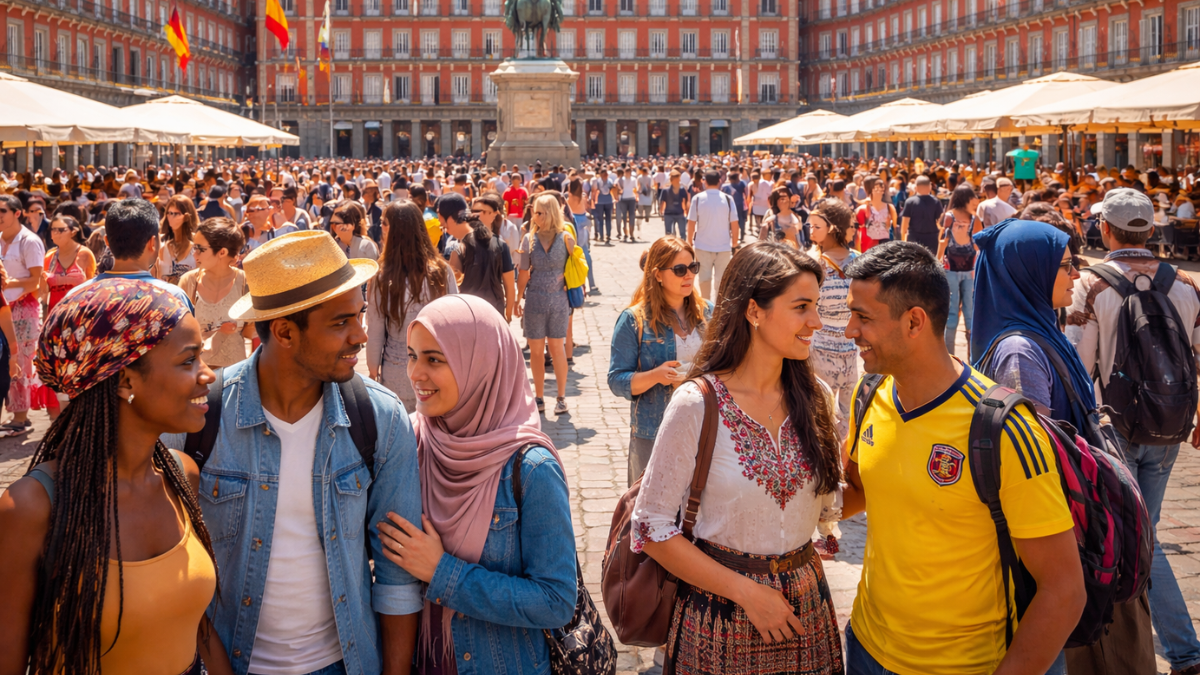
Migration has become one of the most transformative forces shaping contemporary societies across the globe. In Southern Europe, Spain stands as a particularly significant case. Over the past four decades, Spain has transitioned from being a country of emigration to one of immigration. This transformation has deeply influenced its demographic structure, labor market, political debates, cultural identity, and social institutions. The issue of migration and multiculturalism in Spanish society is not merely a demographic phenomenon; it is a complex sociological process that involves integration, identity formation, social cohesion, inequality, and power relations.
Understanding migration in Spain requires examining its historical trajectory, economic structures, regional diversity, and the evolving nature of multiculturalism in the European context. From North African labor migrants to Latin American domestic workers and Eastern European construction laborers, Spain’s migration patterns have produced a new social mosaic that continues to redefine Spanish society.
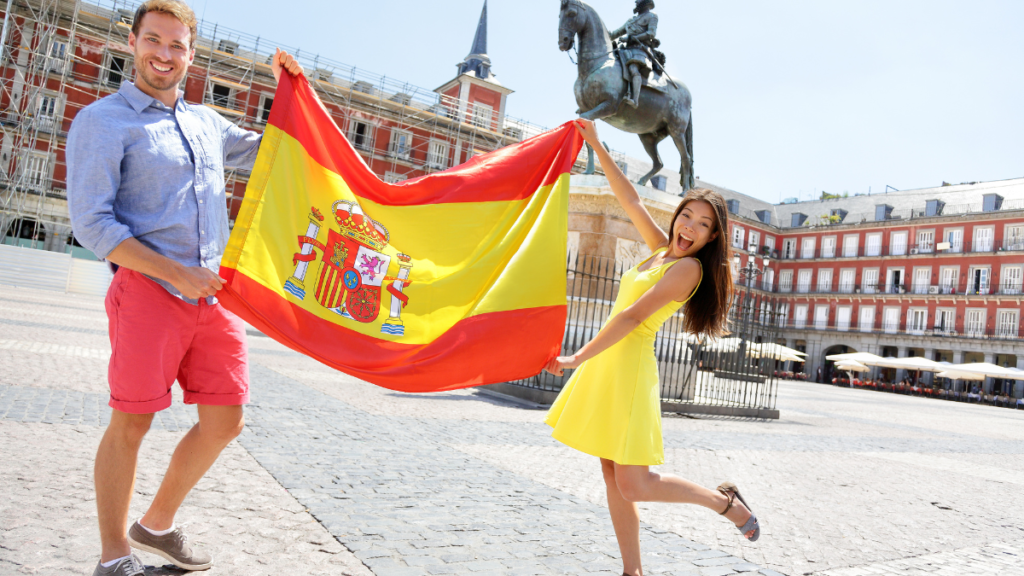
Explore Multiculturalism in Spanish Society through a sociological lens, examining migration, identity, integration, inequality, and cultural diversity shaping modern Spain.
Historical Context: From Emigration to Immigration
For much of the twentieth century, Spain was primarily a country of emigration. During the dictatorship of Francisco Franco and the economic difficulties of the mid-1900s, many Spaniards migrated to countries such as France, Germany, Switzerland, and Latin American nations in search of employment and stability. Migration was viewed as an economic necessity.
However, after Spain’s democratic transition in the late 1970s and its integration into the European Union in 1986, the country experienced rapid economic growth. By the 1990s and early 2000s, Spain had become a destination for migrants rather than a source. Economic expansion in construction, tourism, agriculture, and domestic services created labor shortages that attracted migrants from Morocco, Romania, Ecuador, Colombia, and other regions.
This reversal reshaped Spanish society. Migration was no longer something Spaniards experienced abroad; it became a visible reality within cities like Madrid, Barcelona, Valencia, and Seville.
Sociological Theories and Migration in Spain
Several sociological theories help explain migration and multiculturalism in Spanish society.
Structural-functionalism views migration as a response to labor market demands. Migrants fill economic gaps in sectors that local populations may avoid. In Spain, migrants have often occupied low-wage, precarious positions in agriculture, domestic work, and hospitality.
Conflict theory, on the other hand, emphasizes inequality and competition over resources. From this perspective, migration may generate tensions related to employment, housing, welfare benefits, and cultural recognition. Economic crises, such as the 2008 financial crash, intensified these tensions in Spain, as unemployment rose dramatically and anti-immigrant sentiments gained visibility.
Symbolic interactionism focuses on everyday interactions and identity construction. In Spanish neighborhoods, schools, and workplaces, multicultural coexistence is negotiated daily. Cultural symbols, language practices, and religious expressions become sites of interaction and sometimes conflict.
These theoretical lenses reveal that migration is not only about population movement but also about social integration, identity politics, and institutional adaptation.
Demographic Transformation and Urban Diversity
Migration has significantly altered Spain’s demographic composition. Immigrant populations have contributed to population growth and partially mitigated aging trends. In many urban areas, multicultural neighborhoods have emerged where diverse languages, cuisines, and cultural traditions coexist.
Cities such as Madrid and Barcelona reflect this transformation. Markets display Latin American products, halal butcher shops serve Muslim communities, and Eastern European cultural associations organize festivals. These visible signs of multiculturalism challenge traditional notions of Spanish national identity, which historically emphasized Catholicism and linguistic unity.
At the same time, rural areas have also experienced migration, particularly in agricultural regions like Andalusia and Murcia. Migrant labor has become essential for harvesting crops, yet migrants in rural areas often face social isolation and limited access to services.
Demographically, migration has diversified Spanish society along ethnic, religious, and linguistic lines. This diversity has enriched cultural life but also required institutions to adapt.
Multiculturalism and National Identity
The concept of multiculturalism refers to the coexistence of diverse cultural groups within a society and the policies that recognize and accommodate that diversity. In Spain, multiculturalism interacts with an already complex internal diversity, including regional identities such as Catalan, Basque, and Galician communities.
Spanish national identity has historically been shaped by a strong Catholic tradition and linguistic dominance of Castilian Spanish. The arrival of Muslim migrants, particularly from North Africa, has reintroduced visible Islamic presence, reconnecting Spain with its historical past during Al-Andalus while also generating debates about religious pluralism.
Latin American migrants often integrate more easily linguistically due to shared language, yet they still encounter racial and class-based discrimination. Eastern European migrants have formed distinct communities, sometimes perceived as culturally distant.

The sociological challenge lies in balancing cultural recognition with social cohesion. Should Spain adopt assimilationist policies that expect migrants to conform to dominant norms? Or should it embrace a multicultural model that promotes cultural pluralism?
In practice, Spain has adopted a hybrid approach, encouraging integration through language acquisition and employment while allowing cultural expressions within legal frameworks.
Education and Second-Generation Integration
Schools are central institutions in the integration process. The children of migrants represent the future of multicultural Spain. In classrooms across the country, students from Moroccan, Romanian, Colombian, and Senegalese backgrounds study alongside Spanish peers.
Educational integration involves language support programs, intercultural education initiatives, and anti-discrimination policies. However, disparities persist. Research indicates that children of migrants often face higher dropout rates and limited access to higher education compared to native-born Spaniards.
Sociologically, this reflects structural inequality rather than cultural deficiency. Economic precarity, residential segregation, and limited parental educational capital contribute to unequal outcomes.
Second-generation migrants often navigate hybrid identities. They may feel culturally Spanish while maintaining connections to their parents’ heritage. Identity negotiation can be complex, particularly in contexts where discrimination reinforces feelings of exclusion.
Labor Market Segmentation and Inequality
Migration and multiculturalism in Spanish society are closely linked to labor market structures. Migrants frequently occupy low-skilled, low-paid, and precarious jobs. Domestic work, agriculture, construction, and tourism rely heavily on migrant labor.
This labor segmentation reflects broader patterns of global capitalism. Migrants are integrated economically but often excluded socially. Temporary contracts, informal employment, and limited union representation contribute to vulnerability.
The 2008 economic crisis exposed these inequalities. Migrants were disproportionately affected by unemployment and housing foreclosures. Some returned to their countries of origin, while others remained despite hardship.
From a sociological perspective, labor market inequality shapes perceptions of multiculturalism. When migrants are seen primarily as economic instruments rather than full citizens, social cohesion may weaken.
Media Representation and Public Discourse
Media plays a powerful role in shaping public attitudes toward migration. Spanish media coverage has alternated between humanitarian narratives and security-focused discourses, particularly concerning irregular migration across the Mediterranean.
Images of boats arriving on the southern coast generate emotional reactions and political debates. Right-wing political actors have used migration as a mobilizing issue, framing it as a threat to national identity and economic stability.
However, civil society organizations, religious groups, and grassroots movements have advocated solidarity and human rights. Public opinion in Spain has generally been more moderate compared to some other European countries, though polarization has increased in recent years.
Sociologically, discourse influences policy and everyday interactions. Narratives of threat can intensify prejudice, while narratives of contribution can foster inclusion.
Policy Responses and Integration Models
Spanish migration policy operates within the broader framework of the European Union. Border control, asylum procedures, and labor migration regulations are shaped by EU agreements.
At the national and regional levels, integration policies focus on language training, employment access, anti-discrimination laws, and social services. Municipal governments often play a key role in practical integration efforts.
Spain has periodically implemented regularization programs, granting legal status to undocumented migrants who meet certain criteria. These measures reflect pragmatic responses to labor market realities but also generate political controversy.
The effectiveness of integration policies depends on resource allocation, political will, and community participation.
Religion, Culture, and Everyday Multiculturalism
Religion has become a visible dimension of multiculturalism in Spanish society. The presence of mosques, evangelical churches serving Latin American communities, and Orthodox Christian congregations reflects growing religious diversity.
Negotiating public expressions of religion, such as Islamic dress or dietary requirements, has required institutional adaptation. Debates over secularism, religious education, and public space continue.
Everyday multiculturalism, however, often unfolds quietly. Shared workplaces, intermarriages, neighborhood friendships, and cultural festivals create spaces of interaction. Food, music, and sports serve as bridges across cultural boundaries.
Sociologists emphasize that integration is not a one-sided process. Host societies also change. Spanish cuisine, music, and urban culture increasingly reflect global influences.
Challenges and Future Directions
Despite progress, migration and multiculturalism in Spanish society face ongoing challenges. Rising housing costs in urban canters disproportionately affect migrant communities. Youth unemployment and precarious work remain significant issues.

Political polarization may intensify debates around migration. Climate change could generate new migration flows, further testing institutional capacities.
At the same time, demographic aging makes migration economically necessary. Spain’s future workforce will increasingly include people of migrant origin. Social cohesion will depend on inclusive policies that promote equal opportunities and civic participation.
Multiculturalism in Spain is not a temporary phase but a structural reality. The key sociological question is whether diversity will deepen inequality or enrich democratic pluralism.
Conclusion
Migration and multiculturalism in Spanish society represent one of the most significant social transformations of the past decades. From its shift from emigration to immigration, Spain has experienced demographic diversification, cultural pluralism, and institutional adaptation.
Sociologically, migration is not merely about border crossings. It involves labor markets, identity negotiations, power structures, media narratives, and policy frameworks. Multiculturalism challenges traditional conceptions of national identity while offering opportunities for cultural enrichment and economic vitality.
Spain’s experience demonstrates that integration is a dynamic, ongoing process. The success of multicultural society depends not only on migrants’ adaptation but also on structural equality, political inclusiveness, and everyday solidarity.
In the long term, migration may redefine what it means to be Spanish. Rather than eroding national identity, multiculturalism may transform it into a more inclusive and pluralistic form, reflective of Spain’s historical complexity and contemporary realities.
FAQs on Multiculturalism in Spanish Society
1. What is Multiculturalism in Spanish Society?
Multiculturalism in Spanish Society refers to the coexistence of diverse cultural, ethnic, religious, and linguistic communities within Spain, shaped largely by migration and globalization.
2. How did Multiculturalism in Spanish Society develop?
Multiculturalism in Spanish Society developed mainly after the 1990s when Spain shifted from being a country of emigration to one of immigration, attracting migrants from Latin America, North Africa, and Eastern Europe.
3. What role does migration play in Multiculturalism in Spanish Society?
Migration is the foundation of Multiculturalism in Spanish Society, as it introduces new cultures, religions, languages, and traditions into the social fabric.
4. How has Multiculturalism in Spanish Society affected national identity?
Multiculturalism in Spanish Society has expanded the definition of Spanish identity, challenging traditional ideas centered on Catholicism and linguistic uniformity.
5. Is Multiculturalism in Spanish Society linked to economic change?
Yes, Multiculturalism in Spanish Society is closely connected to labor market needs, especially in agriculture, tourism, domestic work, and construction sectors.
6. What challenges does Multiculturalism in Spanish Society face?
Multiculturalism in Spanish Society faces challenges such as social inequality, discrimination, housing segregation, labor exploitation, and political polarization.
7. How does education influence Multiculturalism in Spanish Society?
Schools play a central role in Multiculturalism in Spanish Society by promoting intercultural dialogue, language learning, and integration of second-generation migrants.
8. How does religion shape Multiculturalism in Spanish Society?
Religious diversity, including Islam, Evangelical Christianity, and Orthodox Christianity, has become an important dimension of Multiculturalism in Spanish Society.
9. What is the difference between assimilation and Multiculturalism in Spanish Society?
Assimilation expects migrants to adopt dominant cultural norms, while Multiculturalism in Spanish Society promotes cultural pluralism and mutual adaptation.
10. How do media representations impact Multiculturalism in Spanish Society?
Media narratives can either support inclusive Multiculturalism in Spanish Society or contribute to fear and prejudice through negative portrayals.
11. How did the 2008 economic crisis affect Multiculturalism in Spanish Society?
The crisis intensified unemployment and social tensions, testing the resilience of Multiculturalism in Spanish Society.
12. What role do local governments play in Multiculturalism in Spanish Society?
Municipal governments often implement integration programs, social services, and intercultural initiatives that strengthen Multiculturalism in Spanish Society.
13. How does labor market segmentation influence Multiculturalism in Spanish Society?
Economic inequality and concentration of migrants in low-paid sectors shape experiences of Multiculturalism in Spanish Society.
14. Is Multiculturalism in Spanish Society comparable to other European countries?
While similar to other European contexts, Multiculturalism in Spanish Society is unique due to Spain’s historical diversity and relatively recent immigration history.
15. What is the future of Multiculturalism in Spanish Society?
The future of Multiculturalism in Spanish Society depends on inclusive policies, equal opportunities, and social cohesion in an increasingly diverse population.