Introduction on Globalization and Development
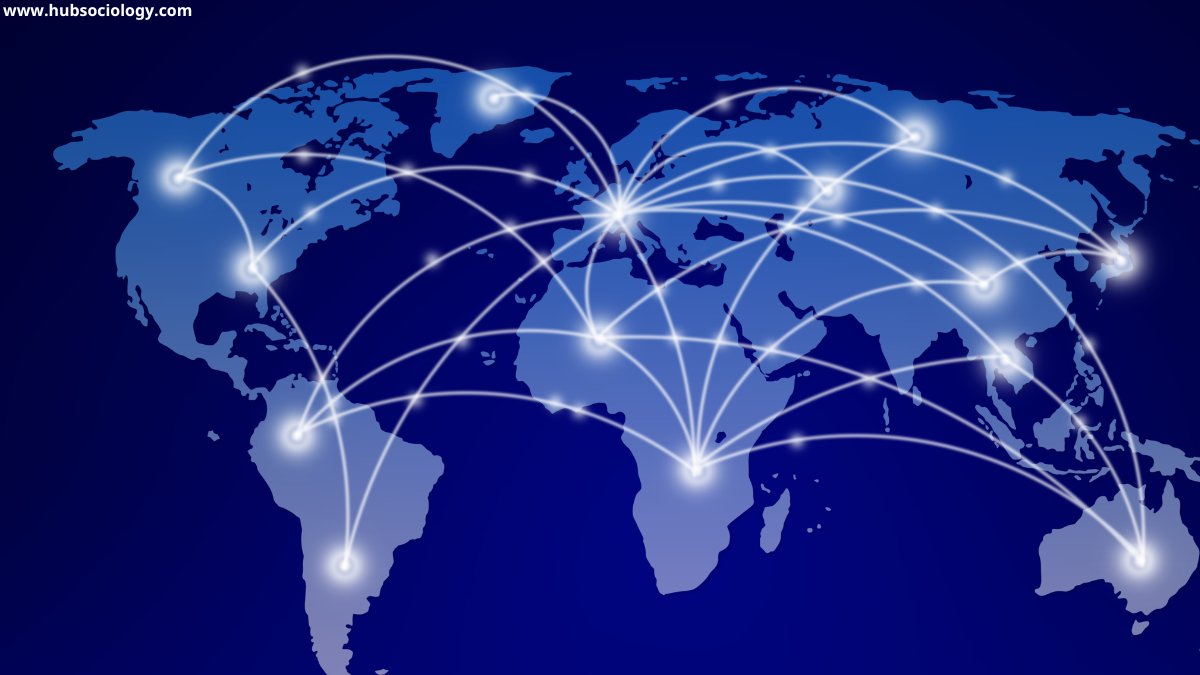
Globalization and development are among the most debated concepts in contemporary sociology. Both terms represent complex, interlinked processes shaping the modern world. While development traditionally refers to the economic, social, and political progress of nations, globalization signifies the increasing interconnectedness of societies through trade, communication, culture, and technology. From a sociological perspective, globalization is not merely an economic phenomenon but a social process that transforms the structures, institutions, and cultures of societies. The interaction between globalization and development brings both opportunities and challenges—stimulating economic growth and cultural exchange on one hand, and deepening inequality and dependency on the other.
This article explores the sociological dimensions of globalization and development, focusing on theoretical perspectives, impacts on developing societies, and critical debates surrounding their relationship.
Table of Contents
1. Understanding Globalization: A Sociological Concept
Sociologically, globalization is the process through which social life becomes increasingly shaped by global forces rather than local or national ones. It involves the flow of goods, capital, people, ideas, and cultural practices across borders. According to sociologist Anthony Giddens, globalization is “the intensification of worldwide social relations which link distant localities in such a way that local happenings are shaped by events occurring many miles away and vice versa.”
Globalization manifests in multiple dimensions:
- Economic globalization — the integration of world markets and the rise of multinational corporations.
- Cultural globalization — the diffusion of cultural symbols, values, and lifestyles through media, entertainment, and technology.
- Political globalization — the formation of supranational institutions (like the UN, WTO, and IMF) influencing national policies.
- Technological globalization — the revolution in communication and transport systems, enabling instant global connectivity.
Sociologically, globalization alters the patterns of social organization, relationships, and power. It reshapes identities, consumption habits, education systems, and even family structures.
2. Development: Beyond Economic Growth
Development, in sociological terms, extends beyond economic prosperity. It encompasses improvements in the quality of life, social justice, equality, education, health, and empowerment. Early development theories, such as modernization theory, equated development with Westernization and industrialization. However, sociologists later challenged this view, emphasizing the social and cultural dimensions of progress.

From a sociological standpoint, development involves:
- Structural changes in society (urbanization, education, and employment patterns).
- Social mobility and reduction of inequalities.
- Cultural adaptation to new technologies and institutions.
- Human empowerment and participation in governance.
In contemporary times, the human development approach—pioneered by Amartya Sen—views development as the expansion of people’s freedoms and capabilities, rather than mere GDP growth.
3. Theoretical Perspectives on Globalization and Development
a. Modernization Theory
Modernization theorists like W.W. Rostow viewed globalization as a positive force for development. They argued that contact with global markets, technologies, and institutions helps traditional societies modernize by adopting industrial and democratic models. Globalization, from this lens, spreads progress, rationality, and innovation.
b. Dependency Theory
Dependency theorists, such as Andre Gunder Frank and Samir Amin, offered a critical perspective. They argued that globalization perpetuates underdevelopment in the Global South. The global capitalist system creates a core-periphery structure where rich nations exploit poor nations through unequal trade and resource extraction. Development in the Global North thus depends on the underdevelopment of the South.
c. World-Systems Theory
Immanuel Wallerstein expanded this critique by proposing the world-systems theory, where the world economy is divided into core, semi-periphery, and periphery nations. According to him, globalization maintains a global hierarchy that limits the development of peripheral countries by keeping them dependent on the core for capital and technology.
d. Globalization Theories
Sociologists like Roland Robertson and Manuel Castells emphasize the cultural and network dimensions of globalization. Castells, in his “Network Society” concept, highlights how global information flows create new forms of inequality and social stratification. Robertson introduces the idea of globalization—the coexistence of global and local forces shaping social development uniquely in each context.
4. Globalization as a Driver of Development
Despite criticisms, globalization has undeniably contributed to significant developmental changes worldwide.
- Economic Growth and Technology Transfer:
Globalization allows developing countries to access global markets, attract foreign investments, and benefit from technological diffusion. Countries like India and China have utilized globalization to achieve rapid industrialization and IT-driven growth. - Cultural Exchange and Social Awareness:
Exposure to global media and ideas has transformed cultural values, increased awareness of human rights, gender equality, and environmental issues, and encouraged social reforms. - Educational and Skill Development:
Global institutions and educational exchanges have expanded opportunities for learning, research, and innovation, fostering human capital development. - Global Solidarity and Movements:
Globalization facilitates transnational activism for issues such as climate change, social justice, and sustainable development. NGOs and civil societies collaborate across borders for humanitarian and environmental causes.
5. The Dark Side: Globalization and Inequality
However, sociologists also highlight the unequal benefits of globalization. The process often favors developed nations and global elites, leaving behind marginalized communities.
- Economic Inequality:
Globalization deepens the gap between rich and poor nations. The benefits of global trade and investment are unevenly distributed, often concentrating wealth in urban centers and among transnational corporations. - Cultural Homogenization:
The spread of Western consumer culture threatens local traditions and identities, leading to cultural domination or McDonaldization—a term coined by George Ritzer describing the standardization of culture through global capitalism. - Loss of Sovereignty:
Global institutions like the IMF or WTO influence domestic economic policies, reducing the autonomy of developing nations to design their development strategies. - Environmental Degradation:
Global industrialization accelerates resource depletion and pollution. Developing countries often bear the brunt of environmental harm while striving for growth. - Social Displacement and Labor Exploitation:
Global labor markets create new forms of exploitation. Migrant laborers, sweatshop workers, and informal sector employees face insecure conditions due to global competition.
6. Globalization, Development, and Social Change in Developing Societies
In developing nations, globalization has triggered rapid urbanization, shifting labor patterns, and changing lifestyles. Traditional communities are exposed to global cultural flows, leading to a hybridization of identities.
For example:
- In India, globalization has boosted sectors like IT and services but also widened the rural-urban divide.
- In Africa and Latin America, it has encouraged political democratization but reinforced dependency on global markets.
- East Asian countries like South Korea have demonstrated how controlled integration with the global economy can lead to sustainable development.
Thus, the sociological impact of globalization varies across societies depending on historical, cultural, and political contexts.
7. Globalization, Development, and the Future: Towards Sustainable Globalization
Modern sociology emphasizes the need for inclusive and sustainable globalization. Development should not merely focus on economic expansion but on social equity, environmental protection, and cultural diversity. The United Nations’ Sustainable Development Goals (SDGs) reflect this vision by linking globalization with poverty eradication, gender equality, and climate action.
Sociologists advocate for:
- Democratizing global governance to ensure fair representation of developing nations.
- Promoting ethical global trade and labor practices.
- Strengthening local cultures through glocalization instead of cultural dominance.
- Ensuring technological access and digital literacy for all.
Globalization, when guided by human-centered development, can become a force for global solidarity rather than global inequality.
Conclusion on Globalization and Development
From a sociological perspective, globalization and development are intertwined processes that shape the structures and meanings of modern life. While globalization can act as a catalyst for progress by enabling knowledge exchange, innovation, and economic growth, it also poses challenges of inequality, dependency, and cultural erosion. Development in the age of globalization, therefore, requires balancing global integration with local empowerment.

Sociology reminds us that true development is not only about material progress but about enhancing human dignity, equity, and social justice. The task ahead lies in shaping globalization into a socially responsible and inclusive process—one that bridges rather than widens the divide between the global North and South, and fosters a humane and sustainable world order.
Do you like this Article ? You Can follow as on :-
Facebook – https://www.facebook.com/hubsociology
Whatsapp Channel – https://whatsapp.com/channel/0029Vb6D8vGKWEKpJpu5QP0O
Gmail – hubsociology@gmail.com
Topic Related Questions on Globalization and Development
5 Marks Questions on Globalization and Development (Short Answer Type)
- Define globalization in sociological terms.
- What is the relationship between globalization and development?
- Mention two positive effects of globalization on developing countries.
- What is meant by cultural globalization?
- Explain the concept of glocalization with an example.
- What is dependency theory in relation to globalization?
- State two negative impacts of globalization on traditional societies.
- What is meant by economic globalization?
- Write a short note on technological globalization.
- How has globalization influenced education and employment?
10 Marks Questions on Globalization and Development (Short Essay Type)
- Explain the sociological perspective of globalization and its dimensions.
- Discuss how globalization affects the social structure and culture of developing countries.
- Analyze the relationship between globalization and inequality.
- Examine the major criticisms of globalization from a sociological point of view.
- Compare the views of modernization theory and dependency theory on development.
- How does globalization influence the process of development in India?
- Discuss the role of information and communication technology (ICT) in global development.
- Explain Immanuel Wallerstein’s World-Systems Theory and its relevance to globalization.
- Discuss how globalization has transformed the nature of work and labor.
- What are the sociological challenges of globalization for sustainable development?
15 Marks Questions on Globalization and Development (Long Answer / Analytical Type)
- Critically analyze the impact of globalization on social and economic development in the Global South.
- Evaluate globalization as both a driver and inhibitor of development in contemporary societies.
- Discuss major sociological theories explaining globalization and their implications for development.
- Examine how globalization has reshaped cultural identities and local traditions.
- Analyze the relationship between globalization, inequality, and social justice with suitable examples.
- How do sociologists explain the dual nature of globalization — as a process of integration and domination?
- Discuss the role of globalization in shaping modern development strategies and policies.
- Evaluate the positive and negative consequences of globalization for developing nations.
- Explain how globalization affects national sovereignty and state policy-making in the era of global capitalism.
- “Globalization has made the world smaller but inequalities larger.” — Discuss this statement with sociological evidence.
1 thought on “Globalization and Development: A Sociological Perspective”