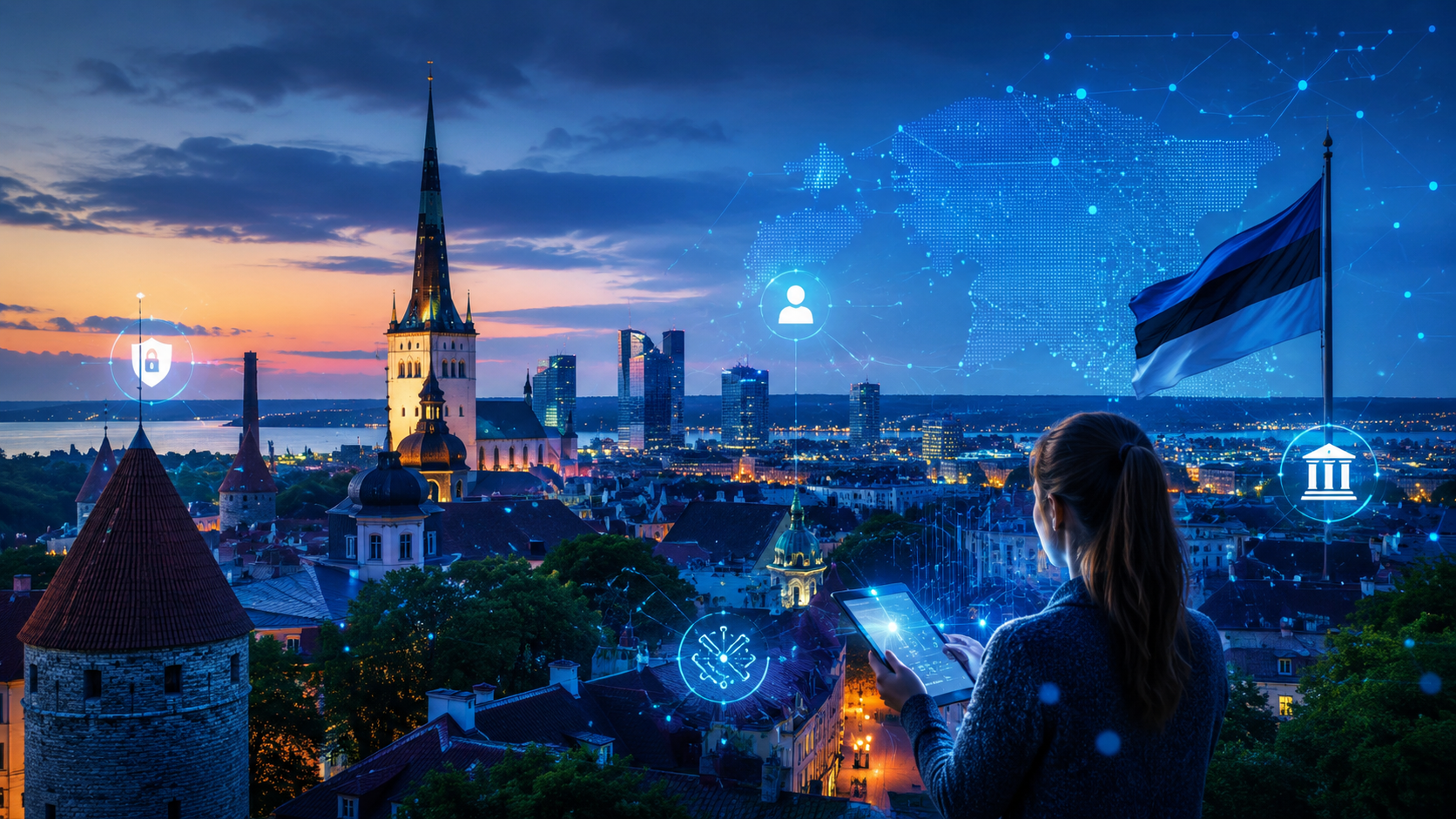
Introduction on Digital Society and Technology in Estonia
In the twenty-first century, the relationship between society and technology has become one of the central themes of sociology. Countries across the world are transforming through digitalization, artificial intelligence, online governance, and virtual communication. Among all modern nations, Estonia has emerged as one of the most remarkable examples of a digital society. Often described as the world’s most advanced digital nation, Estonia has built a society where government services, education, business, healthcare, banking, and even voting are deeply connected with technology.
From a sociological perspective, Estonia provides an important case study of how digital transformation changes social institutions, social interaction, citizenship, inequality, identity, and everyday life. The Estonian experience demonstrates both the opportunities and challenges of technological modernization. Digital technology has increased efficiency, transparency, and participation, but it has also created concerns about surveillance, cybersecurity, digital inequality, and dependency on technological systems.

This article explores the development of digital society and technology in Estonia from a sociological perspective. It examines how Estonia became a digital nation, how technology influences social structures, and what lessons other societies can learn from the Estonian model.
Understanding Digital Society
A digital society refers to a society where digital technologies significantly influence communication, economy, governance, education, culture, and social relationships. In such societies, internet-based systems become integrated into daily life. Social interaction increasingly occurs through online platforms, and public institutions use digital infrastructures to manage services.
Sociologists study digital society because technology does not merely change machines or communication methods; it transforms human behavior and social organization. Technology affects social norms, power structures, employment patterns, family life, political participation, and cultural identity.
In Estonia, digitalization is not limited to urban elites or technology companies. Instead, it has become part of the national identity. Citizens use digital IDs, online voting systems, e-governance platforms, and digital healthcare records in their daily lives. The state itself functions through interconnected digital systems.
Historical Background of Estonia’s Digital Transformation
To understand Estonia’s digital success, it is necessary to examine its historical background. Estonia regained independence from the former Soviet Union in 1991. After independence, the country faced economic and administrative challenges. Rather than rebuilding traditional bureaucratic systems, Estonia decided to modernize rapidly through digital innovation.
The government recognized that technology could help a small country overcome limitations of population and resources. During the 1990s, Estonia invested heavily in internet infrastructure, computer education, and digital governance.
One of the most important initiatives was the “Tiger Leap” program, launched in 1996. This project aimed to introduce computers and internet access in schools. The program helped create a digitally literate generation and reduced technological gaps between urban and rural regions.
Estonia later introduced national digital identity cards, electronic banking systems, and e-government services. These reforms transformed the relationship between citizens and the state. Sociologically, this marked a shift from traditional bureaucratic governance to network-based governance.
E-Governance and Digital Citizenship
One of the most significant aspects of Estonia’s digital society is e-governance. E-governance refers to the use of digital technology in public administration and government services.

In Estonia, citizens can complete most government-related activities online, including:
- Paying taxes
- Accessing healthcare records
- Registering businesses
- Applying for government services
- Voting in elections
- Signing legal documents digitally
This system has changed the nature of citizenship. Traditional citizenship often involved physical interaction with government offices and paperwork. In Estonia, citizenship has become increasingly digital.
Digital identity cards play a major role in this transformation. Every citizen possesses a secure digital identity that allows access to online services. This creates what sociologists call “digital citizenship,” where participation in society occurs through technological systems.
Sociological Significance of Digital Citizenship
Digital citizenship in Estonia has several sociological implications:
1. Increased Civic Participation
Online voting allows greater political participation, especially among young people and overseas citizens. Estonia became the first country to introduce nationwide internet voting.
Technology reduces barriers to participation and increases convenience. Citizens can interact with the state more efficiently, which strengthens trust in institutions.
2. Reduction of Bureaucracy
Max Weber described bureaucracy as a rational but often slow and complex administrative system. Estonia’s digital governance reduces paperwork, waiting times, and corruption opportunities.
Digital systems make administrative procedures transparent and efficient, changing citizens’ experiences with authority.
3. State-Citizen Relationship
Technology has transformed the relationship between the state and individuals. Citizens expect quick digital services and continuous online access. The state becomes more service-oriented rather than purely administrative.
However, this also increases dependence on technological systems. If digital systems fail, social disruption may occur.
Technology and Education in Estonia
Education has been central to Estonia’s digital development. The government understood that technological modernization required digital literacy among citizens.
Estonian schools integrated computers and internet access early compared to many countries. Today, digital learning platforms, online educational resources, and technology-based teaching methods are common.
Digital Literacy and Social Development
Digital literacy refers to the ability to use technology effectively. Sociologically, digital literacy is connected to social mobility and cultural capital.
French sociologist Pierre Bourdieu argued that education provides cultural capital that influences social status. In Estonia, digital skills function as a new form of cultural capital. Individuals with technological knowledge gain better employment opportunities and social advantages.
The education system has helped reduce digital exclusion by providing equal technological access to students across regions. Estonia consistently performs strongly in international education assessments, partly due to its emphasis on innovation and critical thinking.
Challenges in Digital Education
Despite success, digital education also creates challenges:
- Excessive screen exposure among children
- Dependence on online learning systems
- Cyberbullying and online harassment
- Reduced face-to-face interaction
Sociologists debate whether digital education weakens traditional socialization processes. Schools are not only educational institutions but also spaces for emotional and social development.
Digital Economy and Labor Transformation
Technology has transformed Estonia’s economy significantly. The country is known for its startup culture and innovation ecosystem. Several globally recognized technology companies emerged from Estonia, including Skype.
Rise of the Knowledge Economy
Estonia’s economy increasingly depends on knowledge, information, and digital services. This reflects the global transition from industrial society to post-industrial society.
Sociologist Daniel Bell described post-industrial society as one where information and services become more important than manufacturing. Estonia represents this transformation clearly.
Technology-related sectors create employment opportunities in:
- Software development
- Cybersecurity
- Artificial intelligence
- Digital finance
- Online services
Remote Work and Flexible Employment
Digitalization has also changed work culture. Remote work and online business operations became more common, especially after the COVID-19 pandemic.
From a sociological perspective, remote work has both positive and negative effects:
Positive Effects
- Greater flexibility
- Improved work-life balance
- Reduced commuting stress
- Opportunities for rural populations
Negative Effects
- Social isolation
- Blurred boundaries between work and family life
- Increased mental stress
- Job insecurity in gig economies
Technology changes the structure of labor relations and social interaction in workplaces.
Social Media and Communication
Digital communication plays a major role in Estonian society. Social media platforms, online forums, and digital messaging systems influence how people interact.

Transformation of Social Interaction
Traditional face-to-face communication has increasingly shifted toward virtual communication. Sociologists observe that online interaction changes social relationships in several ways:
- Faster communication
- Expansion of global social networks
- Greater exposure to diverse cultures
- Increased individualism
In Estonia, digital communication is integrated into everyday social life. Citizens use online systems for education, employment, shopping, and civic engagement.
Digital Identity and Self-Presentation
Social media encourages individuals to create digital identities. People present themselves online through photographs, opinions, and personal content.
Sociologist Erving Goffman’s theory of self-presentation becomes highly relevant in digital society. Individuals carefully manage their online images to gain social acceptance.
However, digital identity also creates pressure, anxiety, and comparison culture. Young people may experience mental health challenges due to social media influence.
Cybersecurity and Social Trust
As a highly digitalized nation, Estonia faces cybersecurity risks. In 2007, Estonia experienced major cyberattacks targeting government institutions, banks, and media organizations.
This event demonstrated that digital societies are vulnerable to technological threats.
Cybersecurity as a Social Issue
Cybersecurity is not only a technical matter but also a sociological issue. Digital attacks can create fear, distrust, and social instability.
Estonia responded by strengthening cybersecurity infrastructure and international cooperation. The country became a global leader in cyber defense strategies.
Trust in Technology
A successful digital society depends on public trust. Citizens must trust that their personal data is secure and that digital systems are reliable.
Estonia has maintained relatively high trust in digital governance due to transparency and effective security measures. Sociologically, institutional trust is essential for social stability.
Digital Inequality and Social Exclusion
Although Estonia is digitally advanced, technological development does not benefit everyone equally.
The Digital Divide
The digital divide refers to inequalities in access to technology, internet connectivity, and digital skills.
Certain groups may face disadvantages, including:
- Elderly populations
- Low-income communities
- Rural residents
- Individuals with limited digital education
Even in technologically advanced societies, digital inequality remains an important issue.
Sociological Impact of Exclusion
Individuals excluded from digital systems may face social isolation and reduced access to services. In Estonia, many essential services operate online, making digital access increasingly necessary for participation in society.
This raises important sociological questions:
- Can citizenship exist without digital access?
- Does technology create new forms of inequality?
- Are digital systems inclusive for all populations?
These questions are relevant not only for Estonia but also for global society.
Technology and National Identity
Technology has become part of Estonia’s national identity. The country often presents itself as an innovative digital nation.
Digital Nationalism
Digital achievements contribute to national pride and international reputation. Estonia promotes itself globally through technological success and innovation.
Sociologically, nationalism is no longer based only on territory, language, or military strength. Technological advancement can also shape collective identity.
E-Residency Program
One of Estonia’s most innovative programs is e-Residency. This initiative allows foreigners to access Estonian digital services and establish businesses remotely.
The program challenges traditional ideas of citizenship and borders. People can participate economically in Estonia without physically living there.
This reflects globalization and the emergence of transnational digital communities.
Family Life and Everyday Culture
Technology influences family relationships and everyday routines in Estonia, as in many modern societies.
Changing Family Interaction
Digital devices affect communication within families. Parents and children spend more time online, sometimes reducing direct interaction.
At the same time, technology enables families to maintain connections across distances through video calls and messaging applications.
Consumer Culture
Digital platforms have transformed consumption patterns. Online shopping, streaming services, and digital entertainment shape lifestyles and cultural preferences.
Estonia’s technologically connected society reflects broader trends of consumerism and digital capitalism.
Estonia as a Model for Other Countries
Many countries study Estonia’s digital transformation as a model for modernization. Estonia demonstrates how technology can improve governance, economic efficiency, and public services.
Lessons from Estonia
Other societies can learn several lessons:
- Investment in digital education is essential.
- Public trust must be maintained.
- Cybersecurity infrastructure is necessary.
- Digitalization should remain inclusive.
- Technology must serve social welfare rather than only economic growth.
However, the Estonian model may not be easily transferable to larger or more unequal societies. Estonia’s small population and strong institutional coordination contributed to its success.
Sociological Theories Relevant to Estonia’s Digital Society
Several sociological theories help explain Estonia’s technological transformation.
Functionalism
Functionalists argue that social institutions work together to maintain stability. Technology in Estonia improves efficiency and coordination within society.
Digital governance supports social order by simplifying administration and improving communication.
Conflict Theory
Conflict theorists focus on inequality and power relations. Technology may benefit privileged groups more than marginalized communities.
Digital capitalism can create economic concentration and data control by powerful institutions.
Symbolic Interactionism
This perspective examines everyday interactions and meanings. Social media and online communication change how individuals construct identity and relationships.
Digital symbols, online behavior, and virtual communication become important parts of social life.
Future of Digital Society in Estonia
Estonia continues to develop technologically through artificial intelligence, automation, blockchain systems, and smart governance.
The future may include:
- Greater AI integration
- Expansion of digital healthcare
- Smart cities and automation
- Advanced cybersecurity systems
However, sociological concerns will also grow:
- Privacy protection
- Mental health impacts
- Employment displacement through automation
- Ethical use of artificial intelligence
Technology will continue reshaping Estonian society, requiring careful balance between innovation and human values.
Conclusion
Estonia stands as one of the most advanced examples of a digital society in the modern world. Through e-governance, digital education, technological innovation, and online public services, Estonia has transformed its social structure and national identity.
From a sociological perspective, Estonia demonstrates how technology influences citizenship, education, economy, communication, and culture. Digitalization has increased efficiency, transparency, and participation, while also creating challenges related to inequality, privacy, cybersecurity, and social isolation.
The Estonian experience shows that technology is not merely a technical tool but a social force that reshapes institutions and human relationships. As societies around the world move toward greater digitalization, Estonia offers valuable insights into both the possibilities and complexities of technological modernization.
Ultimately, the future of digital society depends not only on innovation but also on the ability to ensure that technology remains inclusive, ethical, and beneficial for all members of society.
FAQs on Technology in Estonia
1. Why is Technology in Estonia considered one of the most advanced in the world?
Technology in Estonia is highly advanced because the country has developed strong digital governance systems, online public services, secure digital identities, and nationwide internet accessibility. Estonia is known for e-governance, online voting, and digital citizenship programs.
2. How has Technology in Estonia changed everyday life?
Technology in Estonia has made daily activities easier through online banking, digital healthcare records, electronic tax filing, and internet-based government services. Citizens can access most services digitally without visiting offices physically.
3. What is the role of digital identity in Technology in Estonia?
Digital identity is central to Technology in Estonia. Every citizen receives a secure digital ID that allows them to access online services, sign legal documents digitally, and participate in e-governance systems safely.
4. How does Technology in Estonia influence education?
Technology in Estonia supports smart classrooms, digital learning platforms, online educational resources, and computer literacy programs. Schools encourage innovation and digital skills from an early age.
5. What is e-governance in the context of Technology in Estonia?
E-governance refers to the use of digital systems in government administration. Technology in Estonia allows citizens to vote online, pay taxes digitally, register businesses remotely, and access public services through secure internet systems.
6. How has Technology in Estonia affected the economy?
Technology in Estonia has created a strong digital economy with growth in startups, software development, cybersecurity, and online services. The country has become a global center for technological innovation.
7. What is Estonia’s e-Residency program?
The e-Residency program is a digital initiative that allows foreigners to establish and manage businesses online through Estonia’s digital infrastructure. It reflects the global influence of Technology in Estonia.
8. How does Technology in Estonia support democracy?
Technology in Estonia supports democracy through internet voting, transparent digital governance, and easier civic participation. Citizens can engage with political and administrative systems more efficiently online.
9. What are the social benefits of Technology in Estonia?
Technology in Estonia improves efficiency, transparency, access to services, and communication. It reduces bureaucracy and saves time for citizens and businesses.
10. Are there any challenges related to Technology in Estonia?
Yes, challenges include cybersecurity threats, digital inequality, online privacy concerns, and dependence on technological systems. Elderly populations and digitally excluded groups may face difficulties.
11. How important is cybersecurity in Technology in Estonia?
Cybersecurity is extremely important because Estonia relies heavily on digital systems. After experiencing major cyberattacks in 2007, the country invested strongly in cyber defense and digital security.
12. How does Technology in Estonia affect social interaction?
Technology in Estonia has increased online communication through social media, messaging platforms, and virtual workspaces. While it improves connectivity, it may also reduce face-to-face interaction.
13. Why is Estonia called a digital society?
Estonia is called a digital society because technology is integrated into governance, economy, education, healthcare, and everyday social life. Most public services are available online.
14. How does Technology in Estonia influence employment?
Technology in Estonia has increased opportunities in digital industries, remote work, software development, and online entrepreneurship. However, automation may also transform traditional jobs.
15. What can other countries learn from Technology in Estonia?
Other countries can learn the importance of digital education, transparent governance, cybersecurity, and inclusive technological development from Estonia’s successful digital transformation.
1 thought on “Digital Society and Technology in Estonia: A Sociological Perspective”