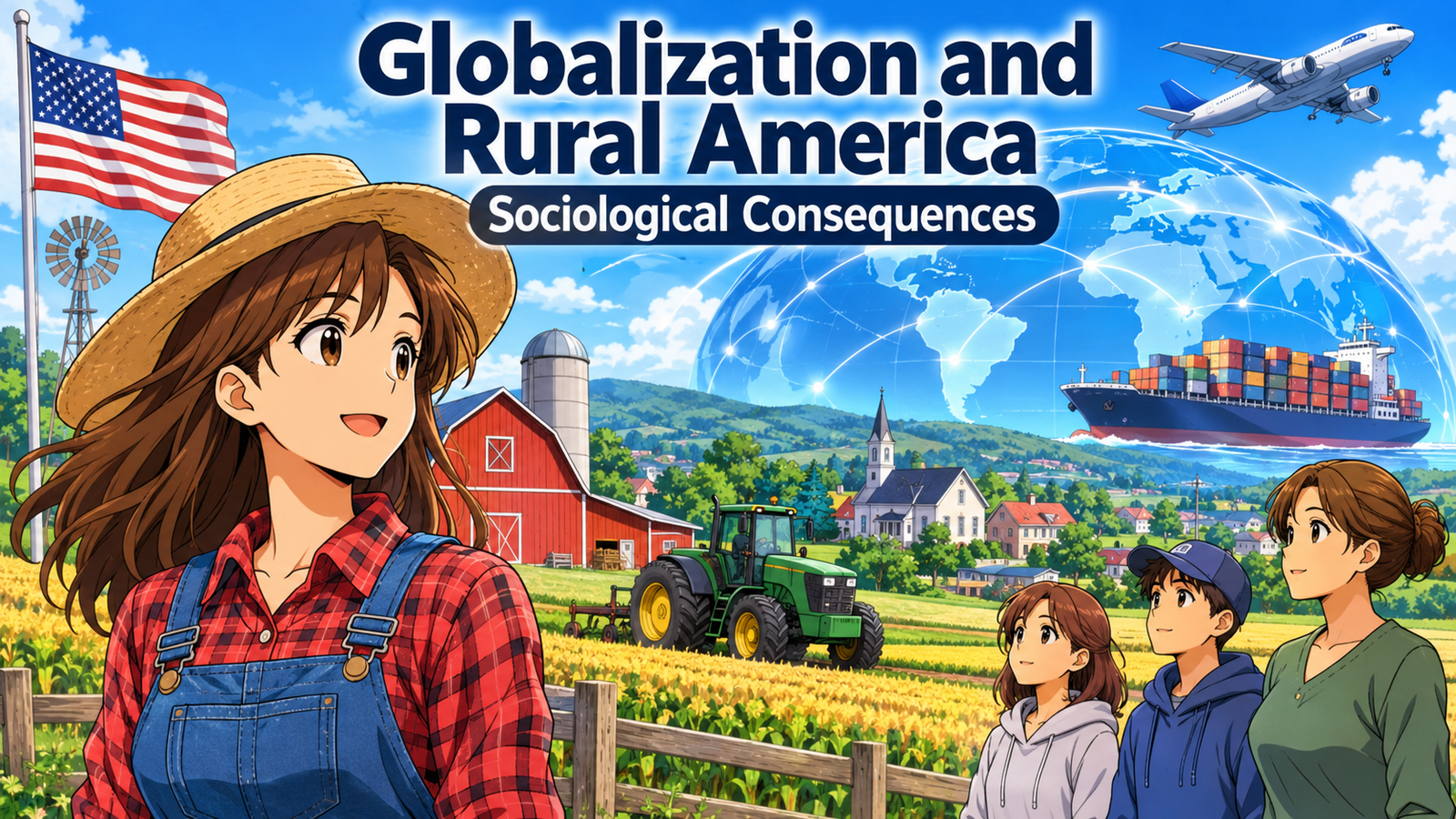
Introduction on Globalization and Rural America
Globalization has become one of the most influential forces shaping contemporary society. It connects countries through international trade, financial markets, technological development, migration, communication, and cultural exchange. Although globalization is frequently associated with large cities and industrial economies, its consequences extend deeply into rural communities. The relationship between Globalization and Rural America provides an important example of how worldwide economic and cultural processes transform local social structures, livelihoods, identities, and community relationships.
Rural America includes agricultural regions, small towns, remote settlements, and communities whose economies depend on farming, manufacturing, natural resources, tourism, and local services. These communities have experienced significant changes as international markets, multinational corporations, digital technologies, and global labor systems have become increasingly influential. For some rural areas, globalization has created new economic opportunities, expanded markets, and improved access to information. For others, it has contributed to employment insecurity, agricultural consolidation, population decline, and growing social inequality.
From a sociological perspective, Globalization and Rural America should be understood as a relationship between global forces and local social experiences. Economic restructuring influences class relations, family organization, gender roles, migration patterns, and community solidarity. At the same time, rural residents actively respond to these changes through adaptation, political participation, entrepreneurship, and collective action.
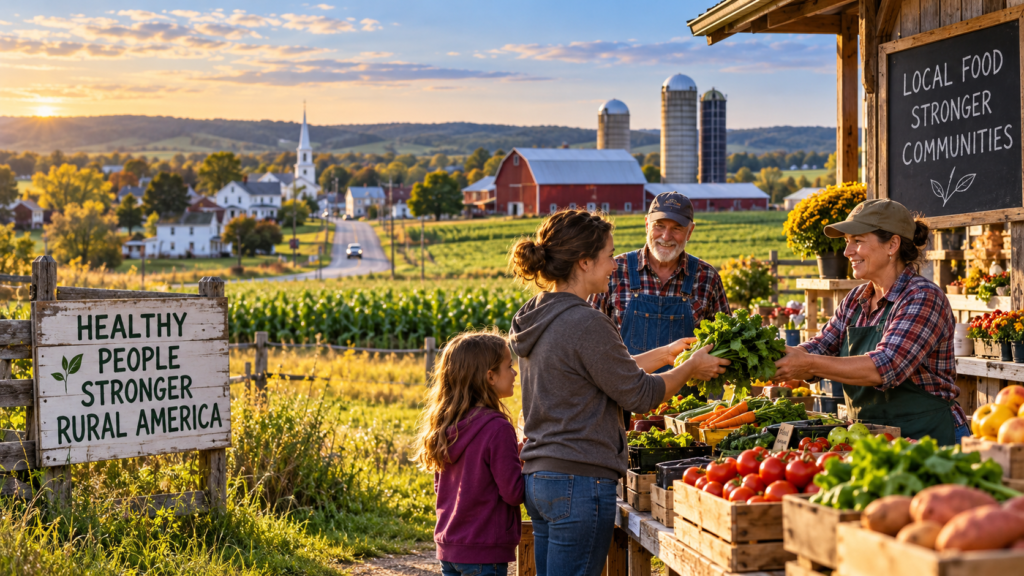
This article examines the major sociological consequences of globalization in rural America, focusing on economic transformation, agriculture, employment, social inequality, family life, migration, cultural identity, technology, and community development.
Table of Contents
1. Understanding Globalization and Rural America
Globalization refers to the increasing interconnectedness of societies through economic, political, technological, and cultural processes. It allows goods, services, capital, information, and people to move across national borders, creating relationships between distant communities.
The study of Globalization and Rural America demonstrates that rural communities are not isolated from global society. A farmer in Iowa may depend on international grain prices, while a manufacturing worker in a small Ohio town may experience the effects of overseas production. A rural business in Montana may sell products through international online marketplaces, while a family in a farming community may rely on income earned by relatives working elsewhere.
Also read – About Rural America
These examples illustrate the sociological concept of interdependence. Local livelihoods increasingly depend on decisions made by distant corporations, governments, investors, and consumers. Consequently, changes in global markets can influence employment, household income, and community stability thousands of miles away.
Globalization does not affect every rural community equally. Regions with strong infrastructure, diversified economies, educational institutions, and reliable internet access may benefit more than communities dependent on a single industry. Therefore, Globalization and Rural America must be analyzed through the interaction of global economic structures and local social conditions.
2. Economic Transformation and Rural Employment
One of the most important consequences of globalization is the transformation of rural employment. Historically, many rural American communities depended on agriculture, mining, forestry, and small-scale manufacturing. Global competition, technological advancement, and changing production systems have altered these traditional economic foundations.

International trade can expand employment opportunities when rural businesses export agricultural products, manufactured goods, and specialized services. However, global competition can also pressure domestic producers to reduce costs, relocate production, or introduce labor-saving technologies. When factories close or employers move operations abroad, small towns may lose a major source of employment.
The sociological significance of these changes extends beyond individual job losses. A factory or processing plant often supports restaurants, shops, transport services, schools, and other local institutions. Its closure may reduce household purchasing power and weaken the broader community economy.
In this context, Globalization and Rural America reveal how economic restructuring can produce collective insecurity. Workers may face irregular employment, lower bargaining power, or the need to acquire new skills. Younger residents may leave their hometowns to seek education and stable employment elsewhere, reducing the local working-age population.
Nevertheless, globalization can also encourage economic diversification. Rural entrepreneurs may establish online businesses, develop tourism services, or supply specialized products to national and international markets. The social outcome depends partly on whether communities possess the resources needed to participate successfully in the changing economy.
3. Globalization and the Transformation of Agriculture
Agriculture occupies a central position in the sociology of rural America. Global food markets connect American farmers with consumers, processors, retailers, and agricultural producers throughout the world. These connections influence what farmers grow, how they organize production, and how they respond to economic uncertainty.
The expansion of international agricultural trade has created opportunities for farmers who produce commodities such as corn, soybeans, wheat, meat, and dairy products. Access to overseas markets can increase demand and support rural incomes. At the same time, international price fluctuations and competition from producers in other countries can create uncertainty for farming households.
Also Read – Globalization
Another major consequence is agricultural consolidation. Large-scale producers often benefit from economies of scale, access to credit, advanced machinery, and established distribution networks. Smaller farms may struggle to compete when production costs rise or commodity prices decline. Although consolidation has multiple causes, including domestic technological change and land-market pressures, global competition can reinforce the incentives for larger-scale production.
From the perspective of rural sociology, these developments affect land ownership, occupational identity, class relations, and community participation. When family farms disappear, communities may lose not only businesses but also longstanding social relationships and traditions.
Globalization and Rural America also illustrate how agricultural decisions are shaped by institutions beyond the farm. International trade agreements, corporate purchasing policies, transportation costs, and global demand can influence farmers’ choices. Rural households therefore experience the consequences of decisions made within a much larger economic system.
At the same time, some farmers respond through organic production, direct-to-consumer sales, specialty crops, farmers’ markets, and cooperative enterprises. These strategies demonstrate that globalization does not eliminate local agency. Instead, rural producers negotiate between global market pressures and locally grounded economic practices.
4. Social Inequality and the Rural Class Structure
Globalization can redistribute economic benefits unevenly across rural society. Some businesses, landowners, skilled professionals, and export-oriented producers gain new opportunities, while low-wage workers, small farmers, and communities dependent on declining industries may experience insecurity.
This unequal distribution is an important theme in understanding Globalization and Rural America. Economic growth at the national level does not automatically translate into improved living conditions for every rural household.
From a Marxist perspective, globalization can strengthen the power of capital over labor. Businesses operating across international markets may seek cheaper production, flexible employment arrangements, and greater control over supply chains. Workers in rural areas may consequently experience reduced bargaining power, particularly when alternative employers are scarce.
Weberian sociology offers another useful interpretation. Economic resources, occupational status, education, and access to influential networks shape people’s life chances. Rural residents with specialized qualifications or strong professional connections may be better positioned to benefit from global economic change than those with limited educational opportunities.
Social inequality also has a spatial dimension. Wealthier rural areas may attract investment, improve infrastructure, and develop new services, while poorer communities struggle with declining tax revenues and limited employment options. Such differences can reinforce existing inequalities between regions.
The relationship between Globalization and Rural America therefore raises important questions about economic justice. Who benefits from global trade? Who bears the costs of industrial restructuring? How can governments and communities ensure that economic opportunities are more widely distributed?
These questions are essential for understanding the broader social consequences of globalization.
5. Migration, Population Decline, and Demographic Change
Migration is another important consequence of globalization and economic restructuring. Rural residents frequently move to metropolitan areas or other regions in search of employment, education, healthcare, and improved living standards. International migration also contributes to demographic change in many rural communities.
In some areas, young adults leave because local economies cannot provide suitable jobs. This movement may produce an aging population, reduce school enrollment, and create difficulties for businesses seeking workers. When population decline continues, local services such as healthcare facilities, public transport, and retail establishments may become less sustainable.
However, migration can also revitalize rural communities. Immigrants and newcomers may establish businesses, work in agriculture and food processing, contribute to local tax revenues, and introduce new cultural practices. Some rural towns have benefited from the arrival of international migrants who help maintain industries experiencing labor shortages.
The sociological analysis of Globalization and Rural America must therefore consider both population loss and population renewal. Migration is not simply an individual decision; it is influenced by employment opportunities, family networks, immigration policies, housing availability, and regional economic inequalities.
Migration can also create tensions surrounding belonging and cultural identity. Long-term residents and newcomers may differ in language, religion, social customs, or political outlook. These differences can lead to misunderstandings, but they may also encourage intercultural exchange and new forms of community cooperation.
The eventual outcome depends on local institutions, opportunities for interaction, and the willingness of residents to develop inclusive social relationships.
6. Family Life and Changing Gender Roles
Global economic changes can influence family organization in rural America. When traditional industries decline, households may need to reconsider employment arrangements, caregiving responsibilities, and patterns of financial support.

For example, a family whose primary income came from farming or manufacturing may need to diversify its income sources. One partner may commute to a distant town, while another manages household responsibilities or takes additional employment. Some families may relocate entirely when local opportunities become insufficient.
These developments demonstrate how Globalization and Rural America influence the relationship between the economy and private life. Employment insecurity can increase stress, delay marriage or parenthood, and complicate the division of domestic labor. Families with savings, flexible employment, and access to transportation may adapt more easily than households with limited resources.
Gender is particularly important in this analysis. Women in rural communities often contribute through agricultural work, paid employment, household management, and unpaid caregiving. Globalization may create new opportunities for women through online entrepreneurship, remote employment, and access to wider professional networks. However, these benefits are not equally available where internet access, childcare, education, or transportation is inadequate.
Men whose identities are closely connected to farming, mining, or industrial employment may also experience difficulties when traditional occupations become less secure. Occupational change can challenge established ideas about masculinity, family provision, and social status.
A sociological approach recognizes that families are not passive recipients of economic change. They develop strategies such as shared employment, intergenerational support, migration, and small-business ownership. Their ability to respond depends on both personal resources and the wider social environment.
7. Cultural Identity and the Transformation of Rural Communities
Rural communities often maintain distinctive identities based on local history, religion, family traditions, occupational practices, and shared experiences. Globalization exposes these communities to new cultural influences through television, social media, travel, education, migration, and international commerce.
These interactions can broaden cultural understanding and provide access to new ideas. Rural young people can participate in global discussions, follow international entertainment, learn foreign languages, and connect with people who share their interests. Local artists and businesses can also reach audiences beyond their immediate geographical area.
However, cultural globalization may generate concerns about the decline of traditional practices. Commercial entertainment, standardized consumer products, and changing lifestyles can influence local customs and expectations. Some residents may interpret these developments as a threat to established community values.
The concept of cultural homogenization helps explain fears that different places are becoming increasingly similar. Conversely, the concept of cultural hybridization emphasizes how local communities adapt outside influences and combine them with existing traditions.
Globalization and Rural America demonstrate both processes. Rural residents may adopt new technologies while preserving local festivals, religious practices, food traditions, and community celebrations. They may also reinterpret traditional identities in response to changing economic and demographic conditions.
Cultural change should not automatically be understood as cultural decline. Instead, it represents an ongoing process through which communities negotiate continuity and transformation.
The central sociological question is how rural residents maintain a sense of belonging while participating in an increasingly interconnected world.
8. Technology, Education, and the Digital Divide
Digital technology is a major channel through which globalization reaches rural America. High-speed internet, online education, digital banking, e-commerce, and remote employment can connect rural residents to opportunities that were previously difficult to access.
For small businesses, online platforms can expand customer bases beyond local markets. Students can access educational resources from universities and institutions around the world. Farmers can use digital tools to obtain market information, monitor weather conditions, and improve production decisions.
Yet technological benefits depend on the availability of reliable infrastructure, affordable devices, digital literacy, and suitable employment opportunities. Rural areas with limited broadband access may be excluded from many of these advantages.
The digital divide is not merely a technological problem. It is also a form of social inequality because access to digital resources increasingly influences education, employment, political participation, and social mobility.
Within Globalization and Rural America, the digital divide illustrates how global connectivity can produce unequal outcomes. A well-connected rural entrepreneur may participate in international markets, while another resident in a poorly connected area may struggle to complete an online job application or access educational materials.
Education is equally important. Schools, community colleges, vocational programs, and adult-learning institutions can help residents acquire the skills needed in changing labor markets. However, communities experiencing population decline and shrinking tax revenues may struggle to maintain these institutions.
Investment in broadband infrastructure and accessible education can therefore help rural communities participate more effectively in globalization.
9. Community Solidarity and Social Relationships
Community solidarity is a central concern in rural sociology. Many rural communities have historically relied on informal networks, neighborhood cooperation, religious organizations, voluntary associations, and extended family relationships.
Economic restructuring can weaken these relationships when people leave, local businesses close, or community institutions lose financial support. A declining population may reduce participation in civic organizations and make it harder to organize collective activities.
Nevertheless, globalization does not necessarily destroy rural solidarity. Communities may respond to economic pressure through cooperatives, local development organizations, mutual-aid networks, and collaborative business ventures.
For example, farmers may establish cooperatives to improve their bargaining position, while residents may organize campaigns to preserve schools, healthcare services, and local businesses. Digital communication can also help rural residents coordinate fundraising, share information, and maintain relationships across long distances.
The effects of Globalization and Rural America on social cohesion are therefore complex. Global competition can create uncertainty, but shared challenges may also encourage collective action.
Social capital—the resources available through relationships, trust, and networks—can help communities respond to external pressures. However, strong social networks alone cannot replace adequate infrastructure, investment, or public services.
Effective rural development requires both community participation and institutional support.
10. Political Attitudes and Rural Social Change
Globalization can influence political attitudes in rural America, particularly when economic restructuring produces insecurity or perceptions of unequal treatment.
Residents of communities affected by industrial decline may question trade policies, corporate power, government spending, and the distribution of economic benefits. Political responses differ according to local histories, occupational interests, religious affiliations, race, education, and individual experiences.
Some residents support international trade because it benefits their industries or businesses. Others favor protectionist policies when they believe imports and overseas production threaten local employment. These disagreements reveal that rural America is not politically or economically homogeneous.
The sociological study of Globalization and Rural America must avoid treating rural residents as a single group. Farmers, factory workers, professionals, business owners, immigrants, and retirees may experience global economic changes in very different ways.
Political mobilization can provide a means of expressing economic grievances. However, the relationship between globalization and political behavior is not automatic. Local institutions, media environments, party identification, and broader national debates also shape political attitudes.
Understanding these differences is essential for developing policies that respond to rural concerns without assuming that all rural communities face identical problems.
11. Environmental Consequences and Rural Sustainability
Globalization also affects rural environments through agricultural production, transportation, resource extraction, manufacturing, and international demand for food and raw materials.
Expanding export-oriented agriculture may encourage higher production, greater mechanization, and increased use of agricultural inputs. In some circumstances, intensive production can contribute to soil degradation, water pollution, biodiversity loss, and pressure on natural resources. However, environmental outcomes depend on production methods, regulation, geography, and local management practices.
Global markets can also support environmentally beneficial changes. Demand for renewable energy, sustainable agricultural products, and conservation-related services may create new opportunities for rural communities.
Climate change adds another dimension. Farmers and rural businesses face risks from droughts, floods, extreme temperatures, and changing growing seasons. Because rural livelihoods often depend directly on natural resources, environmental disruption can affect household income and community stability.
The relationship between Globalization and Rural America therefore involves both economic development and environmental responsibility. Rural sustainability requires policies that balance productivity with ecological protection.
Community participation, agricultural research, renewable-energy investment, and conservation initiatives can help rural residents respond to these challenges.
12. Sociological Theories Explaining Globalization and Rural America
Several sociological theories help explain the consequences of globalization for rural communities.
Modernization theory emphasizes the transformation of traditional social structures through technological development, education, urbanization, and economic diversification. From this perspective, globalization can introduce new opportunities and help rural communities modernize their economies. However, modernization is not necessarily a uniform or universally beneficial process.
World-systems theory, associated with Immanuel Wallerstein, examines how national and regional economies are integrated into a wider capitalist system. Applied to rural America, this perspective draws attention to the unequal relationships among producers, corporations, consumers, and global markets. Rural communities may benefit from international trade while remaining vulnerable to decisions made by powerful economic institutions.
Karl Marx’s conflict perspective highlights the relationship between capital ownership, labor, and economic inequality. It helps explain why the benefits of globalization may be concentrated among some business owners and investors while workers experience insecurity or reduced bargaining power.
Anthony Giddens’s theory of globalization and modernity emphasizes the intensification of social relationships across distance. Decisions and developments occurring far away can increasingly influence local experiences. This perspective is particularly relevant to rural communities whose employment and livelihoods depend on global markets.
Finally, social capital theory emphasizes trust, networks, cooperation, and collective participation. It helps explain why communities with effective local organizations may be better equipped to respond to economic disruption, although social capital cannot eliminate structural inequalities by itself.
Together, these perspectives demonstrate that Globalization and Rural America cannot be understood solely through economic statistics. It is also a process involving power, social relationships, cultural meaning, and institutional change.
Conclusion on Globalization and Rural America
Globalization has transformed rural America in complex and uneven ways. It has expanded international markets, introduced new technologies, encouraged economic diversification, and created opportunities for entrepreneurship. At the same time, it has contributed to employment insecurity in some regions, agricultural consolidation, social inequality, demographic change, and pressure on traditional community institutions.
The sociological significance of Globalization and Rural America lies in the interaction between global economic structures and everyday social life. Changes in trade, technology, and production affect not only businesses but also families, cultural identities, political attitudes, and relationships within rural communities.
These consequences are not identical everywhere. Rural communities differ in their economic resources, infrastructure, social networks, educational opportunities, and capacity for collective action. Some successfully adapt to global markets, while others struggle with the consequences of industrial decline and limited investment.
A sustainable future requires policies that expand access to broadband, education, healthcare, employment opportunities, and economic development. Support for small businesses, family farms, workforce training, and local institutions can help rural residents participate more fully in the global economy.
Ultimately, Globalization and Rural America should be understood neither as an entirely positive process nor as an unavoidable source of decline. Its consequences depend on how global economic forces interact with public policy, social inequality, community resources, and local agency. A sociological approach makes these relationships visible and provides a foundation for building more inclusive, resilient, and sustainable rural communities.
Frequently Asked Questions (FAQs) on Globalization and Rural America
1. What is globalization and rural America?
Globalization and Rural America refers to the relationship between worldwide economic, technological, political, and cultural connections and their effects on rural communities in the United States. It influences agriculture, employment, migration, family relationships, cultural identity, and social inequality.
2. How does globalization affect rural America?
Globalization and Rural America are connected through international trade, technological development, foreign competition, and cultural exchange. These processes create opportunities for rural businesses and farmers while sometimes contributing to job insecurity, population decline, and economic inequality.
3. What are the major sociological consequences of globalization in rural America?
The major sociological consequences of Globalization and Rural America include changing class relations, employment insecurity, agricultural consolidation, migration, changing family structures, cultural transformation, and differences in access to education and technology.
4. How does globalization affect farmers in rural America?
Globalization and Rural America influence farming through international commodity prices, export markets, agricultural technology, and global competition. Some farmers benefit from expanded markets, while smaller producers may face financial pressure and competition from large-scale agricultural businesses.
5. What is the relationship between globalization and rural employment in America?
Globalization and Rural America are linked through changing labor markets. International trade and digital commerce can create new employment opportunities, but overseas competition, industrial restructuring, and automation may reduce jobs in certain rural industries.
6. How does globalization contribute to social inequality in rural America?
Globalization and Rural America can experience unequal outcomes because economic benefits are not distributed evenly. Large businesses, skilled workers, and export-oriented producers may gain opportunities, while low-wage workers and economically vulnerable communities may experience insecurity.
7. How does globalization influence migration in rural America?
Globalization and Rural America are connected through internal and international migration. Young people may leave rural communities for education and employment, while immigrants and returning residents can contribute labor, entrepreneurship, cultural diversity, and population growth.
8. How does globalization affect family life in rural America?
Globalization and Rural America influence family life through employment changes, migration, income uncertainty, and new technologies. Families may adapt by diversifying income sources, relocating, sharing caregiving responsibilities, or establishing small businesses.
9. How does globalization change rural culture and traditions?
Globalization and Rural America influence cultural practices through social media, international entertainment, migration, education, and consumer culture. These influences can introduce new lifestyles while encouraging communities to preserve and reinterpret local traditions.
10. What role does technology play in globalization and rural America?
Technology connects rural America with national and international markets through broadband internet, e-commerce, digital banking, and online education. However, limited connectivity and digital skills can prevent some rural residents from benefiting equally.
11. How does globalization affect community solidarity in rural America?
Globalization and Rural America can experience changes in community solidarity when businesses close, residents migrate, or local institutions lose resources. However, cooperatives, voluntary organizations, digital networks, and community initiatives can strengthen cooperation and resilience.
12. Which sociological theories explain globalization and rural America?
Several theories help explain Globalization and Rural America, including modernization theory, world-systems theory, Marxist conflict theory, Anthony Giddens’s analysis of globalization, and social capital theory. These perspectives examine economic transformation, inequality, interconnectedness, and community relationships.
13. How does globalization affect rural education in America?
Globalization and Rural America are connected through changing educational needs and digital access. Online learning and global information resources can expand educational opportunities, but inadequate broadband, limited funding, and unequal access to technology can create disadvantages.
14. What are the environmental consequences of globalization for rural America?
Globalization and Rural America are linked through agricultural intensification, transportation, resource extraction, and international demand for food and raw materials. These processes can create environmental pressures but may also support renewable energy, conservation, and sustainable agricultural markets.
15. How can rural America respond to the challenges of globalization?
Rural America can respond to globalization through investment in broadband, education, workforce training, healthcare, small businesses, sustainable agriculture, and local infrastructure. Strong community organizations and inclusive public policies can help distribute economic opportunities more fairly and strengthen rural resilience.