Introduction: Political Repression in India
Political Repression is a central concept in political sociology because it reveals how governments respond when citizens challenge established authority. Elections, parliamentary institutions and constitutional procedures are essential to democracy, but democratic life also depends on the freedom to express disagreement, organise collective action and demand accountability without fear of arbitrary punishment.
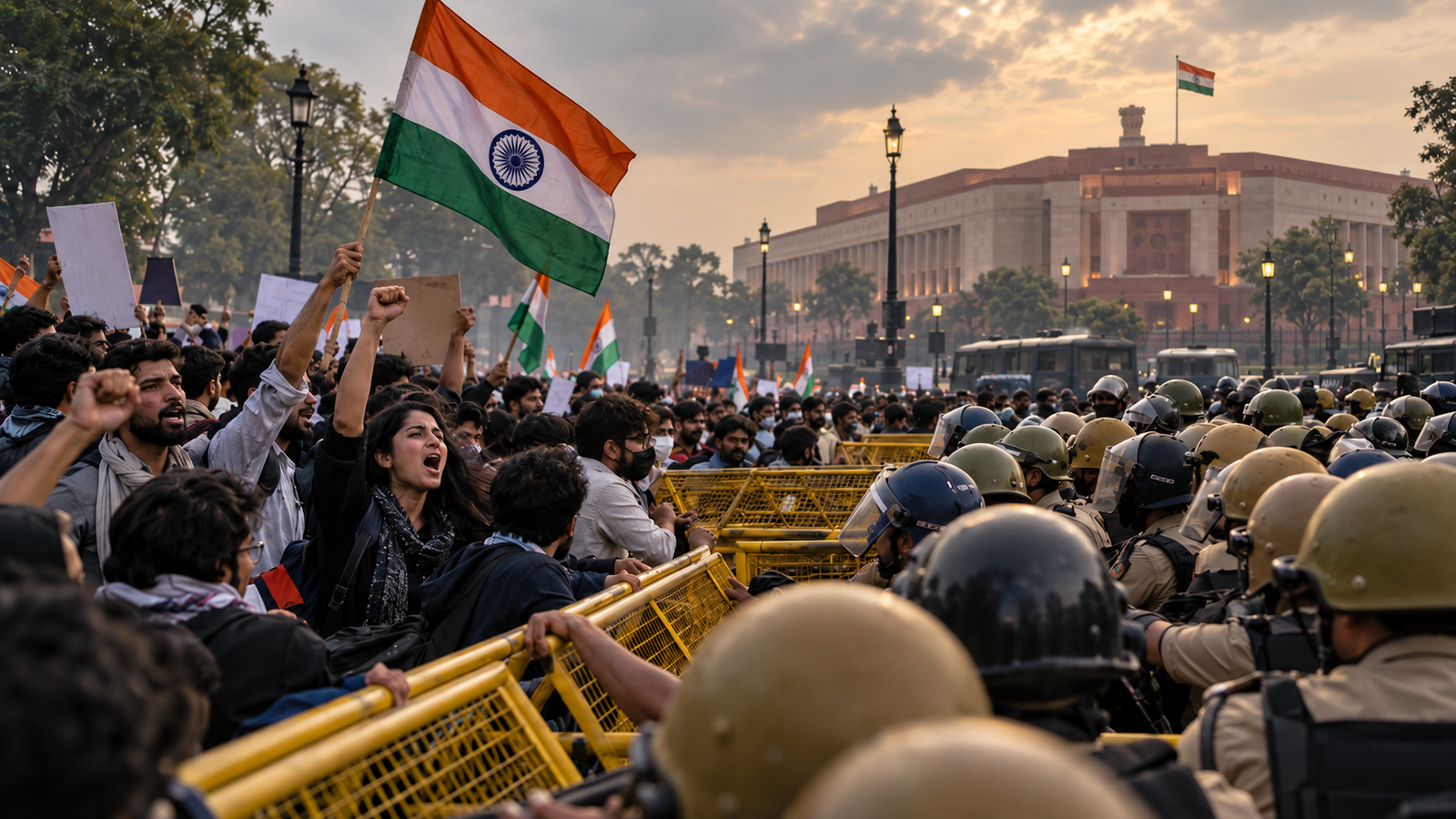
The events of 10 October 2026 in New Delhi have brought these questions into sharp focus. Authorities detained more than 2,000 people as security forces moved to prevent a planned demonstration organised by the youth-led Cockroach Janta Party (CJP). The protesters demanded the resignation of Chief Election Commissioner Gyanesh Kumar over alleged irregularities in the Special Intensive Revision (SIR) of electoral rolls. The operation involved extensive security deployment, restrictions on transport, barricades and the suspension of mobile internet services in parts of the capital. Reuters reported that the planned gathering at Jantar Mantar was blocked before it could proceed as intended.
The crackdown followed several days of demonstrations, preventive detentions and growing controversy over voter registration. It also occurred amid legal scrutiny of electoral procedures and disagreements between opposition parties and the Election Commission of India (ECI).
From a sociological perspective, these events are not simply a confrontation between protesters and police. They raise fundamental questions about state power, political citizenship, freedom of assembly and the conditions under which democratic institutions maintain public trust.
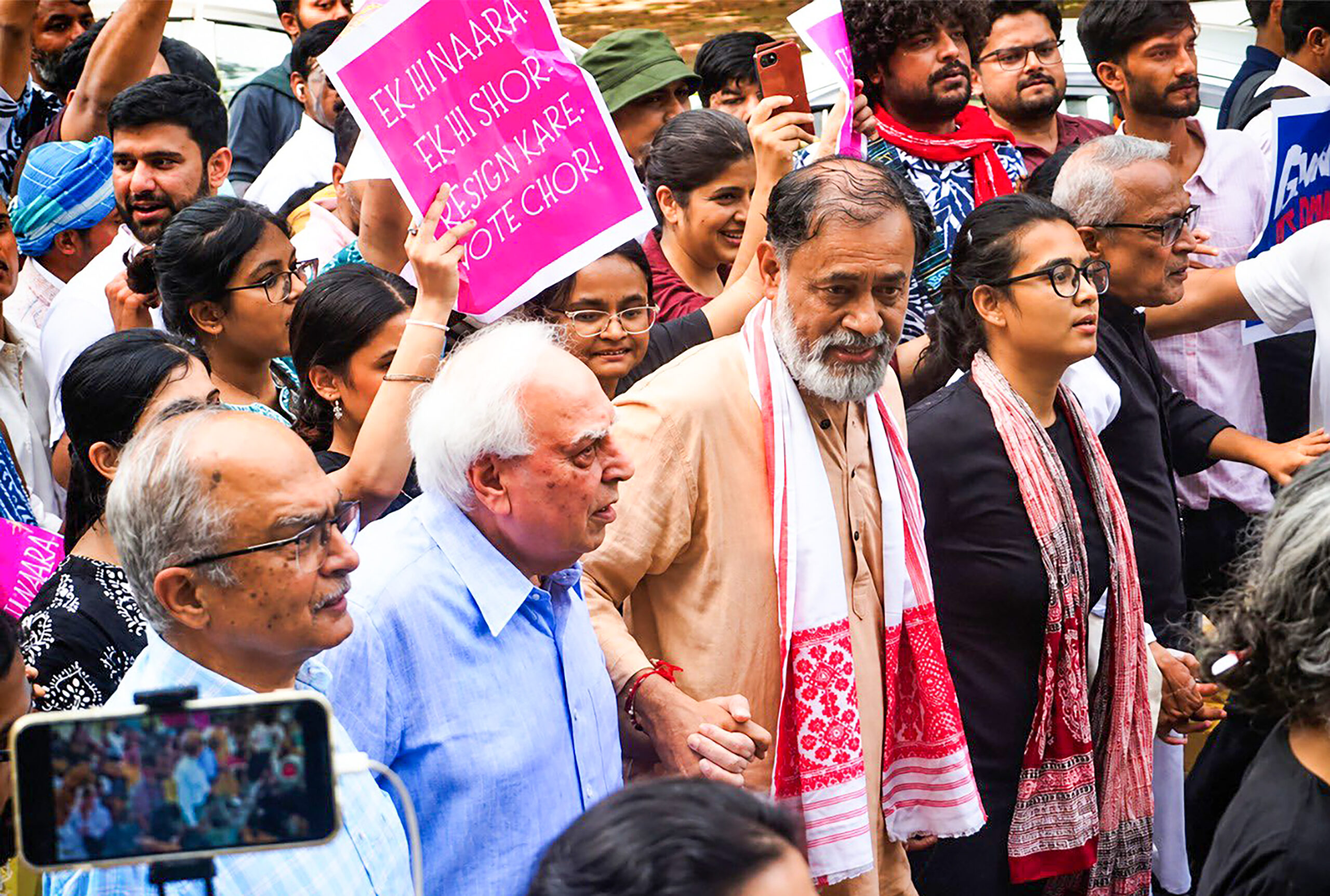
The central issue is whether measures justified in the name of public order remain proportionate and compatible with constitutional freedoms. Political Repression provides a framework for examining that question without assuming that every police restriction is unlawful or that every allegation made by a political movement is established fact.
Table of Contents
Understanding Political Repression in Sociology
Political Repression refers to actions by state authorities or other powerful actors that restrict political expression, collective organisation, peaceful protest or opposition. It may involve arbitrary detention, intimidation, censorship, surveillance, restrictions on public gatherings or the disproportionate use of coercive power.
Repression does not always require physical violence. Administrative restrictions, preventive policing and barriers to communication can also discourage citizens from participating in public life. When people begin to fear detention, professional consequences or harassment because of their political activities, they may practise self-censorship even without being formally prohibited from speaking.
However, sociological analysis requires an important distinction. Not every detention or restriction on a demonstration constitutes political repression. Governments have legitimate responsibilities to prevent violence, protect public safety and manage competing uses of public space. The relevant questions concern legality, necessity, proportionality, equal treatment and accountability.
The events of October 2026 provide a case through which these competing considerations can be examined. The police cited procedural and security concerns surrounding the proposed demonstration, while protesters and civil liberties advocates questioned the scale of the response. Understanding the incident requires investigating both the official justification and the consequences for citizens seeking to exercise their democratic rights.
The October 2026 Crackdown: Recent Developments
The controversy developed through a series of incidents rather than a single confrontation.
On 2 October, demonstrations demanding the Election Commission chief’s resignation led to preventive detentions and restrictions affecting protesters in Delhi and Mumbai. Amnesty International criticised the restrictions, detentions and interruptions to internet and public transport services, arguing that peaceful assembly and freedom of expression must be protected. These are the organisation’s human rights assessments, rather than judicial findings that every detention was unlawful.
On 5 October, the Supreme Court issued notices to the Union government, the Election Commission and the Chief Election Commissioner concerning petitions challenging aspects of the voter-list revision process. The controversy included questions about transparency, voter deletions and the procedures available to eligible citizens seeking correction of their records. The Court’s demand for responses represented judicial scrutiny; it should not be interpreted as a final finding that electoral manipulation had occurred.
On 5 October, a separate legal controversy also emerged concerning changes to Form 6, used by first-time voters to register. According to The Indian Express, Chief Justice of India Surya Kant stated during proceedings that a modified version of the form had not been approved by the Supreme Court. The issue concerned the legal authority for changes to voter-registration procedures, underscoring the importance of transparent and properly authorised electoral administration.
On 8 October, opposition parties continued demonstrations against Chief Election Commissioner Gyanesh Kumar. Congress leaders, including Rahul Gandhi and Priyanka Gandhi Vadra, were among those detained during a protest march that was stopped by police. The developments demonstrated that the dispute had expanded beyond a single youth movement into a broader political confrontation.
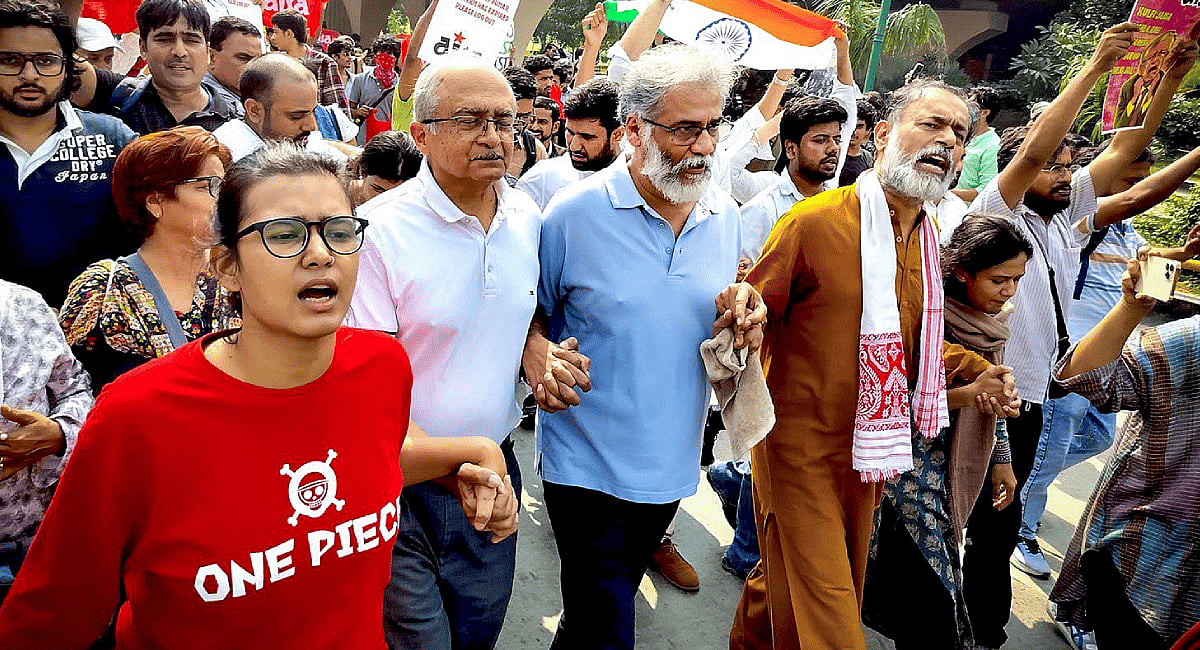
The largest reported operation came on 10 October. Reuters reported that more than 2,000 people were detained in Delhi, including CJP leaders Abhijeet Dipke, Saurav Das and Ashutosh Ranka. The report also described the detention of opposition politicians and brief detentions involving journalists covering the demonstrations. Security measures affected roads, metro access and public movement across parts of the capital.
Police had denied permission for the planned Jantar Mantar gathering, citing security concerns and the timing of the application. The protest organisers nevertheless argued that preventing the demonstration undermined democratic participation.
The distinction between these competing accounts is important. The reported detentions and restrictions establish the scale of the operation, but the legality of individual detentions and the proportionality of specific measures require assessment based on the relevant evidence and legal procedures.
Electoral Roll Revision and the Sociology of Citizenship
The immediate political dispute centred on the SIR exercise, which the Election Commission describes as a process for verifying electoral rolls and removing ineligible or duplicate entries.
Reuters reported that approximately 130 million entries had been removed during the revision exercise. According to the report, the categories included around 63 million people recorded as having relocated, 30 million who could not be traced and 28 million who had died. The Election Commission maintained that eligible voters wrongly removed could seek re-enrolment, while opposition parties alleged that the deletions had harmed electoral fairness.
These figures require careful interpretation. The removal of an entry does not automatically establish that a legitimate voter was disenfranchised, just as an official explanation does not independently prove that every deletion was accurate. The central questions concern verification, transparency, accessibility of correction procedures and the actual number of eligible citizens wrongly excluded.
Political sociology helps explain why these administrative questions matter. Electoral registration is a bureaucratic process, but it determines access to a fundamental form of political participation. If citizens cannot understand why their names have been removed or cannot navigate the procedures required to restore them, formal political equality may not translate into practical equality.
The controversy has also generated allegations that socially and economically vulnerable groups, including religious minorities, may face disproportionate risks of exclusion. These concerns deserve evidence-based investigation through demographic data, documented cases, appeal outcomes and independent monitoring.
The wider lesson is that electoral legitimacy depends not only on conducting elections but also on ensuring that citizens can register, verify their status and challenge administrative errors through accessible and impartial procedures.
Max Weber: State Authority and the Monopoly of Force
The sociologist Max Weber argued that the modern state claims a monopoly over the legitimate use of physical force within its territory. Police institutions are central to this authority because they enforce laws and maintain public order.
However, Weber’s framework also raises a question about legitimacy: when do citizens regard state power as justified, and when do they begin to see it as arbitrary or politically selective?
In the context of the October crackdown, authorities defended their actions by pointing to the absence of permission and public-order concerns. Critics questioned whether the extensive operation was proportionate to the risks posed by the proposed gathering.
The sociological issue is not whether the state should possess coercive powers. It is whether those powers are exercised within established legal limits, applied consistently and subjected to meaningful oversight.
When people believe that peaceful opposition is treated as a security threat while other political interests receive different treatment, confidence in institutional neutrality can weaken. Even where authorities act within their legal powers, a lack of transparency can damage public trust.
A legitimate democratic state must therefore demonstrate not only its ability to enforce rules but also its commitment to impartiality, accountability and citizens’ rights.
Michel Foucault: Surveillance, Discipline and Public Space
Michel Foucault‘s analysis of surveillance and disciplinary power offers another way to understand the effects of extensive security operations.
Political control can operate through more than direct violence. Monitoring, checkpoints, movement restrictions and the possibility of detention can influence behaviour by making citizens anticipate the consequences of participation.
The security measures reported in Delhi illustrate this possibility. Barricades, transport restrictions and mobile internet suspensions affected the ability of protesters to reach the planned venue and communicate with one another. Such measures can also affect commuters, workers, journalists and residents who are not involved in the demonstration.
This creates the possibility of a chilling effect: people may withdraw from political activity because they perceive the personal or practical costs as too high.
Internet restrictions are particularly significant in contemporary society because digital platforms are used to coordinate gatherings, circulate information and document interactions with authorities. Interrupting connectivity can therefore affect not only convenience but also the capacity for collective action and public scrutiny.
Nevertheless, surveillance and security measures should be evaluated in context. Their existence alone does not establish political repression. Their significance depends on their justification, duration, scope and impact on lawful activity.
The central question is whether public space remains available for peaceful democratic expression or whether security practices make participation increasingly difficult.
Youth Movements, Digital Activism and Collective Identity
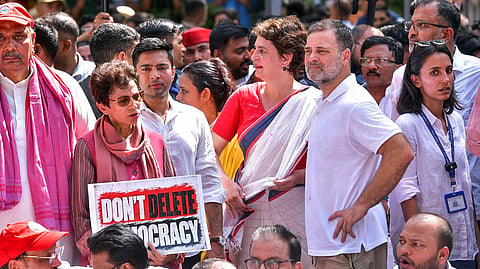
The Cockroach Janta Party illustrates the changing relationship between youth mobilisation, digital communication and political participation.
Online networks allow emerging movements to communicate rapidly, develop shared identities and organise demonstrations without relying entirely on established political parties. Social media can also bring attention to grievances that traditional institutions or mainstream political organisations have overlooked.
From a sociological perspective, collective identity is important because individuals are more likely to participate in sustained action when they see their personal concerns as part of a shared social problem.
The CJP’s campaign against the SIR process brought together people concerned about electoral accountability and the role of the Election Commission. The participation of established opposition parties subsequently broadened the political significance of the demonstrations.
However, online visibility does not automatically establish the accuracy of a movement’s claims or the representativeness of its supporters. Viral posts can circulate incomplete information, and successful mobilisation requires credible evidence, transparent organisation and clear demands.
The reported detention of movement leaders on 10 October raises a further question: whether coercive measures directed at organisers discourage participation among people who might otherwise join peaceful political activity.
Young citizens should not automatically be treated as a source of disorder merely because they challenge public institutions. Their participation can provide a mechanism through which emerging grievances enter democratic debate. At the same time, movements must remain accountable for their own conduct and the accuracy of their claims.
The Indian Constitution and the Right to Protest
The Indian Constitution provides a framework for balancing public order with democratic freedoms. Article 19(1)(a) protects freedom of speech and expression, while Article 19(1)(b) protects the right to assemble peaceably and without arms. These rights are subject to constitutionally permitted reasonable restrictions. Article 21 protects life and personal liberty.
The Supreme Court has repeatedly considered the relationship between peaceful assembly and the interests of other members of society. In Mazdoor Kisan Shakti Sangathan v. Union of India (2018), the Court examined the competing considerations involved in public demonstrations, including protesters’ rights and the interests of people affected by gatherings.
The right to protest does not mean every demonstration must be permitted at every location or under every circumstance. Authorities can impose reasonable conditions to protect safety, regulate traffic and prevent violence. However, the denial of permission does not automatically establish that every associated detention is justified.
The legality of the October detentions must therefore be considered in relation to the applicable law, individual circumstances, procedural safeguards and available evidence.
A democratic system must provide meaningful opportunities to challenge restrictions, obtain legal assistance and seek judicial review. Where public authorities impose broad restrictions, they should be able to explain why those measures were necessary and why less restrictive alternatives would not have been adequate.
The objective should be to maintain public order without making peaceful dissent practically impossible.
Political Repression, Media and Public Trust
Media coverage shapes how citizens understand confrontations between protesters and authorities. Governments may frame restrictions as necessary security measures, while opposition movements may describe them as attacks on democracy.
Neither interpretation should be accepted automatically.
The reporting on 10 October documented large-scale detentions and restrictions on public movement. Amnesty International separately criticised the earlier restrictions on peaceful assembly and internet access. These accounts provide evidence for examining the consequences of the crackdown, while the legality of individual police actions remains a separate question.
Independent journalism is particularly important during political confrontations because it helps establish what occurred, who was affected and how official explanations compare with eyewitness accounts.
Restrictions affecting journalists or access to information can reduce the public’s ability to evaluate state conduct. Conversely, responsible reporting must distinguish verified events from allegations and avoid treating political claims as established facts.
Public trust depends partly on whether citizens believe that institutions act impartially and respond transparently to criticism. If political disagreements are managed primarily through coercion rather than explanation and dialogue, distrust can deepen.
The long-term health of democracy therefore depends not only on the conduct of protesters and police but also on independent reporting, credible evidence and institutions willing to investigate contested claims.
Conclusion: Protecting Democracy Requires Protecting Dissent
The 10 October 2026 crackdown demonstrates why Political Repression remains an important subject in contemporary Indian political sociology. The reported detention of more than 2,000 people, restrictions on public movement and the prevention of the planned Jantar Mantar demonstration raise serious questions about the relationship between state authority and democratic participation.
These developments must be considered alongside the wider controversy over electoral roll revisions, the Supreme Court’s scrutiny of electoral procedures and the continued mobilisation of students and opposition parties.
The allegations of wrongful voter exclusion require transparent investigation, just as the legality and proportionality of the detentions require independent scrutiny. Neither political accusations nor official justifications should substitute for evidence.
The deeper sociological lesson is that democracy involves more than elections and constitutional institutions. It requires citizens to have meaningful opportunities to question public authorities, organise collectively and seek remedies when their rights are threatened.
A strong democracy does not need to accept every demand made by protesters. It must, however, preserve credible channels through which grievances can be expressed, investigated and addressed.
Ultimately, democratic resilience depends on the ability of institutions to maintain public order without undermining the freedoms that make political accountability possible. Political disagreement should remain a legitimate part of public life rather than becoming a reason for citizens to fear participation.
The central challenge for India is therefore not simply how to control demonstrations, but how to protect electoral credibility, civil liberties and public trust simultaneously. The treatment of dissent is one of the most revealing measures of how effectively a democracy fulfils that responsibility.
FAQs: Political Repression in India
1. What is Political Repression in India?
Political Repression in India refers to actions by state authorities or other powerful institutions that restrict political expression, peaceful protest, opposition activities or collective organisation. Examples may include arbitrary detention, censorship, intimidation and disproportionate restrictions on public assemblies.
2. What is the sociological meaning of Political Repression in India?
From a sociological perspective, Political Repression in India concerns the relationship between power, authority and society. It examines how state institutions regulate dissent and how restrictions on political participation affect social movements, public trust and democratic citizenship.
3. What happened during the 10 October 2026 crackdown in India?
The reported crackdown in Delhi involved the detention of more than 2,000 people amid efforts to prevent a planned demonstration associated with the Cockroach Janta Party. The protest concerned electoral roll revisions and demands for the resignation of Chief Election Commissioner Gyanesh Kumar. The legality and proportionality of individual detentions require examination of the available evidence and legal procedures.
4. How does Political Repression in India affect democracy?
Political Repression in India can affect democracy when restrictions prevent citizens from expressing grievances, organising peacefully or holding public institutions accountable. Its effects may include reduced political participation, declining institutional trust and greater distance between citizens and decision-makers.
5. What role does the Indian Constitution play in preventing Political Repression in India?
The Indian Constitution protects several freedoms relevant to Political Repression in India. Article 19(1)(a) protects freedom of speech and expression, Article 19(1)(b) protects peaceful assembly without arms, and Article 21 protects life and personal liberty. These rights operate alongside constitutionally permitted restrictions and applicable legal safeguards.
6. How did the 10 October crackdown raise questions about civil liberties that effect Political Repression in India?
The reported detentions and restrictions on public movement raised questions about whether the authorities’ response was necessary and proportionate. Evaluating these concerns requires examining the reasons for the restrictions, the circumstances of individual detentions and the availability of less restrictive alternatives.
7. What is the relationship between Political Repression in India and freedom of speech?
Freedom of speech allows citizens to criticise government policies, discuss public issues and express opposing political views. Political Repression in India becomes a concern when people face unjustified penalties, intimidation or restrictions because of peaceful expression.
8. How does Political Repression in India affect student movements?
Political Repression in India may discourage students from participating in demonstrations, campus discussions and civil society organisations. If students perceive political participation as risky, they may withdraw from public debate, potentially weakening opportunities for civic learning and collective action.
9. What is Max Weber’s contribution to understanding Political Repression in India?
Max Weber’s theory of the state explains how modern governments claim a monopoly over the legitimate use of physical force. His framework helps sociologists examine when police powers are exercised through established legal authority and why perceived arbitrariness can undermine institutional legitimacy.
10. How does Michel Foucault explain Political Repression in India?
Michel Foucault’s theories of surveillance and disciplinary power help explain how monitoring, movement restrictions and the possibility of punishment influence behaviour. These concepts can be used to study how security measures may discourage political participation, even when direct force is not used.
11. How is Political Repression in India connected to the Special Intensive Revision (SIR) of electoral rolls?
The SIR controversy concerns the verification and revision of electoral rolls. Critics have raised concerns about possible wrongful voter deletions, while the Election Commission maintains that verification is intended to improve electoral accuracy. Political Repression in India becomes relevant to this debate when examining whether citizens can peacefully challenge administrative decisions and access effective remedies. Allegations of deliberate exclusion require independent verification.
12. Can restrictions on public protests be justified in India?
Authorities may impose lawful and reasonable restrictions to protect public order, prevent violence and manage traffic. However, restrictions must comply with constitutional protections and applicable law. The assessment of Political Repression in India therefore depends on factors such as necessity, proportionality, equal treatment and access to legal remedies.
13. What is the role of social media in Political Repression in India?
Social media enables activists to organise demonstrations, share evidence and communicate political grievances. However, online platforms can also expose organisers to surveillance, facilitate the spread of misinformation and become affected by connectivity restrictions. Their overall impact depends on how citizens, platforms and authorities use them.
14. How does Political Repression in India affect marginalised communities?
Political Repression in India may have unequal consequences for communities with limited access to legal assistance, public institutions or influential political networks. Restrictions on participation and barriers to challenging administrative decisions can make it more difficult for disadvantaged groups to defend their interests. Establishing disproportionate effects requires reliable evidence.
15. How can Political Repression in India be reduced?
Reducing the risk of Political Repression in India requires transparent policing, proportionate enforcement, independent judicial oversight, protection for peaceful assembly, responsible journalism and accessible complaint mechanisms. Transparent electoral administration and effective procedures for correcting voter-registration errors can also strengthen public confidence in democratic institutions.