Introduction on Tourism and Social Change in Mediterranean Countries
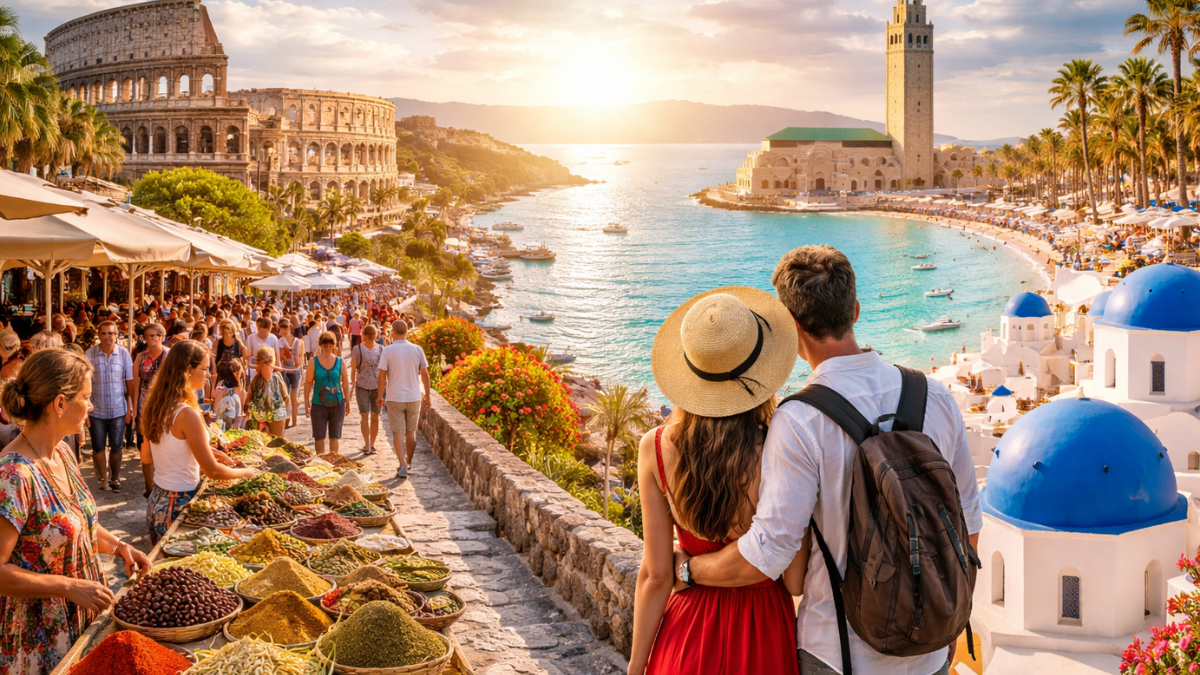
The Mediterranean region—stretching across Southern Europe, North Africa, and parts of Western Asia—has long been a cradle of civilization, cultural exchange, and economic activity. Countries such as Spain, Italy, Greece, Turkey, Morocco, and Egypt are globally renowned for their historical heritage, coastal beauty, and diverse cultural landscapes. In recent decades, tourism has emerged as one of the most powerful forces shaping social life in these Mediterranean countries.
From a sociological standpoint, tourism is not merely an economic activity but a transformative social process. It influences patterns of social interaction, cultural identity, class structure, gender roles, and even political dynamics. The expansion of mass tourism, particularly since the mid-20th century, has led to profound changes in local communities—some beneficial, others deeply problematic.
This article explores the relationship between tourism and social change in Mediterranean countries through a sociological lens, focusing on cultural transformation, economic restructuring, social stratification, urbanization, environmental implications, and identity politics.
Historical Context of Tourism in the Mediterranean
Tourism in the Mediterranean has its roots in ancient travel, including pilgrimages, trade journeys, and educational tours. However, modern tourism began to take shape in the 19th century with the rise of the European elite’s “Grand Tour.” By the mid-20th century, technological advancements such as commercial aviation and improved infrastructure made travel accessible to the middle class.
The post-World War II period marked the emergence of mass tourism, particularly in coastal areas like the Spanish Costa del Sol, the French Riviera, and the Greek islands. Governments actively promoted tourism as a strategy for economic development, leading to rapid expansion in hotel industries, transportation, and recreational services.
This shift laid the foundation for extensive social transformations across Mediterranean societies.
Tourism as an Agent of Social Change
From a sociological perspective, tourism can be understood as an agent of social change—a force that alters social structures, relationships, and cultural norms. It introduces new values, lifestyles, and economic opportunities, often challenging traditional ways of life.

Cultural Diffusion and Hybridization
One of the most visible impacts of tourism is cultural exchange. Tourists bring their own languages, customs, and consumption patterns, which interact with local traditions.
- Local cuisines may be modified to suit foreign tastes.
- Traditional festivals are sometimes reshaped to attract visitors.
- Language use shifts, with English often becoming dominant in tourist zones.
This process leads to cultural hybridization, where local and global elements blend. While this can enrich cultural diversity, it may also lead to the dilution or commercialization of authentic traditions.
Economic Transformation and Social Stratification
Tourism has significantly reshaped the economic structures of Mediterranean countries.
Shift from Traditional to Service Economy
In many regions, traditional sectors like agriculture and fishing have declined as tourism-related industries—hotels, restaurants, and entertainment—have expanded.
- Youth increasingly prefer jobs in tourism over farming.
- Coastal economies become heavily dependent on seasonal tourism.
Emergence of New Class Structures
Tourism creates new forms of social stratification:
- Entrepreneurial class: Hotel owners, tour operators, and investors benefit significantly.
- Service workers: Many locals work in low-paying, seasonal jobs with limited security.
- Migrant laborers: In some countries, migrants fill labor shortages in tourism sectors.
This leads to economic inequality, where wealth is unevenly distributed, often favoring urban and coastal areas over rural interiors.
Urbanization and Spatial Transformation
Tourism has accelerated urbanization in Mediterranean regions, especially along coastlines.
Development of Tourist Cities
Small fishing villages have transformed into bustling tourist hubs. Examples include Ibiza in Spain and Santorini in Greece.
- Construction of hotels, resorts, and airports alters the physical landscape.
- Traditional architecture is often replaced with modern infrastructure.
Gentrification and Displacement
The rise in property values due to tourism often leads to:
- Displacement of local residents from city centers.
- Conversion of homes into vacation rentals.
- Increased cost of living for locals.
This process, known as tourism-driven gentrification, creates tensions between residents and the tourism industry.
Changing Family Structures and Gender Roles
Tourism has also influenced social institutions such as family and gender relations.
Changing Family Dynamics
- Increased income opportunities may lead to dual-income households.
- Seasonal work patterns can disrupt traditional family routines.
- Migration for tourism jobs separates families geographically.
Empowerment and Exploitation of Women
Tourism provides employment opportunities for women, contributing to:
- Greater financial independence.
- Increased participation in public life.
However, it can also expose women to:
- Job insecurity and low wages.
- Exploitative labor conditions.
- Objectification in certain sectors (e.g., hospitality, entertainment).
Thus, tourism simultaneously empowers and marginalizes women.
Cultural Commodification
A key sociological concept related to tourism is cultural commodification—the process of turning cultural practices, symbols, and traditions into commodities for sale.
Examples in Mediterranean Countries
- Traditional dances performed for tourists rather than community rituals.
- Handicrafts produced in bulk for commercial purposes.
- Historical sites marketed as “experiences” rather than heritage.
While commodification can generate income and preserve certain traditions, it often reduces cultural practices to superficial performances, stripping them of their original meaning.
Environmental and Social Sustainability
Tourism’s rapid growth has raised concerns about sustainability.
Environmental Impact
- Overuse of natural resources such as water and land.
- Pollution and degradation of coastal ecosystems.
- Loss of biodiversity due to construction and overcrowding.
Social Sustainability
- Overcrowding in cities like Venice and Barcelona leads to “overtourism.”
- Conflicts between locals and tourists over noise, behavior, and resource use.
- Decline in quality of life for residents.
These challenges have led to the emergence of sustainable tourism initiatives aimed at balancing economic benefits with social and environmental well-being.
Identity, Globalization, and Resistance
Tourism is closely linked to globalization, which influences identity formation in Mediterranean societies.
Identity Transformation
Exposure to global cultures through tourism leads to:
- Adoption of Western lifestyles and consumer habits.
- Changing aspirations among youth.
- Redefinition of local identity in a global context.
Resistance and Cultural Revival
In response to perceived cultural erosion, some communities engage in:
- Revival of traditional practices.
- Promotion of local languages and crafts.
- Resistance movements against mass tourism.
For example, protests in cities like Barcelona highlight the tension between economic dependence on tourism and the desire to preserve local identity.
Migration and Mobility
Tourism also affects patterns of migration.
In-Migration
- Workers from rural areas or other countries move to tourist destinations for employment.
- This creates multicultural environments but may also lead to social tensions.
Out-Migration
- Rising living costs in tourist areas push locals to move elsewhere.
- Brain drain occurs when educated youth leave for better opportunities.
Migration reshapes demographic structures and influences social cohesion.
Role of the State and Policy Interventions
Governments play a crucial role in managing tourism and its social impacts.
Policy Measures
- Regulation of short-term rentals (e.g., Airbnb restrictions).
- Investment in sustainable tourism infrastructure.
- Promotion of off-season and rural tourism to reduce pressure on hotspots.
Challenges
- Balancing economic growth with social equity.
- Addressing corruption and unequal distribution of tourism revenues.
- Ensuring participation of local communities in decision-making.
Effective governance is essential for minimizing negative impacts and maximizing the benefits of tourism.
Theoretical Perspectives
Several sociological theories help explain the relationship between tourism and social change:
Modernization Theory
Tourism is seen as a driver of development, bringing modernization, technology, and improved living standards.
Dependency Theory
Tourism may create dependency on foreign capital and markets, limiting local autonomy.
Cultural Imperialism
The dominance of Western tourists can lead to the imposition of foreign values on local cultures.
Symbolic Interactionism
Focuses on everyday interactions between tourists and locals, shaping perceptions and identities.
Each perspective offers valuable insights into the complex dynamics of tourism in the Mediterranean.
Conclusion on Tourism and Social Change in Mediterranean Countries
Tourism in Mediterranean countries is a powerful force of social change, reshaping economies, cultures, and social structures. While it brings economic growth, employment opportunities, and cultural exchange, it also generates inequality, environmental degradation, and cultural commodification.
From a sociological perspective, the impact of tourism is deeply ambivalent—simultaneously transformative and disruptive. The challenge for Mediterranean societies lies in managing tourism in a way that promotes sustainable development, preserves cultural heritage, and ensures social justice.
As globalization continues to intensify, the future of tourism in the Mediterranean will depend on the ability of governments, communities, and stakeholders to navigate these complex social dynamics. A balanced approach that prioritizes both economic and social well-being is essential for creating a more equitable and sustainable tourism model.
FAQs on Social Change in Mediterranean Countries
1. What is meant by Social Change in Mediterranean Countries?
Social Change in Mediterranean Countries refers to the transformation of social structures, cultural practices, economic systems, and everyday life patterns due to factors like tourism, globalization, and modernization.
2. How does tourism contribute to Social Change in Mediterranean Countries?
Tourism introduces new cultural values, economic opportunities, and lifestyles, leading to changes in local traditions, employment patterns, and social relationships.
3. What are the positive effects of Social Change in Mediterranean Countries?
Positive effects include economic growth, improved infrastructure, cultural exchange, increased employment, and greater global connectivity.
4. What are the negative impacts of Social Change in Mediterranean Countries?
Negative impacts include cultural commodification, environmental degradation, rising inequality, and displacement of local communities.
5. How does tourism affect cultural identity in Mediterranean societies?
Tourism often reshapes cultural identity by blending local traditions with global influences, sometimes weakening authentic cultural expressions.
6. What role does globalization play in Social Change in Mediterranean Countries?
Globalization accelerates social change by facilitating the flow of ideas, people, and capital, influencing lifestyles, consumption patterns, and social values.
7. How does Social Change in Mediterranean Countries impact local economies?
It shifts economies from traditional sectors like agriculture to service-based industries such as tourism and hospitality.
8. What is cultural commodification in the Mediterranean context?
Cultural commodification refers to turning local traditions, festivals, and crafts into marketable products for tourists, often reducing their original cultural meaning.
9. How does Social Change in Mediterranean Countries influence family structures?
It leads to smaller family sizes, dual-income households, and changing gender roles due to increased employment opportunities.
10. What is the relationship between urbanization and Social Change in Mediterranean Countries?
Tourism-driven urbanization transforms rural and coastal areas into urban centers, altering lifestyles and increasing population density.
11. How does Social Change in Mediterranean Countries affect gender roles?
It often empowers women through employment opportunities but may also expose them to job insecurity and exploitation.
12. What is overtourism and its role in Social Change in Mediterranean Countries?
Overtourism refers to excessive tourist numbers that strain local resources, disrupt daily life, and create social tensions.
13. How does migration relate to Social Change in Mediterranean Countries?
Tourism attracts migrant workers and causes local displacement, reshaping demographic patterns and social interactions.
14. What are the environmental consequences of Social Change in Mediterranean Countries?
They include pollution, depletion of natural resources, and damage to coastal ecosystems due to mass tourism.
15. How can Social Change in Mediterranean Countries be managed sustainably?
Through policies promoting sustainable tourism, community participation, environmental protection, and equitable distribution of resources.