Introduction
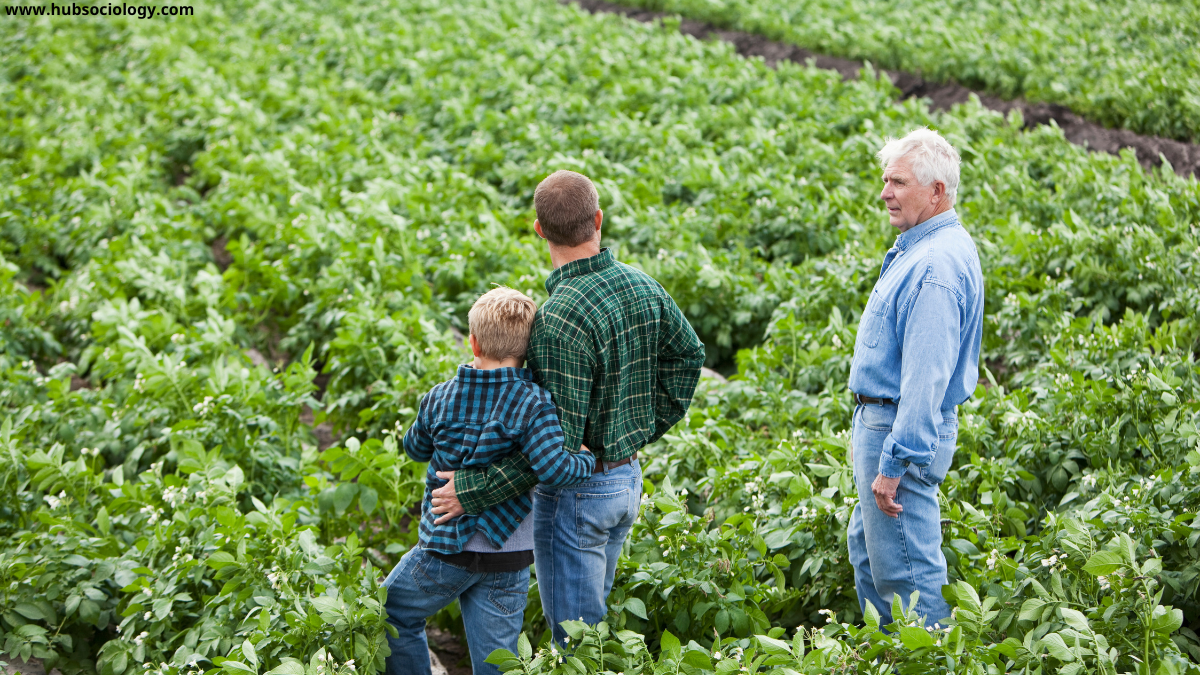
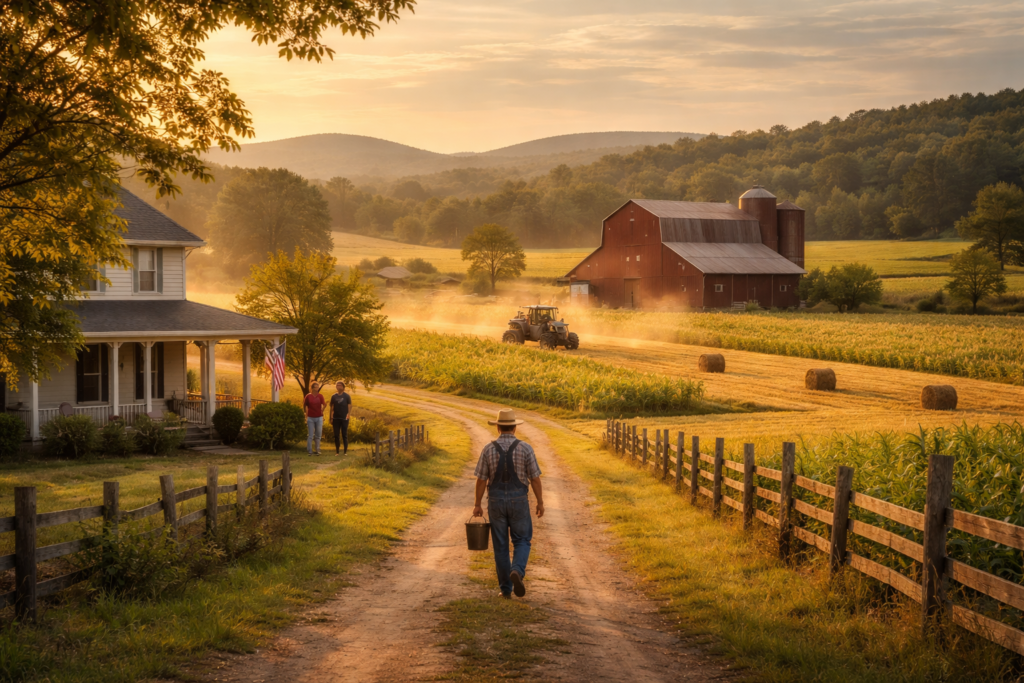
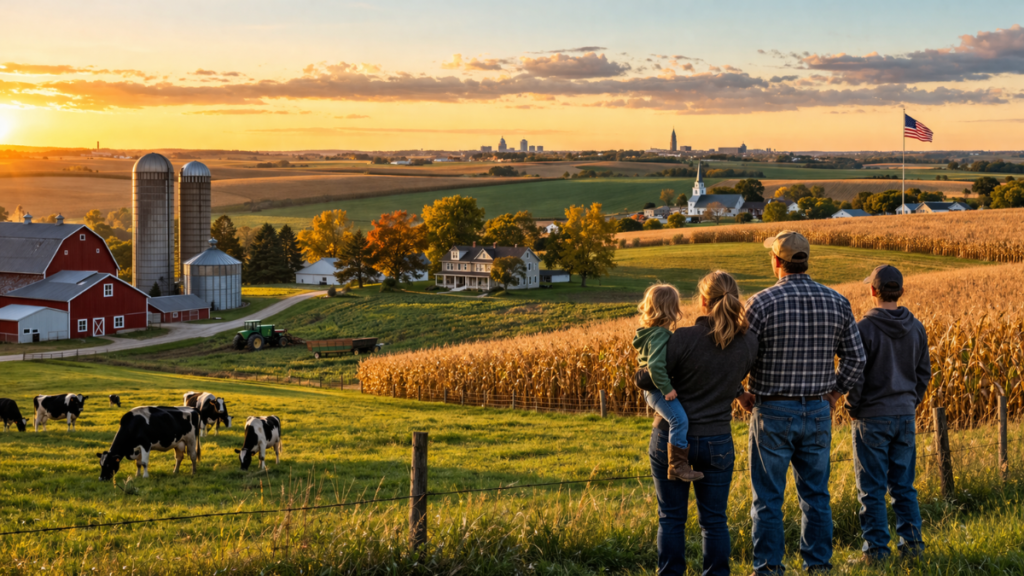
Farming communities have long been central to the social, economic, and cultural life of Kansas. Often referred to as the “breadbasket of America,” Kansas is characterized by vast agricultural lands, wheat production, and rural settlements that shape the everyday experiences of its inhabitants. From a sociological standpoint, these farming communities are not just sites of agricultural production but also complex social systems where relationships, identities, and institutions interact dynamically.
This article explores the social structure of farming communities in Kansas by examining class relations, family systems, community organization, technological transformations, and the impact of globalization. It aims to highlight how traditional rural life intersects with modern economic pressures, producing both continuity and change in social organization.

Explore the Social Structure in Kansas through a sociological lens, focusing on farming communities, class relations, family systems, and rural transformations shaping modern agricultural society.
Historical Foundations of Farming Communities in Kansas
The development of farming communities in Kansas dates back to the 19th century, particularly after the Homestead Act, which encouraged settlers to move westward. These settlers established small, family-owned farms that formed the backbone of rural society.
Sociologically, early farming communities were based on:
- Self-sufficiency
- Close-knit social ties
- Shared labor and cooperation
These characteristics created what sociologist Ferdinand Tönnies described as Gemeinschaft—a form of social organization rooted in personal relationships, tradition, and collective identity.
Social Stratification in Farming Communities
Although rural areas are often perceived as egalitarian, farming communities in Kansas exhibit clear forms of social stratification.
1. Land Ownership and Class Structure
Land remains the primary source of wealth and power. Farmers can be broadly divided into:
- Large-scale commercial farmers
- Medium-sized family farmers
- Tenant farmers and agricultural laborers
Large landowners often possess economic and political influence, shaping local governance and policy decisions. In contrast, small farmers face financial instability due to fluctuating market prices and climate risks.
This reflects the broader sociological concept of agrarian class structure, where ownership of productive resources determines social hierarchy.
2. Capital and Technology Divide
Modern agriculture requires significant investment in machinery, seeds, and technology. Wealthier farmers can adopt advanced techniques such as precision farming, while smaller farmers may lag behind, increasing inequality within rural communities.
Family and Kinship Systems
Family plays a central role in Kansas farming communities, functioning as both a social and economic unit.
1. Family as a Unit of Production
Unlike urban settings, where work and home are separate, farming families integrate both:
- Children often assist with farm work
- Knowledge is passed down through generations
- Family labor reduces dependency on external workers
This reflects the concept of family-based production systems, where economic activity is embedded within kinship structures.
2. Gender Roles
Traditional gender roles have historically shaped farming life:
- Men: Fieldwork, machinery operation, decision-making
- Women: Household management, bookkeeping, auxiliary farm work
However, these roles are evolving. Women increasingly participate in farm management and leadership, reflecting broader societal shifts toward gender equality.
Community Life and Social Networks
Farming communities in Kansas are characterized by strong social cohesion.
1. Informal Social Control
Social norms and values are maintained through:
- Reputation and community opinion
- Religious institutions (churches)
- Local gatherings and events
Deviations from accepted norms are often addressed informally rather than through formal legal systems.
2. Institutions and Collective Life
Key institutions include:
- Schools
- Churches
- Agricultural cooperatives
These institutions foster a sense of belonging and mutual support. For example, cooperatives allow farmers to pool resources and share risks, strengthening community resilience.
The Role of Religion and Culture
Religion plays a significant role in shaping the social structure of rural Kansas.
- Churches act as centers of social interaction
- Religious values influence attitudes toward work, family, and morality
Cultural traditions such as harvest festivals, county fairs, and community dinners reinforce collective identity and continuity.
Technological Change and Its Impact
The introduction of modern agricultural technology has transformed farming communities.
1. Mechanization
The use of tractors, combines, and automated systems has:
- Reduced the need for manual labor
- Increased productivity
- Altered traditional labor relationships
2. Digital Agriculture
Technologies such as GPS mapping and data analytics are increasingly used in farming. While these innovations improve efficiency, they also create disparities between farmers who can afford them and those who cannot.
Migration and Demographic Changes
Rural Kansas has experienced significant demographic shifts.
1. Rural-Urban Migration
Younger generations often leave farming communities in search of:
- Education
- Employment opportunities
- Urban lifestyles
This leads to:
- Aging rural populations
- Labor shortages
- Decline in community institutions
2. Immigration and Labor
In some areas, immigrant labor has become essential for agricultural operations, introducing new cultural dynamics and diversity into traditionally homogeneous communities.
Globalization and Market Pressures
Farming in Kansas is increasingly influenced by global markets.
1. Price Volatility
Farmers are affected by international demand, trade policies, and commodity prices. This creates uncertainty and financial stress.
2. Corporate Agriculture
The rise of agribusiness corporations has transformed the rural economy:
- Small farms struggle to compete
- Consolidation of land ownership increases
- Traditional farming lifestyles are threatened
This reflects the broader sociological process of capitalist expansion into rural areas.
Environmental Challenges and Sustainability
Environmental issues play a crucial role in shaping farming communities.
1. Climate Change
Kansas farmers face:
- Droughts
- Extreme weather events
- Soil degradation
These challenges impact both economic stability and social organization.
2. Sustainable Practices
Some farmers are adopting sustainable methods such as:
- Crop rotation
- Organic farming
- Water conservation techniques
These practices reflect a growing awareness of environmental responsibility and long-term survival.
Education and Social Mobility
Education serves as a pathway for social mobility in rural Kansas.
- Rural schools provide basic education but often lack resources
- Higher education opportunities are limited locally
As a result, many young people leave farming communities, leading to a “brain drain” that affects community development.
Gender, Identity, and Changing Roles
The social structure of farming communities is evolving with changing gender roles and identities.
- Women are increasingly recognized as farmers and decision-makers
- Younger generations challenge traditional norms
- Diversity in identity and lifestyle is gradually increasing
These changes indicate a shift from rigid traditional structures to more flexible and inclusive social systems.
Social Problems in Farming Communities
Despite their strengths, farming communities face several social challenges:
1. Economic Stress
Debt, fluctuating income, and market uncertainty contribute to financial instability.
2. Mental Health Issues
Isolation and economic pressure can lead to:
- Depression
- Anxiety
- Higher suicide rates compared to urban areas
3. Decline of Community Institutions
School closures, reduced church attendance, and population decline weaken social cohesion.
Theoretical Perspectives
Understanding farming communities in Kansas requires applying sociological theories.
1. Structural Functionalism
This perspective views farming communities as systems where each institution (family, religion, economy) contributes to social stability.
2. Conflict Theory
From this viewpoint, inequalities in land ownership, capital, and access to resources create conflicts between different social groups.
3. Symbolic Interactionism
This approach focuses on everyday interactions and meanings, such as how farmers construct their identities and maintain community bonds.
Continuity and Change in Rural Social Structure
Farming communities in Kansas illustrate a balance between tradition and change.
Continuities:
- Strong family ties
- Community solidarity
- Cultural traditions
Changes:
- Technological advancement
- Economic pressures
- Demographic shifts
This duality reflects the dynamic nature of social structure, where old patterns coexist with new developments.
Conclusion
Farming communities in Kansas offer a rich field for sociological analysis. They demonstrate how economic activity, social relationships, and cultural values intertwine to create complex social systems. While these communities face significant challenges—ranging from economic pressures to demographic changes—they also exhibit resilience through strong social networks and adaptive strategies.
Understanding the social structure of these communities is essential not only for academic purposes but also for policymaking and rural development. As Kansas continues to evolve in the face of globalization and technological change, its farming communities will remain a vital component of its social fabric.
FAQs on Social Structure in Kansas
- What is meant by Social Structure in Kansas?
Social Structure in Kansas refers to the organized patterns of relationships, institutions, and hierarchies within its rural and farming communities. - How do farming communities shape the Social Structure in Kansas?
Farming communities influence Social Structure in Kansas through family-based labor, land ownership patterns, and close-knit social networks. - What role does land ownership play in the Social Structure in Kansas?
Land ownership determines economic status and power, making it a key factor in shaping the Social Structure in Kansas. - How does family influence the Social Structure in Kansas?
Families act as units of production and socialization, maintaining traditions and sustaining the Social Structure in Kansas. - What are the main social classes in the Social Structure in Kansas?
The Social Structure in Kansas includes large landowners, medium family farmers, and agricultural laborers. - How has technology impacted the Social Structure in Kansas?
Technological advancements have widened inequality and changed labor roles within the Social Structure in Kansas. - What is the role of religion in the Social Structure in Kansas?
Religious institutions strengthen community bonds and guide moral values within the Social Structure in Kansas. - How does migration affect the Social Structure in Kansas?
Rural-to-urban migration leads to population decline and aging communities, reshaping the Social Structure in Kansas. - What challenges does the Social Structure in Kansas face today?
Economic stress, population decline, and environmental issues are major challenges affecting the Social Structure in Kansas. - How does globalization influence the Social Structure in Kansas?
Global markets and agribusiness impact local economies, altering traditional aspects of the Social Structure in Kansas. - What is the importance of community institutions in the Social Structure in Kansas?
Schools, churches, and cooperatives support social cohesion and stability in the Social Structure in Kansas. - How are gender roles changing in the Social Structure in Kansas?
Women are increasingly participating in leadership and farm management, transforming the Social Structure in Kansas. - What sociological theories explain the Social Structure in Kansas?
The Social Structure in Kansas can be analyzed using structural functionalism, conflict theory, and symbolic interactionism. - How does education affect the Social Structure in Kansas?
Education provides mobility but also contributes to youth migration, influencing the Social Structure in Kansas. - Why is studying the Social Structure in Kansas important?
It helps understand rural life, inequality, and development challenges in agricultural societies.
1 thought on “Farming Communities and Social Structure in Kansas: A Sociological Perspective”