Introduction
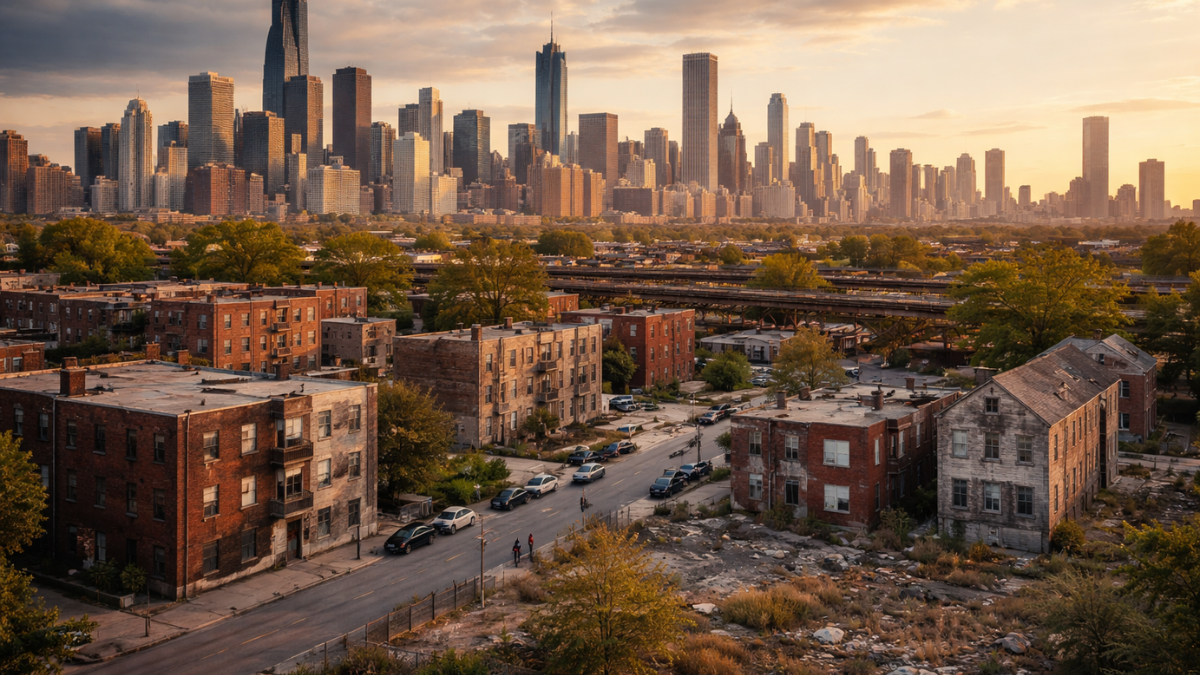
Urban sociology examines how social structures, institutions, and inequalities shape life in cities. Among global metropolitan areas, Chicago stands as one of the most significant case studies in understanding urban inequality and segregation. Often described as a “laboratory” of urban sociology, Chicago has historically illustrated how race, class, and spatial organization interact to produce deeply unequal urban outcomes.
From the early sociological work of the Chicago School to contemporary research, the city has been analyzed for its patterns of residential segregation, economic inequality, and institutional discrimination. Despite being one of the wealthiest and most influential cities in the United States, Chicago continues to experience stark divisions between neighborhoods—particularly along racial and economic lines.
This article explores the urban sociology of Chicago by examining the historical roots, structural mechanisms, and contemporary consequences of inequality and segregation, while also reflecting on sociological theories and policy responses.

The Chicago School and the Origins of Urban Sociology
Chicago occupies a central place in the development of urban sociology. Scholars from the Chicago School in the early 20th century, such as Robert Park and Ernest Burgess, conceptualized the city as an ecological system. Their concentric zone model explained urban spatial organization in terms of competition, invasion, and succession.
Although this model helped explain urban growth, it often underestimated the role of power, race, and institutional discrimination. Later scholars criticized the Chicago School for treating segregation as a natural process rather than a socially constructed phenomenon rooted in inequality.
Nevertheless, Chicago remains an ideal case study because it combines rapid industrialization, large-scale migration, and diverse populations—all of which contribute to complex patterns of inequality.
Historical Foundations of Segregation in Chicago
Racial Segregation and the “Black Belt”
Chicago’s segregation dates back to the Great Migration (1916–1970), when millions of African Americans moved from the rural South to northern cities. In Chicago, they were largely confined to a narrow area on the South Side known as the “Black Belt.”
White residents and institutions actively enforced segregation through violence, restrictive covenants, and discriminatory policies. Restrictive covenants legally prevented Black families from purchasing homes in certain neighborhoods, forcing them into overcrowded areas.
This spatial confinement created dense, segregated communities that lacked access to resources and opportunities.
Redlining and Institutional Discrimination
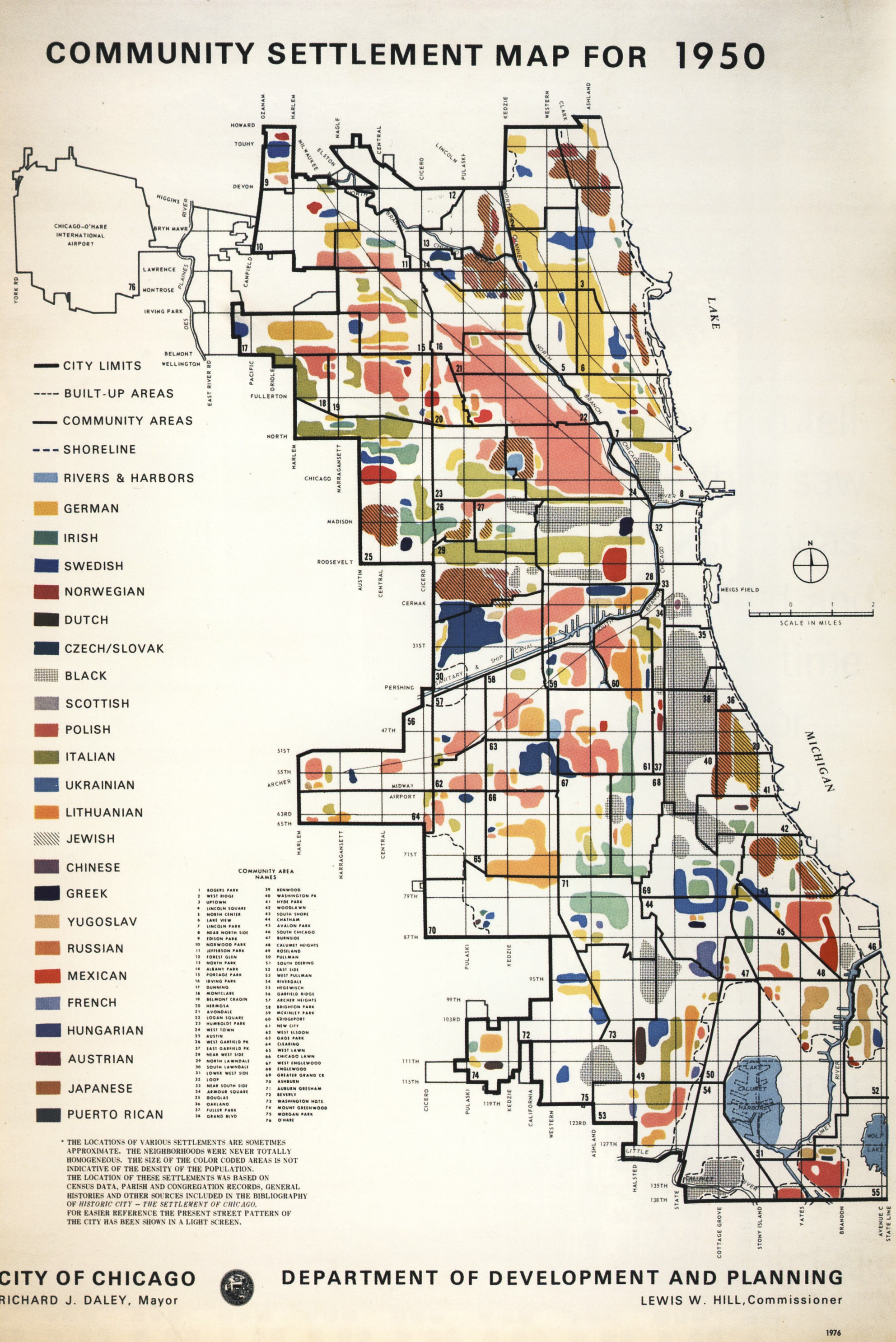
One of the most significant drivers of segregation in Chicago was redlining. This practice involved denying financial services—such as mortgages—to residents of certain neighborhoods, often based on race or income.
Government-backed maps labeled minority neighborhoods as “high risk,” discouraging investment and reinforcing segregation. These policies had long-term consequences:
- Reduced homeownership
- Lower property values
- Persistent neighborhood poverty
Research shows that redlining contributed significantly to long-term housing inequality and continues to shape urban disparities today.
Structural Mechanisms of Urban Inequality
Urban inequality in Chicago is not accidental; it is produced and maintained through structural mechanisms embedded in institutions.
Housing Segregation
Housing is at the core of Chicago’s inequality. The city remains one of the most segregated metropolitan areas in the United States.
Segregation is reinforced by:
- Zoning laws
- Unequal access to credit
- Real estate practices
- Neighborhood preferences shaped by race and class
Even after the Fair Housing Act of 1968 outlawed explicit discrimination, the legacy of past policies continues to shape residential patterns.
Economic Inequality
Economic disparities in Chicago are stark and closely tied to race. A recent study found that:
- 72% of White families own homes
- Only 34% of Black families own homes
This gap reflects broader inequalities in wealth accumulation, employment opportunities, and access to capital.
Moreover, Chicago has become increasingly polarized, with wealthy and poor neighborhoods growing further apart. The decline of middle-class neighborhoods has intensified spatial inequality.
Education and Social Mobility
Segregation also affects educational opportunities. Schools in poorer neighborhoods often have fewer resources, lower funding, and limited access to quality education.
This creates a cycle:
Segregated housing → Unequal schools → Limited opportunities → Continued poverty
Such structural inequality limits upward mobility and reinforces intergenerational disadvantage.
Spatial Segregation and the Urban Landscape

Chicago’s spatial organization reflects its social divisions. The city is often described as divided into:
- Wealthy, predominantly White neighborhoods on the North Side
- Poorer, predominantly Black and Latino neighborhoods on the South and West Sides
These divisions are not merely demographic—they are embedded in infrastructure, public services, and environmental conditions.
Research indicates that segregation leads to “resource-scarce environments,” where residents have limited access to healthcare, employment, and social networks.
Social Consequences of Segregation
Concentrated Poverty
Segregation concentrates poverty in specific neighborhoods. High-poverty areas often lack:
- Quality schools
- Healthcare facilities
- Employment opportunities
This concentration creates environments where social mobility is extremely difficult.
Health Inequalities
Studies show that historically segregated neighborhoods experience worse health outcomes, including higher rates of chronic diseases and lower life expectancy.
These health disparities are linked to environmental factors, stress, and limited access to healthcare.
Crime and Violence
Segregation and inequality are also associated with higher rates of violence. Disinvestment and limited opportunities contribute to social instability in marginalized neighborhoods.
Social Isolation
Segregation reduces interaction between different social groups, leading to:
- Reduced social cohesion
- Increased prejudice
- Fragmented urban communities
Sociological Perspectives on Chicago’s Inequality
Structural Functionalism
From a functionalist perspective, inequality may be seen as a necessary feature of society. However, in Chicago, extreme inequality undermines social stability and cohesion.
Conflict Theory
Conflict theorists argue that inequality in Chicago is the result of power struggles between groups. Dominant groups use institutions—such as housing markets and financial systems—to maintain their advantages.
This perspective helps explain:
- Racial segregation
- Wealth disparities
- Institutional discrimination
Symbolic Interactionism
At the micro level, segregation shapes everyday interactions and identities. Neighborhoods become symbols of status, influencing how individuals perceive themselves and others.
Contemporary Trends and Challenges
Gentrification
In recent years, gentrification has transformed some Chicago neighborhoods. While it brings investment and development, it also displaces long-term residents and reinforces inequality.
Persistent Segregation
Despite policy efforts, Chicago remains highly segregated. Studies show that segregation continues to shape access to resources and opportunities.
Urban Policy and Reform
Efforts to address inequality include:
- Affordable housing initiatives
- Community investment programs
- Educational reforms
However, these policies often face political and structural barriers.
The Cost of Segregation
Segregation is not only a moral issue but also an economic one. It reduces overall productivity and limits economic growth. Research suggests that segregation negatively impacts entire metropolitan regions, not just marginalized communities.
Moreover, inequality weakens social cohesion and increases public expenditure on social services.
Toward a More Equitable Chicago
Addressing inequality in Chicago requires structural change:
Inclusive Housing Policies
Expanding affordable housing across neighborhoods can reduce segregation.
Economic Redistribution
Policies that address income inequality and provide opportunities for marginalized communities are essential.
Educational Equity
Improving access to quality education can break cycles of poverty.
Community Empowerment
Strengthening local communities and promoting participation can foster social cohesion.
Conclusion
The urban sociology of Chicago reveals how inequality and segregation are deeply embedded in the structure of cities. Far from being natural or inevitable, these patterns are the result of historical policies, institutional practices, and social dynamics.
Chicago’s experience demonstrates that urban inequality is multidimensional—spanning housing, education, health, and economic opportunity. It also highlights the importance of sociological analysis in understanding and addressing these challenges.
As cities around the world continue to grow, the lessons from Chicago remain highly relevant. Creating more equitable urban environments requires not only policy reform but also a fundamental rethinking of how cities are organized and governed.
FAQs
1. What is Urban Sociology of Chicago?
Urban Sociology of Chicago refers to the sociological study of urban life in Chicago, focusing on patterns of inequality, segregation, social structure, and institutional dynamics within the city.
2. Why is Chicago important in urban sociology?
Chicago is considered a classic case study because it was central to the Chicago School of Sociology and provides clear examples of urban segregation, migration, and social inequality.
3. How does Urban Sociology of Chicago explain segregation?
Urban Sociology of Chicago explains segregation as a result of historical policies like redlining, racial discrimination, and economic inequality rather than natural urban growth.
4. What role did the Chicago School play in Urban Sociology of Chicago?
The Chicago School introduced key theories like the concentric zone model, helping explain urban spatial patterns, though later criticized for ignoring structural inequalities.
5. What is redlining in the context of Urban Sociology of Chicago?
In Urban Sociology of Chicago, redlining refers to discriminatory housing policies that denied loans and investments to minority neighborhoods, reinforcing segregation.
6. How does Urban Sociology of Chicago address economic inequality?
Urban Sociology of Chicago highlights how income disparities, unemployment, and unequal access to resources contribute to long-term economic inequality.
7. What are the main causes of segregation in Urban Sociology of Chicago?
The main causes include historical discrimination, housing policies, economic disparities, and social stratification based on race and class.
8. How does Urban Sociology of Chicago relate to education inequality?
Urban Sociology of Chicago shows that segregated neighborhoods often have underfunded schools, limiting social mobility and reinforcing inequality.
9. What is the impact of segregation according to Urban Sociology of Chicago?
Urban Sociology of Chicago identifies impacts such as concentrated poverty, health disparities, crime, and reduced social cohesion.
10. How does Urban Sociology of Chicago explain spatial inequality?
It explains spatial inequality as the uneven distribution of resources, services, and opportunities across different neighborhoods.
11. What is gentrification in Urban Sociology of Chicago?
In Urban Sociology of Chicago, gentrification refers to the process where wealthier populations move into poorer neighborhoods, often displacing existing residents.
12. How does Urban Sociology of Chicago analyze race and class?
Urban Sociology of Chicago examines how race and class intersect to shape access to housing, jobs, education, and social mobility.
13. What policies are suggested by Urban Sociology of Chicago to reduce inequality?
Suggested policies include affordable housing, educational reforms, economic redistribution, and community development initiatives.
14. How does Urban Sociology of Chicago affect social mobility?
It shows that segregation and inequality restrict opportunities, making it difficult for individuals from disadvantaged neighborhoods to improve their socioeconomic status.
15. Why is Urban Sociology of Chicago relevant today?
Urban Sociology of Chicago remains relevant as it helps understand modern urban challenges like inequality, segregation, and sustainable city development.
3 thoughts on “Urban Sociology of Chicago: Inequality and Segregation”