Introduction
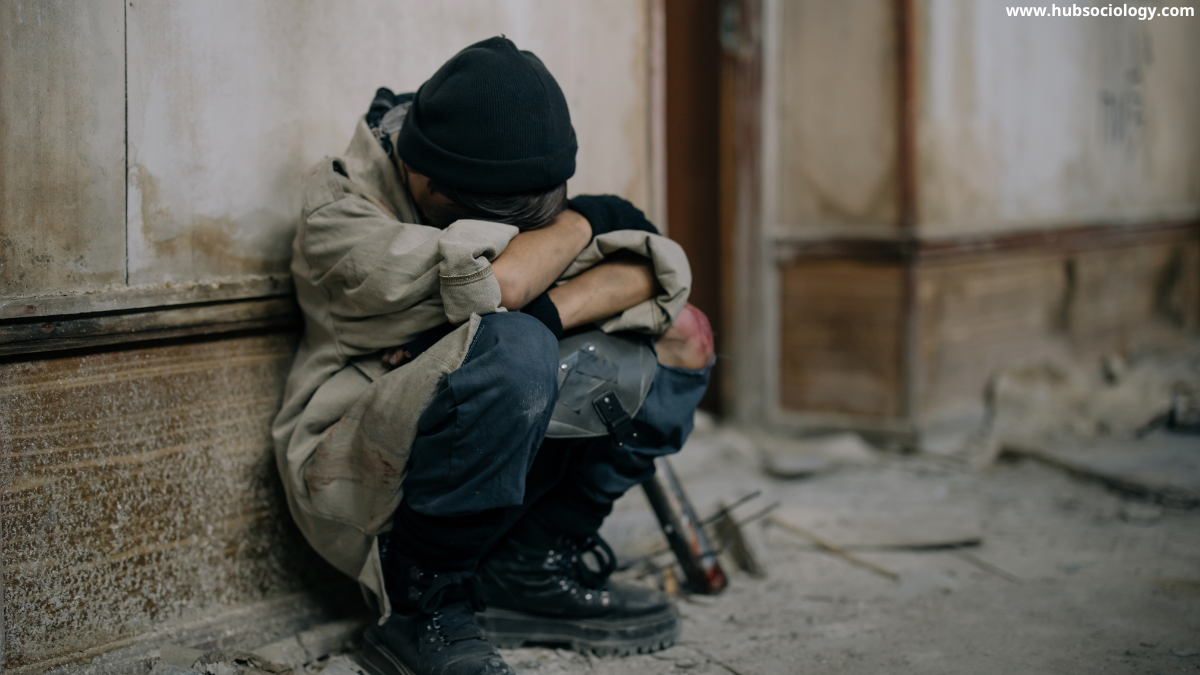
Poverty is one of the most persistent and complex social problems confronting human societies across time and space. Despite significant economic growth, technological advancement, and policy interventions, large sections of the global population continue to experience deprivation, insecurity, and marginalization. In sociology, poverty is not viewed merely as a lack of income but as a multidimensional condition shaped by social structures, power relations, cultural norms, and institutional arrangements. The question “Who are the poor?” is therefore not simply statistical; it is deeply sociological, involving issues of inequality, exclusion, and social justice.
Defining and measuring poverty has long been contested. Governments, international organizations, and scholars employ different indicators, leading to varied understandings of who qualifies as “poor.” These definitions influence public policy, welfare programs, and political debates. This article examines poverty from a sociological perspective by exploring how poverty is defined, how it is measured, and how social categories such as class, gender, caste, race, and region shape experiences of poverty.
Understanding Poverty in Sociology
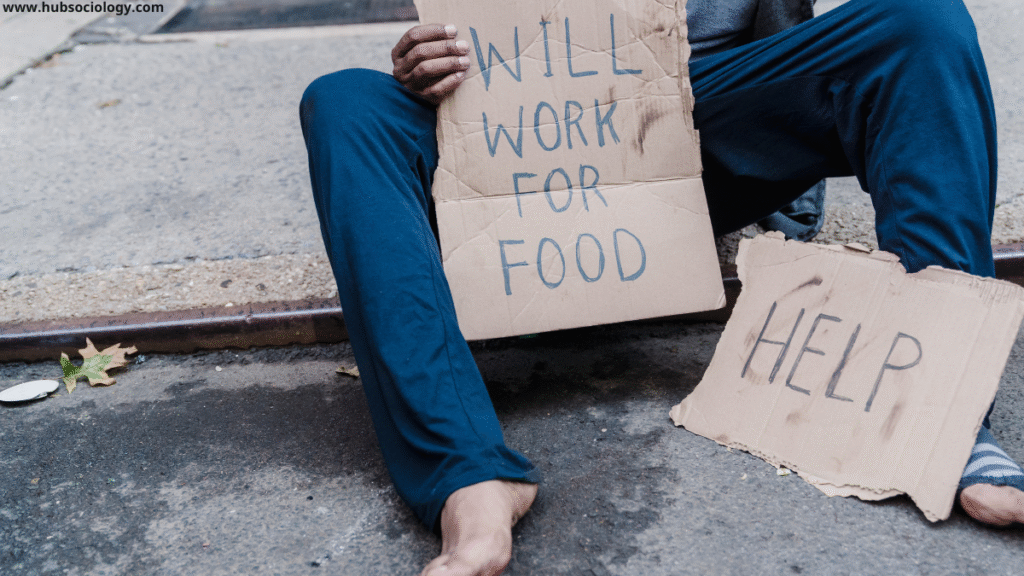
In sociological terms, poverty refers to a condition in which individuals or groups lack the resources necessary to maintain a socially acceptable standard of living. Unlike purely economic approaches, sociology emphasizes that poverty is socially produced and maintained through unequal power relations and structural disadvantages.
Sociologists argue that poverty must be understood in relation to broader social systems, including capitalism, colonial histories, patriarchy, caste hierarchies, and state policies. Thus, poverty is not simply an individual failure but a consequence of social arrangements that systematically disadvantage certain groups.
Absolute Poverty
Absolute poverty refers to a condition where individuals are unable to meet basic survival needs such as food, shelter, clothing, and clean water. This concept is often associated with a fixed poverty line based on minimum caloric intake or basic consumption requirements.
International organizations such as the World Bank define extreme poverty using a global income threshold, commonly measured in purchasing power parity (PPP). From a sociological viewpoint, absolute poverty highlights the most severe forms of deprivation, often found in developing countries, conflict zones, and marginalized rural areas.
However, critics argue that absolute poverty measures are too narrow. They fail to account for cultural variations in needs and ignore social aspects such as dignity, participation, and relative deprivation.
Relative Poverty
Relative poverty defines poverty in relation to the living standards of a particular society. People are considered poor if they lack the resources to participate fully in the normal life of their community. This approach is especially relevant in developed and middle-income societies.
Sociologist Peter Townsend emphasized that poverty should be understood as exclusion from customary living patterns, social activities, and amenities. For example, lack of access to education, digital technology, or healthcare may constitute poverty even if basic survival needs are met.
Relative poverty highlights inequality within societies and draws attention to social comparison, stigma, and marginalization. It underscores the idea that poverty is relational rather than absolute.
Multidimensional Poverty
Contemporary sociology increasingly supports a multidimensional understanding of poverty. This approach recognizes that poverty is not only about income but also about access to education, health, housing, sanitation, employment, and social security.
The Multidimensional Poverty Index (MPI) captures overlapping deprivations across several indicators. Sociologically, this approach is significant because it reflects lived experiences of poverty and reveals how disadvantages accumulate across different spheres of life.
For instance, a household may earn above the poverty line yet lack access to clean drinking water, quality education, or healthcare. Such conditions perpetuate intergenerational poverty and social exclusion.
Cultural and Social Dimensions of Poverty
Poverty is deeply embedded in social and cultural contexts. Social norms, beliefs, and values influence how poverty is experienced and perceived. In some societies, poverty is associated with shame and stigma, leading to social isolation. In others, communal support systems may mitigate its harshest effects.
Oscar Lewis introduced the controversial concept of the “culture of poverty,” suggesting that long-term poverty creates distinct values and behaviors that perpetuate deprivation. While this theory has been criticized for blaming the poor, it sparked important debates about how socialization and environment interact with structural constraints.
Modern sociology largely rejects cultural determinism and emphasizes that so-called “poverty behaviors” are adaptive responses to limited opportunities rather than inherent traits.
Measuring Poverty: Methods and Indicators

Income and Consumption Measures
The most common method of measuring poverty is through income or consumption expenditure. Governments establish poverty lines based on minimum consumption needs. While these measures are useful for policy planning, they have limitations.
Income data often fail to capture informal economies, unpaid labor (especially women’s work), and fluctuations in earnings. Consumption measures may be more reliable but still overlook social dimensions such as access to public services.
Poverty Lines and Their Limitations
Poverty lines are socially constructed and politically influenced. What is considered “poor” in one society may be considered acceptable living in another. Moreover, poverty lines often underestimate deprivation by excluding non-monetary factors.
From a sociological perspective, poverty lines risk depoliticizing poverty by reducing it to a technical issue rather than a question of inequality and power.
Multidimensional Indices
Multidimensional indices attempt to overcome these limitations by including health, education, and living standards. Sociologists appreciate these measures because they align more closely with the concept of social exclusion.
However, even multidimensional indices face challenges, such as assigning weights to different indicators and capturing subjective experiences of poverty.
Who Are the “Poor”? A Sociological Profile
Class and Economic Structure
Poverty is closely linked to class position. The working poor, informal laborers, agricultural workers, and the unemployed are more vulnerable to economic shocks. Capitalist economies often produce wealth alongside persistent poverty due to unequal distribution of resources.
Marxist sociology views poverty as an outcome of exploitation and surplus extraction, where the working class remains impoverished despite contributing to economic growth.
Gender and Poverty
Women experience poverty differently and often more intensely than men, a phenomenon known as the “feminization of poverty.” Gender wage gaps, unpaid care work, limited access to property, and patriarchal norms contribute to women’s economic vulnerability.
Single mothers, elderly women, and women in informal employment are particularly at risk. Sociology emphasizes that gendered power relations are central to understanding poverty.
Caste, Race, and Ethnicity
In many societies, poverty is closely linked to caste, race, and ethnicity. In India, historically marginalized castes and tribal communities experience higher poverty rates due to structural discrimination. Similarly, racial and ethnic minorities in countries like the United States face systemic barriers to education, employment, and housing.
Sociologists argue that poverty among these groups cannot be explained without addressing historical oppression and institutional racism.
Rural and Urban Poverty
Rural poverty is often associated with landlessness, agricultural distress, and lack of infrastructure. Urban poverty, on the other hand, manifests in slums, informal settlements, and precarious employment.
Urban poor populations face unique challenges such as housing insecurity, environmental hazards, and lack of social protection. Sociology highlights how urbanization and development policies can both alleviate and intensify poverty.
Poverty, Social Exclusion and Power
Poverty is closely linked to social exclusion—the process by which individuals or groups are systematically denied full participation in society. Exclusion operates through institutions such as education, labor markets, healthcare systems, and political processes.
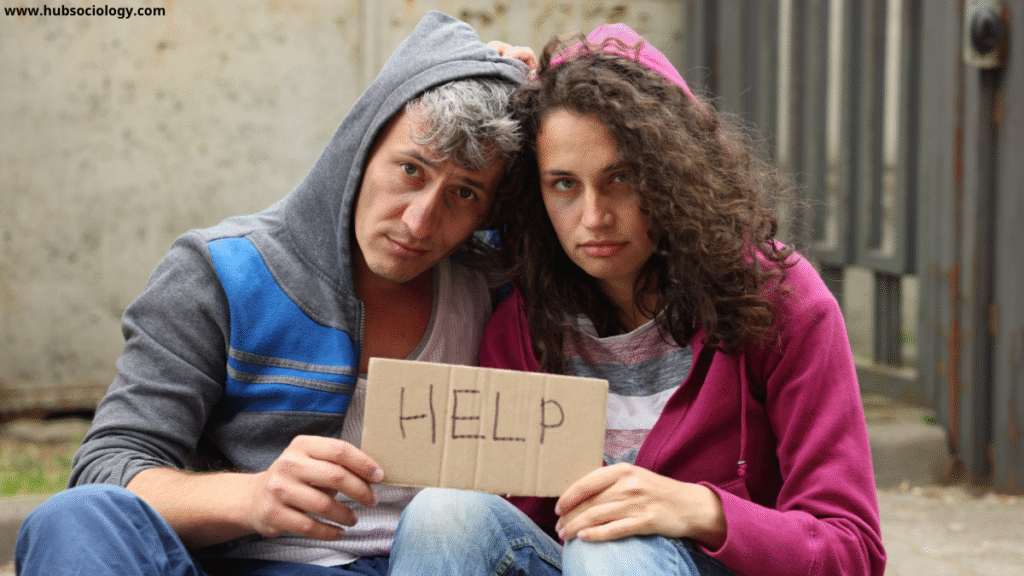
Michel Foucault’s ideas on power help explain how knowledge systems and policies define and regulate the poor. Welfare systems often categorize the poor in ways that control behavior rather than empower individuals.
Poverty and the State
The role of the state is central in defining and addressing poverty. Welfare policies, social security programs, and labor regulations shape who is protected and who remains vulnerable. Sociologists debate whether welfare states reduce poverty or merely manage it.
Neoliberal policies emphasizing market solutions and reduced state intervention have often led to increased inequality and insecurity. From a sociological perspective, poverty reduction requires not only economic growth but also redistributive justice and inclusive institutions.
Conclusion
Defining and measuring poverty is not a neutral or purely technical exercise; it is deeply sociological and political. Poverty reflects broader patterns of inequality, power, and social organization. While income-based measures provide useful data, they fail to capture the full reality of deprivation experienced by marginalized groups.
A sociological perspective emphasizes that the “poor” are not a homogeneous group but are differentiated by class, gender, caste, race, and location. Understanding poverty requires attention to structural factors, historical injustices, and social relations that shape life chances.
Ultimately, addressing poverty demands more than measurement—it requires a commitment to social justice, equality, and human dignity. Only by recognizing poverty as a social condition produced by unequal systems can societies move toward meaningful and sustainable solutions.
Frequently Asked Questions (FAQs)
1. What is poverty in sociological terms?
In sociology, poverty refers to a condition where individuals or groups lack the material, social, and cultural resources required to participate fully in society. It is understood as a structural problem rather than an individual failure.
2. How is poverty different from inequality?
Poverty refers to deprivation below a minimum standard of living, while inequality refers to unequal distribution of resources across society. Sociology views poverty as an outcome of social and economic inequalities.
3. What is absolute poverty?
Absolute poverty is a condition where people cannot meet basic survival needs such as food, shelter, and clothing. It is measured using fixed minimum standards, often through poverty lines.
4. What is relative poverty?
Relative poverty defines individuals as poor when they lack the resources to live according to the standards of their society. It emphasizes social exclusion and inequality rather than basic survival alone.
5. Who introduced the concept of relative poverty?
The concept of relative poverty was popularized by sociologist Peter Townsend, who emphasized participation in normal social life as a key criterion.
6. What is multidimensional poverty?
Multidimensional poverty refers to deprivation in multiple areas such as education, health, housing, sanitation, and living conditions, not just income.
7. Why is income-based measurement of poverty criticized in sociology?
Sociologists criticize income-based measures because they ignore social exclusion, unpaid labor, informal economies, and access to public services, which are crucial to understanding lived poverty.
8. What is the Multidimensional Poverty Index (MPI)?
The MPI measures poverty by assessing deprivations across health, education, and living standards, providing a broader understanding of poverty beyond income.
9. Who are considered the “poor” in sociological analysis?
The poor typically include marginalized groups such as informal workers, landless laborers, women, racial and caste minorities, migrants, and residents of slums and rural areas.
10. What is the feminization of poverty?
The feminization of poverty refers to the disproportionate representation of women among the poor due to gender discrimination, wage gaps, unpaid care work, and limited access to resources.
11. How does caste or race influence poverty?
Caste and race influence poverty through historical discrimination, social exclusion, and unequal access to education, employment, and political power.
12. What is the culture of poverty theory?
Proposed by Oscar Lewis, the culture of poverty theory suggests that long-term poverty creates distinct values and behaviors. However, it is criticized for blaming the poor rather than addressing structural causes.
13. How is poverty linked to social exclusion?
Poverty and social exclusion are interconnected, as the poor are often excluded from education, healthcare, political participation, and social networks.
14. What role does the state play in defining poverty?
The state defines poverty through poverty lines, welfare eligibility, and policy frameworks, shaping who receives assistance and how poverty is addressed.
15. Why is poverty considered a structural problem in sociology?
Sociology views poverty as a structural issue because it arises from unequal economic systems, power relations, and institutional arrangements rather than individual shortcomings.