Introduction on Globalization and Social Change
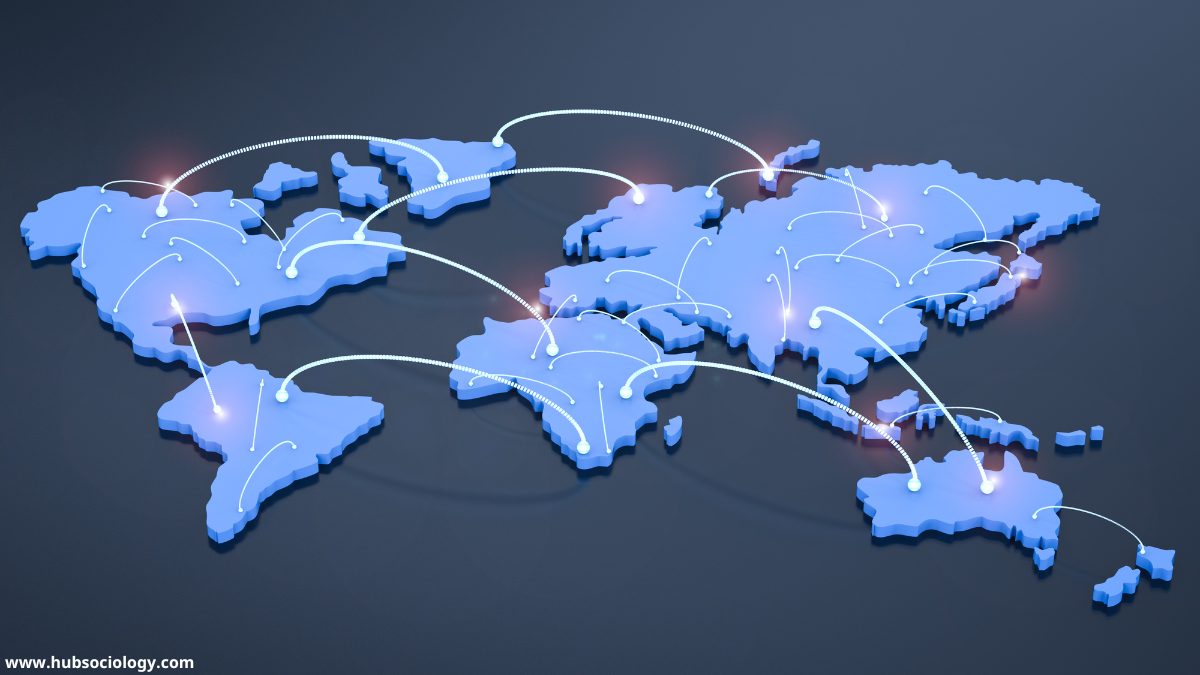
Globalization has emerged as one of the most transformative forces shaping societies in the 21st century. North America—particularly the United States, Canada, and Mexico—stands at the crossroads of global economic, cultural, and political flows that have redefined social life in profound ways. From changes in labor markets and migration patterns to shifts in identity, family structures, consumption culture, and social inequality, globalization has produced both opportunities and challenges across the continent. Understanding these transformations requires a sociological lens that examines not just economic exchanges but also the lived experiences, institutional changes, and cultural negotiations that globalization engenders.
This article explores how Globalization and Social Change has reshaped North American societies, drawing upon key sociological frameworks such as world-systems theory, cultural hybridization, transnationalism, and global cultural political economy. It highlights the multidimensional nature of globalization—economic, cultural, technological, political—and analyzes its impact on identity, social inequality, work, migration, culture, communities, and social movements.
Historical Context: North America and the Global Order
Rise of North America in the Global System
Historically, North America has been central to the formation of the modern global capitalist system. Immanuel Wallerstein’s world-systems theory positions the United States as a “core” nation characterized by advanced technology, strong state institutions, and dominance over economic and political networks. Canada shares many core characteristics, while Mexico occupies a semi-peripheral position—integrated into global production chains but with structural vulnerabilities.
This historical dominance sets the stage for understanding how globalization affects North America: the region is not merely a passive recipient but an active driver of global processes.
Late 20th-Century Neoliberal Globalization
From the 1980s onward, neoliberal reforms—deregulation, privatization, free-market expansion—accelerated globalization. North America became both a laboratory and a promoter of neoliberal globalization, reshaping its internal class structure, labor markets, and welfare institutions.
Economic Globalization and Social Transformation
Economic globalization is often the first domain scholars discuss. In North America, its effects are visible in production, employment, class dynamics, and urban transformation.
Restructuring of Labor and Production
The outsourcing of manufacturing jobs to Mexico, China, and Southeast Asia since the 1990s dramatically affected the American and Canadian working classes. This shift produced:
- Deindustrialized towns, particularly in the U.S. Midwest.
- A service-oriented economy with polarized job quality.
- Growth of precarious, gig-based employment.
- Rising anxiety among the working and middle classes.
In contrast, Mexico’s integration into global supply chains (especially through NAFTA) created industrial hubs such as Monterrey and Tijuana but often with low wages, weak labor protections, and dependency on foreign capital.
Sociologists view this as a form of global capitalist restructuring that unevenly benefits different classes and regions.
The Gig Economy and Technological Globalization
Platforms like Uber, Amazon, and DoorDash reflect the fusion of technological and economic globalization. While they offer flexibility and new income sources, they also erode job security and blur boundaries between labor and leisure. North America now navigates a new digital class divide between:

- high-skilled tech workers,
- low-wage gig workers, and
- those excluded from digital economies.
Consumer Culture and Hyper-Globalization
North America is both producer and consumer of global brands. The rise of:
- fast fashion,
- global food chains,
- e-commerce,
- and global entertainment industries
has transformed daily consumption habits, reinforcing what sociologists call global cultural capitalism—a system where identities are shaped through consumption rather than production.
Migration, Transnationalism, and Changing Demographics
Migration is one of the most significant social changes resulting from globalization, especially in North America.
Migration as a Global Phenomenon
North America is a major migration hub due to economic opportunities, political stability, and existing diasporic networks. Globalization has strengthened these migration flows by:
- reducing travel costs,
- enabling digital communication that maintains ties to home,
- and creating global labor demands in fields like tech, healthcare, and agriculture.
Rise of Transnational Communities
Sociologists emphasize that globalization creates transnational identities. Immigrants often:
- send remittances,
- maintain dual loyalties,
- communicate through digital platforms,
- and live “here and there” simultaneously.
Examples include Mexican transnational families, South Asian professionals in the U.S. and Canada, and Caribbean diaspora communities in Toronto and New York.
Demographic Transformation of North America
Migration has led to:
- Increased ethnic diversity
- Multilingual societies
- Growth of mixed-identity communities
- Changing urban demographics
Cities like Toronto, Vancouver, Los Angeles, and Houston are now among the most multicultural in the world.
However, such diversity also generates social tensions—debates over assimilation, multiculturalism, border policies, and citizenship.
Cultural Globalization: Identity, Media, and Everyday Life
Globalization reshapes not only economies but also identities, cultural practices, and everyday communication.

Global Media and Cultural Flows
North America is both a producer and consumer of global media.
North America as Producer
Hollywood, Netflix, Disney, and global music industries export North American cultural values worldwide—individualism, consumerism, liberal democracy.
North America as Consumer
At the same time, North America increasingly consumes global cultural products:
- Anime and K-pop
- Latin American music
- Global cuisines
- International fashion
- World literature and philosophy
This results in cultural hybridization, where cultures blend rather than clash.
Negotiating Identity in a Global Age
Identity in North America is increasingly shaped by:
- multicultural interactions,
- online communities,
- global human rights discourses,
- and transnational belonging.
Young generations often form globally-influenced identities, drawing from multiple cultural sources.
Language and Multicultural Communication
While English remains dominant, Spanish, French, Mandarin, Tagalog, Arabic, and Punjabi have become major languages in North America due to immigration.
This linguistic diversity contributes to:
- multicultural education debates,
- language rights struggles (e.g., Quebec),
- and shifting national identities.
Globalization and Social Inequality
Not all groups benefit equally from globalization. Inequality is one of the most urgent sociological concerns in North America.
Growing Income Inequality
Globalization has widened income gaps:
- Richest 1% benefit from global financial markets.
- Middle-class manufacturing workers lose job stability.
- Gig and migrant workers face precarity.
This has produced a “barbell economy,” with clusters of wealth at the top and bottom, and a shrinking middle.
Racial Inequality and Global Systems
In the U.S. and Canada, racial minorities disproportionately occupy low-wage globalized labor positions—farm work, caregiving, construction—reflecting historical inequalities in education, housing, and access to capital.
Globalization also amplifies racialized surveillance, border policing, and immigration detention systems.
Urban Inequalities and Global Cities
Cities like New York, Vancouver, and San Francisco have become global cities, attracting international investment and highly skilled migrants. However, this creates:
- Housing crises
- Gentrification
- Homelessness
- Segregation
Global capital drives up property prices, pushing working-class residents to the margins.
Family, Community, and Social Institutions
Globalization influences not just economies and cultures but also everyday social institutions.
Changing Family Structures
Global labor mobility and economic pressures reshape North American families:
- Dual-income households become the norm.
- Transnational parenting emerges (e.g., Filipino caregivers).
- Delayed marriage and low fertility rates become common.
- Single-person households rise in cities.
These changes reflect both cultural globalization and economic constraints.
Education in a Globalized Society
Education systems increasingly focus on:
- global competitiveness
- STEM and digital skills
- multicultural curricula
- international student mobility
Canada and the U.S. host millions of international students, transforming campuses into global spaces.
Religion and Globalization
Globalization introduces diverse religious practices:
- Growth of Buddhism, Sikhism, Islam, Hinduism, and indigenous spiritualities
- Interfaith dialogue
- New Age and hybrid practices
North America’s religious landscape becomes increasingly pluralistic.
Globalization, Environment, and Social Movements
Environmental Challenges
North American societies face global environmental issues:
- Climate change
- Deforestation
- Global supply chain pollution
- Waste from consumer culture
Environmental justice movements highlight how ecological harms disproportionately affect marginalized communities.
Rise of Global Social Movements
The last two decades have seen global movements influencing North American societies:
- Black Lives Matter
- Indigenous rights movements
- MeToo
- Climate activism (led by youth)
- Anti-globalization protests
- Digital freedom and labor rights campaigns
These movements leverage global networks, social media, and transnational solidarity.
Technological Globalization: Digital Life and Social Connectivity
Internet and Social Media as Global Platforms
Digital platforms create new global publics where people:
- share information
- build identities
- mobilize politically
- engage in global cultural consumption
North America is deeply integrated into this digital globalization, hosting major tech companies and innovations.
Surveillance and Data Capitalism
Tech globalization also brings:
- data extraction,
- surveillance capitalism,
- algorithmic inequality,
- privacy concerns.
Marginalized communities often face disproportionate risk due to digital surveillance practices at borders, in policing, and in workplaces.
Political Globalization and Governance
Global Governance and North America
North American states are key players in global institutions such as:
- United Nations
- World Bank
- IMF
- WTO
- NATO
Global political decisions influence domestic policies on trade, migration, environment, and human rights.
Nationalism vs Globalism
Globalization has triggered political backlash:
- U.S. debates over free trade, immigration, and global governance
- Rise of right-wing populism
- Struggles over multiculturalism in Canada
- Sovereignty concerns in Mexico
This tension reflects sociologist Anthony Giddens’ notion of reflexive modernity, where rapid globalization creates uncertainty and identity crises.
Indigenous Communities and Globalization
Globalization uniquely affects Indigenous peoples in North America.
Impacts include:
- Displacement by global resource extraction
- Cultural erosion through global media
- Economic marginalization
But globalization also creates opportunities:
- Global Indigenous rights networks
- International climate activism
- Revitalization of languages and traditions
- Digital storytelling platforms
Indigenous communities increasingly assert sovereignty and cultural autonomy in a globalized world.
The Future of Globalization in North America
Post-Pandemic Realignment
COVID-19 highlighted both the vulnerabilities and strengths of global systems:
- Supply chain disruptions
- Digital acceleration
- Remote work normalization
- Renewed focus on domestic production
North America continues reshaping its role in the global economy.
Rise of Regionalism: USMCA
The updated USMCA trade agreement signals renewed regional cooperation between the U.S., Canada, and Mexico—balancing globalization with regional stability.
Emerging Trends
Future social transformations will likely be shaped by:
- automation and AI
- climate migration
- global health governance
- digital currencies
- multicultural generational transitions
North American societies are poised to remain key arenas where globalization continues to evolve.
Conclusion
Globalization is not a distant or abstract process—it is woven into the everyday lives of North Americans. It shapes how people work, communicate, eat, study, love, consume, and express their identities. It generates new opportunities for cultural exchange, technological development, and economic growth, while also producing deep inequalities, political tensions, and cultural negotiations.
From migratory flows and global cities to digital culture and environmental activism, globalization transforms social structures and personal experiences across the continent. A sociological perspective reveals the complexity of these transformations—not simply as economic transactions but as dynamic social processes embedded in power relations, cultural interactions, and institutional change.
North American societies today are hybrid, interconnected, contested, and constantly evolving. Globalization is both a catalyst for social change and a terrain of struggle where different groups negotiate the meaning of identity, belonging, justice, and development. Understanding this complexity is essential for building inclusive, equitable, and sustainable futures in an increasingly interconnected world.
FAQs: Globalization and Social Change
1. What is meant by globalization and social change?
Globalization and social change refer to the interconnected processes through which global economic, cultural, political, and technological interactions transform social structures, institutions, and everyday life across societies.
2. How does globalization contribute to social change in modern societies?
Globalization drives social change by reshaping labor markets, migration patterns, cultural identities, communication systems, and political governance, leading to new social norms and inequalities.
3. Why is globalization and social change important in sociology?
In sociology, globalization and social change help explain how global forces influence local communities, identities, power relations, and social institutions such as family, education, and the economy.
4. How does globalization affect social inequality?
Globalization often increases social inequality by concentrating wealth among elites while exposing workers and marginalized groups to job insecurity, low wages, and limited social protection.
5. What is the role of culture in globalization and social change?
Culture plays a central role as globalization spreads ideas, values, media, and lifestyles, leading to cultural hybridization, identity negotiation, and sometimes cultural conflict.
6. How does globalization and social change affect employment?
Globalization transforms employment by outsourcing jobs, expanding the gig economy, increasing labor mobility, and creating precarious work conditions alongside high-skill opportunities.
7. What is the relationship between migration and globalization and social change?
Migration is a key outcome of globalization, contributing to social change by increasing multiculturalism, transnational identities, and demographic diversity in host societies.
8. How does globalization influence family and social institutions?
Globalization reshapes families and institutions through changing gender roles, dual-income households, transnational families, delayed marriage, and evolving education systems.
9. What is the impact of globalization and social change on identity?
Globalization and social change influence identity by exposing individuals to multiple cultures, global media, and transnational networks, creating hybrid and fluid identities.
10. How does technology link globalization and social change?
Technology accelerates globalization by enabling instant communication, digital economies, online activism, and global social networks that reshape social interaction and power structures.
11. What are the environmental effects of globalization and social change?
Globalization intensifies environmental challenges such as climate change and pollution while also promoting global environmental awareness and transnational ecological movements.
12. How do social movements respond to globalization and social change?
Social movements respond by forming global networks that advocate for climate justice, labor rights, racial equality, gender justice, and Indigenous rights.
13. Does globalization weaken national cultures and traditions?
Globalization does not simply erase traditions; instead, it often transforms them through adaptation, resistance, and cultural blending within global contexts.
14. What are the positive effects of globalization and social change?
Positive effects include cultural exchange, technological advancement, global cooperation, educational opportunities, and increased awareness of human rights and social justice.
15. What is the future of globalization and social change in North America?
The future of globalization and social change in North America will be shaped by digitalization, climate action, migration trends, political responses, and struggles over inequality and inclusion.
16. How does globalization and social change affect education systems?
Globalization and social change influence education by promoting global curricula, international student mobility, digital learning platforms, and skills suited to a global labor market.
17. What role does the state play in globalization and social change?
The state mediates globalization and social change by regulating markets, managing migration, protecting social welfare, and balancing national interests with global commitments.
18. How does globalization and social change impact developing regions connected to North America?
Globalization and social change affect developing regions through labor migration, remittances, resource extraction, trade dependency, and cultural exchange linked to North American economies.
19. Is globalization and social change a uniform process across societies?
No, globalization and social change are uneven processes; their impacts vary by class, race, gender, region, and political power, producing unequal outcomes within and across societies.
20. How do sociologists study globalization and social change?
Sociologists study globalization and social change using theories such as world-systems theory, modernization theory, transnationalism, and political economy to analyze global-local interactions.
3 thoughts on “Globalization and Social Change in North American Societies”