Introduction: Why Student Movements Matter in Modern Society
Student movements are an important form of collective action through which young people express dissatisfaction with educational institutions, government policies and broader social inequalities. Schools and universities are not merely places for academic learning; they are also institutions where young people develop political awareness, social identities and expectations about their futures. When students believe that these expectations are being undermined, educational grievances can develop into wider social protests.
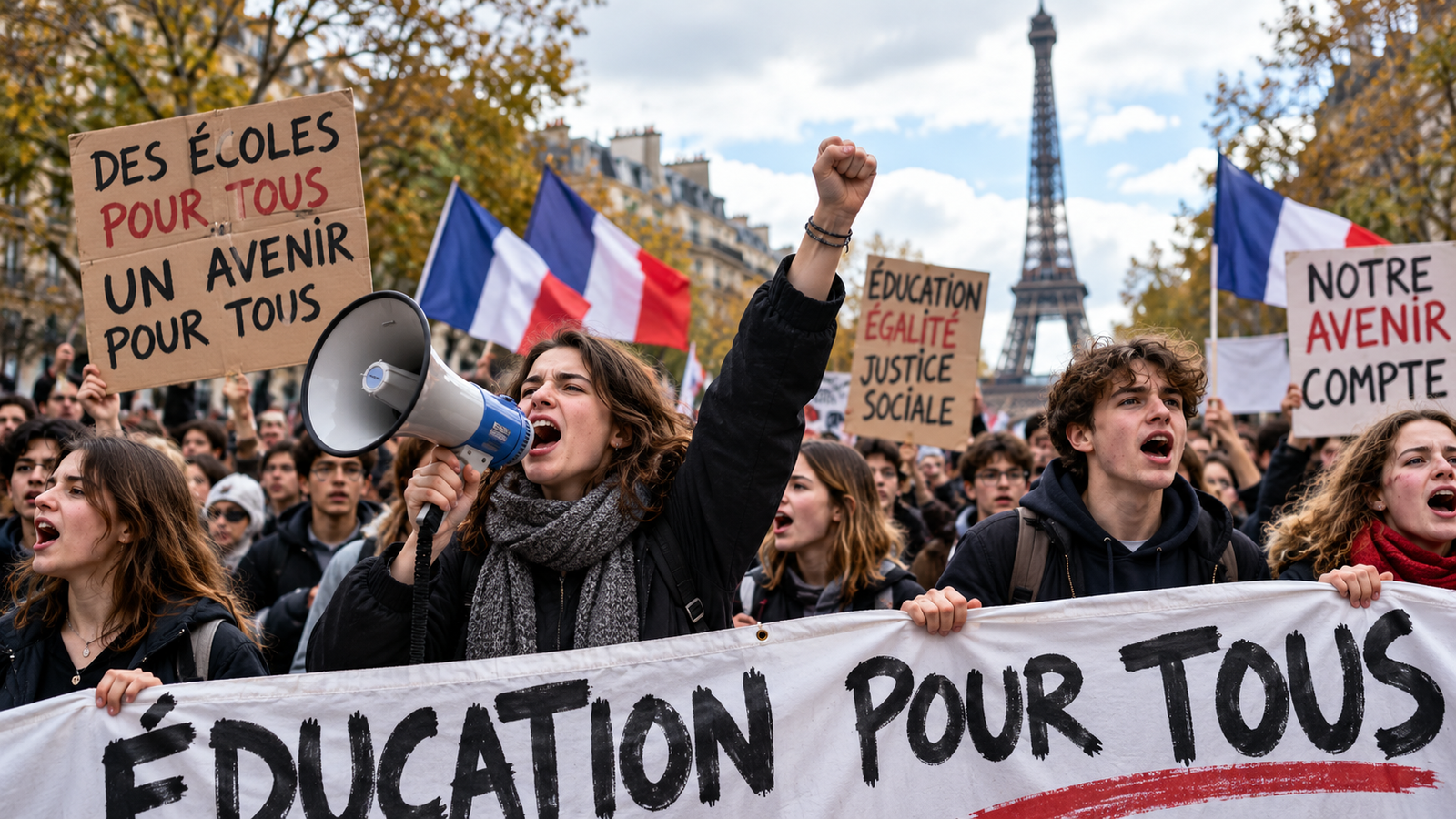
France provides a significant contemporary example. In October 2026, high school students joined demonstrations demanding improvements in educational conditions, while trade unions, parents and supporters of the Yellow Vest movement brought broader concerns about living costs, wages and public services into the streets. According to the Associated Press (AP), demonstrations on October 17 involved approximately 550,000 people according to authorities, while organizers estimated participation at around 800,000. These figures reflected different estimates of the scale of the mobilization. Read the AP report.

The protests demonstrate how student movements can connect educational problems with wider questions of social justice. From a sociological perspective, they raise important questions: Why do students mobilize? How does educational inequality influence political participation? Why do different social groups join the same demonstrations? And how can governments respond to student demands while protecting the right to peaceful protest?
The Background of Student Movements in France
The French student protests developed amid dissatisfaction with school conditions and unequal educational opportunities. Students and their supporters raised concerns about deteriorating school buildings, shortages of teachers and other staff, overcrowded classrooms, insufficient resources and difficulties accessing higher education.
An AP report published on October 6, 2026, described demonstrations involving more than 266,000 people according to government figures, as protests expanded from high school blockades into a national movement. Students argued that inadequate resources and unequal opportunities were affecting their education and future prospects. Source: AP News.
These grievances reflect a central sociological problem: education is widely presented as a pathway to social mobility, but access to educational opportunities is not always equal. Students may be formally entitled to education while experiencing substantial differences in the quality of teaching, school infrastructure, academic support and preparation for university.
For students from disadvantaged neighbourhoods, these differences can have lasting consequences. A shortage of qualified teachers or inadequate classroom facilities may affect academic achievement, while limited access to educational support can make competition for university places more difficult.
The protests therefore cannot be understood exclusively as a reaction to individual school problems. They also reflect concerns about the distribution of social resources and the ability of educational institutions to fulfil their promise of equal opportunity.
Sociological Causes of Student Movements
1. Educational Inequality and Social Stratification
Social stratification refers to the structured inequalities that divide society into groups with unequal access to resources, opportunities and social advantages. Education can reduce these inequalities, but it can also reproduce them.
Students do not enter educational institutions with identical social and economic resources. Family income, parental education, housing conditions, access to books, digital technology and private tutoring can all influence educational experiences.
When some schools have better facilities, more stable teaching staff and stronger academic support than others, students may perceive the education system as unfair. These differences can create frustration, particularly when educational achievement is presented as depending entirely on individual effort.
The French protests illustrate how school-level grievances can become demands for structural change. Students calling for better facilities and more teachers are not simply requesting immediate improvements; their demands also concern the fair distribution of educational opportunities.
From a sociological perspective, student movements can make inequalities visible that might otherwise remain hidden within everyday institutional practices.
2. Youth Frustration and Uncertainty About the Future
Young people often make educational decisions based on expectations about employment, economic security and social mobility. They invest time and effort in schooling because they expect education to improve their future prospects.
However, inadequate educational resources, uncertainty about university admission and concerns about employment can weaken confidence in this promise.
When students believe that institutions are failing to provide a fair opportunity to succeed, dissatisfaction may extend beyond the classroom. A school building in poor condition can become a symbol of wider political neglect, while difficulties accessing higher education can raise questions about whether achievement is genuinely rewarded.
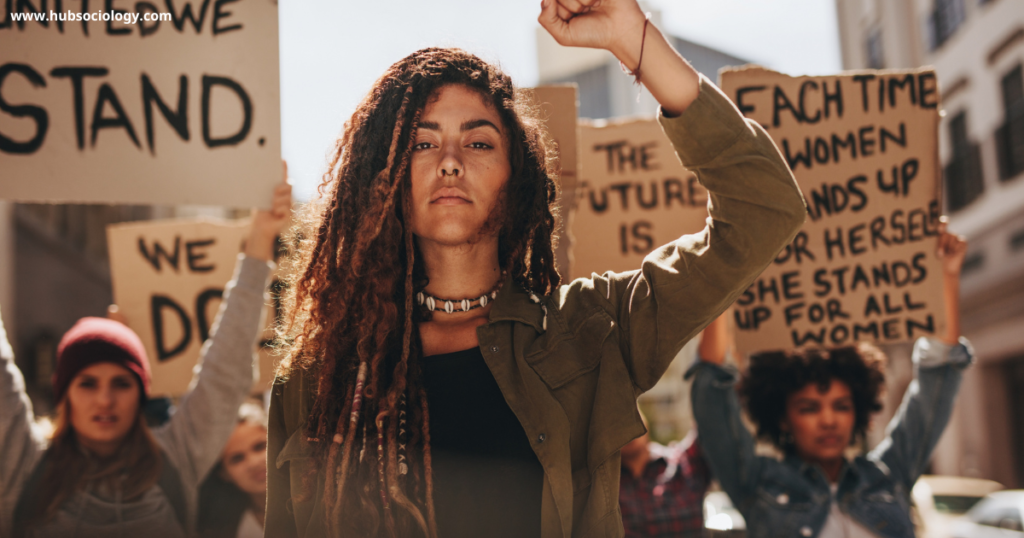
The French movement also demonstrates that young people are not merely passive recipients of public policy. Through demonstrations, school blockades, public statements and collective organizing, students can attempt to influence the institutions that shape their lives.
Their participation represents an effort to transform personal anxieties into public demands.
3. Economic Pressure and the Cost of Living
Student movements can gain wider support when educational grievances overlap with economic hardship.
The October 17 demonstrations in France connected demands for improved schools with public dissatisfaction about rising living costs, including the cost of energy, fuel and food. AP reported that trade unions and Yellow Vest supporters joined the wider mobilization, bringing economic concerns into the same protest environment.
This connection is sociologically important because families do not experience education separately from their economic circumstances. Rising household expenses can limit the resources available for transport, books, meals, technology and private educational support.
Economic pressure can also influence teachers, parents and other public-sector workers. When several groups face related problems, their grievances may become connected through a shared perception that existing policies do not adequately address their needs.
Student movements can therefore develop beyond the boundaries of educational institutions. Their demands may become part of a wider discussion about inequality, public expenditure, wages and the responsibilities of the state.
4. Limited Representation of Young People
Students are directly affected by educational decisions, yet they may have limited influence over the institutions that make those decisions.
This creates a question of political representation. When students feel that their experiences are not being taken seriously through established channels, demonstrations can become an alternative way to communicate their concerns.
Student unions, school groups, online campaigns and public marches provide opportunities to express collective demands. These activities allow young people to demonstrate that an issue affecting individual schools may also affect students elsewhere.
The French protests show why student participation matters in democratic societies. Young people do not need to wait until they are older to develop political opinions, debate public policy or participate in peaceful collective action.
At the same time, student representation requires more than public demonstrations. Meaningful participation also depends on opportunities for consultation, transparent decision-making and responses that address the substance of students’ concerns.
Student Movements Through Major Sociological Theories
Marxist Theory: Class Inequality and Education
Marxist sociology emphasizes the relationship between economic power, social class and institutional inequality. From this perspective, education must be examined in relation to the wider distribution of resources and opportunities.
Schools may promise equal opportunity while students from wealthier families retain advantages through private tutoring, educational technology, stable housing and other forms of support.
This does not mean that every educational difference is deliberately created by a particular class. Rather, a Marxist analysis asks how economic inequalities shape educational experiences and whether institutional arrangements reproduce existing social advantages.
In France, demands for better-resourced schools can be interpreted as challenges to unequal access to educational resources. When students and families connect these demands with the cost of living, their protests also question how economic pressures are distributed across society.
The theory helps explain why apparently local school problems can become part of a broader debate about social justice.
Functionalism: Education and Social Integration
Functionalist sociology examines how institutions contribute to social order, shared values and the coordination of society.
From this perspective, education transmits knowledge, develops skills and prepares young people for social roles. Schools also help establish expectations about fairness, achievement and citizenship.
Student protests can reveal tensions between these institutional goals and actual experiences. If students believe that their schools lack essential resources, they may question whether educational institutions are fulfilling their responsibilities.
Protest can therefore function as a form of social feedback. It communicates that existing arrangements are not meeting the expectations of at least some members of society.
However, functionalism also draws attention to the consequences of prolonged disruption. School closures and interrupted lessons can affect students who already face educational disadvantages. Resolving disputes through dialogue and institutional reform can help restore confidence while protecting learning.
Social Movement Theory: Mobilization and Collective Action
Social movement theory provides a direct framework for understanding how individual dissatisfaction develops into organized public action.
Three concepts are especially useful: mobilizing resources, political opportunities and collective framing.
Mobilizing resources refers to the networks, organizations, communication channels and practical support that enable people to act together. Student associations, trade unions, parents and social media can help distribute information and coordinate demonstrations.
Political opportunities concern the conditions that make collective action possible or potentially influential. Public debate, political competition, government responses and media attention can affect whether protesters believe their demands may receive consideration.
Collective framing refers to the way movements define problems and present them as shared concerns. Rather than treating poor school facilities as isolated difficulties, student activists can frame them as evidence of unequal educational opportunities and insufficient public investment.
The French protests illustrate how these mechanisms can interact. School-based mobilization developed into a broader public demonstration as students received support from other social groups. The resulting protests connected educational demands with wider concerns about economic security and public services.
Weberian Sociology: Authority and Legitimacy
Max Weber’s sociology distinguishes between the possession of power and the legitimacy through which authority is accepted.
Governments and school administrations have formal authority to establish rules, allocate resources and maintain public order. However, authority can become contested when people believe that decisions are unfair, unresponsive or insufficiently justified.
Student protests can therefore be understood as challenges to institutional legitimacy. Students may question not only a particular policy but also the process through which educational decisions are made.
The government’s response becomes important because it can influence whether students perceive institutions as willing to listen. Consultation, transparent explanations and credible reforms may strengthen institutional trust. Responses perceived as dismissive or excessively coercive may deepen alienation.
This perspective does not imply that every protest demand must be accepted. It highlights the importance of accountable decision-making and the social conditions under which authority is regarded as legitimate.
The Role of Social Media in Student Movements

Social media has changed the way student movements emerge, communicate and expand. Digital platforms allow students to share information about school conditions, publish photographs and videos, circulate protest demands and coordinate collective activities across geographical boundaries.
In the French protests, social media calls helped encourage participation in demonstrations that brought together students, trade unions and supporters of the Yellow Vest movement. AP’s October 17 report described the wider mobilization as a response to educational difficulties and dissatisfaction with rising living costs.
From a sociological perspective, digital communication can reduce the practical barriers to participation. A student who feels isolated within one school may discover that others face similar problems. This recognition can create a sense of shared identity and encourage collective action.
Social media also helps movements develop a common vocabulary. Hashtags, slogans and short videos can turn complicated grievances into messages that are easier to communicate to wider audiences.
However, digital mobilization has limitations. Online popularity does not necessarily translate into sustained participation, and misleading information can circulate rapidly. Online discussions may also exaggerate divisions or encourage confrontational behaviour. Successful student movements therefore require more than visibility: they need clear objectives, responsible communication, organizational capacity and meaningful engagement with the affected communities.
Why Did Student Protests Connect With the Yellow Vest Movement?
One of the most significant features of the French demonstrations was the connection between student activism and the Yellow Vest movement, which emerged in 2018 amid opposition to fuel costs and perceptions of social injustice.
The two movements developed in different contexts. Students emphasized educational conditions, school resources and future opportunities. Yellow Vest supporters highlighted economic pressures, purchasing power and concerns about unequal treatment.
Nevertheless, both movements could identify overlapping concerns about the distribution of resources, the cost of everyday life and the responsiveness of political institutions.
The connection illustrates the sociological concept of coalition building. A coalition forms when groups with distinct interests identify enough common ground to coordinate their activities.
Such cooperation can increase the visibility of a movement and extend its reach beyond its original participants. Students may gain support from workers and parents, while older participants may view young people’s educational grievances as connected to the economic future of their families.
The Yellow Vest movement also provides a historical context for understanding the symbolic meaning of protest in France. Research published through the Institut Polytechnique de Paris examined the early geographical spread of the Yellow Vest mobilization and identified mobility-related factors and online participation as important elements of its development.
However, student movements and the Yellow Vest movement should not be treated as identical. Their participants, immediate demands and organizational structures differ. Their cooperation reflects overlapping grievances rather than complete agreement on political goals.
Student Movements, Protest Policing and Democratic Rights
Public demonstrations create a difficult challenge for governments: authorities must maintain public safety while respecting the right to peaceful assembly.
The October 17 demonstrations in France included large peaceful marches, but AP also reported violent clashes, fires, looting and attacks on public buildings in several cities. Police used tear gas and water cannons in some confrontations, and authorities reported arrests. These events show why it is important to distinguish peaceful student participation from violence and property destruction.
From a sociological standpoint, policing can influence how protesters understand the state. If students perceive the response to peaceful demonstrations as disproportionate, they may lose confidence in public institutions. Conversely, violence against people or the destruction of public property can undermine public support for a movement and expose participants and bystanders to harm.
The relationship between protest and policing is therefore not simply a question of order versus disorder. It also concerns civil liberties, accountability, public safety and the legitimacy of state authority.
A balanced analysis should distinguish verified incidents from allegations, recognize the different responsibilities of protesters and law enforcement, and avoid treating all demonstrators as responsible for the actions of violent individuals.
For student movements to remain inclusive and effective, peaceful participation, transparent policing and credible channels for dialogue are essential.
The Role of Parents, Teachers and Trade Unions
Student movements often become more influential when they receive support from people outside educational institutions.
Parents may participate because they are concerned about their children’s learning conditions and future opportunities. Teachers may support demands for adequate staffing, safe buildings and sufficient classroom resources. Trade unions can provide organizational experience, communication networks and the ability to coordinate demonstrations across different sectors.
In France, the October protests brought students together with parents, workers and trade union supporters. This broader participation suggests that educational problems can become concerns for society as a whole rather than remaining the responsibility of students alone.
Sociologically, this reflects intergenerational solidarity: cooperation between age groups around shared social concerns.
Such solidarity can strengthen a movement, but it can also introduce tensions. Students may prioritize immediate educational reforms, while trade unions may focus on wages, pensions or public expenditure. Parents may be concerned about missed lessons even when they sympathize with the protesters.
A durable coalition must therefore recognize differences among its members while identifying clear, achievable objectives.
What Are the Wider Consequences of Student Movements?
Student movements can have consequences beyond the immediate protest period.
First, they can place neglected problems on the public agenda. Media coverage and public demonstrations can make school conditions, staff shortages and educational inequalities more visible to policymakers and citizens.
Second, student mobilization can develop political skills. Participants may gain experience in public speaking, organizing meetings, communicating demands and negotiating with authorities. These experiences can contribute to long-term civic engagement.
Third, movements can encourage institutional reform. Governments and school administrations may review resource allocation, establish consultation mechanisms or reconsider policies when sustained public pressure reveals significant dissatisfaction.
Fourth, student protests can reshape public debates about citizenship. When young people participate in political discussions, they challenge the assumption that political engagement belongs primarily to adults.
However, protests also carry costs. School blockades and prolonged closures may interrupt learning, while confrontations can cause injuries, arrests and property damage. Students who already face educational difficulties may be especially affected by missed classes.
The consequences therefore depend on the movement’s demands, organizational practices, public response and the willingness of institutions to address underlying problems.
A protest’s visibility should not be confused with policy success. Long-term change requires sustained attention to implementation, funding and accountability.
<WritingBlock id=”58315″ variant=”document”>## What Can Governments Learn From Student Movements?
The French protests offer several lessons for governments, educational administrators and policymakers.
First, educational infrastructure matters. Safe buildings, adequate classroom facilities, sufficient teaching staff and appropriate learning materials are basic requirements for an effective education system. These needs should be assessed regularly, with particular attention to disadvantaged communities.
Second, students need meaningful representation. Consultation should not be limited to moments of crisis. Student councils, school-level forums and transparent grievance mechanisms can provide opportunities to raise concerns before dissatisfaction develops into large-scale confrontation.
Third, educational equality requires attention to wider social conditions. Differences in family income, access to technology, housing stability and academic support can affect students’ educational experiences. Improving schools therefore requires policies that consider the broader circumstances in which students learn.
Fourth, public authorities should distinguish peaceful protest from violence. Protecting public safety and safeguarding the right to peaceful assembly are compatible responsibilities. Clear communication, proportionate enforcement and independent investigation of alleged misconduct can help maintain public confidence.
Finally, governments should evaluate reforms through measurable outcomes. Improvements in teacher availability, classroom conditions, student participation and access to higher education can help establish whether policy responses address the problems identified by protesters.
The central lesson is that student movements should be understood as opportunities to identify institutional weaknesses and strengthen public accountability, rather than simply as interruptions to the normal functioning of schools.
Conclusion: Student Movements as Agents of Social Change
Student movements occupy an important place in contemporary sociology because they connect the everyday experiences of young people with broader questions of power, inequality, citizenship and social justice.
The October 2026 protests in France illustrate how concerns about school conditions and educational opportunities can develop into a wider mobilization involving parents, workers, trade unions and supporters of the Yellow Vest movement. The demonstrations also show that movements can contain both peaceful collective action and episodes of violence, requiring careful analysis rather than sweeping generalizations.
Marxist theory helps explain the relationship between educational opportunities and social inequality. Functionalism highlights the expectations placed on educational institutions and the role of protest as social feedback. Social movement theory explains how organizations, networks and shared interpretations help transform individual grievances into collective action. Weberian sociology draws attention to authority, legitimacy and institutional responsiveness.
Together, these perspectives show that student activism is not simply a temporary expression of youthful frustration. It can reveal problems within educational institutions, introduce neglected issues into public debate and create opportunities for political learning.
The long-term significance of student movements depends on what happens after demonstrations end. If policymakers respond with meaningful reforms, transparent dialogue and equitable investment, collective action can contribute to stronger educational institutions and greater public trust. If underlying grievances remain unresolved, dissatisfaction may persist.
Ultimately, student movements remind society that young people are not merely future citizens. They are present members of society whose experiences, rights and voices deserve serious consideration in decisions affecting education and the public good.
FAQs About Student Movements in France
1. What are Student Movements in France?
Student Movements in France are forms of collective action in which students organize demonstrations, campaigns, school blockades and public discussions to demand educational reforms or express concerns about wider social issues. Student Movements in France can address school funding, educational inequality, teaching conditions, economic hardship and students’ future opportunities.
2. Why do Student Movements in France emerge?
Student Movements in France may emerge when students experience inadequate school facilities, insufficient teachers, unequal educational opportunities or dissatisfaction with government policies. Sociologically, Student Movements in France reflect the relationship between institutional inequality, youth frustration and collective action.
3. What are the main sociological causes of Student Movements in France?
The main sociological causes of Student Movements in France include social stratification, educational inequality, economic pressure, limited student representation and uncertainty about future employment. These factors can encourage students to transform individual grievances into collective demands for social change.
4. How do Student Movements in France challenge educational inequality?
Student Movements in France challenge educational inequality by drawing public attention to differences in school resources, teaching quality and access to educational opportunities. Through collective action, Student Movements in France can encourage governments and educational institutions to reconsider resource allocation and policies affecting disadvantaged students.
5. How does Marxist theory explain Student Movements in France?
Marxist theory explains Student Movements in France by examining how social class and economic inequality influence educational opportunities. From this perspective, Student Movements in France may challenge educational arrangements that reproduce existing social advantages rather than providing equal opportunities for all students.
6. What is the role of social media in Student Movements in France?
Social media helps Student Movements in France spread information, organize demonstrations and communicate demands to wider audiences. Digital platforms can connect students from different schools and communities, allowing Student Movements in France to build solidarity and attract public attention more quickly.
7. How are Student Movements in France connected to the Yellow Vest movement?
Student Movements in France have connections with the Yellow Vest movement when educational grievances overlap with concerns about the cost of living, economic inequality and public services. These connections illustrate how Student Movements in France can develop alliances with workers, parents and other groups seeking social and economic change.
8. What is the role of collective action in Student Movements in France?
Collective action enables Student Movements in France to coordinate individual concerns around shared objectives. Demonstrations, petitions, student associations and public campaigns help participants communicate their demands. In sociology, Student Movements in France demonstrate how organized participation can turn personal dissatisfaction into public debate.
9. How do Student Movements in France influence democracy?
Student Movements in France can strengthen democratic participation by encouraging young people to express opinions, question public policies and demand government accountability. By participating in peaceful demonstrations, Student Movements in France can contribute to civic learning and public discussion about educational rights and social justice.
10. What are the positive effects of Student Movements in France?
The positive effects of Student Movements in France may include greater public awareness, improved student representation, stronger civic engagement and pressure for educational reform. When their demands receive constructive attention, Student Movements in France can help identify institutional weaknesses and encourage more inclusive education policies.
11. What challenges do Student Movements in France face?
Student Movements in France may face organizational difficulties, disagreements among participants, public opposition, disruption to education and confrontations with authorities. Student Movements in France can also struggle to maintain momentum after demonstrations end or to convert public attention into lasting policy changes.
12. How do functionalist sociologists interpret Student Movements in France?
Functionalist sociologists examine how Student Movements in France reveal tensions between the expectations placed on educational institutions and their actual performance. Student Movements in France can act as a form of social feedback, drawing attention to problems that may require institutional adjustment to maintain public confidence.
13. What is the relationship between youth activism and Student Movements in France?
Youth activism is central to Student Movements in France because it enables young people to participate in public affairs and advocate for changes affecting their lives. Through Student Movements in France, young people can develop leadership, communication, organizational and critical-thinking skills while expressing concerns about education and society.
14. How do Student Movements in France affect government education policies?
Student Movements in France can influence government education policies by bringing school conditions, staffing shortages and unequal opportunities into public debate. However, the impact of Student Movements in France depends on political responses, public support, the clarity of their demands and whether proposed reforms are implemented effectively.
15. Why are Student Movements in France important for sociological research?
Student Movements in France are important for sociological research because they reveal relationships between education, social class, political participation, collective identity and institutional power. Studying Student Movements in France helps sociologists understand how young people organize, build alliances and attempt to influence social change in contemporary society.