Introduction
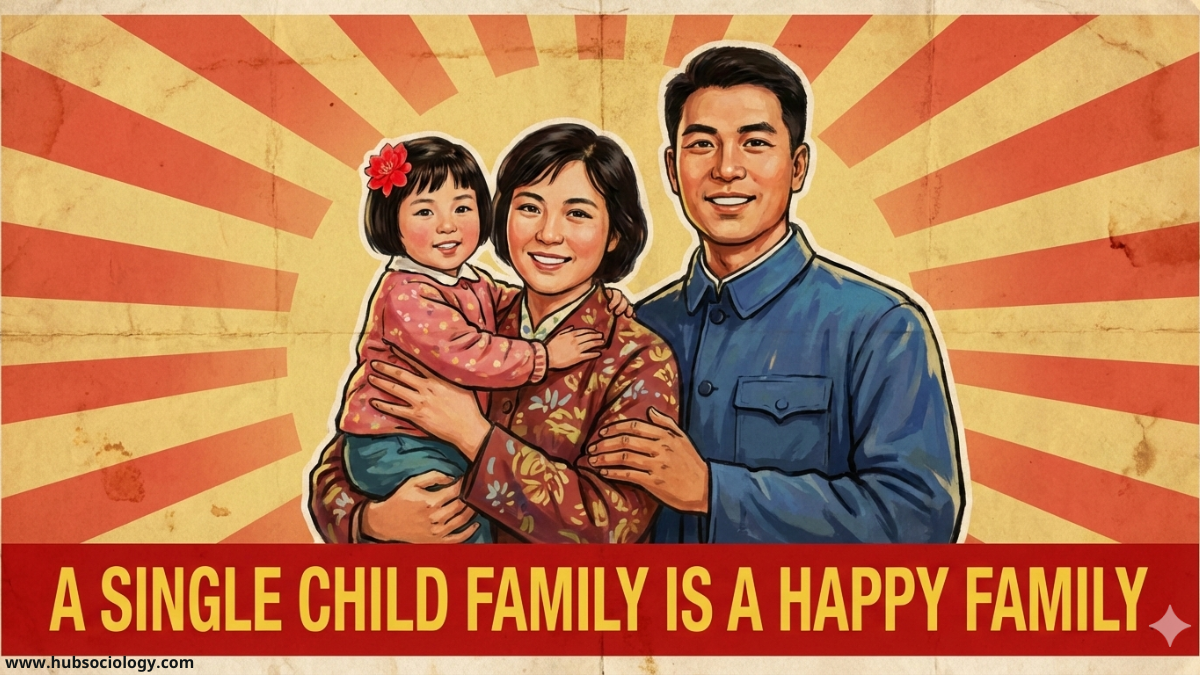
China’s One-Child Policy, introduced in 1979, remains one of the most ambitious and controversial social engineering projects in modern history. Implemented to control rapid population growth after decades of high fertility rates, the policy profoundly reshaped Chinese society. While its demographic and economic consequences have been widely discussed, the social effects of the One-Child Policy demand careful sociological analysis. From family structures and gender relations to social inequality, aging, and psychological outcomes, the policy transformed everyday social life in China.
This article examines the social effects of the One-Child Policy from a sociological perspective, drawing upon theories of family, gender, stratification, and social change. Rather than focusing only on state policy outcomes, it highlights how individuals, families, and communities adapted to and were shaped by this unprecedented demographic intervention.
Background of the One-Child Policy
Following the establishment of the People’s Republic of China in 1949, population growth was initially encouraged as a sign of national strength. By the late 1970s, however, rapid population expansion was seen as a barrier to economic development. The One-Child Policy was introduced to reduce fertility rates and accelerate modernization.
Although commonly referred to as a “one-child” rule, implementation varied across regions, ethnic groups, and rural–urban divides. Urban Han Chinese families were most strictly regulated, while rural families and ethnic minorities often received limited exemptions. Despite these variations, the policy deeply penetrated social institutions such as marriage, family, reproduction, and gender norms.
Transformation of Family Structure
From Extended to Nuclear Families
One of the most significant social effects of the One-Child Policy was the transformation of traditional Chinese family structures. Historically, Chinese society emphasized large extended families, patrilineal descent, and strong kinship ties. The policy accelerated the shift toward nuclear families, consisting of two parents and one child.
Sociologically, this shift weakened intergenerational bonds beyond the immediate household. Cousins, siblings, and extended kin became less central in daily life, reducing traditional support networks. Family socialization increasingly occurred within smaller units, reshaping values related to cooperation, sharing, and collective responsibility.
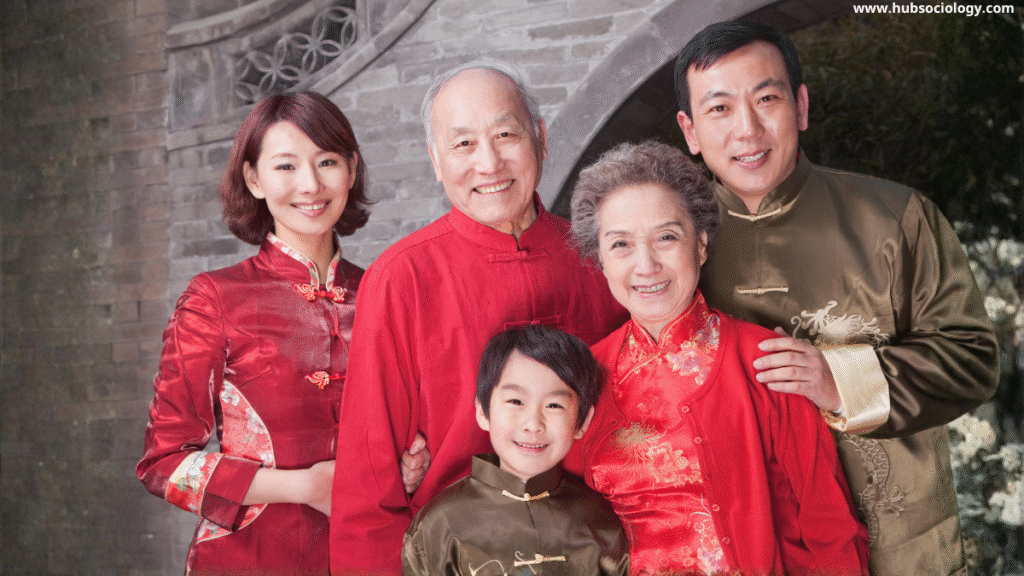
The “4-2-1” Family Structure
The emergence of the “4-2-1” family structure—four grandparents, two parents, and one child—became a defining feature of post-policy China. This structure placed immense emotional and economic pressure on the only child, who was expected to support aging parents and grandparents.
From a sociological standpoint, this altered patterns of intergenerational dependency. While earlier generations relied on multiple children for old-age support, the burden became concentrated on a single individual, creating long-term challenges for family welfare systems.
Effects on Gender Relations and Gender Inequality
Son Preference and Sex Ratio Imbalance
Despite socialist ideals of gender equality, traditional son preference remained deeply embedded in Chinese culture. The One-Child Policy unintentionally intensified this preference, leading to practices such as sex-selective abortion, female infanticide, and underreporting of female births.
As a result, China experienced a highly skewed sex ratio, with significantly more males than females. Sociologically, this imbalance has produced long-term consequences, including difficulties in marriage markets, increased trafficking of women, and heightened social instability in some regions.
Changing Status of Women
Paradoxically, the policy also improved the social status of many women, particularly urban only daughters. With no male siblings, girls often received greater parental investment in education, healthcare, and career development.
From a feminist sociological perspective, the One-Child Policy disrupted patriarchal inheritance patterns in some families. However, these gains coexisted with systemic gender discrimination, revealing the complex and contradictory nature of social change under state intervention.
Psychological and Socialization Effects on the Only Child
The “Little Emperor” Phenomenon
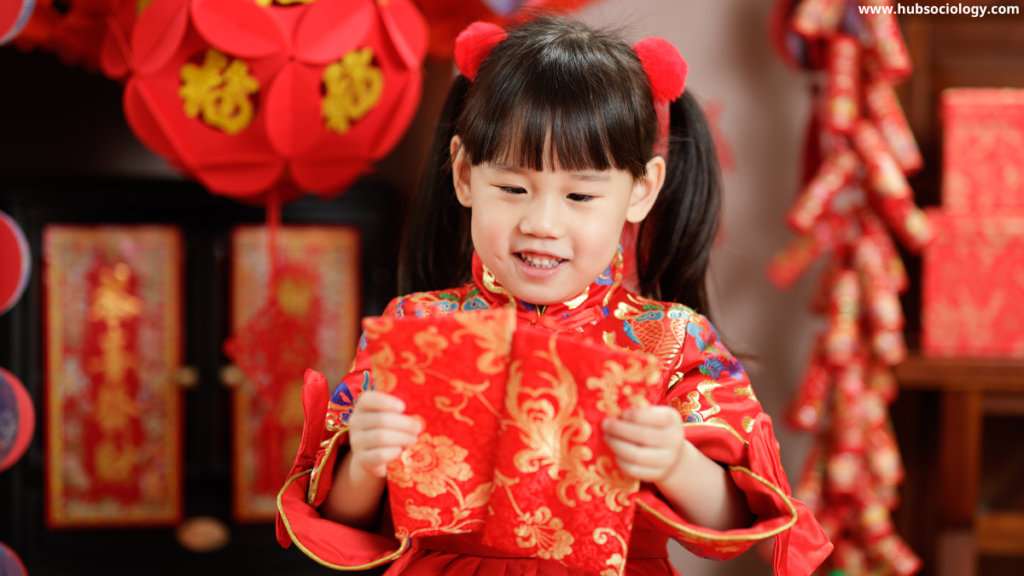
One of the most debated social consequences of the policy is the so-called “Little Emperor Syndrome.” Only children, particularly in urban middle-class families, were often perceived as spoiled, overprotected, and lacking social skills due to excessive parental and grandparental attention.
Sociologists argue that this phenomenon reflects changes in socialization patterns rather than inherent personality traits. With fewer peer interactions at home, schools and state institutions took on greater responsibility for teaching cooperation, discipline, and social norms.
Individualism and Changing Values
The One-Child Policy coincided with China’s transition toward a market-oriented economy. Together, these forces contributed to the rise of individualism, competition, and self-oriented aspirations among younger generations.
Unlike earlier collectivist generations, only children were socialized to prioritize personal success, education, and career mobility. This shift has reshaped social relations, workplace culture, and attitudes toward marriage and family life.
Social Inequality and Regional Disparities
Rural–Urban Divide
The social effects of the One-Child Policy were uneven across China. Urban families generally complied more strictly, while rural families often resisted due to economic reliance on children for agricultural labor and old-age security.
This uneven enforcement reinforced existing rural–urban inequalities. Urban only children benefited from better education and healthcare, while rural families sometimes faced fines, social stigma, or forced compliance, deepening social stratification.
Class-Based Inequality
Wealthier families could more easily navigate or circumvent policy restrictions by paying fines or leveraging social connections. Poorer families bore the brunt of enforcement, including coercive measures such as forced sterilizations.
From a sociological perspective, the policy functioned as a mechanism that reproduced class inequality, contradicting the state’s egalitarian rhetoric.
Impact on Marriage and Intimate Relationships
Delayed Marriage and Changing Partner Preferences
As education levels rose among only children, particularly women, marriage was increasingly delayed. Sociologically, this reflects changing gender norms, greater female autonomy, and shifting expectations around romantic relationships.
The gender imbalance caused by the policy also altered marriage dynamics. In some regions, men faced difficulties finding spouses, leading to the emergence of involuntary bachelors, often referred to as “bare branches.”
Commercialization of Marriage
The shortage of women increased the social and economic costs of marriage, including rising bride prices and material expectations. Marriage became more commercialized, reinforcing class differences and placing additional pressure on men from lower socioeconomic backgrounds.
Aging Population and Intergenerational Challenges
Rapid Population Aging
One of the most profound long-term social effects of the One-Child Policy is China’s rapidly aging population. With fewer young people entering the workforce, the dependency ratio has increased sharply.
Sociologically, this creates tension between traditional filial expectations and modern economic realities. Only children face conflicting demands from careers, migration, and elder care responsibilities.

Strain on Social Institutions
The aging population has placed significant pressure on healthcare systems, pension schemes, and social welfare institutions. Informal family-based care, once the backbone of elder support, is increasingly insufficient.
This shift highlights the limits of family-centered welfare models and underscores the need for institutional solutions, marking a transformation in the relationship between the state, family, and society.
Social Control, State Power, and Resistance
Biopolitics and State Intervention
From a sociological and Foucauldian perspective, the One-Child Policy represents a form of biopolitics, where the state exercises control over bodies, reproduction, and private life.
The regulation of fertility blurred the boundary between public authority and personal autonomy, raising ethical questions about state power and individual rights.
Everyday Resistance and Negotiation
Despite strict regulations, families developed strategies to resist or negotiate policy enforcement, such as hidden pregnancies, false reporting, or migration. These practices reveal the limits of state control and the agency of individuals within authoritarian systems.
Cultural and Social Legacy of the Policy
Redefinition of Parenthood
The policy reshaped cultural meanings of parenthood. Parenting became more intensive, emotionally focused, and child-centered. Expectations regarding children’s success increased, leading to heightened academic pressure and competition.
Long-Term Social Consequences
Even after the official end of the One-Child Policy in 2015, its social effects persist. Fertility rates remain low, reflecting deep-seated changes in values, economic conditions, and lifestyle preferences.
This demonstrates that social policies can have path-dependent effects, continuing to shape society long after their formal repeal.
Conclusion
The One-Child Policy was not merely a demographic measure; it was a transformative social experiment that reshaped Chinese society at multiple levels. From family structures and gender relations to social inequality, aging, and individual identity, its effects penetrated deeply into everyday life.
A sociological perspective reveals that the policy produced both intended and unintended consequences, highlighting the complex interaction between state power, culture, and social institutions. While it contributed to economic development and population control, it also generated long-lasting social challenges that China continues to address today.
Ultimately, the social effects of the One-Child Policy offer critical lessons for policymakers worldwide about the limits of top-down social engineering and the importance of considering cultural, social, and ethical dimensions in population policies.
Do you like this this Article ? You Can follow as on :-
Facebook – https://www.facebook.com/hubsociology
WhatsApp Channel – https://whatsapp.com/channel/0029Vb6D8vGKWEKpJpu5QP0O
Gmail – hubsociology@gmail.com
FAQs on Social Effects of the One-Child Policy
1. What was the One-Child Policy?
The One-Child Policy was a population control measure introduced by China in 1979 to limit most families to one child in order to control rapid population growth.
2. Why is the One-Child Policy significant in sociology?
It represents one of the largest examples of state intervention in private life, affecting family, gender relations, and social structure.
3. How did the policy change family structure?
It shifted Chinese society from extended families to nuclear families and created the “4-2-1” family structure.
4. What is the 4-2-1 family model?
It refers to four grandparents, two parents, and one child, placing heavy care and economic responsibility on the only child.
5. How did the policy affect gender relations?
It intensified son preference, caused sex-ratio imbalance, and reinforced patriarchal values despite official gender equality.
6. What sociological issues arose due to gender imbalance?
Marriage squeeze, trafficking of women, forced bachelorhood, and increased social instability.
7. How did the policy affect women socially?
Urban women often benefited from better education and autonomy, while rural women faced coercion and inequality.
8. What is the “Little Emperor Syndrome”?
A sociological term describing overprotected only children due to concentrated parental and grandparental attention.
9. Did the policy promote individualism?
Yes. Combined with economic reforms, it encouraged individualism, competition, and self-oriented life goals.
10. How did the policy increase social inequality?
Unequal enforcement deepened rural–urban and class-based inequalities.
11. What impact did it have on marriage patterns?
Delayed marriage, rising bride prices, and commercialization of marriage became common.
12. How did the policy contribute to population aging?
Low fertility rates reduced the young population, increasing the dependency ratio.
13. Why is the policy described as biopolitical?
Because the state controlled reproduction, bodies, and family life to regulate population.
14. Did people resist the One-Child Policy?
Yes. Resistance included hidden births, migration, false reporting, and informal negotiations.
15. Are the social effects still visible today?
Yes. Low fertility, aging population, and changed family values persist even after the policy ended.