
Australia’s LGBTQ rights movement today sits at an uneasy but consequential crossroads. Over the past decade the country has moved from a bitter national debate about same-sex marriage to a period of substantial legal advances — while also confronting new flashpoints around religious exemptions, trans youth health, and the policing of hate and speech.
This article reviews the contemporary landscape through sociological lenses: social movement theory (resources, frames and political opportunity), intersectionality, the relationship between law and cultural change, and the everyday lived realities the movement seeks to transform.
Recent legal and statistical landmarks
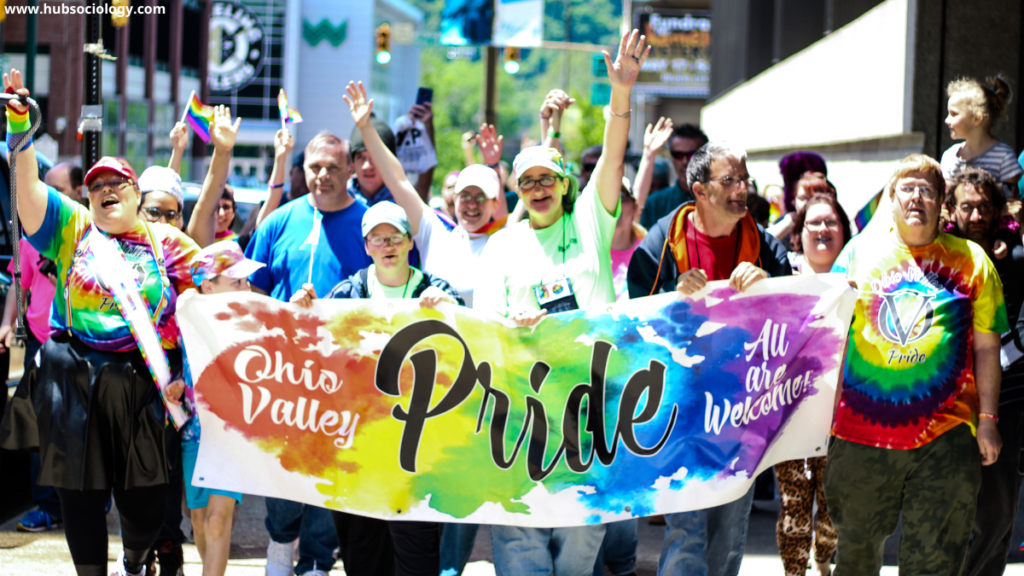
Two kinds of markers help set the scene: measurable social change, and legislative reform. On the statistical side, the Australian Bureau of Statistics’ recent population health data shows a growing visibility of LGBTI+ people: around 4–5% of Australians aged 16+ now identify as LGBTI+ (with markedly higher rates among younger cohorts). This demographic shift matters because demographics shape political salience, service needs and cultural representation.
On the legal side, several high-visibility reforms have reshaped the terrain. The 2017 Australian Marriage Law Postal Survey and the swift passage of marriage equality were watershed moments for formal equality. More recently, governments have acted on other fronts: a wave of state/territory bans on so-called “conversion practices,” and a major federal Criminal Code Amendment (Hate Crimes) Act 2025 that explicitly added sexual orientation, gender identity and intersex status as protected attributes in federal hate-crime law. These reforms have important symbolic and practical consequences: they mark an expansion of the state’s willingness to recognise and protect LGBTQ+ people, while also prompting debates about freedom of expression and religious belief.
Social movement dynamics: resources, frames and political opportunity
Sociologists of social movements commonly analyse activism through three interrelated mechanisms: resource mobilization, framing, and political opportunity structures.
Resource mobilization points to the organisational and material capacities that movements draw on — funds, professional staff, legal expertise, media platforms and international networks. Australian LGBTQ+ advocacy organisations (e.g. Equality Australia and local legal centres) have professionalised significantly: strategic litigation, policy submissions, coordinated lobbying and evidence-based campaigning are now routine. That professionalisation helped translate the large public “Yes” in 2017 into concrete legislative reform and continues to underpin push-backs against regressive proposals.
Framing refers to how activists shape public meaning. LGBTQ+ campaigns in Australia have used multiple frames simultaneously: equality and human rights frames (legal parity), public-health frames (reducing suicide and improving access), economic frames (tourism and workforce inclusion), and narratives of recognition and dignity. The marriage equality campaign is a typifying example: organizers framed marriage equality as a matter of fairness and family recognition — a frame that resonated across large sections of the electorate.
Political opportunity structure examines how the state, party systems and institutional openings affect movement success. Australia’s federal structure means activism operates at national and state levels: many reforms (anti-discrimination, health policy, school programs) fall to states and territories. This multi-level governance both enables policy experimentation (some states move faster) and produces patchwork protections — a feature visible in conversion-therapy bans and gender-affirming care policies. The 2025 federal hate-crime reforms show how national crises (rises in particular types of hate-motivated incidents) can create windows for faster legislative change.
Law vs culture: victories, backlash and ambiguous terrains
Legal change does not automatically produce cultural acceptance. The marriage equality vote and subsequent law are symbolically powerful; yet legal recognition coexists with ongoing stigma, violence and social exclusion for many LGBTI+ people — particularly for young trans people, Indigenous queer and gender-diverse people, immigrants and those in regional/rural areas.
Two contested flashpoints exemplify this tension.
- Religious exemptions and free-speech debates. Episodes like proposals for religious discrimination laws and public debates over “religious freedom” have triggered concerns that legal exemptions could undermine antidiscrimination protections. These debates demonstrate how rights for different social groups can come into conflict in plural democratic settings, and how legal reforms can mobilise counter-mobilisations.
- Trans youth and clinical governance. The politics of trans youth health (puberty blockers, access to gender-affirming care and school inclusion) has become salient in recent years. Different Australian states have adopted varying regulatory approaches, and policy decisions (including temporary bans or moratoria in some jurisdictions) have sparked heated public debate — pitting medical expertise and youth welfare advocates against conservative political actors and some parent groups. These tensions highlight how biomedical controversies can become cultural and political struggles over identity, childhood and parental rights. Recent state actions, such as Queensland’s restrictive moves reported in 2025, illustrate how policy responses may diverge from clinical guidance and community expectations.
Everyday life: violence, wellbeing and social determinants
Sociological attention must move beyond statutes to everyday realities. Research consistently shows LGBTQ+ people face elevated levels of mental-health challenges, discrimination, domestic and public-space violence, and barriers when accessing services. Minority-stress theory helps explain how structural stigma translates into chronic psychosocial stressors that drive poorer health outcomes for sexual and gender minorities.
The ABS data discussed above not only shows rising visibility but also suggests important service and policy implications: higher visibility among young people requires schools, primary-care services and mental-health systems to be prepared to meet needs sensitively and competently. Advocacy groups have repeatedly called for better data, targeted services, and respectful, evidence-based approaches in health and education.
Intersectionality: who benefits, who remains marginalised?
A core sociological insight is intersectionality: sexual orientation and gender identity do not exist in a vacuum. Race, Indigeneity, class, disability, migration status, rurality and age all shape how people experience sexuality and gender.
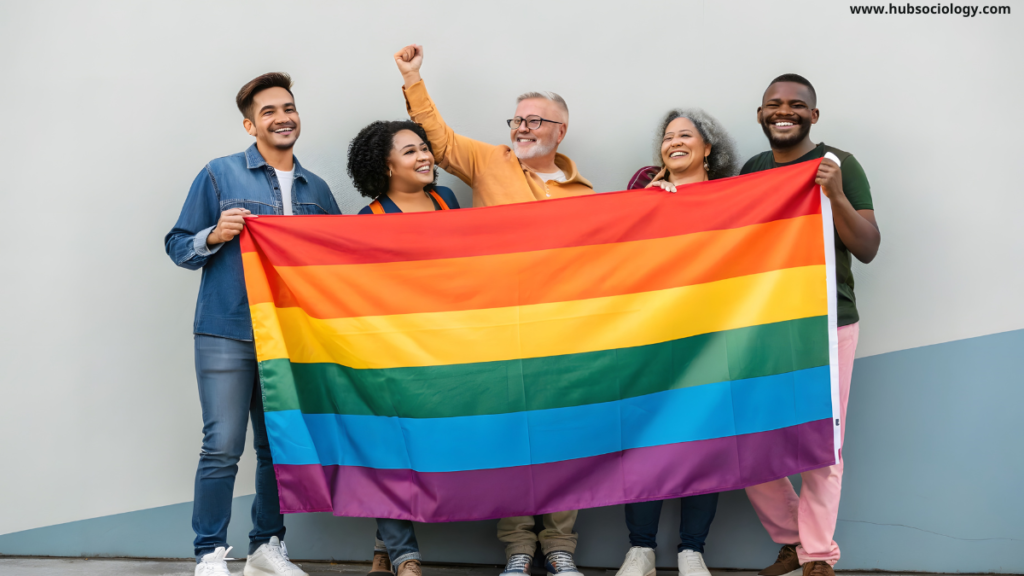
Indigenous LGBTIQ+ Australians, for example, face layered inequalities — historical dispossession, higher rates of incarceration and health disparities combine with homophobia and transphobia. Migrant LGBTIQ+ people may face barriers related to language, visa insecurity or fear of institutional authorities. Intersex Australians campaign for bodily autonomy and medical reform; intersex issues are distinct but intersect with broader LGBTIQ+ politics around bodily integrity and legal recognition. Policymaking that treats “the LGBTIQ+ community” as homogeneous risks leaving these groups behind. Equality-focused reforms that ignore structural inequalities will produce uneven gains.
Culture, visibility and institutions: Mardi Gras and media
Cultural repertoires — parades, festivals, media representation — have both expressive and political functions. Sydney’s Mardi Gras is more than a parade; historically and sociologically it is a site of collective memory, identity formation, spectacle and political performance. Such events can normalise queer lives in public space but also generate debates about corporatisation, policing, and who gets centre stage within the queer community.
Mainstream media and popular culture also play critical roles: positive representation reduces stigma and increases empathy, while hostile media environments can amplify backlash. The contemporary media landscape — social media platforms, streaming, and activist digital campaigns — gives movements both new tools and new vulnerabilities (misinformation, doxxing, targeted harassment).
Key tensions ahead
- Patchwork protections vs national consistency. States and territories vary in their protections on conversion practices, anti-vilification, health regulation and identity documents. This creates uneven citizenship experiences. The 2025 federal hate-crime amendments reduced some of this patchiness at the federal criminal-law level, but civil-law and service gaps remain.
- Balancing rights: anti-discrimination vs religious freedom. Debates over religious exemptions continue to animate politics and could shape future litigation and legislation. How courts and parliaments balance competing rights claims will be decisive for the scope of protections.
- Clinical governance of trans healthcare. The governance of gender-affirming healthcare for minors — scientific evidence, ethical frameworks and political pressures — is likely to remain contentious. Policy choices here have immediate consequences for young people’s wellbeing.
- Data, services and representation. The ABS’s inclusion of LGBTI+ measures and planned 2026 census questions are crucial for evidence-based policymaking. Visibility in data must translate into funding, training and service redesign, especially in mental health, primary care and regional services.
What sociological theory suggests about strategy
From a sociological standpoint, three strategic lessons emerge for activists and allies:
- Keep building institutional capacity. Professional advocacy organisations, well-documented research, strategic litigation and policy know-how translate visibility into durable protections.
- Frame adaptively. Successful movements maintain multiple resonant frames — legal rights, public health, economic inclusion, and stories that humanise. Adaptive framing reduces the chance that opponents can collapse the movement into a single, easily dismissed caricature.
- Practice solidarity across differences. An intersectional politics is not only ethically right — it is strategically necessary. Coalitions across Indigenous groups, migrant communities, disability advocates and progressive faith actors can blunt polarising frames and broaden public constituencies for reform.
Conclusion: incremental, contested, consequential
Contemporary Australia’s LGBTQ+ movement illustrates the mixed character of social change in liberal democracies: legal advances and growing visibility co-exist with new policy struggles and cultural backlash. The movement’s future will depend on its capacity to institutionalise gains (through law, services and anti-violence measures), to protect vulnerable subgroups through intersectional policy, and to defend hard-won recognition against rollback attempts framed as competing rights.
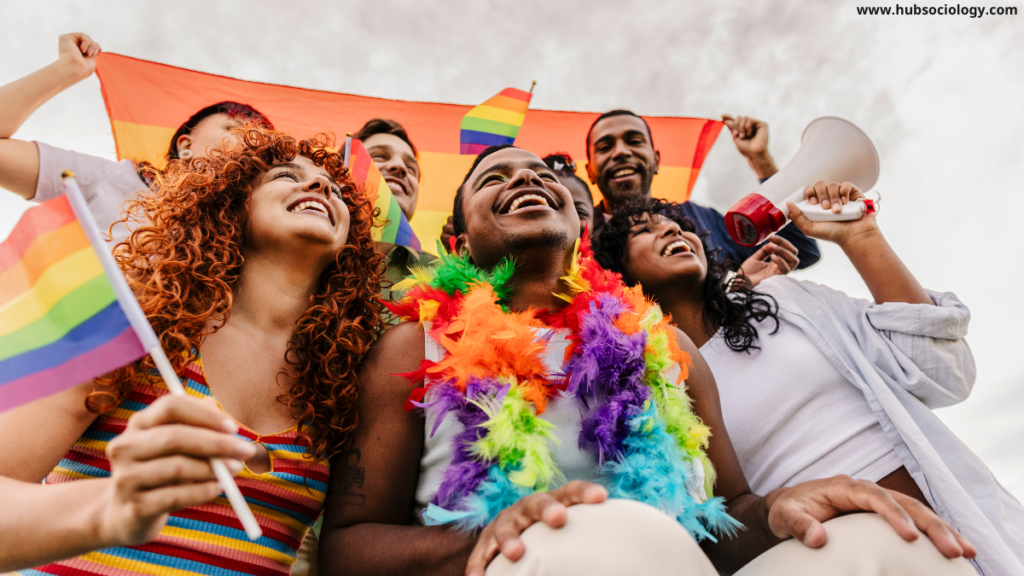
For sociologists, Australia today offers a live case of how social movements convert moral claims into institutional change — and how that conversion is never linear or complete. Legal wins, festivals and statistics are important markers, but the deeper task is changing everyday social relations so that dignity and equality are experienced, not merely decreed.
Selected sources and further reading
- Australian Bureau of Statistics — Australian Marriage Law Postal Survey and recent LGBTI population data. Australian Bureau of Statistics+1
- Criminal Code Amendment (Hate Crimes) Act 2025 (Cth) — federal legislative reform and explanatory materials. Federal Register of Legislation+1
- NSW Conversion Practices Ban Act 2024 — example of state-level conversion-therapy prohibition. NSW Legislation
- Equality Australia — strategic plans and legal advocacy on LGBTIQ+ equality. Equality Australia+1
- Histories of Sydney Gay and Lesbian Mardi Gras and cultural politics. Wikipedia+1
FAQs on LGBTQ Rights Movement
1. What is the LGBTQ Rights Movement?
The LGBTQ Rights Movement is a collective social movement that seeks equal legal rights, social acceptance, and protection from discrimination for lesbian, gay, bisexual, transgender, and queer people.
2. How did the LGBTQ Rights Movement develop in Australia?
The LGBTQ Rights Movement in Australia evolved from early decriminalization struggles in the 1970s to marriage equality in 2017 and recent reforms addressing hate crimes and conversion practices.
3. Why is the LGBTQ Rights Movement important from a sociological perspective?
Sociologically, the LGBTQ Rights Movement highlights how marginalized groups mobilize, challenge dominant norms, and reshape laws, institutions, and cultural values.
4. What role did marriage equality play in the LGBTQ Rights Movement?
Marriage equality was a landmark achievement of the LGBTQ Rights Movement, symbolizing legal recognition, social legitimacy, and broader public acceptance.
5. How does social movement theory explain the LGBTQ Rights Movement?
Social movement theory explains the LGBTQ Rights Movement through resource mobilization, political opportunity structures, and framing strategies that influence public opinion and policy.
6. What challenges does the LGBTQ Rights Movement face today?
The LGBTQ Rights Movement continues to face challenges such as hate crimes, debates over religious freedom, trans healthcare policies, and uneven state-level protections.
7. How is intersectionality linked to the LGBTQ Rights Movement?
Intersectionality shows that the LGBTQ Rights Movement must address overlapping inequalities related to class, race, Indigeneity, gender, and migration status.
8. What is the role of law in advancing the LGBTQ Rights Movement?
Law plays a crucial role by formalizing equality through anti-discrimination acts, hate-crime legislation, and recognition of diverse gender identities.
9. How does culture influence the LGBTQ Rights Movement?
Cultural events, media representation, and public discourse shape how the LGBTQ Rights Movement is perceived and supported in society.
10. What is the relationship between youth and the LGBTQ Rights Movement?
Young people are central to the LGBTQ Rights Movement, with higher levels of identification and activism, while also facing specific vulnerabilities related to mental health and education.
11. How does the LGBTQ Rights Movement address violence and discrimination?
The LGBTQ Rights Movement advocates for stronger hate-crime laws, inclusive policing, and awareness campaigns to reduce violence and social exclusion.
12. What role do advocacy organizations play in the LGBTQ Rights Movement?
Advocacy organizations provide legal support, policy research, public education, and coordinated activism essential to the LGBTQ Rights Movement.
13. How does media impact the LGBTQ Rights Movement?
Media can amplify the LGBTQ Rights Movement by increasing visibility and empathy, or hinder it through misinformation and moral panic.
14. Is the LGBTQ Rights Movement complete in Australia?
No, the LGBTQ Rights Movement is ongoing, as legal equality does not always translate into social acceptance or equal lived experiences.
15. What is the future of the LGBTQ Rights Movement in Australia?
The future of the LGBTQ Rights Movement depends on sustained activism, inclusive policymaking, intersectional approaches, and continued cultural change.