Introduction
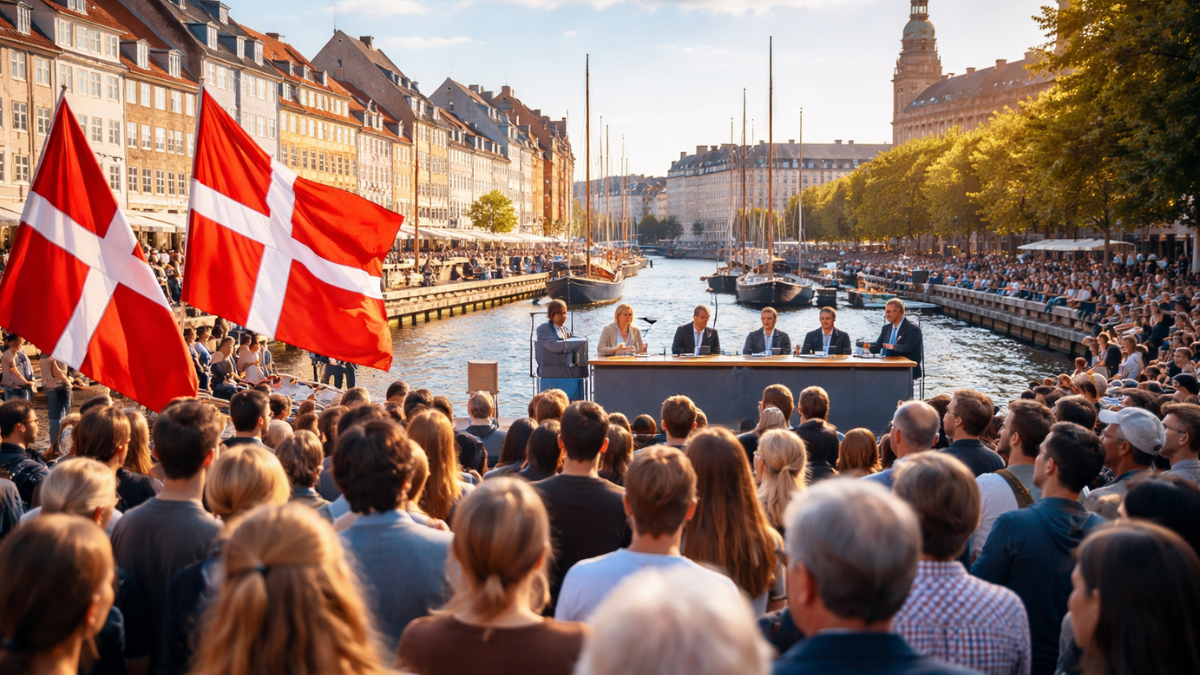
Immigration has become one of the most debated social and political issues in contemporary Europe. Among European countries, Denmark stands out for its distinctive approach to immigration, integration, and national identity. Known for its strong welfare state, social cohesion, and relatively homogeneous population in the twentieth century, Denmark has experienced significant demographic and cultural change over the past five decades. These changes have sparked intense debates about citizenship, belonging, multiculturalism, and the limits of tolerance.
From a sociological perspective, immigration in Denmark is not merely a matter of population movement. It is deeply connected to questions of national identity, welfare distribution, social trust, cultural integration, and political power. This article explores immigration, identity formation, and social debate in Denmark through major sociological theories and empirical developments.
Historical Background of Immigration in Denmark
From Emigration to Immigration
For much of the nineteenth and early twentieth centuries, Denmark was primarily a country of emigration. Many Danes moved to North America in search of better economic opportunities. However, after the Second World War, especially from the 1960s onward, Denmark gradually transformed into a country of immigration.
The first significant wave of immigrants arrived during the 1960s and early 1970s as “guest workers.” These migrants mainly came from countries such as Turkey, Pakistan, and Yugoslavia to fill labor shortages in Danish industries. Initially, policymakers assumed that these workers would return to their countries of origin. Instead, many settled permanently and brought their families through family reunification policies.
In later decades, Denmark also received refugees and asylum seekers from conflict zones, including the Middle East, Africa, and the Balkans. These developments diversified Danish society ethnically, religiously, and culturally.
The Danish Welfare State and Immigration
Denmark is often described as a universal welfare state. It provides extensive social benefits, including healthcare, education, unemployment insurance, and social assistance. The welfare model is based on high levels of taxation and strong public trust in state institutions.
Sociologically, immigration challenges certain assumptions underlying the welfare state. Scholars argue that welfare systems function effectively when there is a strong sense of social solidarity and mutual trust among citizens. The question arises: can a highly redistributive welfare state maintain cohesion in a culturally diverse society?

Some critics claim that immigration strains public finances and weakens social trust. Others argue that immigrants contribute economically and demographically, especially in aging societies like Denmark. The debate often reflects deeper anxieties about cultural difference rather than purely economic concerns.
National Identity and Cultural Homogeneity
Danish Identity and “Danishness”
National identity in Denmark has historically been associated with language, Lutheran Christianity, shared history, and cultural traditions. The concept of “Danishness” often emphasizes social equality, modesty, and community orientation.
Sociologists view national identity as socially constructed rather than biologically fixed. It is shaped through education, media, political discourse, and everyday practices. In Denmark, immigration has triggered a re-examination of what it means to be Danish.
Is Danish identity civic (based on shared values and citizenship), or is it cultural (based on heritage and tradition)? This tension lies at the heart of many social debates.
The Politics of Cultural Integration
Denmark has adopted relatively strict integration policies compared to some other European countries. These policies include language requirements, civic tests for citizenship, and regulations concerning family reunification. The state emphasizes adaptation to Danish norms and values rather than strong multicultural accommodation.
From a sociological viewpoint, this reflects an assimilationist model, where immigrants are expected to integrate into the dominant culture. Critics argue that such policies may marginalize minorities and create feelings of exclusion. Supporters claim they protect social cohesion and democratic values.
The Role of Political Parties and Public Debate
Immigration has played a central role in Danish politics since the 1990s. Political parties have shaped public discourse by framing immigration as an issue of security, culture, or welfare sustainability.
The rise of the Danish People’s Party significantly influenced national debates. The party advocated stricter immigration controls and stronger emphasis on Danish cultural values. Its success reflects broader European trends of populist nationalism.
At the same time, other political actors emphasize human rights, refugee protection, and inclusive citizenship. The social debate thus reveals a conflict between nationalist and cosmopolitan perspectives.
Immigration and Religion: The Question of Islam
Religion has become a central element in the immigration debate, particularly concerning Muslim minorities. Denmark’s historically Lutheran identity contrasts with the growing presence of Islam.
The controversy surrounding the publication of cartoons depicting the Prophet Muhammad in 2005 intensified discussions about freedom of expression, religious respect, and multiculturalism. The issue was not only about religion but also about democratic values and national identity.
Sociologists interpret such conflicts as symbolic struggles over cultural boundaries. They highlight how minorities are often constructed as “others” in public discourse, which may lead to stereotyping and social exclusion.
Social Integration and Inequality
Education and Labor Market Participation
One major sociological concern is the socio-economic integration of immigrants and their descendants. Research indicates that immigrants in Denmark often face higher unemployment rates and lower average incomes compared to native Danes. Educational outcomes also vary significantly among different ethnic groups.
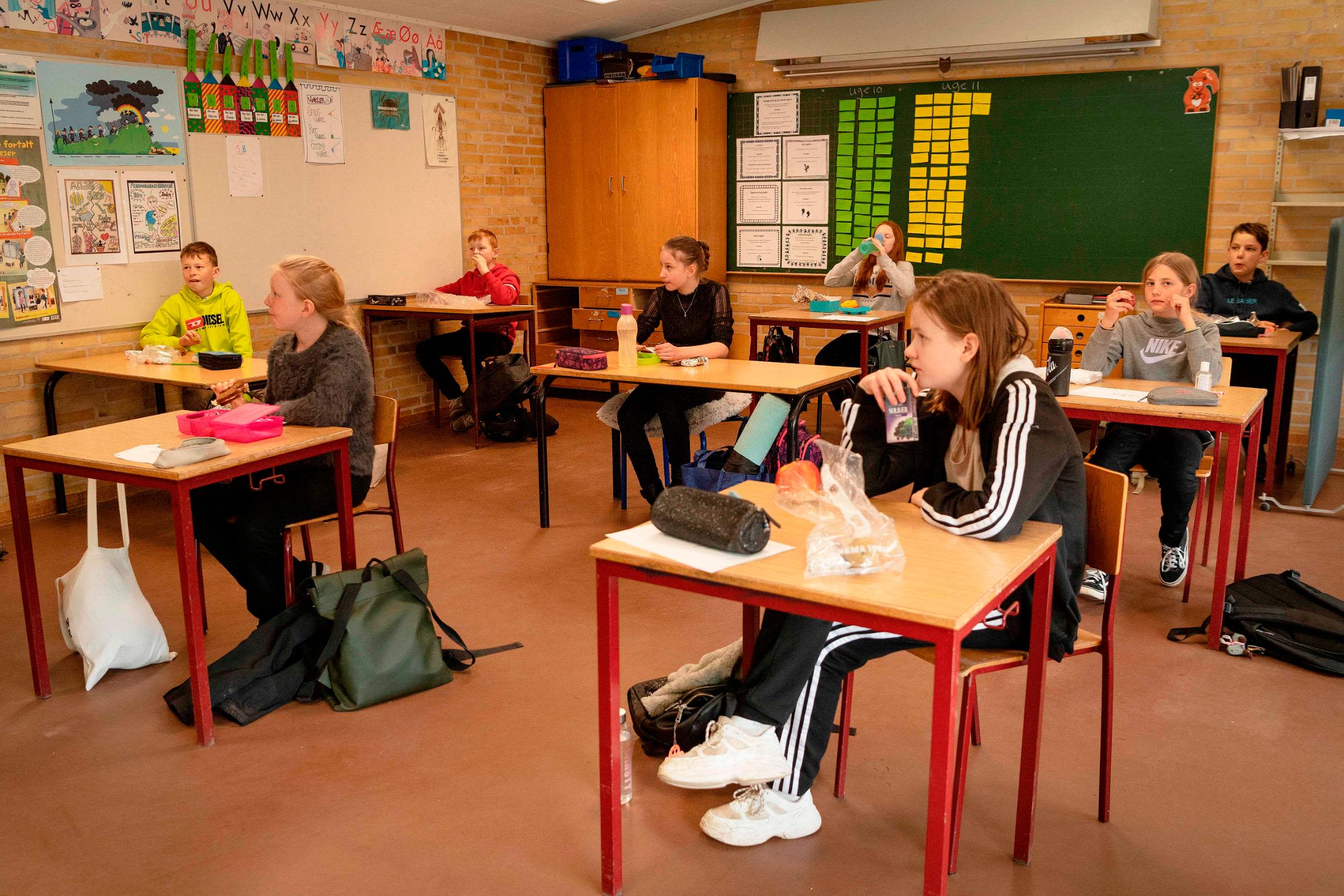
Structural factors such as language barriers, discrimination, and limited social networks can hinder integration. From a conflict theory perspective, inequality reflects broader power relations within society. Immigrant communities may occupy disadvantaged positions in the labor market hierarchy.
However, second-generation immigrants often achieve higher levels of education and professional mobility, demonstrating processes of gradual integration and social change.
Residential Segregation
Certain urban areas in Denmark have higher concentrations of immigrant populations. Public discourse sometimes labels these neighborhoods as “ghettos,” raising concerns about parallel societies.
Sociologically, residential segregation can result from economic inequality, housing market structures, and social preferences. Segregation may limit cross-cultural interaction, reinforcing stereotypes and social distance. At the same time, ethnic communities can provide support networks that facilitate adaptation.
Media Representation and Public Perception
The media plays a crucial role in shaping perceptions of immigration. News coverage often focuses on crime, integration problems, or cultural conflict. This selective emphasis may create moral panics and amplify fear.
According to symbolic interactionism, meanings are constructed through communication and shared narratives. When immigrants are frequently associated with negative themes, public attitudes may become more hostile.
At the same time, civil society organizations, academic researchers, and minority voices challenge dominant narratives by highlighting success stories and contributions of immigrants to Danish society.
Citizenship, Law, and Belonging
Citizenship laws in Denmark have become stricter over time. Applicants must meet language proficiency requirements, pass civic knowledge tests, and demonstrate economic self-sufficiency.
From a sociological standpoint, citizenship is not only a legal status but also a marker of social belonging. Stricter requirements can signal that national membership is conditional and earned rather than automatic.
Debates over dual citizenship, loyalty, and national symbols reveal deeper anxieties about identity in a globalized world. Denmark’s policies reflect a desire to balance openness with cultural preservation.
Globalization and Transnationalism
Immigration in Denmark cannot be understood without considering globalization. Increased mobility, digital communication, and transnational networks allow migrants to maintain ties with their countries of origin.
Transnationalism challenges traditional notions of singular national identity. Immigrants may feel attached to multiple cultural spaces simultaneously. Sociologists argue that such hybrid identities are common in contemporary societies.
Rather than viewing identity as fixed, a sociological approach emphasizes its dynamic and negotiated nature.
Generational Change and Identity Formation
The children of immigrants often experience identity differently from their parents. Born or raised in Denmark, they speak Danish fluently and participate in Danish institutions. Yet they may still encounter questions about their “real” origin.
Identity for second-generation youth can be complex and layered. They may combine elements of Danish culture with heritage traditions. Sociological research suggests that inclusive educational environments and equal opportunities are crucial for fostering a sense of belonging.

Generational change also influences public attitudes. Younger Danes tend to be more accustomed to diversity, which may gradually reshape national identity.
Social Trust and Cohesion
Denmark is frequently cited as a high-trust society. Trust in institutions and fellow citizens supports democratic stability and welfare provision.
Some scholars argue that rapid demographic change may reduce social trust. Others find that inclusive policies and equal treatment can maintain cohesion despite diversity.
Sociologically, trust depends less on cultural homogeneity and more on perceptions of fairness, rule of law, and equal opportunity. When immigrants feel fairly treated and socially included, trust can be strengthened rather than weakened.
Comparative Perspective
Denmark’s immigration policies are often compared with those of other Scandinavian countries such as Sweden and Norway. Sweden historically adopted more multicultural policies, while Denmark pursued stricter integration requirements.
These differences highlight how national histories, political cultures, and welfare systems shape responses to immigration. Comparative sociology shows that there is no single model for managing diversity; policies reflect broader societal values and institutional frameworks.
Conclusion
Immigration, identity, and social debate in Denmark represent a complex interplay of demographic change, cultural negotiation, political conflict, and institutional adaptation. From a sociological perspective, immigration is not simply a policy issue but a transformative process that reshapes national identity, social structures, and public discourse.
Denmark’s experience illustrates the challenges of balancing welfare solidarity with cultural diversity, national identity with globalization, and freedom of expression with respect for difference. While tensions and controversies continue, sociological analysis reveals that identities are dynamic, integration is gradual, and social cohesion depends on inclusive institutions and equitable opportunities.
Ultimately, the Danish case offers valuable insights into how modern societies negotiate belonging and diversity in an interconnected world.
FAQs on Social Debate in Denmark
1. What is meant by Social Debate in Denmark?
Social Debate in Denmark refers to public discussions and political disagreements about immigration, national identity, integration policies, welfare sustainability, and cultural values within Danish society.
2. Why is Social Debate in Denmark closely linked to immigration?
Social Debate in Denmark is strongly connected to immigration because demographic changes have raised questions about cultural cohesion, citizenship, and the future of the Danish welfare state.
3. How does the welfare state influence Social Debate in Denmark?
The Danish welfare model is built on high taxation and social trust. Social Debate in Denmark often centers on whether immigration affects economic redistribution and solidarity among citizens.
4. What role does national identity play in Social Debate in Denmark?
National identity is central to Social Debate in Denmark, as many discussions focus on what it means to be “Danish” in a multicultural society.
5. How do political parties shape Social Debate in Denmark?
Political parties influence Social Debate in Denmark by framing immigration either as a challenge to national culture or as an opportunity for diversity and economic growth.
6. Is religion part of Social Debate in Denmark?
Yes, religion—especially discussions surrounding Islam—has been a significant aspect of Social Debate in Denmark, particularly concerning freedom of expression and cultural integration.
7. How does Social Debate in Denmark affect integration policies?
Social Debate in Denmark has led to stricter language requirements, citizenship tests, and regulations on family reunification aimed at promoting assimilation.
8. What is the connection between Social Debate in Denmark and social trust?
Social Debate in Denmark often explores whether increasing diversity impacts Denmark’s traditionally high levels of social trust and institutional confidence.
9. How do media representations impact Social Debate in Denmark?
Media coverage can shape Social Debate in Denmark by emphasizing issues such as crime, cultural differences, or integration challenges, influencing public opinion.
10. Does Social Debate in Denmark affect second-generation immigrants?
Yes, Social Debate in Denmark impacts second-generation immigrants, especially in discussions about identity, belonging, and equal opportunities.
11. How does Social Debate in Denmark compare with other Nordic countries?
Social Debate in Denmark is often considered more restrictive compared to neighboring countries, particularly in terms of immigration and integration policies.
12. What are the economic dimensions of Social Debate in Denmark?
Economic concerns in Social Debate in Denmark include labor market participation, unemployment rates among immigrants, and the long-term sustainability of social welfare.
13. How does globalization influence Social Debate in Denmark?
Globalization contributes to Social Debate in Denmark by increasing migration flows and encouraging transnational identities that challenge traditional national boundaries.
14. Is Social Debate in Denmark only about immigration?
No, while immigration is central, Social Debate in Denmark also includes discussions on equality, democracy, human rights, and cultural preservation.
15. What is the future outlook of Social Debate in Denmark?
The future of Social Debate in Denmark will likely depend on generational change, economic conditions, and how effectively integration policies foster inclusion and social cohesion.