Introduction
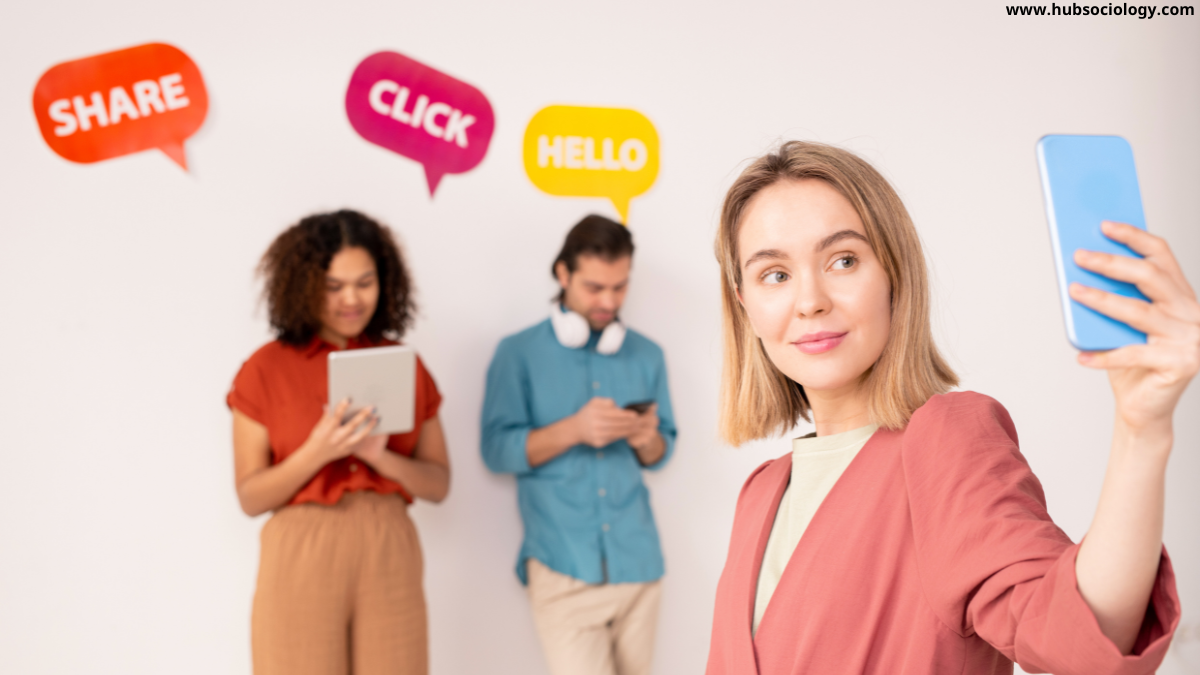
In the twenty-first century, social life in the United States has become deeply intertwined with digital technologies. From everyday communication to political mobilization, from identity formation to economic activities, social media platforms have transformed how Americans interact, express themselves, and understand the world. Digital sociology emerges as a vital subfield of sociology that examines how digital technologies—especially social media—reshape social relationships, institutions, power structures, and cultural meanings.
Digital sociology does not treat technology as a neutral tool. Instead, it views social media as a social product shaped by economic interests, political ideologies, and cultural values, while simultaneously shaping society itself. This article explores Digital Sociology: Social Media and American Society by analyzing how platforms influence identity, inequality, politics, culture, surveillance, and everyday social interaction in the United States.
Understanding Digital Sociology
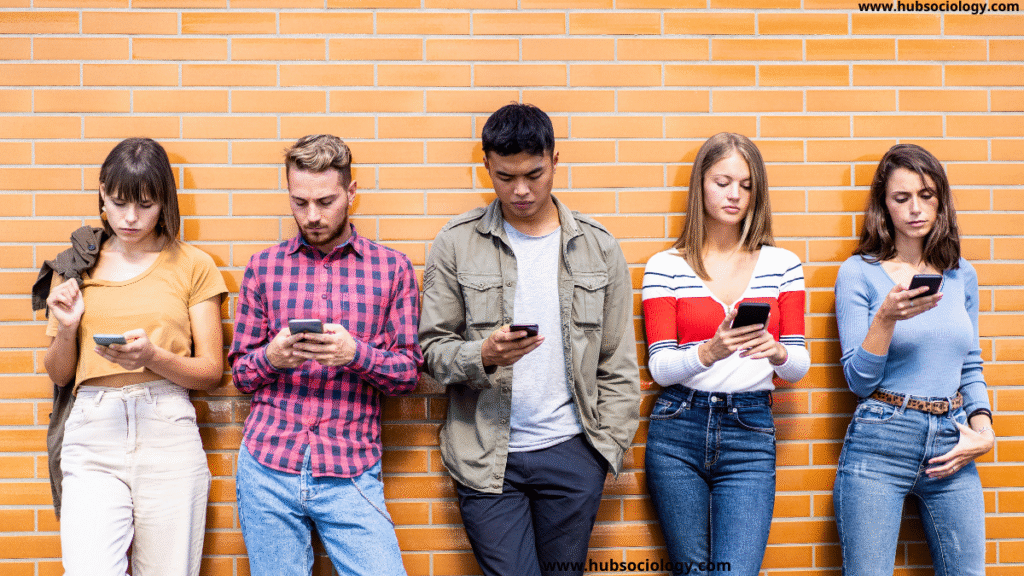
Digital sociology is the sociological study of digital life. It focuses on how digital technologies are embedded in social structures and how they transform social behavior, norms, and institutions.
From a sociological perspective, digital sociology examines:
- How online interactions reflect offline social inequalities
- How power operates through algorithms and platforms
- How digital spaces shape identities and communities
- How technology redefines concepts like privacy, work, and democracy
In American society, where internet penetration and social media usage are among the highest in the world, digital sociology is essential for understanding contemporary social change.
Social Media as a Social Institution
Social media platforms have evolved into informal social institutions in the United States. Much like family, education, or religion, they regulate behavior, transmit values, and shape social norms.
Platforms such as Facebook, Instagram, X, and TikTok influence how Americans communicate, form opinions, and build relationships. Likes, shares, comments, and followers act as social rewards and sanctions, reinforcing certain behaviors while discouraging others.
From a sociological viewpoint, social media normalizes constant connectivity, public self-expression, and digital validation. These platforms do not merely reflect society; they actively produce social reality.
Digital Identity and the Presentation of Self
Social media has transformed how individuals construct and present their identities. Drawing on Erving Goffman’s idea of the presentation of self, digital sociology argues that online spaces function as stages where users perform curated versions of themselves.

In American society, identity on social media is shaped by:
- Profile images and bios
- Carefully selected posts and stories
- Public expressions of political and cultural beliefs
This digital self is often idealized, creating pressure to appear successful, happy, and socially relevant. Sociologically, this leads to identity strain, comparison anxiety, and emotional labor, especially among youth and young adults.
At the same time, social media provides space for marginalized groups—such as LGBTQ+ communities, racial minorities, and disabled individuals—to express identities that may be suppressed offline.
Social Media and Social Inequality
Digital sociology highlights that social media does not eliminate inequality; instead, it often reproduces and amplifies existing social divisions in American society.
Digital Divide
Access to high-speed internet, digital literacy, and technological devices varies by class, race, age, and geography. Rural populations, low-income households, and elderly Americans often face digital exclusion.
Algorithmic Inequality
Algorithms prioritize content that generates engagement, often favoring sensationalism, celebrity culture, and dominant voices. This results in:
- Marginalization of minority perspectives
- Reinforcement of racial and gender stereotypes
- Unequal visibility and influence
From a sociological perspective, algorithms act as invisible structures of power shaping what Americans see, believe, and discuss.
Social Media, Politics and Democracy
Social media plays a central role in American political life. Digital sociology examines how these platforms transform political participation, activism, and democratic processes.
Political Mobilization
Movements such as Black Lives Matter, climate activism, and women’s rights have used social media to organize protests, spread awareness, and challenge dominant narratives.
Misinformation and Polarization
At the same time, social media contributes to:
- Spread of fake news
- Echo chambers and ideological polarization
- Decline of trust in traditional institutions
Sociologically, this creates a fragmented public sphere, where citizens consume different realities based on algorithms and networks rather than shared facts.
Culture, Consumption, and Influencer Economy
Social media has reshaped American consumer culture. Digital sociology analyzes how capitalism adapts to digital spaces through branding, influencers, and data-driven marketing.
Influencers function as new cultural intermediaries, shaping tastes, lifestyles, and aspirations. Consumption becomes performative—what one buys is also what one posts.
This leads to:
- Commercialization of personal life
- Blurring of boundaries between authenticity and advertising
- Intensification of consumer pressure
From a sociological angle, social media deepens neoliberal values such as self-branding, competition, and visibility.
Mental Health and Emotional Life
Digital sociology pays close attention to the emotional consequences of social media use in American society.
Positive aspects include:
- Social support networks
- Mental health awareness campaigns
- Community building during crises
Negative effects include:
- Anxiety and depression linked to comparison
- Cyberbullying and online harassment
- Fear of missing out (FOMO)
Sociologically, these issues are not just individual problems but structural outcomes of platform design, attention economy, and cultural expectations.
Surveillance, Privacy and Data Power

One of the most critical concerns in digital sociology is surveillance. Social media platforms collect vast amounts of user data, turning personal behavior into economic and political resources.
In American society:
- User data is monetized through advertising
- Governments may access digital information
- Individuals trade privacy for convenience
This creates a form of digital surveillance capitalism, where power lies with corporations that control data and algorithms. Sociologically, this shifts the balance of power away from citizens toward institutions.
Online Communities and Social Relationships
Despite concerns, digital sociology also recognizes the positive role of social media in building communities. Online spaces allow people to connect beyond geography, especially for those experiencing isolation.
Examples include:
- Support groups for chronic illness
- Educational and academic communities
- Diaspora and immigrant networks
In American society, social media often complements rather than replaces offline relationships, creating hybrid social worlds.
Digital Sociology and the Future of American Society
Digital sociology suggests that social media will continue to shape American society in complex ways. Future trends may include:
- Greater regulation of platforms
- Ethical debates on AI and algorithms
- Increased digital activism and resistance
- New forms of inequality and solidarity
Understanding these changes requires sociological imagination—connecting personal digital experiences with broader social structures.
Conclusion
Digital Sociology: Social Media and American Society reveals that social media is far more than entertainment or communication technology. It is a powerful social force that shapes identity, inequality, politics, culture, and everyday life in the United States. Digital sociology helps us move beyond technological optimism or moral panic and instead analyze how digital platforms reflect and reinforce existing social relations.
For students, researchers, and readers of sociology, digital sociology provides essential tools to critically understand life in a digitally connected yet socially divided American society.
4 thoughts on “Digital Sociology: Social Media and American Society”