
Introduction
Democracy in India is often celebrated as the world’s largest experiment in popular governance. Since its independence in 1947, India has upheld democratic ideals of universal adult suffrage, rule of law, and representative institutions despite its enormous cultural, linguistic, and religious diversity. From a sociological perspective, Indian democracy is not merely a system of political institutions; it is deeply embedded in social structures, cultural values, and patterns of inequality. However, the functioning of Indian democracy faces several challenges rooted in its social fabric—caste, religion, regionalism, class inequalities, gender bias, corruption, and the rise of identity-based politics. These challenges often limit the effective realization of democratic ideals such as equality, liberty, and fraternity.
This article examines the major challenges to Indian democracy in a sociological framework, highlighting how structural inequalities, cultural diversity, and social conflicts impact democratic functioning.
1. Caste and Social Stratification
Caste continues to be one of the most significant challenges to Indian democracy. Although the Constitution of India guarantees equality and abolishes untouchability, caste-based hierarchies still influence political participation, voting behavior, and access to power.

- Caste in Politics: Electoral politics often revolve around caste-based mobilization. Political parties distribute tickets and form alliances based on caste arithmetic, reducing democracy to vote-bank politics rather than issue-based governance.
- Caste Discrimination: Dalits and marginalized castes still face exclusion and violence in rural areas. Despite reservations in education and jobs, their political voice is often suppressed by dominant caste groups.
- Democratic Implications: Caste undermines the principle of political equality, as representation becomes a matter of identity rather than merit or ideology.
Thus, caste acts as both a medium of political participation and a barrier to democratic equality.
2. Communalism and Religious Polarization
Religion plays a dual role in Indian society—it is a source of cultural identity but also a source of political conflict. Communalism, or the politicization of religion, poses a serious challenge to democratic harmony.
- Communal Riots and Violence: Events like the Partition riots, Babri Masjid demolition, Gujarat 2002 riots, and other instances of communal violence reveal how religious differences are exploited for political gain.
- Minority Rights: The secular framework of Indian democracy promises equal rights to all religions. However, minorities often feel alienated due to majoritarian politics.
- Polarization through Media: In recent years, social media and news platforms have amplified communal sentiments, leading to hate speech, intolerance, and the weakening of democratic dialogue.
A democracy thrives on pluralism, but religious polarization creates divisions that weaken the collective democratic spirit.
3. Regionalism and Linguistic Diversity
India’s federal structure accommodates its vast diversity, yet regionalism continues to be a challenge.
- Linguistic Issues: The imposition of Hindi in non-Hindi states has historically sparked resistance, especially in Tamil Nadu. Language remains a sensitive identity marker.
- Regional Movements: Demands for separate states, such as Telangana, Gorkhaland, or Bodoland, show that regional aspirations often clash with national integration.
- Inter-State Conflicts: Water disputes (like Cauvery river between Karnataka and Tamil Nadu) or border disputes create tensions that spill over into politics.
While regionalism reflects democratic assertion of identity, it also fragments national unity and complicates governance.
4. Economic Inequalities and Class Divides
Economic inequality is another major obstacle to Indian democracy.
- Poverty and Participation: Large sections of the population live below the poverty line. For the poor, survival often takes precedence over political participation, limiting their ability to influence democratic processes.
- Wealth Concentration: A small elite controls significant economic resources. Their influence on media, political parties, and policy-making often turns democracy into an oligarchy in practice.
- Rural-Urban Divide: Development remains uneven. While cities experience rapid modernization, rural areas suffer from inadequate education, healthcare, and employment opportunities.
Democracy presupposes equality of opportunity, but economic disparities perpetuate unequal access to rights and resources.
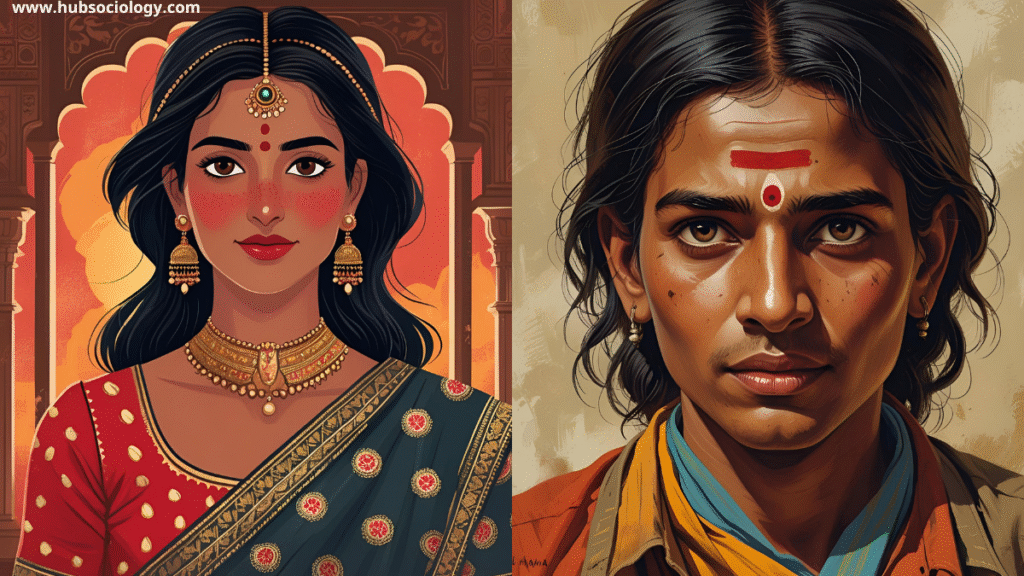
5. Gender Inequality
Despite constitutional guarantees, gender inequality continues to weaken democratic inclusivity in India.
- Political Representation: Women constitute almost half the population but remain underrepresented in legislatures. The long-pending Women’s Reservation Bill reflects this gap.
- Patriarchal Norms: Social norms restrict women’s participation in decision-making, both within families and in politics.
- Violence Against Women: Rising incidents of sexual violence, harassment, and domestic abuse restrict women’s freedom and undermine the principle of equality.
Without gender justice, Indian democracy cannot claim to be truly representative or inclusive.
6. Corruption and Weak Institutions
Corruption is a systemic challenge to democratic governance in India.
- Electoral Corruption: Money and muscle power dominate elections. The use of black money, distribution of freebies, and vote-buying dilute the fairness of the democratic process.
- Weak Institutions: The autonomy of democratic institutions such as the Election Commission, judiciary, and media is often undermined by political pressures.
- Bureaucratic Inefficiency: Corruption in administration erodes public trust in democracy and discourages civic participation.
A democracy without integrity in institutions becomes vulnerable to authoritarian tendencies.
7. Identity Politics and Populism
In recent decades, Indian democracy has witnessed the rise of identity-based politics and populist leaders.
- Ethnic and Caste-Based Parties: Many political parties cater to specific castes, religions, or regional groups rather than the common good.
- Populist Promises: Leaders often use populist rhetoric—freebies, subsidies, or divisive slogans—to gain votes, bypassing long-term structural reforms.
- Erosion of Deliberation: Instead of fostering debate and consensus, populism thrives on emotions and polarization, weakening rational democratic discourse.
Sociologically, this reflects a shift from issue-based to identity-based mobilization, limiting democracy’s transformative potential.
8. Media and the Crisis of Public Sphere
A vibrant democracy requires a free and fair media. However, the Indian media landscape faces serious challenges.
- Sensationalism and Bias: Instead of objective reporting, many outlets engage in sensationalism, promoting political propaganda.
- Social Media Challenges: Fake news, misinformation, and hate speech spread rapidly, polarizing public opinion.
- Corporate Control: Media ownership concentrated in the hands of a few corporations undermines independent journalism.
When media becomes a tool of manipulation, the democratic principle of informed citizenship is compromised.
9. Youth Disengagement and Political Apathy
India has one of the largest youth populations in the world. Yet, youth participation in democratic processes remains limited.
- Disillusionment: Corruption, unemployment, and lack of opportunities create frustration among the youth.
- Apathy Towards Politics: Many young people perceive politics as dirty and avoid active engagement.
- Potential for Change: At the same time, student movements, social media activism, and civil society campaigns show that youth can also be powerful agents of democratic transformation.
The challenge lies in channeling youthful energy towards constructive participation in democracy.

Conclusion
From a sociological perspective, the challenges to Indian democracy are deeply rooted in its social structures and cultural complexities. Caste, religion, regionalism, class inequality, gender discrimination, corruption, and identity politics all intersect to shape the functioning of democratic institutions. While India has successfully sustained democracy for over seven decades, its quality and inclusivity remain uneven.
Democracy in India must evolve beyond being a procedural mechanism of elections to becoming a lived reality of social justice, equality, and fraternity. Strengthening democratic institutions, fostering inclusive participation, and addressing structural inequalities are essential steps toward this goal.
Ultimately, the resilience of Indian democracy lies not only in its constitutional framework but also in the collective will of its diverse society to uphold democratic values amidst challenges.
Do you like this this Article ? You Can follow as on :-
Facebook – https://www.facebook.com/hubsociology
Whatsapp Channel – https://whatsapp.com/channel/0029Vb6D8vGKWEKpJpu5QP0O
Gmail – hubsociology@gmail.com
Exam-style questions
5 Marks Questions
- Define communalism and explain why it is a challenge to Indian democracy.
- How does caste-based politics weaken the principle of political equality?
- Briefly mention two ways in which corruption undermines democracy in India.
- What role does gender inequality play in limiting democratic participation?
- Write a short note on the impact of social media on Indian democracy.
10 Marks Questions
- Discuss how economic inequalities affect democratic participation in India.
- Explain the role of regionalism and linguistic diversity as challenges to Indian democracy.
- How does identity politics shift the focus of democracy from issues to identities? Give examples.
- Evaluate the impact of youth disengagement on the democratic process in India.
- Examine the role of media as both a supporter and a challenge to democracy in India.
15 Marks Questions
- Critically analyze the challenges posed by caste and religion to the functioning of Indian democracy.
- Discuss how corruption and weak institutions undermine the spirit of Indian democracy.
- Examine the sociological challenges of gender inequality, class divides, and poverty in shaping India’s democratic experience.
- “Indian democracy is sustained procedurally but weakened substantively.” Discuss this statement with reference to sociological challenges.
- From a sociological perspective, suggest measures to strengthen Indian democracy against the challenges of caste, communalism, and populism.