The Role of Women in Confucian Cultures: A Sociological Perspective

The Role of Women in Confucian Cultures: A Sociological Perspective

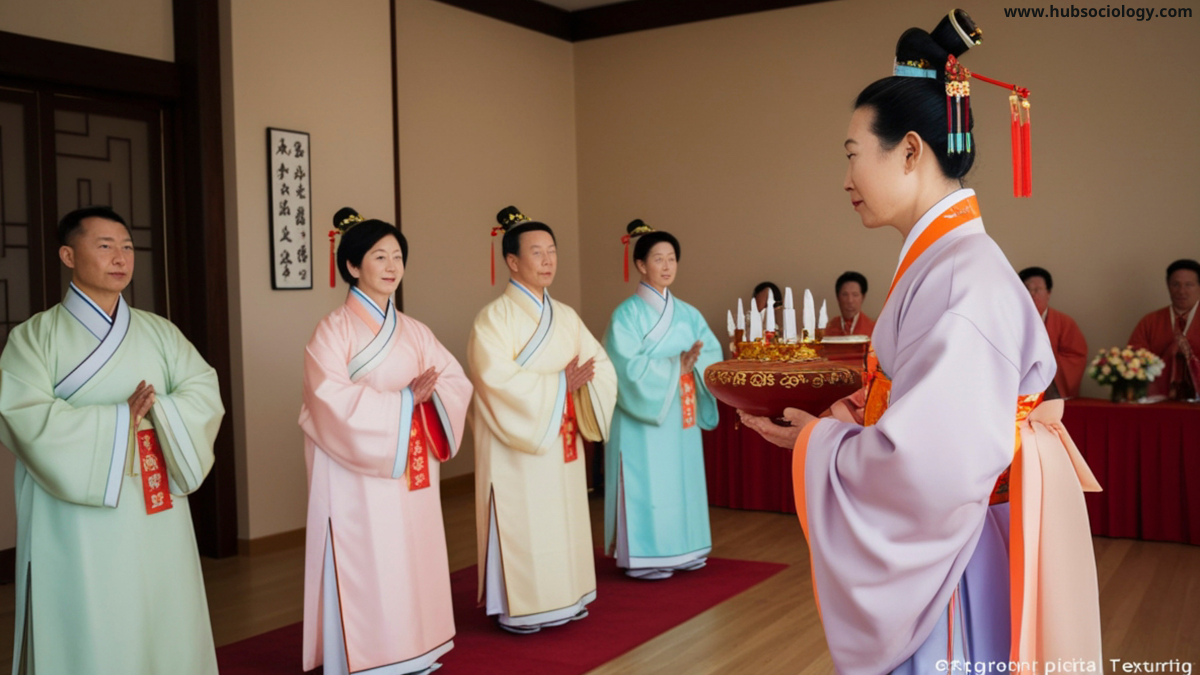
Introduction The role of women in Confucian cultures has been a central topic in sociological debates on gender, family, morality, and social order in East Asia. Confucianism, as a moral–philosophical system, has historically shaped social institutions, kinship patterns, education, governance, and everyday life across societies such as China, Japan, South Korea, and Vietnam. While often … Read more

Technology and Society in South Korea: A Sociological Perspective

Digital India and Social Transformation: A Sociological Perspective

Introduction South Korea is often described as one of the most technologically advanced societies in the world. High-speed internet, near-universal smartphone usage, cutting-edge electronics manufacturing, and digitally integrated everyday life have transformed how people communicate, work, learn, and form social relationships. From smart classrooms and online gaming cultures to AI-driven services and digital governance, technology … Read more

Work Culture and Mental Health in East Asia: A Sociological Perspective

Concepts of Illness and Sickness in Sociology

Introduction Work culture plays a decisive role in shaping individual identities, social relationships, and overall well-being. In East Asia—particularly in countries such as Japan, South Korea, China, and Taiwan—work culture is deeply embedded in historical traditions, economic development models, and collective social values. While this region has achieved remarkable economic growth and global competitiveness, it … Read more

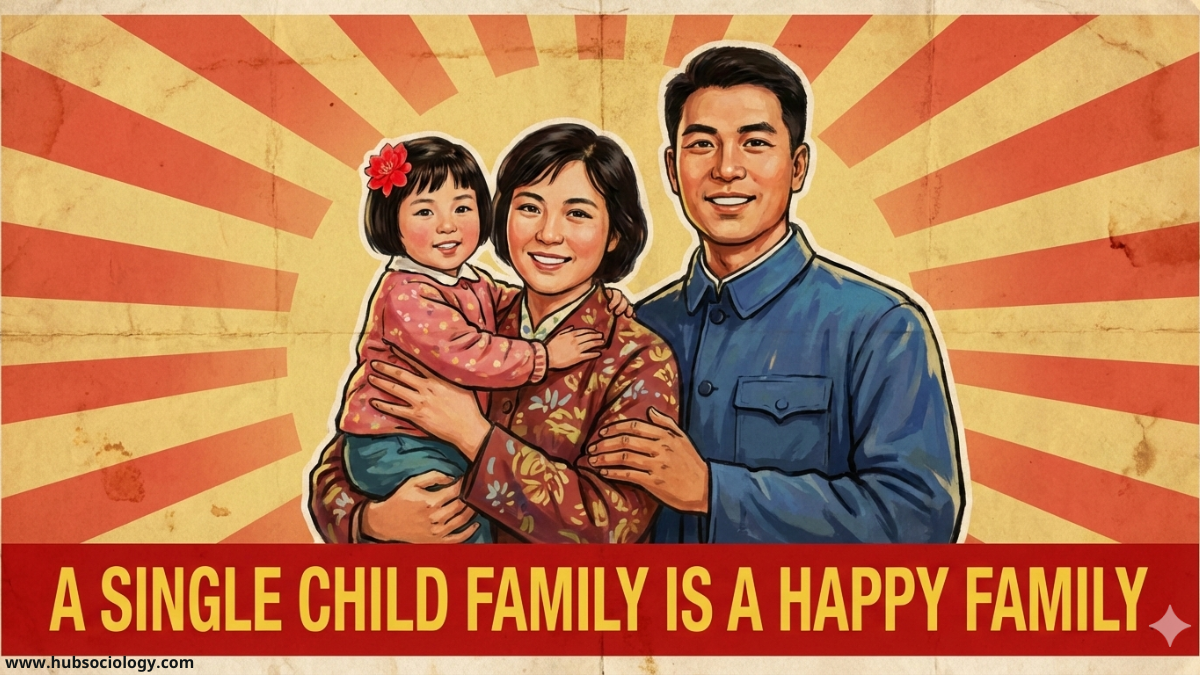
Social Effects of the One-Child Policy: A Sociological Perspective

Social Effects of the One-Child Policy

Introduction China’s One-Child Policy, introduced in 1979, remains one of the most ambitious and controversial social engineering projects in modern history. Implemented to control rapid population growth after decades of high fertility rates, the policy profoundly reshaped Chinese society. While its demographic and economic consequences have been widely discussed, the social effects of the One-Child … Read more

Cultural Globalization in East Asia: A Sociological Perspective

G.H. Mead on Hermeneutic and Interpretative Traditions – 50 MCQs with Answers (UGC NET Sociology)

Introduction Cultural globalization—the movement, hybridization, and diffusion of cultural practices, symbols, and identities across borders—has reshaped societies around the world. In East Asia, this process has unfolded with unique characteristics due to the region’s long civilizational history, strong state structures, rapid economic development, and increasingly influential cultural industries. Countries such as China, Japan, South Korea, … Read more

Youth Protest Movements in Hong Kong: A Sociological Analysis

Youth protest movements have emerged as one of the most defining socio-political phenomena in Hong Kong over the past decade. From the 2014 Umbrella Movement to the 2019 Anti-Extradition Bill protests, young people have consistently been at the forefront of collective action, mobilizing in large numbers and shaping global conversations about democracy, identity, and state-society … Read more

China’s Hukou System and Social Inequality: A Sociological Analysis

China’s Hukou System and Social Inequality: A Sociological Analysis

China’s rapid economic transformation over the past four decades has reshaped global discussions on development, urbanization, and social change. Yet beneath the impressive growth lies a deeply rooted institutional mechanism that continues to shape life chances, identity, and social mobility for millions of Chinese citizens—the hukou system. Originally introduced in the 1950s as a household … Read more

Urbanization and Mega-Cities in China: A Sociological Exploration

Introduction Over the last four decades, few social transformations have been as dramatic, rapid, and far-reaching as China’s urbanization. From a largely agrarian society in the 1970s, China has evolved into a nation where over 65% of the population now lives in cities. This unprecedented shift has led to the rise of mega-cities—urban centers with … Read more

Family Values in Japan, South Korea and China: A Sociological Perspective

Family Values in Japan, South Korea and China: A Sociological Perspective

Introduction on Family Values Family is one of the most enduring social institutions that shapes cultural identity, moral systems, and social behaviour. In East Asia, particularly in Japan, South Korea, and China, family values form the backbone of societal organization and individual conduct. Despite the pressures of globalization, modernization, and demographic changes, the traditional East … Read more

Social Movements and Youth in Central Asia: A Sociological Perspective

Social Movements and Youth in Central Asia: A Sociological Perspective

Introduction on Social Movements and Youth Social movements have long been vehicles of collective action, allowing marginalized groups and disenfranchised populations to articulate grievances and challenge structures of power. In Central Asia, a region characterized by its unique post-Soviet transition, authoritarian governance, and hybrid socio-political structures, youth play an increasingly prominent role in shaping and … Read more