
Introduction
Family is one of the most fundamental social institutions in every society. It serves as the primary unit for socialization, emotional support, economic cooperation, and cultural transmission. In Canada, family structures have undergone significant transformations over the last century. Traditional family models that once dominated Canadian society have gradually evolved in response to industrialization, urbanization, globalization, technological advancement, migration, changing gender roles, and shifts in cultural values. Today, Canada presents a diverse range of family forms that reflect both continuity and change.
From a sociological perspective, the evolution of Canadian family structures provides valuable insights into broader social transformations occurring within Canadian society. Traditional nuclear families continue to exist, but they now coexist with single-parent families, blended families, same-sex families, cohabiting couples, child-free households, and transnational families. These changes illustrate how family structures adapt to social, economic, and cultural conditions.

This article explores Canadian family structures through a sociological lens, examining the interaction between tradition and modernity. It analyzes historical developments, theoretical perspectives, emerging trends, challenges, and the future of family life in Canada.
Understanding Family in Sociology
Sociologists define the family as a social institution composed of individuals connected through blood relations, marriage, adoption, or long-term emotional commitment. Families perform essential functions that contribute to social stability and individual development.

Traditionally, families have been responsible for reproduction, socialization of children, economic support, emotional care, and social control. However, the ways in which these functions are performed have changed significantly in modern societies.
In Canada, family structures reflect both traditional values and contemporary social realities. The concept of family has expanded beyond biological and marital ties to include diverse forms of relationships based on emotional bonds, legal recognition, and shared responsibilities.
Historical Development of Canadian Family Structures
Indigenous Family Systems
Before European colonization, Indigenous communities across Canada maintained diverse family systems rooted in collective responsibility and kinship networks. Family relationships extended beyond the nuclear household and included grandparents, aunts, uncles, cousins, and community members.
Many Indigenous societies emphasized communal child-rearing and shared responsibilities. Elders played a significant role in transmitting cultural knowledge, traditions, and social values. Family structures varied among First Nations, Inuit, and Métis communities but generally reflected strong collective orientations.
Colonial policies, particularly residential schools, disrupted Indigenous family systems. These policies separated children from their families and communities, causing long-term social and cultural consequences that continue to affect Indigenous families today.
European Influence and Traditional Families
European settlers introduced family structures based largely on Christian values and patriarchal norms. During the nineteenth and early twentieth centuries, the dominant family model in Canada was the nuclear family consisting of a married heterosexual couple and their children.
Men were generally viewed as breadwinners, while women were expected to perform domestic duties and child care. Marriage was regarded as a lifelong commitment, and divorce was relatively uncommon due to religious, legal, and social constraints.
Families often served as economic units, especially in rural agricultural communities where family labor contributed directly to household production.
Industrialization and Family Transformation
The process of industrialization significantly altered family life in Canada. As economic activities shifted from farms to factories and urban workplaces, family functions changed accordingly.
Urbanization encouraged geographic mobility and reduced dependence on extended family networks. The nuclear family became increasingly common as people migrated to cities in search of employment opportunities.
Industrialization also contributed to the separation of work and home life. Economic production increasingly occurred outside the household, reducing the family’s role as an economic unit and emphasizing its emotional and social functions.
These developments laid the foundation for modern family structures characterized by greater individualism and flexibility.
The Traditional Canadian Family
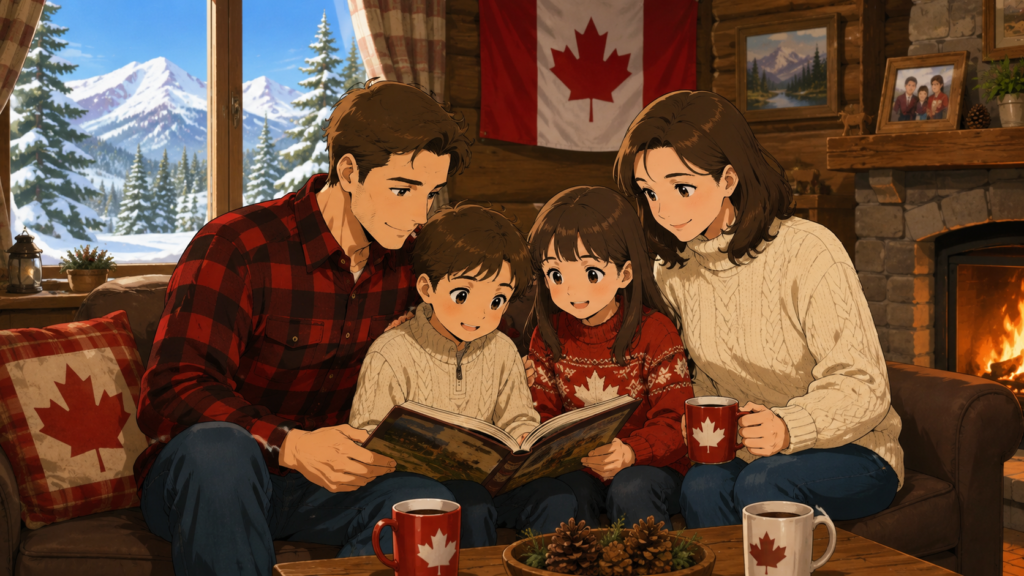
The traditional Canadian family was characterized by marriage, clearly defined gender roles, religious influence, and strong parental authority.
Several features distinguished traditional family structures:
Marriage served as the socially accepted basis for family formation.
Gender roles were highly differentiated, with men acting as providers and women as caregivers.
Extended family relationships played an important role in social support.
Religious institutions influenced family values and behavior.
Children were expected to respect parental authority and social norms.
This model dominated Canadian society throughout much of the twentieth century and remains influential in some communities today.
The Rise of Modern Family Structures
Modernization has introduced substantial diversity into Canadian family life. Family structures today are more flexible and varied than ever before.
Dual-Earner Families
One of the most significant changes has been the rise of dual-earner households. Increasing female participation in the labor force has transformed traditional gender roles.
Women now contribute significantly to household income, challenging the traditional breadwinner-homemaker model. This shift has encouraged more egalitarian relationships and shared responsibilities within families.
However, balancing work and family obligations remains a challenge for many households, creating new social pressures and demands.
Single-Parent Families
Single-parent families have become increasingly common in Canada. These households may result from divorce, separation, widowhood, or personal choice.
From a sociological perspective, the growth of single-parent families reflects changing attitudes toward marriage and parenthood. While many single-parent families provide stable and supportive environments, they may face economic and social challenges due to limited resources.
Government support programs and social policies have become increasingly important in addressing the needs of these families.
Cohabitation and Common-Law Relationships
Living together without formal marriage has become socially acceptable across much of Canada.
Cohabitation often serves as an alternative to marriage or as a step preceding marriage. Sociologists view this trend as evidence of growing individual autonomy and changing attitudes toward intimate relationships.
The legal recognition of common-law partnerships has further contributed to the normalization of cohabitation.
Blended Families
High rates of divorce and remarriage have contributed to the growth of blended families.
Blended families include parents, stepparents, and children from previous relationships. These family structures illustrate how individuals adapt to changing relationship circumstances while maintaining family connections.
The formation of blended families often requires negotiation of new roles, responsibilities, and emotional relationships.
Same-Sex Families and Social Inclusion
A major feature of modern Canadian family life is the increasing recognition of same-sex families.
Canada became one of the first countries in the world to legalize same-sex marriage nationwide in 2005. This legal change reflected broader societal shifts toward equality and diversity.
Same-sex couples increasingly form families through adoption, surrogacy, assisted reproduction, and previous heterosexual relationships.
From a sociological perspective, the acceptance of same-sex families demonstrates how family definitions evolve in response to changing social values and human rights principles.
Immigration and Family Diversity
Canada is one of the world’s most multicultural societies. Immigration has significantly influenced family structures and cultural practices.
Immigrant families often bring diverse traditions, beliefs, and family arrangements. Many maintain strong extended family networks and emphasize collective values.
At the same time, immigrant families frequently adapt to Canadian social norms. This process can create intergenerational tensions as younger family members adopt modern values while older generations seek to preserve traditional cultural practices.
Sociologists describe this dynamic as cultural negotiation, where families balance heritage preservation with social integration.
Indigenous Families in Contemporary Canada
Indigenous families continue to play a central role in preserving cultural identity and community resilience.
Despite historical disruptions caused by colonialism, many Indigenous communities are actively revitalizing traditional family practices and kinship systems.
Contemporary Indigenous family structures often combine traditional values with modern realities. Community-based child welfare initiatives, language revitalization programs, and cultural education efforts strengthen family connections and social cohesion.
Understanding Indigenous family experiences is essential for a comprehensive analysis of Canadian family structures.
Theoretical Perspectives on Canadian Family Structures
Functionalist Perspective
Functionalists view the family as a vital institution that contributes to social stability.
According to this perspective, families perform essential functions such as socialization, emotional support, reproduction, and social integration.
Functionalists argue that although family forms may change, the institution remains necessary for societal functioning.
In Canada, diverse family structures continue to fulfill many of these important social functions.
Conflict Perspective
Conflict theorists emphasize power inequalities within families and society.
They argue that family structures often reflect broader social inequalities related to class, gender, and economic resources.
Changes in Canadian family life can be understood as responses to shifting power relations and economic conditions.
The increasing participation of women in education and employment has challenged traditional family hierarchies and contributed to more egalitarian relationships.
Feminist Perspective
Feminist sociologists focus on gender dynamics within families.
Historically, women carried a disproportionate share of domestic labor and caregiving responsibilities. Feminist movements advocated for greater equality in both public and private spheres.
Contemporary Canadian families increasingly reflect feminist ideals through shared parenting, workplace equality initiatives, and changing expectations regarding household responsibilities.
Nevertheless, gender inequalities continue to exist in areas such as unpaid care work and work-family balance.
Symbolic Interactionist Perspective
Symbolic interactionists examine everyday interactions among family members.
They emphasize how family roles, identities, and meanings are socially constructed through communication and shared experiences.
This perspective helps explain how modern Canadian families continuously redefine relationships, parenting practices, and family responsibilities.
Technology and Family Life
Technological advancements have significantly influenced Canadian family structures.
Digital communication allows family members to maintain connections across geographic distances. Social media, video calls, and messaging platforms facilitate relationships among relatives living in different regions or countries.
Technology has also transformed parenting practices, education, and family leisure activities.
However, excessive screen use can create challenges related to communication, privacy, and family interaction. Sociologists continue to examine how digital technologies shape family relationships in modern societies.
Economic Factors and Family Change
Economic conditions strongly influence family structures.
Housing costs, employment opportunities, income inequality, and educational expenses affect decisions regarding marriage, childbearing, and household formation.
Many young Canadians delay marriage and parenthood due to financial uncertainty. Rising living costs have contributed to longer periods of co-residence between adult children and parents.
Economic pressures also affect family well-being, mental health, and relationship stability.
Understanding these economic influences is crucial for analyzing contemporary Canadian family dynamics.
Family Policy and Government Support
The Canadian government plays an important role in supporting families through social policies and public programs.
Parental leave policies, child benefits, childcare programs, healthcare services, and family law regulations contribute to family well-being.
These policies reflect the recognition that families require institutional support to fulfill their social functions effectively.
Comparatively generous family support systems distinguish Canada from some other countries and help promote social inclusion and child development.
Challenges Facing Canadian Families
Despite significant progress, Canadian families face numerous challenges.
Work-life balance remains a major concern, particularly for dual-earner households.
Mental health issues affect many family relationships and require increased support services.
Economic inequality contributes to differences in family opportunities and outcomes.
Population aging places additional caregiving responsibilities on families.
Migration and globalization can create geographical separation among family members.
These challenges highlight the need for adaptive social policies and community support systems.
Tradition and Modernity: Finding Balance
The relationship between tradition and modernity is a defining characteristic of Canadian family life.
Traditional values such as commitment, responsibility, mutual support, and intergenerational relationships continue to influence many families. At the same time, modern values emphasize individual choice, gender equality, diversity, and personal fulfillment.
Rather than replacing tradition entirely, modern family structures often integrate traditional elements into new social contexts.
For example, many families maintain cultural traditions while embracing egalitarian gender roles. Similarly, extended family support remains important even within highly modernized urban environments.
This coexistence of continuity and change demonstrates the adaptability of the family institution.
Future Trends in Canadian Family Structures
Several trends are likely to shape the future of Canadian families.
Increasing cultural diversity will continue to expand family forms and practices.
Technological innovation will influence communication, parenting, and household organization.
Population aging may strengthen intergenerational caregiving relationships.
Gender equality movements will continue reshaping domestic responsibilities and family expectations.
Alternative family arrangements are likely to gain greater social acceptance.
Environmental and economic uncertainties may influence decisions regarding marriage, fertility, and household formation.
These developments suggest that Canadian family structures will remain dynamic and adaptable.
Conclusion
Canadian family structures provide a compelling example of the interaction between tradition and modernity. While traditional family models have played a foundational role in Canadian society, social, economic, cultural, and political changes have produced a wide variety of contemporary family forms.
From Indigenous kinship systems and immigrant family traditions to dual-earner households, single-parent families, blended families, and same-sex families, Canada’s family landscape reflects remarkable diversity. Sociological perspectives help us understand how these changes are connected to broader social transformations involving gender roles, economic conditions, cultural values, and public policies.
Despite ongoing changes, the family remains a central institution in Canadian society. Its forms may evolve, but its significance in providing socialization, support, identity, and belonging continues. The Canadian experience demonstrates that tradition and modernity are not opposing forces but interconnected elements that together shape the future of family life.
FAQs
1. What is a Canadian Family in sociological terms?
A Canadian Family refers to a social unit connected by marriage, blood relations, adoption, or long-term partnerships that provides emotional, social, and economic support to its members.
2. How has the Canadian Family changed over time?
The Canadian Family has evolved from predominantly traditional nuclear households to diverse forms including single-parent, blended, same-sex, and common-law families.
3. What are the most common types of Canadian Family structures today?
Modern Canadian Family structures include nuclear families, extended families, single-parent families, blended families, common-law families, and same-sex parent families.
4. Why is diversity important in the Canadian Family system?
Diversity allows the Canadian Family to reflect Canada’s multicultural society, accommodating different cultural traditions, values, and lifestyles.
5. How does immigration influence the Canadian Family?
Immigration enriches the Canadian Family by introducing varied cultural practices, family values, and intergenerational relationships.
6. What role does gender equality play in the Canadian Family?
Gender equality has transformed the Canadian Family by encouraging shared responsibilities in parenting, household work, and economic support.
7. How do Indigenous traditions shape the Canadian Family?
Indigenous communities contribute unique kinship systems and collective caregiving practices that influence the broader understanding of the Canadian Family.
8. What challenges does the Canadian Family face today?
The Canadian Family faces challenges such as rising living costs, work-life balance issues, housing affordability, and mental health concerns.
9. How has technology affected the Canadian Family?
Technology helps the Canadian Family maintain communication across distances but also creates concerns regarding screen time and family interaction.
10. What is the significance of common-law relationships in the Canadian Family?
Common-law partnerships have become a recognized and accepted part of the Canadian Family, reflecting changing attitudes toward marriage.
11. How do sociologists study the Canadian Family?
Sociologists examine the Canadian Family through theories such as functionalism, conflict theory, feminism, and symbolic interactionism.
12. What role does government policy play in supporting the Canadian Family?
Government programs such as parental leave, child benefits, healthcare, and childcare services strengthen the well-being of the Canadian Family.
13. Why is the Canadian Family considered an important social institution?
The Canadian Family is essential because it provides socialization, emotional support, cultural transmission, and social stability.
14. How does multiculturalism influence the Canadian Family?
Multiculturalism encourages the Canadian Family to preserve cultural identities while adapting to Canadian social values and norms.
15. What is the future of the Canadian Family?
The future of the Canadian Family will likely include greater diversity, technological integration, gender equality, and evolving family arrangements.
1 thought on “Canadian Family Structures: Tradition and Modernity”