Introduction
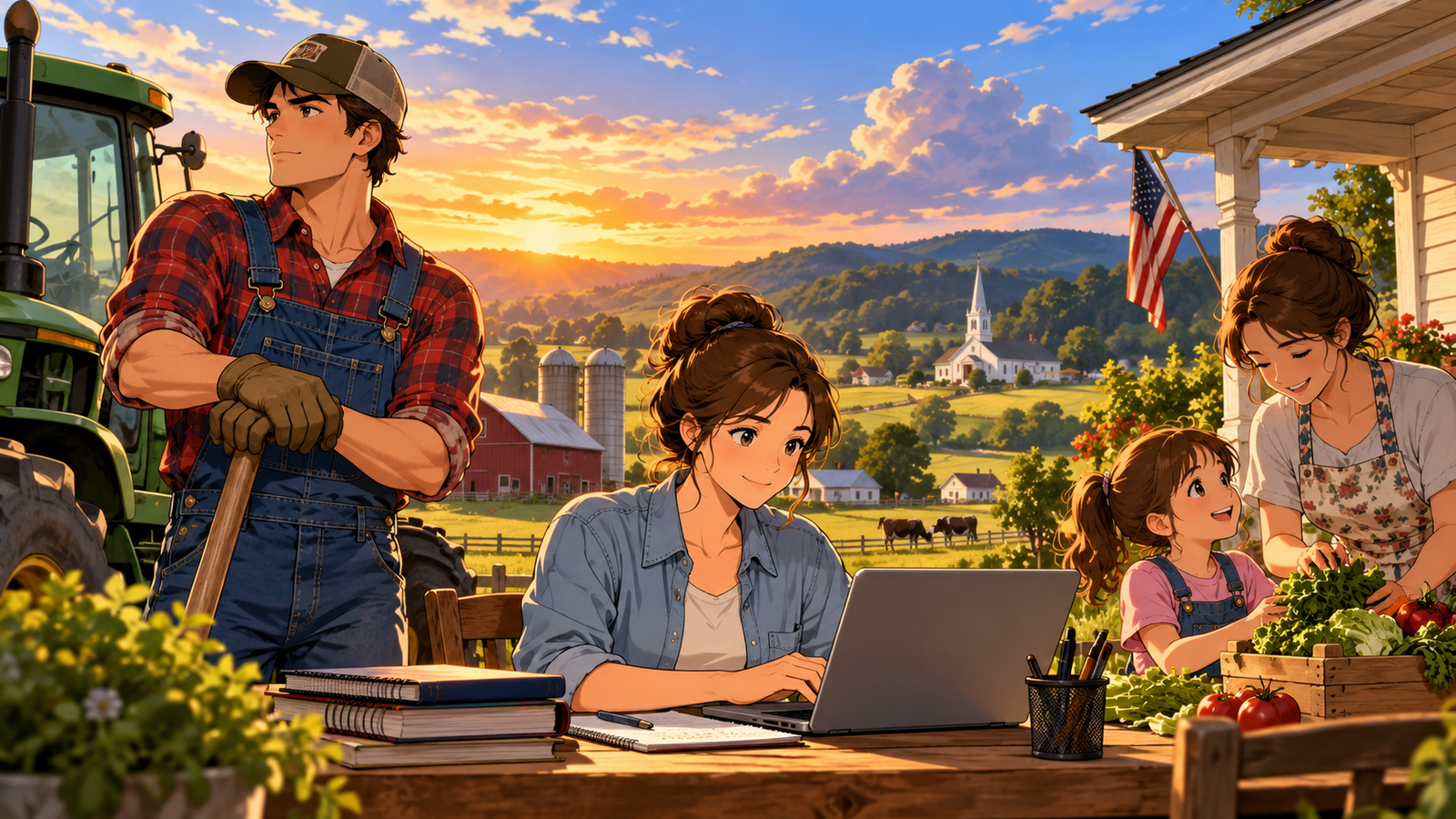
Gender is one of the most important dimensions of social organization, influencing family relationships, employment opportunities, political participation, and cultural expectations. In rural America, gender relations have historically been shaped by agricultural production, family traditions, religious institutions, and community networks. However, economic restructuring, technological development, educational expansion, and changing cultural attitudes have transformed the ways men and women understand their social positions. The study of Gender Roles in Rural American Society therefore provides important insights into the relationship between tradition and social change.
Rural communities in the United States are not socially or culturally uniform. Farming regions, small industrial towns, Indigenous communities, and rural areas near expanding metropolitan centres have different economic structures and cultural experiences. Consequently, Gender Roles in Rural American Society vary according to class, race, ethnicity, age, education, religion, and geographical location. Although traditional expectations about masculinity and femininity remain influential in some communities, many rural families are adapting to new forms of employment, caregiving, and household decision-making.
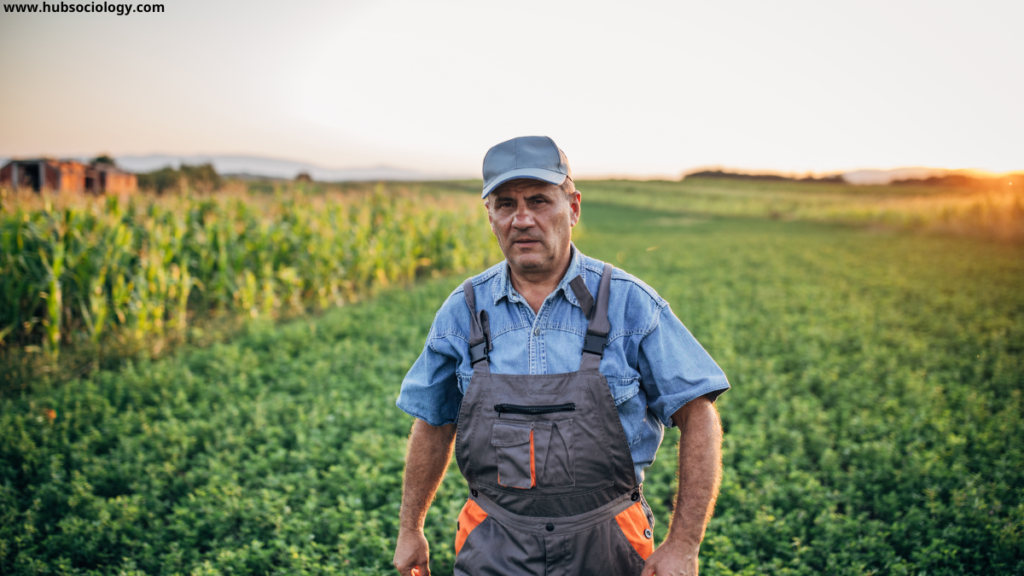
From a sociological perspective, the relationship between continuity and change is particularly significant. Traditional gender arrangements have not disappeared, but they increasingly coexist with new expectations of equality, independence, and shared responsibility. Understanding Gender Roles in Rural American Society requires examining how institutions reproduce gender inequalities and how individuals and communities challenge established social norms.
Historical Foundations of Gender Roles in Rural American Society
Historically, agriculture played a central role in shaping Gender Roles in Rural American Society. In farming households, men’s work was often associated with operating machinery, managing livestock, cultivating fields, and representing the family in commercial transactions. Women frequently performed domestic labour, prepared food, raised children, maintained household gardens, cared for animals, and helped with agricultural production.
This division of labour reflected the influence of patriarchal social structures, in which men generally possessed greater authority over property, income, and public decision-making. However, it would be inaccurate to assume that rural women were simply confined to domestic responsibilities. Their labour was essential to household survival and agricultural productivity, even when it was unpaid or excluded from formal economic statistics.
The ideal of the male breadwinner and female homemaker became particularly influential during periods when cultural expectations emphasized separate responsibilities for men and women. Nevertheless, actual rural households often depended on women’s economic contributions, especially during planting and harvesting seasons, financial difficulties, and periods of labour shortages.
Marriage and family formation also reinforced conventional gender expectations. Women were commonly expected to prioritize motherhood and household management, while men were expected to provide financial security and demonstrate physical strength, independence, and authority. These historical patterns continue to influence Gender Roles in Rural American Society, although their significance differs across communities and generations.
Theoretical Perspectives on Rural Gender Relations
Sociological theories provide useful tools for understanding Gender Roles in Rural American Society. Structural functionalism, feminist theory, symbolic interactionism, and intersectionality offer different explanations for the persistence and transformation of gender expectations.
Structural Functionalism
Structural functionalism examines how social institutions contribute to social stability. From this perspective, traditional divisions of labour may be understood as arrangements that historically helped agricultural households coordinate productive and reproductive responsibilities.
Men’s participation in physically demanding agricultural tasks and women’s responsibility for childcare and household management were often presented as complementary functions. However, this explanation can overlook unequal access to authority, income, and resources. A division of labour that contributes to household organization does not necessarily distribute power equally.
Modern rural economies also challenge assumptions that fixed gender roles are necessary for family stability. Shared parenting, women’s employment, and men’s participation in domestic work demonstrate that families can maintain social cohesion through more flexible arrangements.
Feminist Theory
Feminist theory offers a critical explanation of Gender Roles in Rural American Society by examining patriarchy, unpaid labour, occupational segregation, and unequal access to resources. Feminist sociologists argue that domestic work and caregiving have frequently been treated as women’s natural responsibilities rather than socially necessary forms of labour.
This distinction matters because unpaid work can limit women’s opportunities to pursue education, paid employment, political leadership, and professional advancement. Rural women who manage households while participating in farming or off-farm employment may experience a double burden of productive and reproductive responsibilities.
Feminist approaches also emphasize that rural women are not a homogeneous group. Their experiences differ according to economic position, racial identity, family structure, disability, and access to public services. These differences help explain why changes in gender expectations benefit some women more than others.
Symbolic Interactionism
Symbolic interactionism focuses on how gender is constructed through everyday interactions. In rural communities, gender expectations may be reinforced through family conversations, school activities, religious participation, workplace practices, and local traditions.
Children learn ideas about masculinity and femininity by observing adults and receiving approval or criticism for their behaviour. Boys may be encouraged to demonstrate independence and physical competence, while girls may be praised for being cooperative, responsible, and caring. Such messages influence how gender identities develop.
At the same time, everyday interactions can gradually transform social expectations. When fathers take parental leave, women manage farms, or men become primary caregivers, familiar assumptions about gender become open to reconsideration.
Continuity of Traditional Gender Roles in Rural America
Despite significant social changes, traditional expectations remain an important feature of Gender Roles in Rural American Society. Family traditions, religious beliefs, community reputation, and economic circumstances can reinforce conventional ideas about masculinity and femininity.

Family and Domestic Responsibilities
Family remains a central institution in many rural communities. Women often continue to carry a substantial share of childcare, cooking, cleaning, care for older relatives, and household organization. Even when women participate in paid employment, domestic responsibilities may not be distributed equally between partners.
This unequal distribution of unpaid labour affects women’s time, financial independence, and professional opportunities. A woman who works in a school, hospital, local business, or agricultural enterprise may still be expected to manage most household tasks. Consequently, the expansion of women’s employment does not automatically produce equality within the family.
Nevertheless, domestic arrangements differ considerably. Some rural households share childcare and housework more equally, particularly when both partners work outside the home. These differences demonstrate that Gender Roles in Rural American Society are shaped by social expectations but are not fixed or universal.
Religion, Culture, and Community Expectations
Religious institutions and cultural traditions can influence attitudes toward marriage, parenthood, leadership, and sexuality. In some rural communities, religious teachings support conventional family structures and emphasize distinct responsibilities for husbands and wives.
Community relationships can strengthen these expectations because individuals often live within closely connected social networks. Family reputation, local approval, and long-standing traditions may influence personal decisions about employment, marriage, and parenting.
However, rural religious communities are diverse. Many congregations support women’s education, professional participation, community leadership, and shared family responsibilities. Religious beliefs can therefore preserve established gender norms while also providing moral support for social reform.
Masculinity and the Rural Male Identity
Traditional masculinity is another important dimension of Gender Roles in Rural American Society. Rural men have often been associated with physical labour, agricultural knowledge, self-reliance, economic provision, and responsibility for protecting the family.
These expectations can provide a sense of identity, pride, and belonging. Agricultural skills and practical knowledge are valued forms of cultural competence in many rural settings. However, rigid masculine expectations can also create difficulties when men experience unemployment, financial insecurity, illness, or occupational decline.
Men may feel pressure to avoid expressing emotional vulnerability or seeking psychological support because these actions are sometimes perceived as inconsistent with traditional masculinity. Sociologically, this illustrates how gender norms can constrain men as well as women.
Economic restructuring has further complicated these identities. As employment in agriculture and manufacturing changes, men may need to enter healthcare, education, retail, care work, or service occupations. These transitions can challenge established understandings of what it means to be a successful rural man.
Changing Gender Roles in Rural American Society
The transformation of Gender Roles in Rural American Society reflects broader changes in the economy, education, family structure, and public attitudes. Although these developments have not eliminated inequality, they have expanded the range of roles available to women and men.
Women’s Education and Employment
Educational expansion has created new opportunities for rural women. Women increasingly pursue higher education, vocational qualifications, professional training, and careers in healthcare, education, administration, business, and public services.
Paid employment can strengthen women’s financial independence and bargaining power within the household. It can also increase their participation in decisions about spending, children’s education, property, and family planning.
However, rural women may encounter distinctive barriers, including long travel distances to colleges, limited public transportation, fewer local employers, inadequate childcare, and restricted access to professional networks. In some areas, highly educated women leave for larger cities because suitable employment is unavailable locally.
These challenges reveal that changing Gender Roles in Rural American Society depends not only on individual ambition but also on institutional opportunities. Educational access, broadband connectivity, affordable childcare, and local employment development can determine whether women are able to translate qualifications into economic independence.
Women’s Participation in Agriculture
Women’s contribution to agriculture has become increasingly visible through farm management, agricultural entrepreneurship, financial administration, marketing, and direct-to-consumer sales. Women may also manage farm accounts, coordinate labour, adopt digital technologies, and make strategic decisions about production.
Nevertheless, formal recognition does not always reflect actual participation. Women can perform substantial agricultural work without being identified as the principal farm operator or property owner. Unequal inheritance practices, access to credit, land ownership, and professional networks may restrict their decision-making authority.
The changing position of women in agriculture demonstrates the complexity of Gender Roles in Rural American Society. Women may exercise considerable practical responsibility while still encountering institutional barriers to ownership and leadership.
Technology, Digital Work, and Social Change
Digital technology has introduced new possibilities for rural employment and social participation. Remote work, online education, e-commerce, digital marketing, and telehealth can reduce some of the disadvantages associated with geographical isolation.
For rural women, remote employment may create opportunities to combine professional work with family responsibilities. Rural entrepreneurs can sell agricultural products, handmade goods, educational resources, and other services beyond their immediate communities.
However, digital opportunities are unevenly distributed. Reliable broadband, suitable equipment, digital literacy, and access to secure employment remain important conditions for participation. Remote work can also reinforce gender inequality if women are expected to combine paid employment with uninterrupted domestic responsibilities.
Technology therefore does not automatically transform Gender Roles in Rural American Society. Its effects depend on how households, employers, and institutions organize work and caregiving.
Changing Family Structures
Marriage, parenthood, and household composition have also changed. Rural America includes married couples, single-parent families, cohabiting partners, multigenerational households, same-sex couples, and people living alone.
These different arrangements challenge the assumption that every rural household follows a single traditional model. Single mothers may combine paid work with extensive caregiving, while single fathers may assume responsibilities previously associated with women. Grandparents and other relatives can play significant roles in raising children.
Economic pressures, migration, changing marriage patterns, and rising living costs influence these arrangements. As a result, Gender Roles in Rural American Society increasingly reflect negotiation within diverse family structures rather than a uniform division between male and female responsibilities.
Intersectionality: Race, Class, and Rural Gender Inequality
Gender cannot be understood independently of other social inequalities. Intersectionality examines how gender interacts with race, ethnicity, class, disability, age, and other social positions to shape people’s opportunities and experiences.
For example, the experiences of a white woman managing a relatively prosperous family farm may differ substantially from those of a low-income agricultural worker, an Indigenous woman in a remote community, or a Black woman operating a small business in a rural Southern town.
Indigenous rural communities have distinct histories, cultural traditions, and political circumstances. Women’s participation in community governance, cultural preservation, family care, and economic development must be understood in relation to Indigenous sovereignty and specific local histories rather than through generalized assumptions about rural life.
Similarly, low-income rural households may have limited access to childcare, healthcare, transportation, and secure employment. Women in these households can face greater difficulties balancing paid work and family responsibilities. Men in economically marginalized communities may also experience employment insecurity and pressure to fulfil traditional provider expectations despite limited opportunities.
Intersectionality therefore reveals that Gender Roles in Rural American Society are not simply changing from traditional to modern. Their transformation is uneven, reflecting differences in resources, institutional power, and community conditions.
Gender, Power, and Decision-Making in Rural Communities
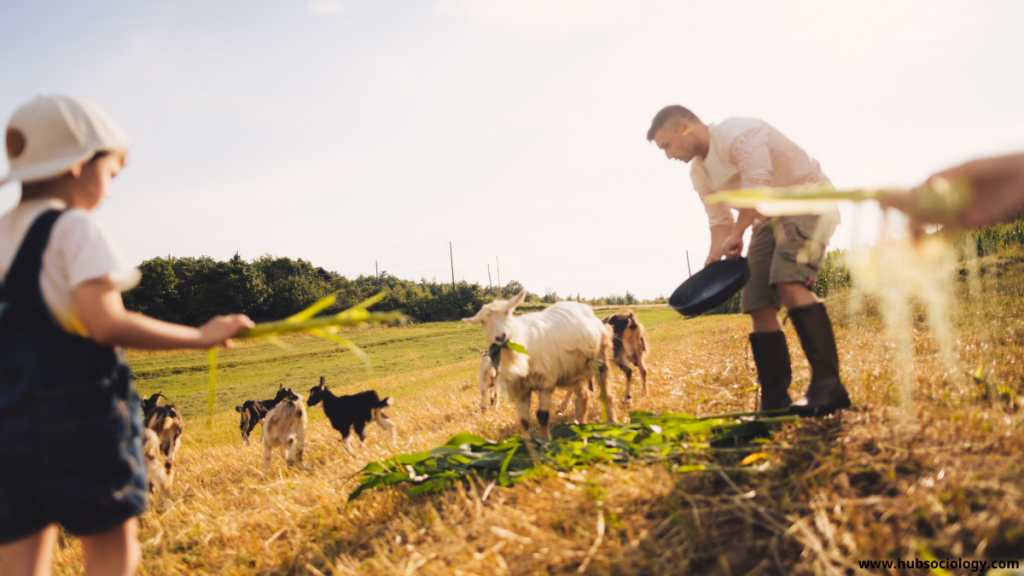
Power relations are central to the sociological analysis of Gender Roles in Rural American Society. Gender inequality is visible not only in households and workplaces but also in local government, agricultural organizations, community associations, and political institutions.
Historically, men have often occupied prominent positions in farm organizations, local business networks, and elected leadership. Women’s participation in community life has frequently been associated with volunteering, education, charitable activities, and family-oriented organizations. Although these activities contribute substantially to rural development, they may receive less recognition than formal political or economic leadership.
Women’s growing involvement in local councils, school boards, agricultural associations, and business organizations challenges these patterns. Female leadership can bring greater attention to childcare, public health, educational access, domestic violence prevention, and the needs of economically vulnerable families.
Nevertheless, barriers remain. Limited professional networks, financial constraints, time spent on unpaid care, and gender stereotypes can restrict women’s participation in decision-making. Small communities may also have limited institutional resources for addressing discrimination and harassment.
Changes in leadership illustrate that Gender Roles in Rural American Society are closely connected to the distribution of power. Achieving greater equality requires not only changing attitudes but also expanding access to decision-making institutions and leadership opportunities.
Challenges Facing Gender Equality in Rural America
Despite growing awareness of gender equality, several structural problems continue to influence rural gender relations.
First, limited economic diversification can restrict employment opportunities. When a rural community depends heavily on agriculture, mining, manufacturing, or a small number of employers, women and men may face occupational choices shaped by local labour demand rather than personal preferences.
Second, inadequate childcare services can create difficulties for working parents. Where childcare facilities are expensive or geographically distant, women may reduce their working hours or leave employment altogether. Men who wish to take a more active caregiving role may also face inflexible workplace expectations.
Third, gender stereotypes remain influential in some educational and occupational settings. Girls may receive less encouragement to pursue certain technical fields, while boys may be discouraged from entering caring professions. Such expectations reproduce occupational segregation across generations.
Fourth, rural isolation can complicate access to healthcare, reproductive healthcare, counselling, and support services for people experiencing domestic abuse. Long travel distances and concerns about confidentiality can make seeking assistance especially difficult in small communities.
Finally, economic insecurity can reinforce conventional gender expectations. When families experience financial stress, they may return to familiar arrangements in which men are expected to earn income and women are expected to absorb additional unpaid responsibilities.
Addressing these issues requires a structural approach. Individual awareness is important, but lasting improvements in Gender Roles in Rural American Society also depend on employment policy, accessible public services, educational opportunities, and institutional accountability.
The Future of Gender Roles in Rural American Society
The future of Gender Roles in Rural American Society will depend on the interaction between demographic change, economic development, technology, education, and cultural adaptation.
One important development is the increasing recognition that caregiving is a shared social responsibility. Policies that support paid family leave, affordable childcare, flexible working arrangements, and eldercare can help families distribute responsibilities more fairly.
Educational institutions can also contribute by challenging gender stereotypes, encouraging students to explore a broad range of careers, and providing career guidance that reflects local economic opportunities. Community colleges, vocational programmes, and online learning can help rural residents acquire skills without necessarily leaving their communities.
Economic diversification is equally important. Rural entrepreneurship, renewable energy, healthcare, digital services, and small-business development can create new opportunities for people whose choices were previously restricted by local labour markets.
Community organizations and local leaders can encourage inclusive participation by recognizing women’s contributions, supporting diverse family arrangements, and challenging harmful assumptions about masculinity. Men can be important participants in this process through shared parenting, equitable household labour, and support for women’s leadership.
However, progress should not be understood as the simple disappearance of tradition. Some rural families may retain valued cultural practices while adopting more equal approaches to work and caregiving. Others may experience change more gradually because of economic constraints or differing beliefs.
The future of Gender Roles in Rural American Society will therefore likely involve a continuing negotiation between inherited cultural values and emerging expectations of equality. Sociological analysis is essential for understanding why these changes occur differently across communities and why formal equality does not always produce equal everyday experiences.
Conclusion
Gender Roles in Rural American Society reflect the complex relationship between historical traditions and contemporary social transformation. Agricultural production, family structures, religion, and community networks have historically shaped expectations concerning masculinity, femininity, employment, and domestic responsibilities. These institutions continue to influence rural life, but their effects are changing as education expands, women enter diverse occupations, technology creates new opportunities, and family arrangements become more varied.
From a sociological perspective, continuity and change are not opposing processes. Traditional expectations can persist alongside new practices, creating tensions within households, workplaces, and community institutions. Feminist theory highlights unequal power relations, symbolic interactionism explains how gender expectations are reproduced in everyday life, and intersectionality demonstrates that rural gender experiences differ according to race, class, and other social positions.
Ultimately, the transformation of Gender Roles in Rural American Society requires more than changing individual attitudes. It depends on equitable access to education, employment, property, healthcare, childcare, and political participation. Rural communities can preserve their cultural identities while developing more inclusive social arrangements.
A deeper understanding of Gender Roles in Rural American Society helps sociologists explain how gender inequality is maintained, how social change occurs, and how rural institutions can support greater equality. The central challenge is to ensure that cultural continuity does not prevent individuals from pursuing opportunities and responsibilities according to their abilities, aspirations, and circumstances.
Frequently Asked Questions (FAQs)
1. What are Gender Roles in Rural American Society?
Gender Roles in Rural American Society refer to the social expectations, responsibilities, and behaviours traditionally associated with men and women in rural communities. These roles influence family life, employment, agriculture, caregiving, and community participation.
2. How have Gender Roles in Rural American Society changed over time?
Gender Roles in Rural American Society have changed through educational expansion, women’s employment, technological development, and changing family structures. Women increasingly participate in professional work and leadership, while some men take greater responsibility for childcare and domestic work.
3. What factors influence Gender Roles in Rural American Society?
Family traditions, religion, economic conditions, education, employment opportunities, community values, and public policies influence Gender Roles in Rural American Society. Race, class, age, and geographical location also shape gender experiences.
4. How does agriculture affect Gender Roles in Rural American Society?
Agriculture has historically influenced Gender Roles in Rural American Society by organizing work around farming, livestock management, household production, and caregiving. Although these responsibilities were often divided by gender, women have always made important contributions to agricultural production.
5. What is the role of women in Gender Roles in Rural American Society?
Women play important roles in farming, education, healthcare, entrepreneurship, household management, and community development. Changing Gender Roles in Rural American Society have increased women’s visibility in paid employment and leadership, although inequalities in income, property ownership, and unpaid labour remain.
6. How does masculinity influence Gender Roles in Rural American Society?
Traditional masculinity often emphasizes independence, physical strength, self-reliance, and financial provision. These expectations shape Gender Roles in Rural American Society and may create pressure on men to demonstrate economic success or avoid expressing emotional vulnerability.
7. How does education affect Gender Roles in Rural American Society?
Education expands career choices, increases awareness of gender equality, and supports economic independence. In Gender Roles in Rural American Society, educational opportunities can challenge stereotypes, although geographical isolation and limited local employment may restrict their benefits.
8. How does technology influence Gender Roles in Rural American Society?
Technology creates opportunities for remote employment, online education, digital entrepreneurship, and access to services. Its influence on Gender Roles in Rural American Society depends on broadband availability, digital skills, household responsibilities, and access to suitable jobs.
9. What is the relationship between family and Gender Roles in Rural American Society?
Family is a major institution through which gender expectations are learned and reproduced. Gender Roles in Rural American Society influence marriage, parenting, domestic labour, financial decisions, and caregiving, although many households increasingly share these responsibilities.
10. How does religion influence Gender Roles in Rural American Society?
Religious beliefs and institutions can reinforce traditional expectations about marriage, parenting, and leadership. However, religious communities differ, and some actively support women’s leadership and more equitable family relationships within Gender Roles in Rural American Society.
11. What is the feminist perspective on Gender Roles in Rural American Society?
Feminist theory examines how patriarchy, unpaid labour, occupational segregation, and unequal access to resources shape Gender Roles in Rural American Society. It emphasizes the importance of economic independence, equal opportunities, and recognition of women’s contributions.
12. How does intersectionality explain Gender Roles in Rural American Society?
Intersectionality explains how gender interacts with race, class, ethnicity, disability, and other social positions. This approach demonstrates why Gender Roles in Rural American Society produce different experiences and opportunities for different groups of rural residents.
13. What challenges affect gender equality in rural America?
Major challenges include limited employment opportunities, inadequate childcare, occupational segregation, restricted healthcare access, unequal domestic responsibilities, and barriers to leadership. These structural conditions influence the transformation of Gender Roles in Rural American Society.
14. What is the future of Gender Roles in Rural American Society?
The future of Gender Roles in Rural American Society will depend on educational access, economic diversification, technology, public services, and changing cultural expectations. Greater equality is possible when institutions support shared caregiving and fair participation in employment and leadership.
15. Why is the sociological study of Gender Roles in Rural American Society important?
The sociological study of Gender Roles in Rural American Society helps explain how institutions maintain gender expectations and how individuals challenge them. It also provides insights into rural inequality, family relationships, social mobility, and community development.
References
1. Smyth, J. D., Swendener, A., & Kazyak, E. (2018). Women’s Work? The Relationship between Farmwork and Gender Self-Perception. Rural Sociology, 83(3), 654–676. Read the research article.
2. Keller, J. C. (2014). “I Wanna Have My Own Damn Dairy Farm!”: Women Farmers, Legibility, and Femininities in Rural Wisconsin, U.S. Journal of Rural Social Sciences, 29(1). Read the research article.
3. Duncan, C. M., & Schueths, A. M. (2023). Southern Rural Feminism: U.S. Women Farmers in Production Agriculture. Qualitative Sociology Review, 19(2), 30–49. Read the research article.
4. Joseph, C., Roesch-McNally, G., & Looser, A. (2024). The State of Gender Equity in U.S. Agriculture. American Farmland Trust. Read the research report.
5. Pilgeram, R., Dentzman, K., & Lewin, P. (2022). Women, Race and Place in US Agriculture. Agriculture and Human Values, 39, 1341–1355. Read the research article.