Introduction
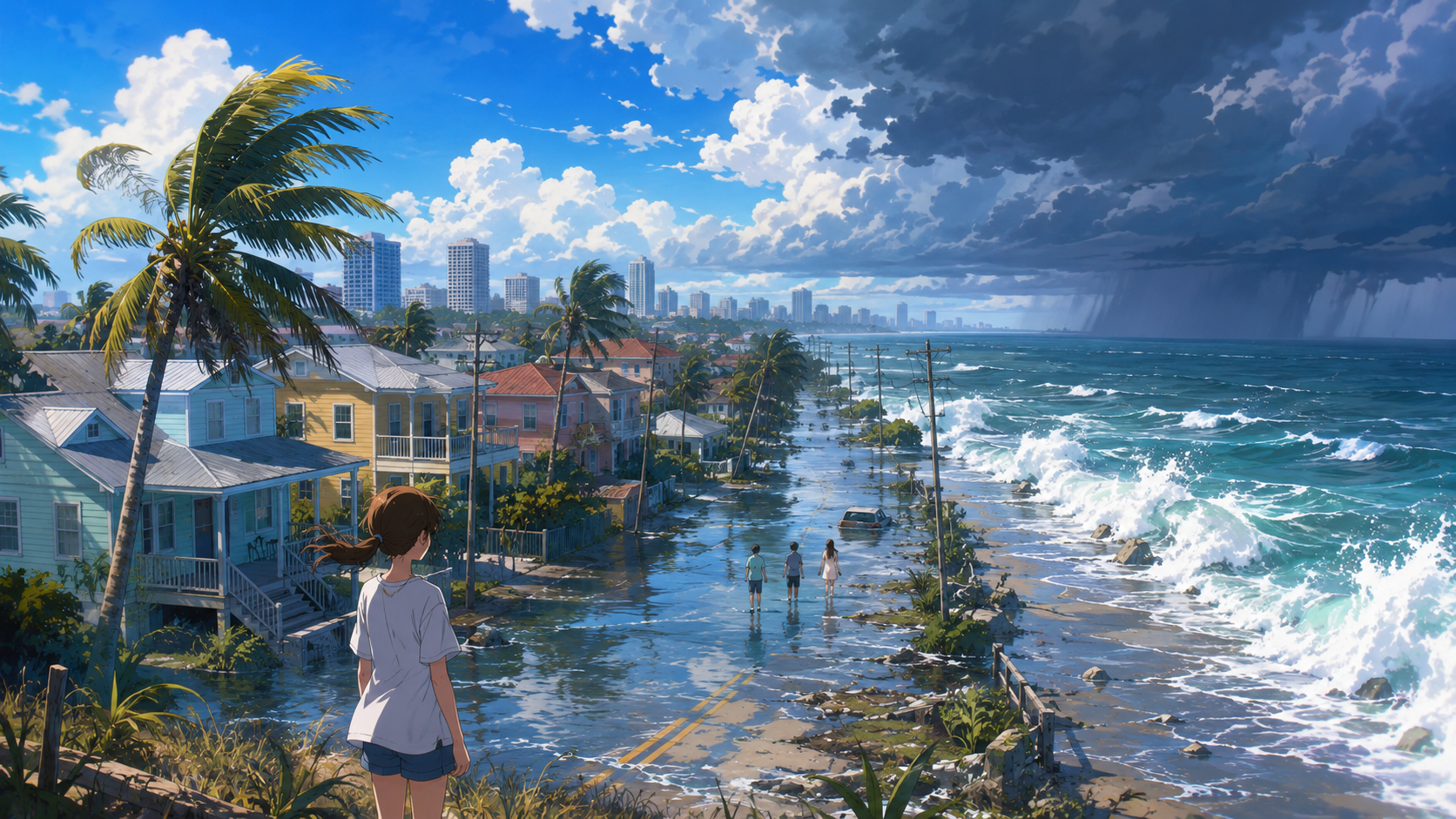
Climate change has emerged as one of the most significant social and environmental challenges of the twenty-first century. While its effects are global, certain regions experience disproportionate impacts because of their geographical location and socioeconomic characteristics. Florida, a southeastern state of the United States, represents one of the most vulnerable regions to climate-related threats due to its extensive coastline, low elevation, growing population, and dependence on coastal economies. Rising sea levels, stronger hurricanes, coastal erosion, flooding, and saltwater intrusion are transforming both the physical and social landscapes of Florida.
From a sociological perspective, climate change is not merely an environmental issue. It is a social phenomenon that influences community structures, economic relationships, cultural identities, social inequalities, migration patterns, and public policy. Coastal communities in Florida face unique challenges as they adapt to changing environmental conditions while attempting to preserve their livelihoods and social cohesion.
This article examines climate change and coastal communities in Florida through a sociological lens. It explores the relationship between environmental transformation and social systems, highlighting how climate change affects population dynamics, economic structures, social inequality, community resilience, governance, and cultural identity.

Table of Contents
Understanding Climate Change in the Florida Context
Climate change refers to long-term alterations in global temperature patterns and weather systems, largely driven by human activities such as fossil fuel combustion, deforestation, and industrial production. These activities increase greenhouse gas concentrations in the atmosphere, leading to global warming.
Florida is especially vulnerable because:
- More than 1,300 miles of coastline surround the state.
- Much of the state’s population lives near coastal areas.
- Low-lying geography increases flood risks.
- Tourism, fisheries, and real estate depend heavily on coastal ecosystems.
- Hurricanes frequently affect the region.
The impacts of climate change in Florida include rising sea levels, increased storm intensity, coastal flooding, heat waves, and ecosystem degradation. These environmental changes have significant social consequences that extend far beyond physical damage.
The Sociological Importance of Coastal Communities
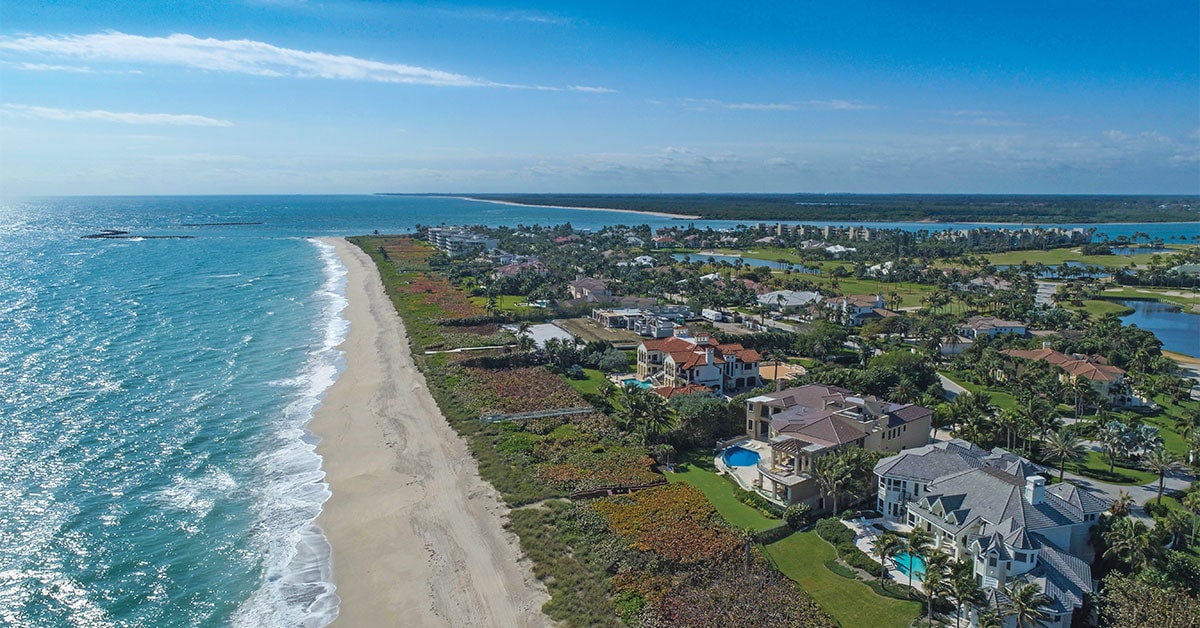
Coastal communities are more than geographic locations. They are social systems composed of families, businesses, institutions, cultural traditions, and networks of social relationships. Sociologists view communities as interconnected structures where social life develops through shared experiences, economic activities, and cultural practices.
Florida’s coastal communities include:
- Fishing villages
- Tourist towns
- Retirement communities
- Urban coastal cities
- Indigenous settlements
- Immigrant neighborhoods
Each community possesses unique social characteristics, yet all face increasing pressures from climate change. The disruption of environmental conditions often leads to broader social transformations affecting identity, stability, and collective well-being.
Sea Level Rise and Social Transformation
Sea level rise represents one of the most visible consequences of climate change in Florida. As ocean waters expand due to warming temperatures and melting ice sheets, coastal regions experience more frequent flooding and land loss.
Impact on Housing and Settlements
Housing is a fundamental social institution that provides security, identity, and community attachment. Rising sea levels threaten residential areas through chronic flooding and property damage.
Many homeowners face:
- Reduced property values
- Increased insurance costs
- Repeated flood damage
- Relocation pressures
These challenges affect not only individuals but also entire neighborhoods. Communities that once served as stable social environments may experience population decline and fragmentation.
Community Displacement
Sociologists use the term environmental displacement to describe population movements caused by environmental changes. In Florida, some residents are already considering relocation because of recurring flooding and rising risks.
Displacement often creates:
- Loss of social networks
- Emotional stress
- Community fragmentation
- Cultural disconnection
When people leave long-established neighborhoods, the social bonds that sustain community life may weaken significantly.
Climate Change and Social Inequality
One of the most important sociological insights is that environmental problems do not affect all populations equally. Climate change often magnifies existing social inequalities.
Economic Inequality
Wealthier individuals generally possess greater resources to adapt to climate-related threats. They may:
- Elevate homes
- Purchase insurance
- Relocate more easily
- Access recovery resources
In contrast, low-income populations often face greater vulnerability. Limited financial resources reduce their ability to recover from disasters or move to safer areas.
Environmental Justice
Environmental justice examines how environmental risks are distributed across different social groups. In Florida, marginalized communities often live in areas more susceptible to flooding and environmental hazards.
These groups may include:
- Low-income households
- Minority populations
- Elderly residents
- Immigrant communities
Climate change therefore becomes both an environmental and social justice issue.
Housing Inequality and Climate Gentrification
An emerging phenomenon in Florida is climate gentrification. Traditionally, waterfront properties were considered highly desirable. However, as flooding risks increase, higher-elevation neighborhoods become more attractive.
As wealthier residents move toward safer locations:
- Housing prices rise
- Low-income residents face displacement
- Social inequalities deepen
This process demonstrates how climate change can reshape urban social structures.
Hurricanes and Community Resilience
Florida has long experienced hurricanes, but climate change is increasing the intensity and destructive potential of these storms.
Social Consequences of Hurricanes
Hurricanes affect communities in multiple ways:
- Destruction of homes
- Disruption of education
- Loss of employment
- Psychological trauma
- Family separation
The social impact often persists long after physical reconstruction is completed.
Community Resilience
Community resilience refers to the ability of a community to withstand, adapt to, and recover from challenges. Sociologists emphasize that resilience depends not only on infrastructure but also on social relationships.
Strong communities often possess:
- High levels of trust
- Active civic organizations
- Effective local leadership
- Strong social networks
Following hurricanes, neighbors frequently assist one another through sharing resources, providing shelter, and offering emotional support. Such social capital becomes a critical factor in recovery.
Social Capital and Adaptation
The concept of social capital plays a crucial role in understanding climate adaptation.
Social capital refers to networks, trust, and social connections that facilitate cooperation among community members.
Types of Social Capital
Bonding Social Capital
This exists among family members, friends, and close-knit groups.
Benefits include:
- Emotional support
- Resource sharing
- Immediate disaster assistance
Bridging Social Capital
This connects individuals across different social groups.
Benefits include:
- Access to information
- Broader community cooperation
- Collective problem-solving
Linking Social Capital
This connects communities with institutions and government agencies.
Benefits include:
- Disaster relief access
- Policy influence
- Resource allocation
Communities with strong social capital tend to adapt more successfully to climate-related challenges.
Economic Impacts on Coastal Communities
Climate change affects the economic foundations of Florida’s coastal regions.
Tourism Industry

Tourism is a major component of Florida’s economy. Coastal attractions draw millions of visitors annually.
Climate-related threats include:
- Beach erosion
- Coral reef degradation
- Extreme heat
- Hurricane damage
These factors may reduce tourism revenue and affect employment opportunities.
Fisheries and Marine Livelihoods
Many coastal residents depend on fishing and marine industries.
Climate change contributes to:
- Changing fish populations
- Habitat loss
- Ocean warming
- Ecosystem disruption
These changes create economic uncertainty and affect community stability.
Real Estate Markets
Florida’s coastal real estate market faces increasing pressure from climate risks.
Consequences include:
- Changing property values
- Rising insurance costs
- Reduced investment confidence
- Financial instability
Real estate trends influence local economies, tax revenues, and social development.
Cultural Identity and Place Attachment
Sociologists recognize that communities are not merely physical spaces; they are sources of identity and belonging.
Place Attachment
Place attachment refers to emotional connections between people and locations.
Many Florida residents have deep ties to coastal environments because of:
- Family history
- Cultural traditions
- Economic activities
- Recreational experiences
Climate-induced changes threaten these attachments.
Cultural Heritage
Coastal communities often possess distinctive cultural traditions linked to maritime environments.
Examples include:
- Fishing cultures
- Coastal festivals
- Indigenous traditions
- Local knowledge systems
Environmental degradation can undermine these cultural practices and weaken collective identities.
Indigenous Communities and Climate Change
Florida is home to Indigenous groups whose cultural and historical connections to the land extend across generations.
Climate change threatens:
- Sacred sites
- Traditional livelihoods
- Ecological knowledge systems
- Community continuity
Indigenous communities often contribute valuable perspectives regarding environmental stewardship and sustainable adaptation.
Sociologists emphasize the importance of including Indigenous voices in climate policy discussions and planning processes.
Migration and Demographic Change
Climate change increasingly influences migration patterns.
Climate Migration
Climate migration occurs when environmental conditions encourage people to relocate.
In Florida, migration may occur because of:
- Repeated flooding
- Hurricane damage
- Rising insurance costs
- Declining economic opportunities
Some residents move inland, while others leave the state entirely.
Demographic Consequences
Migration affects:
- Population composition
- Labor markets
- School systems
- Community networks
Receiving communities may experience increased housing demand and infrastructure pressures.
These demographic changes alter social structures and community dynamics.
Public Health and Social Well-Being
Climate change affects public health in numerous ways.
Physical Health Impacts
Residents face increased risks from:
- Heat-related illnesses
- Waterborne diseases
- Respiratory problems
- Disaster-related injuries
Vulnerable populations often experience the greatest risks.
Mental Health Challenges
The psychological consequences of climate change are gaining increasing attention.
Common effects include:
- Anxiety
- Stress
- Depression
- Trauma after disasters
Repeated exposure to environmental threats can create long-term emotional burdens.
Sociologists emphasize that mental health should be considered an essential component of climate adaptation strategies.
Governance and Climate Policy
Effective adaptation requires cooperation among governments, communities, businesses, and civil society organizations.
Local Government Responses
Many Florida municipalities have adopted adaptation measures such as:
- Flood management systems
- Infrastructure improvements
- Coastal restoration projects
- Resilience planning
These efforts seek to reduce vulnerability and protect residents.
Community Participation
Sociological research highlights the importance of participatory governance.
Residents should be involved in:
- Decision-making processes
- Climate planning
- Resource allocation
- Adaptation strategies
Community participation promotes trust, legitimacy, and more effective outcomes.
Environmental Sociology and Climate Change
Environmental sociology examines interactions between society and the natural environment.
Several theoretical perspectives help explain climate challenges in Florida.
Human Ecology Perspective
Human ecology explores relationships between populations and environmental resources.
This perspective highlights how coastal settlement patterns influence vulnerability to climate risks.
Risk Society Theory
Developed by sociologist Ulrich Beck, risk society theory argues that modern societies increasingly face manufactured risks created by technological and economic development.
Climate change exemplifies such risks because human activities contribute directly to environmental transformation.
Political Economy Perspective
Political economy examines how economic systems influence environmental outcomes.
This perspective emphasizes:
- Development patterns
- Real estate interests
- Economic inequality
- Resource distribution
These factors shape climate vulnerability and adaptation opportunities.
Community-Based Adaptation Strategies
Community-based adaptation focuses on local knowledge and participation.
Effective strategies include:
- Neighborhood preparedness programs
- Coastal restoration initiatives
- Community education campaigns
- Emergency response networks
These approaches strengthen resilience while fostering social cohesion.
Local participation often improves adaptation outcomes because residents understand community-specific needs and vulnerabilities.
The Future of Coastal Communities in Florida
The future of Florida’s coastal communities depends on multiple factors:
- Climate mitigation efforts
- Adaptation investments
- Social equity policies
- Community engagement
- Technological innovation
Some communities may successfully adapt through infrastructure improvements and collective action. Others may face significant relocation pressures.
Sociologists argue that adaptation should not focus solely on physical protection. It must also address social justice, cultural preservation, and community well-being.
The challenge is not merely to protect coastlines but to sustain the social systems that make coastal communities meaningful places to live.
Conclusion
Climate change is reshaping coastal communities throughout Florida in profound ways. Rising sea levels, stronger hurricanes, flooding, and ecosystem changes affect housing, livelihoods, health, culture, and social relationships. These impacts reveal that climate change is fundamentally a sociological issue as well as an environmental one.
From the perspective of sociology, climate change exposes existing inequalities, transforms community structures, influences migration patterns, and challenges cultural identities. Vulnerable populations often bear disproportionate burdens, highlighting the importance of environmental justice and equitable adaptation strategies.
At the same time, Florida’s coastal communities demonstrate remarkable resilience through social networks, collective action, and local adaptation efforts. Strong social capital, inclusive governance, and community participation remain essential for addressing future challenges.
As climate risks continue to grow, sociological insights can help policymakers, researchers, and communities understand not only the environmental dimensions of climate change but also its human consequences. The future of Florida’s coastal communities will depend on balancing environmental protection, social equity, economic sustainability, and cultural preservation in an increasingly uncertain climate landscape.
FAQs
1. What are Coastal Communities in Florida?
Coastal Communities in Florida are towns, cities, and settlements located along the state’s extensive coastline, where residents depend on marine resources, tourism, fishing, and coastal ecosystems for their livelihoods and cultural identity.
2. How does climate change affect Coastal Communities in Florida?
Climate change affects Coastal Communities in Florida through rising sea levels, stronger hurricanes, increased flooding, coastal erosion, and saltwater intrusion into freshwater systems.
3. Why are Coastal Communities in Florida vulnerable to sea-level rise?
Many Coastal Communities in Florida are located in low-lying areas, making them highly susceptible to tidal flooding, shoreline erosion, and permanent land loss caused by rising sea levels.
4. What economic sectors support Coastal Communities in Florida?
Tourism, fishing, marine transportation, real estate, hospitality, and recreation are major economic sectors supporting Coastal Communities in Florida.
5. How do hurricanes impact Coastal Communities in Florida?
Hurricanes can damage homes, infrastructure, businesses, and public services, while also causing long-term social and economic disruptions in Coastal Communities in Florida.
6. What is climate migration in Coastal Communities in Florida?
Climate migration refers to the movement of residents away from Coastal Communities in Florida due to repeated flooding, storm damage, or increasing environmental risks.
7. How does climate change influence housing in Coastal Communities in Florida?
Climate change can lower property values in flood-prone areas, increase insurance costs, and encourage relocation to safer neighborhoods within or beyond Coastal Communities in Florida.
8. What is climate gentrification in Coastal Communities in Florida?
Climate gentrification occurs when higher-elevation areas become more desirable, leading to rising property prices and potential displacement of lower-income residents in Coastal Communities in Florida.
9. How do Coastal Communities in Florida contribute to the state’s economy?
Coastal Communities in Florida contribute billions of dollars annually through tourism, fisheries, maritime industries, and waterfront development.
10. What role does social capital play in Coastal Communities in Florida?
Social capital strengthens community resilience by promoting trust, cooperation, mutual support, and collective action during climate-related disasters.
11. How are vulnerable populations affected in Coastal Communities in Florida?
Low-income households, elderly residents, minority groups, and immigrants often face greater risks and fewer resources for recovery in Coastal Communities in Florida.
12. What environmental justice issues exist in Coastal Communities in Florida?
Environmental justice concerns arise when disadvantaged groups experience disproportionate exposure to flooding, pollution, and climate-related hazards in Coastal Communities in Florida.
13. How can Coastal Communities in Florida adapt to climate change?
Adaptation strategies include improving infrastructure, restoring wetlands, strengthening emergency preparedness, implementing flood management systems, and encouraging community participation.
14. Why is cultural identity important in Coastal Communities in Florida?
Many residents have strong emotional and historical connections to coastal environments, making cultural preservation an important aspect of climate adaptation in Coastal Communities in Florida.
15. What is the future of Coastal Communities in Florida?
The future of Coastal Communities in Florida depends on effective climate policies, sustainable development, social equity measures, and community resilience initiatives.